
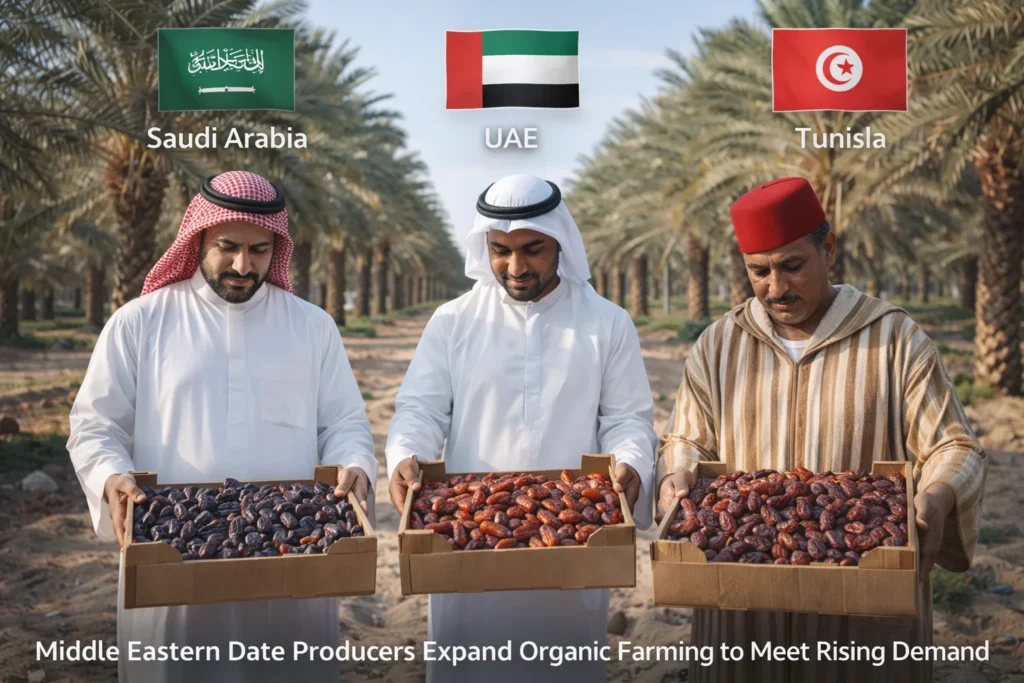

To understand the profound metamorphosis unfolding across the date palm groves of the Middle East, one must first embark on a journey through time and terrain. Imagine a vast, silent expanse where the horizon shimmers in the heat, a landscape sculpted by wind and aridity. Here, for millennia, the date palm (Phoenix dactylifera) has not merely survived; it has thrived, becoming the undisputed “Tree of Life.” Its deep roots sought out hidden aquifers, its towering crown offered a fragmented canopy of shade, and its bountiful clusters of fruit provided a dense, sugary sustenance that could be stored, traded, and relied upon through harsh seasons. Civilizations rose around these oases; the date palm was the pillar upon which desert societies were built. It was currency, it was medicine, it was mythology made tangible.
Yet, in the latter half of the 20th century, this ancient covenant between people and palm faced a new kind of crossroad. The global Green Revolution introduced high-yield farming practices, synthetic fertilizers, and potent pesticides to deserts and deltas alike. The goal was noble: to feed burgeoning populations. In many date-producing regions, these methods were adopted to boost production, combat pests more aggressively, and standardize output for emerging commercial markets. For a time, yields increased. But a cost, subtle at first, began to accrue—not just in financial terms, but in the health of the soil, the purity of the groundwater, and the very biological complexity of the oasis ecosystem.
Simultaneously, in the distant, bustling metropolises of Europe, North America, and East Asia, a quiet counter-narrative was gaining momentum. A series of food safety scares, a growing awareness of environmental degradation, and a burgeoning wellness culture began to shift consumer consciousness. People started to look beyond the supermarket shelf, asking questions about provenance, process, and principle. They began to seek out food that told a story of care, not just convenience; of nutrition, not just novelty. This was not a fringe movement of activists, but a broad-based, mainstream evolution in purchasing behavior, led by educated, health-conscious millennials and Generation Z, and supported by a vast digital ecosystem of food bloggers, nutritionists, and ethical lifestyle advocates.
It is at the precise intersection of these two narratives—the ancient, soil-based wisdom of the Middle Eastern date farmer and the modern, health-driven demand of the global consumer—that our story truly begins. This is the genesis of a green revolution, not one imposed from outside with chemical packages, but one emerging from within, fueled by market signals and a rediscovery of balance. Major date-producing nations, led by the Gulf powerhouses of Saudi Arabia and the United Arab Emirates, along with North African leaders like Tunisia, are now executing a strategic, large-scale pivot. They are channeling significant investment, research, and national agricultural policy toward organic cultivation. This is a deliberate, calculated effort to capture the immense value of a global market that is willingly paying a premium for authenticity, transparency, and demonstrable purity. The goal is clear: to position the Middle Eastern date not as a common commodity, but as a premium, sought-after superfood, a symbol of both heritage and holistic well-being in the 21st century.
Decoding the Global Palate: The Unstoppable Consumer Demand for Purity and Transparency
The engine driving this agricultural transformation is located thousands of miles from the date groves, in the minds and shopping carts of consumers worldwide. To dismiss this as a passing “health fad” is to fundamentally misunderstand a deep, structural shift in the relationship between people and their food. This movement is built on several interconnected pillars that have coalesced into a powerful market force.
First, there is the Wellness Imperative. Modern nutritional science has progressively moved away from a simplistic focus on macronutrients (calories, fats, carbs) toward a more nuanced understanding of food as information and medicine. The concept of “functional foods”—items that provide health benefits beyond basic nutrition—has entered the mainstream. Dates, naturally rich in dietary fiber, potassium, magnesium, B-vitamins, and potent antioxidants like polyphenols and flavonoids, fit this paradigm perfectly. They are seen as a natural source of sustained energy, a digestive aid, a heart-healthy snack, and an anti-inflammatory agent. When grown organically, this nutritional profile is perceived as being untainted and more potent, as the plant is forced to develop its own robust defenses, potentially increasing its phytonutrient content.
Second, we witness the Ecology of Distrust. A series of high-profile food contamination scandals, ongoing debates about the long-term health effects of pesticide residues (the “cocktail effect”), and a general disillusionment with overly processed, industrially manufactured foods have eroded consumer confidence in the conventional food system. The organic label functions as a crucial trust mechanism. It is a regulated, third-party-verified promise that the food was produced without a specific list of prohibited synthetic substances. For a parent packing a lunchbox, this assurance carries immense emotional weight. It represents a choice to minimize a child’s exposure to potential toxins, a form of dietary risk management that is increasingly seen as a parental responsibility.
Third, we must consider the Ethical and Environmental Consciousness. Today’s consumer, particularly in the target markets of Western Europe and East Asia, is often an “ethical omnivore.” Purchasing decisions are influenced by concerns about water usage, soil health, biodiversity loss, and carbon emissions. Organic farming, with its emphasis on soil fertility through composting, its prohibition of synthetic nitrogen fertilizers (a significant source of agricultural greenhouse gases), and its promotion of biodiversity, aligns with a value system that seeks to heal the planet through consumption choices. Buying an organic product from a water-scarce region like the Middle East carries an added narrative: it supports farmers who are using water more efficiently (a point we will explore later) and stewarding fragile ecosystems.
Finally, there is the Experience Economy. Food is no longer just fuel; it is a central pillar of lifestyle, identity, and social experience. Consumers crave stories, authenticity, and a connection to the origin of their food. An organic date from a specific oasis in Saudi Arabia offers a more compelling story than a generic, commoditized date. It speaks of terroir, of ancient trade routes, of sun and sand, and of a modern commitment to purity. This narrative can be leveraged through sophisticated packaging, digital content, and direct-to-consumer marketing, transforming a simple fruit into an experience of culture and wellness.
This confluence of health, trust, ethics, and experience has created a voracious and growing market. Analysts project the global organic food and beverage market to continue expanding at a compound annual growth rate far exceeding that of the conventional food market. For agri-exporting nations, ignoring this trend is not an option; capturing its value is an economic imperative. The Middle East, with its iconic date crop, is not just responding to this demand—it is strategically positioning itself to become a defining supplier for this new era of eating.
The Alchemy of Certification: Transforming Land and Legacy into a Marketable Guarantee
The journey from a conventional date palm grove to a certified organic exporter is a profound alchemical process. It is not merely a change in farming techniques; it is a philosophical and operational overhaul that touches every aspect of production, from the microscopic life in the soil to the paperwork in the office. The coveted organic certificate is not a medal awarded for good intentions; it is a license to operate in a prestigious and demanding global marketplace, earned through years of meticulous effort and rigorous auditing.
The process universally begins with the Transition Period, a mandated span of time—typically 36 months—during which the land must be managed according to organic standards before its harvest can be legally sold as “organic.” This is arguably the most challenging phase for the farmer. It requires investing in new practices and inputs while often facing a temporary decline in yield as the chemical-dependent soil microbiome and pest-predator balance recalibrates to a new, organic equilibrium. The farmer bears the full cost of organic management during this time but cannot command the organic price premium, a financial hurdle that requires planning, support, or significant personal capital.
The core of the transformation lies in the Daily Practice of Organic Management. This is where theory meets the hard red earth. It starts with Soil Health as the fundamental creed. Instead of applying soluble synthetic fertilizers that feed the plant directly (and often runoff to pollute waterways), the organic farmer feeds the soil ecosystem. This involves:
- Composting: Creating rich, thermally processed compost from date palm waste, animal manures, and other organic matter. This “black gold” is reintroduced to the grove, slowly releasing nutrients and building stable soil organic carbon, which improves water retention—a critical advantage in arid climates.
- Green Manures and Cover Cropping: Planting specific legumes or grasses between date palm rows. These plants are not harvested; they are plowed back into the soil to fix atmospheric nitrogen, add biomass, and prevent erosion.
- Mineral Amendments: Using naturally occurring rock powders (like phosphate rock or lime) and approved mineral supplements to address specific soil deficiencies.
Pest and Disease Management undergoes a complete paradigm shift. The “spray and pray” model is replaced with Integrated Pest Management (IPM), a sophisticated ecological strategy. This includes:
- Biological Controls: Introducing or encouraging beneficial organisms. For example, releasing parasitic wasps to control date palm borers, or using Bacillus thuringiensis (Bt), a natural soil bacterium, as a targeted biological pesticide.
- Cultural Practices: Manipulating the farming environment to discourage pests. This can involve careful sanitation to remove fallen fruit that harbors insects, using pheromone traps to monitor and disrupt pest mating cycles, and selecting planting dates or varieties that are less susceptible to infestation.
- Mechanical and Physical Controls: Employing traps, barriers, or even manual removal of pests. Some progressive farms use drones equipped with multispectral cameras to identify pest hotspots early, allowing for precise, localized intervention.
Weed control, often a major labor cost, moves away from herbicides. Methods include manual weeding, mechanized cultivation with specialized tools, and the use of organic mulches (like chopped palm fronds) to suppress weed germination and conserve soil moisture.
Underpinning all these practices is the Documentation and Traceability burden, the unsung hero of organic integrity. Every input—every bag of compost, every batch of beneficial insects—must be from an approved organic source and its use meticulously logged. Every field activity, from planting to harvest, must be recorded. This creates an unbroken “chain of custody” for every single date cluster. This paper trail is what the certifying auditor from bodies like Ecocert, the Soil Association, or the USDA National Organic Program scrutinizes during annual inspections. They will cross-check purchase records, observe practices, and may even take soil or plant samples for residue testing. The system is designed to be transparent and fraud-resistant, providing the end consumer with a verifiable guarantee that stretches back to the farm.
For the pioneering farmers who have completed this journey, the reward is more than financial. As Ahmed Al-Mansoori, a third-generation date farmer from Al Ain, UAE, reflects: “The certification process was our university. We thought we knew our land, but organic farming taught us to listen to it. We learned to see the signs of health in the earthworm castings and the ladybug larvae. That piece of paper from the certifier is our diploma. And it has opened doors to buyers who share our values, who want a story they can believe in.”
Icons of the Oasis: Ajwa and Medjool as the Vanguard of the Organic Premium
In any agricultural revolution, certain varieties emerge as standard-bearers, their inherent qualities perfectly aligned with the new paradigm. In the world of dates, two varieties have ascended to this iconic status, becoming the charismatic faces of the Middle Eastern organic movement. Their journeys from prized regional delicacies to global superfoods illustrate the powerful synergy between intrinsic value and organic certification.
Ajwa: The Sanctified Fruit Embraces a Secular Standard of Purity
To speak of the Ajwa date is to delve into a realm where botany intertwines with deep cultural and spiritual history. Primarily cultivated in the blessed orchards surrounding Medina in Saudi Arabia, the Ajwa holds a unique position in the Islamic tradition, mentioned in prophetic teachings for its purported health benefits and spiritual significance. It is a date of modest size, with a distinctive wrinkled, deep black skin that encases a tender, almost fudgy flesh. Its flavor profile is complex, less overtly sugary than some varieties, with notes of prune, caramel, and a subtle, pleasing astringency.
The decision to cultivate Ajwa organically is a masterstroke of narrative fusion. It marries an ancient heritage of veneration with a modern, globally recognized benchmark of quality. For the export market, this creates a product with unparalleled storytelling power. Marketing can seamlessly weave together threads of:
- Sacred Geography: The unique terroir of Medina’s volcanic soils and arid climate.
- Historical Legacy: A fruit consumed for wellness for over fourteen centuries.
- Modern Scientific Validation: Its rich nutritional profile, now guaranteed free of synthetic contaminants.
This transforms the Ajwa from a religious-cultural artifact into a global luxury health product. It is marketed not just as a sweet snack, but as a functional food for meditation and focus, a natural energy source for athletes seeking clean fuel, and a gourmet ingredient for chefs creating high-end, health-conscious desserts. The organic certification provides the crucial, credible bridge that allows this deeply traditional fruit to communicate its value in the secular, science-based language of the international wellness industry. It assures the buyer in Paris or Seoul that they are receiving a product whose purity matches its legendary status.
Medjool: The “King of Dates” Reinvents Its Monarchy for a Health-Conscious Court
The Medjool date’s story is one of royal rescue and global conquest. Believed to have originated in Morocco, the variety was nearly wiped out by disease in the early 20th century. A few surviving palms were brought to the United States, where they were propagated and eventually reintroduced to the Middle East. Today, it is a cornerstone of date agriculture in Jordan, Israel, Palestine, Saudi Arabia, and the UAE. The Medjool is a spectacular fruit: large, often the size of a small egg, with a glossy, reddish-brown to amber skin. Its texture is famously soft, moist, and chewy, and its flavor is a rich, unabashed celebration of caramel and butterscotch.
Organic certification has allowed the Medjool to transcend its role as a mere “luxury sweet” and claim a new title as a versatile, whole-food staple in the modern pantry. The organic narrative enhances its core attributes:
- Clean Indulgence: It satisfies a sweet tooth with unrefined sugars, fiber, and nutrients, positioning it as the ultimate “guilt-free” treat. The absence of pesticide residues is a key selling point for a fruit often eaten skin-and-all.
- Culinary Versatility: Promoted as “nature’s caramel,” organic Medjools become the perfect, clean-label ingredient for raw vegan desserts, energy balls, smoothie sweeteners, and gourmet sauces. Their size and presentation make them ideal for stuffing with nuts or cheese for elegant appetizers.
- Athletic Nutrition: Their glycemic index, providing a quick yet sustained energy release, coupled with their potassium and magnesium content (crucial for muscle function and recovery), makes them a favorite among endurance athletes and fitness enthusiasts. The organic seal adds a layer of “clean fuel” credibility.
The economic impact is significant. Organic Medjools command a price premium that can be 50-100% above their conventionally grown counterparts. This premium flows back through the supply chain, rewarding the farmers for their more labor-intensive methods and enabling further investment in organic infrastructure. The Medjool, therefore, is not just a beneficiary of the organic trend; it is a powerful economic engine driving its adoption, proving that environmental stewardship and profitability can be powerfully aligned.
The Symphony of Sand and Silicon: Precision Agriculture in the Organic Oasis
Perhaps the most potent refutation of the myth that organic farming is a rejection of modernity is visible in the most advanced date groves of the Middle East. Here, a quiet symphony is performed, where the ancient rhythms of the desert are conducted by the silent, precise algorithms of digital technology. This fusion of ecology and electronics is not a contradiction; it is the very enabler of large-scale, commercially viable organic date production in one of the world’s most challenging climates.
At the heart of this fusion lies the existential challenge of Water Scarcity. The Middle East and North Africa (MENA) region is home to 6% of the world’s population but possesses less than 2% of its renewable freshwater. Agriculture accounts for over 80% of water use in the region. In this context, organic farming’s requirement for healthy, living soil becomes a strategic advantage, but only when paired with hyper-efficient water delivery. Enter the era of Micro-Irrigation and Smart Water Management.
Gone are the days of wasteful flood irrigation. The modern organic date farm is a networked organism. Subsurface Drip Irrigation (SDI) systems are now the gold standard. Lines of drip tubing are buried 20-40 centimeters below the soil surface, directly targeting the root zone of each palm. Water, often enriched with soluble organic fertilizers like fish emulsion or liquid compost tea, is emitted in slow, frequent drops. The benefits are revolutionary:
- Drastic Efficiency: Evaporation loss from the soil surface is nearly eliminated. Water application efficiency can exceed 95%, compared to 50-60% for surface methods. Reports from farms in Saudi Arabia’s Qassim region and the UAE’s Al Faqa district consistently cite water savings of 40-70%.
- Weed Suppression: Because the soil surface remains dry, weed seed germination is massively reduced. This directly addresses one of the most significant labor and cost challenges in organic farming.
- Root Zone Optimization: Moisture and nutrients are consistently maintained in the ideal root area, promoting stronger, deeper root systems that make palms more resilient to drought stress.
This physical infrastructure is governed by a digital nervous system. Wireless sensor networks are deployed throughout the grove. Soil moisture sensors (capacitance or time-domain reflectometry probes) at various depths provide real-time data on water content. Soil salinity sensors alert farmers to salt buildup, a constant threat in arid irrigated agriculture. Weather stations on-site track evaporation demand (evapotranspiration), solar radiation, and wind speed.
All this data streams wirelessly to a cloud-based platform. Using sophisticated algorithms, the system can now move from monitoring to prescriptive action. It can automatically trigger irrigation cycles only when and where needed, adjusting for specific soil types, palm age, and real-time weather. A farm manager can oversee hundreds of acres from a smartphone dashboard, receiving alerts if a sensor indicates a block is too dry or a pump has failed. This is not just convenience; it is the prevention of crop stress and resource waste at a previously impossible scale.
Beyond water, technology aids in Pest and Disease Forecasting. Drones equipped with high-resolution and multispectral cameras fly pre-programmed routes, capturing imagery that can reveal early signs of pest infestation, nutrient deficiency, or fungal disease long before the human eye can see it. Software analyzes these images, creating “health maps” of the grove. This allows for targeted, sparing interventions—sending a crew to a specific cluster of trees showing early stress, or releasing beneficial insects in a precise location. This precision minimizes disruption to the broader ecosystem and aligns perfectly with the organic philosophy of management over eradication.
This marriage of smart tech and organic principles creates a powerful business case. While the initial investment in sensors, software, and drip systems is substantial, the long-term reduction in input costs—water, fuel, labor, and even organic inputs themselves—is dramatic. The technology pays for itself by making the organic system profoundly efficient and resilient. It demonstrates that sustainability is not a cost center, but a driver of operational excellence and long-term profitability. The desert, once a place of scarcity, is being reimagined as a landscape of precise, data-driven abundance.
Weaving the Narrative: From Commodity to Coveted Brand in the Global Marketplace
Producing a perfect, certified organic date is an immense achievement, but it is only the first act. The final, crucial act is one of communication and connection. In a crowded global market, a date is no longer just a date. It is a story waiting to be told, an experience waiting to be had, a value proposition waiting to be understood. The most successful Middle Eastern producers and exporters have realized that their competition is not just other date-growing regions; it is every other snack, sweetener, and superfood on the shelf. To win, they must master the art of strategic storytelling and brand building.
This process begins with a fundamental shift in mindset: moving from selling a bulk agricultural commodity to building a consumer-facing brand. This involves investing in every touchpoint of the customer journey.
1. The Power of Origin and Terroir:
Just as Champagne is not merely sparkling wine, an “Al-Hasa Organic Khlas Date” or a “Tafilalet Oasis Medjool” carries a geographical story. Producers are increasingly securing Protected Geographical Indication (PGI) status for their premier varieties. This legal framework ties the product’s quality, reputation, and characteristics to its specific place of origin. Marketing then amplifies this: the unique mineral content of the soil, the specific microclimate of the oasis, the generations of cultivar selection and care. This creates an aura of authenticity and non-replicability that justifies a premium price.
2. Packaging as a Silent Ambassador:
The days of generic, transparent plastic boxes are fading. Modern organic date packaging is a canvas for storytelling. It uses clean, elegant design, earthy colors, and high-quality materials. It prominently features the organic certification logos (EU leaf, USDA seal) as badges of trust. It tells the farm’s story briefly but powerfully, often using QR codes that link to immersive digital content—videos of the harvest, interviews with the farmers, drone footage of the oasis. The packaging must communicate luxury, purity, and care, transitioning the product from the produce aisle to the gourmet food and gift sections.
3. Content and Education:
A brand must become a trusted authority. Leading companies develop rich content ecosystems. This includes:
- Recipe Development: Showcasing dates’ incredible versatility—from savory tagines and salads to smoothie bowls, energy bites, and decadent yet healthy desserts. Collaborations with food influencers and nutritionists in target markets are key.
- Nutritional Communication: Clearly, and scientifically explaining the health benefits without making unproven medical claims. Infographics on fiber content, explainers on the difference between natural fructose and refined sugar, and highlights of key minerals all educate and empower the consumer.
- Transparency Journals: Using social media and blogs to pull back the curtain—showing the compost piles, introducing the beneficial insects, documenting the harvest. This builds an emotional connection and demystifies the organic process, reinforcing the value of the premium.
4. Navigating Distribution Channels:
Market access is strategic. Organic dates are placed in channels that match their positioning:
- Specialty Health Food Stores: Places like Whole Foods, Bio c’Bon, or Natural House, where informed shoppers actively seek organic products.
- High-End Supermarkets: Gourmet sections of stores like Waitrose, Carrefour, or Dean & DeLuca.
- E-commerce and Direct-to-Consumer (D2C): Building online brand stores or partnering with premium online grocers allows for fuller storytelling and captures higher margins. Subscription models for regular deliveries of organic dates are also emerging.
- Food Service and Hospitality: Supplying luxury hotels, airline lounges, and high-end restaurants where dates can be featured in signature dishes or as part of a curated welcome amenity.
By orchestrating these elements—origin story, design, content, and distribution—a simple agricultural product is transformed. It becomes “The Nayef Farms Organic Medjool,” a brand that stands for trust, quality, and a sustainable connection to an ancient land. The consumer is no longer just buying calories; they are buying into a narrative that aligns with their self-image and values, creating loyalty that transcends price fluctuations. This is the final, essential step in capturing the full value of the organic revolution.
The Inevitable Challenges: Confronting the Realities of Scale and Change
No transformation of this magnitude occurs without friction, setbacks, and complex challenges. The organic pathway, while filled with long-term promise, is paved with short-term obstacles that test the resolve of farmers, policymakers, and investors. Acknowledging and addressing these headwinds is critical for the sustained growth and credibility of the sector.
The Financial Valley of Death: The Transition Period
As outlined, the 3-year transition is the single greatest barrier to entry for most farmers. It represents a period of increased costs and uncertain yields without the compensating premium. Smallholder farmers, who may farm just a few hectares, are particularly vulnerable. Solutions are being explored:
- Transitional Premiums: Some forward-thinking exporters and cooperatives offer contracts that pay a partial premium during the transition period, sharing the risk and providing farmers with crucial cash flow.
- Government Subsidies and Soft Loans: Nations like Saudi Arabia, through its Saudi Green Initiative and support for Vision 2030’s agricultural goals, are providing direct subsidies for organic conversion costs (certification fees, organic inputs) and low-interest loans for infrastructure like drip irrigation.
- Group Certification: Encouraging small farmers to organize into cooperatives that can be certified as a single entity, spreading the cost of certification and creating collective marketing power.
The Knowledge Chasm: From Chemical Dependence to Ecological Literacy
A farmer skilled in conventional agriculture is not automatically equipped for organic management. It requires a new literacy—understanding soil food webs, recognizing beneficial insects, mastering compost recipes, and interpreting data from soil sensors. Building extension services is paramount. This involves:
- Farmer Field Schools: Practical, hands-on training programs led by experienced organic agronomists, held right in the groves.
- Digital Knowledge Platforms: Creating Arabic-language apps and online portals with video tutorials, pest identification guides, and best practice manuals.
- Peer-to-Peer Networks: Facilitating connections between pioneering organic farmers and those considering the switch, as lived experience is often the most convincing teacher.
Supply Chain Integrity: Maintaining the “Organic Chain of Custody”
The moment an organic date leaves the farm, the risk of contamination or fraud begins. Ensuring integrity requires investment in dedicated infrastructure:
- Segregated Processing Facilities: Packing houses must have separate lines, or rigorously cleaned and audited procedures, to prevent mixing with conventional dates. Storage silos and cold rooms must be dedicated.
- Blockchain for Traceability: Some exporters are piloting blockchain technology. Each pallet or batch receives a digital token, and every step—harvest, transport, washing, packing, export—is recorded on an immutable ledger. A consumer could scan a code and see the entire journey, a powerful tool for building ultimate trust.
- Combating Fraud: The high premium attracts bad actors. Strengthening national regulatory bodies to conduct random testing and enforce penalties for fraudulent use of the organic label is essential to protect the reputation of all legitimate producers.
Market Volatility and Competition
The organic market, while growing, is not immune to economic downturns. Furthermore, other regions (notably California in the USA, and organic producers in Iran and Pakistan) are also competing for the same premium markets. Maintaining a competitive edge requires constant innovation in product development (e.g., ready-to-eat pitted dates, date syrup, date sugar powder) and unwavering commitment to quality and consistency. The Middle East’s unique selling proposition of “heritage and purity” must be defended through relentless storytelling and demonstrable quality.
These challenges are significant, but they are not insurmountable. They are the growing pains of an industry maturing from a niche pursuit into a mainstream economic pillar. Each hurdle that is overcome strengthens the entire system, making it more resilient, more credible, and more valuable.
The Ripple Effects: Economic Diversification, Environmental Resurrection, and Social Cohesion
The impact of the organic date revolution extends in concentric circles far beyond the balance sheets of exporting companies. It is seeding positive change in economic structures, environmental landscapes, and social fabrics, creating a legacy that may be as valuable as the export revenue itself.
Economic Diversification and Value Capture:
Historically, many resource-rich Gulf states have faced the “resource curse,” an over-reliance on hydrocarbon exports. Investing in high-value, knowledge-intensive agriculture like organic date production is a strategic move toward economic diversification. It creates jobs not just on the farm, but throughout a sophisticated value chain:
- Upstream: Jobs in producing organic compost, manufacturing biopesticides, developing agricultural software, and manufacturing irrigation equipment.
- Midstream: Employment in certified processing and packing plants, quality control labs, logistics and cold chain management, and certification bodies.
- Downstream: Careers in international marketing, brand management, e-commerce, and food science for product development.
Critically, more of the final retail value of the product is captured within the producing country, as the premium is for knowledge, process, and branding, not just for the raw material.
Environmental Renaissance in Fragile Ecosystems:
The shift to organic management is, in effect, a large-scale ecological restoration project for oasis environments.
- Soil Revitalization: The constant addition of organic matter transforms degraded, chemically dependent soils into living, spongy ecosystems. Increased soil organic carbon sequesters atmospheric CO2, contributing to climate change mitigation. This carbon-rich soil also has a vastly improved water-holding capacity, creating a virtuous cycle of resilience.
- Biodiversity Boon: By eliminating broad-spectrum pesticides, organic groves become havens for beneficial insects, birds, and soil microorganisms. This restored biodiversity provides natural pest control services and increases the overall stability of the agro-ecosystem.
- Water Quality Protection: Preventing the leaching of synthetic nitrates and phosphates into groundwater safeguards precious aquifer resources for future generations. This is a critical benefit in regions where desalination is expensive and groundwater is often non-renewable.
Social and Cultural Reinforcement:
The organic movement often strengthens rural communities and revalues traditional knowledge.
- Youth Engagement: The infusion of technology—drones, sensors, data analytics—makes farming more attractive to a younger, tech-savvy generation, helping to reverse rural-to-urban migration.
- Empowering Women: In many regions, date packing and processing have traditionally been sectors employing women. Modern, certified facilities offer safer, more formalized employment opportunities with better working conditions.
- Cultural Pride: Successfully marketing a traditional staple like the date as a world-class, premium product fosters national and regional pride. It validates indigenous agricultural knowledge and demonstrates its relevance in solving modern global challenges.
These ripple effects transform the narrative. The organic date grove is no longer seen just as a production unit, but as the beating heart of a sustainable, diversified, and resilient local economy. It proves that environmental stewardship can be the foundation of lasting prosperity.
Visions of the Future: From Organic to Regenerative, and the Dawn of a New Agricultural Epoch
As the organic date sector matures, its most visionary leaders are already looking beyond the current horizon. The goalposts of sustainability are continually moving, driven by an urgent climate crisis and ever-more-informed consumers. The next evolutionary stage is already coming into focus: the shift from organic to regenerative agriculture.
Regenerative agriculture is a set of farming principles that goes beyond “doing no harm.” Its explicit aim is to actively improve and regenerate the ecosystems in which it operates. For date farming, this could mean:
- Holistic Planned Grazing: Integrating livestock (like sheep or goats) into the groves during specific seasons. Their grazing manages weeds, their hoof action aerates the soil, and their manure adds fertility, mimicking natural migratory patterns.
- Advanced Agroforestry: Designing more complex oasis ecosystems by interplanting date palms with complementary fruit trees, nitrogen-fixing shrubs, and medicinal herbs. This increases total farm productivity, biodiversity, and creates a more resilient microclimate.
- Water Harvesting and Recycling: Implementing systems to capture rare rainwater runoff and treat and recycle all wastewater from processing plants for irrigation.
- Renewable Energy Integration: Powering pumping stations, processing plants, and cold stores with solar PV arrays, making the entire operation carbon-neutral or even carbon-negative.
Simultaneously, digital innovation will deepen. Artificial Intelligence (AI) models will analyze data from sensors, drones, and satellites to provide predictive insights: forecasting pest outbreaks weeks in advance, prescribing exact compost blends for each soil zone, and optimizing harvest times for maximum flavor and shelf-life. Hyper-transparency will become standard, with blockchain or similar technologies providing consumers a real-time, verifiable view of their food’s carbon footprint, water footprint, and ecosystem impact.
On the market side, we can expect further product sophistication. The date will be deconstructed into a suite of functional ingredients: organic date syrup as a clean-label sweetener for the food industry, date seed flour as a high-fiber, gluten-free baking ingredient, and encapsulated date polyphenols as nutraceutical supplements. The geographic branding will intensify, with specific oases becoming globally recognized appellations of origin.
The driving forces—climate urgency, technological possibility, and consumer demand for true sustainability—are aligning to make this regenerative future not just desirable, but inevitable. The Middle Eastern date sector, having successfully navigated the turn to organic, is now poised to lead this next, even more ambitious chapter. It has the land, the iconic crop, the growing technological expertise, and, most importantly, the powerful economic incentive to do so.
Conclusion: A Legacy of Sweetness, Forged in Sun and Sustained by Wisdom
The story unfolding in the date palm groves of the Middle East is a grand narrative of adaptation and affirmation. It is a testament to the fact that the most profound progress is often not a radical break from the past, but a thoughtful synthesis of tradition and innovation. This organic revolution is not a rejection of the date palm’s history, but a fulfillment of its deepest promise as a true “Tree of Life”—one that sustains not only human bodies but also the health of the land, the vitality of communities, and the economic aspirations of nations.
From the meticulous, patient work of the farmer rebuilding his soil, to the whirr of the drone scanning the canopy, to the savvy marketing executive crafting a brand story in Berlin, this is a collective endeavor. It links the silence of the desert oasis to the bustling energy of global commerce through a shared value: the desire for purity, authenticity, and a healthier relationship with our planet.
The world’s palate has changed, seeking nourishment that is both physical and ethical. The Middle East, answering this call with its most ancient of fruits, has found a powerful new voice. The organic date is more than a successful export commodity; it is a symbol. It symbolizes that in the face of environmental challenge, innovation rooted in ecological wisdom can flourish. It proves that ancient agricultural heritage, when paired with modern science and market intelligence, can become a powerful engine for sustainable development.
As this journey continues, evolving from organic toward regenerative paradigms, one thing remains certain. The humble date, a sweet morsel born of harsh conditions, will continue to be a focal point of this transformative story. Each box of certified organic dates that reaches a distant shore carries with it the heat of the sun, the wisdom of the sands, and a potent, hopeful promise for a sweeter, more sustainable future for all.



**mounja boost**
MounjaBoost is a next-generation, plant-based supplement created to support metabolic activity, encourage natural fat utilization, and elevate daily energywithout extreme dieting or exhausting workout routines.
**prodentim**
ProDentim is a distinctive oral-care formula that pairs targeted probiotics with plant-based ingredients to encourage strong teeth, comfortable gums, and reliably fresh breath
**herpafend official**
Herpafend is a natural wellness formula developed for individuals experiencing symptoms related to the herpes simplex virus. It is designed to help reduce the intensity and frequency of flare-ups while supporting the bodys immune defenses.
**neuro sharp**
Neuro Sharp is an advanced cognitive support formula designed to help you stay mentally sharp, focused, and confident throughout your day.
Logging in to bjbajilogin was super easy which is always a plus. The site honestly surprised me. Give it a try, you might find something you like. bjbajilogin
So, I tried gigabetlogin. The login process was straight forward as heck, and they offer many promos. Have fun gambling! gigabetlogin
Downloaded k1gameapk and it’s pretty cool. Easy to install and lots of games to pick from. No regrets. k1gameapk