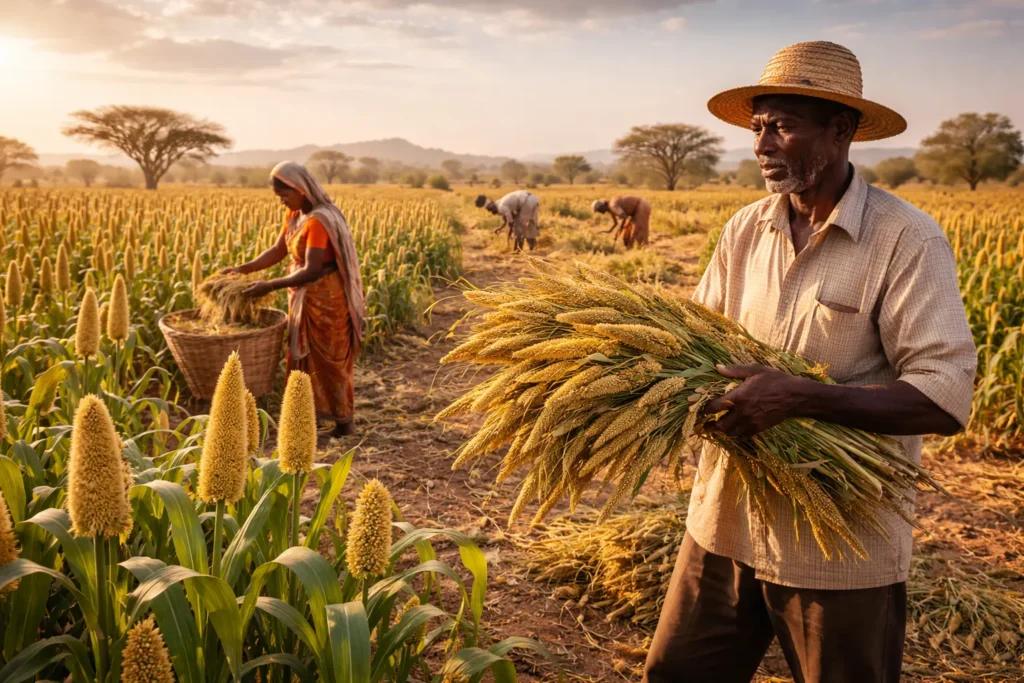

Part One: The Farmer Who Stopped Staring at the Sky
In the quiet village of Ambavadi, nestled in the dry, rocky plateaus of Gujarat, India, a farmer named Rakesh Parmar used to spend his nights doing something that might seem strange to people who live in cities. He stared at the sky. Not because he was a poet or an astronomer, but because his life depended on what that sky did—or more often, what it failed to do.
For generations, Rakesh’s family had farmed this same red soil. His grandfather used to tell him stories about the monsoon rains, how they would arrive like clockwork around the first week of June, how the sky would turn a particular shade of gray, and how the land would drink until it was satisfied. Back then, a farmer knew what to expect. The rhythm of the seasons was as reliable as a heartbeat.
But over the last twenty years, that heartbeat has become erratic. The rains have turned into a liar. They would arrive late, sometimes not showing up until July. Other times, they would come early, raise a farmer’s hopes, and then vanish for weeks, leaving the young crops to crisp under a sun that felt angrier than it used to. And on those rare years when the rains did come on time, they would sometimes dump an entire season’s worth of water in just a few days, flooding fields and washing away seeds.
Rakesh used to grow cotton and corn. These were the “cash crops” that everyone said would make him rich. The government talked about them on the radio. The fertilizer companies sold him expensive chemicals for them. His neighbors planted them. But there was a problem that no one in a government office seemed to understand: cotton and corn are thirsty. They are divas of the plant world. They want perfect weather, consistent moisture, and constant attention.
In a bad year—and the years kept getting bad—Rakesh’s cotton would germinate, grow about a foot tall, and then just stop. The leaves would curl inward, turn yellow, and then brown. The plants would look like they were praying for water. And Rakesh, standing in his field, would pray right along with them. But prayers don’t fill an empty stomach, and they certainly don’t pay back the loan from the bank.
There was a season, about five years ago, that Rakesh still doesn’t like to talk about. The monsoon failed completely. He had spent his savings on certified cotton seeds and urea fertilizer. He had borrowed money from the local moneylender at an interest rate that made his stomach hurt. He planted when the first showers came, but then the sky went dry for three weeks. Then came a little sprinkle, enough to fool him into thinking things were okay. He planted again. Again, the rain stopped. By the end of August, his field looked like a desert with a few dead sticks in it. That year, Rakesh didn’t just lose a crop. He lost his dignity. He had to send his youngest daughter to live with his brother in the city because he couldn’t afford to feed her. He sat on his porch every night, staring at that cruel, empty sky, wondering if his family had a future in farming at all.
Three years ago, something changed. A young woman from the local agricultural extension office showed up at the village gathering spot under the big banyan tree. Her name was Diya, and she wasn’t like the other government officials who came, gave boring speeches, and left. She actually walked through the fields. She knelt down and touched the soil. And she carried with her a bag of seeds that looked oddly familiar to the older farmers.
The seeds were small, round, and golden. They were millet seeds. Rakesh’s grandmother used to cook millet when he was a child. She made a thick, gray porridge that filled your belly and kept you full for hours. But his mother had stopped cooking it. She said it was “poor people’s food.” She wanted to serve rice, like the city people ate.
Diya explained that these weren’t the millets of his grandmother’s time. Well, they were, but they were also different. They were stronger. Scientists had taken the ancient, hardy millet varieties and, without using any genetic modification or scary laboratory tricks, had bred them with other strong varieties to create something new. It’s called “marker-assisted selection.” Basically, you take the millet plants that survive the toughest droughts, you save their seeds, you plant them, and you keep doing that until you have a variety that carries all the best survival genes.
“You see this?” Diya said, holding up a single millet seed between her thumb and finger. “This little thing has roots that can go six feet into the ground. It laughs at heat. It doesn’t need expensive fertilizer. And it will harvest in 90 days, even if the rain stops next month.”
Rakesh was skeptical. He took a small bag of seeds just to be polite, figuring he’d plant them on the worst piece of his land, the rocky corner that never produced anything anyway.
That decision saved his life.
He planted the millet late, after his cotton had already failed for the third year in a row. He didn’t water it. He didn’t fertilize it. He basically ignored it. And then, one morning, he walked out to that rocky corner and stopped in his tracks. The millet stood tall and green, its seed heads heavy and full, while everything around it was brown and dead. The plants had done something remarkable. They had grown slowly at first, sending those deep roots down, down, down until they hit moisture that the shallow-rooted cotton couldn’t reach. They had waited out the dry spell. And when a small rain finally came, they were ready to explode with growth.
Today, Rakesh’s fields are a sea of green and gold. He still keeps a small patch of cotton for cash, but his main crop is pearl millet, which the locals call bajra. His neighbors, the ones who laughed at him for planting “weed seeds,” now come to his field to take notes. They ask him questions. They want to know where to get the seeds.
“These grains are like the camels of the plant world,” Rakesh laughs, running a weathered hand over the heavy, drooping seed heads. “They don’t complain. They don’t ask for much. They just survive. And when you harvest them, you know you’re going to eat that winter.”
Rakesh’s story is not unique. It is a story echoing across the vast, dry stretches of Sub-Saharan Africa and the sun-baked, semi-arid tropics of South Asia. It is playing out in a thousand villages with a thousand different farmers, each with their own version of the same struggle against a climate that has gone haywire. As our planet warms and weather patterns become more erratic and harder to predict, scientists, agricultural experts, and farmers themselves are doing something that might seem counterintuitive. They are turning back the clock to find solutions. They are looking to the past to save the future. And they are finding that the ancient grains our ancestors survived on might just be the key to feeding a thirsty, heating planet.
Part Two: What the Green Revolution Forgot
To really understand why millets are making such a big comeback, we have to take a trip back in time. We have to look at what humanity has been eating for the last fifty or sixty years, and more importantly, what we stopped eating.
After World War II, the world was facing a crisis. Populations were booming, and there were real fears of mass starvation, especially in Asia. Into this crisis stepped a brilliant American agronomist named Norman Borlaug. Working in Mexico, he developed new, high-yielding varieties of wheat that were short, sturdy, and produced massive amounts of grain. This was the beginning of what we now call the Green Revolution.
In the 1960s and 70s, this revolution swept across the globe. It was incredibly successful at what it set out to do: prevent famine and feed billions of people. The world fell in love with two grains in particular: rice and wheat. They were efficient. They responded well to irrigation and chemical fertilizers. You could get twice as much food from the same amount of land. Governments loved them because they solved political problems. Farmers loved them because they made money. Consumers loved them because they were cheap and filled you up.
But there was a hidden cost to this love affair. As rice and wheat marched across the agricultural landscape, they pushed aside thousands of years of biodiversity. The traditional grains that had once dotted the countryside—the sorghum, the finger millet, the foxtail millet, the kodo millet, the barnyard millet—were slowly pushed to the margins, literally and figuratively. They were planted on the worst land, the rocky hillsides, the dry patches where rice wouldn’t grow. They became known as “coarse grains” or, even worse, “poor people’s food.”
In India, if you wanted to insult someone’s cooking, you would say it tasted like ragi (finger millet) porridge. In parts of Africa, millet was associated with hard times, with famine, with the food you ate when there was nothing else. People wanted what the rich people ate. They wanted shiny white rice and soft, fluffy wheat bread. They wanted to forget the “backward” grains of their grandparents.
This cultural shift was so powerful that it changed farming forever. Government policies reinforced it. In country after country, subsidies flowed to rice and wheat. The government would buy these crops at guaranteed prices. They would distribute them through food aid programs. They would fund research into improving them. Millet got nothing. No subsidies. No guaranteed buyers. No research money. It was the forgotten grain, left to survive on its own in the drylands, which it did, because that’s what it’s always done.
But here’s the thing about rice and wheat: they are thirsty crops. Rice, in particular, is one of the thirstiest plants on earth. It grows best in standing water. Wheat needs consistent moisture throughout its growing season. They are crops of the temperate zones and the well-watered plains. They struggle in the places where the rains are unreliable, where the sun beats down, where the soil is thin and poor.
Millets, on the other hand, are nature’s original drought busters. They are the survivors, the tough guys of the plant kingdom. They are C4 plants, which is a fancy way of saying they have a super-efficient way of photosynthesizing that uses less water. They have evolved over thousands of years to thrive in exactly the conditions that are now spreading across the globe: heat, drought, and poor soil.
For centuries, before the Green Revolution pushed them aside, millets were the backbone of farming in the arid and semi-arid regions of the world. They didn’t need perfect conditions. They didn’t ask for irrigation. They didn’t demand expensive chemicals. They just grew, providing food and fodder for millions of families. They were the original sustainable agriculture.
Now, with climate change threatening to undo the gains of the Green Revolution, scientists aren’t just digging up the past and saying, “Here, plant this.” They are doing something much smarter. They are using modern breeding techniques—not genetic modification, but advanced methods like marker-assisted selection and recurrent selection—to enhance what was already great about millets.
Think of it this way: imagine you have a team of athletes. Some are naturally fast runners. Some have incredible endurance. Some are strong. In traditional breeding, you would just hope that when these athletes had children, they would inherit all the best traits. But with modern techniques, scientists can look at the athletes’ DNA and say, “Ah, this one has the gene for speed. This one has the gene for endurance.” Then they can make matches that are much more likely to produce a child who is both fast and has great endurance.
That’s what’s happening with millets. Scientists are taking the hardiness of the wild landraces—the varieties that farmers have grown for centuries—and they are combining them with other traits to create something even better. They are creating millets that are:
Extra-Fast Maturing: Some of the new varieties can go from seed to harvest in as little as 60 days. That’s half the time of traditional millets, which need 100 to 120 days. Why does this matter? Because in a world of erratic rainfall, speed is survival. If the rains are late, a farmer can plant these fast-maturing varieties and still get a harvest before the dry season hits. They can “escape” the drought. In some places, if the rains come early enough, farmers can actually do something that was previously impossible: they can plant two crops in a single year.
Deep-Rooted: Millets naturally have deeper root systems than many other grains. The new varieties have been selected for even better root architecture. These roots can pull moisture from deep underground, from soil layers that other plants can’t even reach. When the topsoil is dry as dust, the millet is still drinking from the deep aquifer.
Nutrient-Packed: This is perhaps the most exciting part. The new varieties aren’t just climate-resilient; they are also more nutritious. In Senegal, a new variety called Chatki has been released that contains 65 mg/kg of iron, compared to just 47 mg/kg in the traditional variety Souna 3. That’s a 38% increase in iron content. For families that eat millet as their main food, this extra nutrition is a game-changer. It fights the “hidden hunger” of micronutrient deficiency, which affects billions of people worldwide.
Disease-Resistant: The old millets were tough, but they had their weaknesses. One of the biggest was a fungal disease called downy mildew, which could wipe out an entire field in wet conditions. Scientists at institutions like ICRISAT have been working for decades to develop downy mildew-resistant varieties. The new three-way hybrid RHB 273, released in January 2026, shows good resistance to key diseases including downy mildew, blast, and smut.
This comeback isn’t just about survival. It’s not about going backward to some romanticized past. It’s about rediscovering the deep, accumulated wisdom of our ancestors, taking that wisdom, and upgrading it with the best tools of modern science. It’s about creating crops that can face the future without fear.
Part Three: A New Era in Millet Breeding—The World’s First Three-Way Hybrid
Just when Rakesh and millions of farmers like him thought millets couldn’t get any better, science took another giant leap forward. In January 2026, something happened that made agricultural news around the world. The Union Minister of Agriculture & Farmers Welfare in India, Shri Shivraj Singh Chouhan, announced the release of 184 improved crop varieties for cultivation. Among them was a pearl millet hybrid that experts are calling a game-changer.
This is the world’s first three-way pearl millet hybrid, developed by the International Crops Research Institute for the Semi-Arid Tropics (ICRISAT) in collaboration with the Indian Council of Agricultural Research (ICAR) through the All India Coordinated Research Project on Pearl Millet centre at the Rajasthan Agricultural Research Institute (RARI). Its name is RHB 273, and it represents a entirely new way of thinking about plant breeding.
To understand why this is such a big deal, you have to understand how hybrids are normally made. Conventional pearl millet hybrids involve two parents. You take one line and cross it with another, and the offspring—the hybrid—inherits traits from both. It’s like having a mother and a father. The child might get the mother’s height and the father’s eye color.
A three-way hybrid is different. It combines three parental lines. Think of it as having a mother, a father, and a third contributor—maybe a grandparent with a special talent. This allows breeders to integrate multiple traits in ways that weren’t possible before. With three parents, you can pack more good stuff into a single seed: high yield, drought tolerance, disease resistance, and superior fodder quality, all at once.
Dr. S. K. Gupta, Principal Scientist in Pearl Millet Breeding at ICRISAT, explained it this way: “Three-way hybrids offer better buffering capacity against biotic and abiotic stresses, making them well-suited to stress-prone ecologies. We initiated this novel work in pearl millet in 2019 with our partners, and the results we see today validate the approach.”
The results are indeed impressive. RHB 273 didn’t just pop out of a lab and get released to farmers. It went through three years of extensive testing between 2022 and 2024, at 30 different sites across three states: Rajasthan, Gujarat, and Haryana. These are some of the driest, toughest farming environments in the world, areas with annual rainfall below 400 millimeters. That’s less than 16 inches of rain per year—barely enough to grow anything.
What did the tests show? RHB 273 recorded an average grain yield of about 2,230 kilograms per hectare. That translates to approximately 13 to 27 percent yield advantage over the regional varieties that farmers have been planting for years. Even more impressive, it outperformed HHB 67 Improved, a widely cultivated variety that farmers know and trust, by about 28 percent.
But here’s what really matters for farmers in places like Ambavadi. In the arid and hyper-arid belts of northwestern India, water scarcity isn’t just a problem for crops. It’s a problem for livestock too. When the land is dry, there’s no fodder. Cattle go hungry. Families lose their animals. RHB 273 is what scientists call a “dual-purpose hybrid.” It doesn’t just produce grain for human consumption; it also delivers enhanced fodder availability, helping sustain livestock through the toughest times.
Dr. Himanshu Pathak, Director General of ICRISAT, put it in perspective: “Millets are a lifeline for drought-prone regions in Asia and Africa. Pearl millet, in particular, is known for its ability to withstand high temperatures and low water availability.”
Dr. Tara Satyavathi, Director of the ICAR-Indian Institute of Millets Research, added: “RHB 273 is an innovative hybrid, and its adoption—especially in the A1 belt—will significantly strengthen pearl millet production in drought-prone states of north-western India, contributing to food, nutrition and fodder security.”
This is what the future of farming looks like. It’s not about some high-tech, space-age solution that costs a fortune and requires a PhD to operate. It’s about taking the wisdom of nature and the best of science and combining them into a seed that a farmer like Rakesh can hold in his palm. A seed that will grow in dust, survive on a few inches of rain, and still produce enough grain to feed a family and enough fodder to keep a goat alive.
Part Four: From Field to Fork—Real Stories from the Drylands of Africa
Let’s travel about 3,000 miles southwest from Rakesh’s farm in Gujarat. Let’s cross the Arabian Sea, fly over the Horn of Africa, and land in the arid landscapes of Makueni County, Kenya. This is a different world, but the story is the same.
Here, the landscape is painted in shades of brown and dust. The acacia trees are thorny and sparse. The roads are dirt tracks that turn to mud when it rains and clouds of fine red powder when it doesn’t. And for most of the year, it doesn’t.
For women like Grace Mwende, water is the most precious currency in the world. It is more valuable than the Kenyan shilling notes she keeps folded in a small tin box under her bed. Every morning, Grace used to wake up before the sun, long before her children stirred, and she would walk. She would walk for three hours, balancing a yellow plastic jerry can on her head, to the nearest stream that still had a trickle of water. She would wait in line with other women, fill her can, and then walk three hours back. That water had to do everything: drinking, cooking, washing, and if there was any left, watering her small garden.
Grace used to grow maize. Maize is the staple of East Africa, the foundation of every meal. It is ugali, the thick white cornmeal porridge that families eat with their hands. But year after year, Grace’s maize harvests got smaller and smaller. The rains, when they came, were violent and short. The soil, which had been farmed for generations without much fertilizer, was tired and weak.
“The maize would grow tall, sometimes,” Grace explains in Swahili, her voice soft but her eyes sharp. “It would flower. It would tassel. You would look at it and think, ‘Thank God, we will eat this year.’ But then you would go to check the cobs, and they would be empty. Just rows of nothing. Dry husks with no grain inside. It was heartbreaking. We would go to bed hungry, and the children would get sick. They would get colds that wouldn’t go away. They would be tired all the time.”
Grace’s husband, like many men in the region, had gone to Nairobi to look for work. He sent money when he could, but it was never enough. The burden of the farm, of the children, of the daily struggle for survival, fell entirely on Grace’s shoulders.
Then, about two years ago, a local women’s farming cooperative came to her village. The cooperative was working with a big international research organization called ICRISAT. They were part of a project that basically means: teaching farmers how to survive climate change.
The cooperative workers brought seeds. They brought bags of finger millet, which the locals call mwele. At first, Grace was hesitant. Finger millet reminded her of the hard times, of the “famine food” her mother used to make when the maize ran out. It was the food of poverty. But the cooperative workers insisted. They set up demonstration plots right in the village, small fenced-off areas where they planted the new millet right next to traditional maize.
Grace watched those plots all season. She watched as the maize, despite being planted in good soil, began to droop and yellow when a dry spell hit. She watched as the millet, planted right next to it, barely seemed to notice. The millet leaves were green and firm. The plants stood straight.
Across the continent in West Africa, similar stories were unfolding. In Senegal, researchers released a new millet variety called Chatki. This wasn’t just any millet. It was a short-cycle variety that matures in just 68 days. It was drought-resistant. It had what scientists call the “Stay Green” character, meaning it stays green and productive even under stress. And it was much more nutritious than the traditional variety Souna 3, with iron content of 65 mg/kg compared to 47 mg/kg. That’s a 38% increase in iron.
In Niger, where millet is a staple crop and climate change poses severe threats to food security, ICRISAT and the National Institute of Agricultural Research of Niger (INRAN) developed the Chakti millet. This early-maturing variety does something remarkable: it goes from seed to harvest in just 60 days. That’s half the time of traditional millet. When the rains are late, when the growing season is short, Chakti gives farmers a chance to get something—anything—in the field and harvested before the dry season returns.
Grace decided to give the millet a try on a small patch of her land. She didn’t have high hopes. She planted the seeds, gave them one good watering from her precious jerry can, and then more or less forgot about them while she focused on her maize.
Weeks passed. The rains, as expected, were erratic. A good downpour, then ten days of nothing. Grace went to check her maize. It was stressed, the leaves rolling up to conserve moisture. She walked over to her millet patch and stopped. The millet was not just surviving; it was thriving. It had grown knee-high, with multiple tillers (side shoots) that promised lots of grain.
When harvest time came, Grace didn’t just get food for her family. She got a surplus. For the first time in years, she had grain left over after filling her own storage baskets.
“I took the millet to the market in Wote town,” Grace says, her face lighting up at the memory. “I was nervous. I didn’t know if anyone would want it. But the traders saw it and they started calling out to me. They call it ufuta—the grain with oil, because it’s so rich. They were fighting over it. I made enough money to buy a new goat. A good one, with a strong udder.”
These stories from Kenya, Senegal, and Niger are the heart of the millet revolution. It’s not about abstract concepts like “food security” or “sustainable development goals.” It’s about a mother being able to feed her children porridge that is actually full of the iron and calcium they need to grow strong brains and bodies. It’s about turning subsistence farmers—people who are just barely surviving—into small-scale entrepreneurs who can sell their surplus, buy a goat, pay school fees, and hold their heads up high in the market.
Part Five: Chinese Hybrid Millet Finds a Home in Africa
The millet revolution isn’t confined to India and the research stations of ICRISAT. It’s a global movement, and one of the most interesting developments is happening in East Africa, where researchers from the Jomo Kenyatta University of Agriculture and Technology (JKUAT) in Kenya have partnered with the Chinese Center for Agricultural Resources Research (CARR) to introduce something new: Chinese hybrid foxtail millet.
This isn’t your grandmother’s millet. The Chinese hybrid foxtail millet is specifically bred for efficiency. It takes about half the time to ripen compared to most local varieties. It adapts to various soils and diverse climatic conditions. It’s grown both for human consumption and as feed for livestock. And it’s already been planted in over 10 African countries including Uganda, Ethiopia, Burundi, Mali, and Zimbabwe.
During a field training course at the Sino-Africa Joint Research Centre based at JKUAT, Chinese researcher Xiaoxin Li explained what makes this millet special. “The Chinese hybrid foxtail millet is very popular in China for its efficiency in taking up nutrients,” she said. “It grows quickest between 24-25°C and performs best in sandy loam soils or clay loam.”
Zhao Zhihai, a leading Chinese agricultural expert, pointed out that the crop is particularly suited to the challenges faced by African farmers. “It is climate change tolerant and suitable for regions with poorer soils as well as rainy and dry seasons,” he noted.
The results have been striking, especially in Uganda. Farmers there report that the Chinese hybrid millet matures in just 65 days, compared to local strains which take 90 to 120 days. That’s a difference of a month or more—enough time to escape a drought, enough time to plant a second crop, enough time to make it through the hungry season. Farmers have also noted its long seed panicle, which yields more seed compared to local varieties.
This cross-continental collaboration shows something important: millets are not a local solution for a local problem. They are a global solution for a global crisis. The same traits that make millet valuable in Gujarat make it valuable in Kenya, in Uganda, in Senegal, in Zimbabwe. Drought doesn’t respect borders. Heat doesn’t stop at national boundaries. And neither should the solutions.
Part Six: The Science of Survival—How Millets Do What They Do
You might be wondering: what exactly makes millets so tough? What is the secret hidden inside these tiny grains that allows them to thrive where other crops wither and die? The answer lies in a combination of sophisticated biological adaptations that scientists are only now beginning to fully understand.
Let’s start with the roots. If you could dig up a mature pearl millet plant and wash the soil away from its roots, you would see something remarkable. The root system is massive. It’s a dense, fibrous network that spreads out wide and, more importantly, goes down deep. While a corn plant’s roots might only reach two or three feet, a millet plant can send its roots down six feet or more. That means it can access water that is far below the reach of other crops. It’s like having a long straw that can reach the water at the bottom of a deep well.
Then there’s the way millet handles water once it’s inside the plant. Millet is what’s known as a C4 plant. This is a type of photosynthesis that evolved in tropical grasses to deal with high temperatures and intense sunlight. Without getting too technical, C4 plants have a special way of concentrating carbon dioxide in their cells, which allows them to photosynthesize more efficiently while keeping their leaf pores (called stomata) closed more of the time. When those pores are closed, the plant loses less water to evaporation. So millet can keep growing and producing food during the heat of the day, when other plants would have to shut down to conserve water.
Scientists are also digging into the millet genome to find the specific genes responsible for this toughness. Research has identified what are called Quantitative Trait Loci (QTLs) that contribute to drought tolerance during germination and early seedling growth—the most vulnerable stages of a plant’s life. By identifying these genetic markers, breeders can select for them more efficiently, creating new varieties that are even more resilient.
In some cases, researchers are exploring more advanced techniques. One study on finger millet looked at the effect of inserting a specific gene (called mtlD) that helps the plant produce compounds that protect it under stress. The results showed that the modified plants were significantly better at handling drought conditions, maintaining their chlorophyll and adjusting their internal chemistry to cope with the lack of water. While this is still in the research phase, it points to a future where we might be able to boost millet’s natural toughness even further.
But it’s not just about drought. Millet is also resilient to heat. As global temperatures rise, this becomes more and more important. Wheat, for example, is sensitive to high temperatures during its flowering period. If it gets too hot, the flowers fail, and no grain is produced. Millet, on the other hand, can take the heat. It flowers and sets seed even when temperatures soar.
And then there’s the issue of disease. Even tough crops have enemies. For pearl millet, one of the biggest enemies is downy mildew, a fungal disease that can devastate fields. But scientists have been fighting back. At institutions around the world, researchers have been working for years to develop downy mildew-resistant varieties. They use a combination of molecular marker technology—which lets them quickly identify resistant genes—and good old-fashioned field testing to make sure the new varieties actually work in real farming conditions.
Their work has paid off. The three-way hybrid RHB 273, released in January 2026, shows good resistance to downy mildew, blast, and smut. The Chatki variety in Senegal has been selected for its “Stay Green” character, which helps it resist disease and stay productive under stress. This is the cutting edge: creating a crop that is good for the farmer, good for the eater, and good for the planet.
Part Seven: Why Millets Are a Sustainability Superstar
Beyond the personal stories of farmers and the excitement of scientific discovery, there’s a bigger picture here, one that excites environmentalists, policy makers, and anyone who worries about the future of the planet. In a world worried about carbon footprints, water scarcity, and degrading soils, millets are nothing short of a superstar.
Let’s do a quick comparison. Imagine a field of wheat. To grow one kilogram of wheat, you need a massive amount of water. We’re talking about 1,500 liters or more, depending on the climate. It also typically requires a lot of nitrogen fertilizer. Where does that fertilizer come from? It’s made from natural gas, using a process that releases a lot of carbon dioxide. Fertilizer is basically fossil fuel for plants. Wheat also often needs pesticides to keep the bugs and diseases away. All of this adds up to a significant environmental footprint.
Now imagine a field of pearl millet right next to that wheat field. The millet uses a fraction of the water. Because it’s naturally resilient, it needs very little fertilizer. Its tough structure and natural defenses mean pests often leave it alone, reducing the need for chemical sprays. It doesn’t need irrigation; it grows on rainfall alone. And at the end of the season, after the grain is harvested, there’s the stover—the leaves and stalks. This stover is valuable livestock feed, providing nutrition for animals during the dry season when pastures are brown.
This makes millets a crucial tool in the fight against climate change. If we can shift even a portion of our grain production from water-guzzlers to climate-smart crops like millets, we can achieve multiple goals at once:
Save Precious Groundwater: In many parts of the world, farmers are pumping groundwater faster than it can be replenished. Aquifers are dropping. Switching to millets in dry areas can reduce the demand for irrigation, leaving more water in the ground for drinking and for times of extreme drought.
Reduce the Carbon Footprint: Less fertilizer means fewer greenhouse gas emissions. Millet farming is inherently lower-carbon than intensive rice or wheat farming. Every field switched to millet is a small step toward meeting global climate goals.
Keep Topsoil Healthy: Intensive farming of thirsty crops often leads to soil degradation. The heavy use of chemicals can kill beneficial soil life. Millet, with its deep roots and lower chemical needs, helps build soil health. The roots add organic matter deep in the soil, improving its structure and ability to hold water.
Increase Biodiversity: A landscape planted entirely in one crop (a monoculture) is vulnerable. If a disease hits, everything dies. Bringing millets back into rotation with other crops increases biodiversity, which makes the whole farming system more resilient.
For countries facing water shortages and the impacts of climate change, this isn’t just a nice idea. It’s a necessity for survival. It’s about building a food system that can withstand the shocks that are surely coming.
Part Eight: The Nutritional Powerhouse Hiding in Plain Sight
For a long time, people made a terrible mistake about millets. They looked at the grayish color of the flour, the slightly dense texture of the bread, and they dismissed it as “poor people’s food.” They assumed it was inferior. They were completely wrong.
We now know that millets are nutritional giants. In fact, they are so nutrient-dense that the Government of India has officially reclassified them as “nutri-cereals.” This isn’t just marketing hype. It’s backed by a growing body of scientific research.
Let’s look at the numbers. According to data from the Indian Institute of Millets Research, the nutritional profile of different millets is impressive:
Sorghum (Jowar): Contains 10 grams of protein per 100 grams, 4 grams of fiber, and 2.6 mg of iron.
Pearl Millet (Bajra): Contains 10.6 grams of protein, 1.3 grams of fiber, and an impressive 16.9 mg of iron per 100 grams. That’s more iron than almost any other grain.
Finger Millet (Ragi): The calcium champion. It contains 344 mg of calcium per 100 grams. To put that in perspective, a glass of milk has about 300 mg of calcium. Finger millet provides that same bone-building power in a plant-based, affordable package.
Foxtail Millet: Contains 12.3 grams of protein and 8 grams of fiber per 100 grams.
Kodo Millet: Contains 9 grams of fiber per 100 grams, great for digestive health.
Little Millet: Contains 7.7 grams of protein and 7.6 grams of fiber.
Barnyard Millet: Contains 11.2 grams of protein, 10.1 grams of fiber, and 15.2 mg of iron.
The U.S. Department of Agriculture confirms these numbers. According to USDA data, one cup of cooked millet (about 760 grams) provides 897 calories, 26.6 grams of protein, 9.9 grams of fiber, and significant amounts of iron, potassium, and other minerals.
But it’s not just about the basic nutrients. The magic of millets lies in what they do inside your body.
Low Glycemic Index: The glycemic index (GI) measures how quickly a food raises blood sugar levels. Millets have a low to medium GI, meaning they release glucose slowly into the bloodstream, preventing sudden spikes. Pearl millet has a GI of about 54, finger millet around 68, and foxtail millet about 52. Compare that to white rice at 73 or refined wheat flour at 85, and you can see why millets are a much better choice for blood sugar management.
High Fiber Content: Millets are rich in dietary fiber, which slows down digestion and keeps you full longer. This helps stabilize blood sugar levels, reduce insulin resistance, and prevent overeating and weight gain.
Rich in Magnesium: Magnesium plays a crucial role in insulin sensitivity. Many millets are excellent sources of magnesium, helping the body use insulin more effectively.
Packed with Antioxidants: Millets contain polyphenols and flavonoids, which reduce oxidative stress and inflammation—common issues in diabetes and other chronic diseases.
Gluten-Free: For the millions of people around the world with celiac disease or gluten sensitivity, millet flour is a fantastic, nutritious alternative to wheat. It makes excellent flatbreads, porridges, and baked goods, all while being naturally gluten-free.
In many parts of Africa and India, malnutrition is a serious problem. It’s not always a lack of food; often it’s a lack of the right food. Children fill their bellies with empty calories from refined grains, but they aren’t getting the vitamins and minerals their bodies need to develop properly. This is “hidden hunger,” and it has devastating consequences for health, education, and economic potential.
By bringing millets back to the dinner table, we are fighting hidden hunger with a cheap, local, and sustainable solution. A simple bowl of finger millet porridge for breakfast can give a child a significant portion of their daily calcium needs. A lunch of pearl millet flatbread with a side of lentils provides protein, iron, and fiber. It’s not about importing expensive supplements or fortified foods from the West. It’s about using the crops that grow naturally in the local environment to nourish the local population. It’s common sense.
Part Nine: A Delicious Diversity—Getting to Know the Millet Family
One of the most interesting and fun things about millets is that “millet” isn’t just one thing. It’s a whole family of different grains, each with its own personality, its own history, its own taste, and its own best use in the kitchen. If you’re looking to add them to your diet, or just curious about what farmers are growing in those fields, here are the main characters in this story:
Pearl Millet (Bajra in India, Mahangu in parts of Africa): This is the tough guy of the family, the heavyweight champion. It’s the most widely grown of all the millets and can handle the hottest and driest conditions. The grains are large, grayish, and have a nutty, earthy flavor. In India, it’s famously used to make bhakri, a sturdy, satisfying flatbread that is the staple food of millions in Rajasthan and Gujarat. In Namibia, it’s the foundation of the diet, ground into flour and cooked into a thick porridge. It’s also an excellent source of iron, with 16.9 mg per 100 grams.
Finger Millet (Ragi in India, Mwele in East Africa): This is the calcium king. The grains are small, reddish-brown, and when ground, they make a dark flour with a slightly malty flavor. In East Africa, it’s used to make uji, a fermented porridge that is a common breakfast food, and also to brew traditional beer. In South India, it’s made into ragi mudde, dense, doughy balls that are eaten with sambar or curries. It’s also made into malt, a nutritious drink for children and the elderly. With 344 mg of calcium per 100 grams, it’s one of the richest plant sources of this bone-building mineral.
Sorghum (Jowar in India, Mtama in East Africa): Botanically speaking, sorghum is a bit different from the other millets, but it’s just as important. It’s a tall, majestic plant that looks a bit like corn when it’s growing. It’s incredibly versatile. In the drier parts of India, sorghum flatbread (jowar roti) is a daily staple. In Africa, it’s used for porridge and beer. In the United States, it’s grown for animal feed and, increasingly, for making gluten-free flour and popped like popcorn. It contains 10 grams of protein and 2.6 mg of iron per 100 grams.
Foxtail Millet (Kangni or Thinai in India): This is a tiny, yellow grain that cooks up light and fluffy, similar to rice but with a nuttier flavor. It’s a favorite in the health food world and is often used in salads, pilafs, and as a base for grain bowls. In South India, it has ancient associations with the Tamil culture and is mentioned in Sangam literature. It cooks quickly and is very digestible. It contains 12.3 grams of protein and 8 grams of fiber per 100 grams, making it one of the more protein-rich options.
The Small Millets (Proso, Barnyard, Kodo, Little): These are the unsung heroes, often grown in the poorest, most remote areas by smallholder farmers. They are incredibly fast-maturing—some can go from seed to harvest in as little as 60 to 70 days—which makes them a crucial “safety net” crop. If the main crop fails, a farmer can quickly plant a small millet and still get something to eat before the hungry season sets in. They are packed with nutrition. Kodo millet contains 9 grams of fiber per 100 grams. Barnyard millet contains 11.2 grams of protein and 10.1 grams of fiber. Little millet contains 7.7 grams of protein and 7.6 grams of fiber.
This diversity is a massive strength. It means farmers aren’t putting all their eggs in one basket. They can plant a mix of these grains, spreading their risk across the season. If the weather is bad for pearl millet, maybe foxtail will do better. If the insects attack one variety, the others might be left alone. This is the opposite of the monocultures that dominate modern agriculture, and it’s a much safer, more resilient way to farm in an uncertain world.
Part Ten: Cooking with Millets—Bringing the Ancient Grain to Your Modern Kitchen
Okay, so you’re convinced. Millets are good for the planet. They’re good for the farmers who grow them. They’re packed with nutrition. But here’s the question that stops most people: “What do I actually do with them?” Many home cooks are intimidated because millets aren’t as simple as boiling a pot of rice. But with a few simple tips and a little bit of practice, you can turn these hardy grains into delicious, satisfying meals that your whole family will love.
The first thing to remember is that millet is a blank canvas. It doesn’t have an overpowering flavor. It takes on the tastes of whatever you cook it with—the spices, the broth, the vegetables, the sauce. This makes it incredibly versatile.
Tip 1: Toast for Flavor. Before you cook millet (especially foxtail, proso, or pearl millet), try this simple step. Put a dry skillet or pan over medium heat. Add your millet grains and cook them, stirring frequently, for 3 to 5 minutes. You’ll know they’re done when they start to smell wonderfully nutty and toasty, and they might start popping slightly. Toasting brings out the grain’s natural flavor and also helps the cooked grains stay separate and fluffy, rather than turning into mush.
Tip 2: Get the Water Ratio Right. Different millets absorb different amounts of water. As a general rule, for a fluffy grain (like you’d use in a pilaf or salad), use a ratio of about 1 part millet to 2 to 2.5 parts water or broth. For a creamier porridge, use more liquid. For example, to make a breakfast porridge with finger millet flour, you might use 1 part flour to 4 parts water or milk.
Tip 3: Soak Before Cooking. Some millets contain anti-nutrients that can interfere with digestion. Soaking them for at least 6-8 hours before cooking helps reduce these compounds and makes the grains easier to digest. It also reduces cooking time.
Tip 4: The Pliability Method for Flatbreads. If you’re making flatbreads with pearl millet or sorghum flour (like bhakri or jowar roti), you need to know that these flours don’t contain gluten. Gluten is the protein in wheat that makes dough stretchy and elastic. Without it, your dough will be crumbly if you just add cold water. The trick is to use hot water. Boil water, pour it over the flour, and mix immediately. The hot water partially cooks the starch, which makes the dough pliable and easy to roll out. You have to work fast while it’s warm, but it works like magic.
Tip 5: Breakfast of Champions. The easiest way to start your millet journey is with breakfast. Millet porridge is simple, nutritious, and delicious. You can use pearl millet flour, finger millet flour, or even whole foxtail millet grains. Cook the millet with water or milk (or a mix), add a pinch of salt, and flavor it with warm spices like cinnamon, cardamom, or nutmeg. Top it with fresh fruit, nuts, seeds, and a drizzle of honey or maple syrup. It’s a breakfast that will keep you full and focused until lunchtime, without the sugar crash you get from processed cereals.
Beyond Breakfast:
- Millet Pilaf: Toast foxtail millet, then cook it in vegetable or chicken broth with some chopped onion, garlic, and herbs. Fluff with a fork and serve as a side dish, just like rice or quinoa.
- Millet Salad: Cook and cool millet, then toss it with chopped vegetables (cucumbers, tomatoes, bell peppers), fresh herbs (parsley, mint), a simple lemon vinaigrette, and some crumbled feta cheese or chickpeas for protein.
- Millet Khichdi: A classic Indian comfort food. Cook millet with moong dal (split yellow lentils), turmeric, and ginger for a simple, nourishing one-pot meal.
- Millet Upma: Use foxtail or barnyard millet instead of semolina to make this savory South Indian breakfast dish, packed with vegetables and flavored with mustard seeds, curry leaves, and green chilies.
- Millet “Polenta”: Cook coarsely ground millet in water or broth until thick and creamy. Stir in butter and Parmesan cheese, then pour it into a dish to set. Slice and pan-fry the slices until crispy, just like polenta.
- Millet Burgers: Mix cooked, cooled millet with mashed beans or lentils, finely chopped vegetables, breadcrumbs, and spices. Form into patties and pan-fry or bake for a delicious vegetarian burger.
A Note on Portion Control: Even healthy grains can raise blood sugar if eaten in excess. For people with diabetes, it’s best to stick to ½ to 1 cup of cooked millet per meal and monitor blood glucose levels to see how your body responds.
As more people discover millet, the options keep expanding. You can find millet pasta, millet flakes for breakfast cereal, millet flour in gluten-free baking mixes, and even millet-based snacks in health food stores. The more we cook with it, the more demand grows, and that demand sends a powerful signal back through the supply chain to farmers in the drylands: “Grow more. We want this. This grain has value.”
Part Eleven: The Global Millet Market—A Booming Industry
The renewed interest in millets isn’t just happening on farms and in kitchens. It’s happening in boardrooms and on trading floors around the world. Millet has become big business, and the numbers tell an impressive story.
According to the latest market research, the global millet market was valued at approximately $14.13 billion in 2025. By 2026, it had grown to $15.36 billion. And the growth is expected to continue at a compound annual growth rate (CAGR) of 9.06%, reaching nearly $25.93 billion by 2032. Another report from Knowledge Sourcing Intelligence projects the market to reach $18.8 billion by 2031, with a CAGR of 4.18%.
The millet flour market specifically is also seeing strong growth. It grew from $6.3 billion in 2025 to $6.84 billion in 2026, and is expected to reach $9.16 billion by 2030.
What’s driving this growth? Several factors are coming together at once:
Consumer Health Awareness: More than half of consumers are now familiar with healthy eating guidelines, and the proportion of consumers aiming to increase protein intake rose from 67% in 2023 to 71% in 2024. Those attempting to limit sugar consumption increased from 61% to 66% during the same period. Millets, with their high protein, high fiber, and low glycemic index, fit perfectly with these health trends.
Gluten-Free Demand: The growing awareness of gluten intolerance and celiac disease has created a massive market for gluten-free alternatives. Millets are naturally gluten-free, making them an attractive option for this expanding consumer base.
Climate-Smart Agriculture: Governments and international organizations are increasingly interested in crops that can withstand climate change. Millets’ drought tolerance and low input requirements make them attractive to policymakers looking to build resilient food systems.
Product Innovation: Food companies are developing innovative millet-based products to cater to health-conscious consumers. In August 2023, PURATOS INDIA introduced millet-based products including Easy Puravita Millet Bread Mix and Tegral Satin Millet Cake Mix. These products promote health benefits by substituting jaggery for refined sugar and eliminating refined wheat flour.
Government Support: India’s declaration of 2023 as the International Year of Millets, following a UN resolution, put millets on the global stage. The Indian government has also extended the Price Support Scheme to include millets, offering farmers a guaranteed minimum price, and has allocated significant funds to incentivize millet-based product manufacturing.
The market is segmented in various ways. By type, pearl millet and finger millet are the most commercially significant, followed by proso millet, foxtail millet, and little millet. By application, millet is used in bakery and confectionery, snacks, baby food, dietary supplements, and animal feed. By distribution channel, products reach consumers through grocery stores, online retail, specialty stores, and supermarkets.
Key players in the market include ITC Limited, Hain Celestial Group, Ardent Mills LLC, Bob’s Red Mill Natural Foods Inc., King Arthur Baking Company, and many others. These companies are investing in product innovation, supply chain development, and consumer education to capture a share of the growing millet market.
The Asia-Pacific region remains central to the global millet story, given its role as the primary production and consumption base. Countries like India and China, with their vast populations, traditional dietary incorporation of millets, and proactive government promotion, are the heart of the market. But North America and Europe are emerging as high-growth markets for value-added millet products, driven by health and wellness trends.
Part Twelve: The Roadblocks—What’s Still Standing in the Way of the Millet Revolution?
If millets are so great—if they’re good for farmers, good for eaters, and good for the planet—then why isn’t everyone eating them? Why did Rakesh’s neighbors initially laugh at him for planting “weed seeds”? Why did Grace associate finger millet with poverty and famine?
The truth is that the millet revolution, for all its momentum, faces some serious challenges. These roadblocks aren’t trivial. They are deeply embedded in our economies, our policies, and our cultures, and overcoming them will take sustained effort.
Policy Neglect: For decades, government policies in India, in many African countries, and around the world have heavily favored rice and wheat. This wasn’t an accident; it was a deliberate choice. After the Green Revolution, governments wanted to ensure a stable food supply, so they poured subsidies into these two crops. They guaranteed minimum support prices. They built massive public stockpiles. They distributed them cheaply through food aid programs and public ration shops. Millet got left out. In most places, there was no minimum support price for millet. There was no government agency ready to buy it. There was no public stockpile. So even if a farmer wanted to grow millet, they faced a much riskier market.
The Image Problem: For two generations, millet has been associated with poverty, with hard times, with the food you ate when you had no choice. People in developing countries want what they see as “modern” food. They want the shiny white rice they see in restaurants. They want the soft, fluffy white bread they see in advertisements. They want to forget the “backward” grains of their rural grandparents. This is a powerful cultural force, and you can’t change it just by waving a nutrition label. It takes time, smart marketing, and the involvement of chefs and food companies who can make millet cool and desirable.
Processing Challenges: Millets are small. They are hard. To make them edible in forms other than whole grain, you need to remove the outer husk. This process, called dehulling, has to be done carefully. If you remove too much of the outer layer, you lose the most nutritious parts, which are rich in fiber and minerals. If you don’t remove enough, the grain can be too tough to eat. Traditional methods of processing, like pounding with a mortar and pestle, are incredibly labor-intensive and fall mostly on women. We need better, affordable, small-scale milling machines that can dehull millet efficiently without destroying its nutritional value. Without this infrastructure, millet remains a hassle to prepare, and busy women will stick with the easier options.
Supply Chain Inefficiencies: The production of millets is often dispersed across many small farms, leading to quality variability and supply inconsistencies. Underdeveloped aggregation systems can make it difficult for large food manufacturers to source the quantities and quality they need. This can lead to price volatility and supply uncertainties that discourage investment.
Consumer Awareness: While consumer awareness is growing, it’s not yet universal. Many people still don’t know about the different types of millet, their specific health benefits, or how to cook them. Market education is needed to translate nutritional information into everyday cooking practices.
Farmer Adoption Challenges: Even when new varieties are developed, getting them into farmers’ fields isn’t automatic. The Chakti millet in Niger, for example, has faced some resistance from farmers. Its seed heads are shorter than traditional varieties, which doesn’t match local habits of storing the harvest in bundles. The color of its grain is darker, which some farmers don’t like. And its early maturity, which is usually a benefit, can actually attract birds and insects, who find it as a tempting early food source in the season. These are real, practical problems that need real, practical solutions. You can’t just hand a farmer a bag of seeds and walk away. You have to work with them, listen to their concerns, and adapt.
Storage and Shelf Life: Compared to refined flours, some millet products have a relatively short shelf life due to their higher oil content, which can go rancid. This poses logistical challenges and cost implications for distribution and retail.
But these roadblocks aren’t walls. They are hurdles that smart policies, innovative companies, and dedicated farmer organizations are slowly learning to jump over. The path forward is clear, even if it’s not easy.
Part Thirteen: Policy and the Future—How Governments and Markets Can Help
The good news is that the tide is finally turning. After decades of neglect, policymakers in India, several African nations, and international organizations are waking up to the “millet magic.” They are realizing that you cannot build a food-secure future on a foundation of thirsty, climate-sensitive grains alone. You need diversity. You need resilience.
India has been leading the charge. The government has been promoting millets aggressively through multiple channels. They declared 2018 as the National Year of Millets. Then, building on that momentum, they pushed the United Nations to declare 2023 as the International Year of Millets. This put the tiny grain on the global stage in a big way. Suddenly, millet was being discussed at international conferences, featured in the global press, and served at high-profile diplomatic events.
The Indian government has also put its money where its mouth is. Under the National Food Security Mission, they have provided financial support to millet farmers, including better seeds and training on improved cultivation practices. They have also, for the first time, extended the Price Support Scheme to include millets, offering farmers a guaranteed minimum price. This is a game-changer. It means farmers now have the same safety net for millet that they’ve always had for wheat and rice.
But perhaps the most exciting developments are happening in the private sector. The Ministry of Food Processing Industries in India has launched a major initiative to boost millet-based products. Under the Production Linked Incentive (PLI) scheme, they have allocated significant funds specifically for millet-based products. This is creating jobs, building infrastructure, and—most importantly—creating demand.
Across Africa, organizations like ICRISAT, AICCRA, and national research institutes are working directly with farmers, providing seeds, training, and connections to markets. They are building the infrastructure of knowledge and trust that is the foundation of any agricultural revolution.
The International Year of Millets in 2023 was a huge boost. It brought together governments, researchers, companies, and farmers in a way that hadn’t happened before. The challenge now is to maintain that momentum, to turn a moment of attention into a lasting movement.
Here is what needs to happen for the revolution to truly take root:
Inclusion in Public Distribution Systems: Governments should buy millet from farmers at fair prices and include it in the rations given to low-income families. This creates a massive, stable market and ensures that nutritious food reaches those who need it most.
Continued Research Funding: We need more scientists working on even more resilient, higher-yielding, more nutritious varieties. The three-way hybrid RHB 273 and the biofortified Chatki variety in Senegal show what’s possible when research is funded and prioritized.
Investment in Processing Infrastructure: Small-scale, affordable milling machines need to be developed and deployed in rural areas. This will make millet easier to prepare and more attractive to consumers.
Farmer Training and Support: Farmers need to be trained in the best practices for growing these new varieties. A new seed isn’t magic; you have to know how to treat it. Demonstration plots, like those used in Kenya, are a powerful tool for showing farmers what’s possible.
Market Development and Consumer Education: Chefs, food companies, and health advocates need to continue showing people how delicious and versatile millets can be. The more people cook with millet, the more demand grows, and the more farmers benefit.
When governments, scientists, companies, and farmers work together, the results are powerful. It creates a system where the farmer wins, the consumer gets better food, and the planet breathes a little easier.
Part Fourteen: A Deeper Look at the Health Science
For those who want to dig a little deeper into the science of why millets are so good for us, let’s take a closer look at what the research actually says. This isn’t just folk wisdom; it’s peer-reviewed science.
The nutrient profile of millet is impressive. On average, millets contain 60% to 70% carbohydrates, but these are not the simple, refined carbs that are bad for you. They are complex carbohydrates, including significant amounts of dietary fiber. The protein content ranges from about 7% to 12%, and importantly, the protein in millet contains a good spectrum of essential amino acids—the building blocks of protein that our bodies cannot make on their own. Pearl millet is particularly rich in these amino acids.
The mechanism by which millets help regulate blood sugar is particularly interesting. Researchers have identified several ways millets exert their hypoglycemic effect (lowering of blood sugar):
Slowly Digested Starch: Millets have slowly digested starch (low GI), which in the intestines prolongs the process of breaking down and absorbing carbohydrates. This leads to sustained release of glucose in the blood, attributed to diabetes prevention.
High Protein Content: Millet’s high protein content improves glycaemic response by raising insulin sensitivity.
Dietary Fiber: Millets are rich in dietary fiber, which improves insulin sensitivity and thus leads to better sugar control.
Phenolic Compounds: Phenolics in millets have inhibitory effects on starch-digesting enzymes, which effectively reduce post-prandial blood glucose levels.
Magnesium Content: The efficiency of insulin and glucose receptors in the body is improved due to the good magnesium content of millets.
Satiety Effect: Diabetics often show signs of extreme hunger and frequent food cravings. Millets reduce the duration of gastric emptying to maintain constant body glucose balance.
Beyond blood sugar management, millets offer a range of other health benefits. They support digestive health through their high fiber content. They help regulate cholesterol metabolism. They boost heart health. The calcium in finger millet contributes to bone strength. And the antioxidant content helps combat free radical damage, making millets a powerhouse of health benefits.
Of course, it’s important to note that while millets are beneficial for most people, there are some precautions. Allergic reactions are rare but possible. Some people may experience digestive discomfort like bloating or gas when first adding millets to their diet, which is why it’s often recommended to start with small amounts and increase gradually. Millets contain some compounds that can affect thyroid function in susceptible individuals, and they have oxalate content that could be a concern for people prone to kidney stones. But for the vast majority of people, millets are a safe, nutritious addition to the diet.
Part Fifteen: The Environmental Case for Millets
The case for millets isn’t just about human health. It’s about the health of the planet. In an era of climate change, water scarcity, and soil degradation, millets offer a model of agriculture that works with nature rather than against it.
Let’s start with water. Agriculture accounts for about 70% of global freshwater withdrawals. Much of that water goes to thirsty crops like rice, wheat, and sugarcane. Millets, by contrast, are remarkably water-efficient. They can produce grain with a fraction of the water required by other cereals. In a world where water scarcity is becoming the new normal, this is not a small thing.
Then there’s the issue of inputs. Modern industrial agriculture is heavily dependent on fossil fuels—to make fertilizer, to run irrigation pumps, to power machinery. Millets, with their low need for fertilizer and their ability to grow on rainfall alone, have a much smaller carbon footprint. Every hectare switched from rice to millet is a small step toward reducing agriculture’s contribution to climate change.
Soil health is another factor. The deep root systems of millets do more than just find water. They also add organic matter to the soil, improving its structure and its ability to hold carbon. In an era when so much of the world’s farmland is degraded, crops that build soil rather than depleting it are invaluable.
Biodiversity is also part of the picture. The Green Revolution’s focus on a few high-yielding varieties led to a dramatic narrowing of the genetic diversity in our food system. This monoculture approach is risky. If a new disease emerges that attacks wheat or rice, the consequences could be catastrophic. Bringing back millets—with their many different types and varieties—is a way of rebuilding the biodiversity that makes our food system resilient.
For livestock farmers, millets offer another benefit: high-quality fodder. The new three-way hybrid RHB 273 was specifically bred as a “dual-purpose” variety, producing not just grain for humans but also plenty of stover for animals. In the arid regions of Rajasthan, Gujarat, and Haryana, where water scarcity frequently leads to acute shortages of fodder, this is a lifesaver. It helps sustain livestock through the toughest times, keeping families’ most valuable assets alive.
This combination of traits—water efficiency, low input requirements, soil-building capacity, biodiversity support, and fodder production—makes millets a cornerstone of sustainable agriculture. They are not just a crop for surviving climate change; they are a crop for building a better agricultural system.
Part Sixteen: A Call to Action—You Can Be Part of This Story
The story of millets is not just a story about farming. It’s not just a story about science or policy or international development. It’s a story about choices. It’s about the choice to value resilience over sheer volume. It’s about the choice to honor the accumulated wisdom of traditional foods while embracing the best tools of modern science. And it’s about the choice that every single one of us makes, multiple times a day, every time we sit down to eat.
You don’t have to be a farmer in Gujarat or a grandmother in Kenya to be part of this revolution. You can be a part of it from your own kitchen, in your own city, starting with your very next meal.
Next time you’re at the grocery store, the farmers’ market, or browsing online for groceries, take a moment to look for millet. It might be in the bulk bins, labeled as “foxtail millet” or “pearl millet.” It might be in the gluten-free aisle as millet flour. It might be in the snack aisle as millet-based crackers or puffs. Buy a bag. Bring it home. Try that recipe for millet porridge. Experiment with a millet pilaf instead of rice. Look for bread made with sorghum flour.
If you’re a baker, experiment with millet flour in your recipes. If you’re a chef, put a millet dish on your menu and see how your customers respond. If you’re a teacher, talk to your students about where their food comes from and why diversity matters. If you’re a parent, serve millet to your kids and watch them discover a new taste.
When you choose millet, you are sending a message. You are telling the food industry that you value sustainable farming. You are telling retailers that there is a demand for diverse, climate-friendly grains. You are creating a market that supports farmers like Rakesh and Grace, allowing them to earn a decent living while doing something good for the soil and the water.
Think of it as a vote. Every dollar you spend on food is a vote for the kind of world you want to live in. You can vote for the industrial system of water-guzzling monocultures, heavy chemical use, and long supply chains. Or you can vote for a system of climate-resilient diversity, healthy soils, and direct connections between farmers and eaters.
If you’re a policymaker, advocate for including millets in public distribution systems, for funding research into even better varieties, for supporting the processing infrastructure that makes millets easier to use. If you’re a businessperson, look at the millet value chain and see where you can add value, create jobs, and build a profitable enterprise that also does good.
If you’re a researcher, consider the questions that still need answers. How can we make millet even more productive? How can we make it easier to process? How can we understand its health benefits even better? How can we help farmers adapt it to their local conditions?
Everyone has a role to play. The millet revolution doesn’t belong to scientists or governments or companies. It belongs to all of us. It’s a movement of people who believe that we can do better than a food system that is making us sick and destroying the planet. It’s a movement of people who believe that the solutions to our biggest problems are often right in front of us, hidden in plain sight, waiting to be rediscovered.
Part Seventeen: Looking to the Future—What Comes Next?
So what does the future hold for millets? If current trends continue, the next decade could see dramatic changes in how these ancient grains are grown, processed, and consumed.
More Breeding Breakthroughs: The success of the three-way hybrid RHB 273 opens the door to more sophisticated breeding techniques. We can expect to see more hybrids that combine multiple traits—yield, drought tolerance, disease resistance, nutritional quality, fodder value—in ways that weren’t possible before. The work being done with Chinese hybrid foxtail millet in Africa points to a future of international collaboration that brings the best genetics from around the world to the farmers who need them most.
Expansion of Processing Technology: As the market grows, investment in processing technology will follow. Better dehulling machines, more efficient milling equipment, and innovative preservation techniques will make millet easier to use and more attractive to consumers. This will create a virtuous cycle: easier processing leads to more consumption, which leads to more demand, which leads to more investment in processing.
New Products and Applications: Food companies are already experimenting with millet in everything from breakfast cereals to pasta to snacks to baby food. This trend will continue and accelerate. We’ll see millet appearing in more forms in more places, making it easier for consumers to incorporate into their diets.
Climate-Driven Adoption: As climate change continues to make weather patterns more erratic, farmers in dry regions will have no choice but to adapt. Millets, with their proven resilience, will be a key part of that adaptation. Governments and aid organizations will increasingly promote millets as a climate-smart crop, leading to wider adoption.
Growing Consumer Awareness: The health and wellness trend shows no signs of slowing. As more consumers learn about the nutritional benefits of millets—their high fiber, their rich mineral content, their low glycemic index—demand will continue to grow. The gluten-free trend alone will drive significant adoption.
Policy Support: The success of India’s push for millets will likely inspire other countries to follow suit. We can expect to see more governments including millets in their food security programs, supporting millet farmers, and promoting millet consumption.
Integration into Global Food Systems: Millets are moving from being a niche, traditional crop to a mainstream ingredient in the global food system. This transition will bring challenges—maintaining quality, ensuring consistent supply, preserving nutritional value—but also enormous opportunities.
The vision is clear: a world where millets are recognized for what they truly are—not “poor people’s food,” but smart people’s food. A world where farmers in drylands can make a good living growing crops that are good for the planet. A world where consumers have access to diverse, nutritious, delicious grains that support their health and the health of the environment.
It’s an ambitious vision, but it’s achievable. And it starts with each of us, making small choices that add up to big changes.
Part Eighteen: The Last Word from the Farmers Themselves
Rakesh Parmar doesn’t stare at the sky in fear anymore. He still looks at it, of course. A farmer always looks at the sky. But now, when the rains are late, when the clouds don’t come, he doesn’t feel that old familiar panic rising in his chest. He walks out to his field and looks at his crop. He sees the deep green of the pearl millet. He runs his hand over the heavy, golden seed heads. And he smiles.
“The rains may be uncertain,” Rakesh says, holding a handful of his harvest, letting the small grains trickle through his fingers. “The climate may be changing. But this grain? This grain is my certainty. As long as I have these seeds, my family will eat. My children will be strong. And I will be here, on this land, for as long as I live.”
In Kenya, Grace Mwende looks at her finger millet with pride. She’s no longer just a subsistence farmer, struggling to get by. She’s a businesswoman, a provider, a person with a future. “My daughters see me going to the market, selling my grain, coming home with money,” she says. “They see that a woman can be strong. They see that farming is not just hard work; it can be good work. They want to learn. They want to stay on the land. That is the biggest gift.”
In the research stations of ICRISAT, scientists look at their data and see the results of years of work. The three-way hybrid is released. The biofortified variety is planted. The disease-resistant line is adopted. But they know their work is never done. There are always new challenges, new pests, new climate stresses. The race to stay ahead of nature never ends. But it’s a race worth running.
In the kitchens of cities around the world, curious cooks are discovering millet for the first time. They’re learning to toast it, to soak it, to cook it into pilafs and porridges and breads. They’re discovering a new ingredient that is healthy, sustainable, and delicious. And without knowing it, they’re connecting with farmers half a world away, creating the demand that makes the whole system work.
The seeds of a climate-resilient future are small, round, and golden. They are ancient and brand new at the same time. They are waiting in the fields of India and Africa, waiting in the research stations of scientists, waiting in the bulk bins of health food stores. They are waiting to be planted, to be harvested, to be cooked, to be celebrated.
The time has come to bring the millets back to the table. The time has come to build a food system that can face the future without fear. And it starts with a single seed, a single farmer, and a single meal.
The golden grains of tomorrow are here today. All they need is for us to recognize their value, to support the farmers who grow them, and to welcome them into our kitchens and onto our plates. The revolution is underway. The question is: Will you be part of it?