
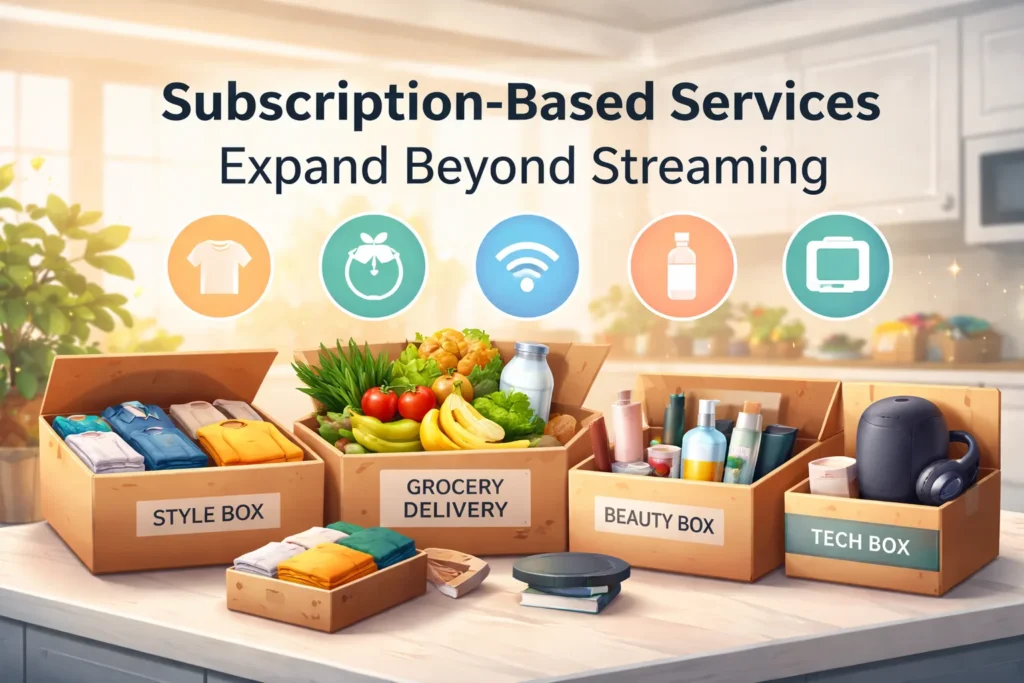

The subscription box was waiting on the porch, exactly as promised. Sarah almost didn’t want to open it. Not because she wasn’t excited about the curated skincare samples inside, but because she knew that somewhere in her email inbox, another receipt had just landed. Another monthly charge to add to the growing list. Another small commitment she’d need to remember to cancel if it didn’t work out.
Just five years ago, her recurring bills were simple: rent, utilities, and a single streaming service. Today, like millions of others, she navigates a web of payments for meal kits, cloud storage, fitness apps, clothing rentals, and software tools she barely uses. The subscription economy has exploded far beyond its streaming origins, weaving itself into the fabric of how we eat, dress, work, and live. But as businesses celebrate the predictable revenue, a quieter story is unfolding—one of fatigue, frustration, and a growing desire to take back control.
This shift from owning things to renting them on a recurring basis represents one of the most significant changes in consumer behavior since the rise of online shopping. Let’s pull back the curtain on this new economy, explore why companies are so eager to sign us up, and understand what it really means for our wallets and our sense of ownership.
The Great Shift: From Store Shelves to Monthly Bills
Remember when buying software meant bringing home a big box with a CD inside? Or when your music collection lived on physical albums you could hold in your hands? That world now feels like a distant memory. We’ve quietly moved from an economy of ownership to an economy of access.
This transformation is massive in scale. Industry analysts estimate that the global subscription economy market was valued at nearly $500 billion in 2024 and is projected to surpass $1.5 trillion by 2033. That’s not just Netflix and Spotify anymore. That’s your razors, your dog toys, your office software, and even the tractor a farmer uses.
So what drove this change? For starters, technology made it possible. High-speed internet and cloud computing mean that companies can deliver updates and services continuously rather than in one-time packages. But more importantly, consumer expectations shifted. We now value flexibility over permanence. Why commit to buying a $500 software suite when you can pay $15 a month and never worry about it becoming outdated? Why guess which wines you’ll like when a curated club can send you expert selections monthly?
For businesses, the appeal is almost irresistible. Recurring revenue is predictable revenue. Instead of constantly chasing the next one-time sale, companies can build a subscription base that provides financial stability and deeper customer relationships. It’s no wonder that nearly half of digital publishers now see subscriptions as their biggest opportunity for growth.
The historical context here matters enormously. Subscriptions aren’t entirely new inventions. Newspapers and magazines have operated on subscription models for centuries, dating back to the 1600s when pamphlets and periodicals first began offering annual delivery for a set price. Milkmen delivered dairy products on weekly subscriptions long before anyone had heard of streaming, leaving glass bottles on doorsteps before dawn. Book clubs of the mid-20th century sent selected reads to members monthly, building communities around shared literary experiences. What’s changed is the scale and scope. Digital technology allows subscription relationships to be managed automatically, with payments processed seamlessly and services delivered instantly. This frictionless experience has removed the practical barriers that once limited subscriptions to a handful of categories.
Consider the math driving corporate interest in subscriptions. A traditional retail business must constantly acquire new customers just to maintain revenue. If customer acquisition costs $50 and the average purchase is $60, profits are thin and precarious. But a subscription business that acquires a customer for $50 and retains them for three years at $15 monthly generates $490 in revenue from that single acquisition. The economics compound dramatically when retention works effectively. This mathematical reality explains why venture capital has flooded into subscription startups. Investors recognize that businesses with predictable recurring revenue are fundamentally more valuable than those dependent on one-time transactions. Public markets consistently assign higher valuation multiples to subscription companies, sometimes double or triple what traditional businesses receive.
The transformation extends beyond consumer goods. Business-to-business subscriptions have grown even faster than consumer subscriptions. Companies now subscribe to their accounting software, their customer relationship management tools, their design platforms, their cybersecurity solutions, and their human resources systems. A typical small business might manage twenty or more software subscriptions, each essential to operations and each billing monthly or annually. This B2B subscription explosion has created its own ecosystem of management tools. Companies like Vertice now help businesses track and optimize their software subscriptions, recognizing that sprawl affects organizations just as it affects individuals. The average enterprise spends over $1,000 per employee annually on software subscriptions, with much of that spending fragmented across departments and credit cards.
The infrastructure supporting subscriptions has matured dramatically. Payment processors like Stripe and Recurly now offer specialized subscription billing tools handling prorations, upgrades, downgrades, and failed payments automatically. Subscription analytics platforms track metrics like monthly recurring revenue, churn rate, customer lifetime value, and expansion revenue with sophisticated dashboards. These tools have lowered barriers to entry, enabling even small businesses to launch subscription offerings that would have required enormous development investment just a decade ago.
The COVID-19 pandemic accelerated subscription adoption across every category. When physical stores closed and people sheltered at home, subscriptions provided safe, contactless access to goods and services. Meal kit subscriptions exploded as restaurants closed. Streaming services added millions of subscribers during lockdown months. Fitness apps replaced gym memberships. This pandemic-induced adoption created lasting behavioral changes, with many consumers continuing subscriptions even after restrictions lifted.
Demographic patterns reveal interesting variations in subscription adoption. Millennials lead in subscription numbers, averaging nearly fifteen active subscriptions per household. Gen X follows closely with around twelve, while Baby Boomers average seven and Gen Z, still early in their earning years, averages nine. These differences reflect both life stage and generational attitudes toward ownership versus access. Younger consumers who grew up with digital subscriptions view them as natural, while older consumers who remember only ownership models approach them more selectively.
Geographic patterns show significant variation too. North American households lead global subscription adoption, with average monthly subscription spending exceeding $250. European households spend less, around $150 monthly, partly due to stronger privacy regulations and cultural preferences for ownership. Asian markets show explosive growth in mobile-first subscriptions, with Southeast Asian subscription spending growing over 30 percent annually. These geographic differences will shape how global subscription companies approach various markets.
Beyond Entertainment: How Subscriptions Reshaped Everyday Life
While streaming video and music kicked down the door, subscriptions have quietly colonized nearly every corner of consumer life. The most striking examples are in categories where we never expected to pay recurring fees.
Consider how we eat. A recent industry report found that nearly every major prepared meal delivery service now requires a weekly subscription with automatic billing. Companies like Factor, CookUnity, and BistroMD have built their entire models around recurring shipments. You don’t just buy a week’s meals; you join a continuous relationship with the brand. The average household now manages roughly 12 paid subscriptions, and most people underestimate their total monthly spending on these services by about 40 percent.
The meal kit phenomenon deserves deeper examination. When HelloFresh and Blue Apron first emerged around 2012, skeptics questioned whether people would really pay premium prices to cook at home rather than simply grocery shopping. The answer proved more complex than expected. Meal kits succeeded not because they saved money, but because they solved specific problems: decision fatigue, grocery store anxiety, food waste, and the logistical challenge of planning varied meals. Subscribers weren’t just buying ingredients; they were buying freedom from daily choices about what to cook, plus precisely measured portions eliminating waste and the guarantee of recipes that would actually work.
The evolution of meal kits reveals broader patterns about subscription success. Early meal kits required significant cooking effort, appealing to food enthusiasts. Later entrants recognized that many consumers wanted convenience above culinary adventure, leading to prepared meal subscriptions requiring only heating. This segmentation shows how subscription categories mature, with specialized offerings emerging to serve distinct customer segments. Today you can subscribe to organic family meals, keto diet plans, vegan prepared dishes, or gourmet cooking projects, each serving different needs within the broader category.
Clothing retailers have embraced the model just as enthusiastically. Montreal-based Frank And Oak built much of its early growth around subscription services that send curated clothing items to members. The model works by reducing decision fatigue. Instead of spending hours shopping, members receive stylist-selected items based on their preferences and data-driven recommendations.
The evolution of clothing subscriptions reveals interesting patterns about consumer psychology. Early entrants like Stitch Fix succeeded by combining human stylists with algorithmic recommendations. Subscribers completed detailed style profiles covering fit preferences, color palettes, price sensitivity, and style aspirations. They received personalized selections, kept what they loved, and returned the rest. This hybrid approach recognized that clothing is deeply personal and resistant to pure automation. The human touch proved essential for building trust, even as algorithms improved recommendations over time.
More recently, specialized clothing subscriptions have proliferated across niches. From Rachel offers hosiery subscriptions, recognizing that tights are consumable items women repurchase regularly and often forget to buy until needed. Chou La La sends children’s clothing boxes to busy parents who’d rather spend time with kids than drag them through stores. Mejuri, the jewelry brand, successfully converted occasional buyers into subscribers by offering exclusive access and early previews to members. Winc launched as a wine subscription before expanding into broader lifestyle products, demonstrating how subscription relationships enable category expansion.
Even industries that seem far removed from digital services have gotten into the game. John Deere, the agricultural machinery giant, has faced intense criticism for transitioning to a model where farmers effectively license the software that runs their tractors rather than owning it outright. The company frames this as providing ongoing value through integrated digital technology that optimizes planting, fertilizing, and harvesting. But farmers see it as losing control over machines they purchased, with tractors that can be remotely disabled if subscription payments lapse.
The farming controversy illuminates tensions likely to spread across other industries. When you buy a tractor, you expect to own it completely. But modern tractors contain millions of lines of code running everything from engine timing to GPS navigation to automated steering. Manufacturers argue that software requires ongoing updates, security patches, and support, justifying subscription fees. Farmers counter that they’ve purchased physical machines and should control how they operate, including the right to repair or modify them independently. This fundamental disagreement about ownership versus access will intensify as more products incorporate sophisticated software, from cars to refrigerators to medical devices.
Pet care has emerged as another unexpected subscription frontier. BarkBox famously built a billion-dollar business delivering themed toy and treat boxes to dogs, tapping into owners who treat pets as family members deserving monthly surprises. But the category has matured significantly. Subscription pet food services like The Farmer’s Dog and Nom Nom now deliver precisely portioned fresh meals based on your dog’s weight, age, and activity level, claiming health benefits over processed kibble. Veterinary telehealth subscriptions provide unlimited access to professional advice for monthly fees, reducing unnecessary emergency visits. Pet insurance itself is essentially a subscription, protecting against unexpected medical costs through regular payments. Even litter delivery subscriptions save cat owners from hauling heavy boxes from stores.
Home maintenance subscriptions have proliferated quietly, often attached to major purchases. SimpliSafe and other home security companies shifted from one-time equipment sales to recurring monitoring fees, recognizing that ongoing revenue far exceeds initial hardware profits. Nest and Amazon offer subscription tiers for enhanced camera storage, facial recognition, and package detection, turning basic devices into ongoing revenue streams. HVAC companies now offer monthly maintenance plans that include priority service, discounted repairs, and regular inspections, smoothing their revenue and locking in customer relationships. These subscriptions sell peace of mind rather than products, protecting against emergencies that customers hope never occur.
The automotive industry represents the next frontier, with profound implications for how we think about transportation. Traditional car ownership is declining among younger consumers, who increasingly prefer access over ownership for reasons ranging from urban density to environmental concerns to simple economics. Subscription services like Care by Volvo and Porsche Passport allow drivers to pay a single monthly fee covering vehicle access, insurance, maintenance, and roadside assistance. You can switch vehicles based on your needs, using a sedan for commuting and an SUV for weekend trips, or swap out entirely for something new when boredom strikes. This flexibility appeals to consumers who view cars as tools rather than status symbols, and who value variety over permanence.
Beyond personal vehicles, transportation subscriptions are expanding into multimodal offerings. Some cities are piloting mobility subscriptions that bundle public transit, bike-sharing, scooter rentals, and ride-hailing credits into single monthly packages. These models could reduce car ownership while improving transportation access for lower-income residents, potentially addressing both equity and environmental goals simultaneously. The subscription here isn’t to a specific vehicle but to transportation itself as a service.
Financial services have embraced subscriptions with particular enthusiasm, fundamentally changing how banking works. Digital banks like Chime, Current, and Monzo offer premium tiers with enhanced features for monthly fees, including higher interest rates, earlier direct deposit access, and budgeting tools. Investment platforms charge recurring management fees rather than per-transaction commissions, aligning their incentives with asset growth rather than trading volume. Credit monitoring services alert subscribers to changes in their credit reports for ongoing payments, providing peace of mind against identity theft. Even traditional banks now offer subscription-style packages bundling accounts, credit cards, loans, and advisory services for single monthly fees, attempting to replicate the relationship depth of digital natives.
The shift in financial subscriptions reflects broader changes in how we value banking relationships. For most of banking history, customers paid per transaction or maintained minimum balances to avoid fees. Subscription models flip this logic, charging for ongoing access and relationship regardless of transaction volume. This works better for customers who transact frequently and worse for those who don’t, potentially creating cross-subsidies that some regulators watch carefully.
Education and professional development have transformed through subscriptions, recognizing that learning never stops. MasterClass offers unlimited access to celebrity-taught courses for annual fees, letting you learn cooking from Thomas Keller or writing from Margaret Atwood. Coursera and edX provide subscription access to thousands of university courses from institutions like Stanford and MIT, complete with certificates upon completion. LinkedIn Learning bundles professional development content into monthly plans, recommending courses based on your job role and career aspirations. These services recognize that modern careers require continuous learning, and subscriptions align perfectly with ongoing educational needs that extend far beyond formal degrees.
The university subscription model represents an intriguing innovation. Some institutions now offer alumni lifetime learning subscriptions, granting access to courses, lectures, and career resources for flat annual fees. This maintains relationships beyond graduation while providing ongoing value that justifies continued affiliation. If this model scales, it could transform higher education funding from front-loaded tuition to lifelong relationships.
Health and wellness subscriptions deserve special attention given their profound impact on physical well-being. Fitness apps like Peloton and Apple Fitness+ charge monthly for access to extensive workout libraries spanning yoga, strength training, running, and meditation. Users build habits around these services, integrating them into daily routines until cancellation feels like losing a part of healthy identity. Meditation apps like Calm and Headspace have built massive subscriber bases seeking stress relief in increasingly anxious times, with sleep stories and guided sessions becoming nightly rituals for millions. Telemedicine services offer unlimited virtual consultations for monthly fees, dramatically lowering barriers to medical advice and potentially reducing emergency room utilization. Even prescription medications now flow through subscription models, with companies like Hims and Hers delivering recurring shipments directly to customers for hair loss, skincare, sexual health, and mental wellness.
The healthcare subscription trend raises important questions about access equity. If essential health services increasingly require subscriptions, those who can’t afford multiple monthly payments may face reduced access to care. Regulators are watching this space closely, concerned that subscription models might segment healthcare into tiers rather than providing universal access. How this tension resolves will significantly shape healthcare’s future.
Beauty and personal care subscriptions have created entirely new retail categories. Birchbox pioneered the discovery model, sending sample-sized products monthly so subscribers could try before buying full sizes. Ipsy built a billion-dollar business on personalized beauty sampling, using preference quizzes to customize each bag. Dollar Shave Club disrupted the razor market entirely with subscription delivery, forcing giants like Gillette to launch competing services. Function of Beauty offers personalized shampoo and conditioner formulated based on hair profiles, delivered automatically before you run out. These services succeed by combining convenience with customization, delivering products that feel personally designed while eliminating shopping trips.
The fragmentation within beauty subscriptions reveals how niches deepen over time. You can now subscribe to clean beauty products only, Korean skincare routines, professional-grade hair tools, or sustainable packaging options. Each niche serves customers whose specific needs weren’t met by general offerings, demonstrating how subscription models enable personalization at scale that traditional retail struggles to match.
The Psychology of “Yes”: Why We Keep Signing Up
Understanding why we subscribe requires looking beneath the surface of convenience. There’s something almost magical about the subscription pitch. It rarely feels like a sales pitch at all.
When you encounter a subscription offer, the psychological framing is carefully designed to lower your defenses. That $10 monthly fee feels trivial compared to a $120 annual commitment, even though they’re mathematically identical. This “pain of paying” is diluted when spread across twelve smaller transactions. We experience the cost as less significant, even when the total is higher. Behavioral economists call this phenomenon “payment decoupling.” When you pay for something long before you use it, or long after, the connection between cost and consumption weakens. Subscription payments happen automatically, often without any immediate consumption. The subscription box arrives days after the payment processes. The streaming service charges weeks before you watch anything. This temporal separation reduces the psychological friction of spending, making us less sensitive to costs than we would be with visible, immediate transactions.
Beyond pricing, subscriptions appeal to deep-seated desires for simplicity and expertise. WineCollective, a Calgary-based wine subscription service, built its business on solving the paralysis of choice. The average wine buyer stares at store shelves overwhelmed by thousands of options and terrified of picking something disappointing that will ruin dinner or embarrass them before guests. WineCollective removes that anxiety entirely. Their experts taste hundreds of wines to select less than one percent for members, effectively outsourcing the hardest part of wine buying to professionals. Subscribers don’t just receive wine; they receive confidence that what arrives will be good.
This expertise-as-service model extends across categories. Beauty subscription boxes leverage professional makeup artists to select products aligned with current trends and individual coloring. Book subscriptions employ literary critics to choose titles worth reading, filtering the millions published annually. Coffee subscriptions use professional roasters to source beans at peak freshness, delivering better coffee than most stores stock. Meal kits rely on recipe developers to create dishes that actually work for home cooks. Subscribers aren’t just buying products; they’re buying access to specialized knowledge they don’t possess themselves, paying for curation as much as for goods.
For busy parents, Chou La La offers children’s clothing “wardrobes in a box.” Founder Rola Amer explicitly modeled the service after meal-prep subscriptions, noting that parents would rather spend quality time with their kids than drag them through clothing stores. The subscription sells time savings, not just clothes. This insight about what customers actually value, not products but outcomes, explains why subscriptions resonate so deeply. Parents don’t want children’s clothing; they want well-dressed kids without hours of shopping. Subscriptions deliver that outcome directly.
Time scarcity increasingly drives subscription decisions across demographics. In dual-income households, free time has become the scarcest resource, more precious than money for many families. Subscriptions that eliminate errands, reduce shopping trips, or automate routine purchases provide genuine value beyond their product costs. The calculation isn’t just whether the subscription saves money, but whether it saves something more precious. A meal kit might cost more than groceries, but if it saves two hours of planning and shopping weekly, that trade often makes sense for time-starved families.
There’s also the seductive appeal of discovery. Subscription boxes arrive like monthly birthdays, offering surprises carefully selected to delight. This anticipation creates emotional engagement that one-time purchases rarely generate. Opening the box becomes an experience, not just a transaction. The neuroscience behind anticipation matters here. Dopamine, the neurotransmitter associated with pleasure and reward, surges during anticipation, not just during consumption. The week waiting for a subscription box provides repeated small dopamine hits as you imagine what might arrive, check shipping status, and plan when to open it. This chemical reward system reinforces subscription behavior independently of the actual products received, creating positive associations with the service itself.
Social validation plays a subtler but powerful role in subscription psychology. When friends admire your new skincare products or comment on your stylish clothing, you receive social reinforcement that strengthens subscription commitment. Unboxing videos on social media have created entire communities around subscription reveals, transforming private consumption into shared experience. The subscription becomes part of your identity and social presentation, something you discuss with others who share your interests. This social dimension makes cancellation feel like leaving a community, not just ending a service.
Loss aversion, a powerful psychological principle identified by Nobel laureates Daniel Kahneman and Amos Tversky, explains why free trials convert so effectively. Once you’ve invested time setting up your profile, customizing preferences, receiving initial shipments, and perhaps sharing results with friends, canceling feels like losing that investment. Even though the setup cost was minimal, perhaps just fifteen minutes of time, it creates psychological ownership that makes continuation easier than cancellation. Companies deliberately design onboarding to maximize this investment, asking detailed questions about preferences, encouraging profile completion, and sending personalized communications that acknowledge your choices. Each interaction increases the psychological cost of leaving.
Habit formation represents the ultimate subscription goal, the holy grail for recurring revenue businesses. Companies deliberately design experiences that integrate into daily routines until they become automatic. Your morning coffee ritual includes that specific brand because it arrives automatically and you’ve grown accustomed to its taste. Your workout relies on that particular app because it’s always available and you’ve built playlists within it. Your evening relaxation includes that meditation session because the app reminds you and tracks your streak. Once habits form, cancellation requires disrupting established routines, which requires conscious effort most people avoid. Breaking a habit is psychologically harder than forming it, so subscriptions that achieve habit integration achieve remarkable retention.
The power of defaults cannot be overstated in subscription psychology. When services automatically renew unless you actively cancel, they leverage what behavioral scientists call the “default effect.” People tend to stick with whatever option requires no action, even when actively choosing would serve them better. This inertia is so powerful that some jurisdictions now require affirmative renewal consent rather than automatic renewal, recognizing that defaults unfairly advantage companies over consumers. Where automatic renewal remains legal, it significantly boosts retention simply by making cancellation the active choice requiring effort.
Sunk cost fallacy also plays a role in subscription continuation. Once you’ve paid for several months, the thought of canceling means losing that investment without recovering value. Even though those past payments are truly gone regardless of future decisions, psychologically they feel like investments that would be wasted by cancellation. This fallacy keeps people subscribed to services they rarely use, simply because they’ve already paid for access and canceling would acknowledge that spending was wasted.
The endowment effect, another behavioral economics principle, explains why ownership increases perceived value. When you merely consider subscribing, the service feels optional. Once you’ve subscribed and integrated it into your life, it feels like something you possess, and losing it feels like a loss. This asymmetry between the pleasure of gaining and the pain of losing means subscriptions become more valuable psychologically after you have them than they seemed before you signed up.
When the Bill Arrives: Understanding Subscription Fatigue
But every honeymoon period eventually ends. For millions of consumers, the romance with subscriptions has soured into something closer to dread. The term “subscription fatigue” has entered our vocabulary for good reason, describing the exhaustion that comes from managing dozens of recurring payments while wondering whether any still provide value.
Recent surveys paint a concerning picture for subscription businesses. About 41 percent of consumers now report experiencing subscription fatigue, with meal kit services facing cancellation rates exceeding 60 percent within the first six months. Streaming services face similar pressures. Nearly one-third of streaming subscribers canceled at least one service in 2025, and the average U.S. household dropped from 4.1 subscriptions to 2.8 in a single year. These numbers represent more than statistical fluctuations; they signal a fundamental shift in consumer relationship with subscription models.
What’s driving this wave of cancellations? Often, it’s simply the accumulation of small charges that collectively become overwhelming. When your bank statement reveals charges for streaming services, fitness apps, cloud storage, meal kits, and software tools, the total can feel shocking even when each individual charge seemed reasonable. Seventy-two percent of consumers underestimate their subscription spending by an average of 40 percent, suggesting we’re systematically blind to the true cost of our recurring commitments. This blindness stems partly from payment methods. When subscriptions charge credit cards automatically, you never actively authorize each payment. There’s no moment of decision, no wallet opening, no cash changing hands. The payments happen invisibly until statement review reveals their cumulative weight. This opacity is convenient for companies and problematic for consumers.
But cost isn’t the only factor. Value perception matters enormously. About 35 percent of subscribers who cancel cite value-related concerns, meaning they simply don’t feel they’re getting enough from the service to justify continued payment. This is especially common when initial enthusiasm fades and services become background noise rather than sources of genuine satisfaction. The value calculation shifts over time in predictable ways. New subscriptions provide novelty and excitement. You explore the content library, try different products, engage actively with features, and share discoveries with friends. But eventually, you’ve watched the shows you wanted, tried the products you found interesting, and established routines. The marginal value of each additional month declines while the cost remains constant. At some point, the equation flips and cancellation becomes rational.
The cancellation patterns reveal something important about modern consumer behavior. People aren’t necessarily rejecting subscriptions forever. Instead, they’re cycling in and out of services based on immediate needs. Nearly one in four new subscriptions now comes from a former customer returning after a cancellation. This “subscribe–cancel–resubscribe” behavior is particularly common in streaming, where users sign up for specific content and leave when they’ve watched what they wanted. Streaming services have adapted to this behavior by abandoning simultaneous release strategies. Netflix once released entire seasons at once, encouraging binge-watching followed by cancellation. Now they stagger releases, keeping subscribers engaged longer across weeks rather than days. Disney+ structures releases weekly, extending subscription duration for flagship shows to span months rather than weekends. These tactics directly combat the binge-and-cancel pattern by controlling content availability.
Younger consumers show different subscription behaviors than older generations. Gen Z and younger millennials are more likely to cycle through services aggressively, treating subscriptions as temporary access rather than long-term commitments. They’ve grown up with flexible digital models and feel no loyalty to companies that don’t continuously deliver value. This generational shift will force subscription businesses to constantly prove their worth rather than resting on installed bases. The concept of “subscription stacking” deserves attention here. Many households maintain multiple services within the same category, subscribing simultaneously to Netflix, Hulu, Disney+, Apple TV+, and HBO Max. This stacking emerged because each service offers exclusive content, and missing out feels like social exclusion when friends discuss shows you can’t watch. But stacking costs quickly exceed traditional cable bills, leading to periodic “subscription audits” where households prune their collections to manageable size.
The phenomenon of “subscription overlap” creates additional friction. When multiple services offer similar content or functionality, consumers must decide which to keep and which to cut, a decision process that itself creates fatigue. Streaming services now compete fiercely for exclusive content precisely because exclusivity reduces overlap and makes cancellation feel more costly. If every service had the same movies, you’d only need one. By securing exclusive series and films, services make themselves individually necessary rather than interchangeable.
Privacy concerns increasingly drive cancellations as awareness grows about data collection practices. Subscription services collect enormous amounts of behavioral data, tracking what you watch, when you watch, how long you watch, what you skip, what you purchase, what you search for, and how you engage with recommendations. This data builds detailed profiles used for personalization but also for advertising targeting, content development decisions, and sometimes sale to third parties. Some consumers have grown uncomfortable with this surveillance, particularly as data breaches become routine and stories emerge about intimate data being exposed. Canceling a subscription becomes a way to reclaim privacy, even if the service itself provided value.
The mechanics of cancellation reveal much about company priorities. Many subscription services make cancellation deliberately difficult, requiring phone calls during limited hours, presenting multiple retention offers that must be declined sequentially, or hiding cancellation options behind multiple menu layers. These “dark patterns” frustrate consumers and create negative associations with the brand, but they do reduce short-term cancellations. Regulatory attention to these practices is increasing, with some jurisdictions requiring cancellation processes as simple as sign-up processes. The California Automatic Renewal Law, for example, mandates clear cancellation options and has forced many companies to simplify their processes.
Economic pressures amplify subscription fatigue during difficult times. When households face inflation, job uncertainty, or reduced income, discretionary subscriptions become obvious targets for cutting. Essential subscriptions like internet access and cloud storage survive, while entertainment and lifestyle subscriptions face scrutiny. This economic sensitivity means subscription businesses must demonstrate clear value during downturns or face accelerated churn that can threaten viability.
The psychological weight of managing subscriptions extends beyond money. Each subscription requires remembering passwords, tracking renewal dates, updating payment information when cards expire, and deciding whether to continue. This cognitive load accumulates silently, consuming attention that could be directed elsewhere. Researchers have found that decision fatigue from managing multiple subscriptions reduces satisfaction with all of them, even individually valuable ones, because the overhead of management overshadows the benefits of access.
What We Lose When We Only Rent
Behind the convenience and flexibility of subscriptions lies a more uncomfortable truth. Something valuable is disappearing from our relationship with goods and services, and it’s not obvious until it’s gone.
When you own something, you control it. That book on your shelf doesn’t require a monthly payment and won’t disappear if the publisher goes bankrupt. That software you bought outright doesn’t stop working if the company changes its pricing or decides you’re not profitable enough. That music album you purchased doesn’t vanish from your library when licensing agreements expire or artists switch distributors. Ownership provides permanence that access simply cannot match, a stability that becomes more valuable as the world grows more uncertain.
The shift to access-based models transfers control from consumers to companies in subtle but significant ways. Prices can increase, and your only options are to pay or lose access. There’s no negotiating, no buying in bulk to lock in rates, no protection against future increases beyond cancellation. Features can be altered or removed entirely based on company priorities rather than customer preferences. Services can be discontinued, erasing years of accumulated value in an instant when corporate strategy shifts. Your carefully curated playlists, your saved documents with years of work, your personalized settings refined over time, all potentially vulnerable to decisions made in corporate boardrooms where you have no voice.
Consider what happened when Google decided to cancel its Stadia gaming platform in 2023. Subscribers who had purchased games through the service lost access completely when the platform shut down, receiving refunds for game purchases but losing access to the games themselves. Their purchases weren’t truly purchases; they were long-term rentals contingent on Google’s continued operation. This fragility is inherent to subscription models, where access depends entirely on the provider’s ongoing existence and willingness to serve you.
The fragility extends beyond platform shutdowns. When Microsoft recently increased Xbox Game Pass prices by 25 percent, subscribers had no recourse beyond canceling. When Spotify changed its royalty structure, some artists removed their music, and subscribers lost access to favorites. When Netflix cracks down on password sharing, households that shared accounts face difficult choices about whose subscription continues. Each change reminds subscribers that they don’t control their access; they merely rent it on terms set by others.
This fragility is the hidden cost of convenience. When you don’t own the products you use, you’re permanently dependent on the continued goodwill and financial stability of their providers. Missed payments, account glitches, or policy changes can instantly cut access to tools and content integrated into your daily life. A forgotten credit card expiration can interrupt your workout routine. A billing error can lock you out of documents needed for work. A policy change can remove features you rely on. These vulnerabilities accumulate across dozens of subscriptions, creating a complex web of dependencies that requires constant attention to maintain.
The psychological impact matters too. Ownership provides a sense of security and autonomy that renting cannot replicate. There’s comfort in knowing that something is truly yours, not borrowed on an indefinitely renewable term that could end at any time. As subscriptions multiply, this loss of control can create low-level anxiety, a sense that you’re never quite settled, always potentially one missed payment away from disruption. This anxiety may seem minor, but multiplied across dozens of services and years of time, it contributes to the ambient stress of modern life.
Cultural critics have begun examining how subscription models affect creativity and cultural production. When artists depend on streaming platforms for income, their work must satisfy algorithmic preferences rather than personal vision. When writers publish on subscription platforms like Substack, they’re incentivized to produce frequently rather than thoughtfully, chasing engagement rather than depth. When filmmakers create for streaming services, they must consider how their work will perform in recommendation algorithms and whether it will retain subscribers through completion rates. The economic structure of subscriptions shapes cultural output in ways we’re only beginning to understand, potentially homogenizing creativity toward whatever algorithms reward.
The environmental impact deserves consideration too. Subscription models often increase consumption through convenience. Automatic replenishment encourages using more than necessary, since running out requires no effort to replace. Curated boxes include packaging that must be manufactured and discarded, often with multiple layers of protective materials. Frequent product turnover, encouraged by subscriptions that deliver new items monthly, generates waste that ownership models might avoid. The environmental costs of subscription convenience are rarely factored into consumer decisions, but they accumulate across millions of subscribers and billions of shipments.
There’s also a social dimension to consider. Subscription models can create or reinforce class divisions in concerning ways. Premium subscriptions provide access to better services, faster shipping, exclusive content, and priority treatment. Those who can afford multiple subscriptions navigate the world more easily, while those who cannot face longer waits, fewer choices, and inferior options. The subscription economy creates tiers of citizenship where access to essentials increasingly requires ongoing payments that not everyone can afford. This dynamic is particularly troubling in categories like healthcare, education, and financial services, where subscription models may reduce access for lower-income populations.
The loss of secondary markets matters economically and environmentally. When you own something, you can sell it when you’re done, recouping value and extending the product’s useful life. When you subscribe, there’s nothing to sell. The product either returns to the company or becomes useless when subscription ends. This eliminates the second-hand markets that traditionally provided affordable access to goods for lower-income consumers and kept products out of landfills longer. As more categories shift to subscription models, these secondary markets shrink, potentially increasing both economic inequality and environmental waste.
The generational implications deserve attention. Children growing up in fully-subscribed households may never develop relationships with owned objects, never experience the security of possessions that can’t be taken away, never learn to maintain and repair things because nothing stays long enough to need maintenance. This could fundamentally reshape how future generations relate to material goods, potentially accelerating the shift toward disposability and away from stewardship.
The Hidden Costs Nobody Talks About
Beyond the obvious monthly fees, subscriptions carry hidden costs that rarely appear in marketing materials. Understanding these costs is essential for making informed decisions about which subscriptions truly deserve space in your budget and attention.
Cognitive load represents perhaps the most significant hidden cost. Every subscription requires attention: remembering what you have, tracking when payments occur, deciding whether to continue, managing passwords, updating payment methods when cards expire, monitoring for unauthorized charges, evaluating whether value still justifies cost. This mental overhead accumulates silently, consuming attention that could be directed elsewhere. Researchers have found that decision fatigue from managing multiple subscriptions reduces satisfaction with all of them, even individually valuable ones, because the overhead of management overshadows the benefits of access. The cumulative cognitive cost of twenty subscriptions may exceed the cognitive benefit of any single one.
Transaction costs multiply across subscriptions in ways that add up significantly. When you cancel a service, you spend time navigating cancellation flows designed to discourage leaving, sometimes requiring phone calls or chat interactions. When a payment fails because your card expired, you spend time updating information across multiple services, tracking down which ones need attention. When you want to try a new service, you spend time researching options, reading reviews, setting up accounts, and configuring preferences. These micro-costs, perhaps ten minutes here and fifteen there, add up to hours annually across dozens of subscriptions. For someone earning $50 per hour, ten hours of subscription management represents $500 in implicit cost.
Security risks increase with each subscription in ways that compound rather than simply add. Every service you subscribe to stores your payment information and personal data, from your name and address to your preferences and behavior patterns. Each represents a potential breach point where criminals could access your information. The massive 2023 breach affecting multiple subscription platforms exposed millions of customers’ data precisely because consolidation created attractive targets. Managing security across dozens of accounts becomes increasingly difficult as subscriptions multiply, with each requiring strong unique passwords, each representing a potential vulnerability if credentials are reused.
Late fees and overage charges create unexpected costs that escape initial budgeting. Some subscription services charge penalties when shipments aren’t received and returned, essentially fining customers for failed delivery attempts. Others impose fees when usage exceeds plan limits, with streaming services charging for additional screens or cloud storage services charging for exceeded capacity. These charges appear separately from base subscription costs, often escaping notice until statements arrive weeks later. The subscription price advertised rarely represents the complete cost of participation, and these variable charges can substantially increase actual spending.
Opportunity costs matter economically in ways rarely considered. Money flowing to subscriptions can’t flow elsewhere, whether to savings, investments, experiences, or other purchases. The cumulative monthly spending on subscriptions often exceeds what people realize, representing significant foregone savings or alternative purchases. A 2024 study found that the average household could fund a complete retirement contribution by eliminating unused subscriptions, suggesting substantial opportunity costs from maintaining services that provide little value. Even active subscriptions carry opportunity costs if the money would serve better elsewhere.
Social costs emerge when subscription access creates exclusion. When friends discuss shows available only on premium platforms, non-subscribers feel left out of conversations and cultural moments. When colleagues reference tools available only through paid subscriptions, those without access face professional disadvantages in collaboration and skill development. When children’s friends discuss subscription box contents, kids without them feel excluded from playground conversations. Subscriptions create information and experience gaps that weren’t previously as pronounced, adding social pressure to maintain services primarily for inclusion rather than value.
The cost of complexity extends beyond individual management to household coordination. In families with multiple members, subscriptions multiply further as each person maintains services aligned with their interests. Coordinating across household members becomes complex, with overlapping accounts, shared versus individual subscriptions, and questions about who pays for what. This coordination burden falls disproportionately on household managers, typically women, adding invisible labor to already overloaded schedules.
Psychological costs include the nagging sense of being nickel-and-dimed, the irritation of unexpected charges, the frustration of cancellation difficulties, and the anxiety of potential service disruptions. These emotional costs, while difficult to quantify, affect well-being and satisfaction with consumption overall. The cumulative annoyance of managing subscriptions may exceed the cumulative pleasure they provide, particularly for services that have become background noise rather than sources of genuine delight.
Financial opacity creates costs through reduced awareness. When you pay for things individually, you know exactly what each costs because you authorize each payment. When subscriptions bundle multiple small charges, the total becomes harder to track, and individual services can increase prices without attracting attention. This opacity benefits companies at consumers’ expense, enabling gradual price increases that would provoke outrage if presented as single large changes.
Smart Strategies for Managing the Subscription Maze
So how do we navigate this new landscape without drowning in monthly charges or abandoning convenience entirely? The key is intentionality. Subscriptions become problems when they’re accumulated thoughtlessly, not when they’re chosen deliberately with clear understanding of their value and costs.
Start by auditing what you actually have. Gather three months of bank and credit card statements and highlight every recurring charge. You’ll almost certainly find subscriptions you forgot about, services you meant to cancel, and free trials that converted without your clear consent. This awareness alone often leads to immediate savings. The audit should include digital wallets and payment apps. Many subscriptions charge through PayPal, Apple Pay, or Google Pay rather than directly to cards. These payments can be harder to track because they appear differently on statements. Reviewing connected payment methods separately ensures nothing escapes detection.
Create a subscription inventory document that tracks every service, its monthly cost, annual cost, renewal date, payment method, and your personal value rating. This master list, maintained in a simple spreadsheet or dedicated app, transforms scattered subscriptions into manageable information. When you can see everything together, patterns emerge: categories where you have too many overlapping services, subscriptions you forgot existed, annual renewals approaching that require decisions. This visibility alone often motivates pruning.
When evaluating whether to keep a subscription, ask hard questions about value. Do you use it weekly? Does it genuinely improve your life? Would you notice if it disappeared? Be honest about services kept “just in case” or because canceling feels like too much effort. That inertia is exactly what subscription companies count on, and overcoming it requires conscious evaluation. Create a simple scoring system for subscription evaluation. Rate each service on frequency of use, enjoyment, cost relative to alternatives, and irreplaceability. Services scoring low on multiple dimensions become candidates for cancellation. This systematic approach reduces emotional attachment to subscriptions that have outlived their usefulness.
Consider the “subscription replacement test.” If this service disappeared tomorrow, what would you do? Would you replace it immediately with something similar, or would you adapt and move on? The answer reveals whether the subscription provides essential value or merely habitual convenience. Services you’d immediately replace deserve retention. Those you’d adapt without matter less than you think.
Look for flexibility in the services you keep. The best subscription companies now offer pause options, allowing you to temporarily suspend service without fully canceling. Pause usage has increased dramatically, and research shows that 75 percent of customers who pause eventually return. This flexibility benefits both consumers and companies, preserving relationships during periods when you simply don’t need the service. Pausing works particularly well for seasonal subscriptions. Lawn care services might pause during winter. Meal kits might pause during vacation months. Clothing boxes might pause when your wardrobe feels full. The ability to match subscription flow to actual need transforms fixed costs into variable ones aligned with real consumption.
Consider whether annual payment makes sense for services you’re committed to. Annual plans typically generate 50 to 60 percent more revenue per user than monthly plans, but they also lock in savings if you’re certain about long-term use. The trade-off is reduced flexibility, so this approach works best for services deeply integrated into your routine. Annual payment also eliminates monthly decision points. For services you’ll definitely keep, removing the monthly “should I cancel” calculation reduces cognitive load. The key is honest assessment of your commitment. Annual payment for a service you might abandon mid-year wastes money rather than saving it.
For newer brands or services you’re unsure about, consider testing through one-time purchases before committing to subscriptions. Chou La La, the children’s clothing service, deliberately delayed introducing auto-renew options until they’d built trust with customers. Starting with single boxes allowed customers to experience the value before facing a recurring commitment. This test-before-subscribe approach deserves wider adoption. Many services offer single purchases or gift options that provide the same products without recurring commitment. Trying these first reveals whether you actually enjoy and use the offering before monthly charges begin accumulating.
Use technology to manage subscriptions deliberately rather than reactively. Apps like Rocket Money, Bobby, and Subby track subscriptions across accounts, send renewal alerts, and facilitate cancellations. These tools transform subscription management from scattered effort into coordinated oversight. The small subscription cost for management apps often pays for itself through identified savings. Calendar reminders prevent free trial conversions. When signing up for a free trial, immediately add a calendar reminder for one day before the trial ends. This simple practice ensures you evaluate the service before being charged, maintaining conscious choice rather than automatic conversion. The five minutes this takes can save hundreds in unwanted subscriptions annually.
Consider sharing subscriptions where terms allow. Many streaming services permit household sharing, and some family plans cover multiple users at discounted per-person rates. Coordinating with friends or family members can provide access to more services at lower individual cost. Just ensure you understand terms of service to avoid account issues. Some services actively combat sharing, so verify what’s permitted before building sharing arrangements.
Library access offers surprising subscription alternatives that many overlook. Many public libraries now provide free access to streaming services like Kanopy and Hoopla, digital magazines through Libby, audiobook platforms, and learning tools like LinkedIn Learning and Mango Languages. These library subscriptions cost taxpayers collectively but appear free to individual users. Checking what your library offers might replace several paid subscriptions while supporting a public institution. University alumni associations often provide similar benefits, with many offering free or discounted access to academic databases, career tools, and professional development resources.
The “one in, one out” rule helps control subscription sprawl. For every new subscription you add, cancel an existing one of similar cost. This forces prioritization and prevents unlimited expansion. If a new streaming service launches that you want to try, you must decide which existing service to drop. This discipline ensures your subscription portfolio remains curated rather than accumulated.
Regular subscription audits, perhaps quarterly or semi-annually, maintain control over time. Set calendar reminders to review your subscription inventory, evaluate continued value, and cancel services that no longer serve you. These audits catch services that have drifted from usefulness before they’ve drained accounts for months. During audits, also review pricing changes, as many services increase rates gradually and you may not notice until statements arrive.
Payment method management provides another control layer. Consider using virtual credit cards with spending limits for subscriptions, or dedicated cards that make tracking easier. Some banks now offer subscription management tools that categorize recurring payments and alert you to increases. Taking advantage of these tools reduces the manual effort required to maintain awareness.
The Business Side: Why Companies Keep Pushing Subscriptions
From the corporate perspective, the subscription model isn’t just a trend, it’s a transformation of fundamental business logic. Understanding why companies push so hard helps explain why subscriptions keep multiplying despite consumer resistance.
Predictable revenue transforms how businesses operate. When you know roughly how much money will arrive each month, you can plan investments, staffing, and product development with much greater confidence. This stability is enormously valuable, which is why public markets often value subscription companies more highly than traditional businesses. The mathematics of recurring revenue create powerful incentives. A company with $10 million in annual recurring revenue can project next year’s revenue within narrow bands, assuming reasonable retention. A traditional business with $10 million in annual sales faces enormous uncertainty about whether next year will bring $8 million or $12 million. This predictability enables aggressive investment that one-time businesses can’t safely attempt, funding research, marketing, and expansion with confidence that revenue will support it.
Customer relationships also deepen in subscription models. Instead of a single transaction, companies have ongoing opportunities to demonstrate value, gather feedback, and build loyalty. Adobe’s transition from selling software in boxes to charging monthly subscriptions initially angered many customers who preferred ownership, but the company now reports annual net income nearly 50 percent higher than when it peaked under the old model. Subscription revenue reached nearly $6 billion in a single quarter, with steady year-over-year growth demonstrating the power of recurring relationships.
The Adobe transformation illustrates broader patterns about subscription economics. When Adobe sold Creative Suite as boxed software priced at several hundred dollars, customers upgraded every few years at most, and engagement was episodic. Many customers used outdated versions for years, missing new features and creating support challenges. Now Adobe engages with customers continuously, releasing updates monthly, gathering usage data constantly, and building features based on actual behavior. The subscription model transformed a transactional relationship into an ongoing conversation, with benefits for both parties despite initial resistance.
The data advantage matters enormously in subscription businesses. Subscription relationships generate continuous streams of information about how customers actually use products, what features they value, when they engage, and where they struggle. Frank And Oak leverages this data through AI-powered recommendation tools that improve conversion rates by suggesting items customers genuinely want based on past selections and returns. Each interaction makes the service smarter and harder to leave, as the accumulated data creates personalized experiences that competitors can’t match without similar history.
This data creates competitive moats that protect subscription businesses from new entrants. A startup can’t simply copy features and expect to compete; they’d need years of behavioral data to match recommendation quality, personalization accuracy, and customer understanding. The data accumulated through subscriptions becomes proprietary assets that strengthen over time, creating increasing returns to scale that benefit established players. This dynamic explains why established subscription businesses often maintain leadership despite aggressive competition from well-funded newcomers.
But successful subscription companies in 2026 recognize that old tactics no longer work effectively. Generic win-back emails offering small discounts and one-size-fits-all retention offers are losing effectiveness as consumers become savvier about these automated approaches. The companies seeing the best results now use behavioral data to identify at-risk subscribers before they cancel, intervening with targeted offers and personalized experiences rather than generic pleas that feel automated and insincere.
Predictive cancellation modeling represents the cutting edge of subscription retention. By analyzing usage patterns, engagement metrics, support interactions, and payment history, companies can identify subscribers likely to cancel within 30 days with remarkable accuracy, often exceeding 80 percent precision. These at-risk customers receive special attention: personalized content recommendations based on viewing history, exclusive offers tailored to their preferences, direct outreach from customer success teams, or early access to new features. The goal is addressing concerns before they trigger cancellation decisions, intervening while the relationship can still be saved rather than after the decision is made.
Pricing sophistication has increased dramatically as subscription markets mature. Companies now test dozens of price points simultaneously, optimizing for different customer segments with precision unimaginable a decade ago. Some customers receive premium offers with enhanced features and priority support. Others receive discount offers designed for price sensitivity, perhaps with advertising or reduced feature sets. This dynamic pricing maximizes revenue while maintaining accessibility across income levels, though it raises questions about fairness when different customers pay different prices for identical services.
Bundling strategies have evolved beyond simple package deals combining unrelated services. Modern subscription bundling uses algorithms to create personalized bundles matching individual preferences and usage patterns. A streaming service might bundle with a fitness app for health-conscious users based on their viewing history, or with a meal kit for food enthusiasts who watch cooking shows. These intelligent bundles increase perceived value while maintaining premium pricing, creating combinations that feel personally designed rather than generic packages.
Acquisition economics favor subscription models in important ways. Customer acquisition costs can be amortized over longer relationships, enabling more aggressive marketing spend. A traditional business must recoup acquisition costs from a single transaction, limiting marketing investment. A subscription business can spend more to acquire customers, confident that retention will spread costs across many months. This enables richer marketing, better onboarding, and more generous trials that would be economically impossible in transactional models.
The shift to subscriptions also changes competitive dynamics. In traditional markets, competitors compete on each transaction, with customers free to switch based on price or features at any purchase moment. In subscription markets, switching requires active effort, and inertia favors incumbents. Once a customer subscribes, they’re likely to remain unless significantly dissatisfied, creating stickiness that protects market position. This dynamic advantages established players and makes market entry more difficult for newcomers.
Investor preferences reinforce corporate subscription strategies. Public markets assign higher valuation multiples to subscription companies, sometimes 2-3 times higher than traditional businesses with similar profits. This valuation premium creates powerful incentives for companies to transition to subscription models even when customers might prefer alternatives. Executives responding to shareholder pressure pursue subscriptions because markets reward them, regardless of whether customers benefit.
Finding Balance in an Access-Based World
The future of consumption isn’t likely to be all subscriptions or all ownership. Instead, we’re moving toward hybrid models that offer the best of both worlds, recognizing that different categories and different consumers benefit from different approaches.
Smart companies are recognizing that forcing customers into binary choices, subscribe or don’t subscribe, limits both satisfaction and revenue. The most successful platforms now offer tiered options that match different levels of engagement and commitment. Casual users might access ad-supported versions for free, supported by advertising rather than direct payment. Regular users might choose light advertising with lower fees, balancing cost and experience. Committed fans might pay premium prices for ad-free experiences and exclusive content, supporting services they love while enjoying enhanced access.
This approach acknowledges what subscription fatigue really signals. Consumers aren’t rejecting the access model entirely. They’re overwhelmed by volume and frustrated by inflexibility. When companies offer graceful ways to pause, downgrade, or temporarily disconnect, they maintain relationships that would otherwise end in cancellation. The flexibility to match subscription commitment to current circumstances, rather than requiring permanent commitment, aligns better with modern life’s variability.
The rise of “subscription wallets” represents an interesting development in managing fragmentation. Companies like Apple and Amazon now offer consolidated subscription management through their platforms, allowing users to view and manage all subscriptions from a single dashboard. This consolidation reduces the fragmentation that contributes to fatigue, making intentional management easier while giving platform providers visibility into customer relationships. Apple’s subscription management tools, for example, show all subscriptions processed through Apple’s payment system in one place, with easy cancellation options that bypass individual service cancellation flows.
For consumers, the path forward involves becoming more intentional about what we choose to own versus what we prefer to access. Ownership still makes sense for things we want permanently, items that function independently of ongoing payments, and products with emotional significance that we want to keep. Access works better for things that require continuous updates, services we use intermittently, and categories where curation adds genuine value beyond what we could select ourselves.
The key is making these choices consciously rather than defaulting to subscriptions because they’re the path of least resistance. That means reading the fine print before free trials, understanding what will happen when trials end. It means setting calendar reminders to evaluate services before renewal rather than after charges process. It means periodically auditing what’s actually earning its place in our monthly budgets and canceling what isn’t. These practices transform subscriptions from passive drains to active tools that serve intentional purposes.
Some categories naturally suit subscription models better than others. Software that requires continuous updates, security patches, and feature additions fits subscriptions perfectly, with ongoing payments funding ongoing development. Physical products that vary in quality based on freshness, like food and personal care items, make sense for automatic replenishment that ensures you never run out. Services providing ongoing professional advice, like financial planning or fitness coaching, align naturally with recurring payments that sustain relationships. Recognizing which categories genuinely benefit from subscription treatment helps separate valuable services from unnecessary ones that simply transfer costs.
The concept of “subscription minimalism” has gained traction among consumers seeking relief from fatigue. Practitioners deliberately limit themselves to a small number of subscriptions, typically five or fewer, and evaluate new subscriptions against the requirement that something else must go. This forced prioritization ensures that each subscription genuinely earns its place rather than accumulating thoughtlessly. For minimalists, the question isn’t “is this service valuable?” but “is this service more valuable than something I’d have to give up to keep it?”
Financial advisors increasingly recommend treating subscriptions as a distinct budget category with a hard cap, just like housing, food, or transportation. Just as housing shouldn’t exceed certain income percentages, subscriptions shouldn’t exceed amounts that vary based on individual circumstances. This budgeting approach transforms subscriptions from invisible leakage to managed expense category, ensuring they receive appropriate attention in financial planning.
The regulatory landscape will continue evolving alongside subscription growth. Consumer protection agencies are examining subscription cancellation practices with increasing scrutiny, with some jurisdictions requiring “one-click cancellation” equal in simplicity to sign-up. The Federal Trade Commission has proposed rules requiring sellers to make cancellation as easy as enrollment, potentially eliminating the dark patterns that currently frustrate consumers. Automatic renewal laws increasingly require clear disclosure and affirmative consent before charging, reducing the accidental subscriptions that result from obscured terms.
Privacy regulations will affect subscription data collection significantly. As consumers become more aware of how their behavioral data is used and abused, regulations like GDPR in Europe and CCPA in California will continue evolving, potentially limiting the data advantages subscription companies currently enjoy. How companies adapt to privacy-conscious consumers, whether through transparent practices and genuine value exchange or through regulatory resistance, will determine which subscription models thrive in coming years.
The intersection of subscriptions and artificial intelligence promises personalized experiences at unprecedented scale. AI agents may soon manage subscription portfolios on behalf of consumers, automatically optimizing which services are active based on current needs, usage patterns, and budgets. These agents could eliminate much of the cognitive load currently associated with subscription management while ensuring consumers never pay for unused services. Imagine an AI that knows you watch streaming primarily on weekends, so it pauses services during weekdays. Or one that detects you haven’t used your meal kit in three weeks and suggests pausing until your schedule clears. This intelligent management could restore the convenience promise that subscriptions originally offered.
Community features are becoming central to subscription retention as markets mature. Services that foster connections among subscribers, through forums, events, shared experiences, or user groups, build emotional attachments that transcend functional value. These community bonds make cancellation feel like leaving relationships, not just ending services. Peloton famously built community through leaderboards and shoutouts, creating connections among riders who’ve never met. Expect subscription companies to invest heavily in community building as functional differentiation becomes harder to maintain.
Generational shifts will continue reshaping subscription expectations and behaviors. Generation Alpha, now entering adolescence, has never known a world without ubiquitous subscriptions, streaming, and access models. Their relationship with access versus ownership will differ fundamentally from older generations, potentially accelerating subscription adoption in categories where older consumers still prefer ownership. But this same generation may also develop different expectations about subscription relationships, perhaps demanding more flexibility, transparency, and value than companies currently provide.
The macroeconomic environment will influence subscription trajectories significantly. During economic uncertainty, consumers scrutinize discretionary subscriptions more carefully, benefiting essential services while challenging entertainment and lifestyle offerings. Subscription companies must demonstrate clear value during downturns or face accelerated churn that can threaten viability. The COVID-19 pandemic demonstrated this dynamic vividly, with some subscriptions booming while others collapsed based on their alignment with changed circumstances.
International variations in subscription adoption will persist and shape global strategies. North American markets lead in consumer subscriptions, with average spending and penetration exceeding other regions. European markets show stronger preference for ownership in some categories, partly due to cultural factors and stronger privacy regulations. Asian markets have developed unique subscription models blending e-commerce and social features, with platforms like WeChat integrating subscriptions into broader digital ecosystems. These regional differences will shape how global subscription companies approach various markets, with strategies tailored to local preferences rather than one-size-fits-all approaches.
The sustainability implications of subscriptions will receive greater attention as environmental concerns intensify. Critics note that subscription models can increase consumption and waste through convenience, encouraging more frequent replacement and generating more packaging. Proponents argue that access models reduce overall resource use by maximizing utilization of shared assets, with car-sharing subscriptions potentially reducing vehicles produced and meal kits potentially reducing food waste through precise portioning. Which view proves correct will depend on how subscription models are designed and whether they encourage mindful or mindless consumption.
Sarah, standing on her porch with that unopened subscription box, eventually made a decision that reflects the balanced approach emerging among savvy consumers. She opened it, enjoyed the samples, and then did something she’d never done before. She set a calendar reminder for three weeks later with a simple note: “Try the products. Decide if they’re worth keeping. Cancel if not.”
That small act of intentionality represents the future of healthy subscription relationships. Not rejection of the model, but engagement with it on clear terms. Not passive acceptance of automatic charges, but active evaluation of continued value. Not accumulation without awareness, but curated collection serving genuine needs.
The subscription economy isn’t going anywhere. The forces driving it, technological capability, corporate preference, and genuine consumer benefit in many categories, ensure its continued expansion. But how we participate in it, deliberately or mindlessly, will determine whether it serves us or simply serves those who bill us each month. The tools for intentional participation exist: audit practices, management apps, budgeting discipline, and simple awareness. Using them transforms subscriptions from sources of fatigue to sources of genuine value.
In the end, the question isn’t whether subscriptions are good or bad. They’re tools, like any other consumption model, useful for some purposes and less so for others. The question is whether we use them intentionally, choosing what serves us and rejecting what doesn’t, or whether we let them accumulate until their weight exceeds their worth. The answer to that question will determine whether the subscription economy fulfills its promise of convenience and access or becomes just another source of modern exhaustion.
Sarah’s calendar reminder approach won’t solve all subscription challenges. Some services will still slip through, some charges will still surprise, some value will still prove illusory. But each small act of intentionality, each conscious decision to continue or cancel, builds a different relationship with consumption. That relationship, grounded in awareness rather than automation, may be the most valuable subscription of all.



Used 679win the other day when my friends mentioned the odds were high. I was pleasantly suprised by the many different game options. Worth checking out!
Yo heard some buzz about 735betapp and gave it a shot. Not bad, not bad at all! They have a decent selection of games and the signup process was a breeze. Throwing my chips in! Get in on the action at 735betapp
Okay, 87agame is definitely catching my eye. It looks like they’ve got a good range of stuff to play. Gonna dive in and see what’s what! What are you waiting for? Head on over to 87agame