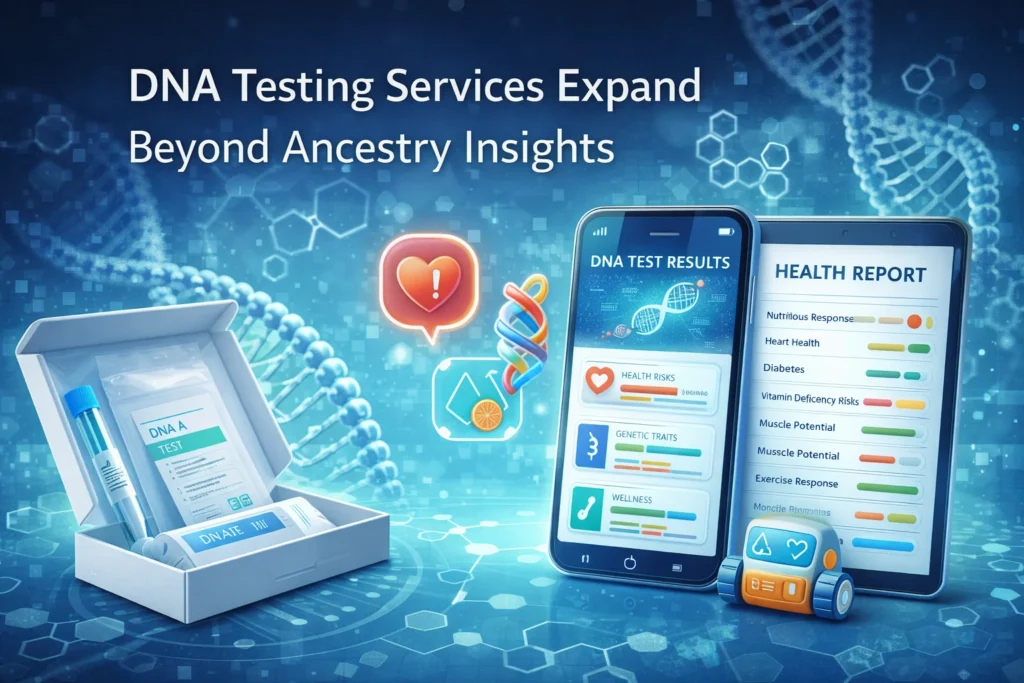

The Quiet Revolution in a Tiny Tube
It starts with a box. A simple, unassuming cardboard box that arrives in your mailbox or appears on a store shelf next to vitamins and toothpaste. Inside, there’s a plastic tube, some stabilizer liquid, and a barcode that will soon become more intimately connected to your identity than your social security number. You spit. You seal. You mail. And then you wait.
The waiting is the hardest part. Three to six weeks of wondering what secrets your cells might reveal. You go about your daily life—work, family, errands, sleep—but there’s a tiny part of your brain that keeps circling back to that tube, now sitting in a laboratory somewhere, being spun in centrifuges and washed in chemicals and read by machines that cost more than most houses. Your DNA is being extracted, amplified, and analyzed, turned from living tissue into digital data.
Then the notification pings on your phone. Your results are ready. With a trembling finger, you click the link, and suddenly you’re staring at a digital dashboard that claims to know things about you that you’ve never told anyone. Where your great-grandmother really came from. Whether you’re likely to sneeze when you look at the sun. If your muscles are built for sprinting or marathons. Maybe even if you carry a shadow of a disease that hasn’t yet touched your family tree.
This scene has played out more than 100 million times globally. That’s right—over 100 million people have now spit into tubes and mailed their genetic secrets to laboratories they’ll never visit, trusting corporations they’ve never met with the most intimate data imaginable. It’s one of the largest, quietest revolutions in the history of medicine and personal identity, and most of us barely noticed it happening.
Think about that number for a moment. One hundred million people. That’s more than the entire population of Germany, or France, or the United Kingdom. It’s roughly the population of the Philippines, or Egypt, or Ethiopia. If all the people who’ve taken consumer DNA tests formed their own country, it would be the fourteenth largest nation on Earth. And that country is growing by millions every year.
Remember when discovering your family history meant sitting at your grandmother’s kitchen table, eating her famous cookies while she pulled out photo albums with yellowed tape holding in the corners? Those moments were magical, but they were also limited by memory, by what stories survived the ocean crossing, by what names weren’t lost to Ellis Island scribbles. Today, that same curiosity leads us to spit in a tube, trading cookies for chemistry, stories for single nucleotide polymorphisms.
The journey from those kitchen tables to these digital dashboards is a story of science, money, hope, fear, and the timeless human desire to answer two simple questions: Where did I come from? And what’s going to happen to me?
But like any story involving human beings, it’s also a story of surprises. Of family secrets revealed. Of long-lost relatives found. Of medical mysteries solved and new mysteries created. Of joy and heartbreak and everything in between. The DNA testing revolution isn’t really about technology at all. It’s about us—who we are, where we belong, and what we pass on to the people who come after us.
The Long Road to the Spit Tube: A History of Genetic Discovery
To understand where we’re going, we have to understand how we got here. And the story of consumer DNA testing is really a story about human curiosity, scientific breakthroughs, and price tags that kept falling until they reached your wallet.
The journey begins long before anyone imagined spitting in a tube for fun. It starts in 1865 with an Austrian monk named Gregor Mendel, who spent years cross-breeding pea plants in his monastery garden. Mendel noticed that certain traits—plant height, flower color, pea shape—were passed down in predictable patterns. He didn’t know about DNA, didn’t know about genes, didn’t know about chromosomes. He just knew that something was being inherited, something that followed mathematical rules. His work was ignored for decades.
Fast forward to 1953, when two young scientists in Cambridge, England, walked into a pub and announced they’d discovered the secret of life. James Watson and Francis Crick had figured out the structure of DNA—the famous double helix. With that discovery, the door to the genetic age cracked open. Scientists could finally see the molecule that carried inheritance, could finally understand how information was stored and copied.
The next decades brought a cascade of discoveries. In the 1970s, scientists learned to cut and paste DNA, creating the field of genetic engineering. In the 1980s, they developed the polymerase chain reaction, a technique that could make millions of copies of a tiny DNA sample. In the 1990s, they launched the Human Genome Project, an ambitious international effort to read every single letter of human DNA.
The Human Genome Project was science on an epic scale. It involved thousands of scientists across twenty universities, cost nearly three billion dollars, and took thirteen years to complete. When they published the first draft in 2000, President Clinton stood beside Tony Blair and announced that we’d begun to learn the language in which God created life. It was that big a deal.
But here’s the thing about technology: it gets cheaper. The first human genome cost three billion dollars to sequence. By 2005, the price had dropped to about ten million. By 2010, it was ten thousand. By 2015, it was under a thousand. Today, some companies promise they’ll soon do it for a hundred dollars. The cost of reading DNA has fallen faster than the cost of almost any technology in human history—faster than computers, faster than cell phones, faster than anything.
This price collapse made consumer testing possible. But there was another trick that made it affordable for the masses. You don’t actually need to read all three billion letters of someone’s genome to give them useful information. Most of those letters are identical between humans anyway. We’re all 99.9% the same genetically. The differences that make us unique—that determine our ancestry, our traits, our health risks—are concentrated in specific spots called single nucleotide polymorphisms, or SNPs (pronounced “snips”).
By reading about 700,000 of these specific spots, companies can make very good predictions about your ancestry and pretty good predictions about some health traits. It’s like reading the headlines instead of the whole newspaper—you miss some details, but you get the gist. And it costs a fraction of what full sequencing would cost.
The first company to really figure this out was called 23andMe, named for the 23 pairs of chromosomes in every human cell. They launched in 2007 with a simple idea: let people spit in a tube, mail it in, and get back interesting information about themselves. The response was immediate and intense. People were fascinated by the ancestry results, but they were absolutely captivated by the health information. Suddenly, regular people could see if they carried the BRCA gene mutation linked to breast cancer, or if they had variants associated with late-onset Alzheimer’s.
This freaked out the government. In 2013, the FDA slammed the brakes, ordering 23andMe to stop offering health interpretations. They argued that people might make medical decisions based on incomplete information, that they might get mastectomies they didn’t need or skip checkups they did need. For two years, the company could only offer ancestry and raw genetic data—a long string of letters that meant nothing to most customers.
But the genie was out of the tube, both literally and figuratively. People wanted this information. And in 2015, after extensive studies showing that consumers actually handled the information pretty responsibly, the FDA started allowing health reports back. First for carrier status—conditions you could pass to children. Then for genetic health risks. Then for traits. Then for wellness. Each year, the fence moved a little further.
Today, you can get reports on everything from your likelihood of developing celiac disease to whether you have the “chef gene” that makes you more sensitive to bitter tastes. The industry has exploded into dozens of companies, each offering slightly different flavors of the same basic service: a peek behind the curtain of your own biology.
The Ancestry Illusion: What Those Colorful Pie Charts Really Mean
Let’s talk about that colorful pie chart. You know the one—it shows up on social media constantly, with friends posting “I’m 37% Scandinavian!” or “Turns out I’m mostly Nigerian!” It’s beautiful, it’s shareable, and it’s also deeply misleading in ways that most people never consider.
When a company tells you you’re 24% Italian, they’re not actually finding Italian DNA. There’s no gene that says “this person’s ancestors made good pasta.” There’s no genetic marker for pizza or the Colosseum or speaking with your hands. Instead, they’re comparing your DNA to reference populations—groups of living people in specific regions who the company has determined are “typical” for that area. If your DNA matches patterns common in modern Tuscany, they call it Italian.
But here’s the catch: those reference populations are incomplete. They’re based on volunteers, often from specific socioeconomic groups, usually with European ancestry heavily overrepresented. If your family comes from a region where few people have volunteered their DNA for research, the algorithm gets fuzzy. It might call broadly “Middle Eastern” what should be specifically “Lebanese.” It might miss your Native American ancestry entirely because the reference database lacks enough indigenous samples.
The numbers themselves are also fuzzier than they look. When a report says you’re 12% German, that’s not a measurement like your height or weight. It’s a statistical estimate based on how your DNA segments match reference patterns. Run your data through a different company’s algorithm, and you might get 8% or 16% instead. Neither is wrong, exactly. They’re just different statistical models interpreting the same data.
This became painfully clear a few years ago when identical twins started sending their DNA to testing companies. Twins share 100% of their DNA—they’re genetic copies. Yet when they got results back from the same company, the ancestry estimates sometimes differed by a few percentage points. The algorithms, it turned out, have a margin of error that companies don’t always highlight in their marketing.
The deeper truth about ancestry testing is that it’s not really about the past. It’s about the present. Your DNA doesn’t remember that your great-great-grandfather walked out of a village in County Cork. It just carries patterns that happen to match patterns currently found in Ireland. National borders are human inventions that shift constantly. DNA doesn’t care about them. Your ancestors didn’t think of themselves as “Italian”—they thought of themselves as from Naples, or Sicily, or a tiny valley where they’d lived for a thousand years.
And yet, despite all these caveats, there’s something genuinely magical about seeing yourself connected to a bigger story. When an African American descendant of enslaved people sees “23% Nigerian” on a screen, it’s not just a statistic. It’s a thread reaching back across a chasm of violence and erasure, a connection to a homeland that was stolen. When an adopted person finds genetic matches that lead them to biological family, it’s not just data—it’s reunion.
The ancestry pie chart is an illusion, but like all good illusions, it points toward a deeper truth. We are connected. We come from somewhere. We belong to a story bigger than our individual lives.
The Migration Stories Hidden in Your Cells
Beyond the simple percentages, your DNA contains a record of human migration that stretches back tens of thousands of years. Every one of your ancestors, going back to the first humans who left Africa, contributed to the genetic map that you carry today.
Consider the story of human migration out of Africa. About 60,000 years ago, a small group of humans—maybe as few as a few hundred individuals—crossed from the Horn of Africa into the Arabian Peninsula. They were the ancestors of everyone who today lives outside Africa. Every person of European, Asian, Native American, or Oceanian descent carries DNA from that small founding population.
As these humans spread across the globe, they carried their DNA with them. They adapted to new environments, developing lighter skin to produce vitamin D in northern latitudes, evolving the ability to digest milk into adulthood in cultures that domesticated cattle. These adaptations left signatures in their DNA, signatures that scientists can read today.
Your DNA might tell the story of the ancient Bantu migration across Africa, or the movement of Indo-European speakers into Europe, or the settlement of the Pacific islands by seafaring Austronesians. It might reveal traces of Neanderthal DNA, inherited from interbreeding that happened 50,000 years ago. It might show the genetic impact of the Mongol Empire, or the transatlantic slave trade, or the forced migrations of colonial times.
These are not just abstract historical facts. They’re part of you. The DNA that determines your hair texture, your susceptibility to certain diseases, your ability to digest certain foods—all of it carries the imprint of your ancestors’ journeys. When you look at your ancestry results, you’re not just seeing where your recent relatives came from. You’re seeing the accumulated history of thousands of generations, written in the language of your cells.
Case Study: Elena’s Unexpected Journey
Elena was 47 when she took the test. A high school principal in Albuquerque, she’d always known she was adopted. Her parents, wonderful people who’d raised her from three weeks old, had been open about it her whole life. She knew her birth mother was a teenager from a small town in New Mexico, that the adoption had been closed, that there would likely never be any more information.
She took the DNA test for medical reasons—she wanted to know if she carried any genetic risks her doctors should watch for. The health results came back relatively boring, which was a relief. But the family matching feature… that changed everything.
The company matched her with a second cousin she’d never heard of, a woman in Texas who had also tested. They messaged cautiously at first, comparing notes on family trees, trying to figure out how they might be connected. The cousin mentioned that her grandmother had grown up in that same small New Mexico town. Elena’s birth mother’s town.
Over the next eighteen months, Elena pieced together a story. Her birth mother had passed away a decade earlier, but she had siblings. Elena connected with an aunt, then with half-siblings she never knew existed. She learned she had three half-brothers, all of whom knew about her, all of whom had wondered for decades if she was okay. She learned that her birth mother had never stopped thinking about her, had kept a scrapbook with her photo, had told her other children about the baby girl she’d had to give up.
“It’s like falling through a trapdoor into a parallel universe,” Elena told me when we spoke. “I’m still the same person. I still have the same parents who raised me, the same life I built. But now there’s this whole other family out there that I belong to, that always wanted me. The DNA test didn’t just tell me about my past. It gave me a future with people I never knew existed.”
Elena’s story is dramatic, but it’s not unusual. The family matching features of these tests have reunited thousands of families, solved countless adoption mysteries, and sometimes opened doors that maybe should have stayed closed. Every story of joyous reunion has a counter-story of painful revelation—a secret sibling nobody knew about, a parent who wasn’t biological, a family secret that shatters relationships.
The tests don’t care about family secrets. They just reveal what’s always been true.
The Health Horizon: What Your Genes Can Really Tell You
Beyond the ancestry pie charts and long-lost cousins lies the territory that really excites scientists and scares regulators: health. Your DNA contains information about your risks, your vulnerabilities, and your likely responses to medications. But understanding that information requires navigating a minefield of nuance.
The health reports from consumer companies generally fall into four categories, and it’s crucial to understand the differences.
First are carrier status reports. These tell you whether you carry a gene for a recessive condition like cystic fibrosis or sickle cell anemia. Carrying one copy of the gene doesn’t affect your own health—you need two copies, one from each parent, to actually have the disease. But if you and your partner are both carriers, your children could be affected. This information matters most for family planning, and it’s generally pretty reliable. The science here is solid because these are well-studied conditions caused by specific, known genetic variants.
Second are genetic health risks. These include things like the BRCA gene variants for breast cancer or the APOE gene variant for late-onset Alzheimer’s. These are different from carrier status because having the variant actually increases your own risk of developing the condition. But here’s the crucial point: they are not diagnoses. Most people with the Alzheimer’s variant never develop Alzheimer’s. Most people with the breast cancer variant never develop breast cancer. The genes increase risk; they don’t guarantee destiny. For some variants, the increased risk is dramatic—BRCA mutations can raise breast cancer risk from about 12% to about 70%. For others, the increase is modest—a few percentage points above the baseline.
Third are polygenic risk scores. These are newer and more controversial. Instead of looking at one powerful gene, they look at hundreds or thousands of tiny genetic variations, each contributing a tiny amount to your overall risk for common conditions like heart disease, diabetes, or depression. The math is complicated, the science is evolving, and the accuracy varies wildly depending on your ancestry. If you’re of European descent, the scores are reasonably predictive because most research has been done on Europeans. If you’re not, they’re basically guesswork because the underlying studies don’t represent your genetic background.
Fourth are wellness and trait reports. These are the fun ones, the ones that feel like reading a horoscope written in science language. Do you have the gene for “dry” or “wet” earwax? (Yes, that’s real, and it’s connected to body odor too.) Are you likely to prefer sweet or fatty foods? Do you have the muscle fiber composition of a sprinter or a marathon runner? The science behind these ranges from solid to speculative, and companies sometimes oversell what they mean. A report that says you’re genetically predisposed to dislike broccoli might be correct about the taste receptor gene, but it can’t account for the fact that you learned to love roasted broccoli as an adult.
The challenge for consumers is distinguishing between these categories. When you’re scrolling through your results, it all looks the same—a colorful chart with a risk percentage and some explanatory text. But the weight you should give that information varies enormously. A carrier status report is basically factual. A polygenic risk score is a statistical guess with a wide margin of error.
The Complicated Science of Genetic Risk
To really understand what genetic risk means, you have to understand something about how genes work. It’s not like flipping a switch. It’s more like an orchestra, with thousands of instruments playing together to produce the music of you.
Most diseases are not caused by a single gene. They’re caused by complex interactions between many genes, and between genes and environment. Heart disease, for example, involves genes that affect cholesterol metabolism, blood pressure regulation, inflammation, and dozens of other processes. It also involves diet, exercise, smoking, stress, and sleep. Your genetic risk score for heart disease is just one factor among many.
Even the single-gene conditions are more complicated than they seem. Take the BRCA gene mutations. Having a BRCA mutation dramatically increases your risk of breast and ovarian cancer, but it doesn’t guarantee you’ll get cancer. Why? Because other genes modify the risk. Because your immune system plays a role. Because environmental factors matter. Because there’s an element of randomness in how cells divide and mutate.
Scientists talk about “penetrance”—the probability that a gene variant will actually produce its associated trait. Some variants are highly penetrant, meaning that if you have them, you’ll almost certainly develop the condition. Huntington’s disease is like that—if you have the mutation, you will get the disease if you live long enough. But most variants are incompletely penetrant. They increase your risk, sometimes dramatically, but they don’t determine your fate.
Then there’s the problem of gene-environment interactions. A genetic predisposition to obesity might never manifest if you grow up in a culture with healthy food and active lifestyles. A genetic vulnerability to depression might never activate if you lead a low-stress life with strong social support. Your genes load the gun, but your environment pulls the trigger.
This is why genetic counselors are so important. They can help you understand not just what your genes say, but what those findings mean in the context of your life, your family history, your other risk factors. They can help you distinguish between information that matters and information that’s interesting but not actionable.
Case Study: David’s Difficult Choice
David was 34, a construction project manager in Denver, when he took a consumer DNA test primarily for ancestry. He was curious about a family rumor of Native American heritage. The ancestry results were interesting but inconclusive. The health results, though, contained a bombshell.
He had a variant in the BRCA2 gene, strongly associated with increased risk of breast, prostate, and pancreatic cancers. David is a man. He didn’t know men could get breast cancer. He definitely didn’t know they could carry BRCA mutations and pass them to children.
“I stared at the screen for an hour,” he told me. “I called my sister and said ‘you need to test, right now.’ I called my mom and asked if anyone in the family had cancer, really pressed her, and she remembered that a great-aunt had breast cancer in her forties. It was this puzzle piece that suddenly made everything click.”
David did exactly what the experts recommend: he took his consumer test results to a genetic counselor. The counselor confirmed the finding with clinical-grade testing, then helped him understand what it meant. His lifetime risk of prostate cancer was elevated, so he started screening earlier and more frequently than most men. His breast cancer risk, while still low as a man, warranted occasional checks. And crucially, his sister tested positive for the same variant, leading her to make difficult decisions about preventive surgery.
The hardest part was thinking about his three-year-old daughter. She had a 50% chance of inheriting the variant. David couldn’t test her—she was too young, and experts recommend waiting until adulthood for such life-altering information. He could only wait, and worry, and hope that by the time she grew up, the treatments would be even better.
“I’m grateful I took the test,” David said. “Ignorance might have been bliss for a while, but knowledge let me do something. I see doctors. I’m vigilant. My sister made choices that might save her life. My daughter will know her risk and can make her own decisions when she’s ready. The test took away my innocence, but it gave me power.”
David’s story illustrates both the power and the weight of genetic information. It’s not just data. It’s the kind of knowledge that changes how you live, how you plan, how you see your future.
The Wellness Industrial Complex: Personalized Everything
If health testing is the serious, sober side of the industry, wellness testing is the flashy, fun cousin. And it’s growing even faster.
The pitch is seductive: generic health advice is for generic people. You’re unique, so why follow one-size-fits-all diet and exercise plans? Upload your DNA, and we’ll tell you exactly what your body needs. Are you a “slow metabolizer” of caffeine? Switch to decaf after noon. Do you have the FTO gene variant associated with obesity? Here’s a diet plan specifically designed for your genetics. Are you genetically predisposed to vitamin D deficiency? Take this specific supplement, which we happen to sell.
It’s personalized everything, and it taps into something deep in the human psyche: the desire to be seen as an individual, to have solutions that fit us specifically, not just the average person. In a world of mass production and generic advice, genetic wellness promises to make you the hero of your own health story.
The science, unfortunately, is not nearly as solid as the marketing suggests.
Take the caffeine example. Yes, there are genetic variants that affect how quickly your liver processes caffeine. People with the “slow” variant do, on average, keep caffeine in their systems longer. But the effect size is modest, and individual variation is huge. Your morning coffee habit, your body weight, your other medications—all of these matter as much or more than your genes. Telling someone they must switch to decaf based solely on a genetic test is like telling someone they’ll definitely love broccoli because they have a certain taste receptor gene. It’s not wrong, exactly, but it’s missing the point.
The fitness predictions are even squishier. The idea of a “sprinter gene” or “endurance gene” comes from studies of elite athletes, people at the absolute tail end of the human performance curve. Among regular people, the genetic differences are swamped by lifestyle factors. Did you run track in high school? Did you grow up walking everywhere or riding in cars? Do you enjoy exercise or dread it? These things matter more than whether you have the ACTN3 variant associated with fast-twitch muscle fibers.
And yet, there’s something undeniably appealing about seeing your traits validated by science. When a test tells you you’re genetically predisposed to enjoy endurance activities, and you’ve always loved long hikes, it feels like confirmation. When it tells you you’re likely a “supertaster” who’s sensitive to bitter flavors, and you’ve always hated broccoli and Brussels sprouts, it feels like vindication. The test isn’t really telling you anything new—it’s just putting a scientific stamp on what you already knew.
The danger is when people take these wellness reports too seriously, when they make major life changes based on weak genetic signals, or when they use genetic results to explain away problems that might have better solutions. “I can’t lose weight because I have the obesity gene” might feel better than “I need to reevaluate my diet and exercise habits,” but it’s not necessarily true, and it’s definitely not helpful.
The Supplement Connection: When Genes Become Marketing
One of the most controversial developments in the wellness testing space is the direct link between genetic results and product recommendations. Several companies now offer DNA tests that tell you which supplements you should take, based on your genetic variants. Need more vitamin B12? Here’s our B12 supplement. Folate metabolism issues? Try our methylfolate. Inflammation markers? Our turmeric complex is on sale this week.
This is brilliant marketing. It turns a one-time test into an ongoing revenue stream. It creates a reason for customers to keep coming back, to keep buying, to stay within the company’s ecosystem. And it taps into the same psychological dynamic that makes people trust personalized recommendations: if it’s tailored to me, it must be right.
But the science behind supplement recommendations is even weaker than the science behind diet and exercise predictions. Most of the genetic variants that affect nutrient metabolism have small effects that are easily overcome by a normal diet. Unless you have a diagnosed deficiency, you probably don’t need supplements based on your genes. And even if you do, the supplement industry is notoriously under-regulated. What’s in the bottle may not match what’s on the label, and the doses may not be what you need.
There’s also a deeper concern: the medicalization of normal variation. Not everyone needs to optimize their nutrient levels. Not everyone needs to take supplements. By framing normal genetic differences as problems to be solved with products, these companies create a market where none existed before. They sell not just supplements, but anxiety about being genetically suboptimal.
Case Study: Marcus and the Marketing Machine
Marcus, a 52-year-old accountant from Phoenix, got sucked into the wellness testing vortex hard. An avid cyclist, he saw an ad for a DNA-based fitness company that promised to optimize his training. The ad showed a professional cyclist holding a trophy, with text that read “Train Smarter, Not Harder—Your Genes Hold the Key.” Marcus clicked. He bought. He spit. He waited.
The results came back and told him he had the “power” genetics of a sprinter, not an endurance athlete. His fast-twitch muscle fibers were genetically optimized for short bursts of speed. His endurance genetics were merely average. The report recommended he switch from long-distance cycling to high-intensity interval training and weightlifting.
Marcus was crushed. He loved cycling—the long slow miles, the meditative rhythm, the feeling of covering distance under his own power. But the test said his body wasn’t built for it. He dutifully switched to the recommended program, forcing himself into a gym routine he hated. He was miserable. His fitness declined. He stopped exercising altogether for two months.
Eventually, he mentioned this to his doctor during a routine physical. The doctor, who knew Marcus well, laughed. “Marcus, you’ve been cycling for thirty years. You’ve done centuries, you’ve climbed mountains, you’re in better shape than most men half your age. And you’re letting a mail-in test tell you your body isn’t built for it? That test doesn’t know you. It knows statistical probabilities based on population averages. You’re not an average. You’re you.”
Marcus went back to his bike that weekend. Within a month, he felt like himself again. He still has the DNA report saved on his computer—he looks at it sometimes, mostly as a reminder not to let data override experience.
“The test wasn’t wrong, exactly,” Marcus told me. “It correctly identified my genetic variants. But the interpretation was wrong for me. My body had thirty years of evidence that I could be an endurance athlete. The test had a statistical model. I should have trusted my body.”
The Privacy Puzzle: Who Owns Your Genetic Code?
There’s a question that haunts the DNA testing industry, and it’s one that most consumers never think about when they’re spitting in that tube: what happens to your data after the test?
You might think the transaction is simple. You pay money, they analyze your DNA, they give you results, and that’s the end. But your DNA is not like a photo you upload to a printing service. It’s not like a survey you fill out for a store discount. Your DNA is the most intimate, unchangeable data you possess. You can change your password. You can cancel your credit card. You cannot change your genome.
When you send your saliva to a testing company, you’re not just buying a service. You’re entering a complex relationship with a corporation that has its own interests, its own investors, its own future plans. And the terms of that relationship can change.
Most companies offer privacy policies that sound reasonable. They promise to keep your data secure, to anonymize it for research, to let you opt out of sharing. But those policies have changed over time, sometimes in ways that surprise customers. One major company was acquired by a pharmaceutical giant eager to access its genetic database. Another company faced criticism when it was revealed they’d been sharing data with law enforcement in criminal investigations.
The pharmaceutical angle is particularly interesting. Your anonymized genetic data is incredibly valuable to drug companies. Instead of spending billions to recruit participants for research studies, they can buy access to massive databases of people who’ve already volunteered their DNA and health information. This has led to legitimate breakthroughs—one company used its database to identify a genetic variant that protects against Alzheimer’s, opening new avenues for drug development. But it’s also led to concerns about whether consumers fully understand what they’ve signed up for.
Then there’s the law enforcement question. The Golden State Killer case in 2018 made headlines when investigators used a public genealogy database to identify a suspect through his relatives’ DNA. It was a brilliant piece of detective work that caught a notorious criminal. It also opened a Pandora’s box. If police can access these databases for violent crimes, what stops them from accessing them for lesser offenses? What about insurance companies? What about employers?
The Genetic Information Nondiscrimination Act (GINA) protects Americans from genetic discrimination in health insurance and employment. But it doesn’t cover life insurance, disability insurance, or long-term care insurance. If an insurance company gets access to your genetic data and sees elevated risk for a condition, they could deny you coverage or raise your rates. This is not hypothetical—it’s already happening in some countries, and the legal framework in the US hasn’t fully caught up with the technology.
The companies themselves argue that they take privacy seriously, that they encrypt data, that they give consumers choices. And for the most part, they’re trying to do the right thing. But the incentives are complicated. Their business models often depend on using data for research and development. Their shareholders want growth. Their future might depend on partnerships that weren’t contemplated when you mailed in your tube five years ago.
For consumers, the only protection is awareness. Read the privacy policy before you buy. Understand what you’re consenting to. Know that you can usually opt out of research sharing. And recognize that once your genetic data is digitized and stored, you lose some control over where it goes and how it’s used.
The Data Breach Nightmare
Privacy isn’t just about companies sharing your data intentionally. It’s also about protecting it from theft. Genetic data is a tempting target for hackers because it’s permanent, because it’s personally identifiable, and because it can’t be changed once stolen.
In recent years, several genetic testing companies have experienced data breaches. In one case, the account information of nearly a million users was exposed. In another, hackers gained access to customer data through credential stuffing—using passwords stolen from other sites to log into DNA accounts. So far, the stolen data has mostly been used for account takeover and spam, but the potential for more serious harm is real.
Imagine your genetic data being leaked online. Imagine employers, insurers, or random strangers being able to look up your disease risks, your ancestry, your family connections. Imagine the blackmail possibilities: “Pay up or we’ll tell your insurance company about your BRCA mutation.” Imagine the embarrassment of having your non-paternity events—the times when your father isn’t your biological father—exposed for the world to see.
These are not science fiction scenarios. They’re realistic possibilities in a world where genetic data is stored on servers that can be hacked, transmitted over networks that can be intercepted, and accessed by employees who might be bribed or blackmailed.
The companies are working on security, but they’re in an arms race with increasingly sophisticated criminals. And unlike a credit card number, your genetic data can’t be cancelled and reissued. Once it’s out there, it’s out there forever.
The Science Gap: Why Your Results Might Be Wrong
Here’s something the testing companies don’t highlight in their marketing: their results can be wrong. Not just interpretively wrong, like telling you you’re more Scandinavian than you really are, but factually wrong, like misreading the actual letters of your DNA.
The technology is good, but it’s not perfect. Genotyping arrays read specific spots in your genome by looking for fluorescent signals. Sometimes those signals are ambiguous. Sometimes the software makes mistakes. Sometimes the sample gets contaminated. Quality control catches most of these errors, but not all.
One study that looked at direct-to-consumer raw data found that about 40% of variants in certain medically important genes were false positives when confirmed by clinical-grade sequencing. That’s a stunning number. It means that if you’re making medical decisions based on consumer test data, you’re rolling the dice.
The raw data you can download from these companies is particularly problematic. It’s tempting to run it through third-party interpretation tools that promise even more insights—promethease, genetic genie, and others. But these tools are only as good as the data they receive, and they often lack the clinical context that professional geneticists provide. They’ll tell you about every variant they find, including many that are harmless or poorly understood, potentially causing unnecessary anxiety.
The ancestry side has its own accuracy issues. Remember those reference populations? They’re getting better, but they’re still skewed toward people of European descent who’ve volunteered for research. If your ancestry is predominantly African, Asian, or Indigenous, your results will be less precise. The algorithms have less data to work with, so they make broader estimates. What a European customer sees as “42% Irish, 23% German, 15% Scandinavian” an African customer might see as “82% Nigerian, 18% broadly West African.” The resolution is just lower.
Companies are working to fix this, recruiting more diverse participants, building better reference panels. But it’s a slow process, and it’s complicated by historical distrust of medical research in many communities. Why would someone whose ancestors were exploited in the name of science volunteer their DNA for more research? That trust, once broken, is hard to rebuild.
The Representation Problem
The lack of diversity in genetic databases isn’t just an academic problem. It has real consequences for the people whose ancestry isn’t well represented.
Consider a person of primarily Korean ancestry who takes a DNA test. The company’s reference panel might have only a few hundred Korean samples, compared to tens of thousands of European samples. The algorithm has less information to work with, so it makes broader, less certain estimates. It might call the person’s ancestry “broadly East Asian” instead of specifically Korean. It might miss subtle regional distinctions that would be obvious with better data.
The same problem affects health predictions. Polygenic risk scores are built by studying thousands of people with a particular condition and identifying the genetic variants that correlate with it. If those studies are done almost entirely on Europeans, the resulting risk scores work well for Europeans but poorly for everyone else. A person of African ancestry might get a risk score that’s essentially meaningless, even though the report presents it with the same confidence as a European person’s score.
This creates a genetic divide. People of European descent get increasingly precise, useful information. People of other ancestries get fuzzy estimates that may be wrong. As genetic testing becomes more integrated into medicine, this divide could widen health disparities rather than reducing them.
Some companies are trying to address this by recruiting more diverse research participants, by partnering with institutions in other countries, by building better reference panels. But it’s a long, slow process, and it’s hampered by the same historical injustices that created the problem in the first place.
The Emotional Rollercoaster: When Data Hits Home
The most underestimated aspect of DNA testing is the emotional impact. We talk about data, about results, about reports—clinical language that suggests this is just information. But information about your origins, your health, your family secrets—that’s not just data. That’s your story. That’s who you are.
The emotional journeys people take with their DNA results are as varied as the people themselves. Some feel joy at connecting with distant cousins. Some feel validation when their results confirm family legends. Some feel curiosity satisfied, questions answered, mysteries solved.
Others feel something darker. They discover that the father who raised them isn’t their biological father. They learn they have a sibling they never knew about, a secret their parents kept for decades. They find out they carry a gene for a devastating disease, a time bomb they never knew was ticking inside them. They see their risk for Alzheimer’s, for cancer, for heart disease, and suddenly they’re staring at a future they never asked to preview.
The companies try to prepare you for this. They put warnings on certain reports, suggest genetic counseling, encourage you to talk to your doctor. But warnings on a screen can’t prepare you for the gut punch of discovering a family secret or confronting your own mortality.
Genetic counselors are the unsung heroes of this story. They’re the professionals who help people make sense of their results, who explain what the numbers really mean, who provide context and support. The problem is that there aren’t nearly enough of them. The demand for genetic counseling has exploded along with the testing industry, but the supply of trained counselors hasn’t kept up. Many people get their results and have nowhere to turn for interpretation.
Online forums fill some of the gap. Facebook groups, Reddit communities, specialized websites where people share their experiences and try to make sense of their results together. It’s peer support, which can be helpful, but it’s also peer support, which means misinformation spreads as easily as information. A well-meaning stranger on the internet is not a substitute for a trained professional.
The NPE Phenomenon: When Families Get Rewritten
One of the most emotionally charged outcomes of DNA testing is the discovery of NPE—”not parent expected.” This is the polite term for finding out that your father isn’t your biological father, or that you have a half-sibling you never knew about, or that you were adopted and never told.
These discoveries are happening more and more frequently as DNA testing becomes common. People take the test for fun, and suddenly they’re faced with a fundamental rewriting of their family story. The man who raised them, who taught them to ride a bike, who walked them down the aisle—not biologically related. The siblings they grew up with—half-siblings. The family medical history they’ve been giving doctors for years—completely wrong.
The emotional impact of these discoveries can’t be overstated. People feel their identity shaken, their history rewritten, their sense of belonging disrupted. They struggle with whether to confront their parents, whether to tell their siblings, whether to seek out their biological father. They grapple with questions of loyalty and betrayal, of truth and secrecy, of who they really are.
Some NPE discoveries lead to positive outcomes. People connect with biological relatives they never knew, build new relationships, fill in gaps in their understanding of themselves. Others lead to family rifts, estrangements, lasting trauma. There’s no way to predict which way it will go.
The testing companies are aware of this, but they’re limited in what they can do. They can warn people that family surprises are possible, but they can’t prevent the surprises from happening. They can provide resources and support, but they can’t undo the emotional impact. The fundamental dilemma is built into the technology: DNA reveals truth, and truth can hurt.
The Future Is Sequencing: What Comes Next
As remarkable as today’s DNA tests are, they’re just the beginning. The technology is evolving fast, and the next generation of consumer genetics will make current tests look like toys.
The big shift will be from genotyping to sequencing. Genotyping looks at specific spots in your genome—the spots where we know variation matters. Sequencing reads every letter, every one of those three billion base pairs. It’s more expensive, but the price is dropping. Several companies now offer whole genome sequencing for under $1,000, and it’ll keep falling.
Full sequencing changes everything. Instead of getting reports on a few hundred predetermined traits, you’ll have your entire genetic code. You’ll be able to check for anything, anytime, as new discoveries emerge. Found a new gene for heart disease next year? You can look it up in your sequence without retesting.
This creates new challenges. More information means more uncertainty. We don’t know what most of your genome does. We’ll find variants we don’t understand, flags we can’t interpret, warnings we can’t act on. The burden of knowledge will grow.
Artificial intelligence will help. Machine learning algorithms are already getting better at predicting how genes interact, how variants combine, how your unique genetic symphony produces the music of you. These algorithms will improve as databases grow, as we collect more data from more people, as we connect genetic information to real health outcomes over decades.
The integration with other health data is coming too. Your genetic report won’t exist in isolation. It’ll connect to your wearable device data, your electronic medical records, your blood test results, your sleep patterns, your diet logs. Algorithms will synthesize all of it into a dynamic picture of your health, constantly updating as new data arrives.
Imagine getting a notification that says: “Based on your genetic risk for diabetes, your recent blood sugar readings, and your sleep quality over the past month, your risk of developing prediabetes in the next five years has increased by 15%. Here are three things you can do today to lower that risk.” That’s the future the industry is building.
The Pharmacogenomics Revolution
One of the most promising areas of genetic testing is pharmacogenomics—using your DNA to predict how you’ll respond to medications. This is already starting to enter clinical practice, and it could transform how doctors prescribe drugs.
The basic idea is simple: genetic variants affect how your body processes medications. Some people metabolize drugs quickly, so standard doses might be too low. Others metabolize slowly, so standard doses might be toxic. Some people have genetic variants that make certain drugs ineffective or dangerous. Knowing this information in advance could save lives and prevent suffering.
Consider the blood thinner warfarin. It’s a tricky drug to dose—too little and it doesn’t prevent clots, too much and it causes dangerous bleeding. Genetic variants strongly influence how people respond to warfarin, and knowing a patient’s genetics can help doctors choose the right starting dose, avoiding weeks of trial and error.
Or consider antidepressants. It often takes months to find the right medication for depression, with patients trying one drug after another, waiting weeks to see if it works, suffering through side effects. Genetic testing can identify which drugs are likely to be effective and which are likely to cause problems, potentially shortening the journey to relief.
Or consider chemotherapy. Some cancer drugs are only effective in patients with specific genetic profiles. Others are dangerous in patients with certain variants. Genetic testing can help match patients to the treatments most likely to help them, and avoid treatments that might harm them.
The consumer testing companies are getting into this space, offering pharmacogenomic reports that tell you how you’re likely to respond to common medications. But again, caution is warranted. These reports are based on averages, and individual responses can vary. They’re a tool for discussion with your doctor, not a substitute for medical judgment.
The Reproductive Frontier
Another area where genetic testing is expanding rapidly is reproductive health. People planning families can now get tested to see if they’re carriers for genetic conditions, and embryos created through IVF can be screened for genetic abnormalities.
Carrier screening has been around for decades, but it used to be limited to specific conditions based on family history or ethnicity. Jewish couples were screened for Tay-Sachs. African Americans were screened for sickle cell. Everyone else got basic testing or nothing at all.
Today, expanded carrier screening panels can test for hundreds of conditions at once, regardless of ethnicity. A simple blood test can tell prospective parents if they’re both carriers for the same recessive condition, giving them a 25% chance of having an affected child. This information allows them to make informed choices—using donor eggs or sperm, pursuing IVF with genetic testing, adopting, or taking their chances with prenatal diagnosis.
Then there’s preimplantation genetic testing. For couples doing IVF, embryos can be screened for genetic abnormalities before transfer. This was originally developed to detect major chromosomal problems, but it’s increasingly used to screen for specific genetic conditions, and even for traits in some cases.
This raises ethical questions. Is it okay to select embryos based on genetic risk for disease? Most people say yes. Is it okay to select for sex? More controversial. Is it okay to select for height, or intelligence, or athletic ability? We’re not there yet technically, but we’re heading in that direction. The technology is advancing faster than our ability to agree on how it should be used.
The Regulation Question: Who’s Watching the Watchers?
With all this power comes a pressing question: who’s making sure these companies do it right? The regulatory landscape for consumer genetics is a patchwork, and there are holes in the fabric.
In the United States, the FDA regulates health claims. They’ve taken a reasonably active role, approving specific tests for specific conditions, requiring companies to show their results are accurate and their claims are supported. But the FDA’s resources are limited, and the number of tests grows faster than the agency can review them. Many wellness claims exist in a gray area—they’re not quite health claims, so they escape the strictest oversight.
The Federal Trade Commission watches for deceptive advertising, and they’ve taken action against companies that made exaggerated claims. But again, enforcement is reactive. They can punish bad actors after they’ve already misled consumers, but they can’t pre-approve every marketing claim.
State laws add another layer. Some states have their own genetic privacy laws, their own requirements for consent, their own restrictions on data use. A company operating nationally has to navigate fifty different sets of rules, which is complicated and expensive.
Internationally, the picture varies even more. Europe’s GDPR provides strong privacy protections, requiring explicit consent for data use and giving consumers rights to access and delete their information. Other countries have weaker protections or none at all. Companies that operate globally have to decide whether to follow the strictest standards everywhere or to segment their practices by jurisdiction.
The industry argues that self-regulation is working, that they have strong incentives to protect customer trust, that the market will punish companies that abuse data or make false claims. There’s some truth to this—a major privacy scandal could destroy a company’s reputation overnight. But history suggests that market forces alone aren’t enough, that the temptation to monetize data is strong, that consumers need protection even from companies that mean well.
The International Patchwork
Different countries have taken different approaches to regulating consumer genetics. The contrast between the US and Europe is particularly striking.
In the US, the approach is relatively permissive. Companies can offer tests unless the FDA stops them. The burden is on regulators to prove that a test is unsafe or misleading. This has led to a vibrant market with many options, but also to concerns about oversight.
In Europe, the approach is more restrictive. Many countries require that genetic testing be ordered by a physician, that results be delivered with genetic counseling, that companies meet strict quality standards. This protects consumers but also limits access and slows innovation.
Other countries fall somewhere in between. Canada allows direct-to-consumer testing but requires that health-related results be delivered through a physician. Australia has banned some health-related tests entirely. China has embraced genetic testing but with less attention to privacy.
For consumers, this means that your rights and protections depend on where you live. A test that’s freely available in the US might be illegal in Germany. A privacy policy that’s acceptable in California might violate French law. Companies have to navigate this complexity, and consumers have to understand their local regulations.
Making Sense of It All: A Consumer’s Guide to Genetic Testing
So where does this leave you, the curious consumer, wondering whether to spit in that tube? The decision is personal, but there are frameworks to help you think it through.
Start with your motivation. Why do you want to test? If it’s pure curiosity about your ancestry, go ahead—just understand the limitations. The pie charts are approximations, not facts. The cousin matches are real, but they might reveal surprises. If you’re prepared for those surprises, ancestry testing can be genuinely fun and illuminating.
If you’re interested in health, be more cautious. Consider whether you’re emotionally prepared for whatever you might find. Ask yourself how you’d handle learning about elevated Alzheimer’s risk, or a BRCA mutation, or a predisposition to heart disease. If the answer is “I’d want to know so I could take action,” then testing might be right for you. If the answer is “I’d probably just worry,” maybe stick to ancestry.
Before you buy, read the privacy policy. I know, nobody reads privacy policies. But this one matters. Look for answers to specific questions: Can you opt out of research? Is your data shared with third parties? What happens if the company gets acquired? Can you delete your data and sample after testing? Companies that are serious about privacy make these answers easy to find.
Consider using a pseudonym or a P.O. box if you’re worried about anonymity. Some people create separate email addresses for testing, use a different name, pay with prepaid cards. It’s extra work, but it provides an extra layer of separation between their genetic data and their public identity.
When your results come, take them slowly. Don’t read everything at once. Let the information sink in. If you find something concerning, don’t panic. Most genetic variants are not destiny. Most risks are small. Most findings require confirmation with clinical testing before any action.
Talk to a professional if you can. Genetic counselors are the best resource, but they’re not always accessible. Your regular doctor can help with some things, though they may not be genetics experts. Online resources from reputable sources—university medical centers, government health agencies, professional medical societies—can provide context.
And remember, always, that you are more than your genes. The test results are a map, not the territory. They show probabilities, not certainties. They describe tendencies, not destinies. You still make choices every day that shape your health, your relationships, your future. The genes are just the starting point.
The Conversation You Should Have First
Before you take a DNA test, have a conversation with your family. This is especially important if you’re testing for health reasons, because your results will have implications for your blood relatives.
If you find out you carry a BRCA mutation, that means your siblings, your children, maybe even your cousins could carry it too. They have a right to know, but they also have a right to decide whether they want to know. Some people prefer not to learn about genetic risks. They’d rather live with uncertainty than confront difficult information.
Having the conversation beforehand can prepare everyone for what might come. It can establish ground rules for sharing results. It can give family members time to think about whether they want to be informed if something significant is found.
The conversation can be awkward. “Hey, I’m taking a DNA test, and if it turns out I have a scary disease gene, do you want me to tell you?” But awkward is better than blindsiding someone with life-altering information they never asked for.
The Deeper Story: What We’re Really Looking For
Maybe, in the end, the explosion of DNA testing isn’t really about science at all. Maybe it’s about something deeper, something more human.
We live in a time of fragmentation. Families scatter across continents. Traditions fade. The stories that used to connect us to our past—the oral histories, the family recipes, the holiday rituals—get diluted with each generation. We’re connected to more people than ever through technology, but we often feel less connected to where we came from, to the roots that anchor us.
DNA testing offers an antidote to that fragmentation. It promises to reconnect us, to give us back a story, to place us in a narrative that stretches back thousands of years. When you look at that pie chart and see that you’re part of this group and that group, you’re not just learning facts. You’re joining a tribe. You’re becoming part of something bigger than your individual life.
The health information taps into a different but related need: the desire for control in a world that feels uncontrollable. We can’t predict the future. We can’t prevent all disease. We can’t guarantee we’ll be healthy into old age. But a DNA test feels like a peek behind the curtain, a chance to see what’s coming and prepare for it. It’s the illusion of control, but illusions can be comforting.
And the family matching—that’s pure human connection. In a world where loneliness is epidemic, where genuine community is increasingly rare, the chance to find biological family, to discover cousins you never knew existed, to build new relationships based on shared DNA—that’s powerful. It’s not about data. It’s about belonging.
The technology will keep advancing. The tests will get cheaper, more accurate, more comprehensive. The ethical questions will get more complex. The privacy concerns will persist. But underneath all of it, the fundamental human need will remain: the need to know where we come from, to understand who we are, to connect with others who share our story.
That’s what the spit tube is really about. Not data. Not science. Just the oldest human question of all: Who am I, and where do I belong?
The Ethical Horizon: Questions We Haven’t Answered
As we race forward into this genetic future, there are questions we haven’t fully grappled with. Big questions. Uncomfortable questions.
What happens when genetic prediction gets really good? When we can tell parents not just about rare diseases, but about likely personality traits, likely intelligence, likely athletic ability? Will we start selecting embryos based on genetic predictions? Will we start judging people based on their genetic potential?
What happens when employers get access to genetic data? They can’t use it now, legally, but laws can change. Will we see a future where companies screen applicants for genetic fitness for the job, where “you have the wrong genes” becomes a hiring disqualification?
What happens when insurance companies figure out how to use genetic information despite current restrictions? Will we see a two-tier system where people with “good” genes get affordable coverage and people with “bad” genes pay astronomical rates?
What happens to people who don’t want to know? Who prefer to live with uncertainty, to take life as it comes, to not preview their medical future? As genetic testing becomes more common, will they face pressure to test? Will they be seen as irresponsible for not knowing their risks?
What happens to our conception of ourselves when we start seeing everything through a genetic lens? When we explain away our behaviors as “my genes made me do it”? When we reduce the beautiful complexity of human personality to a collection of statistical probabilities?
These aren’t academic questions. They’re coming. Some of them are already here. The technology is moving faster than our ability to think through the implications, faster than our laws can adapt, faster than our ethics can evolve.
The Wisdom of Caution: Learning to Live With Genetic Knowledge
Perhaps the wisest approach to DNA testing is neither wholehearted embrace nor fearful rejection, but something in between: engaged caution. Curiosity balanced with skepticism. Interest tempered by understanding.
Take the tests if you want to. They’re fascinating. They’ll teach you things about yourself and your family. They might connect you with relatives you never knew. They might give you information that helps you make better health decisions.
But hold the results lightly. Remember their limitations. Remember that they’re probabilities, not certainties. Remember that your life is lived in the choices you make, not in the genes you inherited.
Talk to family before you test, especially if you’re testing for health reasons. Your genetic information is also their genetic information. The BRCA mutation you discover might be their mutation too. The Alzheimer’s risk you learn about might be their risk. They have a right to prepare for that knowledge, even if they don’t want to receive it themselves.
Consider the timing. If you’re going through a difficult period—divorce, illness, loss—maybe wait. Genetic information can be heavy. It’s better to receive it when you have the emotional bandwidth to process it.
And remember, always, that you can stop. You can decide not to look at certain results. You can delete your data. You can walk away. The information exists, but you don’t have to engage with it. Ignorance, in some cases, really is bliss.
The Story Continues
A hundred years ago, people knew their ancestors going back generations because they lived in the same villages, married the same families, told the same stories. Identity was inherited through community, through place, through the daily rhythms of life that connected you to everyone who came before.
That world is mostly gone. We move. We scatter. We lose track. We become individuals, disconnected from the chains of ancestry that once defined us.
DNA testing offers a way back. Not all the way back—it can’t give us the villages, the communities, the shared daily life. But it can give us a thread, a connection, a sense that we’re part of something continuous, something ancient, something that will continue after we’re gone.
That’s worth something. Even with all the limitations, all the uncertainties, all the ethical complexities—that’s worth something.
The story of you is written in your cells. It stretches back to the first humans who walked out of Africa, who crossed mountains and oceans, who survived ice ages and famines, who loved and lost and loved again, generation after generation, until they produced you.
The spit tube can read some of that story. Not all of it. The most important parts—the love, the struggle, the choices, the relationships—those aren’t in your DNA. Those are in your life, in the way you live it, in the people you touch, in the difference you make.
The genes are just the starting point. The rest is up to you.
The Final Question: To Spit or Not to Spit?
So here you are, at the end of this long exploration, still holding that metaphorical tube in your hand. Should you spit? Should you send your genetic secrets off to a laboratory somewhere, trusting that they’ll be handled with care, interpreted correctly, and kept private?
The answer, as with so many things in life, is: it depends.
It depends on your curiosity and your tolerance for uncertainty. It depends on your emotional resilience and your support system. It depends on your family situation and your medical history. It depends on how much you trust corporations with your most personal data.
For some people, the benefits clearly outweigh the risks. They gain valuable health information, connect with relatives, satisfy deep curiosity about their origins. The tests enrich their lives and expand their understanding of themselves.
For others, the risks loom larger. They worry about privacy, about unexpected discoveries, about the psychological weight of genetic knowledge. They prefer to live with mystery rather than court revelation.
Both choices are valid. There’s no right answer, only the right answer for you.
Whatever you decide, do it with open eyes. Understand what you’re getting into. Know the limitations of the technology. Consider the implications for your family. Read the privacy policy. Prepare for surprises.
And if you do spit, remember: the results are just one chapter in your story, not the whole book. You are still the author of your life, still making choices every day that shape who you become. The genes are the notes on the page, but you’re the one playing the music.
The revolution in consumer genetics is just beginning. The technology will keep advancing, the databases will keep growing, the insights will keep deepening. But the fundamental human questions—who we are, where we come from, what we’ll pass on—those are as old as humanity itself.
We’ve just found a new way to ask them.