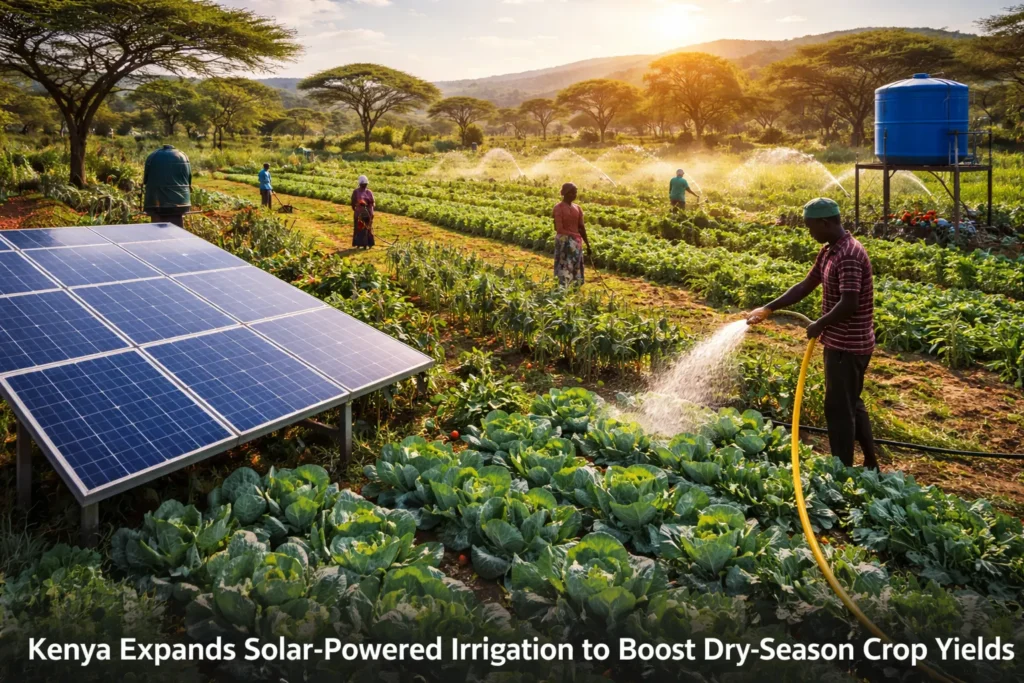

The Crucible of Climate Change: Kenya’s Agricultural Crossroads
Beneath the vast African sky, in the red-earth fields of Kenya’s heartland, a profound struggle for survival and prosperity unfolds with each passing season. For generations, smallholder farmers—the backbone of the nation’s food system—have practiced agriculture as a delicate dance with nature, their rhythms synchronized to the predictable patterns of rainy and dry seasons passed down through centuries of ancestral knowledge. Today, this ancient harmony has been disrupted by a changing climate that respects neither tradition nor timing. The rains arrive late or not at all, departing early after teasing the parched earth with insufficient moisture. The sun, once a benevolent source of life, now often beats down with an intensity that cracks the soil and withers hope alongside crops.
This is not merely an agricultural challenge; it is a human crisis with national implications. In a country where approximately 80% of the rural population depends directly on agriculture for their livelihoods, and where the sector contributes over 25% of GDP and 65% of export earnings, the stability of farming communities directly correlates with national prosperity. The statistics reveal a sobering reality: despite having an estimated irrigation potential of 3.3 million acres, only about 710,000 acres currently benefit from irrigation systems. This means that the vast majority of Kenya’s farmers—over 4.5 million smallholder households—remain entirely dependent on increasingly unreliable rainfall patterns.
The human cost of this dependency manifests in multiple dimensions. Seasonal hunger, once a manageable exception, has become a recurring reality for many farming households during extended dry periods. School dropout rates increase during drought years as children are needed for water collection or as family resources are diverted from education to basic survival. Rural-to-urban migration accelerates, particularly among youth who see limited futures in struggling agricultural communities, thereby aging the farming population and threatening intergenerational knowledge transfer.
Compounding the climatic challenges are economic pressures that squeeze smallholder farmers from both sides. Input costs—seeds, fertilizers, pesticides—have risen steadily while commodity prices remain volatile. The traditional coping mechanism during dry periods—diesel-powered irrigation—has become increasingly untenable as fuel prices fluctuate dramatically. A typical smallholder farmer operating a diesel pump might spend between 6-8 liters of fuel daily during critical dry months, representing a financial burden that can consume 40-60% of their seasonal profits. Beyond the economic burden, these fossil-fuel-dependent systems contribute to the very climate instability that makes them necessary, creating a vicious cycle of cause and effect.
Yet within this landscape of challenge lies extraordinary opportunity. Kenya receives abundant solar radiation—approximately 4-6 kilowatt-hours per square meter daily—representing a clean, renewable resource that could theoretically power not just irrigation but entire agricultural value chains. The question facing the nation was not whether to transform its agricultural systems, but how to do so in a way that was inclusive, sustainable, and scalable. The answer, emerging from fields, research stations, and policy discussions, would converge around a single powerful concept: harnessing sunlight to harvest water.
The Genesis of a Green Revolution: Policy Foundations and Visionary Leadership
The transformation of Kenya’s agricultural landscape through solar-powered irrigation did not emerge spontaneously from the fields; it was cultivated through deliberate policy choices, strategic partnerships, and visionary leadership that recognized the intersection of water security, energy access, and food sovereignty as critical to national development. This policy journey represents one of Africa’s most comprehensive attempts to reimagine agricultural development through the lens of climate resilience and sustainable resource management.
The foundation of Kenya’s solar irrigation expansion was laid with the establishment of the National Irrigation Authority (NIA) in 2019, created through the Irrigation Act to coordinate and accelerate irrigation development across the country. This institutional framework was crucial in moving from fragmented, project-based approaches to a coordinated national strategy. The NIA’s mandate encompassed not just infrastructure development but also capacity building, research coordination, and the establishment of sustainable management models for irrigation schemes.
Building on this institutional foundation, Kenya developed the National Irrigation Sector Investment Plan (NISIP) 2019-2030, a comprehensive roadmap that outlined strategic priorities, investment requirements, and implementation frameworks for irrigation expansion. The plan set an ambitious but achievable target: increasing irrigated land from approximately 710,000 acres to 1 million acres by 2030, with particular emphasis on smallholder systems and climate-resilient approaches. What distinguished NISIP from previous irrigation strategies was its explicit recognition of renewable energy—particularly solar power—as an enabling technology for sustainable irrigation expansion, especially in off-grid areas where over 70% of Kenya’s rural population resides.
The policy framework continued to evolve in response to emerging challenges and opportunities. The Kenya Climate-Smart Agriculture Strategy 2017-2026 explicitly identified solar-powered irrigation as a key technology for achieving the triple objectives of productivity enhancement, resilience building, and emissions reduction. This strategy recognized that agricultural adaptation to climate change could not be separated from mitigation imperatives—that the sector needed to reduce its environmental footprint even as it intensified production to feed a growing population.
A pivotal moment in the policy journey occurred in December 2025, when the State Department for Irrigation formalized a strategic partnership with the International Water Management Institute (IWMI) through a Memorandum of Understanding. This partnership represented a recognition that technological solutions require robust evidence, monitoring frameworks, and adaptive management approaches to achieve sustainable impacts at scale. The collaboration focused on developing “evidence-driven, inclusive, and climate-resilient irrigation systems” that could serve as models for replication across similar agro-ecological zones in Kenya and beyond.
Vincent Kabuti, irrigation secretary at Kenya’s Ministry of Water, Sanitation and Irrigation, articulated the vision driving these policy developments: “Kenya’s irrigation potential is 3.3 million acres, but only about 710,000 acres are under irrigation. With strong political will and an active private sector, we can reach the target of the National Irrigation Sector Investment Plan.” This statement captured the essential triad of success factors: political commitment to create enabling conditions, private sector innovation to develop and deliver appropriate technologies, and farmer adoption to translate potential into production.
Table 1: Kenya’s Policy Evolution for Solar Irrigation Development
| Policy/Initiative | Year Established | Key Provisions Relevant to Solar Irrigation | Primary Implementing Agencies |
|---|---|---|---|
| Irrigation Act | 2019 | Established National Irrigation Authority; Promoted public-private partnerships in irrigation development | Ministry of Water, Sanitation and Irrigation |
| National Irrigation Sector Investment Plan (NISIP) | 2019 | Set target of 1 million irrigated acres by 2030; Emphasized renewable energy for irrigation | National Irrigation Authority |
| Kenya Climate-Smart Agriculture Strategy | 2017 | Identified solar irrigation as key climate-smart technology; Allocated resources for piloting and scaling | Ministry of Agriculture, Livestock, Fisheries and Cooperatives |
| Sustainable Energy for Smallholder Farmers Initiative | 2021 | Created financing mechanisms for solar irrigation equipment; Developed quality standards for solar pumps | Ministry of Energy, in partnership with Kenya Bureau of Standards |
| Memorandum of Understanding with IWMI | 2025 | Established framework for research partnership on sustainable irrigation; Focus on evidence-based scaling | State Department for Irrigation & International Water Management Institute |
The policy environment was further strengthened by fiscal measures designed to reduce adoption barriers. The elimination of Value Added Tax (VAT) on solar products in 2020 made solar irrigation equipment more affordable, while targeted subsidy programs helped bridge the affordability gap for the poorest farmers. These policy measures were complemented by efforts to strengthen quality assurance frameworks, with the Kenya Bureau of Standards developing specific standards for solar water pumps to protect farmers from substandard equipment—a critical concern in a rapidly expanding market.
Perhaps most innovatively, Kenya began exploring integrated policy frameworks that recognized the interconnections between water, energy, and food systems—the so-called “water-energy-food nexus.” This approach moved beyond sectoral planning to consider how decisions in one domain (such as energy pricing) impacted outcomes in others (such as irrigation affordability and food production). This holistic perspective was essential for designing policies that would maximize synergies and minimize trade-offs across these interconnected systems.
As the policy foundations solidified, attention turned increasingly to implementation—to translating paper commitments into field-level transformations. This would require not just government action but the active engagement of multiple stakeholders: technology developers creating appropriate solutions, financiers designing accessible products, extension agents building farmer capacity, and most importantly, farmers themselves adapting these innovations to their specific contexts and needs. The stage was set for a technological revolution that would turn sunlight into agricultural prosperity.
Technological Evolution: From Simple Pumps to Integrated Agricultural Energy Systems
The heart of Kenya’s agricultural transformation beats with the quiet hum of solar photovoltaic panels converting abundant sunlight into usable energy. But to understand the true significance of this technological revolution, one must look beyond the panels and pumps to the complete ecosystem of innovations that have made solar irrigation not just possible but practical, affordable, and transformative for smallholder farmers. This technological journey represents a remarkable case of appropriate innovation—of adapting global technologies to local contexts, constraints, and opportunities.
The earliest solar irrigation systems in Kenya were relatively simple adaptations of existing diesel pump technology, replacing fossil fuel engines with electric motors powered by solar panels. These first-generation systems, while demonstrating the technical feasibility of solar-powered irrigation, faced significant limitations. They were often prohibitively expensive for smallholders, required technical expertise beyond typical farmer capacity, and lacked integration with water application technologies, meaning farmers might pump water efficiently only to apply it inefficiently through flood irrigation.
The breakthrough came when innovators began designing systems specifically for the smallholder context. Companies like SunCulture, Futurepump, and Suncrowd pioneered what might be called “smallholder-centric design“—systems that considered not just technical specifications but the real-world constraints and capabilities of their users. These second-generation systems featured:
- Modular designs that allowed farmers to start small and expand as their capacity and resources grew
- Integrated drip irrigation kits that paired solar pumping with highly efficient water application technologies
- Mobile payment integration through platforms like M-Pesa, enabling flexible financing models
- Remote monitoring capabilities that allowed providers to offer maintenance support and troubleshoot issues without physical visits
- Durable, weather-resistant components designed for harsh field conditions with minimal maintenance requirements
A representative example of this evolved technology is SunCulture’s RainMaker system, which combines portable 120-watt solar panels, a submersible pump capable of lifting water from depths up to 100 meters, a 200-liter storage tank, and a complete drip irrigation kit for approximately half a hectare. The system includes smart features like automatic shut-off when tanks are full and mobile alerts for maintenance needs. Perhaps most innovatively, the company developed a pay-as-you-grow financing model that allows farmers to make an initial down payment as low as $50, then pay for water usage through mobile money, aligning costs directly with agricultural production cycles.
The technological evolution continued beyond pumping to address the broader agricultural value chain. The Solar Energy for Agricultural Resilience (SoLAR) project, supported by the International Water Management Institute, introduced complementary technologies that created what might be termed “solar agricultural ecosystems.” These included:
- Solar-powered cold storage units that allow farmers to preserve perishable harvests, reducing post-harvest losses that typically range from 30-50% for fruits and vegetables
- Solar dryers for preserving fruits, vegetables, herbs, and grains without chemical preservatives
- Solar milling equipment for processing grains into higher-value products
- Solar water purification systems that provide clean drinking water alongside irrigation water
- Solar electric fencing to protect crops from wildlife
This integrated approach recognized that irrigation alone, while crucial, addresses only one constraint in a complex system of agricultural production, processing, and marketing challenges. By creating solar-powered solutions across the value chain, these innovations multiplied the benefits of solar adoption, creating stronger economic cases for investment while addressing multiple aspects of food security and rural development.
Perhaps the most revolutionary technological development has been the emergence of agri-solar or agrivoltaic systems—installations that allow simultaneous agricultural production and solar energy generation on the same land. In these innovative systems, solar panels are mounted several meters above crops, providing partial shade that reduces evapotranspiration while generating electricity. Early research from pilot projects in Kenya shows promising results:
- Certain crops, particularly leafy greens like kale and spinach, show increased yields under the 30-40% shade provided by elevated solar panels, likely due to reduced heat stress and water requirements
- Water savings of 20-30% have been documented for crops grown under solar panels compared to full-sun conditions
- The electricity generated can power irrigation systems, processing equipment, or be fed into mini-grids, creating an additional income stream for farmers
- During extreme heat events, the partial shading provides a protective microclimate that can prevent crop failure
These agri-solar systems represent a fundamental reimagining of how land, water, and sunlight resources can be optimized in agricultural contexts. They transform the traditional trade-off between energy production and food production into a synergistic relationship where each enhances the other’s viability.
Underpinning these hardware innovations have been equally important software and service innovations. Digital platforms now allow farmers to monitor their system performance, water usage, and energy generation through simple mobile interfaces. Predictive maintenance algorithms alert technicians to potential issues before they cause system failures. Satellite data integration provides information on soil moisture levels, crop health, and weather patterns that helps farmers optimize irrigation scheduling. These digital layers transform solar irrigation from a simple water delivery technology into an intelligent agricultural management system.
The technological journey continues with emerging innovations that promise to further enhance the impact and accessibility of solar irrigation:
- Blockchain-enabled carbon credit systems that allow farmers to monetize the emissions reductions from replacing diesel pumps
- Artificial intelligence-powered irrigation scheduling that considers weather forecasts, crop water requirements, and energy availability to optimize water and energy use
- Modular, expandable systems that grow with farmer capacity and can be easily repaired with locally available components
- Integrated soil moisture and nutrient sensors that provide real-time data for precision agriculture applications
- Community-scale solar irrigation systems with smart water allocation and payment systems for farmer cooperatives
This ongoing technological evolution demonstrates a crucial principle: appropriate innovation is not a one-time event but a continuous process of adaptation, improvement, and contextualization. As the needs of Kenyan farmers evolve and new challenges emerge, the technological ecosystem supporting solar irrigation continues to develop in response, creating increasingly sophisticated solutions that remain grounded in the practical realities of smallholder agriculture.
Financial Innovation: Breaking the Affordability Barrier
The most elegant technological solution remains irrelevant if it lies beyond the financial reach of those who need it most. This fundamental reality posed perhaps the greatest challenge to scaling solar irrigation in Kenya: how to make systems costing $1,500-$3,000 accessible to farmers with average annual incomes below $500. The answer emerged not through any single financial instrument but through an ecosystem of innovative financing approaches that collectively addressed different segments of the affordability spectrum. This financial innovation journey represents one of the most significant aspects of Kenya’s solar irrigation story, offering lessons for renewable energy adoption globally.
The financing challenge was multidimensional. Beyond the simple issue of high upfront costs, lenders faced significant risks in agricultural lending due to climate variability, crop price fluctuations, and lack of collateral among smallholders. Farmers, meanwhile, often lacked credit histories, formal land titles for collateral, and financial literacy to navigate complex loan products. Traditional banking models, designed for urban salaried workers with regular incomes and tangible collateral, were ill-suited to the realities of smallholder agriculture with its seasonal income flows and vulnerability to multiple shocks.
The breakthrough came with the recognition that solving the financing puzzle required addressing multiple constraints simultaneously through what became known as “layered financing” or “blended finance” approaches. These models combined different types of capital—commercial, concessional, philanthropic, and public—with each layer addressing specific barriers to create financially viable pathways for farmer adoption.
Table 2: Kenya’s Layered Financing Model for Solar Irrigation
| Finance Layer | Source/Provider | Purpose | Typical Terms | Target Beneficiaries |
|---|---|---|---|---|
| Grant Funding | Development partners, philanthropic foundations, government subsidies | Reduce upfront cost barrier; Fund pilot demonstrations; Support research and development | 100% non-repayable | Poorest farmers; Innovative pilots; Women’s groups |
| Concessional Debt | Development finance institutions, green climate funds | Provide patient capital with below-market rates; Fund aggregator models | 3-7% interest, 5-10 year terms | Farmer cooperatives; Women-led enterprises; Social enterprises |
| Commercial Debt | Commercial banks, microfinance institutions, SACCOs | Mainstream financing for proven models; Scale successful approaches | 10-18% interest, 3-5 year terms | Middle-income farmers; Established farmer groups |
| Risk Mitigation | Guarantee facilities, insurance products | Reduce lender risk; Enable entry of commercial financiers | Partial credit guarantees (50-75%); Weather-indexed insurance | First-time agricultural borrowers; Marginalized groups |
| Results-Based Financing | Carbon credit buyers, impact investors | Pay for verified outcomes (emissions reductions, water savings) | Payments upon verification of results | All adopting farmers; Community-scale projects |
One of the most transformative financial innovations has been the adaptation of pay-as-you-go (PAYG) and pay-as-you-grow models to solar irrigation. Originally developed for solar home systems, these models were adapted to align with agricultural cycles and cash flows. Under these arrangements, farmers make a small initial deposit (typically 10-20% of system cost), then pay for usage through mobile money platforms like M-Pesa. The systems often include remote lockout capabilities that disable operation if payments lapse, significantly reducing default risk for providers.
The psychological and practical benefits of these models are profound. As farmer Rose Nkatha from Embu County explains: “With diesel, I had to find money for fuel whether my crops needed water or not, whether the season was good or bad. With the pay-as-you-grow solar system, I pay for the water my crops actually use. When rains come early, I use less and pay less. The system understands farming.” This alignment of payment with actual agricultural production represents a fundamental improvement over traditional loan products with fixed repayment schedules insensitive to seasonal variations.
For farmers with slightly greater resources or access to group lending, cooperative and chama (investment group) models have proven effective. These approaches leverage social capital and peer accountability to overcome collateral constraints. Farmer groups collectively guarantee loans, purchase systems in bulk for discounted prices, and share maintenance resources. The success of these models depends crucially on strong group governance, transparent management, and equitable benefit-sharing mechanisms—elements that many development programs now explicitly strengthen alongside providing financing.
Perhaps the most innovative financing frontier involves carbon credit monetization. Each diesel pump replaced with a solar system prevents approximately 3-5 tons of CO2 emissions annually. Through programs like Gold Standard and Verra, these emissions reductions can be verified and converted into carbon credits sold on voluntary markets. Pioneering companies like Redavia have developed models where carbon credit revenue subsidizes system costs for farmers, creates community development funds, or covers maintenance costs. This approach creates a virtuous cycle where climate mitigation directly funds climate adaptation, aligning global environmental goals with local development needs.
The government has played a crucial role in de-risking the market through partial credit guarantee schemes. These programs, often funded by development partners, cover 50-75% of potential defaults on loans for solar irrigation equipment, giving commercial lenders the confidence to enter a market they previously considered too risky. According to Central Bank of Kenya data, agricultural lending for renewable energy equipment increased by over 300% following the introduction of these guarantee programs in 2022.
For the poorest farmers, graduation programs that combine asset transfers with training and mentoring have shown promise. These programs recognize that the extreme poor often need both the physical asset and the skills, confidence, and social support to utilize it effectively. By providing a complete package of support, these programs help farmers “graduate” from subsistence to commercial production, at which point they can access more conventional financing for expansion.
The financial innovation journey continues with emerging models that promise to further expand access:
- Warehouse receipt financing that allows farmers to use stored harvests as collateral for irrigation loans
- Digital credit scoring using alternative data like mobile money transaction histories to assess creditworthiness
- Crop yield insurance bundled with irrigation loans to protect against production risks
- Solar irrigation-as-a-service models where farmers pay for irrigation water as a service rather than owning equipment
- Green bonds specifically targeting agricultural renewable energy projects
This evolving financial ecosystem demonstrates a crucial insight: solving the affordability challenge requires not just cheaper technology but financial models that align with how smallholder farmers actually live, work, and manage risk. By creating multiple pathways to ownership and usage tailored to different farmer segments, Kenya has developed one of the world’s most sophisticated financing environments for agricultural renewable energy—a model now being studied and adapted across Africa and beyond.
Gender Transformation: Women at the Center of the Solar Revolution
In the sun-drenched fields of Kenya’s agricultural landscapes, a quiet gender revolution is unfolding alongside the technological transformation. Women, who constitute approximately 43% of Kenya’s agricultural labor force and perform 70-80% of subsistence food production, have emerged not merely as beneficiaries of solar irrigation but as active agents of its adoption, adaptation, and dissemination. This gender dimension of Kenya’s solar irrigation story reveals how technological interventions, when designed with gender considerations at their core, can catalyze profound social transformation that extends far beyond increased crop yields.
The relationship between women and water in rural Kenyan communities is historically one of burden and constraint. Women and girls typically bear responsibility for domestic water collection—a time-consuming, physically demanding task that can consume 4-6 hours daily during dry seasons. This “water burden” has far-reaching consequences: girls miss school or arrive exhausted, women have limited time for productive activities or rest, and the physical strain of carrying heavy water containers contributes to chronic health issues. Solar irrigation addresses this burden at its source, literally bringing water to communities and fundamentally reallocating women’s time.
Research by the International Water Management Institute in solar irrigation communities documents an average reduction of 14-17 hours per week in water-fetching time for women. The reallocation of this time resource has multidimensional impacts:
- Educational benefits: Girls’ school attendance in solar irrigation communities has increased by approximately 25%, with particular improvements in punctuality and concentration
- Economic opportunities: Women report using reclaimed time for additional income-generating activities, with 68% starting small enterprises or expanding existing ones
- Health improvements: Reduced physical strain has decreased reports of chronic back pain and joint problems among women by approximately 40%
- Political participation: Women in solar irrigation communities are 3.5 times more likely to hold leadership positions in community organizations compared to non-irrigation communities
Beyond time savings, solar irrigation has enabled women to transform their agricultural practices from subsistence to commercial production. With reliable water access, women farmers have diversified from low-value staples to high-value vegetables, fruits, and herbs—crops that offer better economic returns but require more consistent moisture. Women-led farming collectives have been particularly successful in leveraging this transition, using group purchasing power to negotiate better input prices and collective marketing to access higher-value markets.
The SoLAR project has implemented particularly innovative gender-sensitive approaches that offer models for replication:
- Gender-transformative financing products with collateral requirements adapted to women’s circumstances (accepting group guarantees or movable assets rather than requiring land titles typically held by men)
- Women-specific training programs that address practical constraints like childcare responsibilities (providing childcare during training sessions) and literacy levels (using visual and practical teaching methods)
- Leadership development pathways that prepare women for roles in water user associations, irrigation management committees, and farmer cooperatives
- Gender-disaggregated monitoring that tracks women’s participation, benefits, and decision-making influence to inform adaptive management
Perhaps the most profound gender impacts have emerged in communities practicing agri-solar systems. These integrated approaches have created new economic roles for women in renewable energy management and maintenance. Women’s groups in several counties have received training as solar technicians, challenging traditional gender norms about technical capabilities while creating new livelihood opportunities. Other women have taken lead roles in managing community-scale solar mini-grids powered by agri-solar installations, developing skills in energy management, billing systems, and conflict resolution.
The gender impacts extend to intra-household dynamics, challenging and gradually transforming traditional power structures. As women’s agricultural incomes increase—often surpassing their husbands’ earnings from casual labor or traditional crops—their influence in household decision-making expands. Studies in solar irrigation communities show increased joint decision-making on expenditures, children’s education, and agricultural investments. In some cases, this economic empowerment has led to reductions in gender-based violence, as women gain greater financial autonomy and community standing.
Yet significant gender disparities persist, and the most innovative programs explicitly address intersectional vulnerabilities. Female-headed households, which constitute approximately 30% of rural households in Kenya, face particular constraints including limited labor availability, higher dependency ratios, and social marginalization. Specialized programs for these households provide additional support including labor-sharing arrangements, higher subsidy rates, and social protection linkages. Similarly, programs for women with disabilities adapt technologies for accessibility and provide targeted training and peer support networks.
The gender transformation extends to the agricultural value chain beyond production. Women in solar irrigation communities are increasingly moving into processing, packaging, and marketing roles—activities that capture more value from agricultural production. Solar-powered processing equipment (millers, dryers, cold storage) has been particularly transformative for women’s enterprises, allowing them to add value to raw produce and reduce post-harvest losses. Women-led cooperatives in several counties now operate solar-powered processing centers that serve multiple communities, creating employment and demonstrating women’s capacity as agricultural entrepreneurs.
This gender dimension of Kenya’s solar irrigation revolution offers crucial insights for agricultural development globally:
- Technologies are not gender-neutral: Their design, financing, training, and governance structures either reinforce or challenge existing gender inequalities
- Women’s time is a critical resource: Technologies that reduce women’s unpaid labor burden can unlock multiple dividends across education, health, economic participation, and community leadership
- Economic empowerment requires addressing multiple constraints simultaneously: Access to technology alone is insufficient without complementary support in financing, skills, market access, and social protection
- Gender transformation is measurable: Specific indicators around time use, decision-making, leadership positions, and asset ownership allow programs to track progress and adjust approaches
- Women’s leadership accelerates adoption: Women who successfully adopt innovations often become powerful agents of diffusion within their social networks
As the solar irrigation revolution continues to unfold across Kenya, its gender impacts will likely represent one of its most enduring legacies—demonstrating how appropriate technology, combined with deliberate social programming, can transform not just agricultural productivity but the very fabric of rural societies, creating more equitable, resilient, and prosperous communities for all members.
Environmental Stewardship: Balancing Productivity and Sustainability
The expansion of irrigation, whether powered by sun or diesel, inevitably raises critical environmental questions about resource sustainability. Water extraction, land use changes, and energy choices all carry ecological implications that must be carefully managed to avoid solving one problem while creating another. Kenya’s approach to solar irrigation has increasingly embraced this complexity, evolving from a focus on water access alone to integrated resource management that considers the broader environmental context. This environmental stewardship dimension represents a crucial aspect of the sustainability equation, ensuring that agricultural intensification today does not compromise productive capacity for future generations.
The most immediate environmental concern surrounding irrigation expansion is groundwater sustainability. Solar pumps, with their zero marginal cost of operation (once installed), create what economists call the “rebound effect”—when efficiency improvements lead to increased rather than decreased resource use because lower costs encourage expanded consumption. In the context of solar irrigation, this risk manifests as potential over-extraction of groundwater resources, particularly in areas with limited recharge. Unregulated expansion could lead to falling water tables, increased pumping costs as depths increase, and ultimately resource depletion that leaves communities worse off than before.
Kenya has addressed this challenge through a combination of technological, institutional, and regulatory approaches:
- Smart solar pumps with integrated flow meters and remote monitoring capabilities allow tracking of extraction volumes and enforcement of sustainable limits
- Community groundwater management committees that establish rules for sustainable use, monitor compliance, and resolve conflicts
- Integrated water resource management plans at catchment level that consider all water uses and users in allocation decisions
- Groundwater recharge initiatives including rainwater harvesting, managed aquifer recharge, and watershed protection
- Crop water requirements databases that help farmers match irrigation to actual crop needs rather than pumping capacity
The Water Resources Authority (WRA) has played a crucial role in developing and implementing these sustainable management approaches. Through its regional offices, the WRA conducts groundwater assessments, establishes sustainable abstraction limits, issues water use permits, and monitors compliance. The authority has pioneered innovative approaches like block tariffs for groundwater use (with higher rates for consumption beyond sustainable levels) and collective permits for farmer groups that encourage cooperative management.
Beyond water, solar irrigation delivers significant climate mitigation benefits through displacement of diesel pumps. Each diesel pump replaced prevents approximately 3-5 tons of CO2 emissions annually, along with reductions in local air pollutants like particulate matter and nitrogen oxides that affect respiratory health. The carbon reduction potential is substantial: if Kenya achieves its target of converting 50,000 diesel pumps to solar by 2030, the annual emissions reduction would exceed 200,000 tons of CO2—equivalent to removing approximately 45,000 cars from the roads.
This mitigation potential is increasingly being monetized through carbon credit mechanisms, creating a financial stream that can support further sustainable irrigation expansion. The SoLAR project has developed a methodology for certifying emissions reductions from solar irrigation under the Gold Standard, with revenue flowing back to farming communities through maintenance funds, expansion subsidies, or community development projects. This creates a virtuous cycle where climate action funds climate adaptation, aligning global environmental goals with local development needs.
The environmental benefits extend to biodiversity and ecosystem services when solar irrigation is implemented as part of integrated landscape approaches. By enabling more efficient water use on existing agricultural land, solar irrigation can reduce pressure to convert natural habitats for expanded production. Some innovative programs explicitly link irrigation development with watershed protection, requiring farmer groups to maintain vegetation buffers along water sources or implement soil conservation practices as conditions for receiving irrigation support.
Perhaps the most environmentally innovative approach has been the development of regenerative solar irrigation systems that go beyond reducing harm to actively restoring ecological functions. These systems integrate:
- Agroforestry components with fruit or nitrogen-fixing trees interspersed with annual crops
- Soil health practices like composting, cover cropping, and reduced tillage that increase organic matter and water retention
- Integrated pest management that reduces chemical inputs through biological controls and diversified cropping
- Water harvesting landscapes that capture and infiltrate runoff rather than allowing it to cause erosion
These regenerative approaches demonstrate how solar irrigation can serve as an entry point for broader ecological restoration, creating agricultural systems that are not just productive but actively contribute to ecosystem health. Early evidence suggests these systems can increase soil carbon sequestration, enhance biodiversity, improve water quality through reduced chemical runoff, and create more resilient production systems better able to withstand climate shocks.
The environmental dimension of Kenya’s solar irrigation revolution highlights several crucial principles for sustainable agricultural development:
- Efficiency alone is insufficient: Water-saving technologies must be paired with sustainable management institutions to avoid rebound effects
- Multiple benefits create stronger cases: Systems that deliver mitigation, adaptation, and ecosystem service benefits attract more diverse support and funding
- Scale matters: Individual farm-level improvements must be coordinated at landscape scales to address watershed-level challenges
- Monitoring enables management: Data on water extraction, energy generation, and ecosystem indicators allows adaptive management for sustainability
- Community ownership ensures compliance: Locally-developed and enforced rules are more effective than top-down regulations alone
As Kenya continues to expand solar irrigation, this environmental stewardship dimension will likely grow in importance, reflecting a global shift toward agricultural systems that not only produce food but also regenerate natural resources. The country’s experience offers valuable lessons in balancing immediate productivity needs with long-term sustainability imperatives—a challenge facing agricultural systems worldwide in an era of climate change and resource constraints.
Health and Nutrition: The Multiplier Effects of Reliable Water Access
The transformation brought by solar-powered irrigation extends its roots deep into the most fundamental aspects of human well-being: health and nutrition. Beyond the visible agricultural yields and economic metrics lies a less immediately apparent but equally vital dimension of change—the improvement in physical health, dietary quality, and overall vitality that follows when communities transition from water scarcity to water security. This health and nutrition narrative reveals how a single technological intervention, when embedded in supportive social and economic systems, can catalyze improvements across multiple indicators of human development.
The most direct health benefit of solar irrigation is the reduction in waterborne diseases that plague communities dependent on unsafe water sources. When irrigation systems are designed to provide both agricultural and domestic water—a practice known as multiple-use water services (MUS)—families gain access to cleaner water closer to home. This reduces contamination risks during transport and storage, while the increased quantity enables better hygiene practices like handwashing and food cleaning. Studies in solar irrigation communities show:
- 40-60% reduction in reported cases of diarrheal diseases among children under five
- 30-50% decrease in water-related conflicts at community water points
- Increased frequency of bathing and clothes washing, particularly among women and girls
- Time savings in water collection repurposed for childcare and food preparation
The nutritional impacts are equally profound and operate through multiple pathways. First, increased dietary diversity follows naturally from irrigation-enabled crop diversification. While rain-fed systems typically focus on drought-tolerant staples like maize and millet, irrigated gardens allow production of vitamin-rich vegetables (kale, tomatoes, carrots), fruits (mangoes, papayas, passion fruit), and legumes (beans, cowpeas). This dietary expansion is particularly significant for children and pregnant women, whose nutritional needs are greatest.
Second, improved food safety results from the ability to irrigate with cleaner water and process produce more hygienically. Solar-powered cold storage reduces reliance on chemical preservatives, while solar dryers allow preservation without contamination risks from open-air drying. Farmers in solar irrigation communities report fewer cases of foodborne illness and greater confidence in the safety of their produce for both household consumption and market sale.
Third, increased household income from irrigated production enables purchase of diverse foods that cannot be grown locally, further enhancing dietary quality. This economic pathway is particularly important for micronutrients like iron, zinc, and vitamin B12 that are difficult to obtain entirely from plant-based diets. Households with solar irrigation report more frequent consumption of animal-source foods (eggs, milk, meat) purchased with income from vegetable sales.
The health benefits extend to reduced physical strain and associated musculoskeletal problems, particularly among women who traditionally bear water collection responsibilities. Carrying 20-liter water containers over long distances, often on uneven terrain, contributes to chronic back pain, joint problems, and pregnancy complications. Solar irrigation that brings water to communities eliminates this physical burden, with women reporting significant reductions in pain and fatigue. This is not merely a quality-of-life improvement but has economic implications as well, as healthier women can engage more productively in farming and other income-generating activities.
Perhaps less obviously, solar irrigation contributes to mental health and reduced anxiety by providing greater predictability in agricultural outcomes. The constant stress of watching crops wither under drought conditions, wondering how the family will eat or pay school fees, creates what psychologists term “climate anxiety”—a chronic stress condition increasingly recognized in farming communities facing climate variability. Reliable irrigation buffers this anxiety by providing a measure of control over agricultural outcomes. Farmers consistently report feeling “more peaceful,” “less worried,” and “more hopeful about the future” after adopting solar irrigation.
The health benefits are further amplified when solar systems power health facility infrastructure in remote communities. Several innovative programs have integrated small solar installations at rural clinics with irrigation systems, using excess energy to power vaccine refrigerators, lighting for nighttime deliveries, and medical equipment sterilization. This creates a virtuous cycle where agricultural development directly supports health service delivery, addressing multiple development challenges simultaneously.
Nutrition-specific interventions have been integrated with solar irrigation programs to maximize impact. These include:
- Nutrition-sensitive agriculture training that helps farmers select and grow crops with high nutritional value
- Kitchen garden programs that ensure a portion of irrigated land is dedicated to household consumption rather than market sale
- Food preservation training to retain nutritional value during processing and storage
- Nutrition education for women on preparing balanced meals from available ingredients
- Child growth monitoring linked to agricultural support for households with malnourished children
The health and nutrition impacts of solar irrigation demonstrate several crucial development principles:
- Cross-sectoral linkages create multiplier effects: Agricultural interventions can deliver health and nutrition benefits when designed with these outcomes in mind
- Women’s time is a health resource: Reducing women’s unpaid labor burden creates time for childcare, food preparation, and rest—all critical for family health
- Economic stability supports health-seeking behavior: Households with more predictable incomes are more likely to seek preventive care and treatment when ill
- Food systems approaches are essential: Addressing nutrition requires looking beyond production to include processing, preservation, preparation, and consumption
- Community ownership enhances sustainability: When communities value the health benefits of irrigation systems, they invest more in their maintenance and proper use
As Kenya continues to expand solar irrigation, monitoring and enhancing these health and nutrition benefits will be crucial for maximizing the human development impact. This requires moving beyond agricultural metrics to track health indicators, dietary diversity scores, and time use patterns—a more holistic approach to evaluation that captures the full spectrum of transformation possible when communities move from water scarcity to water security.
Education and Youth Engagement: Cultivating the Next Generation of Farmers
In the quiet transformation of Kenya’s agricultural landscape through solar-powered irrigation, one of the most hopeful narratives concerns the re-engagement of youth with farming as a viable, technologically sophisticated, and economically promising livelihood. For decades, young people in rural Kenya have migrated to urban centers in search of opportunities, viewing agriculture as backbreaking labor with uncertain returns—the occupation of last resort rather than first choice. This generational disconnect threatened not just individual communities but the nation’s long-term food security, as an aging farmer population struggled to maintain production without the energy and innovation of youth. The solar irrigation revolution is changing this narrative, creating what might be called “digitally enabled agriculture” that appeals to tech-savvy younger generations while honoring the ecological wisdom of their elders.
The educational impacts begin with the most immediate change: increased school attendance, particularly among girls. As previously noted, solar irrigation reduces water collection time by 14-17 hours weekly for women and girls, time that is often reallocated to education. Schools in solar irrigation communities report:
- 25-30% improvement in girls’ regular attendance
- Reduced tardiness as girls no longer complete water collection before school
- Improved concentration in class as students arrive less fatigued
- Higher completion rates for primary education and transition to secondary school
Beyond basic attendance, solar irrigation has inspired new agricultural education programs that integrate renewable energy concepts into curricula. Several counties have developed “solar agriculture clubs” in secondary schools, where students learn to design, install, and maintain small-scale irrigation systems while growing vegetables for school feeding programs. These hands-on programs accomplish multiple objectives: they teach practical STEM skills, demonstrate agricultural applications of renewable energy, provide nutrition for students, and generate modest income for school improvements.
At vocational training levels, solar irrigation has spurred development of new green skills training programs. Technical and Vocational Education and Training (TVET) institutions across Kenya have introduced courses in solar system installation and maintenance, drip irrigation design, water management, and agri-solar integration. These programs often include entrepreneurship modules, preparing graduates to start their own solar irrigation businesses rather than simply seeking employment. Early evidence suggests these “agri-tech entrepreneurs” are particularly successful when they combine technical skills with local agricultural knowledge—often partnering with older farmers who understand crops and soils but lack technical training.
Perhaps the most significant youth engagement has occurred through digital agriculture platforms that appeal to younger generations’ comfort with technology. Mobile applications that allow remote monitoring of irrigation systems, digital marketplaces connecting farmers directly to buyers, and social media groups for knowledge sharing have all attracted youth participation. These digital layers transform farming from isolated physical labor to connected, data-informed decision-making—a shift that aligns with how digital natives prefer to work and solve problems.
Several innovative programs specifically target youth-led agricultural enterprises using solar irrigation as an entry point:
- The Youth in Solar Agriculture Initiative provides matched funding for young entrepreneurs (18-35 years) to establish solar-powered irrigation businesses serving smallholder farmers
- Green Innovation Hubs at universities support student-led startups developing solar agricultural technologies, with several winning national innovation awards
- Digital extension services delivered through chatbots and video platforms make agricultural information more accessible to youth
- Land leasing programs facilitate youth access to land for solar irrigation enterprises, addressing one of the biggest barriers to youth engagement in agriculture
The impact on youth perceptions of agriculture has been measurable. Surveys in solar irrigation communities show:
- 40% increase in youth viewing agriculture as a “modern, technology-based profession”
- 55% of secondary students expressing interest in agricultural careers if they involve renewable energy
- Tripling of applications to agricultural programs at technical colleges in counties with strong solar irrigation adoption
- Emergence of youth-led farmer cooperatives focused on high-value, irrigated crops for urban and export markets
This youth re-engagement has important gender dimensions as well. Young women, who often face even greater barriers to agricultural participation than their male counterparts, are finding opportunities in solar irrigation as technicians, extension agents, and entrepreneurs. Special programs targeting young women provide not just technical training but also mentorship, networking opportunities, and confidence-building to navigate traditionally male-dominated spaces. The results are promising: in several solar irrigation companies, women now constitute 40-50% of technical staff—a dramatic shift from the near-zero representation a decade ago.
The educational transformation extends to intergenerational knowledge exchange that benefits both youth and elders. Young people bring digital literacy, comfort with new technologies, and market connections to urban consumers. Elders bring deep ecological knowledge, understanding of local conditions, and traditional farming wisdom. Solar irrigation projects that deliberately facilitate this exchange—through farmer field schools that pair youth and elders, or innovation platforms that bring together different generations—create richer learning environments and more sustainable adoption patterns.
Looking forward, several emerging trends promise to further enhance the educational and youth engagement impacts of solar irrigation:
- Virtual reality training modules that allow students to practice system design and troubleshooting in simulated environments
- Gamified learning platforms that teach water and energy management through agricultural simulation games
- University-industry partnerships that place students in solar irrigation companies for practical experience
- Youth innovation challenges with prizes for novel applications of solar energy in agriculture
- Digital certification systems that verify skills in solar irrigation for employment or entrepreneurship
This educational dimension of Kenya’s solar irrigation revolution highlights a crucial insight: technological transformations in agriculture are most sustainable when they engage and prepare the next generation. By making farming more knowledge-intensive, technology-enabled, and economically promising, solar irrigation is helping to solve one of Kenya’s most persistent agricultural challenges: the aging farmer population and youth disinterest in agriculture. In doing so, it is not just addressing current production needs but investing in the human capital that will steward Kenya’s agricultural lands for decades to come.
Scaling Challenges and Adaptive Strategies
The remarkable success stories emerging from Kenya’s solar irrigation initiatives—the tripled incomes, transformed gender dynamics, youth re-engagement, and environmental benefits—represent compelling evidence of impact at pilot and early adoption scales. Yet the fundamental challenge facing Kenya, and indeed the global agricultural development community, is how to move from these inspiring examples to transformation at scale. How can solutions that work beautifully for hundreds or thousands of farmers be adapted to serve millions? How can the careful, context-specific approaches that characterize successful pilots be systematized without losing their adaptive quality? This scaling challenge represents the next frontier for Kenya’s solar irrigation revolution, requiring not just more funding or more equipment but fundamentally different approaches to innovation diffusion, capacity building, and ecosystem development.
The scaling challenge is multidimensional, encompassing technical, financial, institutional, and human capacity constraints. Technically, systems must become more robust, easier to maintain, and adaptable to diverse agro-ecological conditions across Kenya’s varied landscapes. Financially, models must reach farmers across the economic spectrum, including the poorest who may never achieve conventional creditworthiness. Institutionally, support services—maintenance networks, spare parts supply chains, technical assistance—must expand beyond project areas to become routinely available market services. Human capacity must be developed at multiple levels: farmers need skills to operate and maintain systems, technicians need training to install and repair them, extension agents need knowledge to provide appropriate advice, and policymakers need understanding to create enabling environments.
Kenya’s approach to scaling has evolved through several phases, each building on lessons from the previous:
Phase 1: Project-Based Piloting (2010-2018)
- Characterized by small, donor-funded demonstrations
- High levels of technical support and subsidy
- Careful monitoring and learning
- Limited attention to sustainable financing or market development
- Reached hundreds to thousands of farmers
Phase 2: Market Ecosystem Development (2019-2023)
- Focus on building commercial supply chains and financing options
- Development of quality standards and certification systems
- Growth of social enterprises and inclusive business models
- Blended finance approaches combining public and private resources
- Reached tens of thousands of farmers
Phase 3: Systemic Integration (2024 onward)
- Integration with national irrigation, energy, and agricultural policies
- Development of integrated water-energy-food nexus approaches
- Mainstreaming into public programs and financial institutions
- Focus on sustainable resource management at landscape scale
- Aiming to reach hundreds of thousands to millions of farmers
This evolutionary approach recognizes that scaling is not merely about distributing more equipment but about transforming systems—creating the conditions under which solar irrigation becomes a normal, accessible, sustainable choice for farmers across diverse contexts. Several adaptive strategies have proven particularly effective in this scaling journey:
1. Modular, Adaptive Technologies
Rather than seeking a single “best” system for all conditions, successful scaling has embraced modularity—designing systems that can be adapted to different water sources, crop patterns, and farmer capacities. This adaptive design approach recognizes Kenya’s ecological and social diversity, allowing solutions to be tailored to local conditions while maintaining core quality standards and interoperability.
2. Pluralistic Financing Ecosystems
No single financing model works for all farmers, so effective scaling has involved developing multiple pathways: pay-as-you-go for those with minimal upfront capital, cooperative lending for organized groups, conventional loans for established farmers, and targeted subsidies for the most vulnerable. This pluralistic approach ensures different farmer segments can access appropriate financing rather than forcing all into a single model.
3. Decentralized Capacity Building
Rather than concentrating expertise in central institutions, successful scaling has distributed capacity through networks of local technicians, farmer-trainers, and community resource persons. Digital platforms support these decentralized networks with remote troubleshooting, spare parts logistics, and continuous learning opportunities. This approach builds local resilience while maintaining connection to technical expertise.
4. Integrated Resource Governance
To avoid the sustainability pitfalls of uncontrolled expansion, scaling has increasingly embraced integrated resource management approaches that consider water, energy, and land use together. Catchment-level planning, sustainable abstraction limits, and landscape approaches ensure irrigation expansion enhances rather than undermines long-term resource sustainability.
5. Innovation Platforms for Continuous Adaptation
Rather than treating scaling as simply replicating proven models, Kenya has established innovation platforms that bring together farmers, researchers, private companies, financiers, and policymakers to continuously adapt approaches based on emerging evidence and changing conditions. These platforms allow for course correction and innovation even during scaling, recognizing that contexts evolve and new challenges emerge.
Several specific scaling initiatives demonstrate these adaptive strategies in action:
The National Solar Irrigation Program (NSIP)
Launched in 2023, NSIP aims to coordinate solar irrigation expansion across multiple government ministries, development partners, and private sector actors. The program establishes common standards, coordinates financing mechanisms, develops training curricula, and monitors impacts at scale. Rather than implementing directly, NSIP strengthens the ecosystem within which multiple actors can operate effectively.
The Digital Farmer Registry
To better target support and track impacts, Kenya is developing a comprehensive digital registry of farmers including their production systems, resource constraints, and technology adoption. This registry allows for more nuanced segmentation of farmer needs and more tailored support services, moving beyond one-size-fits-all approaches to scaling.
The Solar Irrigation Quality Assurance Framework
Recognizing that poor-quality equipment could undermine farmer confidence and stall scaling, Kenya has developed a comprehensive quality assurance system including product standards, testing protocols, certification processes, and market surveillance. This framework protects farmers while creating a level playing field for reputable companies.
The Community of Practice for Solar Irrigation
To facilitate knowledge sharing and collaborative problem-solving across Kenya’s diverse solar irrigation landscape, a national community of practice brings together practitioners monthly (in person and virtually) to share experiences, address common challenges, and develop collective solutions. This peer learning accelerates scaling by avoiding repeated mistakes and spreading innovations rapidly.
Despite these adaptive strategies, significant scaling challenges remain:
- Last-mile distribution to remote communities with limited market infrastructure
- After-sales service sustainability in low-density areas where technician travel costs are high
- Groundwater monitoring and management at scale to prevent over-extraction
- Integration with climate information services to optimize irrigation scheduling
- Policy coordination across water, energy, agriculture, and environment sectors
- Measuring and demonstrating impact at scale to maintain political and financial support
Kenya’s experience with scaling solar irrigation offers several broader insights for agricultural innovation diffusion:
- Scaling is not linear: It involves cycles of expansion, consolidation, learning, and adaptation rather than simple replication
- Context matters increasingly at scale: What works in one region may fail in another without adaptation
- Systems transformation requires patience: Changing agricultural practices, market systems, and resource governance takes years, not months
- Monitoring enables adaptation: Robust data systems allow for course correction during scaling rather than after failures occur
- Partnerships are essential: No single actor has all the resources, knowledge, or authority to scale complex innovations
As Kenya continues its solar irrigation scaling journey, these insights will likely inform not just national efforts but regional and global approaches to agricultural transformation. The country’s experience represents a living laboratory for how to move from promising pilots to systemic change—a challenge facing sustainable agriculture initiatives worldwide.
Regional Leadership and Global Implications
Kenya’s solar irrigation journey extends beyond national borders, positioning the country as a regional leader and innovation hub for climate-smart agriculture in Africa. With over 65% of solar water pump sales in sub-Saharan Africa occurring in Kenya, the country serves as both a major market and a testing ground for technologies and business models that subsequently spread to neighboring countries. This regional leadership role carries both opportunities and responsibilities—opportunities to shape agricultural development pathways across East Africa, and responsibilities to ensure these pathways are sustainable, inclusive, and responsive to local contexts beyond Kenya’s borders.
The regional influence operates through multiple channels:
Technology and Business Model Diffusion
Kenyan companies like SunCulture, Futurepump, and Suncrowd have expanded to Uganda, Tanzania, Ethiopia, and Rwanda, adapting models developed in Kenya to different regulatory environments, farming systems, and market conditions. This South-South diffusion often proves more effective than North-South technology transfer, as companies from similar contexts better understand constraints around affordability, maintenance capacity, and user preferences. The adaptation process itself generates valuable learning about what aspects of innovation are context-specific versus universally applicable.
Knowledge Sharing and Capacity Building
Kenya has become a regional hub for training and knowledge exchange on solar irrigation. The Solar Training Center in Naivasha hosts participants from across East Africa for hands-on technical training, while digital platforms like the East Africa Solar Irrigation Network facilitate virtual knowledge sharing. Kenyan experts regularly participate in regional policy dialogues, sharing lessons on regulatory frameworks, quality standards, and financing mechanisms. This knowledge diplomacy positions Kenya as a thought leader while building regional capacity for sustainable irrigation development.
Policy Influence and Regional Integration
Kenya’s policy innovations—from VAT exemptions on solar products to integrated water-energy planning—are being studied and adapted by neighboring countries. Through regional bodies like the East African Community (EAC) and the Intergovernmental Authority on Development (IGAD), Kenya advocates for harmonized standards and coordinated approaches to cross-border challenges like transboundary water management and climate adaptation. This policy leadership helps create larger, more integrated markets for solar irrigation technologies while addressing resource management challenges that transcend national borders.
Research and Innovation Ecosystems
Kenyan research institutions—including the International Water Management Institute’s Africa office in Nairobi, the World Agroforestry Centre, and several national agricultural research organizations—serve as regional hubs for research on sustainable irrigation. These institutions attract talent from across Africa, conduct research relevant to multiple contexts, and develop innovations with regional applicability. The concentration of expertise creates what economists call “knowledge spillovers,” where innovations developed for Kenya benefit neighboring countries and vice versa.
The expansion of the SoLAR project to Ethiopia provides a concrete example of this regional influence. Building on experiences in Kenya, the project adapts approaches to Ethiopia’s different agro-ecological zones, institutional structures, and farmer preferences. This adaptation process generates comparative learning about what works where and why, enriching the knowledge base for both countries. The project deliberately facilitates exchange visits between Kenyan and Ethiopian farmers, technicians, and policymakers, recognizing that peer learning across similar contexts can be more powerful than expert advice from distant consultants.
Beyond East Africa, Kenya’s experience offers lessons for global efforts to achieve Sustainable Development Goals (SDGs), particularly:
- SDG 2 (Zero Hunger): Demonstrating how climate-resilient irrigation can improve food security
- SDG 6 (Clean Water and Sanitation): Showing integrated approaches to water access and efficiency
- SDG 7 (Affordable and Clean Energy): Illustrating decentralized renewable energy solutions for productive uses
- SDG 13 (Climate Action): Exemplifying mitigation-adaptation synergies in agriculture
- SDG 5 (Gender Equality): Modeling gender-transformative technology adoption
Kenya’s experience particularly challenges several persistent assumptions in global agricultural development:
Assumption 1: Smallholder farmers cannot afford or manage sophisticated technologies
Kenya demonstrates that with appropriate financing, training, and design, smallholders can not only use but creatively adapt advanced technologies to their contexts.
Assumption 2: Renewable energy and agricultural intensification are competing priorities
Agri-solar systems show these can be synergistic, with each enhancing the other’s viability.
Assumption 3: Technology adoption follows awareness creation
Kenya’s experience emphasizes that adoption requires addressing multiple constraints simultaneously—financial, technical, social, and institutional—not just providing information.
Assumption 4: Scale comes from standardization
Effective scaling in Kenya has embraced adaptation and contextualization rather than rigid standardization.
These challenges to conventional wisdom are particularly relevant as the global community seeks to transform food systems to address climate change, biodiversity loss, and persistent hunger. Kenya’s experience suggests that solutions emerging from the Global South may offer more appropriate models for similar contexts than technologies developed for industrialized agriculture.
Looking forward, Kenya’s regional leadership will likely expand in several directions:
- Climate finance mobilization: Leveraging carbon credit mechanisms and green bonds to fund regional irrigation expansion
- Digital integration: Developing regional platforms for climate information, market access, and knowledge sharing
- Policy harmonization: Working through regional bodies to create enabling environments for sustainable irrigation
- Innovation networks: Strengthening connections between innovation hubs across East Africa
- Youth engagement: Creating regional programs to attract youth to agriculture through technology
This regional leadership role carries with it a responsibility to ensure that the development pathway Kenya is pioneering is truly sustainable—environmentally, socially, and economically. This requires ongoing attention to groundwater management, equitable benefit distribution, and economic viability without perpetual subsidies. As other countries look to Kenya’s example, the choices made today will influence agricultural development trajectories across the region for decades to come.
In this broader context, Kenya’s solar irrigation journey represents more than a national success story. It offers a vision of agricultural development that is climate-resilient, technologically sophisticated yet accessible, economically inclusive, and environmentally sustainable. As climate change intensifies pressure on food systems across Africa and beyond, this vision—and the practical experience implementing it—may prove to be one of Kenya’s most valuable contributions to regional and global sustainability.
Conclusion: Harvesting Lessons for a Changing World
The transformation unfolding in Kenya’s fields and farming communities represents more than a technological substitution or agricultural productivity program. It is a comprehensive reimagining of rural development in an era of climate change—a demonstration of how societies can navigate the complex intersection of water security, energy access, food sovereignty, and ecological sustainability. The solar irrigation revolution, with its roots in both cutting-edge innovation and ancient farming wisdom, offers a mosaic of lessons for Kenya and for the world as we confront the urgent challenge of nourishing growing populations while nurturing our planet.
At its heart, Kenya’s experience demonstrates that appropriate technology is contextual technology. The solar pumps spreading across Kenyan fields are not merely smaller versions of systems designed for industrialized agriculture; they are fundamentally reimagined for smallholder contexts—modular, durable, integrable with mobile payments, maintainable with local skills. This contextual intelligence extends beyond hardware to financing models aligned with agricultural cycles, training approaches sensitive to gender dynamics, and governance systems rooted in community institutions. The lesson is clear: sustainable adoption requires designing with users, not just for them.
The journey also reveals that transformation happens at intersections. The most profound impacts have emerged not from isolated interventions but from integrated approaches that connect water access with energy solutions, agricultural productivity with nutrition outcomes, economic empowerment with gender equality, climate adaptation with mitigation. These intersections create multiplier effects where benefits reinforce each other: reliable irrigation enables crop diversification, which improves nutrition, which enhances health, which increases labor productivity, which boosts incomes, which enables further investment. Sustainable development, Kenya’s experience suggests, is less about optimizing individual sectors than about strengthening the connections between them.
Perhaps most importantly, Kenya’s solar irrigation story demonstrates that climate resilience is built from the ground up. The sophisticated adaptation unfolding in Kenyan communities combines advanced technologies with indigenous knowledge, global climate finance with local savings groups, satellite data with farmer observations. This hybrid approach recognizes that resilience cannot be delivered from outside but must be cultivated within communities, drawing on both external resources and internal capacities. The farmers managing solar irrigation systems are not passive recipients of climate aid but active agents of adaptation, innovating daily to match global technologies with local realities.
As this transformation continues to unfold, several frontiers warrant particular attention:
The data frontier: How can digital technologies—from remote sensors to blockchain—enhance transparency, efficiency, and accountability in solar irrigation systems while protecting farmer privacy and autonomy?
The governance frontier: How can water, energy, and agricultural governance be integrated to manage resources sustainably at landscape scales, particularly as climate change alters hydrological cycles?
The equity frontier: How can the benefits of solar irrigation reach the most marginalized—landless farmers, pastoralist communities, those in fragile ecosystems—who may need different technologies and approaches?
The innovation frontier: What next-generation technologies—from artificial intelligence for irrigation scheduling to advanced materials for more efficient solar panels—could further enhance the impact and accessibility of solar irrigation?
The economic frontier: How can solar irrigation be integrated into circular bioeconomies where water, nutrients, and energy are recycled within agricultural systems?
These frontiers represent not just challenges but opportunities—for Kenyan innovators, for development partners, and for farming communities themselves. They remind us that transformation is not a destination but a direction, requiring continuous learning, adaptation, and recommitment.
In communities across Kenya, a quiet confidence is growing alongside the solar panels and irrigated fields. Farmers who once watched helplessly as droughts withered their crops now plan for multiple seasons, invest in their children’s education, and envision futures rooted in their lands. Women who spent their days fetching water now lead cooperatives, manage technical systems, and negotiate in markets. Youth who might have joined urban migration streams now see opportunities in digitally enabled agriculture. This human dimension—the rekindling of hope, the expansion of possibility, the strengthening of community—may ultimately be the most significant yield from Kenya’s solar irrigation revolution.
As the sun rises over Kenya’s fields, it powers not just water pumps but a broader transformation—of livelihoods, landscapes, and life chances. This transformation, grounded in practical solutions to immediate challenges yet reaching toward sustainable futures, offers a beacon of possibility for a world grappling with how to thrive within planetary boundaries. The lesson from Kenya is ultimately one of agency: that even in the face of global challenges like climate change, communities can harness their ingenuity, resources, and solidarity to cultivate resilience, prosperity, and hope.
In the words of a farmer in Kitui County, standing beside solar panels powering drip irrigation for his vegetable garden: “Before, we waited for the rain. Now, we make our own.” This shift from waiting to making, from vulnerability to agency, captures the essence of Kenya’s solar irrigation revolution—and its promise for a changing world.