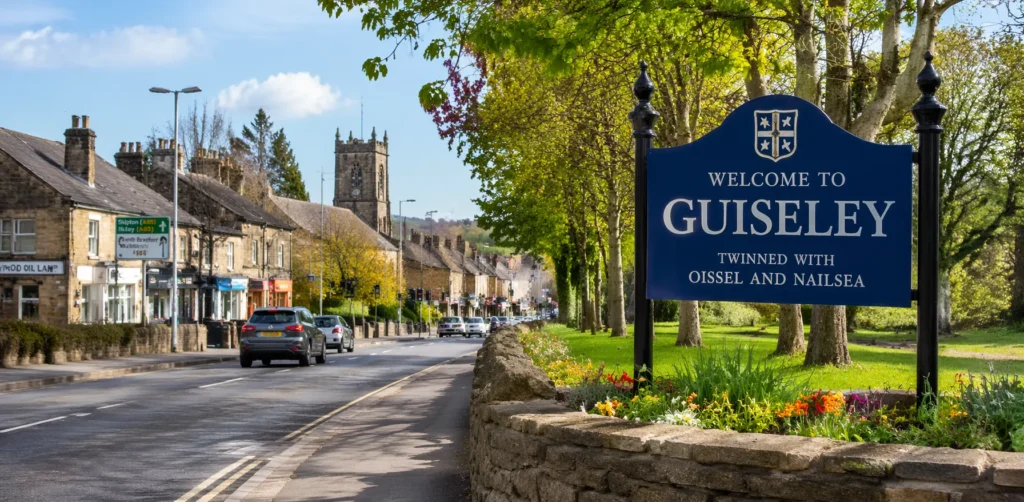

Introduction: The Town That Wore Average Like a Badge of Honor
Imagine for a moment that you are a number. Not a person with hopes, fears, and a favorite sandwich order. Just a number. Your age, your income, the distance you travel to work, the number of bedrooms in your house—all of it gets plugged into a giant spreadsheet. And then someone compares you to the rest of the country.
Now imagine that you are not just close to the average. You are exactly the average. Down to the decimal point.
That was Guiseley.
For a handful of years in the early 2010s, this small West Yorkshire town held the strange, uncomfortable, and somehow charming title of the most statistically average place in all of Britain. Journalists showed up with notebooks and raised eyebrows. They expected to find gray skies, gray buildings, and gray people eating bland food in silence.
What they found instead was a town full of character, history, and a surprising sense of humor about the whole thing.
But here is the truth that the headlines never told you. Guiseley was never really average. It just looked that way on paper. And today, it does not even look that way on paper anymore. Things have changed. People have moved in. Businesses have sprouted up. And the quiet little town on the A65 has started to find its own unique voice.
Before we go any further, let us get the most important thing out of the way. You need to know how to say the name. Because if you say it wrong, locals will still be nice to you. They are Yorkshire folk. They are always nice. But they will definitely notice.
How to Pronounce Guiseley (Finally, a Simple Answer)
Let us solve this mystery once and for all.
The name Guiseley is spelled G-U-I-S-E-L-E-Y. That is eight letters. Four vowels. Two syllables. Wait, two? Yes. Two.
Most people look at “Guiseley” and want to say “Guy-zel-ee” or “Geez-lee” or even “Gwiz-lee.” These are all incorrect. Some are close. None are right.
The correct pronunciation is “GYZ-lee.”
Say it with me now. Guys. Lee. Guys-lee. The first part rhymes with “eyes” or “prize.” The second part is exactly the same as the martial artist Bruce Lee or the famous director Ang Lee. Just “lee.”
Do not put an extra syllable in the middle. Do not soften the G into a J sound. Do not make it fancy. It is short, sharp, and very Yorkshire.
Here is a trick to remember it. Think of a group of male friends. You point at them and say, “Look at those guys.” Now imagine those guys are standing next to a calm pond. That is “guys lee.” Guiseley.
If you are still nervous, listen to the train announcements when you ride the Wharfedale Line. The automated voice says, “Now approaching Guiseley.” It says it fast. Gyz-lee. That is your free pronunciation lesson every time you ride.
And if you accidentally say it wrong? Do not worry. People have been misspelling and mispronouncing Guiseley for centuries. The misspelling “Guisley” (dropping the second E) is so common that the post office used to get mail addressed that way and still deliver it. Local historians have found documents from the 1700s where the town name is spelled a dozen different ways. So you are in good company.
But now you know the right way. Use your power wisely.
Where Exactly Is This Town? A Location Deep Dive
Pull out a map of northern England. Find the city of Leeds. It is the big one in West Yorkshire, just east of the Pennine hills. Now trace your finger northwest. Follow the A65 road. About nine miles from the center of Leeds, you will hit a small cluster of streets, stone buildings, and green spaces. That is Guiseley.
The town sits in a shallow valley. To the north and south, the land rises gently. To the west, you can see the distant outline of Ilkley Moor, the same moor made famous by the old folk song about a man who died from not wearing a hat. To the east, the land rolls down toward Leeds and the flatter parts of Yorkshire.
Guiseley is surrounded by other towns and villages that each have their own personality. To the west is Menston, a quieter village with a train station and a lot of trees. To the north is Yeadon, which used to be its own town but has now grown right up against Guiseley so that you cannot tell where one ends and the other begins. To the south is Baildon, a hilltop town with its own moor and a famous view. To the east is Horsforth, a larger suburb of Leeds with a lively high street and a huge park.
Together, these places form a kind of ring around the northern edge of the Leeds urban area. Guiseley is right in the middle of that ring. Not too big. Not too small. Just… well, you know.
The main road through town is the A65. It is not a highway or a motorway. It is just a two-lane road with traffic lights, shops on both sides, and the occasional slow tractor. In the morning, it gets busy with commuters heading toward Leeds. In the evening, it gets busy with those same commuters coming home. On Saturday afternoons, it gets busy with people trying to park near the bakery. It is ordinary. It is real. And that is exactly why people love it.
A Deep History Lesson: From Saxon Clearings to Sewing Machines
Let us rewind the clock. Way, way back.
The name Guiseley comes from Old English, the language spoken in England before the Norman Conquest in 1066. Most experts agree that the name means something like “Gyd’s wood clearing” or “the clearing in the woods belonging to a man named Gyd.” Gyd was probably a local Saxon leader, the kind of person who owned a few cows, commanded a handful of soldiers, and settled arguments between neighbors.
So even back then, over a thousand years ago, Guiseley was a small, practical, middle-of-the-road kind of place. A clearing in the woods. Not a fortress. Not a cathedral city. Just a spot where people decided to stop walking and start building.
The next big moment in Guiseley’s history came in the 12th century. That is when the parish church of St. Oswald was built. St. Oswald was a king of Northumbria in the 600s, a man who fought battles, spread Christianity, and died in a war against a rival king. Why would a church in West Yorkshire be named after a Northumbrian king? No one knows for sure. But the name stuck.
The church that stands today on the little hill in the center of Guiseley is not the original 12th-century building. Parts of it have been rebuilt, expanded, and repaired many times over the centuries. But if you go inside and look carefully, you can still see Norman arches and stonework that has been there since the 1100s. That is nearly a thousand years of history in one building. Think about all the weddings, funerals, baptisms, and Sunday services that have happened under that roof. Think about all the people who sat in those pews and worried about the same things we worry about today: money, family, health, and the weather.
For most of its history, Guiseley was a farming village. The land around the town is good for grazing sheep and cattle. The soil is rich in the valley bottoms. Farmers would bring their animals to the local market, trade goods with neighbors, and walk home along muddy paths. Life was slow, hard, and small.
Then the Industrial Revolution arrived.
In the late 1700s and early 1800s, mills started appearing along the streams and rivers of West Yorkshire. Guiseley got its own woolen mills. The mills needed workers. Workers needed houses. Houses needed shops, pubs, and schools. The village grew into a small town. The population climbed from a few hundred people to a few thousand.
The biggest change came in 1865. That was the year the railway reached Guiseley. Suddenly, the town was not a remote farming outpost anymore. It was connected to Leeds, Bradford, and the rest of the growing industrial network. People could live in Guiseley and work in the city. They could send their goods to bigger markets. They could visit family in other towns without spending a whole day on horseback.
The railway station was built near the bottom of the town, close to where the main road crossed the tracks. That same station is still there today. The trains look different. The ticket machine is newer. But the basic shape and location have not changed in 150 years.
Now for the story that every local loves to tell. In the 1860s, a man named Isaac Singer came to Guiseley. You know that name. Singer sewing machines. The company that put a sewing machine in nearly every home in America and Europe. Isaac Singer was already rich and famous when he showed up in Yorkshire. He had made his fortune, fought legal battles over patents, and built a massive factory in New York.
But Singer was also a complicated man. He had many children with many different women. He moved around constantly, maybe to escape his past, maybe just because he was restless. In 1863, he married a woman named Isabella Boyce. They chose Guiseley for their wedding. Why Guiseley? No one knows for sure. Maybe they passed through on the train and liked the look of the place. Maybe they had friends in the area. Maybe they just wanted a quiet, out-of-the-way spot to say their vows away from the newspapers.
The wedding took place at St. Oswald’s Church, the same 12th-century building on the hill. You can still see the record of the marriage in the church archives. Isaac Singer is one of the most famous inventors of the 19th century, and he got married in the most average town in Britain. That is the kind of contradiction that makes history interesting.
Singer did not stay in Guiseley. He left soon after the wedding and eventually moved to France, where he died in 1875. But his connection to the town remains. Schoolchildren in Guiseley learn about Isaac Singer. The church sometimes gets visitors who come specifically to see where the sewing machine king got married. It is a small claim to fame, but it is real.
The ‘Most Average Place in Britain’ – What the Headlines Got Wrong
Let us jump forward to 2012. A team of researchers at the University of Sheffield decided to answer a strange question: where is the most normal place in the United Kingdom?
They gathered data from thousands of neighborhoods. They looked at census numbers, crime statistics, house prices, employment rates, education levels, and dozens of other categories. Then they calculated the national average for each category. Finally, they measured how far each neighborhood was from those averages. The neighborhood with the smallest total distance from all the averages would be declared the most average place in Britain.
The winner was a postal code area in Guiseley. Specifically, the area around the Nunroyd Park and the side streets leading up toward Yeadon.
The numbers were almost spooky in their precision. The median age in Guiseley was 41. The UK median age was 41. The average house price was within two percent of the national figure. The average commute time was 23 minutes, exactly the same as the national average. The percentage of homeowners, renters, and social housing tenants was almost identical to the national breakdown. The crime rate was within a whisper of the average. Even the number of cars per household was almost perfectly average.
The researchers published their findings. The news media went wild. Headlines appeared in newspapers across the country. “Boring Britain: The Most Average Town Revealed.” “Guiseley: Where Nothing Ever Happens.” “Life in the Middle: A Day in the UK’s Most Normal Place.”
Television crews arrived with cameras and microphones. They interviewed people on the high street, asking the same question over and over: “How does it feel to live in the most boring town in the country?”
Here is what the news crews did not expect. The people of Guiseley laughed.
They laughed because they knew something the journalists did not. Being average on a spreadsheet does not make you boring in real life. The numbers could not measure the warmth of the local pub on a cold night. They could not capture the sound of children playing in Nunroyd Park on a summer evening. They had no way to count the number of times a neighbor had helped shovel snow off a driveway or brought over a hot meal when someone was sick.
The town leaned into the attention. A local shop started selling mugs that said “Guiseley: Proudly Average.” The town council put up a sign at the train station welcoming visitors to “Britain’s Most Normal Town.” For a few months, it was a running joke that everyone was in on.
But then the news crews left. The headlines stopped. And Guiseley went back to being itself, which was never really average at all.
Not Any More: The Changes That Reshaped the Town
The article you are reading includes the phrase “Not any more.” That phrase is doing a lot of work. It signals that the old story about Guiseley—the story of the most average town—is outdated. Here is why.
Starting around 2015, and accelerating rapidly after 2020, Guiseley began to change. The changes were not dramatic at first. You would not have noticed them if you were just passing through. But if you lived there, you felt them.
The first change was demographic. Young families started moving in. They came from Leeds, from Bradford, from Manchester, and from London. They were looking for something specific: good schools, a safe neighborhood, a train station, and a house with a garden. Guiseley had all of those things. And compared to the prices in the big cities, it was still affordable.
Not anymore. As of 2025, house prices in Guiseley have climbed significantly. A typical three-bedroom semi-detached house that sold for £220,000 in 2015 might now cost £350,000 or more. That is still cheaper than London or the nicer parts of Leeds. But it is no longer cheap. And it is definitely not average. The national average house price is around £285,000. Guiseley is now comfortably above that mark.
The second change was commercial. For decades, the high street in Guiseley was functional but forgettable. There was a bank, a post office, a pharmacy, a couple of pubs, a fish and chip shop, and a newsagent. That was about it. If you needed anything special, you went to Leeds or Bradford.
Then the independents started arriving. A bookshop opened on the main road. It was small, cramped, and wonderful. The owner knew every title on the shelves. She hosted poetry readings, children’s story hours, and a book club that met in the back room. The shop became a gathering place. Then a bakery opened two doors down. They made sourdough bread using flour from a mill just over the hill. The line would stretch out the door on Saturday mornings. Then a zero-waste grocery store opened across the street. Then a coffee shop that roasted its own beans. Then a craft beer bottle shop.
None of these businesses existed in Guiseley ten years ago. Today, they are part of the town’s identity. They attract visitors from surrounding towns who come specifically to shop, eat, and drink. Guiseley is no longer just a place you pass through on the way to Ilkley. It is a destination.
The third change was social. The new residents—the commuters and remote workers who arrived from bigger cities—brought different expectations. They wanted events. They wanted festivals. They wanted community groups that did more than just meet once a month at the church hall. So they started them.
Now Guiseley has an annual arts festival. It has a summer fair in Nunroyd Park with live music, food trucks, and a bouncy castle. It has a Christmas market where local makers sell candles, soap, and knitted hats. It has a park run every Saturday morning that draws over a hundred people. None of this existed fifteen years ago.
The old-timers—the families who have lived in Guiseley for generations—were skeptical at first. Change is hard. New people bring new ways of doing things. But over time, most of them have come around. The new businesses brought life back to the high street. The new events brought energy to the town. And the new residents brought their kids to the same schools, their dogs to the same parks, and their money to the same pubs.
Guiseley is still a small town in West Yorkshire. It still has its quiet streets, its stone houses, and its thousand-year-old church. But it is not average anymore. Not by a long shot.
A Walk Through Guiseley: What You Will See on a Typical Day
Let us take a walk. We will start at the train station and work our way through the town. You will not need a map. Just follow your feet.
The train station sits on the edge of the town center, near the bottom of the hill. It is a modest station. Two platforms. A small car park. A ticket machine that works most of the time. A shelter with a bench and a timetable. If you blink as the train goes by, you might miss it.
But pay attention. The station is busier than it looks. In the morning, dozens of commuters pour off the trains and walk toward the high street or the car park. In the evening, the same people come back, carrying briefcases, shopping bags, or backpacks. The station is the heartbeat of Guiseley’s commuter life. Without it, the town would still be a farming village.
Leave the station and walk up the hill. The road is called Station Road. It changes names a couple of times as you go, but that does not matter. Just keep walking uphill. On your left, you will see a row of stone cottages. Some of them are 200 years old. They have small windows, steep roofs, and front doors that open directly onto the pavement. Imagine living there. Imagine coming home every day to a house that has seen the Industrial Revolution, both World Wars, and the invention of the internet.
At the top of the hill, you reach the crossroads. This is the center of Guiseley. The main road runs east-west. The side streets run north-south. In the middle of the crossroads, there is a small island with a war memorial. Every November, the town gathers here to remember the soldiers who died in the wars. It is a solemn moment. Then everyone goes to the pub.
Turn left at the crossroads. You are now on Oxford Road, the main shopping street. Look around. The buildings are a mix of old and new. There is a Victorian bank building with tall windows and stone columns. Next to it is a modern pharmacy with a flat roof and a glass door. Next to that is a pub that has been serving beer since before the bank was built.
The shops come one after another. A butcher shop with a red sign. A charity shop with a window full of used books and mismatched plates. A hair salon with a spinning barber pole. A pet store with a cat that sleeps in the window. A bakery that sells sausage rolls warm from the oven. A coffee shop where teenagers sit for hours with one latte between four of them.
Keep walking. The road curves slightly. Now you are passing the older part of the high street, where the buildings lean toward each other like tired old friends. There is a fish and chip shop that has been here for fifty years. The owner knows everyone’s name. He knows that Mrs. Higgins likes extra salt, that the lads from the garage want curry sauce, and that the vicar always orders a small portion on Fridays.
At the end of Oxford Road, you reach the green. This is not a large park. It is just a triangle of grass with a few benches and a big tree. But on a sunny day, the green is full of people. Office workers eat their lunch on the benches. Parents push strollers along the path. Older couples sit and watch the world go by. It is the kind of public space that does not look like much on a map but feels essential when you are there.
From the green, you can see St. Oswald’s Church rising on its little hill. The church is made of local stone, gray and rough. The tower is square and solid, not tall enough to be a landmark but tall enough to be seen from most of the town. The churchyard is full of gravestones. Some of them are so old that the writing has worn away. Others are newer, with fresh flowers in plastic pots.
Walk up the path to the church door. Push it open. It will not be locked. It is never locked. Inside, the air is cool and quiet. The stone walls are thick. The light comes through stained glass windows that tell stories from the Bible. There is a smell of old wood, old books, and old dust. Even if you are not religious, you feel something in here. You feel the weight of all those years, all those prayers, all those lives that started and ended in this place.
Sit in a pew for a minute. Look at the carvings on the wooden beams. Look at the brass plaques on the walls, each one commemorating someone who lived and died in Guiseley. There is a plaque for a woman who taught Sunday school for sixty years. There is one for a man who died in a mining accident in 1873. There is one for a pilot who was shot down over France in 1944. These were not famous people. They were not rich or powerful. They were just people. They lived in the houses on Station Road. They walked on the same streets you walked on. And now they are part of the town’s invisible history.
When you are ready, leave the church and walk back down the hill. You have seen the center of Guiseley. But there is more.
Nunroyd Park: The Green Heart of Town
If you ask a local where to go on a sunny afternoon, they will say Nunroyd Park. No hesitation.
Nunroyd Park is not a famous park. It does not have a lake or a castle or a botanical garden. It has a large field, a playground, a skate park, a tennis court, and a lot of trees. That is it. But that is enough.
The park sits on the northern edge of the town center, just a five-minute walk from the high street. The entrance is through a set of stone gates. The gates used to belong to a big house that stood on this land a hundred years ago. The house is gone now, but the gates remain.
Once you step through the gates, the noise of the town fades. The traffic sounds become muffled. You hear birds instead. You hear children shouting and laughing. You hear the thump of a football being kicked across the grass.
The main field is the heart of the park. It is used for everything. On summer weekends, you will see families having picnics. Teenagers playing informal games of cricket. Couples walking their dogs. Old men sitting on benches, feeding bread to the pigeons. During the week, the local schools use the field for sports day. On Sunday mornings, the park run uses the field as the start and finish line.
The playground is always busy. It has swings, slides, climbing frames, and a roundabout that makes some kids dizzy and others ecstatic. Parents sit on the benches around the edge, drinking coffee from travel mugs and having the same conversations they have every day: sleep schedules, school pickups, what to make for dinner.
The skate park is newer. It was built about ten years ago after a group of local teenagers raised money and petitioned the council. It is not a huge skate park. It has a few ramps, a rail, and a concrete bowl. But it is always full. On any given afternoon, you will see kids on skateboards, scooters, and BMX bikes. They fall down. They get back up. They cheer each other on. It is one of the few places in town where teenagers have a space that belongs to them.
The tennis courts are often empty. That is not because no one plays tennis. It is because the courts are tucked away behind a hedge, and sometimes people forget they are there. But on the weekends, a small group of regulars shows up with rackets and cans of balls. They play doubles. They argue about whether the ball was in or out. They laugh and shake hands and do it all again next week.
In the winter, Nunroyd Park is quieter. The field turns muddy. The trees lose their leaves. The playground gets wet and cold. But people still come. Dog walkers in heavy coats. Runners with headlamps when the sun sets at four o’clock. Kids who do not care about the cold, who just want to swing as high as they can before their fingers go numb.
Every summer, the park hosts a small music festival. It is called Nunfest. It is not a famous festival. You will not see any bands you have heard of. But the music is good, the beer is cold, and the crowd is happy. Families bring blankets and lawn chairs. Teenagers stand in groups, pretending not to dance. Older couples sit near the back, holding hands and nodding along to songs they do not know. It lasts one day. It rains half the time. And everyone loves it.
Nunroyd Park is not special in the way that a national park or a world heritage site is special. It is special in the way that a local park is special. It is the place where kids learn to ride their bikes. Where first kisses happen behind the trees. Where arguments are resolved with a walk and a quiet conversation. Where you go when you need to clear your head or fill your lungs with fresh air. It is the green heart of Guiseley, and the town would not be the same without it.
The Pubs of Guiseley: Where Stories Are Told Over a Pint
You cannot understand a Yorkshire town without understanding its pubs. Pubs are not just places to drink. They are living rooms, community centers, and history museums all rolled into one. Guiseley has several good pubs. Each one has its own personality. Let us visit a few.
The Railway Inn is the closest pub to the train station. It is a white building with a red sign, standing on a corner just steps from the platform. The Railway Inn knows exactly what it is. It is a commuter pub. In the evenings, you will see people in suits and office clothes, loosening their ties and complaining about their bosses. On weekends, it fills up with younger crowds, people who came by train from Leeds or Bradford to meet friends. The beer is good. The chips are better. And the conversation is always flowing.
The White Cross is farther from the center, near the cricket ground. It is a larger pub, with a big garden and a separate dining room. The White Cross is famous for its Sunday roast. People drive from other towns to eat here. The roast beef is thick and pink. The Yorkshire puddings are the size of your face. The gravy is dark and rich. You will need to book a table a week in advance, or you will be eating your Sunday lunch standing up in the car park. It is worth the wait.
The New Inn is on the high street, right in the middle of everything. It is a traditional pub. Dark wood. Low ceilings. A fireplace that actually burns coal in the winter. The New Inn does not try to be fancy. It does not have a gastropub menu or craft cocktails. It has beer, cider, and bags of crisps. It has a jukebox with songs from the 80s and 90s. It has a pool table that is slightly uneven, which makes every game unpredictable. The regulars sit in the same seats every night. They have been sitting there for years. They will nod at you when you walk in. If you stay long enough, they will talk to you.
The Woolpack is on the edge of town, closer to Yeadon. It used to be a working men’s pub, the kind of place where mill workers went after their shifts. The mills are gone now, but the Woolpack remains. It has been renovated recently. The inside is brighter and cleaner than it used to be. Some of the old regulars complain that it has lost its character. Others say it was about time. The beer is still cheap. The conversation is still friendly. And the sign outside still shows a bundle of wool, a reminder of what this town used to be.
Each of these pubs has a story. The Railway Inn once had a regular who claimed he had seen a ghost in the upstairs room. No one believed him, but he told the story every Friday for twenty years. The White Cross once hosted a wedding reception where the groom got so nervous that he hid in the garden for an hour. The New Inn had a barmaid who worked there for fifty years. When she retired, the whole street threw a party. The Woolpack had a leaky roof for a decade. Every time it rained, the landlord would put out buckets and say, “Character. That’s what this place has. Character.”
Pubs are not just businesses. They are institutions. They outlive the people who run them. They outlive the customers who drink in them. They change slowly, reluctantly, like old men who do not like new things. But they survive. And as long as they survive, Guiseley will have places where strangers become friends, where stories are told and retold, where a pint of bitter and a packet of crisps can solve almost any problem.
The Commuter Life: Why Trains Made Guiseley What It Is
Let us talk about the trains. They are the reason Guiseley grew from a village into a town. They are the reason the most average place in Britain existed at all. And they are the reason the town is changing today.
The Wharfedale Line runs from Leeds to Ilkley, passing through Guiseley, Menston, and Burley-in-Wharfedale. It is a single track for much of the route, with passing loops at the stations. The trains are not fast. They are not fancy. They are usually clean, usually on time, and usually full.
In the morning, the trains heading toward Leeds are packed. Commuters stand in the aisles, holding coffee cups and staring at their phones. They have done this a thousand times. They know exactly where to stand on the platform to be closest to the doors. They know which carriages have the most seats. They know the faces of the other regulars, even if they have never spoken to them.
The journey to Leeds takes about twenty minutes. That is enough time to check emails, read the news, or just stare out the window at the fields and houses rolling by. Some people use the time to nap. They have perfected the art of sleeping while standing up, leaning against a pole, waking up just before their stop.
In the evening, the trains heading back to Guiseley are just as full. The commuters look tired. Their ties are loosened. Their makeup is smudged. They carry bags from the supermarket, because stopping at Tesco on the way home is easier than driving back out later. They sit in silence or talk quietly with the person next to them. When the train announces “Guiseley,” half the carriage stands up and shuffles toward the doors.
The train station itself is small. There is no ticket office anymore. Just a machine. There is a shelter with a few benches. There is a bike rack that is always full. There is a car park that is always full by 7:30 in the morning. If you arrive later than that, you are parking on a side street and walking.
But the station is more than its physical features. It is a gateway. It is the reason people can live in Guiseley and work in Leeds. It is the reason a young couple can afford a house with a garden while still earning city salaries. It is the reason Guiseley has avoided the fate of so many small towns that lost their young people to the cities.
Without the train, Guiseley would be a different place. It would be quieter, older, and poorer. The shops on the high street would struggle. The schools would have fewer students. The pubs would close earlier. The town would slowly shrink, like so many towns in rural England.
But the train is there. It runs every half hour, every day, from early morning until late at night. It connects Guiseley to the world. And as long as it runs, the town will keep changing, keep growing, keep surprising the people who think they already know what it is.
Schools, Families, and the Pull of Good Education
If you talk to parents in Guiseley, they will give you many reasons why they chose to live here. The train. The parks. The pubs. The countryside. But one reason will come up again and again: the schools.
Guiseley School is the main secondary school for the town. It is a large comprehensive school, serving students from ages 11 to 18. The school building is a mix of old and new. Some parts date back to the 1930s. Other parts were built in the last ten years. The school has a reputation for being solid, reliable, and unspectacular. That sounds like an insult, but it is not. Parents want their children to be safe, to learn, to make friends, and to pass their exams. Guiseley School delivers on all of those fronts.
The school’s exam results are consistently above the national average. Not dramatically above. Not at the level of a fancy private school or a selective grammar school. Just above. The students go on to college, to university, to apprenticeships, to jobs. They do well enough. They do not make headlines. They just get on with their lives.
The primary schools in Guiseley are also well regarded. St. Oswald’s Church of England Primary is right next to the church, on the hill. It is a small school with a strong sense of community. The children learn about religion, but the school welcomes families of all faiths and none. The playground is small. The classrooms are cozy. The teachers know every child’s name.
Queensway Primary is on the other side of town, closer to Yeadon. It is larger than St. Oswald’s, with more modern buildings and a bigger playing field. Queensway has a reputation for being good with children who need extra help. The school has a dedicated team for special educational needs. Parents whose children struggle in traditional classrooms speak highly of Queensway.
There is also a small Catholic primary school, St. Joseph’s, on the edge of town. It is connected to the Catholic church on Leeds Road. The school is tiny. Each grade has only one class. But the families who send their children there are fiercely loyal. They like the small size. They like the focus on faith and community. They like that everyone knows everyone.
The quality of the schools has a direct effect on house prices. Families are willing to pay more to live in the catchment area of a good school. Estate agents know this. When they list a house for sale, they always mention the nearby schools. “Within walking distance of Guiseley School” is a phrase that adds thousands of pounds to the asking price.
This creates a cycle. Good schools attract families. Families buy houses. House prices go up. Higher prices attract more investment. More investment improves the schools. The cycle continues. It is one of the reasons Guiseley is no longer average. The schools have pulled the town upward, away from the middle, toward something better.
The Changing High Street: From Banks to Bakeries
Let us return to the high street. But this time, let us look closer. Let us see the changes that have happened over the past decade.
Ten years ago, the high street in Guiseley had three banks. Barclays. Lloyds. HSBC. They were all within two blocks of each other. On Saturday mornings, people would line up outside the cash machines. The banks were busy, important, and permanent. They felt like they would be there forever.
Today, two of those banks are gone. Closed. Replaced by something else. The Barclays building is now a coffee shop. The HSBC building is a dental clinic. Only Lloyds remains, and its hours are shorter than they used to be. The cash machines are still there, but they are used less often. Most people pay with their phones now.
Ten years ago, the high street had a butcher, a baker, and a candlestick maker. Well, not a candlestick maker. But it did have a butcher and a baker. The butcher was called Rimmington’s. It was a family business that had been around for generations. The meat was good. The service was friendly. But Rimmington’s closed in 2018. The owner retired, and none of his children wanted to take over. The shop sat empty for two years. Then a new butcher opened. Different name. Different family. Same good meat. The cycle continues.
The baker from ten years ago was a Greggs. It is still a Greggs. Some things do not change.
But the new businesses are the story. The bookshop we mentioned earlier. The zero-waste grocery store. The craft beer shop. The sourdough bakery. The artisan chocolate maker. The vintage clothing store. None of these existed a decade ago. All of them are thriving today.
How did they survive? The same way small businesses survive everywhere. They found a niche. They built a loyal customer base. They worked hard. They adapted. When the pandemic hit and people could not shop in person, the bookshop started doing deliveries. The bakery started selling flour and yeast for people to bake at home. The zero-waste store set up a click-and-collect system. They did not give up. They got creative.
The landlords on the high street also helped. When the banks left, they could have raised the rents to make up for the lost income. Instead, many of them lowered the rents to attract new tenants. They understood that an empty shop helps no one. A lower rent with a good tenant is better than a higher rent with no tenant at all.
The high street is not perfect. There are still empty shops. There are still buildings that need repairs. There are still problems with parking, with litter, with the occasional rowdy crowd on a Friday night. But the direction is clear. The high street is getting better, not worse. It is becoming a place where people want to spend time, not just a place they pass through on their way somewhere else.
The Chevin Forest Park: Guiseley’s Backyard Wilderness
Guiseley does not have its own mountain. It does not have its own forest. But it has something almost as good: the Chevin Forest Park, just a ten-minute drive away in the neighboring town of Otley.
The Chevin is a ridge of high ground overlooking the valley of the River Wharfe. It is not a mountain. The highest point is only about 900 feet above sea level. But it feels like a mountain. The slopes are steep. The views are enormous. On a clear day, you can see all the way to the Yorkshire Dales in the north and the city of Leeds in the south.
The Chevin is covered in woodland. Oak, beech, birch, and ash trees. The paths are narrow and muddy in winter, dry and dusty in summer. There are no roads on the top. No houses. No streetlights. When you walk into the Chevin, you leave the town behind. You hear wind in the leaves. You hear birds you cannot name. You hear your own footsteps on the dirt.
There is a famous viewpoint called Surprise View. It is called that because of the sudden drop. You are walking through the trees, and then suddenly the trees stop and the ground falls away and the whole valley opens up in front of you. It is surprising every time. Even if you have been there a hundred times, you still catch your breath.
People use the Chevin for everything. Hiking. Running. Mountain biking. Dog walking. Picnics. Photography. Bird watching. There is a rock climbing area for experienced climbers. There is a playground near the main car park for families with young children. There are benches at the viewpoints for people who just want to sit and stare.
In the autumn, the Chevin is full of families collecting leaves and acorns. In the winter, it is quieter, but the hardcore walkers still come, wrapped in layers, crunching through frost. In the spring, the bluebells bloom. The forest floor turns purple and blue. In the summer, the Chevin is busy from morning until evening. The car parks fill up by ten o’clock. People bring coolers and folding chairs. They stay all day.
The Chevin is not technically in Guiseley. But it might as well be. Guiseley residents treat it as their backyard. They know the best paths. They know where to find the oldest trees. They know which direction to walk for the best sunset views. The Chevin is a gift. It is free. It is open every day of the year. And it is one of the main reasons people choose to live in this part of West Yorkshire.
The Cricket Ground: Summer Afternoons in White
Cricket is not for everyone. It is slow. It is confusing. It can last for days and still end in a draw. But in England, especially in Yorkshire, cricket is a summer ritual. And Guiseley has its own cricket club.
The Guiseley Cricket Club is based at the White Cross ground, just behind the pub of the same name. The ground is a large field with a pitch in the middle. The pitch is not grass. It is clay, rolled flat and cut short. Around the edge of the field, there are benches, a small pavilion, and a scoreboard that has to be updated by hand.
On a summer Saturday, the first team plays a home game. The players wear all white. They look like ghosts moving across the green field. The game starts at noon and goes until early evening. There are breaks for lunch and tea. The pace is leisurely. The crowd is small. Mostly family members and a few old men who have been watching cricket here since the 1970s.
But there is something beautiful about it. The sound of the ball hitting the bat. The applause when someone scores a fifty. The polite clapping when a bowler takes a wicket. The smell of cut grass and sunscreen. The way the sun moves across the sky, casting long shadows by the end of the day. It is peaceful. It is slow. It is everything that modern life is not.
The cricket club also has junior teams. Boys and girls from the local schools learn to play. They learn the rules. They learn the etiquette. They learn that you do not argue with the umpire. They learn that you shake hands with the other team after the game, whether you won or lost. They learn that cricket is not just a sport. It is a way of being.
The club is always looking for volunteers. Someone to update the scoreboard. Someone to run the tea bar. Someone to mow the grass. It is the kind of place where people give their time for free because they love the game and they love the community. It is the kind of place that makes Guiseley feel like a real town, not just a collection of houses and shops.
The People: Who Lives in Guiseley Today?
Let us talk about the people. Because a town is not its buildings or its train station or its parks. A town is its people.
Who lives in Guiseley today? The answer is more complicated than it used to be.
There are the old families. The ones whose grandparents grew up here, whose parents grew up here, who grew up here themselves. They remember when the high street had a cinema. They remember when the fields around the town were still farms. They remember when everyone knew everyone and strangers stood out. Some of them are happy about the changes. Some of them are not. But they are not going anywhere. This is their home. It has always been their home.
There are the commuters. The people who moved here for the train. They work in Leeds, in Bradford, sometimes in Manchester or London a few days a week. They bought their houses in the last ten or fifteen years. They have young children or teenagers. They are busy. They are stressed. They are also grateful. They know they could not afford a house like this in the city. They know their children are safer here. They know the schools are better. They are the ones driving the changes. They are the ones opening the new businesses and starting the new festivals.
There are the retirees. People who moved to Guiseley after raising their families somewhere else. They wanted to be closer to the countryside but not too far from a hospital. They wanted a town with a library and a post office and a bus service. Guiseley fit the bill. They spend their days walking, gardening, volunteering, and meeting friends for coffee. They are the backbone of the town’s volunteer organizations. Without them, the park run would not happen. The church fair would not happen. The library would close early.
There are the students. Young people who grew up in Guiseley and are still living at home while they go to university or start their first jobs. Most of them will leave eventually. They will move to Leeds or Manchester or London. Some will come back when they have children of their own. That is the cycle. That is how towns survive.
There are the newcomers from other countries. Guiseley is not diverse compared to a big city. It is still overwhelmingly white and British. But there are small communities of people from Poland, from India, from the Philippines, from other places. They work in the shops, in the restaurants, in the care homes. They are slowly becoming part of the town. Their children go to the local schools. They shop at the local shops. They are Guiseley now.
Put all these people together, and you get a town that is changing but not broken. A town that argues about parking and school catchment areas and whether the new coffee shop is better than the old one. A town that comes together for the Christmas market and the summer fair and the Remembrance Day service. A town that is not average anymore, even if it used to be.
The Weather: Four Seasons in One Day
Yorkshire weather is a joke. Everyone who lives here makes it. “If you don’t like the weather, wait five minutes.” It is a cliché. It is also true.
Guiseley sits in a valley. Valleys trap weather. Cold air sinks into them. Fog collects in them. Rain falls and does not blow away. On the other hand, valleys are sheltered. The worst winds pass over the top. The worst storms lose some of their power before they reach the bottom.
Winter in Guiseley is cold and dark. The sun sets before four o’clock. The temperature hovers around freezing. Frost covers the cars every morning. Snow is not as common as people imagine. Maybe one or two snowfalls a year. Enough to cancel the schools and make the roads slippery. Not enough to build a snowman that lasts more than a day.
Spring comes slowly. March is still cold. April is unpredictable. May is when things finally warm up. The trees turn green. The flowers appear. People emerge from their houses like bears waking from hibernation. The parks fill up. The pub gardens open. Everyone forgets how miserable the winter was and starts believing that summer is coming.
Summer in Guiseley is pleasant but not guaranteed. Some summers are warm and dry. Others are cool and wet. The average high temperature in July is about 68 degrees Fahrenheit. That is 20 degrees Celsius. Warm enough for shorts. Not warm enough for air conditioning. The sun sets late, after nine o’clock. Long evenings in the park. Long evenings in the pub garden. Long evenings walking the dog while the sky turns pink and orange.
Autumn is beautiful. The leaves change color. The air gets crisp. There is a smell of wood smoke and fallen leaves. The mornings are foggy. The afternoons are golden. The sun sets earlier and earlier, reminding everyone that winter is coming. It is a season of endings. The last cricket game. The last outdoor festival. The last ice cream from the shop on the high street.
The weather in Guiseley is average. That is not a joke. It is genuinely average. Not as rainy as Manchester. Not as cold as Newcastle. Not as hot as London. Just average. But average weather can still be beautiful. And the people of Guiseley have learned to appreciate it. They do not complain about the rain. They bring an umbrella. They do not complain about the cold. They put on a coat. They get on with their lives.
What Makes a Town ‘Average’? The Statistics Behind the Label
Let us go back to the statistics. Because the story of Guiseley as the most average place in Britain is not just a fun fact. It tells us something about how we measure places and people.
The researchers at the University of Sheffield looked at dozens of categories. Age. Income. House prices. Commute times. Car ownership. Education levels. Crime rates. Health outcomes. Voting patterns. Religious affiliation. Ethnic diversity. Household size. Employment status. Housing tenure. The list went on and on.
For each category, they calculated the national average. Then they calculated how far each neighborhood was from that average. The neighborhood with the smallest total distance was the winner. Or the loser. Depending on your perspective.
Guiseley scored well because it did not have any extreme values. It was not super rich or super poor. It was not super young or super old. It was not super diverse or super homogeneous. It was not super urban or super rural. It was right in the middle on almost every measure.
That is what average means. It does not mean boring. It does not mean bad. It just means normal. And normal is not a bad thing to be.
Think about it this way. If you are a doctor, you want your patient’s blood pressure to be average. Not too high. Not too low. Average is good. If you are an engineer, you want the temperature of your machine to be average. Not too hot. Not too cold. Average is good. If you are a parent, you want your child’s height and weight to be average. Not a cause for concern. Average is good.
Average is not an insult. It is a sign of health. It is a sign of balance. It is a sign that things are working the way they are supposed to work.
Guiseley was average because it was healthy. The economy was stable. The population was stable. The crime rate was low. The schools were good. The houses were affordable. The trains ran on time. It was not exciting. It was not glamorous. But it worked.
And then it stopped being average. Not because it became unhealthy. Because it became successful. The train brought more people. The schools brought more families. The new businesses brought more visitors. House prices went up. The population got younger. The town got busier. It moved away from the middle. It became above average.
That is not a tragedy. That is growth. And growth is what every town wants. Even the most average town in Britain.
The Future: What Happens Next for Guiseley?
Predicting the future is impossible. But we can make some educated guesses.
Guiseley will continue to grow. The pressure from Leeds will not stop. More people will move out of the city looking for space, schools, and safety. Guiseley will be one of the places they choose. House prices will continue to rise. The high street will continue to change. More old shops will close. More new shops will open. Some of the new shops will fail. Some will succeed. That is how it works.
The town will get more diverse. Slowly. Not as fast as a big city. But the children of the Polish immigrants and the Indian immigrants will grow up in Guiseley. They will go to the local schools. They will make local friends. They will sound Yorkshire. And they will change the town in ways that are hard to predict.
The train line will probably get upgraded. There is talk of electrification. Faster trains. More frequent service. That would bring even more commuters. That would push house prices even higher. That would change the town even faster.
The climate will change. Winters will be milder. Summers will be hotter. There will be more floods and more droughts. Guiseley is not on a river, so it will not flood like some places. But the farmers in the surrounding hills will struggle. The parks will need more water. The gardens will change.
The older generation will pass on. The people who remember the old Guiseley—the cinema, the mills, the farms—will be gone. Their children will remember a different Guiseley. Their grandchildren will remember a different one still. That is how memory works. That is how history works.
Through all of these changes, Guiseley will remain Guiseley. It will still be a small town on the A65 between Leeds and Ilkley. It will still have its train station, its park, its church, its pubs. It will still have people who say “GYZ-lee” and people who say it wrong. It will still be a place where people live their ordinary, extraordinary lives.
And maybe, someday, some researcher will run the numbers again. And they will find that Guiseley has become average once more. Because the average will have moved. And Guiseley will have moved with it. That is the funny thing about averages. They are always changing. And the places that look average today might look different tomorrow.
Final Thoughts: Why You Should Visit Guiseley
You should visit Guiseley because it is real. It is not a theme park. It is not a museum. It is not a tourist trap. It is a working town where people live, work, raise families, and grow old. It has good days and bad days. It has problems and solutions. It has history and future.
You should visit Guiseley because of the pronunciation. Because now you know how to say it correctly. Because saying “GYZ-lee” makes you feel like an insider, even if you are just passing through.
You should visit Guiseley because of the train ride from Leeds. Twenty minutes through the West Yorkshire countryside. Fields, hills, stone walls, sheep. The train slows down as it approaches the station. The automated voice says the name. You smile because you know how to say it now.
You should visit Guiseley because of the walk from the station to the high street. The stone cottages. The war memorial. The green. The church on the hill. The butcher, the baker, the bookshop. The smell of bread and coffee and rain.
You should visit Guiseley because of the pubs. The Railway Inn. The White Cross. The New Inn. The Woolpack. Because a pint in a Yorkshire pub is one of the great pleasures of life. Because the conversation is free and the welcome is warm.
You should visit Guiseley because of Nunroyd Park. Because every town deserves a green heart. Because watching children play and dogs run and teenagers skate is a reminder of what matters.
You should visit Guiseley because of the Chevin. Because the walk to Surprise View will take your breath away. Because the view of the valley will make you understand why people have lived here for a thousand years.
And you should visit Guiseley because of the story. Because it was once the most average place in Britain. And then it was not. Because it changed and grew and surprised everyone. Because it is a small town with a big heart and a strange name that you now know how to pronounce.
So come to Guiseley. Say it right. Stay a while. And see for yourself why average was never the whole story.
Now you know. Guiseley. GYZ-lee. Guys and lee. A town of stone, trains, parks, pubs, and people. Not average anymore. Just itself.