
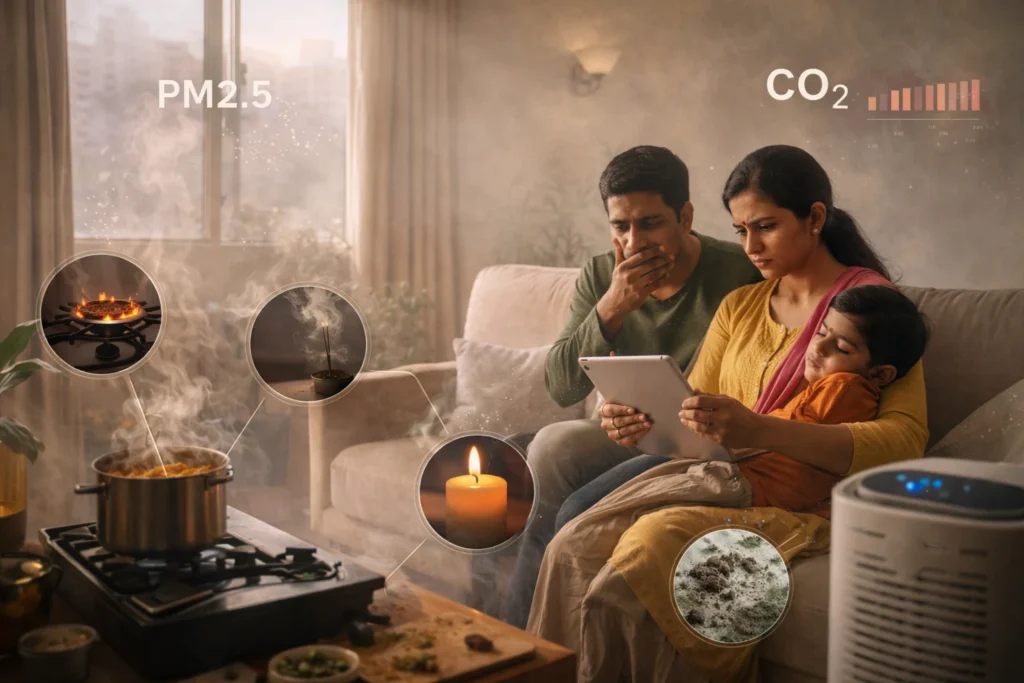

A Winter’s Tale of Two Airs
Every November, as the festival lights fade and the first chill of winter creeps across the northern plains, a familiar transformation begins. The skies over Delhi, Noida, Gurugram, Faridabad, Ghaziabad, Lucknow, Kanpur, Varanasi, Patna, Amritsar, Jalandhar, and countless other cities and towns across North India turn a sickly grey. The sun becomes a pale, diffused orb that struggles to pierce the haze before vanishing completely by midday. For millions of families, the same routine plays out with mechanical precision year after year. Schools announce closures. Colleges suspend outdoor activities. Offices advise work-from-home protocols. The affluent rush to purchase air purifiers, while newspapers fill with alarming AQI graphics and doctors issue desperate warnings on news channels. We shut our windows tight, draw our curtains, lock ourselves in, and collectively breathe a sigh of relief, believing we’ve escaped the poison outside.
This ritual has become so deeply ingrained in North Indian urban life that we rarely stop to question its logic. We treat our homes as fortresses. We assume that by sealing ourselves behind brick and mortar, behind concrete and glass, we are safe. The enemy, we believe, is outside—visible in the grey haze, measurable by the alarming numbers on our phone screens, attributable to the tractors in Punjab, the trucks on the highways, the construction dust at nearby sites, and the factories on the outskirts of our cities.
But what if the biggest danger isn’t waiting for you at the bus stop? What if it’s already inside, sitting on your kitchen counter, hiding in your living room carpet, smoldering in your puja thali, or building up in your bedroom as you sleep soundly, unaware that every breath is taking you closer to the doctor’s clinic, closer to the hospital, closer to a lifetime of respiratory medication?
Welcome to the paradox of the Indian winter home. We spend crores of rupees on sealing our houses against the cold, investing in weather stripping, double-glazed windows, heavy curtains, and door seals, unaware that we are also sealing ourselves in with a danger that is, in many ways, worse than the smog we are trying to keep out. The fortress has become a trap. The sanctuary has become a source. The place where we feel safest has become the place where our health is most at risk.
This is not alarmist rhetoric. This is not the stuff of sensational journalism. This is the conclusion of decades of scientific research, validated by real-time data from monitors placed in thousands of homes across North India, confirmed by studies from prestigious institutions, and witnessed by millions of families who have no idea that the air they breathe indoors is slowly damaging their health. And it is a truth that every Indian household must confront if we are to protect the ones we love.
The Great Indian Misconception: I’m Safe Indoors
Ask the average person in Delhi, Noida, or Lucknow about air pollution, and they will point to the road. They will blame the construction dust, the diesel generators, the traffic jams, and the crop burning in neighboring states. We have been conditioned by years of media coverage and public health campaigns to believe that pollution is an outdoor problem—something that happens to us when we step out of our front door, something we encounter during our commute, something we face during our morning walk.
This belief is reinforced every winter by the visual evidence all around us. We see the smog. We taste the grit in the air during our morning walk. We smell the burning in the air. We hear the coughing of fellow commuters on the bus, in the metro, at the traffic light. The connection is visceral and obvious: bad air is out there, in the world, beyond our doors.
We treat our homes as fortresses. We close the doors, draw the curtains, and assume the threat has been neutralized. The logic seems impeccable: if the pollution is outside, and I am inside, then I am safe. This is the great Indian misconception, and it is quietly damaging the health of millions of people who have no idea that their homes are making them sick.
This misconception is not just held by the common person. It is reflected in policy, in media coverage, in public discourse. When the AQI hits severe levels, the advice is always the same: stay indoors, avoid outdoor activity, keep windows closed. This advice, while well-intentioned, is incomplete. It addresses only half the problem. It tells people how to avoid outdoor pollution but says nothing about the pollution they are creating inside their own homes.
This is a dangerous myth that needs to be debunked once and for all.
The reality, supported by decades of environmental science and confirmed by countless studies across North India, is that during the winter months, the air inside your home is often a toxic cocktail, potentially more hazardous than the air just outside your door. The fortress you’ve built to protect your family might actually be a gas chamber. The sanctuary you’ve created for your children might be a source of chronic disease. The home you’ve worked so hard to provide might be harming the very people you’re trying to protect.
Modern science and real-world data from cities across North India are revealing a shocking truth: the air we breathe for 90% of our time—the indoor air—is the air that impacts our health the most. And in winter, a perfect storm of physics, chemistry, geography, architecture, and our own daily habits turns our living rooms, our bedrooms, our kitchens into pollution traps that make the outdoor smog look almost benign by comparison .
To understand this fully, we first have to understand the enemy we cannot see. We have to look beyond the AQI numbers on our news apps and dive deep into the microscopic world that exists in every room of our homes. We have to understand what we’re actually breathing, where it comes from, and what it does to our bodies.
What is Hiding in Your Breathing Space
When we talk about air pollution, we usually talk about AQI. It’s a convenient number, a shorthand that allows us to gauge at a glance whether the day is safe for a walk, whether we should mask up, whether the children should play outside. But AQI is just an abstraction, a mathematical construct that combines multiple pollutants into a single index. To truly grasp the threat we face every winter, we need to look at the particles and gases themselves—the actual invaders that enter our bodies with every breath we take.
PM2.5: The Silent Invader That Travels Through Your Bloodstream
PM2.5 stands for Particulate Matter that is 2.5 microns in diameter or smaller. To put that in perspective, a human hair is about 70 microns thick. A grain of sand is about 90 microns. A red blood cell is about 7 microns. These particles are so tiny that they bypass your body’s natural defenses entirely, slipping through like a thief in the night.
Your body has evolved over millions of years to deal with threats from the environment. Your nose hairs are designed to catch larger particles before they can enter your respiratory tract. The cilia—microscopic hairs lining your respiratory tract—beat in waves to trap and expel invaders. Your cough reflex expels mucus and foreign matter from your lungs. Your immune system sends cells to engulf and destroy anything that makes it past these barriers. These are sophisticated, effective defenses against the kind of dust and debris our ancestors encountered in the natural world.
But PM2.5? It slips right through this entire defense network as if it didn’t exist.
These particles are small enough to penetrate deep into your alveoli—the tiny, grape-like air sacs in your lungs where oxygen passes into your bloodstream. Once there, they don’t just sit around waiting to be coughed out or engulfed by immune cells. They pass through the thin membrane of the alveoli and enter your bloodstream directly, bypassing all the defenses your body has evolved over eons.
Once in the blood, these particles become systemic invaders. They travel to every organ in your body. They trigger inflammation throughout your system. They carry carcinogenic compounds deep into your tissues. They have been linked in hundreds of peer-reviewed studies to heart attacks, strokes, lung cancer, and cognitive decline. PM2.5 is not just “bad air”; it is a bloodstream invader, a microscopic assassin that reaches every organ in your body, causing damage wherever it goes .
The Central Pollution Control Board sets India’s annual safe limit for PM2.5 at 40 micrograms per cubic meter. The World Health Organization, based on mounting evidence of harm at levels previously thought safe, has revised its guideline downward to just 5 micrograms per cubic meter. During a severe winter day in North India, outdoor PM2.5 levels can exceed 400 or even 500 micrograms per cubic meter. That is not just exceeding the limit; it is 100 times the WHO’s safe guideline. And indoors, as we will see, it can be even worse.
PM1.0: The Even Smaller Invader
If PM2.5 sounds terrifying, consider PM1.0—particles one micron or smaller. These are so tiny that they don’t just enter the bloodstream; some researchers believe they can cross the blood-brain barrier, the protective membrane that keeps harmful substances out of the brain. They can travel up the olfactory nerve directly into the brain, bypassing all defenses.
The health implications of this are still being studied, but early evidence suggests links to neurodegenerative diseases like Alzheimer’s and Parkinson’s. The idea that air pollution could contribute to the loss of memory, to the shaking of hands, to the slow erosion of who we are is frightening, but it is supported by a growing body of scientific evidence.
Studies in North Indian homes have found that indoor levels of these ultrafine particles can be more than three times higher than outdoor levels during winter . This means that while you’re sitting in your living room, watching television with your family, you might be breathing three times more of these brain-penetrating particles than if you were standing on the street outside.
PM10: The Larger Particles That Still Cause Damage
PM10 particles are those 10 microns or smaller. They’re larger than PM2.5 and PM1.0, but they’re still small enough to be inhaled and cause damage. These particles are typically trapped in the upper airways—the nose, throat, and windpipe—rather than penetrating deep into the lungs. But they still cause problems.
PM10 irritates the eyes, nose, and throat. It triggers coughing and sneezing. It exacerbates asthma and other respiratory conditions. In North Indian homes, PM10 levels during winter can be significantly elevated due to dust, dander, and other larger particles that accumulate in sealed spaces.
CO₂: The Drowsy Danger in Your Bedroom
Carbon Dioxide is what we breathe out. It’s odorless, colorless, and in normal concentrations, harmless. In a well-ventilated room, it dissipates quickly, replaced by fresh air from outside. But in a room that is sealed tight against the winter chill, CO₂ builds up to concerning levels.
Have you ever woken up with a splitting headache even after what felt like eight hours of sleep? Have you felt groggy, irritable, and unable to concentrate during your work-from-home morning meetings, blaming it on a bad night’s rest? Have you noticed that your children seem unusually lethargic in the morning, struggling to wake up for school? That could be CO₂ poisoning—not the lethal kind that makes headlines, but the chronic, low-level kind that degrades your quality of life day after day.
In a sealed bedroom with two people sleeping through the night, CO₂ levels can skyrocket within hours. By morning, you are breathing air that is significantly altered by your own exhalations. The oxygen level drops slightly; the CO₂ level rises dramatically. This leads to what occupational health experts call “Sick Building Syndrome”—a constellation of symptoms including fatigue, dizziness, headaches, and lack of focus that have no obvious cause but disappear when you leave the building .
We blame it on stress, on poor sleep, on the demands of modern life, on too much screen time. But sometimes, the explanation is simpler and more physical: we are simply re-breathing our own air, which has turned stale and toxic because we sealed ourselves in so effectively against the cold.
Carbon Monoxide: The Silent Killer
Unlike CO₂, which is a natural byproduct of respiration, Carbon Monoxide (CO) is a product of incomplete combustion. It comes from gas stoves, water heaters, fireplaces, and smoking. It is odorless, colorless, and deadly.
CO binds to hemoglobin in the blood 200 times more effectively than oxygen does. This means that if you’re breathing air that contains CO, your blood will preferentially carry CO instead of oxygen. Your tissues become starved of oxygen even though you’re breathing.
At low levels, CO causes headaches, dizziness, and nausea. At high levels, it causes unconsciousness and death. Every winter, there are tragic stories of families who died from CO poisoning due to improper ventilation of heating appliances. In sealed winter homes, the risk of CO buildup is real and should not be ignored.
Bioaerosols: The Uninvited Guests That Live With You
This is the stuff that sounds like science fiction but is very, very real. Bioaerosols are airborne particles of biological origin—bacteria, fungal spores, viruses, and fragments of pollen and insects. These are not inert particles; they are living or once-living organisms that can interact with your body in complex and often harmful ways.
A study conducted in the Delhi metropolitan area used advanced techniques to characterize the biological content of indoor air . Scientists sampled air in overcrowded, poorly ventilated homes. They weren’t just measuring particle mass; they were identifying the living organisms in those particles. What they found was alarming.
The results were alarming from a public health perspective. Bacterial concentrations ranged from 730 to 5,300 Colony Forming Units per cubic meter (CFU/m³). Fungal concentrations were even higher, ranging from 1,330 to 6,050 CFU/m³.
To give you a benchmark for understanding these numbers, the American Conference of Governmental Industrial Hygienists—a respected body that sets occupational exposure guidelines—suggests a safe threshold of around 1,000 CFU/m³ for total bacteria in indoor environments. Many of the Delhi homes studied were exceeding this by 500%. They were not just mildly contaminated; they were biologically overloaded.
The study identified specific genera of bacteria and fungi present in the air. Staphylococcus species, often associated with skin infections and respiratory illness, were common. Streptococcus, which can cause everything from strep throat to pneumonia, was detected. Aspergillus and Penicillium—fungi that can cause severe allergic reactions, lung inflammation, and in immunocompromised individuals, invasive infections—were also frequently detected .
These aren’t just floating around harmlessly; they are actively looking for a host. For people with compromised immune systems, the elderly, and young children, these bioaerosols pose a significant infection risk. For everyone else, they contribute to the chronic burden of inflammation and immune activation that wears down the body over time.
VOCs: The Chemical Cloud From Your Daily Products
Volatile Organic Compounds (VOCs) are a large family of carbon-containing gases that evaporate from solids or liquids at room temperature. They are emitted by thousands of everyday items that we bring into our homes without a second thought, without any awareness that we are introducing chemicals into our breathing space.
Your new plastic furniture is outgassing VOCs as the chemicals used in its manufacture slowly release into the air. The incense stick you lit during evening puja is pumping out VOCs as it burns. The mosquito repellent you plugged in to protect your children from dengue is releasing VOCs continuously. The synthetic air freshener trying to mask the smell of the bathroom is adding to the chemical cloud with every spray. The cleaning products you used to scrub the kitchen are leaving a residue that continues to evaporate for hours after you’ve finished cleaning. The new carpet you installed last month is releasing VOCs from its backing and fibers. The paint on your walls, even if it’s years old, can continue to release trace amounts of VOCs.
In a well-ventilated home, these VOCs dilute and disperse, carried away by moving air. In a winter-sealed home, they accumulate, building up day after day, week after week. And in high concentrations, many VOCs are known carcinogens. Others are respiratory irritants that trigger asthma and allergies. Others still are neurotoxins that can affect cognitive function, causing brain fog, memory problems, and difficulty concentrating.
The irony is bitter and profound: we buy products specifically to make our homes smell “fresh” and “clean,” and in doing so, we fill the air with chemicals that do the opposite of cleaning. We are essentially spraying a fine layer of toxins onto our lungs under the guise of making our homes smell like “jasmine meadow” or “ocean breeze” or “mountain spring.”
Nitrogen Dioxide (NO₂) and Sulfur Dioxide (SO₂)
These gases are primarily produced by combustion. Your gas stove, your water heater, and if you have one, your fireplace or heater—all of these are sources of NO₂ and SO₂. These gases are respiratory irritants that can trigger asthma attacks and reduce lung function. They are particularly problematic for children, whose developing lungs are more sensitive to their effects.
Studies in cities like Lucknow and Aligarh found heightened indoor NO₂ and SO₂ levels linked mainly to cooking with solid fuels indoors without exhaust ventilation . But even in homes with LPG, these gases are present whenever the stove is on.
Black Carbon: The Soot of Incomplete Combustion
Black carbon is the sooty black material emitted from gas and diesel engines, coal-fired power plants, and other sources that burn fossil fuels. Indoors, it comes from cooking, from smoking, and from outdoor air infiltrating the home. It is a potent climate-forcing agent and a major component of PM2.5.
A study comparing rural and urban households in North India found that rural households had higher black carbon concentrations (4.9 µg/m³) compared to urban households (3.7 µg/m³), largely due to the use of biomass fuels for cooking . In rural homes, black carbon levels fluctuate dramatically with cooking times, spiking during morning and evening meal preparation.
Formaldehyde: The Hidden Hazard in Pressed Wood
Formaldehyde is a specific VOC that deserves special mention because it’s so common in Indian homes. It’s used in the adhesives that bind together particle board, plywood, and medium-density fiberboard (MDF). These materials are ubiquitous in modern Indian furniture—wardrobes, kitchen cabinets, bookshelves, entertainment units.
Formaldehyde is a colorless gas with a sharp odor. At low levels, it irritates the eyes, nose, and throat. At higher levels, it’s a known human carcinogen. In a sealed home, formaldehyde from new furniture can accumulate to concerning levels, especially in bedrooms where furniture is concentrated and ventilation is minimal.
Radon: The Invisible Radioactive Gas
Radon is a radioactive gas that comes from the natural decay of uranium in soil and rock. It seeps into homes through cracks in foundations and floors. It’s odorless, colorless, and tasteless. It’s the second leading cause of lung cancer after smoking.
While radon is more of a concern in certain geological areas, it’s worth mentioning because it’s a classic example of an indoor pollutant that most people never think about. It comes from the ground beneath our homes, not from our activities, and it can only be detected with specialized testing.
Asbestos: The Legacy Pollutant
In older homes, asbestos may be present in insulation, ceiling tiles, floor tiles, and other building materials. When these materials are intact, the asbestos fibers are contained and pose little risk. But when they degrade or are disturbed during renovations, fibers can become airborne.
Asbestos fibers, once inhaled, can cause asbestosis (a scarring of the lungs), lung cancer, and mesothelioma (a cancer of the lining of the lungs). The latency period for these diseases can be decades, meaning that exposure today might not cause illness until years later.
Why Winter is the Perfect Storm
So, we have identified the ingredients for a disaster floating around our homes. PM2.5, PM1.0, PM10, CO₂, CO, bioaerosols, VOCs, NO₂, SO₂, black carbon, formaldehyde, radon, asbestos—a veritable chemical and biological soup that we breathe with every inhalation. But these pollutants are present year-round. Why does winter turn this recipe from a simmer to an explosion? Why do our bodies suffer so much more from November to February?
The answer lies in a complex interaction of meteorology, geography, physics, architecture, and human behavior. It’s a perfect storm of factors that combine to make winter the most dangerous time of year for indoor air quality.
The Inversion Layer: Nature’s Lid on the Pressure Cooker
During summer, the sun beats down on the ground, heating the earth’s surface. This heated ground warms the air directly above it, and warm air rises. This rising air acts like a giant conveyor belt, lifting pollutants from the surface and carrying them high into the atmosphere where they disperse and dilute. This is why summer skies, while sometimes hazy, are generally clearer than winter skies. The atmosphere is doing its job of mixing and diluting the pollutants we generate.
In winter, the situation reverses dramatically. The ground gets cold—very cold in North India, where winter temperatures can drop significantly, especially at night. The sun is lower in the sky and provides less heating, so the ground stays cold. A layer of warm air settles above this cold ground-level air like a lid on a pressure cooker. Meteorologists call this a temperature inversion.
This inversion layer is the enemy of clean air. It traps everything below it. The pollutants from vehicles, from factories, from construction sites, from crop burning—they all rise a little bit as warm exhaust, hit this warm lid, and stop. They can go no further. Instead, they accumulate, getting more and more concentrated in the shallow layer of air near the ground where we live and breathe.
Dr. Balakrishna Pisupati, Head of the United Nations Environment Programme in India, explains it simply and clearly: “In summer, rising warm air carries pollutants upward. But in winter, the air is dense and barely moves. Delhi often sees wind speeds of just 3 or 4 kilometers an hour. That means whatever enters the air stays there” .
To make matters worse, North India’s geography amplifies this trap. The region around the capital forms a shallow bowl, surrounded partially by the Himalayas to the north and the Aravalli hills to the west. The pollutants have literally nowhere to go. They just sit there, over our cities, over our towns, over our villages, over our homes, waiting for us to breathe them .
The Indoor Concentration Camp Effect
But what happens inside your home during this meteorological catastrophe?
When you seal your windows to keep the cold out, you also disconnect your home from the outside world. In a well-sealed room, pollutants don’t disperse; they accumulate. They have no escape route. They are trapped with you, building up hour after hour, day after day.
Think of your home as a bathtub with a tap and a drain.
- The tap is the sources of pollution inside your home—the cooking, the cleaning, the incense, the breathing of the family, the off-gassing of furniture, the shedding of skin cells, the tracking in of outdoor pollutants on shoes and clothes.
- The drain is the ventilation—open windows, door gaps, exhaust fans, air conditioners, the natural air exchange that occurs in a leaky house through cracks and imperfect seals.
- In summer, the drain is wide open. Windows are open, doors are open, air is moving. The water (pollution) flows out as fast as it comes in. The tub stays at a manageable level.
- In winter, we close the drain. We seal every gap, we keep windows shut, we block the natural airflow. But the tap is still running. In fact, in winter, the tap might be running faster because we’re cooking more hot meals, spending more time indoors, using more heating appliances, and burning more candles or incense for the festive season.
The result is inevitable and mathematical. The tub fills up. And by January, that tub is overflowing with pollution.
Data from homes across North India confirms this nightmare scenario with chilling precision. A comprehensive study on respirable particulate matter found that the Indoor/Outdoor (I/O) ratio for PM2.5 during winters was a staggering 2.72 . Let that sink in. This means that for every single particle of pollution floating outside your window, there are nearly three times as many inside your living room.
But it gets worse. The same study showed I/O ratios for PM1.0—those ultrafine particles that can enter the bloodstream and possibly the brain—hitting 3.21 .
In plain, unambiguous language that every family should understand: Your safe home is 200 to 300 percent more polluted than the hazardous street you are trying to avoid.
This is the paradox that every North Indian family must confront. The very act of seeking safety from the outdoor smog is creating an indoor environment that is, by objective scientific measurement, far worse for your health than the environment you’re trying to escape.
Reduced Air Exchange Rates
Air exchange rate is the rate at which indoor air is replaced by outdoor air. In a typical modern home with windows closed, the air exchange rate might be as low as 0.2 to 0.5 air changes per hour. This means that it takes two to five hours to replace half the air in the home.
When windows are open, the air exchange rate can increase dramatically, to 5 or even 10 air changes per hour depending on wind and cross-ventilation. This rapid exchange flushes out pollutants.
In winter, when windows are sealed, we drop to the lowest possible air exchange rates. Pollutants that are generated indoors have nowhere to go and no way to dilute. They just accumulate.
Increased Indoor Source Strength
Winter isn’t just about reduced ventilation; it’s also about increased pollution generation. We cook more in winter—hot meals, fried foods, slow-cooked dishes that are the pride of North Indian cuisine. These cooking activities generate more particles than simple meals.
We spend more time indoors, so we generate more skin cells, more dust, more CO₂ from breathing. We use more heating appliances, some of which may be combustion-based. We light more candles and incense for the festival season and for the cozy atmosphere. All of these increase the load on the indoor environment.
Cold Air Effects on the Body
Even if the indoor air were identical to outdoor air—which it’s not, it’s worse—the cold itself would make us more vulnerable. Cold air constricts the bronchioles, the small airways in the lungs. This natural reaction, designed to conserve heat, makes it harder for the body to clear inhaled particles. The cilia that sweep mucus and debris out of the lungs become less effective in the cold.
Combine that physiological vulnerability with the high PM load from indoors, and you have a perfect biological storm. Your lungs are already working at a disadvantage, and you’re asking them to process three times more pollution than they would in summer .
The Geography of Indoor Pollution: How Your Home’s Location and Construction Affect Your Lungs
Not all homes are created equal when it comes to indoor air quality. Where you live, how your home is built, how you maintain it, and even how you clean it can dramatically influence the air you breathe. Understanding these factors can help you identify the specific risks in your own home.
The Jodhpur Study: Ventilation as the Decisive Factor
A year-long study conducted across 12 households in Jodhpur, Rajasthan, representing slums, low-income, middle-income, and high-income groups, as well as commercial and industrial areas, provided crucial insights into what makes some homes healthier than others .
Researchers placed pre-calibrated air quality monitors in each home and tracked PM2.5 levels continuously for a full year, capturing seasonal variations and daily patterns. They also assessed housing conditions using a detailed scoring system that evaluated ventilation, appliance use, heating methods, cleanliness, construction quality, and location factors.
The findings were remarkably clear and consistent: effective ventilation and good hygiene practices were the most significant factors in reducing indoor PM2.5 levels.
Poorly ventilated homes suffered the worst air quality by a significant margin. House 1, with inadequate ventilation, recorded an average PM2.5 of 62 µg/m³. House 4, similarly poorly ventilated, averaged 73 µg/m³. In contrast, well-ventilated homes or those with air conditioning (which filters air as it cools) maintained significantly lower levels. House 2 averaged 46 µg/m³, and House 3, the cleanest of the residential properties, averaged just 40 µg/m³.
The worst air quality by far was recorded in House 5, which sat near a major highway and had inadequate ventilation. Its average PM2.5 was a staggering 111 µg/m³—nearly triple the Indian annual safety standard and more than 20 times the WHO guideline .
This study tells us something crucial: your home’s location and its ventilation are not minor factors. They are primary determinants of your exposure to air pollution. A well-ventilated home in a moderately polluted area can have better air than a sealed home in a clean area. The physics of air exchange trumps the geography of outdoor pollution.
The Jammu Study: Seasonal Variations Across All Home Types
Another study in urban households of Jammu, in the northern region of India, tracked PM2.5 levels across seasons for two years from 2017 to 2019 . The researchers looked at homes using different fuel types—some using wood fuel, some using non-wood fuels like LPG.
The results were striking and somewhat counterintuitive. All types of households exhibited significantly higher values of indoor PM2.5 during summer (74.36 µg/m³ for non-wood fuel homes, 156.46 µg/m³ for wood fuel homes) followed by winter (62.77 µg/m³ and 143.5 µg/m³ respectively), with lower values during the rainy season (58.47 µg/m³ and 132.52 µg/m³).
Wait—summer had higher indoor PM2.5 than winter? This seems to contradict the common narrative that winter is the worst season. But it actually reinforces a crucial point: indoor air quality is complex and location-specific. In Jammu, summer may bring dust from dry landscapes and open windows that allow outdoor particles to enter freely. The key takeaway is not which season is worst, but that all values across all seasons were above the CPCB prescribed annual limit of 40 µg/m³.
Even in the cleanest season (rainy) and the cleanest homes (non-wood fuel), indoor PM2.5 was nearly 50 percent above the legal safety standard. This means that for residents of urban Jammu, there is no season of safe indoor air. The exposure is chronic, year-round, and cumulative .
The Rural-Urban Divide: Different Sources, Same Danger
The sources of indoor pollution differ dramatically between rural and urban India, but the health consequences are equally severe in both settings. The pollutants may come from different places, but they end up in the same place: our lungs.
In rural North India, the dominant source of indoor air pollution is the burning of solid biomass fuels—wood, cow dung cakes, crop residues—for cooking and heating. These are not occasional sources; they are daily, essential activities. A study from rural northern India found that a staggering 81 percent of households used solid biomass fuels . This results in massive intra-day fluctuations in black carbon concentrations, ranging from 4.2 to 37.6 µg/m³ indoors and 5.7 to 33.3 µg/m³ outdoors. The rapid changes are driven by cooking times, with morning cooking creating massive spikes in pollution that can last for hours.
In these homes, the women who do the cooking and the young children who stay close to their mothers bear the heaviest burden. They are exposed not just to background pollution but to concentrated plumes of smoke during meal preparation.
In urban households, the sources are more diverse and diffuse. While LPG is nearly universal (100 percent of urban households in one study used only LPG), other sources become important. Smoking indoors, outdoor air infiltration, cultural practices like burning incense, and the proximity to traffic and industrial sources all contribute .
The key finding from comparing rural and urban households is that while the sources differ, the exposure is universal. Rural households had higher black carbon concentrations (4.9 µg/m³) compared to urban households (3.7 µg/m³), but both are exposed to levels that pose significant health risks . The rural woman breathing smoke from her chulha and the urban executive breathing VOCs from his new sofa are both breathing air that is damaging their health.
The Lucknow Study: Wealth Doesn’t Protect You
A study in Lucknow compared indoor air quality in different types of homes and found that wealth and modern construction don’t necessarily protect you from indoor pollution . In fact, some modern homes, with their tight seals and synthetic materials, can have worse air quality than traditional, more ventilated structures.
The study found that the highest PM2.5 concentrations were in homes that used solid fuels, but even homes with LPG had levels above safety standards. The key factors determining air quality were not income or education, but specific behaviors: ventilation during cooking, use of exhaust fans, and avoidance of indoor smoking.
The Impact of Neighborhood
Where your home is located within your city matters enormously. Homes near busy roads, near industrial areas, near construction sites, or near open burning sites will have higher infiltration of outdoor pollutants. These outdoor particles become part of the indoor load, adding to the pollution generated inside.
A study in Delhi found that homes within 100 meters of a major road had significantly higher indoor PM2.5 than homes in quieter residential areas, even with windows closed . The constant traffic generates particles that seep through every crack and gap.
Building Materials Matter
The very materials used to build your home can be sources of pollution. Painted walls can off-gas VOCs for years. Synthetic carpets can release chemicals. Particle board furniture can emit formaldehyde. Damp walls can grow mold that releases spores.
Traditional building materials like mud and lime plaster, which allow walls to breathe and resist mold, may actually be healthier than modern sealed constructions that trap moisture and chemicals.
The Age of the Home
New homes often have worse air quality than older homes due to off-gassing from new materials. The smell of a new home—that fresh, new smell that people find appealing—is actually the smell of chemicals evaporating from paints, adhesives, carpets, and furniture. This “new home smell” is a sign of pollution, not purity.
Older homes may have settled, but they may also have accumulated dust, mold, and other pollutants over years of occupancy.
The Unseen Dangers: A Deep Dive into the Data
It is easy to dismiss statistics as abstract numbers that have little to do with our daily lives. A number on a page doesn’t make us cough. A statistic doesn’t make our eyes water. But let’s visualize what is actually happening in different rooms of your house, based on real data collected by researchers across North India. Let’s make the invisible visible.
The Microbial Invasion in Delhi Homes
For years, we assumed that indoor air was just a diluted version of outdoor air—that the pollutants inside were simply the ones that had seeped in from outside. This assumption was reasonable but wrong.
Recent research published in Frontiers in Public Health regarding the Delhi Metropolitan area used advanced molecular techniques to characterize the biological content of indoor air . Scientists sampled air in overcrowded, poorly ventilated homes. They weren’t just measuring particle mass or counting particles; they were identifying the living organisms in those particles at the genus level.
The results were alarming from a public health perspective and should be a wake-up call for every family.
Bacterial concentrations ranged from 730 to 5,300 CFU/m³. Fungal concentrations were even higher, ranging from 1,330 to 6,050 CFU/m³.
To give you a benchmark for understanding these numbers, the American Conference of Governmental Industrial Hygienists—a respected body that sets occupational exposure guidelines for workers—suggests a safe threshold of around 1,000 CFU/m³ for total bacteria in indoor environments. Many of the Delhi homes studied were exceeding this by 500 percent. They were not just mildly contaminated; they were biologically overloaded, hosting microbial communities at densities that would concern industrial hygienists.
The study identified specific genera of bacteria and fungi present in the air. Staphylococcus species, often associated with skin infections and respiratory illness, were common. Streptococcus, which can cause everything from strep throat to pneumonia, was detected. Aspergillus and Penicillium—fungi that can cause severe allergic reactions, lung inflammation, and in immunocompromised individuals, invasive infections—were also frequently detected .
These aren’t just floating around harmlessly. They are active biological agents that can colonize the human body. For people with compromised immune systems, the elderly, and young children, these bioaerosols pose a significant infection risk. For everyone else, they contribute to the chronic burden of inflammation and immune activation that wears down the body over time.
The health effects reported by the residents of these homes weren’t subtle or subclinical. They weren’t the kind of vague symptoms that people might ignore. They were the kinds of symptoms that send people to doctors and disrupt daily life. Headaches, eye irritation, allergic rhinitis (runny nose, sneezing, itchy eyes), coughing, and wheezing were all reported at elevated rates. Crucially, these symptoms peaked in the winter, precisely when ventilation was minimized and people spent the most time indoors .
What this means for you and your family: If you or your children have a persistent winter cough that just won’t go away despite antibiotics and cough syrups, it might not be a viral infection. It might be the air you are breathing 24 hours a day, seven days a week. It might be the fungal spores floating through your living room, the bacteria multiplying in your poorly ventilated bedroom, the bioaerosols that have made your home their home.
The Dyson Effect: A Case Study in Real-Time Pollution
We don’t have to rely solely on academic studies conducted in laboratories by researchers in white coats. The data is now being generated in living rooms across India by smart air purifiers equipped with real-time sensors. These devices provide a running diary of indoor air quality, and the stories they tell are often shocking and illuminating.
A long-term user review of the Dyson Purifier Cool Gen1 in the National Capital Region (NCR) provided a fascinating and disturbing diary of indoor air that defies our common assumptions and reveals the hidden dynamics of home pollution .
Consider the monsoon season. Common sense says that rain cleans the air. And it does—outdoors. The rain washes particulate matter out of the sky, and for a day or two, the outdoor AQI can drop to moderate or even satisfactory levels. People breathe a sigh of relief. But what happens indoors during the monsoon?
The user found that the increased humidity brought by the monsoon created ideal conditions for mold and spore growth inside the home. The indoor AQI was recorded as high as 800 to 999. That is not just poor or severe. That is off-the-charts hazardous—levels that are literally off the standard AQI scale, which typically maxes out at 500.
Think about that deeply. While the outdoor air was being washed clean by rain, while the sky was clearing and visibility was improving, the indoor air was becoming more toxic than almost anything the outdoor environment could produce. The very humidity that made the monsoon bearable was also creating a breeding ground for biological pollutants inside the sealed home.
Or consider the social dimension of pollution. The same user noted that simply having friends over—people moving around, talking, laughing, perhaps someone stepping out for a smoke and bringing the smell back in—would spike the indoor AQI from a respectable 200 to a dangerous 350-400 within minutes .
This tells us something crucial that every family should understand: Your behavior dictates your air quality more than the weather report does. The outdoor AQI might be the headline, but the indoor AQI is the story of your life—your cooking, your cleaning, your guests, your daily routines, your habits. You are not a passive victim of outdoor pollution; you are an active participant in creating your indoor environment, for better or worse.
The Bengaluru Cooking Study: The Critical First Hour
While Bengaluru is in South India, far from the North Indian winter we’re focusing on, a rigorous study conducted there has profound implications for North Indian households because it focuses on a universal human activity: cooking .
Researchers studied 58 urban homes in Bengaluru, using continuous PM2.5 monitors alongside detailed household surveys. They assessed emission levels, exposure durations, and the effectiveness of ventilation strategies across seasons and cooking types.
The findings were stark, actionable, and directly applicable to North Indian kitchens.
First, only 15 percent of cooking events utilized range hoods. The vast majority of cooking happened without mechanical ventilation, without any active removal of pollutants. This means that the pollutants generated by cooking—and there are many—had no immediate escape route. They just spread through the kitchen and the rest of the home.
Second, window ventilation was highly seasonal and inconsistent. In good weather, windows opened; in bad weather, they closed. This resulted in prolonged pollutant persistence indoors during the times when windows were shut. The pollutants stayed longer, meaning higher exposure for longer periods.
Third, and most importantly, the study quantified the impact of ventilation with hard numbers. The use of simple ventilation measures—opening windows or operating range hoods—increased PM2.5 decay rates by more than twofold. In plain language, ventilation more than doubled the speed at which the air cleaned itself. This is not a minor effect; it’s a dramatic improvement.
Fourth, the type of stove mattered significantly. Gas stoves were associated with nearly twice the PM2.5 emissions compared to electric stoves. This is a crucial finding for the millions of Indian households that rely on LPG for cooking. It doesn’t mean everyone should switch to electric immediately, but it does mean that the choice of cooking appliance has real health consequences.
Finally, the study calculated that cooking contributed approximately 26 percent of daily indoor PM2.5 exposure, with the first hour after cooking identified as a critical window of elevated exposure. The air remains dangerously polluted for a full hour after you turn off the flame .
For a North Indian family making winter meals—rich, fried, slow-cooked dishes that are the pride of the region, the comfort food of the cold months—this is a warning that cannot be ignored. That glorious aroma of pakoras frying, of samosas sizzling, of curry simmering for hours is not just fragrance; it is a cloud of particulate matter that will linger in your kitchen, your dining room, and your lungs for hours after the meal is over.
The Aligarh Study: Fuel Choices and Health Outcomes
A study in Aligarh, Uttar Pradesh, examined the relationship between fuel choices, indoor air quality, and health outcomes . Researchers compared households using different fuels and measured both air quality and respiratory symptoms.
The results were clear: households using solid fuels had significantly higher indoor pollution levels and significantly higher rates of respiratory symptoms among residents, particularly women and children. The study also found that even among households using LPG, those without proper ventilation had higher pollution levels and more symptoms.
This study reinforces the point that the fuel you use matters, but how you use it—with ventilation or without—matters just as much.
The Agra Study: The Taj Mahal City’s Hidden Pollution
Agra, home to the Taj Mahal, is also home to severe air pollution. A study there examined indoor air quality in homes near the Taj and found levels well above safety standards . The study noted that tourism-related traffic and small-scale industries contributed to outdoor pollution that infiltrated homes, adding to the load from indoor sources.
The Varanasi Study: The Spiritual City’s Air Crisis
Varanasi, one of the oldest continuously inhabited cities in the world and a major spiritual center, faces unique air quality challenges. A study there found that the combination of domestic fuel burning, funeral pyres along the ghats, vehicular emissions, and small-scale industries created a complex pollution mixture that affected both outdoor and indoor air .
The Culprits in Your Kitchen and Living Room: A Room-by-Room Investigation
It’s easy to blame stubble burning in Punjab or vehicular emissions on the road. Those are convenient villains, far away and impersonal. They allow us to feel like victims of forces beyond our control. But let’s look closer to home. Let’s examine the pollution sources sitting in your own kitchen, your own living room, your own puja room, your own bedroom. They are so ingrained in our daily routines, so much a part of what we consider normal and even sacred, that we never question them. It’s time to question them.
The Kitchen Catastrophe
The kitchen is ground zero for indoor pollution in the Indian home. It is where fire meets food, where combustion creates sustenance—and also creates toxins. It is the heart of the home and, too often, the source of its sickest air.
The Biomass Burning Crisis
In many households across North India, especially in rural areas and even in some urban slums and low-income neighborhoods, biomass fuels are still the primary source of energy for cooking and heating. Wood, cow dung cakes, crop residues—these are burned in chulhas (traditional stoves) that often have no chimneys or inadequate ventilation.
Burning biomass isn’t just inefficient from an energy perspective; it’s a public health crisis contained within four walls. The smoke from these fires is a complex mixture of thousands of chemicals. It is loaded with PM2.5, PM10, carbon monoxide (a deadly gas that binds to hemoglobin and prevents oxygen transport), nitrogen oxides, sulfur oxides, and black carbon.
Studies have shown that this is the primary driver for high RSPM (Respirable Suspended Particulate Matter) concentrations indoors in households that use biomass . The women who do the cooking, and the young children who stay close to their mothers, bear the heaviest burden of this exposure. They are not just exposed to background levels; they are directly in the plume of smoke for hours every day.
The health impact of this exposure is devastating. Women who cook with biomass have significantly higher rates of chronic bronchitis, COPD, and lung cancer. Their children have higher rates of acute respiratory infections, the leading cause of death in young children globally.
The Gas Stove Myth: But I Use LPG, I’m Safe
Even if you use an LPG stove—and the vast majority of urban Indian households do—you are not safe from cooking pollution. This is a dangerous myth that needs to be debunked thoroughly.
LPG is certainly cleaner than biomass. It burns more completely and produces less particulate matter. But less is not none. And cleaner is not clean.
When you cook on a gas stove, especially when you fry foods at high temperatures (think of those winter delicacies—samosas, pakoras, pooris, kachoris, mathris), you generate massive amounts of ultrafine particles. The cooking process itself—the oil heating, the food sizzling, the water boiling—releases particles and gases into the air.
Without a chimney or a range hood that vents to the outside, these particles have nowhere to go. They rise from the pan, spread through the kitchen, and settle on surfaces or remain suspended in the air, waiting to be breathed. They linger for hours after cooking is done.
The Bengaluru study found that gas stoves were associated with nearly twice the PM2.5 emissions compared to electric stoves . If you are concerned about your indoor air quality, this is a statistic worth remembering and acting upon.
The Critical First Hour
The same study identified the first hour after cooking as a critical window of elevated exposure . You might finish cooking, serve the food, and sit down to eat with your family. But the air in your kitchen is still dangerously polluted. The particles are still suspended. The gases are still present.
If you don’t have ventilation running, you and your family are breathing this polluted air throughout your meal and for hours afterward. The act of nourishing your body is simultaneously exposing it to harm. The family meal, that cherished time of togetherness, becomes a time of collective exposure.
The Chimney Question
Many Indian kitchens now have chimneys, but not all chimneys are created equal, and not all are used correctly.
A chimney that recirculates air through a filter and back into the kitchen is better than nothing, but it doesn’t remove gases and may not capture all particles. A chimney that vents to the outside is far more effective because it actually removes pollutants from your indoor space.
Even with a good chimney, you need to use it consistently. Many families use the chimney only for heavy cooking—frying, grilling—but not for simple tasks like boiling water or making tea. But every cooking event adds to the pollution load, and every cooking event should be ventilated.
The Living Room: A Chemical and Biological Soup
The living room is where the family gathers. It’s also where multiple sources of pollution converge. It’s the heart of family life and, too often, the center of the chemical cloud.
The Freshness Fraud
Walk into any Indian home, and you will likely see evidence of our obsession with freshness. A room freshener plugged into a socket, releasing a continuous stream of synthetic fragrance. An incense stick (agarbatti) burning in the corner, its smoke curling toward the ceiling. A scented candle flickering on the coffee table. A bottle of air freshener on the shelf, ready to spray away any unwanted odor.
We associate these products with purity, with cleanliness, with a welcoming home. We buy them specifically to make our homes smell good, to create a pleasant environment for our families and guests. Scientifically, however, they are anything but pure or clean.
Dr. Alok Chopra, a Delhi-based cardiologist who has studied the health effects of indoor air pollution, warns against lighting incense or spraying aerosols indoors . These products don’t clean the air; they add to the pollution load. They release a cocktail of VOCs—benzene, formaldehyde, toluene, xylene, and other chemicals—that are known respiratory irritants and carcinogens.
You are essentially spraying a fine layer of toxins onto your lungs under the guise of making your home smell like jasmine meadow or sandalwood serenity or ocean breeze. The irony is profound and troubling: in our quest for a pleasant olfactory environment, we create a toxic chemical environment.
The Furniture Factor
That new sofa you bought last Diwali? The laminated wood shelves in your entertainment unit? The synthetic carpet under your feet? The foam mattress on your bed? All of these are sources of VOC emissions. The technical term is off-gassing—the release of trapped chemicals from manufactured products.
New furniture, especially if it’s made from pressed wood or particle board with formaldehyde-based adhesives, can off-gas for months or even years. In a sealed winter home, these VOCs accumulate. Your living room becomes a slowly releasing chemical factory, with every piece of furniture contributing to the load.
The Electronics Heat
Televisions, computers, routers, set-top boxes, and other electronics generate heat when they run. In winter, this heat might be welcome, keeping the room slightly warmer. But it also affects air quality in subtle ways.
Heat can increase the rate of VOC off-gassing from furniture and can create convection currents that keep particles suspended rather than allowing them to settle. Electronics also contain flame retardants and other chemicals that can slowly release into the air as they age.
The Dust Reservoir
Living rooms are full of textiles—curtains, sofas, cushions, rugs, carpets. All of these are dust reservoirs. They trap particles that would otherwise settle on hard surfaces and be easily cleaned. When you sit on a sofa, you disturb the dust, sending particles back into the air. When you walk on a carpet, your feet stir up settled dust.
In a sealed winter home, this resuspension of dust becomes a continuous process. Particles never really leave; they just move from surfaces to air and back again.
The Puja Room: Sacred Space, Polluted Air
This is perhaps the most sensitive and difficult topic to address. The puja room is the spiritual heart of the Hindu home. It is where families connect with the divine, where traditions are passed down through generations, where peace is sought, where blessings are received. And it is often a significant source of indoor air pollution.
The tools of worship—incense sticks (agarbatti), camphor (kapur), oil lamps (diyas), ghee lamps—all involve combustion. And combustion, whether of fossil fuels or sacred substances, produces particulate matter and gases.
The smoke from incense has been shown in multiple studies to contain many of the same carcinogenic compounds as cigarette smoke, including benzene and polycyclic aromatic hydrocarbons. The burning of camphor produces a range of VOCs. The ghee or oil in lamps, when burned, releases particles and gases.
This creates a painful dilemma for devout families. The very acts that bring spiritual comfort and cultural continuity are also degrading the physical health of the worshippers. It’s not a dilemma with easy answers, but it is a dilemma that must be acknowledged and addressed thoughtfully.
Some families have found compromises: using electric lamps instead of oil lamps, limiting incense burning to times when windows can be opened, performing puja in a well-ventilated space, or using alternative offerings that don’t involve combustion. These are personal choices that each family must make based on their beliefs and priorities.
The Bedroom: Nighttime Exposure
We spend a third of our lives asleep. The quality of the air in our bedrooms during those sleeping hours has an enormous impact on our health, yet it’s the room we think about least when it comes to air quality.
The CO₂ Buildup
As discussed earlier, CO₂ buildup in sealed bedrooms is a major issue. Two people breathing all night in a room with no ventilation can push CO₂ levels into the range that causes headaches, grogginess, and poor sleep quality.
Studies have shown that CO₂ levels in bedrooms can exceed 2,000 parts per million (ppm) by morning, compared to outdoor levels of around 400 ppm. At these levels, cognitive function is impaired, sleep quality is reduced, and next-day performance suffers.
The Dust Mite Haven
Bedrooms are full of textiles—mattresses, pillows, blankets, comforters, sheets, curtains, carpets. All of these are habitats for dust mites, microscopic creatures that feed on dead skin cells. Dust mite droppings are a potent allergen, one of the most common triggers for asthma and allergic rhinitis.
In a sealed, humid winter bedroom, dust mite populations can explode. The humidity from your breath and body, trapped in the room, creates ideal conditions for these creatures to thrive.
The Off-Gassing Overnight
If you have new furniture in your bedroom—a new wardrobe, a new bed frame, a new mattress—these items will off-gas VOCs continuously. At night, when the room is sealed, these VOCs accumulate. You spend eight hours breathing concentrated chemicals from your furniture.
The Nighttime Cleaning Myth
There’s a common belief in many cultures that we should close windows at night to keep out the night air, which is somehow considered harmful or unhealthy. This belief predates modern understanding of air pollution by centuries. It comes from a time when night air was associated with miasma and disease, before we understood germs and particles.
In reality, if outdoor air is cleaner than indoor air (which it often is, even in winter in many locations), bringing it in is beneficial. The problem is that in North Indian winters, outdoor air is rarely cleaner than indoor air. But the solution is not to seal ourselves in without thought; it’s to ventilate intelligently based on real-time conditions.
The Bathroom: Humidity and Mold
The bathroom is the wettest room in the house. Showers and baths generate massive amounts of humidity. In a sealed winter home, this humidity has nowhere to go. It condenses on walls, ceilings, windows, and mirrors. It seeps into grout and caulking. It soaks into towels and bathmats.
This moisture is an open invitation to mold and mildew. Mold doesn’t just look bad and smell musty; it releases spores and VOCs into the air that can affect the entire house. The musty smell associated with a damp bathroom is actually the smell of microbial growth and decay. And those spores? They become part of the air you breathe throughout the house.
The Store Room: The Forgotten Space
Store rooms, where we keep old furniture, extra supplies, and items we don’t use regularly, are often neglected in cleaning routines. They accumulate dust and, if there’s any moisture issue, mold. When you open the store room door, you release a burst of accumulated pollutants into the rest of the house.
The Garage: Attached and Dangerous
In homes with attached garages, the garage can be a major source of indoor pollution. Cars, motorcycles, generators, lawn equipment—all of these emit pollutants when running, and even when not running, they can leak fuels and oils that evaporate into the air. These pollutants can seep through cracks and doors into the living space.
The Outdoor Connection
Even with windows closed, your home is not completely sealed from the outdoors. Outdoor air infiltrates through cracks around doors and windows, through gaps in construction, every time you open the door to enter or leave. This means that outdoor pollution becomes indoor pollution, adding to the load from indoor sources.
In homes near busy roads, this infiltration can be a major source of indoor PM2.5. In homes near industrial areas, industrial pollutants can enter. In agricultural areas, pesticides and other chemicals can infiltrate.
The Health Price You Pay Daily: From Minor Annoyances to Major Diseases
We often think of pollution deaths as acute events—someone collapsing from a heart attack on a high-pollution day, making headlines, becoming a statistic. But the real damage of indoor air pollution is slow, cumulative, and insidious. It doesn’t make the news because it happens quietly, in millions of homes, day after day, year after year, decade after decade.
The Winter Amplifier
During winter, your body faces a double whammy. Cold air itself constricts your bronchioles—the small airways in your lungs. This natural reaction, designed to conserve heat, makes it harder for your body to clear out inhaled particles. The cilia that sweep mucus and debris out of your lungs become less effective in the cold.
Combine that physiological vulnerability with the high PM load from indoors, and you have a perfect biological storm. Your lungs are already working at a disadvantage, and you’re asking them to process three times more pollution than they would in summer .
Short-Term Health Effects: What You Feel Right Now
The acute effects of poor indoor air quality are often mistaken for other illnesses. If you or your family members experience any of these symptoms regularly during winter, indoor air pollution could be the cause or a contributing factor.
Eye irritation: That itchy, red, burning sensation by evening, after a full day indoors. You blame it on screen time, on too much phone or computer use, and that’s part of it. But pollutants in the air also directly irritate the conjunctiva, the thin membrane covering your eyes. Formaldehyde, ammonia, and other VOCs are particularly irritating to the eyes.
Persistent coughing: A cough that lingers for weeks, that doesn’t respond to antibiotics, that gets worse at night, that wakes you from sleep. This is your body trying desperately to clear the lungs of accumulated particles. It’s not an infection; it’s a response to chronic irritation. Antibiotics won’t help because there’s no bacteria to kill.
Headaches and fatigue: You wake up tired despite sleeping eight hours. You develop a dull headache by mid-afternoon. You feel mentally foggy, unable to concentrate. These are classic symptoms of elevated CO₂ levels from sleeping in a sealed room. You’re not getting the restorative sleep you need because you’re re-breathing your own exhaled air all night.
Allergic reactions: Constant sneezing, runny nose, watery eyes, nasal congestion. You think it’s a cold that just won’t go away. But colds typically resolve in a week or so. If symptoms persist all winter, it’s likely an allergic response to something in your indoor environment—dust mites, mold spores, pet dander, or other bioaerosols.
Sore throat and hoarseness: Waking up with a scratchy, sore throat that improves after you’ve been up and moving for a while. This is often caused by breathing dry, polluted air all night, which dries out and irritates the mucous membranes of your throat and upper airways.
Skin problems: Dry, itchy skin, rashes, eczema flares. Indoor pollutants can irritate the skin directly, and dry air from heating can strip moisture from the skin.
Dizziness and nausea: In cases of significant CO buildup or high VOC levels, people may experience dizziness, nausea, and lightheadedness. These are signs that the body is being overwhelmed by pollutants.
Long-Term Health Effects: The Silent Accumulation
The long-term consequences of chronic exposure to indoor air pollution are far more serious than the daily symptoms. They accumulate over years and decades, and they significantly increase your risk of major diseases and premature death.
Reduced Lung Function: Children growing up in polluted indoor environments may never achieve their full lung capacity. Their lungs develop under constant assault, and they adapt by forming less elastic tissue, less alveolar surface area. As adults, they will have permanently reduced lung function, making them more vulnerable to respiratory infections and diseases for the rest of their lives .
Chronic Obstructive Pulmonary Disease (COPD): This is a progressive lung disease that makes breathing increasingly difficult. It’s often associated with smoking, but in India, a significant proportion of COPD cases occur in non-smoking women who have spent decades breathing smoke from cooking fires. The inflammation caused by years of particle exposure slowly destroys the lung tissue, creating a disease that is just as severe as smoking-related COPD .
Asthma: Indoor air pollutants are potent triggers for asthma attacks. But emerging evidence suggests that exposure to certain pollutants, especially in early childhood, can actually cause the development of asthma, not just trigger existing disease. The chronic inflammation caused by pollutants may permanently alter the airways, making them hyperreactive .
Cardiovascular Disease: The link between air pollution and heart disease is now firmly established and widely recognized in the medical community. The fine particles that enter the bloodstream trigger systemic inflammation, which contributes to the development of atherosclerosis—the hardening and narrowing of arteries. This increases the risk of heart attacks, strokes, and hypertension. The Lancet, one of the world’s most prestigious medical journals, has warned that the combination of cold stress and air pollution can multiply the disease burden by up to 30 percent .
Lung Cancer: While smoking is the leading cause of lung cancer, non-smokers can also develop the disease. Long-term exposure to indoor pollutants, including the carcinogens in biomass smoke and the VOCs from household products, increases lung cancer risk. The International Agency for Research on Cancer has classified indoor emissions from household combustion of biomass fuel as probably carcinogenic to humans .
Adverse Pregnancy Outcomes: Pregnant women exposed to high levels of indoor air pollution have higher rates of low birth weight babies, preterm birth, and infant mortality. The developing fetus is exquisitely sensitive to environmental toxins, and pollutants can cross the placental barrier. Studies have shown that exposure to PM2.5 during pregnancy is associated with reduced birth weight and increased risk of developmental problems .
Cognitive Effects: This is an emerging area of research, but the evidence is increasingly troubling. Studies have linked air pollution exposure to cognitive decline in adults and to developmental delays in children. Particles that reach the brain may contribute to neuroinflammation and have been linked to conditions like attention deficit hyperactivity disorder (ADHD) and autism spectrum disorders. The mechanisms aren’t fully understood, but the association is strong enough to warrant concern .
Diabetes: Emerging research suggests a link between air pollution and type 2 diabetes. The systemic inflammation caused by pollutants may contribute to insulin resistance, the underlying problem in diabetes.
Immune System Dysregulation: Chronic exposure to pollutants may alter how the immune system functions, making it either overreactive (leading to allergies and autoimmune disease) or underreactive (leading to increased susceptibility to infections).
Who Is Most at Risk
While poor indoor air affects everyone in the home, some groups are more vulnerable than others. Understanding who is most at risk can help you prioritize protection efforts.
Children: Their lungs are still developing, they breathe more air per pound of body weight than adults, and they spend more time indoors. The long-term consequences of childhood exposure can last a lifetime, affecting not just respiratory health but cognitive development and overall well-being .
Women: In many households, women spend more time indoors and do most of the cooking. They bear the highest exposure to cooking-related pollutants. Studies from Ladakh to Delhi to Kerala have found that women suffer higher rates of chronic respiratory illness than men, even when they don’t smoke .
The Elderly: Aging lungs are less resilient. Pre-existing conditions like COPD, heart disease, and diabetes make the elderly more vulnerable to the acute and chronic effects of poor air. For an elderly person with heart disease, a day of high pollution can be the trigger for a heart attack.
Those with Pre-existing Conditions: People with asthma, heart disease, diabetes, or compromised immune systems are more susceptible to the effects of air pollution. What might be a minor irritation for a healthy person can be a serious health crisis for someone with a chronic condition.
Infants: Newborns and infants spend almost all their time indoors and have developing lungs and immune systems. They are highly vulnerable to indoor pollutants.
Pregnant Women: As noted above, exposure during pregnancy can affect the developing fetus, with potential lifelong consequences.
The Awareness Gap: We Don’t Know What We Don’t Know
One of the most striking and troubling findings from research across India is the enormous gap between public awareness of outdoor pollution and public awareness of indoor pollution. People know the AQI outside. They have apps on their phones that tell them the outdoor air quality. They adjust their plans based on outdoor conditions. They have no idea about the air inside their own homes, where they spend 90 percent of their time.
The Jodhpur Awareness Study
The Jodhpur study that tracked indoor PM2.5 across 12 households also included a fascinating and revealing awareness component . Researchers administered structured questionnaires to residents before and after they were shown real-time data from the air quality monitors in their homes.
At baseline, before seeing their own data, the results were eye-opening and somewhat depressing.
- While 100 percent of participants recognized that air pollution exists and is harmful to health—everyone knew it was a problem—specific knowledge was remarkably limited and superficial.
- Only 16.67 percent knew about the Air Quality Index (AQI) and what the numbers actually meant. Most people had heard the term but couldn’t interpret it.
- A mere 8.33 percent were aware of the number of deaths in India attributed to air pollution. The scale of the crisis was unknown to them.
- When asked to identify specific health effects of air pollution, only 58 percent mentioned breathing problems, and only 33 percent could identify a comprehensive list of effects including eye irritation and headaches. Most people thought of pollution as a lung problem only.
- Knowledge of specific risk factors was equally limited. While 83 percent knew that air pollution causes respiratory infections—that was the one thing everyone knew—zero percent knew that it causes heart disease, COPD, or lung cancer. These links, which are well-established in the scientific literature and accepted by medical authorities worldwide, were completely unknown to the residents .
Then came the intervention. Researchers showed residents the real-time data from their own homes. They saw with their own eyes the spikes during cooking, the gradual buildup overnight, the impact of opening a window, the difference between a ventilated and unventilated room. They saw that their indoor air was often worse than the outdoor air they worried about. The abstract concept became concrete and personal.
After this intervention, awareness improved dramatically and significantly.
- AQI knowledge rose to 100 percent. Everyone now understood what the numbers meant.
- Recognition of specific health effects, including breathing problems, reached 100 percent.
- Knowledge that air pollution causes heart disease, COPD, and lung cancer rose from zero to 100 percent .
What this means: Awareness is not automatic. It doesn’t happen by osmosis or by watching the news. It requires active education and, crucially, it requires personal data. When people see the numbers from their own homes, when they witness the pollution they create with their own activities, the abstract concept of indoor air pollution becomes concrete and personal. Only then does behavior change become possible and sustainable.
The Rural Awareness Gap
In rural areas, awareness of indoor air pollution is even lower. The smoke from cooking is seen as normal, as just part of life. The cough that women develop is seen as normal, not as a sign of disease. The frequent respiratory infections in children are seen as normal, not as preventable.
Education campaigns in rural areas face additional challenges: lower literacy rates, less access to information, traditional beliefs about health and illness, and the economic reality that for many families, biomass fuels are the only affordable option.
The Urban Awareness Gap
In urban areas, the awareness gap is different. Urban residents know about outdoor pollution and worry about it. But they have been told, repeatedly, that staying indoors is the solution. They have no reason to question this advice. They assume that if they’re inside, they’re safe.
The urban awareness gap is not about lack of information about pollution in general; it’s about misinformation about where the danger lies. It’s about a fundamental misunderstanding of the relationship between indoor and outdoor air.
The Economic Cost of Indoor Air Pollution
The health effects of indoor air pollution have economic consequences that affect families, communities, and the nation as a whole. These costs are rarely calculated, but they are enormous.
Healthcare Costs
Every visit to the doctor for a respiratory infection, every prescription for antibiotics that won’t work against pollution-induced symptoms, every hospital admission for COPD exacerbation, every asthma attack that requires emergency care—all of these cost money. For low-income families, these healthcare costs can be catastrophic, pushing them into debt or forcing them to choose between health and other necessities.
Lost Productivity
When people are sick, they can’t work. When parents are caring for sick children, they can’t work. When people are chronically fatigued from poor sleep due to CO₂ buildup, they are less productive at work. These productivity losses have real economic consequences for families and for the economy.
Reduced Educational Attainment
Children who are frequently sick miss school. Children with reduced cognitive function due to pollution exposure may struggle academically. These educational deficits compound over time, reducing future earning potential and perpetuating cycles of poverty.
Premature Death
The most tragic economic cost is the value of lives cut short by pollution-related disease. Every premature death from heart disease, lung cancer, or COPD represents not just immeasurable human loss but also economic loss to families and society.
The National Burden
A study published in The Lancet estimated that air pollution (both indoor and outdoor) cost the Indian economy over $150 billion in 2019, or about 5.4 percent of GDP . This includes healthcare costs and lost productivity. Indoor air pollution from household solid fuel use alone was responsible for a significant portion of this burden.
The Policy Gap: What the Government Is (and Isn’t) Doing
India has made significant progress in addressing outdoor air pollution. The National Clean Air Programme (NCAP) has set targets for reducing PM2.5 levels in cities across the country. There are regulations for industries, for vehicles, for construction sites. There is growing awareness and political will to address the visible pollution in our cities.
But indoor air pollution remains largely unaddressed by policy. There are no national standards for indoor air quality in homes. There are no regulations for the emissions from household products. There are no subsidies for clean cooking technologies in urban areas. There is no public education campaign about indoor pollution.
The Pradhan Mantri Ujjwala Yojana
One notable exception is the Pradhan Mantri Ujjwala Yojana, which provided LPG connections to millions of poor households, helping them move away from biomass fuels. This program has had significant health benefits, reducing indoor pollution exposure for millions of women and children.
However, even with LPG, pollution from cooking remains an issue, as we’ve seen. And the program doesn’t address other sources of indoor pollution or the ventilation issue.
Building Codes
India’s building codes include some provisions for ventilation, but enforcement is weak, and the codes don’t specifically address air quality. In the rush to build more homes for a growing urban population, ventilation is often sacrificed for maximizing floor space.
Product Regulation
There are no regulations limiting the VOC emissions from furniture, paints, cleaning products, or air fresheners in India. Products that would be restricted in other countries are freely available here.
What Is Needed
Addressing indoor air pollution will require a multi-pronged approach:
- Public education campaigns to raise awareness
- Subsidies for clean cooking technologies and ventilation equipment
- Regulations for product emissions
- Building codes that prioritize ventilation
- Research funding to better understand the problem and solutions
- Integration of indoor air quality into the broader clean air agenda
Practical Steps: Turning Your Home into a Clean-Air Safe Zone
This information is scary, overwhelming even. But it is not meant to paralyze you with fear or make you feel hopeless. It is meant to empower you. Once you know where the dangers are, you can systematically eliminate them or reduce your exposure. You don’t need a laboratory or a massive budget to make a meaningful difference in your indoor air quality. You just need to understand the principles and change a few habits.
Here is your comprehensive, science-backed action plan to reclaim your indoor air and protect your family. These steps are organized from simplest to most involved, so you can start with what’s easy and work your way up.
Step 1: The Source Control Mindset
Before you spend any money on gadgets or technology, the most effective and cheapest strategy is to stop the pollution at its source. This requires a fundamental shift in how you think about your home and your activities.
Ban the Burn (Selectively but Firmly): Create a strict family rule: no smoking inside the house. Ever. Cigarette smoke is one of the most concentrated and toxic forms of indoor air pollution. It contains thousands of chemicals, dozens of which are known carcinogens. Secondhand smoke is not just unpleasant; it’s deadly.
But the ban should extend beyond tobacco. Consider eliminating or strictly limiting other combustion sources:
- Incense sticks (agarbatti): If used for puja, consider confining them to a well-ventilated space or using them only when windows can be opened. The smoke is not harmless, regardless of its spiritual significance.
- Camphor (kapur): Same logic. Combustion is combustion, whether of sacred or secular materials.
- Scented candles: Opt for LED candles for ambiance. They provide the flickering light and cozy atmosphere without the emissions.
- Mosquito coils and repellent mats: These are designed to release insecticides into the air. While they protect against mosquito-borne diseases—a serious threat—they also add to the chemical load. Use them judiciously, and ventilate well after use .
- Wood or coal fires: If you have a fireplace or use a coal heater, ensure it’s properly vented to the outside and that you have working carbon monoxide detectors.
Kitchen Discipline: The kitchen requires special attention because it’s such a concentrated source of pollution.
- Install a chimney or range hood: If you don’t have one, get one. This should be a priority investment for your health. And ensure it vents to the outside, not just recirculates air through a filter. Recirculating hoods trap some particles but do nothing for gases .
- Use it every time: The most common mistake is only using the chimney for heavy cooking—for frying or grilling. Use it every single time you cook, even for boiling water. Even boiling water releases steam that can carry particles. Every cooking event adds to the pollution load .
- Cover your pots: Cooking with lids on traps steam and particles in the pot, reducing the amount that escapes into the kitchen air. This simple habit can significantly reduce emissions.
- Consider induction: If you are renovating your kitchen or replacing appliances, seriously consider induction cooktops. The Bengaluru study found that electric stoves produced half the PM2.5 of gas stoves . Induction is faster, safer, cooler, and cleaner than gas. It’s an investment in your health.
- Cook in the right order: If you’re preparing multiple dishes, do the frying first, when the kitchen is still fresh, and then move to boiling or simmering. This concentrates the highest-emission activities when the air is cleanest.
De-clutter Moisture: Moisture control is critical for preventing biological growth.
- Fix leaks immediately: A dripping tap, a leaking pipe, a seepage in the wall—these are not just plumbing issues; they are sources of humidity that feed mold. Fix them as soon as you notice them.
- Dry clothes outdoors or in a ventilated space: Drying clothes indoors releases massive amounts of moisture into the air. If you must dry indoors (and in North Indian winters, that’s often necessary), do it in a well-ventilated bathroom with the door closed and the exhaust fan running. Better yet, use a dryer that vents outside.
- Use a dehumidifier: If you notice persistent condensation on windows, if certain rooms feel damp or smell musty, a dehumidifier can make a huge difference by removing moisture from the air . This is particularly important in bathrooms and basements.
- Wipe down wet surfaces: After showers, wipe down walls and shower doors to remove moisture. This simple habit can significantly reduce mold growth.
Choose Products Wisely: Become a conscious consumer of household products.
- Fragrance-free is better: Opt for fragrance-free or naturally scented products (with essential oils rather than synthetic fragrances) when possible.
- Low-VOC paints: When painting, choose low-VOC or zero-VOC paints. They cost a bit more but are worth it for your health.
- Solid wood over pressed wood: When buying furniture, choose solid wood over particle board or MDF when possible. If you do buy pressed wood furniture, let it off-gas in a well-ventilated space (like a garage or balcony) for a few weeks before bringing it inside.
- Natural cleaning products: Consider using simple cleaning products like vinegar, baking soda, and lemon juice instead of harsh chemical cleaners. They’re cheaper and non-toxic.
Step 2: Ventilate Intelligently
Keep windows closed is bad advice. Keep windows closed all the time is even worse advice. The key is timing and strategy.
Know the AQI Outside: Before you decide whether to open windows, check the outdoor AQI on a reliable app. In North Indian cities, pollution levels follow a predictable daily pattern due to the inversion layer. Levels are often highest in the early morning (when the inversion is strongest and traffic is building) and lowest in the early afternoon (when the sun has warmed the ground enough to break the inversion lid and winds have picked up) .
The Afternoon Flush: If the outdoor AQI drops to a reasonable level—say, below 200—take advantage of it. Open your windows for 10 to 15 minutes in the early afternoon. Create a cross-breeze by opening windows on opposite sides of the house. This flushes out the accumulated CO₂, VOCs, and particles and brings in fresh (if not perfect) air without letting too many particles settle.
Bathroom Exhausts: Run the bathroom exhaust fan for at least 30 minutes after a shower to suck out humidity. If your bathroom has a window, open it a crack even in winter to allow moisture to escape. The goal is to remove humidity at the source before it spreads.
Kitchen Exhausts: Run your chimney or range hood during cooking and for at least 30 minutes afterward. The Bengaluru study showed that the first hour after cooking is critical for exposure . Keep that fan running even after you’ve finished eating.
Selective Ventilation: If you have rooms that are particularly humid or polluted, ventilate them selectively. Open a window in the bathroom during the day. Open the kitchen window while cooking (if the outdoor AQI allows). Don’t try to ventilate the whole house all at once; target the problem areas.
Mechanical Ventilation: Consider installing mechanical ventilation systems like exhaust fans in key areas. These actively remove polluted air and, if designed properly, can bring in filtered fresh air.
Step 3: Clean Efficiently, Not Just Frequently
How you clean matters as much as how often you clean. Many common cleaning practices actually make air quality worse by resuspending particles rather than removing them.
Ditch the Duster: Dry dusting with a feather duster or a dry cloth is counterproductive and actually harmful. It just knocks particles into the air, where they become resuspended and breathable. You haven’t removed the dust; you’ve just relocated it from surfaces to your lungs.
Wet Mop and Microfiber: The right way to clean is to capture particles and remove them from the environment entirely.
- Wet mop floors to trap dust in water, which can then be disposed of.
- Use damp microfiber cloths for dusting. Microfiber is electrostatic and traps particles effectively, holding them in the cloth rather than releasing them into the air.
- Vacuum with a HEPA-filter vacuum. Regular vacuum cleaners can blow fine particles right through the bag and back into the air, making the problem worse. A HEPA vacuum traps even the smallest particles, removing them from your environment .
Declutter: Every surface collects dust. The more stuff you have—knick-knacks, books, decorative items, piles of papers—the more surface area for dust accumulation. Reducing clutter simplifies cleaning and reduces dust reservoirs. It also makes your home feel more spacious and calm.
Wash Bedding Frequently: Your bed is a dust mite paradise. Wash sheets, pillowcases, and blankets regularly in hot water (at least 130°F or 54°C) to kill mites and remove allergens. Consider using dust-mite-proof covers for pillows and mattresses.
Clean from Top to Bottom: When cleaning a room, start high and work your way down. Dust ceiling fans and light fixtures first, then furniture, then floors. This way, particles that fall from above are captured in the final floor cleaning.
Leave Shoes at the Door: Shoes track in outdoor pollutants—dust, dirt, chemicals, particles from the street. Create a habit of removing shoes at the entrance. Provide slippers for indoor use. This simple practice can significantly reduce the load of outdoor pollutants entering your home.
Groom Pets Outdoors: If you have pets, they bring in dander and outdoor particles. Groom them outdoors when possible to keep the allergens outside.
Step 4: The Green Filter (With Realistic Expectations)
You’ve probably seen lists of NASA recommended plants for cleaning indoor air circulating on social media and in lifestyle magazines. Plants like Snake Plant (Sansevieria), Areca Palm, Peace Lily, Spider Plant, Aloe Vera, and Boston Fern are often cited as natural air purifiers that absorb VOCs and CO₂ .
Here’s the honest truth that those articles often leave out: plants do help, but not nearly as much as you might hope or as the articles suggest. The famous NASA studies were conducted in sealed chambers with very high plant densities—literally a wall of plants. To achieve the same level of purification in a typical living room, you would need a literal forest of plants—hundreds of them, covering every surface.
Plants are wonderful for mental health. They add oxygen to the room through photosynthesis. They absorb some VOCs—formaldehyde, benzene, and others—through their leaves and roots. They improve the ambiance of a home and can reduce stress. But think of them as the supporting cast in your clean-air strategy, not the lead actor. They complement other measures but cannot replace ventilation and filtration.
That said, having some plants is better than having none. They’re beautiful, they’re living, and they do contribute in a small way to cleaner air. Just don’t expect a single snake plant to solve your pollution problems.
Step 5: Invest in the Right Technology
If you live in a high-pollution city like Delhi, Lucknow, Kanpur, Varanasi, Patna, Amritsar, or any of the North Indian urban centers where AQI regularly enters the severe category, an air purifier is no longer a luxury. It is a health necessity, just like a ceiling fan in summer or a geyser in winter.
Choosing the Right Purifier
The market is flooded with options, and it’s easy to get confused by marketing claims. Here’s what you need to know to make an informed choice that actually protects your health.
The Filter is King:
- Never buy a purifier without a HEPA filter (High-Efficiency Particulate Air). HEPA filters are standardized to trap at least 99.97 percent of particles 0.3 microns in size. They are the gold standard for particle removal and are essential for capturing PM2.5 and PM1.0 .
- Ensure the purifier also has an activated carbon filter. HEPA filters handle particles but do nothing for gases. Activated carbon adsorbs VOCs, odors, and some gaseous pollutants. For comprehensive protection against the full spectrum of indoor pollutants, you need both HEPA and carbon filtration .
Size Matters (CADR):
- CADR stands for Clean Air Delivery Rate. It measures how quickly the purifier can clean the air in a room of a given size, expressed in cubic feet per minute.
- A high CADR means the purifier cleans faster and can handle larger rooms. A purifier meant for a small bedroom will be useless in a large living room.
- Match the purifier’s CADR to the size of the room where you’ll use it. Manufacturers provide recommended room sizes. A good rule of thumb is to look for a CADR that’s at least two-thirds of your room’s square footage.
Real-World Options for Indian Homes:
Budget-Friendly Picks (Under ₹15,000):
- Xiaomi Smart Air Purifier 4 Lite: Priced around ₹11,000, this is a highly effective option for smaller rooms (up to about 300 square feet). It offers smart features, app connectivity, and real-time air quality display. It’s a solid entry-level choice that delivers good performance for the price .
- Philips AC1217/20: Another reliable option in the budget range, known for its robust build, effective filtration, and quiet operation. It’s a bit more expensive than the Xiaomi but has a strong reputation.
Mid-Range Options (₹15,000 – ₹30,000):
- Qubo Q600: Priced around ₹15,000, this purifier offers a high CADR and can clean a room quickly. It’s a good choice for larger bedrooms or small living rooms. Qubo is an Indian brand with good support.
- Honeywell Air Touch A5: A trusted international brand with good filtration and smart features. Honeywell has decades of experience in air purification.
- Sharp Air Purifier with Plasmacluster: Sharp’s technology uses ions to help remove pollutants. These purifiers are effective and have a loyal following.
Premium Investment (Above ₹30,000):
- Dyson Purifier Hot+Cool Gen1: At around ₹57,000, this is a significant investment, but it’s a multi-functional device that can replace multiple appliances. It purifies air, provides cooling in summer with a powerful fan, and heats the room in winter. Long-term users in the NCR report that it keeps allergies at bay year-round, not just in smog season. It also serves as a fan and heater, potentially replacing separate devices .
- IQAir HealthPro Plus: Considered by many experts to be the gold standard in air purification. It’s expensive (upwards of ₹80,000) but offers hospital-grade filtration, is built to last for years, and has some of the highest CADR ratings available. If you have serious respiratory issues or just want the best, this is the one.
- Blueair Classic Series: Blueair is another premium brand known for high performance, quiet operation, and energy efficiency. Their filters are effective and long-lasting.
Strategic Placement:
- Place the purifier in the room where you spend the most time—typically the bedroom (for sleeping) or the living room (for family time).
- Keep doors closed to maximize the purifier’s efficiency. You’re asking it to clean a specific volume of air; don’t make it clean the whole house by leaving doors open.
- Run it continuously, especially during high-pollution periods. Particles are constantly being generated; constant filtration is needed. Most purifiers have an auto mode that adjusts fan speed based on pollution levels.
- Don’t place it in a corner or behind furniture. It needs airflow from all sides to work effectively.
Step 6: Monitor What You Can’t See
You can’t manage what you can’t measure. Investing in an indoor air quality monitor can be a game-changer for your awareness and behavior.
These devices, priced from ₹5,000 to ₹20,000, measure PM2.5, CO₂, VOCs, temperature, and humidity in real-time. They show you exactly what’s happening in your home at any given moment.
The Jodhpur study showed that when people saw the real-time data from their own homes, their understanding and motivation to change increased dramatically . A monitor provides feedback that no amount of reading can replace. You can see the spike when you light an incense stick. You can see the CO₂ buildup overnight. You can see the impact of opening a window. You can see the difference a purifier makes. This feedback loop is essential for sustained behavior change.
Popular options include monitors from:
- Uhoo: An Indian brand with affordable, reliable monitors that connect to your phone.
- IQAir: Their AirVisual Pro is a high-quality monitor used by researchers and embassies.
- Qingping: Makes accurate monitors that integrate with smart home systems.
- Awair: Popular internationally, with good sensors and app.
Many air purifiers now come with built-in monitors, providing a unified solution that measures and cleans in one device.
Step 7: The Personal Shield
Sometimes you have to go out. Sometimes the indoor air is just bad despite your best efforts. In those situations, personal protection becomes important.
Wear a Mask: When stepping out during high AQI, wear an N95 or FFP2 mask. Cloth masks are useless against PM2.5; they filter nothing. A properly fitted N95 mask can reduce your exposure significantly and is the single most effective personal protection against outdoor pollution .
Dietary Defense: You can bolster your body’s internal defenses against the damage caused by air pollution. This won’t stop the particles from entering, but it may help your body cope with the damage they cause.
- Antioxidants: Load up on Vitamin C from amla (Indian gooseberry), citrus fruits, bell peppers, and leafy greens. Vitamin E from nuts, seeds, and vegetable oils. These antioxidants help fight the inflammation and oxidative stress caused by free radicals from pollution.
- Omega-3 fatty acids: Found in fatty fish (like Indian mackerel), walnuts, flaxseeds, and chia seeds, these healthy fats help reduce systemic inflammation throughout the body.
- Turmeric: The curcumin in turmeric has potent anti-inflammatory properties. It won’t stop the particles from entering, but it may help your body cope with the damage. Cooking with turmeric is good; taking it with black pepper (which enhances absorption) is better.
- Vitamin D: Many Indians are deficient in Vitamin D, and pollution can block the UVB rays needed for synthesis. Consider supplementation, especially in winter.
- Hydration: Drink plenty of water to help your body flush out toxins and keep mucous membranes moist and functional. Well-hydrated mucous membranes are better at trapping and removing particles .
Nasal Irrigation: For those with significant exposure, nasal irrigation with a neti pot or saline spray can help clear particles from nasal passages.
Step 8: Community Action (The RWA Approach)
Clean air shouldn’t stop at your doorstep. If you live in an apartment complex or a colony, talk to your Resident Welfare Association (RWA). Collective action can amplify individual efforts and create healthier environments for everyone.
Ban Open Burning: Strictly enforce a ban on burning leaves, garbage, or any other materials within the complex. Those piles of dry leaves that the gardener sets on fire every few weeks? They are filling your apartment with smoke, negating all your individual efforts. Insist on composting or municipal collection instead.
Dust Control: Encourage the RWA to use mechanical sweeping or water misting on internal roads to keep dust down. Dry sweeping just puts more dust into the air, where it can enter homes .
Public Displays: Suggest installing an AQI display board at the community entrance so everyone is aware of the daily risk and can adjust their behavior accordingly. Awareness spreads when it’s visible.
Green Buffers: Advocate for planting dense, native trees and shrubs along the boundary of your colony. While plants won’t purify your indoor air, a green buffer can help filter some outdoor pollution before it reaches your windows.
Collective Purchasing: An RWA can negotiate bulk discounts on air purifiers, monitors, or even chimney installations for residents, making these technologies more affordable for everyone.
No-Idling Zones: Create no-idling zones near the entrance to reduce exhaust exposure for residents entering and leaving.
Step 9: Seasonal Adjustments
Different seasons require different strategies. Adapt your approach throughout the year.
Winter:
- Focus on intelligent ventilation during low-pollution afternoon windows
- Run purifiers continuously, especially in bedrooms at night
- Be extra vigilant about moisture control to prevent mold
- Limit combustion sources (incense, candles) as much as possible
- Check and clean chimney and exhaust systems
Summer:
- Ventilate more freely when outdoor air is cleaner
- Use air conditioning, which filters air as it cools
- Be aware of increased dust from open windows
- Watch for ozone on high-pollution summer days
Monsoon:
- Be vigilant about mold growth due to high humidity
- Use dehumidifiers if needed
- Check for leaks and fix them promptly
- Be aware that outdoor AQI may be good while indoor spore counts are high
Step 10: Long-Term Planning
Some improvements require longer-term planning and investment.
Renovation Choices: When renovating, choose materials with low emissions. Use low-VOC paints, solid wood or low-formaldehyde cabinets, and natural flooring materials like tile or wood rather than synthetic carpet.
HVAC Upgrades: If you have a central HVAC system, consider upgrading to higher-quality filters (MERV 13 or better) and having the system regularly maintained.
Home Energy Audit: Consider having a home energy audit that includes air quality testing. Some companies now offer comprehensive assessments of indoor environments.
Education: Educate your family, especially children, about indoor air quality. Help them understand why certain practices (like no smoking indoors, ventilating while cooking) are important. Children who learn these habits early will carry them through life.
Conclusion: Knowledge is the First Breath of Clean Air
As we face another winter in North India, the narrative is often one of helplessness and resignation. We look at the grey sky, we curse the government, we blame the farmers in Punjab, we complain about the traffic, and we resign ourselves to fate. The problem seems too big, too complex, too political for any individual to make a difference.
But the data, the science, the evidence from thousands of homes across North India tells a different story. It tells us that while we can’t control the wind or the stubble burners in Punjab, while we can’t single-handedly fix the traffic or shut down the factories, we have immense control over the air in our own homes. We are not passive victims of forces beyond our reach; we are active participants in creating our indoor environment, for better or for worse.
The danger isn’t just outside. It is in our cooking smoke, our scented candles, our sealed bedrooms, our damp walls, our new furniture, our cleaning products, our daily habits. But the solution isn’t outside either. It is in our kitchens, our living rooms, our cleaning routines, our purchasing decisions, our awareness. The power to change is in our hands.
The Jodhpur study showed that awareness can be transformed. When people saw the data from their own homes, they understood. They changed. They took action . They didn’t need government programs or expensive consultants. They just needed to see the truth.
This winter, don’t just look at the AQI on your phone. Look around your living room. Listen to your cough. Check on your parents’ fatigue. Watch your children while they sleep. The air we can’t see is shaping the health we can feel. Every breath matters. Every particle counts. Every change you make, no matter how small, reduces the burden on your lungs and the lungs of those you love.
By turning our attention inward and taking these practical, science-backed steps, we can stop treating our homes as shelters from the storm and start treating them as the safe zones they are meant to be. We can break the paradox of the winter trap. We can breathe easier, live healthier, and protect the ones we love.
The air you breathe is the most intimate relationship you have with the environment. It touches every cell in your body, every moment of your life, from your first breath to your last. Make sure it’s clean. Make sure it’s safe. Make sure it’s worthy of the family that breathes it.
This winter, take control. Your lungs—and your loved ones—will thank you for years to come.
Start today. Open a window during that afternoon low-pollution window. Run the chimney while you cook. Leave shoes at the door. Choose a fragrance-free cleaner. Get an air purifier if you can. Monitor your air. Share what you learn with your neighbors. The journey to clean air begins with a single breath—and a single decision to make that breath cleaner than the last.
The air we can’t see is the health we can feel. Make it clean. Make it safe. Make it healthy. Your family deserves nothing less.



X555game ain’t bad, fellas. I’ve seen worse. Plus they have some games I haven’t seen anywhere else. Worth a quick spin if you’re bored. x555game
Hey, been playing on 89fgame lately and it’s actually pretty solid. Good selection of games and the site runs smooth. Definitely worth checking out. 89fgame
Alright, so I gave 92gogame a shot. Not gonna lie, it’s got some decent stuff. The graphics are nice and gameplay is engaging. Could be your new favorite spot. 92gogame