
A Nation’s Economic Turning Point
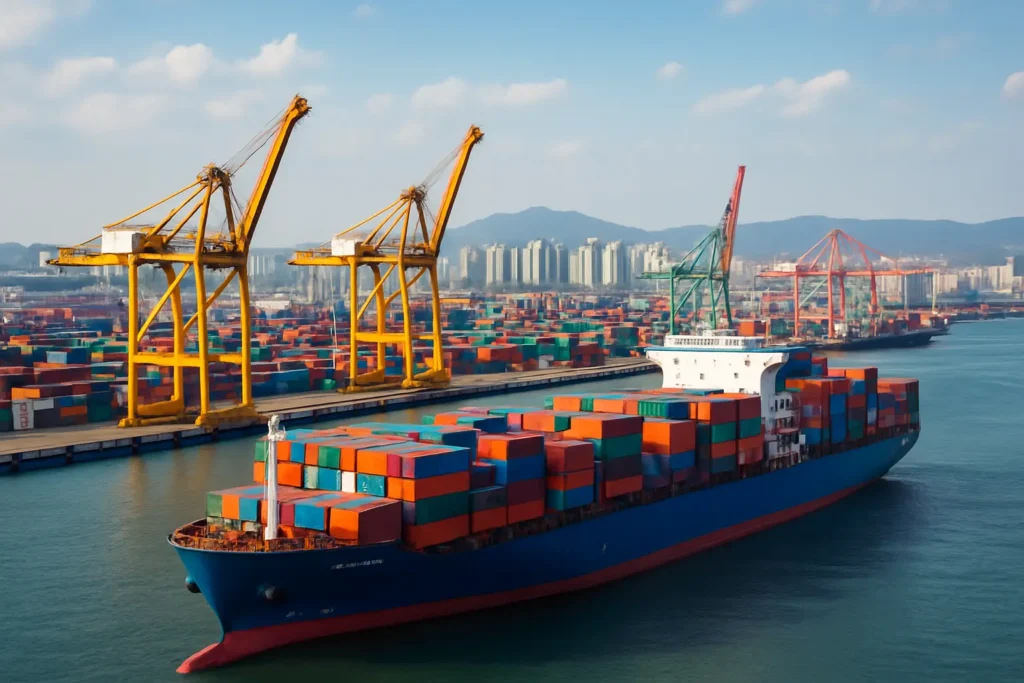
The air in the vast control room of the Busan Port Authority hummed with a quiet intensity that hadn’t been felt in years. On the massive screen spanning the wall, digital maps glowed with the real-time positions of hundreds of cargo ships. Some were massive container vessels, like floating cities, patiently waiting their turn at the bustling docks. Others were specialized carriers, loaded with everything from sleek new automobiles to giant, factory-sized industrial components. Each blinking light represented a thread in the intricate tapestry of global trade, and for the first time in a long while, the pattern was overwhelmingly positive for South Korea.
This vibrant scene at Busan, the world’s seventh-largest container port, is the most visible symbol of a remarkable economic story unfolding across the nation. After navigating the turbulent waters of a global pandemic, supply chain snarls, and international trade tensions, South Korea has reported its strongest quarterly export performance in two years. The numbers themselves are staggering: a record-breaking $185 billion in exports from July through September, marking a robust 6.5 percent year-on-year growth.
But to understand the true significance of this surge, one must look beyond the spreadsheets and economic indicators. This is not merely a statistical rebound; it is a story of strategic pivots, technological dominance, and the relentless spirit of a nation that has built its modern identity on export-led growth. It is a narrative about how sectors like electronics, shipbuilding, and steel are not just contributing to a recovery but are actively reshaping South Korea’s position in the new global economy. This is the human and industrial story behind the headlines.
The Semiconductor Supercycle: Riding the AI Tsunami
The Digital Brain of the Modern World
At the very core of South Korea’s export triumph lies a component so small, yet so powerful, that it has become the undisputed king of the 21st-century economy: the semiconductor. Think of these not just as simple “chips,” but as the fundamental building blocks of our digital lives. They are the brains inside your smartphone, the powerful processors running the data centers that stream your movies, and the critical hardware enabling breakthroughs in artificial intelligence.
The demand for these tiny technological marvels has ignited what industry experts are calling a “semiconductor supercycle.” The figures are almost difficult to comprehend. Between January and September of this year, Korea exported a monumental $119.7 billion worth of semiconductors. This represents a staggering increase of $17.3 billion, or 16.9 percent, compared to the same period last year. To put this in perspective, the country is on track to shatter last year’s full-year record of $141.9 billion before the year is even over.
The Titans of Technology
This boom is largely driven by two global behemoths: Samsung Electronics and SK hynix. Their role in the national economy cannot be overstated. Recent data shows that SK hynix’s portion of total national exports alone rose significantly from 6 percent a year ago to 8.4 percent in the third quarter. When you consider that semiconductors now constitute 26 percent of the country’s total exports, up from 22 percent just a year earlier, you begin to see the scale of their influence.
These companies have positioned themselves at the very heart of the global AI revolution. They are not just making memory chips; they are producing the high-bandwidth memory (HBM) chips that are essential for training complex AI models. As the world races to develop more sophisticated artificial intelligence, the demand for these specialized Korean-made components has skyrocketed, creating a virtuous cycle of investment, innovation, and export revenue.
The Manufacturing Ecosystem
Beyond the headline-grabbing giants, the semiconductor boom has revitalized an entire ecosystem of supporting industries. From companies producing specialized chemicals and gases needed in chip fabrication to firms manufacturing the precision equipment that assembles and tests semiconductors, the ripple effects extend throughout the manufacturing sector. This ecosystem represents a critical competitive advantage, creating barriers to entry for would-be competitors while ensuring that Korea maintains its edge in semiconductor manufacturing technology.
The geographical concentration of this ecosystem in regions like Gyeonggi Province has created clusters of innovation where knowledge transfer occurs naturally, and specialized suppliers can efficiently serve multiple customers. This industrial density reduces costs, accelerates innovation cycles, and creates a resilient supply chain that can adapt quickly to changing market conditions.
Global Demand and a Bright Future
The outlook for the semiconductor sector remains exceptionally strong. A recent in-depth report from the Korea International Trade Association’s Institute for International Trade projected that global semiconductor sales will grow by an impressive 17.8 percent next year. The breakdown is even more promising:
- Memory Chips: Revenue is expected to hit $192.2 billion this year (a 20.3% increase), soaring to $257.1 billion next year (a 33.8% growth).
- Non-Memory Chips: This sector is forecast to reach $580.4 billion this year (up 17.0%), climbing to $652.6 billion next year (a 12.4% rise).
This isn’t a fleeting boom. It represents a fundamental shift in the global economy, and South Korea, through foresight and massive investment, has secured a leading role in the supply chain that powers our digital future.
The Automotive Renaissance: Innovation on the Move
From Internal Combustion to Electric Dreams
While semiconductors capture the spotlight, another traditional powerhouse of Korean industry has been undergoing a quiet revolution. The automotive sector, long dominated by internal combustion engines, is transforming itself for an electric future. Hyundai Motor Group, encompassing both Hyundai and Kia brands, has emerged as one of the world’s most innovative automakers, launching a series of electric vehicles that have captured global attention.
The numbers tell a compelling story of success. Automobile exports reached $54.1 billion in the first nine months of the year, setting a new record for that period. This achievement is particularly remarkable given the challenging global automotive landscape, which has seen supply chain disruptions and shifting consumer preferences.
The European Conquest
The most striking success story within the automotive sector has been the strategic pivot to European markets. While exports to traditional markets like the United States showed some weakness, Korean automakers found spectacular success in Europe. The reason? A perfectly timed rollout of competitive electric vehicles that combined attractive design, impressive range, and reasonable pricing.
European consumers, encouraged by government incentives and growing environmental consciousness, embraced Korean EVs in unprecedented numbers. Models like the Hyundai Ioniq 5 and Kia EV6 became symbols of the new mobility, winning numerous international awards and establishing Korean brands as leaders in electric vehicle technology rather than followers.
The Technology Behind the Transition
Korean automakers have distinguished themselves through vertical integration and technological innovation. Unlike some competitors who rely heavily on external suppliers for key components, companies like Hyundai have developed their own electric vehicle platforms (the Electric Global Modular Platform or E-GMP), battery technology through affiliates like LG Energy Solution, and even advanced driver assistance systems.
This integrated approach provides multiple advantages: better quality control, more efficient production processes, and the ability to innovate across the entire vehicle system rather than being constrained by supplier capabilities. It also creates synergies with other export sectors, particularly batteries and electronics, strengthening Korea’s overall industrial base.
Beyond Passenger Vehicles
The automotive export story extends beyond passenger cars to the commercial vehicle sector. Korean manufacturers have made significant inroads in exporting electric buses and commercial vehicles to markets worldwide. From electric buses navigating the streets of European cities to commercial vehicles serving emerging markets in Southeast Asia, Korean automotive technology is finding diverse applications across the globe.
This diversification within the automotive sector itself provides additional stability to export figures, ensuring that weakness in one segment can be offset by strength in another. It demonstrates the strategic thinking that has characterized Korea’s export success across multiple industries.
Shipbuilding: Navigating Rough Waters to Calm Seas
The Phoenix of Korean Industry
Just a few years ago, South Korea’s shipbuilding industry appeared to be in terminal decline. Chinese competitors had captured significant market share with lower prices, and global orders had dwindled. Today, the industry tells a dramatically different story – one of strategic repositioning and spectacular recovery.
Korean shipbuilders made a crucial decision: rather than competing on price for standard vessels, they would focus their expertise on the most technologically advanced and high-value segments of the market. This pivot has proven extraordinarily successful, with Korean yards now dominating orders for liquefied natural gas (LNG) carriers, ultra-large container ships, and other specialized vessels.
The LNG Carrier Dominance
The global push toward cleaner energy has created unprecedented demand for LNG carriers, and Korean shipbuilders have established themselves as the undisputed leaders in this niche. Companies like Hyundai Heavy Industries, Samsung Heavy Industries, and Daewoo Shipbuilding & Marine Engineering have secured the lion’s share of global LNG carrier orders, with order books stretching years into the future.
These vessels represent the pinnacle of maritime engineering, requiring advanced technology to maintain natural gas at extremely low temperatures during transport. The expertise required to build them creates a significant barrier to entry for competitors, allowing Korean shipbuilders to command premium prices and ensure stable revenue streams.
Digital Transformation in Shipbuilding
Korean shipbuilders are not just building better ships; they’re revolutionizing how ships are designed and constructed. The industry has embraced digital technologies like 3D modeling, virtual reality simulations, and automated manufacturing processes to improve efficiency, reduce errors, and accelerate production timelines.
At the DSME shipyard in Geoje, engineers use advanced simulation software to test vessel designs under thousands of different conditions before construction even begins. At Samsung Heavy Industries, robots handle the dangerous work of welding and painting in confined spaces. This digital transformation enhances both productivity and workplace safety while ensuring the consistent quality that has become synonymous with Korean shipbuilding.
Innovation in Every Hull
Beyond LNG carriers, Korean shipbuilders are pioneering new vessel technologies across multiple categories. They are developing more fuel-efficient container ships, advanced offshore wind installation vessels, and even ships designed for future carbon capture and storage operations. This commitment to innovation ensures that Korean shipbuilding remains at the forefront of maritime technology, constantly creating new export opportunities in emerging segments of the global shipping industry.
The Steel Sector: Forging a New Identity
From Bulk to Boutique
The steel industry represents another fascinating chapter in South Korea’s export transformation. Faced with global overcapacity and increasing trade barriers, particularly the 50 percent US tariffs on steel imports, Korean steelmakers have embarked on a strategic shift from volume to value.
Instead of trying to compete on price for basic steel products, companies like POSCO have focused on developing specialized, high-value steel products that face less competition and command higher prices. These include advanced high-strength steels for the automotive industry, specialized steels for renewable energy applications, and corrosion-resistant steels for harsh environments.
The Research and Development Advantage
POSCO’s research and development center in Pohang exemplifies this transformation. Here, teams of materials scientists work on developing new steel alloys with specific properties for particular applications. Some teams focus on creating lighter but stronger steels for vehicle manufacturing, helping automakers improve fuel efficiency. Others work on developing steels that can withstand extreme temperatures and pressures for energy applications.
This research-driven approach has enabled Korean steelmakers to move up the value chain, creating products that are difficult to replicate and less susceptible to price competition. It represents a broader trend in Korean manufacturing: competing on technology and quality rather than cost.
The Automotive Partnership
The domestic automotive industry’s transition to electric vehicles has created new opportunities for steelmakers. EVs require different types of steel than traditional vehicles, particularly advanced high-strength steels that reduce vehicle weight to extend battery range while maintaining safety. Korean steel companies have worked closely with automakers to develop these specialized products, creating a symbiotic relationship that benefits both industries.
This collaboration exemplifies how different export sectors can reinforce each other, creating a more resilient economic structure. The success of one industry creates opportunities for another, weaving a tighter fabric of industrial interdependence.
Global Reach with Local Focus
Despite trade challenges, Korean steel companies have maintained their global presence through strategic investments in overseas production facilities and a continued focus on markets where their specialized products remain competitive. This global-local approach allows them to navigate trade barriers while maintaining access to key markets, demonstrating the sophisticated strategies that modern global commerce requires.
The Cultural Export Wave: Beyond Heavy Industry
K-Beauty’s Global Allure
One of the most remarkable aspects of South Korea’s export story lies far from the heavy industries of semiconductors and shipbuilding. The global phenomenon of K-beauty has created an export powerhouse in the cosmetics industry, with exports reaching $8.5 billion in the first nine months of the year – a record high.
This success stems from a powerful combination of innovation, marketing, and cultural influence. Korean cosmetics companies have pioneered new product categories, unique formulations, and appealing packaging that has captured consumers’ imaginations worldwide. From BB creams and cushion compacts to innovative skincare ingredients, K-beauty has reshaped global beauty standards and routines.
The Innovation Behind the Products
Korean cosmetics companies invest heavily in research and development, particularly in the areas of natural ingredients, gentle formulations, and advanced delivery systems. Companies like Amorepacific operate extensive research facilities where scientists study traditional Korean herbal medicines alongside cutting-edge biotechnology to develop new cosmetic ingredients.
This commitment to innovation ensures a continuous pipeline of new products that keep Korean brands at the forefront of global beauty trends. It also creates technical barriers to entry that protect market position and justify premium pricing in international markets.
The Hallyu Economic Effect
The cosmetics boom is intrinsically linked to the broader Korean cultural wave known as Hallyu. As K-pop groups like BTS and Blackpink gain international fame, and Korean dramas attract global audiences on streaming platforms, interest in all things Korean grows exponentially. Fans don’t just enjoy the music and stories; they want to emulate the styles, use the products, and experience the culture they see on screen.
This cultural-economic synergy represents a powerful export engine that is largely immune to traditional business cycles. While demand for semiconductors may fluctuate with global economic conditions, cultural appeal can sustain itself and grow organically, creating a more stable long-term export category.
From Kimchi to Convenience: The Food Export Revolution
The Hallyu effect extends to Korean cuisine, with agro-fisheries exports reaching $9.3 billion in the first nine months. This isn’t just about traditional ingredients like kimchi, though kimchi exports have certainly grown. It encompasses a wide range of Korean food products, from instant noodles and snacks to sauces and ready-to-eat meals.
International consumers, introduced to Korean food through media and travel, are increasingly incorporating these flavors into their own diets. Korean food companies have skillfully adapted their products for foreign palates while maintaining authentic flavors, creating a new category of export growth that connects directly to Korea’s cultural soft power.
The Premiumization of Korean Food Exports
Korean food exporters have successfully moved beyond commodity products to premium, value-added offerings. Instead of just exporting bulk gochujang (fermented red pepper paste), companies now export artisanal versions, organic varieties, and even gochujang-based sauces and marinades designed specifically for Western cooking styles.
This premiumization strategy mirrors the approach taken in other export sectors: moving up the value chain to create products that command higher prices and build brand loyalty. It demonstrates how lessons from heavy industry are being applied to consumer goods with equally impressive results.
The Economic Impact: Beyond the Export Numbers
Fueling GDP and National Confidence
The surge in exports does more than just bring money into the country; it acts as a powerful tide that lifts all boats within the domestic economy. Recent data from the Bank of Korea confirmed this, showing the economy expanded at its fastest pace in over a year. Third-quarter Gross Domestic Product (GDP) rose by a strong 1.7% year-on-year, a significant jump from the 0.6% growth in the previous quarter.
This growth was overwhelmingly supported by exports and the manufacturing sector, which expanded by 6% and 3.3%, respectively. When factories are busy fulfilling international orders, they need more workers, they purchase more raw materials from local suppliers, and they invest in new machinery. This creates a positive chain reaction throughout the economy, boosting incomes and, crucially, strengthening domestic consumption.
The Employment Multiplier
A thriving export sector creates jobs far beyond the factory floors. Each manufacturing job supported by exports creates additional jobs in logistics, transportation, professional services, and retail. Truck drivers move components and finished products, engineers design new production processes, marketing professionals develop international campaigns, and restaurant workers serve meals to factory employees.
This employment multiplier effect means that the benefits of export success diffuse throughout the economy, supporting communities and households far removed from the actual export activities. It creates a virtuous cycle where export earnings fuel domestic spending, which in turn supports more local businesses and employment.
Regional Development and Balanced Growth
The export boom has particularly benefited regions with strong industrial bases, such as Gyeonggi Province (semiconductors and electronics), Ulsan (automobiles and shipbuilding), and Pohang (steel). The economic vitality in these regions has helped balance development across the country, reducing the historical over-concentration in the Seoul metropolitan area.
Local governments in these industrial regions have worked to create supportive ecosystems for export industries, investing in infrastructure, education, and quality-of-life amenities that attract and retain talent. This regional development aspect of export success represents an important social benefit that extends far beyond economic statistics.
Government Revenues and Public Investment
Strong export performance also translates into higher government revenues through corporate taxes, income taxes from well-paid export sector employees, and various other levies. These additional resources allow the government to invest in public services, infrastructure, and social programs without increasing debt or raising taxes elsewhere.
From improved roads and ports to better schools and healthcare, the entire population benefits indirectly from a thriving export sector. This creates social stability and improves quality of life, making the country more attractive for both domestic and foreign investment.
The Innovation Ecosystem: Breeding Future Success
Research and Development: The Engine Room
Behind South Korea’s export success lies a massive commitment to research and development. Korean companies consistently rank among the world’s biggest investors in R&D, with Samsung Electronics routinely placing in the global top three for R&D expenditure. This commitment to innovation is not limited to large corporations; it permeates the entire industrial ecosystem.
Government policies have actively supported this R&D culture through tax incentives, research grants, and the establishment of specialized research institutes. These policies have encouraged collaboration between universities, research institutions, and private companies, creating a fertile environment for innovation that continuously generates new exportable technologies and products.
The Education-Industry Nexus
South Korea’s much-vaunted education system, while sometimes criticized for its intensity, has played a crucial role in supplying the highly skilled engineers, technicians, and researchers that export industries require. The close alignment between educational institutions and industrial needs ensures a steady pipeline of talent capable of driving innovation in complex technological fields.
Specialized programs in semiconductor engineering, advanced materials science, and ship design prepare students for specific roles in export industries, reducing the skills gap that plagues many other economies. This human capital development represents a long-term investment in export competitiveness that is difficult for competitors to replicate.
Corporate Academies and Continuous Learning
Major Korean exporters operate extensive corporate universities and training centers that ensure employees’ skills remain current in fast-evolving industries. Samsung’s Advanced Technology Training Institute, for example, provides cutting-edge technical education to thousands of engineers annually, while POSCO’s university focuses on both technical skills and leadership development.
These corporate education initiatives complement the formal education system, providing specialized, industry-relevant training that maintains Korea’s competitive edge. They represent a significant private investment in human capital that directly supports export competitiveness.
Startups and the Next Wave
While chaebols (large family-owned conglomerates) dominate current export statistics, South Korea has also developed a vibrant startup ecosystem that promises to diversify future export streams. Government support for entrepreneurship, combined with abundant venture capital, has created conditions conducive to the growth of innovative new companies.
From fintech and biotechnology to entertainment and educational technology, Korean startups are developing products and services with global appeal. While individually smaller than established exporters, collectively they represent an important diversification of Korea’s export portfolio and a source of future growth in emerging industries.
The Infrastructure Backbone: Enabling Global Trade
Ports and Logistics: The Arteries of Commerce
South Korea’s export miracle would be impossible without world-class infrastructure. The country’s ports, particularly Busan, are marvels of modern logistics, capable of handling the massive container ships that dominate global trade while ensuring rapid turnaround times. Continuous investment in port facilities, automation, and digital systems has maintained Korea’s competitive edge in logistics efficiency.
Beyond the ports themselves, Korea has developed sophisticated logistics networks that seamlessly connect factories to shipping routes. Advanced tracking systems, automated warehouses, and integrated customs procedures minimize delays and reduce costs, making Korean exports more competitive in international markets.
The Busan New Port Expansion
The ongoing expansion of Busan New Port represents a significant commitment to maintaining Korea’s logistics advantage. When completed, the expansion will increase the port’s capacity by approximately 40%, with fully automated terminals that can operate 24/7 with minimal human intervention. The project includes advanced data systems that optimize vessel traffic, container placement, and landside transportation connections.
This infrastructure investment ensures that Korea can handle growing export volumes efficiently while reducing shipping costs for exporters. It’s a critical enabler of continued export growth in an era where logistics capabilities increasingly determine trade competitiveness.
Digital Infrastructure: The Invisible Enabler
In today’s global economy, digital connectivity is as important as physical infrastructure. South Korea’s world-leading digital networks enable the real-time coordination of complex global supply chains, facilitate communication between geographically dispersed teams, and support the digital services that increasingly accompany physical products.
From the 5G networks that enable smart factories to the broadband connections that support international video conferences, Korea’s digital infrastructure provides the nervous system that coordinates its export activities. This digital advantage has become particularly important as products become more intelligent and connected, requiring ongoing digital support throughout their lifecycle.
The Internet of Things in Export Industries
Korean exporters are increasingly incorporating Internet of Things (IoT) technology into their products and operations. Hyundai’s connected vehicles transmit performance data that helps improve future designs. POSCO’s smart factories use sensors to optimize production processes. Samsung’s appliances can be monitored and serviced remotely.
This connectivity creates new service-based export opportunities while improving product quality and customer satisfaction. It represents the convergence of Korea’s traditional manufacturing strength with its digital capabilities, creating hybrid export advantages that are difficult for competitors to match.
Energy Security: Powering Production
Export-oriented manufacturing is energy-intensive, and South Korea has developed a sophisticated energy infrastructure to support its industrial base. While the country faces challenges in energy security due to limited domestic resources, it has built reliable energy supply networks that ensure factories can operate continuously without disruption.
The ongoing transition to renewable energy represents both a challenge and an opportunity for Korean exporters. As global markets increasingly value sustainability, Korea’s ability to decarbonize its export industries will become an important competitive factor, particularly in environmentally conscious markets like Europe.
The Global Context: South Korea in the World Economy
Geopolitical Challenges and Opportunities
South Korea’s export success occurs against a complex backdrop of global geopolitical tensions and shifting alliances. The rivalry between the United States and China, two of Korea’s most important trading partners, creates both challenges and opportunities for Korean exporters.
On one hand, tensions create uncertainty and potential disruption to established supply chains. On the other, they position Korea as a crucial alternative supplier for both camps, particularly in strategically important sectors like semiconductors. Navigating this complex landscape requires diplomatic skill and strategic flexibility from both government and business leaders.
The China Conundrum
China represents perhaps the most complex element in Korea’s trade equation. As both Korea’s largest trading partner and an increasingly formidable competitor, China demands a nuanced approach. Korean companies have had to balance deep economic integration with China against the need to protect intellectual property and maintain technological leadership.
The recent improvements in Korea-China relations, highlighted by increased high-level dialogue, have created opportunities for Korean exporters. However, the fundamental tension between cooperation and competition remains, requiring continuous adjustment of strategies and relationships.
Free Trade Agreements: Building Bridges
South Korea has been exceptionally proactive in negotiating free trade agreements with countries and regions around the world. These agreements have systematically reduced trade barriers for Korean exports, providing competitive advantages in key markets.
From the Korea-US Free Trade Agreement (KORUS) to agreements with the European Union, China, and numerous other countries, this network of trade partnerships has been instrumental in facilitating export growth. By reducing tariffs and standardizing regulations, these agreements make Korean products more price-competitive and accessible in international markets.
The Digital Trade Agreement Frontier
Korea is now pioneering next-generation trade agreements that address digital commerce, data flows, and emerging technologies. The Digital Partnership Agreement with Singapore represents a template for future trade relationships in an increasingly digital global economy.
These agreements create frameworks for cooperation in areas like cross-border data flows, digital customs procedures, and cybersecurity standards. By shaping the rules of digital trade, Korea positions its exporters for success in the evolving global marketplace.
The China Factor: Partner and Competitor
China plays a dual role in South Korea’s export story: as both the largest market for many Korean products and as an increasingly formidable competitor. The relationship is complex and evolving, with Korean companies simultaneously leveraging opportunities in the Chinese market while facing intensifying Chinese competition in third markets.
This complicated partnership requires Korean exporters to continuously move up the value chain, developing products and technologies that remain ahead of Chinese competitors while maintaining productive relationships with Chinese partners and customers. It’s a delicate balancing act that Korean companies have generally managed with notable skill.
The Sustainability Imperative: Green Exports for a Green Future
The Renewable Energy Opportunity
As the world transitions to cleaner energy sources, new export opportunities are emerging in renewable energy technologies. Korean companies are positioning themselves as players in sectors like solar energy, wind power, and hydrogen technology, building on their existing expertise in heavy industry and high-tech manufacturing.
While these sectors currently represent a small portion of total exports compared to established industries like semiconductors and automobiles, they offer significant growth potential as global demand for clean energy solutions accelerates. Korean companies’ experience in quality manufacturing and global marketing provides a solid foundation for success in these emerging fields.
Hydrogen Economy Leadership
Korea has identified hydrogen as a key future growth engine and is making substantial investments in hydrogen production, storage, and utilization technologies. Companies like Hyundai are already exporting hydrogen fuel cell vehicles and systems, while industrial conglomerates are developing hydrogen-based steel production processes.
This early mover advantage in hydrogen technology could create significant export opportunities as the global hydrogen economy develops. It represents a strategic bet on future energy systems that aligns with Korea’s industrial strengths and export ambitions.
Circular Economy and Sustainable Production
International consumers and businesses are increasingly considering environmental factors in their purchasing decisions. Korean exporters are responding by adopting more sustainable production methods, reducing waste, and developing products with better environmental profiles.
From energy-efficient semiconductors to electric vehicles and sustainably sourced cosmetics, Korean companies are integrating sustainability into their product development and marketing strategies. This shift is not just about ethics; it’s about maintaining market access and competitiveness in an increasingly environmentally conscious global marketplace.
Green Certification and Standards
Korean exporters are increasingly seeking international green certifications for their products and processes. POSCO, for example, has developed certification systems for low-carbon steel, while electronics manufacturers adhere to strict international standards for energy efficiency and recyclability.
These certifications provide competitive advantages in markets where sustainability is a purchasing criterion. They also demonstrate Korea’s commitment to environmental leadership, enhancing the country’s brand as a source of sustainable products and technologies.
Carbon Border Adjustments and Future Compliance
Emerging regulatory frameworks like the European Union’s Carbon Border Adjustment Mechanism will increasingly link market access to environmental performance. Korean exporters are preparing for this new reality by measuring and reducing the carbon footprint of their products, ensuring they remain competitive as environmental regulations tighten.
This proactive approach to environmental compliance represents a form of future-proofing for Korean exports, ensuring that products remain welcome in key markets regardless of evolving environmental standards. It’s an investment in long-term export resilience that may provide competitive advantages as global environmental regulations become more stringent.
The Human Dimension: Stories Behind the Statistics
The Factory Workers
Behind the impressive export statistics are millions of Korean workers whose skills and dedication make the export miracle possible. From the engineers designing ever-more-advanced semiconductors to the assembly line workers building vehicles and the quality control specialists ensuring products meet international standards, human expertise remains the foundation of export success.
These workers have adapted to technological changes, embraced new production methods, and maintained the quality standards that give Korean products their reputation for reliability. Their flexibility and commitment to excellence represent a crucial competitive advantage that cannot be easily replicated.
The Global Sales Force
Korean exports reach global markets through the efforts of an extensive international sales and marketing network. From executives negotiating major contracts with multinational corporations to local sales representatives building relationships with distributors in foreign markets, these professionals bridge cultural and commercial divides to place Korean products in the global marketplace.
Their understanding of local markets, customer preferences, and business practices enables Korean companies to tailor their approaches to different regions and customer segments, maximizing the appeal of their products across diverse global markets.
The Innovators and Designers
At the front end of the export pipeline are the researchers, designers, and product developers who create the innovations that make Korean products desirable. Working in R&D centers, design studios, and testing facilities around the country and world, these professionals anticipate market trends and develop the products that will drive future export growth.
Their creativity and technical expertise ensure that Korean exports remain at the cutting edge, combining aesthetic appeal with functional excellence to create products that command premium prices in competitive global markets.
The Logistics Experts
The complex choreography of moving products from Korean factories to customers worldwide requires sophisticated logistics expertise. From supply chain managers who optimize inventory levels to shipping coordinators who ensure timely delivery, these professionals work behind the scenes to make export success possible.
Their ability to navigate complex international regulations, manage multimodal transportation, and respond quickly to disruptions has become increasingly important in an era of global supply chain volatility. Their expertise represents a hidden competitive advantage for Korean exporters.
Challenges on the Horizon: Navigating Future Headwinds
The Demographic Dilemma
South Korea faces significant demographic challenges that could impact its long-term export competitiveness. With one of the world’s lowest birth rates and a rapidly aging population, the country may face labor shortages in the future, particularly in manufacturing sectors that have traditionally relied on abundant young workers.
Addressing this challenge requires multiple strategies: increasing automation to reduce labor dependency, extending the working lives of older employees through retraining and flexible work arrangements, and potentially revising immigration policies to attract skilled foreign workers. How successfully Korea navigates its demographic transition will significantly influence its future export potential.
The Automation Imperative
The demographic challenge is accelerating investment in automation across Korean export industries. Hyundai Robotics is developing increasingly sophisticated industrial robots for manufacturing applications, while Samsung is implementing “smart factory” systems that require minimal human intervention.
This push toward automation not only addresses labor shortages but also improves quality consistency and manufacturing flexibility. It represents a necessary evolution of Korea’s manufacturing model in response to demographic realities.
Technological Disruption
While Korea currently leads in several technological fields, the pace of global innovation means that today’s advantages can quickly erode. Emerging technologies like quantum computing, advanced artificial intelligence, and new materials could disrupt existing industries and create new competitive threats.
Maintaining technological leadership requires continuous investment in research and development, close monitoring of global technological trends, and flexibility to pivot when new opportunities or threats emerge. Complacency represents perhaps the greatest threat to Korea’s continued export success.
The Innovation Arms Race
Korean exporters are engaged in a global innovation arms race, particularly in semiconductors where technological leadership is measured in nanometers. Maintaining this leadership requires astronomical investments in R&D and manufacturing facilities, creating significant financial risks.
The recent government announcement of massive tax incentives for semiconductor investments reflects recognition of this challenge. Similar support may be needed in other key export sectors to ensure Korea remains at the technological frontier.
Economic Nationalism and Protectionism
The global trend toward economic nationalism and protectionism poses challenges for all export-oriented economies. Trade barriers, local content requirements, and preferential treatment for domestic producers can limit market access for Korean exports in key markets.
Countering these trends requires a combination of diplomatic engagement, strategic localization of some production activities, and continued emphasis on producing goods so advanced or specialized that they face limited competition. Diversifying both export markets and product offerings provides some insulation against protectionist measures in individual markets.
Strategic Localization
In response to protectionist pressures, Korean companies are increasingly localizing production in key markets. Hyundai’s new electric vehicle factory in Georgia, Samsung’s expanded semiconductor production in Texas, and LG’s battery plants in multiple countries represent strategic responses to trade barriers and local content requirements.
This globalization of production creates new challenges in managing distributed manufacturing networks but provides access to markets that might otherwise be restricted. It represents an evolution from exporting products to exporting manufacturing capabilities.
The Road Ahead: Strategies for Sustained Success
Investing the Windfall Wisely
The current export boom, particularly in semiconductors, has provided South Korea with a historic opportunity. The critical question is how the nation will use this period of prosperity. The consensus among economists and industry leaders is clear: the massive profits being generated must be channeled into future-proofing the economy.
As Chang Sang-sik, head of KITA’s Institute for International Trade, wisely advised, “We need to channel the supercycle profits into next-stage investments to prepare for competition with China. For steel and petrochemicals, we must pivot to high-value-added products, and for small businesses, targeting niche markets is essential to maintaining industrial balance.” This means not just resting on today’s success, but actively investing in the next generation of technology, from advanced biotech to renewable energy systems.
A Multi-Pronged Strategy for Resilience
To build an economy that can withstand global shocks, a multi-pronged strategy is essential:
- Accelerated Market Diversification: While progress has been made in reducing reliance on China, there is a need to deepen ties with emerging economies in Southeast Asia, India, and Latin America, and to solidify relationships with partners in Europe and the United States.
- Nurturing the “Hidden Champions”: Government and corporate policy must focus on helping small and medium-sized enterprises (SMEs) become export-ready. This could involve providing logistical support, market intelligence, and financial incentives for these smaller companies to find their own niche in the global marketplace.
- The Value-Added Transformation: For traditional sectors like steel and petrochemicals, the future lies not in producing more, but in producing smarter. The focus must shift to developing specialized, high-margin products that are less susceptible to tariffs and price competition.
- Digital and Green Dual Transformation: Korean exporters must simultaneously embrace digital technologies to enhance efficiency and develop environmentally friendly products and processes to meet evolving global standards. This dual transformation will position them for success in the economy of the future.
The Role of Government Policy
Government policy will play a crucial role in sustaining export success. This includes maintaining support for research and development, negotiating favorable trade agreements, investing in infrastructure, and creating a regulatory environment that encourages innovation while ensuring fair competition.
The government’s recent K-Trade Initiative, which provides comprehensive support for exporters across multiple agencies, represents a step in the right direction. Similar coordinated efforts will be needed to address emerging challenges and opportunities in global trade.
The Education Imperative
Long-term export competitiveness depends on a continuous supply of talented workers equipped with relevant skills. This requires ongoing reform of the education system to emphasize creativity, problem-solving, and adaptability alongside technical expertise.
Partnerships between educational institutions and export industries can ensure that curricula remain relevant to evolving industry needs. Lifelong learning opportunities will also be essential as technological change accelerates and workers need to update their skills repeatedly throughout their careers.
Conclusion: A Nation at a Crossroads
The cranes of Busan Port continue their endless dance, loading the products of Korean ingenuity onto ships bound for every corner of the globe. The record-breaking export numbers are a testament to what this nation can achieve: world-class innovation, strategic adaptation, and manufacturing excellence on a monumental scale.
The semiconductor-led surge has given South Korea a powerful engine of growth at a time when the global economy is uncertain. However, the path forward requires wisdom as much as it requires celebration. The challenge for the nation is to leverage this moment of strength to build a more balanced, diverse, and resilient economic foundation.
The goal is to create an economy where the success of a few tech giants provides stability, while a vibrant ecosystem of smaller exporters and a recovering domestic sector ensure shared and sustainable prosperity for all. The third-quarter export performance is not the finish line; it is a powerful starting pistol for the next, more complex leg of South Korea’s remarkable economic journey.
As the world becomes more uncertain, South Korea’s ability to adapt, innovate, and maintain its competitive edge will determine whether today’s export surge becomes a temporary boom or the foundation for lasting prosperity. The signs are promising, but the work has only just begun. The nation stands at a crossroads, with an opportunity to transform its current success into enduring strength that benefits all its people and secures its position as a global economic leader for decades to come.