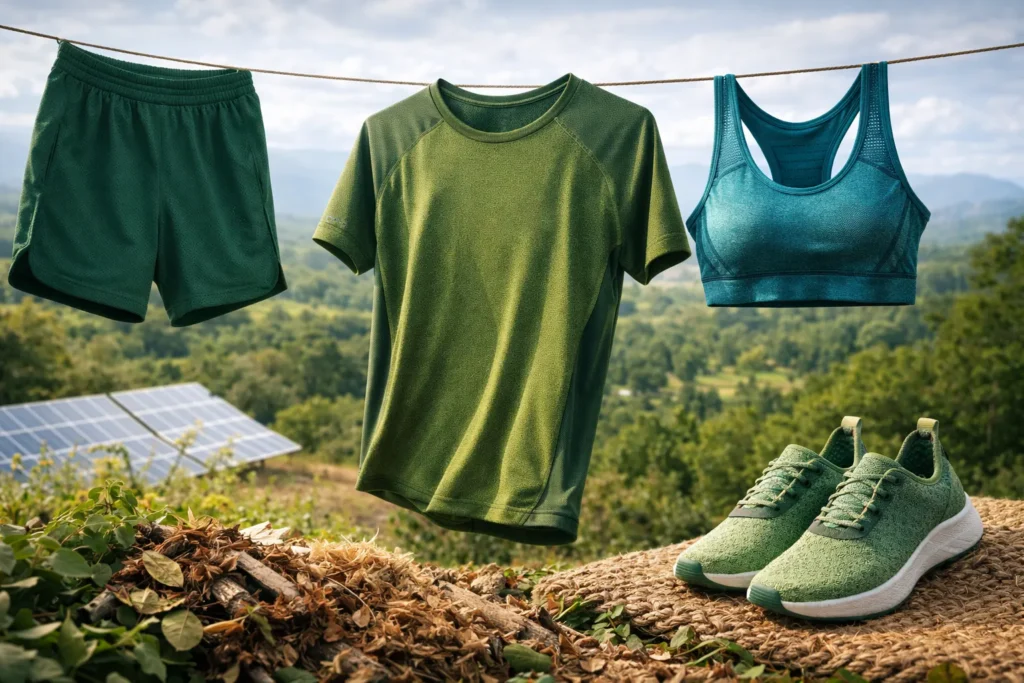

It starts like any other morning. The alarm clock pulls you from sleep, and you swing your legs out of bed, already mentally preparing for the day ahead. You stumble toward the closet, running on autopilot, and your hand reaches for the familiar fabric of your favorite training shirt. It’s that perfect blend of soft and sturdy, the one that has accompanied you through hundreds of miles of running, countless sunrise yoga sessions, and more than a few intense gym battles. It fits like a second skin, and you wouldn’t trade it for anything.
But have you ever really stopped to think about that shirt? Not just about how it makes you look or feel, but about its entire journey through the world? Where did it come from before it arrived in your closet? What hands touched it, what machines wove it, what raw materials gave it life? And more importantly, where will it go when you finally wear it out? After thousands of washes, endless stretches, and so many sweat-soaked adventures, what happens to the gear that has been your loyal training partner through all of it?
For decades, the answer has been a sad and simple one: a landfill. Tossing your worn-out gear into the trash used to mean it would travel to a massive dump somewhere, likely in a different state or even a different country, where it would sit in the ground for hundreds, if not thousands, of years. It would stubbornly refuse to break down, a permanent monument to your workout routine, outlasting you, your children, your grandchildren, and probably your grandchildren’s children many times over. It would become a small but permanent part of the geological record, a fossil of our time.
But a revolution is quietly unfolding in laboratories and factories around the world. Imagine a completely different ending. Picture a world where your worn-out leggings, your faded training jersey, or your hole-ridden running socks could be tossed into a compost bin, returning to the earth as naturally and harmlessly as a banana peel or a pile of fallen leaves. Imagine your clothes becoming food for the soil, helping new plants grow, feeding microorganisms, and participating in the great cycle of life rather than being excluded from it.
This isn’t a scene from a futuristic sci-fi movie or a wishful thinking exercise. This is the reality being built right now within the global sportswear industry, an industry that produces billions of garments each year and has an outsized impact on our planet. It’s a reality driven by the rapid rise of biodegradable performance fabrics, and it is set to transform everything we thought we knew about the clothes on our backs, the workouts we do, and the legacy we leave behind.
The Dirty Secret Hiding in Your Gym Bag
To truly understand why this new technology is so earth-shatteringly important, we have to pull back the curtain and look at the uncomfortable problem hiding in plain sight, right there at the bottom of your gym bag. Most of the activewear we have come to love and depend on is made from synthetic materials like polyester, nylon, and spandex. These fabrics, for all their amazing performance benefits, are essentially plastic. They are derived from crude oil and fossil fuels, pulled from deep within the earth through processes that disrupt landscapes and contribute to climate change. They are engineered on a molecular level to last forever, or at least for a very, very long time.
That’s fantastic when you need a shirt to survive a brutal tumble in the industrial dryer or a pair of tights to stretch without snapping. It’s terrible, absolutely terrible, for the planet we call home. The very same properties that make these fabrics so useful in our active lives make them a nightmare for the environment.
Think about your laundry routine for a moment. Every single time you do a load of wash with these synthetic fabrics, they shed thousands of tiny, invisible plastic fibers called microplastics. You can’t see them, you can’t feel them, but they are there, breaking off with every gentle agitation of the washing machine. These microscopic particles wash right out of your machine, slip through water treatment plants which are not designed to catch something so small, and flow directly into our rivers, lakes, and oceans. Once in the water, they are consumed by plankton, ingested by fish, and work their way up the food chain. Studies have found these microplastics in the most remote places on Earth, from the snow on Mount Everest to the deepest trenches of the Pacific Ocean, places so remote that humans have barely visited them. They are even in the food we eat, the water we drink, the beer we brew, and the salt we sprinkle on our dinner. We are literally consuming our own workout clothes.
And that’s just the washing machine problem. The ending is even worse. When we finally admit that our favorite worn-out jacket has lived its last life, we toss it in the trash. It gets hauled away to a landfill, joining mountains of other discarded textiles. In America alone, the Environmental Protection Agency estimates that millions of tons of textile waste end up in landfills every single year. That’s enough to fill massive stadiums. There, in the darkness of the dump, it will sit for centuries. It doesn’t truly biodegrade in any meaningful way. Instead, it slowly, over hundreds of years, breaks down into smaller and smaller pieces of plastic pollution, leaching chemicals into the ground and continuing its long, slow assault on the environment. It becomes a persistent problem that future generations will have to deal with.
This is the dirty secret of the fitness world. It’s a massive, uncomfortable contradiction. We wear high-tech gear that helps us feel healthy, strong, and connected to the natural world through trail runs in the forest, ocean swims, and mountain hikes, all while unknowingly contributing to a massive and growing waste problem that is choking that very same natural world. The clothes that help us feel close to nature are, ironically, polluting it.
People are waking up to this reality. They are starting to ask hard, necessary questions about the true environmental cost of their workout. They are looking at the labels, researching the brands, and demanding better. They are realizing that personal health and planetary health are not separate issues but deeply interconnected ones. This powerful shift in consumer thinking, this collective awakening, has sparked a massive, industry-wide search for a better way. It is the driving force behind the structural shift toward circular fashion that we are witnessing today, a shift that promises to remake one of the world’s largest industries from the ground up.
Nature’s Answer: The Incredible Science of Going Back to Dirt
So, how exactly do you solve a problem as big as plastic pollution? How do you create a shirt that can survive a brutal CrossFit session, a muddy obstacle course race, or a week-long backpacking trip through the wilderness, but then simply vanish when you’re done with it? It sounds like magic, like something from a fantasy novel, but it’s actually sophisticated chemistry and materials science inspired by nature’s own genius.
The answer lies in a return to our roots, supercharged by modern scientific innovation. Imagine a fiber so incredibly strong it can handle the repetitive stretch of a yoga pose, the abrasion of a heavy hiking backpack rubbing against it for days on end, and the chafing of a marathon runner’s arms, yet so pure and natural that soil microbes recognize it as food. Imagine something that can perform at an elite athletic level and then, when its work is done, become part of the living earth again. That is the remarkable magic of new plant-based polymers and regenerative fibers.
Scientists and leading apparel manufacturers have spent years, and millions of dollars, working in laboratories to figure out how to perfectly mimic the high-performance characteristics of plastic using ingredients sourced entirely from the earth. They have moved far beyond the simple “cotton is comfortable” mentality and have engineered biomaterials that perform at an elite, world-class level. They have had to become chemists, biologists, and engineers all at once.
They are using a stunning variety of natural inputs, each with its own unique properties and story:
Pulp from Sustainably Managed Forests: They take wood from responsibly harvested forests, where for every tree cut down, several more are planted in its place. Through a complex closed-loop process where chemicals and water are recycled and reused rather than dumped, this pulp is transformed into a fiber that feels as soft as luxury cotton but wicks moisture away from the skin just as effectively as high-end polyester. It breathes, it drapes beautifully, and it has a natural, comfortable weight that feels substantial without being heavy. Walking through a forest takes on new meaning when you know your shirt might have started its life there.
Algae Biomass: This might sound strange, and it is, but algae is proving to be a superstar material. Scientists have discovered ways to harvest fast-growing algae from ponds and tanks where it can be cultivated without competing with food crops for land. They transform it into foams and fibers. Imagine running shoes with cushioning made from pond scum that is surprisingly durable, lightweight, and shock-absorbent. Some algae-based materials can even actively improve air quality by capturing carbon dioxide, meaning your shoes are working to clean the atmosphere while you run. The very substance that can create harmful algal blooms in polluted waters is being harnessed for good.
Corn and Sugar Cane Starches: These common crops, grown by farmers around the world, are being used to create next-generation biopolymers. The starches are extracted, fermented in large tanks similar to brewing beer or making yogurt, and then processed into a resin. This resin is melted and spun into strong, flexible threads that can be woven into fabrics with incredible performance characteristics. They are breathable, stretchy, and surprisingly tough. The same fields that feed us can now help clothe us for our workouts.
Castor Beans: The oil from castor beans is being used to create high-performance polymers for things like shoe midsoles and waterproof membranes. Castor beans are hardy plants that can grow in poor soil conditions on marginal land without needing much water or fertilizer, making them a highly sustainable resource that doesn’t compete with food production. They thrive where other crops would struggle, turning previously unproductive land into a source of valuable materials.
Fruit and Agricultural Waste: Perhaps the most ingenious innovation is taking waste from other industries and turning it into treasure. Orange peels from juice factories, pineapple leaves from farms, and grape skins from winemaking are being collected, dried, and processed into fibrous materials. These would have been discarded as trash, left to rot or be burned, but instead, they are being spun into unique, beautiful, and sustainable textiles. Your next workout shirt might have started as a glass of orange juice or a bottle of wine. This is the essence of circular thinking: waste is just a resource we haven’t learned to use yet.
Hemp and Flax: These ancient fibers, used for thousands of years to make clothing and rope, are being rediscovered and reinvented. Modern processing techniques can turn hemp into a fiber that is softer than ever before, while retaining its legendary strength and durability. Hemp grows quickly, requires few pesticides, and actually improves the soil it grows in, making it one of the most sustainable crops on the planet.
Banana Fiber: In countries where bananas are grown, the massive stalks of the banana plant are usually just discarded after the fruit is harvested. Now, innovative companies are taking those stalks, extracting the long, strong fibers, and processing them into textiles. It’s a way of creating value from something that was previously considered worthless.
These aren’t your grandpa’s old, scratchy hemp shirts that feel like burlap and make you itch. We aren’t going back to the 1970s here. These are high-performance biodegradable fabrics that feel luxurious against the skin, fit like a second skin, wick moisture, regulate temperature, and dry in a flash. The key difference, the secret ingredient you can’t see with your eyes or feel with your fingers, is that they are designed with the end of their life firmly in mind. They contain molecular structures that are recognizable to the microbes found in healthy soil and industrial composters. When the conditions are right, these microbes move in and do what they have been doing for millions of years: they break the complex organic matter down into its simplest components—water, carbon dioxide, and healthy, nutrient-rich biomass. Essentially, they turn your old shirt back into dirt, completing a cycle that is as old as life itself.
From the Laboratory to the Track Suit: Performance You Can Actually Feel
It’s easy to be skeptical in a world full of greenwashing and empty marketing promises. We’ve all tried “eco-friendly” products in the past that fell apart after one or two washes, leaving us frustrated and convinced that sustainability means sacrificing quality and performance. We’ve been burned before, and that makes us cautious. But the new wave of biodegradable sportswear is fundamentally different. It had to be. The sportswear market is brutally competitive, and consumers have zero tolerance for gear that fails when they need it most.
After all, no one wants to rip their shorts during a sprint finish at a race they’ve trained months for. No one wants their seams to burst during a heavy squat in front of the whole gym. No one wants to deal with a shirt that becomes a soaking, heavy, uncomfortable rag halfway through a long run, chafing with every step. The durability of these new materials is shocking, even to industry veterans who have spent decades working with synthetics and thought they had seen everything. They perfectly match the durability and flexibility of synthetic sportswear in every single way that counts for an athlete, from the casual weekend warrior to the elite professional.
Let’s break down the specific performance metrics in detail, because this is where the science really shines:
Moisture Management: Just like your favorite tech tee, these biodegradable fabrics use advanced capillary action to pull sweat away from your skin. The fibers are engineered at the microscopic level to have a specific structure that grabs moisture and spreads it across the surface of the fabric where it can evaporate quickly into the air. This is not just about comfort; it’s about safety and performance. Staying dry helps regulate your body temperature, preventing overheating in the summer and chilling in the winter. You stay dry, cool, and comfortable, even during the most intense workouts in the most challenging conditions. No more heavy, sweat-soaked cotton feeling that leaves you drenched and miserable.
4-Way Stretch and Recovery: Whether you’re lunging in a CrossFit box, leaping for a volleyball spike, stretching for a yoga pose you’ve been working on for months, or simply moving through your daily life, the fabric moves with you effortlessly. The plant-based polymers create a natural elasticity that allows the material to stretch in all directions, giving you complete freedom of movement without any restriction. But more importantly, it has excellent “recovery,” meaning it snaps right back into its original shape after being stretched. You won’t get baggy knees in your yoga pants that make you look like you’ve been wearing them for years. You won’t get a stretched-out collar on your shirt that flaps in the wind. The garment maintains its integrity and appearance wash after wash.
Thermoregulation: Some of these new fabrics are designed to be “active” in response to your body temperature. They can help trap heat close to your body when you are cold, creating a warm microclimate, and release it when you are hot, allowing excess heat to escape. This is a level of comfort that goes beyond simple wicking and enters the realm of intelligent clothing. It’s like having a built-in thermostat that responds to your body’s needs, keeping you in your comfort zone no matter what the activity or weather throws at you.
Breathability and Airflow: Because these fibers come from natural origins, they often have a different structure than synthetic fibers. This can translate into enhanced breathability, allowing air to circulate through the fabric and reach your skin. This constant airflow helps with cooling and keeps you feeling fresh, even during long periods of exertion.
Odor Resistance: This is where nature really shows its superiority over synthetics. Synthetic fabrics are like a petri dish for bacteria. The bacteria feed on the proteins and fats in your sweat and multiply rapidly, creating that funky, lingering odor that seems to survive even the hottest wash and often gets worse over time. Many biodegradable fabrics incorporate natural elements—like charcoal, silver ions, copper, or zinc—directly into the fiber structure. These elements naturally prevent bacteria from growing in the first place by disrupting their cell membranes or creating an environment they find inhospitable. The result is that your gear stays fresher, for much, much longer. You can wear it multiple times between washes, saving water, energy, and detergent, and you won’t be that person at the gym with the smelly bag.
UV Protection: Some plant-based fibers naturally offer protection from the sun’s harmful ultraviolet rays. This can be engineered into the fabric at the fiber level, providing built-in UPF (Ultraviolet Protection Factor) that doesn’t wash out over time. For runners, cyclists, hikers, and anyone who spends long hours outdoors, this is an invaluable feature that adds a layer of safety to your workout.
Softness and Hand Feel: There’s something about the way natural fibers feel against the skin that synthetics often struggle to replicate. These new biodegradable fabrics have a softness, a drape, a “hand feel” that is instantly comfortable and luxurious. They don’t have that slightly plastic-y feel that some synthetics have. They feel like something you want to wear, not just something you have to wear to work out.
You don’t have to sacrifice performance for sustainability anymore. That old trade-off is dead and buried. You can absolutely have both. You can have high-tech gear that helps you achieve a new personal best, that supports you through your most challenging physical endeavors, while simultaneously carrying the quiet, satisfying knowledge that when its useful life is finally over, it won’t outlive you by a thousand years and become a problem for your descendants. It will return to the earth, completing its cycle with grace and contributing to new life.
The Journey of a Shirt: From Cornfield to Compost
To really understand the beauty and complexity of this new system, it helps to follow the journey of a single shirt. Let’s call it your new favorite training tee, the one you’ll reach for again and again. Its story is long and fascinating, spanning continents and involving countless hands.
Its story begins not in an oil refinery surrounded by the smell of petroleum, but in a sunny field of corn or sugar cane somewhere in the American Midwest or the Brazilian countryside. The plants grow tall under the sun, pulling carbon dioxide from the atmosphere through the miracle of photosynthesis and converting it into complex sugars and starches. They are building the raw materials of your future shirt molecule by molecule, using energy from the sun.
The harvested plants are transported to a biorefinery, a facility that looks something like a cross between a chemical plant and a brewery. Here, the starches are extracted from the plants and fermented in massive stainless steel tanks. Yeast and other microorganisms are added, and they go to work converting the starches into lactic acid, much the same way they convert sugars into alcohol when brewing beer. It bubbles and ferments for days.
Through a process of polymerization, this liquid lactic acid is transformed into solid resin pellets. Think of it as joining thousands of tiny molecules together into long chains, creating a new material. These pellets, called PLA or PHA depending on the specific chemistry, look just like the plastic pellets used to make soda bottles and food containers, but they are fundamentally different. They are plant-based, they are biocompatible, and they are compostable. They are the raw material of the future.
The pellets are shipped to a textile mill. There, they are melted down and extruded through a device that looks like a high-tech showerhead with thousands of microscopic holes. This process, called melt spinning, creates continuous filaments of fiber, thinner than a human hair. These filaments are cooled, stretched to align the molecules and increase strength, and then spun together into threads and yarns.
The yarns are then knitted or woven into fabric on massive industrial looms, machines that click and clack with a rhythm that hasn’t changed much in centuries, even as the materials have evolved. The fabric is inspected for quality, washed, and prepared for the next stage.
The fabric is cut and sewn into your shirt in a garment factory, likely in a different country, by skilled workers who have spent years mastering their craft. It’s dyed using innovative, waterless dyeing technologies that use compressed carbon dioxide or air to carry the dye into the fabric, creating vibrant, lasting colors without polluting rivers or using millions of gallons of water. It’s tagged, folded, and packed into boxes.
The boxes are loaded onto ships or planes and travel across oceans to reach a warehouse, and finally, a store near you. You walk in, you feel the fabric, you try it on, and you love it. You buy it, take it home, and wear it for years. It becomes part of your routine, part of your identity.
But the story doesn’t end at the landfill, as it would have just a few years ago. When your shirt is finally worn out, when it has given you everything it has, you don’t throw it in the trash. You participate in a brand’s take-back program, dropping it off at the store or mailing it in using a prepaid label. This act of returning is crucial; it’s the moment the circle closes.
The shirt is shipped to an industrial composting facility, a place that looks like a cross between a farm and a factory. Here, in a carefully controlled environment of heat, moisture, and microbial activity, the shirt begins its final transformation. It’s shredded to increase surface area, mixed with other organic materials like food waste and yard trimmings, and placed in large piles or containers. Within a few months, sometimes even weeks, it has completely broken down. The carbon the corn plant pulled from the atmosphere is released harmlessly, and the nutrients are returned to the soil as rich, dark, fragrant compost. That compost is used to grow more corn, or to grow vegetables in a community garden, or to nourish the soil in a farmer’s field. The circle is complete. Your shirt has lived a full life and has given back everything it took.
The Ripple Effect: Why the Biggest Brands in the World Are Diving In Headfirst
When a new technology emerges, it often starts small. It bubbles up from passionate founders in tiny startups, niche brands with loyal but limited followings that cater to hardcore environmentalists. But the transformation we are witnessing right now is fundamentally different in scale and scope. This is big business paying very, very close attention. Think about the largest, most recognizable sportswear companies in the entire world—the corporate giants with the famous swooshes, the three stripes, and the iconic logos that you see on billboards in every city, in every mall in every country, and on the feet and backs of professional athletes everywhere.
Why are these massive, successful, profit-driven corporations so intensely interested in biodegradable fabrics? It’s not just because the CEO suddenly developed a deep, personal love for saving the trees one weekend (though many of their employees and leaders genuinely do care about the environment). It’s because the market itself is changing at a fundamental, structural level. The consumer base is evolving, and the new generation of shoppers, particularly Gen Z and younger millennials, vote with their wallets in a way we’ve never seen before in human history.
They are informed in ways previous generations were not. They have the entire sum of human knowledge in their pockets. They research materials before making a purchase, looking up what things are made of and where they come from. They scan QR codes on hangtags to read detailed sustainability reports. They follow brands on social media and hold them accountable for their environmental promises in public forums. They are not afraid to call out greenwashing or hypocrisy. If a brand is exposed as polluting rivers or exploiting workers or using misleading marketing, they will drop it instantly, organize boycotts, and never look back. Brand loyalty, which used to be everything in this industry, is now conditional on behavior.
Industry analysts, the people whose job it is to predict the future of business and advise companies on where to invest, have been watching this shift with intense focus. They have crunched the numbers, surveyed consumers across dozens of countries, analyzed complex global supply chains, and modeled future scenarios. The projections are staggering. The consensus across multiple reports from different firms is clear and consistent: major global brands will transition at least 40% of their product lines to compostable textiles by 2028.
Let that number sink in for a moment. Let it really land. Forty percent. That’s not 5 percent, not 10 percent. That’s nearly half. This isn’t a tiny experimental collection that sits in a corner of the store with a little green sign that nobody notices. This is a seismic, industry-defining shift. It means that within just the next few years, nearly half of all the running shorts, yoga pants, training jackets, hiking socks, base layers, and sports bras sitting on store shelves around the world could be completely compostable. This isn’t a niche trend for environmentalists who shop at specialty stores; it is a mainstream takeover of the entire industry.
This mass adoption by the biggest players is the clearest possible signal of the structural shift toward circular fashion. The industry is actively, deliberately, and permanently moving away from the old, broken “take-make-waste” linear model that has dominated for a century. That model, where we take resources from the earth, make something from them, use it briefly, and then throw it away forever, is being abandoned. In its place, a new model is rising: one where materials are kept in use for as long as possible, circulating in the economy, and then, at the very end of their long life, they are either infinitely recycled into new products or returned safely to the earth to nourish new growth. It’s a model based on biology and cycles, not geology and linearity.
More Than Just a T-Shirt: Exploring the “Similar Different” Trends Reshaping Fashion
When you start digging into the world of sustainable textiles, you quickly realize that biodegradable fabrics are just one piece of a much larger, more complex puzzle. The innovation is happening on every front, in every part of the supply chain, from the farms where raw materials are grown to the factories where garments are sewn to the stores where they are sold to the facilities where they are eventually composted or recycled. It’s incredibly helpful to look at the “similar different” trends that are all working together, pushing the entire industry in the same positive direction.
These are the Main trending SEOs Keywords that tell the bigger, more complete story of fashion’s transformation, and understanding them gives you a deeper picture of where we’re headed:
Circular Fashion Economy: This is the big-picture, overarching goal that encompasses everything else. It’s an entirely new economic system for clothing and textiles. In a circular economy, clothes are designed from the very beginning with their entire lifecycle in mind. They are designed to be used, then reused, then repaired, then refurbished, and finally, when absolutely nothing else can be done, they are recycled into new materials or composted. Waste is designed out of the system entirely. Nothing is ever “thrown away” because there is no “away.” Everything is a resource for something else. It’s a system that mimics the natural world, where there is no waste, only food for the next cycle.
Carbon-Negative Textiles: Some of the most exciting new fabrics don’t just avoid creating pollution; they actually have a positive, beneficial impact on the climate. These are materials that, through their entire production process, from farm to factory, absorb and store more carbon dioxide from the atmosphere than they emit. Imagine buying a shirt that actively helps clean the air, that is a net positive for the planet. Materials made from fast-growing plants like algae, hemp, or certain regenerative agricultural practices can achieve this incredible feat. Your clothing becomes a carbon sink, a tiny tool in the fight against climate change.
Waterless Dyeing Technology: Traditional textile dyeing is one of the most polluting industrial processes on the entire planet. It uses massive, almost unimaginable amounts of fresh water—millions of gallons per facility per day—and creates toxic runoff that devastates rivers, lakes, and the communities that depend on them. New technologies are revolutionizing this process. Dyeing with supercritical carbon dioxide uses recycled CO2, which becomes a fluid under pressure and carries the dye into the fabric, requiring no water whatsoever. Air-dyeing technologies use compressed air to drive dye into fibers. These methods create vibrant, lasting colors with zero water pollution, far less energy, and no toxic wastewater to dispose of.
Mushroom Leather (Mycelium): The search for sustainable alternatives to animal leather and plastic-based “pleather” has led to one of the most fascinating and futuristic innovations: growing leather from mushroom roots, known as mycelium. In a laboratory, scientists feed agricultural waste like sawdust or corn stalks to mycelium in shallow trays. The mycelium grows, spreading its root-like network through the food source, and binds together to form a dense, continuous mat. This mat is then harvested, tanned using eco-friendly methods, and finished to create a material that looks, feels, and performs just like traditional leather. It is grown in a matter of weeks, requires no animal farming, uses far less water and land, is completely vegan, and is biodegradable at the end of its life.
Agricultural Waste Upcycling: This is the genius of turning trash into treasure, of finding value in what others discard. Instead of growing crops specifically for fabric, which uses land, water, and resources that could be used for food, companies are taking waste from existing agricultural processes. Pineapple leaves, which are usually just left in the field to rot after the fruit is harvested, are being turned into Piñatex, a natural leather alternative. Orange peels from the billions of gallons of orange juice produced each year are being turned into luxurious textiles by companies like Orange Fiber. Grape skins, seeds, and stems from winemaking are being transformed into Vegea, a wine leather. Apple pomace, the leftover pulp from apple juice and cider production, is being made into a material resembling leather. This creates an additional income stream for farmers, dramatically reduces agricultural waste, and creates beautiful, unique materials with a story to tell.
Regenerative Agriculture: This concept goes beyond “sustainable,” which means maintaining the status quo and not making things worse. “Regenerative” means actively improving the environment, leaving it better than you found it. Brands are partnering with farmers who use practices that rebuild soil health, increase biodiversity, improve water retention in the soil, and sequester carbon from the atmosphere and store it in the ground. Practices like cover cropping, no-till farming, and rotational grazing can turn agricultural land from a carbon source into a carbon sink. The cotton or wool grown on these regeneratively managed farms actually helps reverse climate change and restore ecosystems.
Blockchain for Transparency: How can you be sure that a product claiming to be sustainable actually is? New technology is providing answers. Some brands are using blockchain, the same technology behind cryptocurrencies, to create an unalterable record of a garment’s journey from farm to finished product. You can scan a code and see exactly where the cotton was grown, where it was spun, where it was dyed, and where it was sewn. This transparency builds trust and holds every step of the supply chain accountable.
Bio-Based Elastane: For years, one of the biggest challenges for biodegradable fabrics was the need for stretch. Traditional spandex or elastane is a synthetic material that doesn’t biodegrade. Now, companies are developing bio-based alternatives to elastane, made from renewable resources, that provide the same stretch and recovery but can break down at the end of life, finally allowing for fully biodegradable stretch fabrics.
These aren’t just marketing buzzwords designed to sell more products. They are the real, tangible building blocks of the future of fashion. They are all deeply connected, and they all point unwaveringly toward a world where what we wear doesn’t cost the earth, but instead enriches it. They represent a fundamental rethinking of our relationship with clothing.
The Compost Pile: Not Just for Apple Cores and Coffee Grounds Anymore
So, let’s bring it back to you, the athlete, the consumer, the person who actually wears these clothes and will eventually have to decide what to do with them. You’ve worn your biodegradable running tights for three incredible years. They’ve been with you through rain and shine, through personal records and tough losses, through early morning runs and evening gym sessions. They’ve accumulated memories. Finally, they’ve got a small hole in the knee that can’t be repaired, the elastic is losing its grip and they sag a bit, and they’re faded from a vibrant color to a soft pastel that tells the story of all those washes and all those miles. They’ve lived a full, rich life. What do you do now?
This is where the consumer’s role in the circular economy becomes absolutely critical. You are the final link in the chain, the one who completes the circle. You can’t just toss them in your backyard compost bin and expect them to disappear in a month like an apple core. Most home compost piles simply don’t get hot enough or have the right mix of microbial life to break down these engineered biomaterials efficiently and completely. The infrastructure for collecting and processing these materials, while growing rapidly, is still catching up to the brilliant technology.
However, the vision for the future is becoming increasingly clear and practical, and it puts the power to make a difference squarely in your hands:
The Return Program: The most common and accessible model you’ll see is the brand-operated take-back program. This is already happening with some forward-thinking companies. When your gear is truly worn out, you don’t throw it in the household trash. Instead, you’ll drop it off at the brand’s retail store the next time you’re at the mall, or you’ll request a prepaid shipping label online through their website and mail it back in any box. This is very similar to how some brands already recycle old sneakers or jeans, and it’s becoming more common every year. The brand takes responsibility for the entire lifecycle of their product.
The Industrial Process: Once the worn-out clothing arrives at a centralized collection facility, it’s sorted by material type to ensure that only compostable items go to the composter. Then it’s shipped to an industrial composting facility. These are high-tech facilities, not open-air dumps or simple piles. They are carefully engineered environments. Inside, temperature, moisture, oxygen levels, and aeration are all monitored by computers and carefully controlled to create the perfect environment for thermophilic microbes, which thrive at high temperatures. The clothes are often shredded first to increase the surface area for the microbes to attack, and then they are placed in large piles, tunnels, or rotating drums. Within a few months, sometimes even weeks, the fabric is completely broken down by these hungry, hard-working microorganisms. You can’t see the original garment anymore; it’s gone.
New Life from Old Gear: The end result of this process is not useless sludge or more waste to be landfilled. It’s high-quality, nutrient-rich compost, often certified by the US Composting Council or similar organizations. It’s dark, crumbly, earthy-smelling, and full of life. This compost is then sold to farmers, who spread it on their fields to improve soil health and grow better crops. It’s sold to vineyards, who use it to nourish their grapevines and produce better wine. It’s sold to landscaping companies and gardening centers, where home gardeners buy it to grow vegetables and flowers. Your old running tights, through this process, literally help grow the food on your dinner table or the flowers in your garden. They become part of the cycle of life again.
This system completely transforms your relationship with consumption and with your possessions. It turns the old straight line (buy, use, trash) into a beautiful, life-affirming circle (buy, use, return, regrow, and eventually buy again from the fruits of that growth). It requires us to fundamentally shift our mindset, to think of our clothes not as permanent possessions to be hoarded in closets and then discarded thoughtlessly, but as temporary partners in our active lives, borrowed from the earth for a while and eventually returned to it, having served their purpose well.
The Human Element: Stories from the Front Lines of Change
Behind every innovation, behind every statistic and trend line and corporate announcement, there are people. There are real human beings with hopes, fears, dreams, and passions. There are the scientists who spent a decade in the lab, facing failure after failure, before finally perfecting a new fiber. There are the factory workers learning entirely new techniques and skills. There are the farmers planting new crops and adopting new methods. And there are the athletes who are the first to test these new materials in the real world, pushing them to their limits.
Meet Dr. Elena Sharma, a materials scientist who has dedicated her entire career to the development of plant-based polymers. She started her work in a small university lab with minimal funding. “When I started in this field twenty years ago, people laughed,” she says with a gentle, knowing smile. She’s in her fifties now, with silver streaks in her dark hair and kind eyes behind her glasses. “They said plant fibers would never be strong enough for high-performance applications. They said athletes would never accept them because they were used to synthetics. They said it was a nice dream but commercially impossible. But we kept going, driven by the stubborn belief that there had to be a better way, that we couldn’t keep polluting the planet just so people could have workout clothes. Seeing my work on the shelves today, in major stores, knowing it’s helping the planet and that people are wearing it and loving it, is a feeling I can’t put into words. It makes all those years of struggle worthwhile.”
Then there’s Marcus Tolland, a professional trail runner who spends more time outside than most people do in a lifetime. He was an early adopter of biodegradable gear, testing prototypes for a small brand before the big companies got involved. “I spend my life outside,” he explains, adjusting his hat against the mountain sun. “I run through forests, along rivers, over mountains, through deserts. I see the beauty of this planet every single day, but I also see the damage. I see plastic bottles in remote streams. I see microplastics in alpine snow. The idea that my old kit, the stuff I wore to explore these places, was polluting the places I love most became completely unbearable to me. It was a contradiction I couldn’t live with. When I got my first set of biodegradable shorts and shirts to test, I was skeptical, I’ll be honest. I’ve tried eco-friendly stuff before that just didn’t work. But honestly? After the first few runs, I couldn’t tell the difference from my regular gear. They perform just as well, maybe even better in terms of breathability and odor control. And now, when I’m out on the trails for hours, alone with my thoughts, I feel a deep sense of peace. I know I’m part of the solution now, not the problem. My gear is aligned with my values.”
And then there’s Sarah Jenkins, a single mother of two who works as a seamstress in a garment factory in Central America. She’s been sewing clothes for twenty years. “For a long time, I just sewed what they told me to sew. I didn’t think about the materials,” she says through a translator. “But then the company started training us on these new biodegradable fabrics. They explained what they were made of, why they were better. They taught us new techniques for sewing them because they handle a little differently. Now, when I sew a seam, I think about the person who will wear it. I think about the fact that this shirt won’t end up in a dump somewhere, poisoning the ground. It makes me proud of my work in a new way. I feel like I’m making something good, not just something to be thrown away.”
These stories, multiplied by millions across the globe, are the true driving force of this revolution. It’s not just about technology or business. It’s about people deciding that they want something better. It’s the everyday runner, the weekend warrior, the yoga enthusiast, the professional athlete, the factory worker, the farmer, the scientist, all connected in a vast network of change. It’s the collective power of individual choices and individual passions that is forcing an entire global industry to transform itself from the inside out.
The Economic Argument: Why Sustainability Is Also Profitable
Some people still believe that doing the right thing for the planet has to come at the expense of profits. They see sustainability as a cost, a burden, a drag on the bottom line. But the business world is learning that this old way of thinking is completely wrong. In fact, sustainability is becoming one of the most powerful drivers of profit and growth in the apparel industry.
Consider the cost of raw materials. Oil is a volatile commodity, its price subject to geopolitical instability, wars, and the whims of powerful nations. Plant-based materials, grown by farmers all over the world, offer a more stable and predictable supply chain. They insulate companies from the wild swings of the oil market.
Consider the cost of waste. When a brand makes a product that can’t be recycled or composted, that product eventually becomes a liability. It has no value at the end of its life. But a product made from biodegradable materials that can be composted and returned to the earth has value even after the customer is done with it. It can be part of a take-back program that builds customer loyalty and provides a source of raw materials for the future.
Consider the power of brand loyalty. When a customer believes that a brand shares their values, that the brand is doing good in the world, they don’t just buy one product. They become advocates. They tell their friends. They post on social media. They stick with the brand for years. The cost of acquiring a new customer is much higher than the cost of retaining an existing one, and sustainability builds fierce, lasting loyalty.
Consider the talent war. The best and brightest young people, the ones companies need to hire to innovate and grow, want to work for companies that are making a positive difference. They don’t want to spend their talents making the world worse. Companies that lead on sustainability attract the best talent, while those that lag behind struggle to hire.
Consider the regulatory environment. Governments around the world are starting to crack down on plastic pollution and textile waste. The European Union, in particular, is moving toward regulations that will hold companies responsible for the entire lifecycle of their products. Companies that have already transitioned to sustainable materials will be ahead of the curve, while those that haven’t will face costly fines and disruptive changes.
All of these factors combine to make the shift to biodegradable fabrics not just an environmental imperative, but a smart, forward-thinking business strategy. It’s a win-win: good for the planet, good for the bottom line.
The Road Ahead: What This Bright Future Means for You, Right Now
This might all sound wonderfully futuristic, like a utopian vision of a world far, far away, a world we can only dream about. But the critical, exciting thing to understand is that it’s happening right now, in real-time, all around you. The future has already arrived; it’s just not evenly distributed across every store and every brand yet. But it’s coming, and fast. The fabric in your next workout shirt might very well be made from algae grown in a laboratory or from orange peels that would have been thrown away. Your next pair of hiking socks could be completely compostable. The cushioning in your next pair of running shoes might come from the waste of a winery in Italy. The insulation in your next winter running jacket could be made from the fibers of milkweed plants.
This massive structural shift toward circular fashion is no longer a concept on a PowerPoint presentation in a boardroom. It is no longer a niche interest for environmental activists. It is a physical reality on store shelves. It is being shipped in boxes on cargo ships, hung on racks in stores, modeled on websites, and tried on in fitting rooms as you read these words. It is happening, and it is accelerating.
As a consumer, this gives you an incredible amount of power and agency in a world that often feels chaotic, overwhelming, and out of individual control. Your purchasing decisions, made hundreds of times a year, are a clear, direct vote for the kind of world you want to live in. Every dollar you spend is a ballot cast in the election of our collective future. By consciously choosing gear made from biodegradable performance fabrics, by seeking out brands that are transparent about their materials and their practices, by being willing to pay a little more for a product that aligns with your values, you are sending a loud and clear message to the entire industry. You are telling them that you value innovation, you care deeply about the planet, you pay attention to the details, and you absolutely refuse to accept the outdated, destructive notion that pollution, waste, and environmental destruction are simply the price of looking cool and performing well at the gym.
You are not just a consumer. You are a participant. You are part of a movement that is redefining what it means to be an athlete, a fitness enthusiast, an active person in the 21st century. It’s no longer just about personal bests, about lifting heavier, running faster, going farther. It’s about being a steward of the environment that makes all of those achievements possible. It’s about recognizing that our personal health is inextricably linked to the health of the planet we share with seven billion other people and countless other species. It’s about understanding that we can’t have healthy bodies on a sick planet.
The next time you head out for a run, a ride, a hike, or a session at the gym, take a moment to really feel it. Be present in your body and in the world. Feel the rhythm of your feet on the pavement or the trail. Feel the wind against your skin and in your hair. Take a deep, full breath of air filling your lungs, air that is the same for all of us. And carry with you the quiet, satisfying knowledge that the gear on your back, the gear that is helping you move and sweat and improve, was made with intelligence and care and foresight. It was designed to help you move through the world with power and grace, and when you are finally done moving, when its long and faithful service to you is complete, it won’t become a permanent scar on the landscape. It won’t sit in a hole in the ground for a thousand years. It will return to the earth, soft and gentle and humble, ready to help something new grow in its place, to participate in the great cycle of life once more.
The sportswear industry, one of the most powerful and influential forces in global culture, one that shapes how billions of people dress and move and see themselves, is being reborn. It is being reborn not from petroleum and plastic, not from the fossilized remains of ancient life, but from possibility, from innovation, from human ingenuity applied to our greatest challenges, and from a renewed and deepening respect for the natural world that sustains us all. And the most beautiful, hopeful part of the entire story is that we all get to be a part of it. We are not just watching history unfold from the sidelines. We are not passive observers. We are wearing it. We are living it. We are, together, weaving a new future.
Frequently Asked Questions About Biodegradable Sportswear
Q: Is biodegradable activewear really as durable as regular polyester and nylon?
A: Absolutely yes, without question. Current textile technology has advanced to the point where these plant-based and regenerative fibers can meet or even exceed the rigorous performance standards of traditional petroleum-based synthetics. They are specifically engineered at the molecular level to last for years of regular use, frequent washing, and intense stretching before they reach the end of their useful life and enter the biodegradation cycle. You can train hard, compete hard, and live hard without ever worrying about your gear falling apart or failing you when you need it most.
Q: This sounds great, but won’t my clothes start to decompose if I sweat a lot or get caught in the rain?
A: No, not at all, and this is a very common and understandable concern. The biodegradation process is not triggered by simple water, human sweat, or even regular washing. It requires a very specific set of conditions that are only found in carefully controlled industrial composting facilities. These conditions include sustained high temperatures, often above 140°F or 60°C for extended periods, very high humidity levels, and the presence of specific colonies of thermophilic microbes that don’t exist in your closet, your gym bag, your washing machine, or on your body. Your gear is perfectly safe and stable during its normal working life.
Q: How am I supposed to dispose of biodegradable sportswear when I’m done with it?
A: This is an important practical question, and the answer is still evolving as the industry develops. Currently, you should absolutely not put it in your home compost bin, as it won’t break down properly in that environment. The best practice is to look for brands that offer their own take-back or recycling programs. Many companies are building this infrastructure right now and will provide clear instructions on their website or on the garment tag. If a brand doesn’t have a program yet, follow the disposal instructions on the manufacturer’s label carefully. As this industry grows, curbside collection programs for compostable textiles may become a reality in the future, similar to how many cities now collect food waste.
Q: I’m worried about the cost. Are these new eco-friendly fabrics going to be much more expensive?
A: Initially, as with any new technology, some items made from cutting-edge biodegradable materials may carry a slightly higher price tag due to the costs of research and development, new equipment, and smaller production scales. However, here’s the good news: as more major brands adopt these materials and production scales increase dramatically, the principle of economies of scale kicks in. Prices are widely expected to come down significantly and become highly competitive with high-end synthetic activewear. In the near future, choosing sustainable options won’t cost you extra; it will just be the standard.
Q: Do these fabrics use a lot of water or pesticides to grow the plants?
A: The sustainability of the raw material depends heavily on the farming practices used, which is why transparency is so important. Responsible manufacturers are deeply committed to sourcing from suppliers who use sustainable and regenerative methods. This includes rain-fed agriculture that reduces the need for irrigation, organic farming that eliminates synthetic pesticides and fertilizers, and the use of waste products from other industries like fruit peels, which requires no additional land, water, or agricultural chemicals at all. Always look for certifications and transparency from brands about their specific supply chain.
Q: What about the stretch? I need my yoga pants and compression gear to have real stretch and recovery.
A: You will absolutely get the stretch you need. The plant-based polymers used today are chemically engineered at the molecular level to provide excellent elasticity and recovery. Fabrics can be constructed to offer true four-way stretch that moves with you in every direction without any restriction, and they have strong “recovery,” meaning they snap back to their original shape reliably without bagging out at the knees, elbows, or seat. The performance in terms of stretch is now virtually indistinguishable from traditional spandex blends.
Q: Is this just a marketing trend, or is it really the future of the industry?
A: While there will always be some level of “greenwashing” from less scrupulous companies trying to cash in on the trend without doing the real work, the shift toward biodegradables and circular fashion is absolutely genuine, deeply structural, and irreversible. The massive investment from major brands, the clear projections from market analysts about 40% transition by 2028, the billions of dollars being poured into research and development, and the sheer volume of scientific innovation occurring right now all point to this being the long-term future of the entire apparel industry, not a passing fad.
Q: What happens to the dyes and colors? Do they harm the composting process or leave toxins behind?
A: This is a critical part of the innovation ecosystem. Many biodegradable fabrics are colored using new, non-toxic dyeing methods, such as waterless dyeing technologies or dyes derived entirely from natural sources like plants and minerals. These dyes are specifically designed to break down safely and completely in the composting environment without leaving behind any toxic residues or heavy metals. This is a huge improvement over conventional dyeing processes, which often use heavy metals, petrochemicals, and harsh chemicals that can persist in the environment for years.
Q: Can I recycle biodegradable fabrics, or do they have to be composted?
A: In many cases, these materials can also be mechanically or chemically recycled, depending on the specific fiber and the facilities available. The ideal scenario is to keep materials in use for as long as possible through recycling and reuse. Composting is intended for the very end of life, when the garment is so worn out that it can no longer be used as a textile. Some brands are designing for both pathways, creating materials that can be recycled multiple times and then eventually composted when they are no longer fit for recycling.
Q: How can I tell if a product is truly biodegradable and not just greenwashing?
A: Look for third-party certifications, not just marketing claims on the label. Certifications from organizations like TUV Austria, the Biodegradable Products Institute, or similar bodies indicate that the product has been tested and verified to biodegrade in industrial composting facilities. Also look for transparency from the brand about their materials and supply chain. If a brand is vague about what their products are made of or how to dispose of them, that’s a red flag.
Q: What about shoes? Can sneakers be biodegradable too?
A: Yes, absolutely. This technology is being applied to footwear as well as apparel. Brands are developing biodegradable uppers made from plant-based fibers, midsoles made from algae or castor bean oil, and outsoles made from natural rubber. The challenge is greater because shoes have more components that need to work together, but significant progress is being made, and biodegradable sneakers are already starting to appear on the market.
Q: How long does it take for these fabrics to biodegrade in an industrial composter?
A: The timeline varies depending on the specific material, the thickness of the fabric, and the conditions of the composter, but it is generally quite fast. Most biodegradable fabrics will completely break down within a few weeks to a few months in an industrial composting facility. This is remarkably fast compared to the hundreds or thousands of years it takes for synthetic fabrics to break down in a landfill.
Q: Will wearing biodegradable fabrics affect my allergies or sensitive skin?
A: Many people find that natural, plant-based fibers are actually gentler on sensitive skin than synthetics, which can sometimes cause irritation or reactions. Because these materials are free from many of the harsh chemicals used in synthetic production and are highly breathable, they are often a good choice for people with skin sensitivities. However, as with any textile, individual reactions can vary, so it’s always a good idea to check the material composition and do a patch test if you have known sensitivities.
Q: What happens if biodegradable clothing ends up in the ocean by accident?
A: While these materials are designed to biodegrade in the specific conditions of a composter, they will eventually break down in marine environments as well, though the timeline may be different. This is still far better than synthetic materials, which break down into harmful microplastics that persist for centuries and enter the food chain. Biodegradable materials will eventually return to their natural components without leaving behind persistent plastic pollution.
Q: Are there any downsides to biodegradable sportswear that I should know about?
A: The main current downside is the infrastructure challenge: the take-back programs and composting facilities aren’t yet universal, so disposing of them properly requires more effort from the consumer than just tossing them in the trash. Additionally, the initial cost can be slightly higher, though this is expected to decrease. Some people also find that they need to adjust their washing routine slightly, as these fabrics may respond differently to high heat or certain detergents. However, for most users, the performance is identical, and the environmental benefits far outweigh these minor considerations.
Q: Can I put biodegradable sportswear in my home compost if I have a really good, hot pile?
A: It’s not recommended unless the manufacturer explicitly states that it’s safe for home composting. Industrial composters maintain higher, more consistent temperatures for longer periods than even the best-managed home compost piles. To ensure complete breakdown and avoid ending up with pieces of fabric in your garden soil, it’s best to use industrial facilities through brand take-back programs. As the industry develops, we may see more materials certified for home composting.
Q: How do I care for my biodegradable sportswear to make it last as long as possible?
A: Generally, the care instructions are similar to those for high-performance synthetics. Washing in cool or cold water, air drying when possible, and avoiding fabric softeners which can coat the fibers and reduce performance will help extend the life of any activewear, including biodegradable options. Always check the specific care label on your garment, as different blends may have slightly different requirements. Taking good care of your gear means it will serve you well for years before it’s ready to return to the earth.