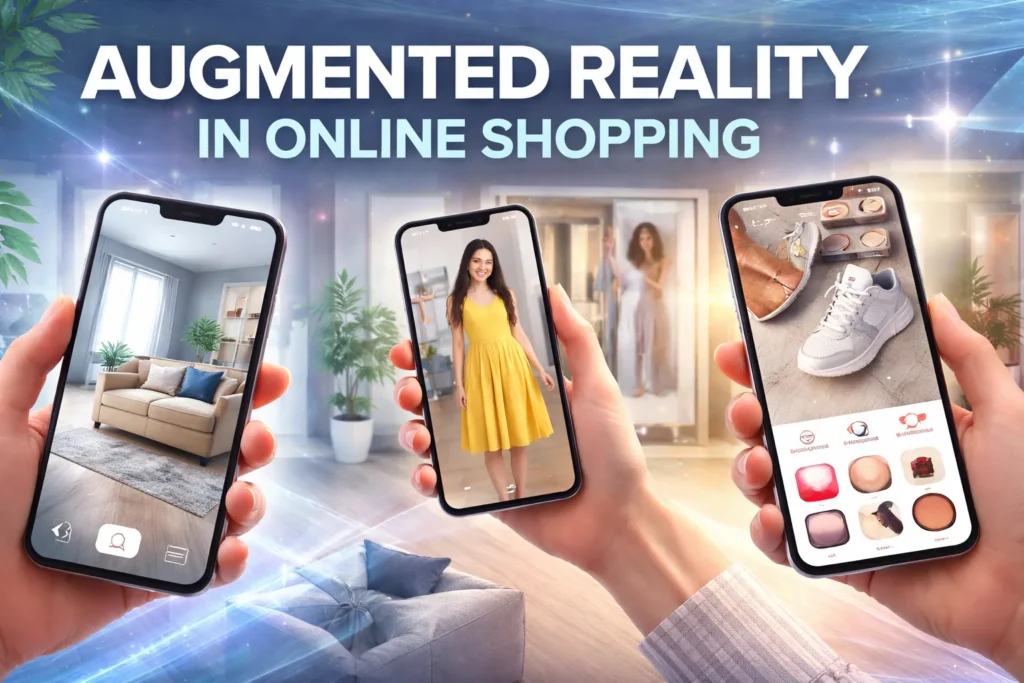

The package arrived on a Tuesday afternoon. Maria had been waiting for this moment all week. She carefully sliced through the tape, pulled back the cardboard flaps, and there it was—the beautiful amber-colored lamp she had spent hours searching for. It was going to be perfect on her nightstand. She carried it to her bedroom, placed it exactly where she had imagined, stepped back to admire it, and felt her heart sink.
It was wrong. All wrong.
The lamp that looked so warm and inviting on her computer screen now seemed cold and harsh in her actual bedroom. The color that matched her decor online clashed terribly with her real-world walls. The size that seemed just right in the product photos now looked awkward and bulky next to her bed. Maria sighed, packed the lamp back into its box, and started the tedious process of printing a return label, repackaging everything, and making a trip to the shipping store.
This scene plays out millions of times every single day in homes across the country. It’s the hidden cost of online shopping—the disappointment, the hassle, the wasted time and fuel, and the environmental impact of all those returned products traveling back and forth across the country. For years, we’ve accepted this as just part of the deal when we buy things online. You win some, you lose some. You get it right sometimes, and sometimes you end up with a box of disappointment.
But what if Maria could have known? What if, before she ever clicked that “Buy Now” button, she could have seen exactly how that lamp would look in her room, at the exact spot on her nightstand, at the exact time of day when she would most often use it? What if she could have walked around it, seen it from different angles, and watched how the light from her window would hit its surface?
Thanks to a remarkable technology called Augmented Reality, or AR, that “what if” is quickly becoming reality. And it’s not just changing how we buy lamps—it’s transforming the entire experience of shopping online, from the clothes we wear to the makeup on our faces, from the furniture in our homes to the cars in our driveways. This is the story of that transformation, told through the eyes of the people who use it, the companies that are betting their futures on it, and the quiet revolution happening right now on millions of smartphone screens.
The Long and Winding Road: How We Got Here
To truly appreciate how revolutionary AR shopping really is, we need to take a step back and look at the long, strange journey of how we bought things before the internet, and how those early online shopping days set the stage for where we are today.
Think about your grandparents, or maybe your great-grandparents. When they wanted to buy something for their home, they had exactly two choices. They could go to a local store, where they could see, touch, and examine the product in person before handing over their hard-earned money. Or they could open a catalog. Those thick, glossy books from Sears or Montgomery Ward were like the Amazon of their day. You could flip through pages and pages of merchandise, from socks to sofas, all photographed beautifully under perfect lighting.
But here’s the thing about those old catalogs. When you ordered a sofa from a picture in a book, you were taking a huge leap of faith. You couldn’t sit on it. You couldn’t feel the fabric. You couldn’t see if the color “Forest Green” in the catalog was the same as the green in your living room. You ordered, you waited six to eight weeks for delivery, and you hoped for the best. Sometimes it worked out. Sometimes it didn’t. And if it didn’t, returning that massive sofa was such a nightmare that most people just lived with their mistake.
Then came the internet, and everything changed. Suddenly, you didn’t need a physical catalog. You could visit a website and see thousands of products. You could read reviews from other customers. You could compare prices across dozens of stores without leaving your chair. It was revolutionary. It was convenient. And yet, it still had that same old problem from the catalog days. You were still looking at pictures. You were still guessing.
For the next twenty years, that’s how online shopping worked. Companies got better at photography. They added zoom features so you could see the stitching on a shirt. They shot videos so you could see a dress in motion. They let customers upload their own photos so you could see how things looked in real homes on real people. These were all improvements, for sure. But none of them solved the fundamental problem. You couldn’t try it before you bought it. You couldn’t see it in your space, on your body, in your light.
That’s where AR comes in. It’s not just another incremental improvement, like better photos or customer reviews. It’s a completely different way of shopping. It bridges that hundred-year gap between the catalog and the store, giving us the convenience of online shopping with the confidence of an in-person try-on. It’s the missing piece of the puzzle that we’ve been waiting for since the very first mail-order catalog landed in someone’s mailbox more than a century ago.
Beyond the Screen: What Augmented Reality Actually Does
When most people hear the term “Augmented Reality,” they might think of something complicated or high-tech, maybe even a little scary. They might picture people walking around with clunky goggles on their faces, bumping into things while seeing digital dragons flying through the air. And sure, that’s one version of what AR can do. But the AR that’s changing shopping is much simpler, much more practical, and way more magical than that.
Let’s break down what AR actually does, in plain language, without all the technical jargon that usually surrounds it.
At its heart, AR is about adding digital things to your real world. Think of it like this. Your phone’s camera shows you exactly what’s in front of you—your living room, your kitchen, your face in the mirror. That’s the real part. AR takes that real image and layers something digital on top of it. That something could be a picture, a piece of furniture, a pair of shoes, or a shade of lipstick. The trick is making that digital thing look like it actually belongs there, like it’s really part of the scene.
The first thing your phone has to do is understand the space it’s looking at. This is where the real intelligence comes in. When you point your camera at your living room floor, the AR software doesn’t just see a flat image. It’s constantly measuring and mapping. It figures out where the floor is, where the walls meet the floor, how far away the couch is, and where the light is coming from. It creates a kind of invisible 3D grid that sits on top of your real room.
Once the phone understands the space, it can place the digital object into that grid. If you’re looking at a virtual chair, the software knows that chair needs to sit on the floor, not float in the middle of the air. It knows that the back of the chair should be against the wall if that’s where you put it. It knows that the chair should get smaller as you walk away from it and bigger as you walk closer.
Then comes the really impressive part. As you move your phone around the room, the AR software is constantly recalculating. It’s keeping that digital chair locked in its exact spot, adjusting the perspective in real time so it always looks like it’s really there. Walk to the other side of the room, and you see the back of the chair. Crouch down, and you see it from a low angle. Move close, and you can examine the virtual texture of the fabric.
This whole process happens in milliseconds, faster than your brain can even register. The result is an experience that feels genuinely magical. That chair isn’t just a picture floating on your screen. It’s an object that exists in your space. You can interact with it. You can move around it. You can see how it fits with your other furniture. You can decide, with real confidence, whether you want to invite that chair into your home for real.
For trying on clothes and makeup, the process is similar but adapted for the human body. The software maps your face or your body, identifying key points like your eyes, nose, lips, shoulders, and waist. Then it carefully places the digital item—a pair of sunglasses, a shade of lipstick, a new jacket—onto that map, adjusting it as you move so it stays perfectly in place. It’s like having a virtual dressing room where nothing is ever the wrong size and you never have to wait for a fitting room to open up.
Sarah’s Living Room: A Story of Confidence and a New Sofa
Let me tell you about Sarah. Not the Sarah from the beginning of our story, but a different Sarah, a real person I know, who had her own transformative moment with AR shopping.
Sarah and her husband, Mike, had been saving for months to buy a new sofa. Their old one was held together by hope and a few strategically placed throw pillows, and it was finally time to invest in something they’d love for years. They’d done all the research. They’d read hundreds of reviews. They’d measured their living room a dozen times. They’d found the perfect sofa online from a company known for quality and comfort.
But there was a problem. The sofa came in three different shades of gray, and the photos on the website made them all look slightly different. Was “Silver Cloud” lighter or darker than “Gentle Gray”? Would “Charcoal Mist” make their small living room feel too dark and cave-like? The website’s photos were beautiful, but they were taken in a huge, bright studio with perfect lighting. Sarah’s living room had a big window that faced west, and the afternoon light changed everything.
In the old days, Sarah would have had to guess. Maybe she would have ordered fabric swatches, waited a week for them to arrive, and tried to imagine what a whole sofa would look like based on a tiny two-inch square. Or maybe she would have just picked one and hoped for the best, knowing that returning a sofa would be a huge ordeal.
But this company had an AR feature on their website and app. One evening, with her phone in hand, Sarah opened the app and selected the sofa she loved. She tapped the “View in Your Room” button. Her phone’s camera turned on, showing her messy but cozy living room. She pointed it at the empty space where the new sofa would go, the spot where their old, sad sofa was currently sitting.
And then, it appeared.
A perfect, life-sized, three-dimensional image of the sofa materialized on her screen, right there in her living room. It wasn’t just a flat image pasted on top of her video. It was a real, rotatable object that sat on her floor and occupied space. Sarah gasped. Mike came running from the kitchen to see what was wrong.
“Look at this!” she said, holding up her phone.
Mike took the phone and started walking around the room, watching as the virtual sofa stayed perfectly in place. He could see it from the kitchen doorway. He could see it from the hallway. He could see how much floor space it would take up and how it related to their TV stand and coffee table.
Then Sarah took the phone back and tapped a button to change the color. “Silver Cloud” disappeared, and “Gentle Gray” appeared in its place. She could see immediately that Gentle Gray was too cool-toned for their warm, sunny room. She tapped again, and “Charcoal Mist” appeared. It was perfect. It added a touch of sophistication without making the room feel smaller. The afternoon sun coming through their real window hit the virtual sofa in a way that looked completely natural.
They spent the next twenty minutes just playing with it. They moved the virtual sofa to different spots in the room. They tried it facing different directions. They even used another AR feature to see how a matching armchair would look next to it. By the time they put the phone down, all doubt was gone. They knew exactly which sofa they wanted, exactly which color, and exactly where it would go. They ordered it that night, with a confidence they never could have had without that magical window into their own future.
When the real sofa arrived three weeks later, Sarah placed it in the spot where the virtual one had lived on her phone screen. It fit perfectly. The color was exactly what she expected. The afternoon light hit it just as it had in the AR preview. There was no disappointment. There was no return. There was just a perfect sofa and two very happy people.
The Numbers Don’t Lie: Why Retailers Are Racing to Adopt AR
Stories like Sarah’s are wonderful, and they clearly show how AR helps individual shoppers. But companies aren’t spending millions of dollars on this technology just to make people happy, although that’s certainly part of it. They’re investing in AR because the numbers tell a story that’s impossible to ignore.
Let’s talk about the return problem first, because it’s huge, and it’s only getting bigger. When you buy something from a physical store and take it home, you return it maybe five to ten percent of the time. But when you buy the exact same item online? Return rates can skyrocket to thirty, forty, even fifty percent for certain categories like clothing and shoes. Think about that. For every two dresses an online store sells, they might get one back.
Every single one of those returns costs money. The company has to pay for the return shipping, which isn’t cheap. They have to have workers who process the returns, inspect the items, and figure out if they can be resold. They have to repackage things. They have to put them back into inventory. Sometimes, items that are returned can’t be resold as new, so they have to be sold at a discount or even thrown away. All of that eats into profits.
Now, imagine you’re a clothing retailer, and you introduce an AR feature that lets customers see how clothes will look on a model with their same body type, or even on their own body through their camera. Studies are showing that this simple tool can reduce returns by twenty to forty percent. For a big company, that’s millions of dollars saved every single year. It’s not just a nice feature anymore. It’s a financial necessity.
But the benefits go far beyond just reducing returns. Companies are also seeing something even more valuable: increased sales. When customers can visualize a product in their own space or on their own body, they become more confident buyers. They stop waffling. They stop adding items to their cart and then abandoning them because they’re just not sure. They hit the buy button.
Data from companies that have implemented AR features shows some remarkable trends. Customers who use AR tools are significantly more likely to make a purchase than those who don’t. They also tend to spend more money. Once they see how good that expensive sofa looks in their room, or how amazing that high-end lipstick shade looks on their face, the price tag doesn’t seem as scary. The value becomes real and tangible.
There’s also something called “dwell time,” which is just a fancy way of saying how long a customer stays on a website or app. AR dramatically increases dwell time. People don’t just look at a product for a few seconds and move on. They play with it. They move it around. They try different colors. They have fun. The more time they spend on a site, the more likely they are to buy something, and the more connected they feel to the brand.
And that connection is maybe the most important benefit of all. When a company gives you a tool that helps you make a better decision, that builds trust. You start to see that brand as being on your side. They’re not just trying to take your money. They’re trying to help you find the right thing. That trust is incredibly valuable. It turns one-time buyers into loyal customers who come back again and again, and who tell their friends about their great experience.
Beauty and the Beast: Trying On Makeup Without the Mess
Of all the areas where AR is changing shopping, beauty might be the most dramatic and the most fun. Think about the last time you went to a makeup counter at a department store. You stood under harsh fluorescent lights while a salesperson, who may or may not have understood what you were looking for, applied products to your face. You might have tried one or two shades before you got tired of wiping things off. You might have felt pressured to buy something. And at the end of it all, you walked out into the real world with its natural light, and that perfect-in-the-store shade suddenly looked completely different.
Now imagine a completely different experience. You’re sitting on your couch, in your own home, with your own lighting. You open an app from your favorite beauty brand. You’re curious about a new line of lipsticks that just launched. There are fifty shades, and they all look beautiful in the photos. How on earth are you supposed to choose?
You tap the “Try On” button. Your phone’s camera turns on, showing your face on the screen. A row of lipstick shades appears at the bottom. You tap the first one, and instantly, your lips change color on the screen. It looks natural, like you’re actually wearing that shade. You tilt your head, smile, pout, and see how the color moves with your expressions. You tap the next shade, and your lips change again. You can try on all fifty shades in less than five minutes. You can see how they look in the warm light of your living room and then walk over to the window to see them in natural daylight.
This isn’t science fiction. This is happening right now, today, on apps from brands like Sephora, L’Oreal, and MAC. The technology has gotten so good that it’s almost impossible to tell the difference between the virtual try-on and a real one. The software maps your lips with incredible precision, tracking their shape even as you move and talk. It applies the color perfectly, right to the edges, just like real lipstick would.
The same technology works for eyeshadow, blush, foundation, and even false lashes. You can experiment with a dramatic smoky eye without worrying about messing it up and having to start over. You can try a bold new hair color without the commitment or the damage to your real hair. It turns makeup shopping into a game, a playground where you can be whoever you want to be for a few minutes and see what feels right.
This is especially powerful for people who might feel intimidated walking into a beauty store. Teenagers just starting to explore makeup can experiment in private, without feeling judged by salespeople or other customers. People with skin conditions can try products without worrying about reactions from in-store testers. People of all ages and backgrounds can see how products look on faces that actually look like theirs, not just on the models in the ads.
The beauty industry has embraced AR faster than almost any other sector, and it’s easy to see why. The try-on experience is so natural, so intuitive, and so fun that it almost guarantees people will spend more time with the products. And more time almost always means more sales. But more importantly, it means customers end up with products they actually love, products that work for them in their real lives, not just in the fantasy world of a perfectly lit store.
Fashion Forward: Dressing Rooms Without the Doors
If AR can put lipstick on your lips, it can certainly put clothes on your body. The fashion industry is next in line for this transformation, and the changes are already starting to appear.
Think about all the frustrations of shopping for clothes online. There’s the size issue, of course. Every brand seems to have its own idea of what a medium should be. There’s the fit issue. A dress that looks amazing on a tall, thin model might look completely different on a real body with curves. There’s the fabric issue. You can’t feel the material to know if it’s soft or scratchy, heavy or flimsy. There’s the color issue. That beautiful teal blouse might show up looking more green than blue.
AR is starting to tackle all of these problems, one by one.
The most basic AR fashion tools let you see clothes on virtual models. You select an item, and the app shows you a 3D model wearing it. You can rotate the model, zoom in on details, and see how the garment moves. It’s better than a flat photo, but it’s still not you.
The next level of AR fashion is much more personal. Some apps now let you create a virtual avatar that represents your actual body. You input your height, weight, and measurements, and the app builds a 3D model that looks like you. Then you can “try on” clothes on your avatar. You can see how that dress would fit on your actual body shape, where the waistline would hit, how the length would compare to your height. It’s like having a digital twin that does all your clothes shopping for you.
The holy grail, though, is the AR mirror. This is the technology that lets you see yourself wearing the clothes in real time, through your camera. It’s much harder to do than makeup because clothes have to move with your body and fit correctly, but the technology is advancing quickly. Some companies are already offering this for accessories like hats, sunglasses, and bags. It’s only a matter of time before it becomes standard for full outfits.
Imagine standing in front of your phone or tablet, and seeing yourself wearing a dozen different dresses without ever changing your clothes. You could have a fashion show in your living room, getting feedback from friends via video chat, finding the perfect outfit for a wedding or a job interview without ever setting foot in a store. You could try combinations you never would have thought of, mixing and matching pieces from different brands to create entirely new looks.
This technology has huge implications for sustainability too. The fashion industry is one of the biggest polluters in the world, and a big part of that problem is the waste created by returns and by clothes that people buy and never wear. When you can see exactly how something will look on your body, you’re much less likely to buy it and send it back. You’re much more likely to keep it and wear it, reducing the environmental footprint of your wardrobe.
For people with disabilities or mobility issues, AR fashion could be truly life-changing. Shopping for clothes in physical stores can be exhausting or even impossible for some people. Being able to try on clothes from home, without the physical demands of going to a store and navigating fitting rooms, opens up a world of fashion that might otherwise be inaccessible. It’s a reminder that AR isn’t just a cool gadget. It’s a tool that can make the world more inclusive.
Beyond the Home: Cars, Gadgets, and Giant Purchases
When we talk about AR shopping, furniture and clothes get most of the attention. They’re the most obvious examples, the ones that people immediately understand. But AR is starting to transform the way we shop for much bigger things too. Things like cars. Things like houses. Things that you really, really don’t want to get wrong.
Let’s talk about cars first. Buying a car is one of the most stressful purchases most people ever make. There’s the negotiation, the financing, the pressure from salespeople. But before all of that, there’s the simple question of whether you actually like the car. You can read reviews and watch videos until your eyes glaze over, but nothing compares to seeing it in person. But what if you could see it in person without going to a dealership? What if you could see it in your own driveway?
Some car companies are now offering AR features that let you do exactly that. You open an app, select the car you’re interested in, and point your phone at your driveway. A life-sized, fully detailed 3D model of the car appears on your screen, parked right where your real car usually sits. You can walk around it. You can open the doors and peek inside. You can see how the color looks in your actual outdoor lighting, at different times of day. You can see if it fits in your garage. You can see if it looks ridiculous next to your house.
This doesn’t replace a real test drive, of course. You still need to feel how the car handles on the road. But it transforms the early stages of the car-buying process. You can narrow down your choices without spending hours driving from dealership to dealership. You can involve your whole family in the decision, having them stand in the driveway and give their opinion on the virtual car. By the time you actually go to a dealership, you’re already confident that this is the car you want. You’re just there to confirm it and handle the paperwork.
The same principle applies to big-ticket items like appliances. Imagine you’re buying a new refrigerator. You’ve measured your space a dozen times. You know the exact dimensions you need. But a refrigerator is a big, bulky object, and it’s hard to imagine how it will look in your kitchen. Will it stick out too far? Will it overwhelm the space? Will the stainless steel finish clash with your cabinet hardware?
With an AR app, you can see that refrigerator in your kitchen before you buy it. You can open the virtual doors and see how they swing. You can see if there’s enough clearance for your kitchen island. You can try different finishes and see which one works best with your cabinets and countertops. It takes the guesswork out of a major purchase and replaces it with certainty.
Even the real estate industry is starting to experiment with AR. Imagine you’re looking at apartments in a city you’re planning to move to. You can’t fly out just to see every potential place. But what if you could take a virtual tour, using AR to see the empty space furnished with virtual furniture, giving you a real sense of how big the rooms actually are and how your own things might fit? It’s not quite the same as being there, but it’s a huge step up from looking at flat photos on a listing website.
The Tech Behind the Magic: Keeping It Simple
By now, you might be wondering how all of this actually works. You might be imagining complex systems, supercomputers, and teams of engineers making all this magic happen. And while there are certainly smart people behind the scenes, the technology itself is designed to be invisible. The best AR experiences are the ones where you don’t even think about the technology. You just point your phone, and the magic happens.
So let’s pull back the curtain, just a little bit, and look at what’s going on behind that screen. Don’t worry, I’ll keep it simple.
The most important piece of the puzzle is your smartphone. Those little computers we all carry in our pockets are incredibly powerful. They have high-resolution cameras that can capture detailed images. They have gyroscopes and accelerometers that know exactly how the phone is moving and which direction it’s pointing. They have powerful processors that can do billions of calculations per second. All of this hardware, which we mostly use for taking pictures of our food and scrolling through social media, is perfectly suited for AR.
When you open an AR shopping app, the first thing it does is ask your camera to look at the world. It’s not just taking a picture, though. It’s constantly analyzing that video feed, frame by frame, looking for flat surfaces like floors and tables, and vertical surfaces like walls. It’s measuring distances and angles. It’s figuring out where the light is coming from. It’s building a 3D map of your environment in real time.
This mapping process is crucial. Without it, the virtual object would just float awkwardly in space, never quite looking like it belongs. But with a good map, the app can place that object exactly where it should go, with the right perspective, the right size, and even the right shadows and lighting to match your real room.
For trying on makeup or glasses, the process is similar but focused on your face. The app uses what’s called facial recognition, but it’s not the creepy kind that governments use to track people. It’s just a way of identifying key points on your face—the corners of your eyes, the tip of your nose, the outline of your lips. Once it knows where all these points are, it can accurately place virtual objects onto your face and make them move with you as you turn your head or change your expression.
The companies that make these AR tools are constantly working to make them better. They’re training artificial intelligence to understand more complex environments and more varied body types. They’re working on better ways to simulate fabric, so that virtual clothes move and drape realistically. They’re improving the lighting and shadows so that virtual objects blend seamlessly into real scenes. The technology that seems magical today will probably seem primitive compared to what’s coming in just a few years.
But for now, the magic is already pretty impressive. It’s reliable enough that millions of people use it every day to make real purchasing decisions. It’s accurate enough that companies trust it to reduce their return rates. And it’s easy enough that anyone with a smartphone can use it, from tech-savvy teenagers to grandparents who still aren’t quite sure how to send a text message.
The Store of Tomorrow: What Your Future Shopping Trips Will Look Like
So where is all of this heading? What does the future of shopping look like, not in some distant sci-fi world, but in the next five or ten years? The changes are coming faster than you might think, and they’re going to transform not just online shopping, but the way we interact with physical stores too.
Let’s start with online shopping, because that’s where the most immediate changes are happening. In the future, AR won’t be a special feature that you have to look for. It’ll be as standard as a product description or a photo. Every item on every major shopping site will have an AR option. You’ll be able to see furniture in your room, clothes on your body, and makeup on your face without even thinking about it. It’ll just be part of how you shop.
The AR experiences themselves will get much more sophisticated. Instead of just seeing one item at a time, you’ll be able to build whole virtual rooms. You’ll be able to furnish an entire apartment digitally, moving furniture around, trying different layouts, and seeing how everything works together before you buy a single thing. You’ll be able to build entire outfits, mixing and matching pieces from different brands, and see how they all look together on your virtual self.
Social shopping will become a huge part of the experience. You’ll be able to shop with friends who live far away, seeing their virtual avatars trying on clothes while you give feedback from your own living room. You’ll be able to share your virtual rooms with family members to get their opinion on your furniture choices. Shopping will become less of a solitary activity and more of a shared experience, even when you’re physically apart.
But the really interesting changes might happen in physical stores. You might think that AR would make physical stores obsolete. Why go to a store if you can try everything at home? But actually, AR has the potential to make physical stores more interesting and more valuable than they’ve been in years.
Imagine walking into a clothing store in the future. Instead of racks and racks of clothes in every size and color, there might just be one sample of each item. You hold it up, and a smart mirror shows you what it would look like on your body, in your size, in every available color. You never have to try anything on. You never have to search through piles of folded jeans to find your size. You just look at the mirror, make your choices, and either take the item home or have it shipped to you.
Imagine a furniture store where you can see any piece of furniture in any fabric, right there in the showroom. You point your phone at a plain white sofa, and it instantly transforms into the green velvet you’ve been dreaming of. You can see how it would look in your actual living room by pulling up a photo of your room on a screen and placing the sofa in it. The store becomes a place for inspiration and experimentation, not just a warehouse full of inventory.
This future store would have smaller footprints and less inventory, which saves the retailer money. It would have happier customers who find exactly what they want without the frustration of limited sizes and colors. And it would create a shopping experience that’s actually fun and engaging, something that might get people excited about going to the mall again.
Small Business, Big Magic: How AR Levels the Playing Field
When we talk about new technology, it’s easy to focus on the big players. The Amazons and Walmarts of the world have the money to invest in the best AR tools, and they’re certainly doing so. But one of the most exciting things about AR is how it can help small businesses compete with those giants. It’s a technology that, in many ways, levels the playing field.
Think about a small, independent furniture maker. Let’s call her Elena. Elena builds beautiful, handcrafted tables in her workshop in a small town. Her tables are amazing, but she’s always been limited by geography. Most of her customers come from within driving distance because people want to see the tables in person before they commit to buying something so expensive. She’s tried selling online, but the photos never do her work justice, and customers are hesitant to buy a table they’ve never seen.
Now imagine Elena adds an AR feature to her website. Suddenly, a customer in New York City can see one of Elena’s tables in their own dining room. They can walk around it, examine the craftsmanship, and see how the wood grain looks in their own lighting. The table is no longer just a picture on a screen. It’s a real object in their home, even if only digitally. That customer’s confidence soars. They’re willing to buy a table from a small maker they’ve never heard of because they can see exactly what they’re getting.
The same goes for a small clothing designer, a local jewelry maker, or an artist selling prints. AR lets them show their work in the context where it will actually live. It builds trust and confidence in a way that photos alone never could. And the best part is that the technology is becoming more affordable every year. There are now platforms and tools that let small businesses add AR to their websites without needing a huge budget or a team of programmers.
For artists, AR is particularly exciting. Imagine you’re a painter, and you want to sell your work online. Instead of just showing a photo of the painting, you can offer an AR feature that lets customers see how it would look on their wall. They can try it in different rooms, see how it fits with their existing decor, and fall in love with it in their own space. It transforms the buying experience from a simple transaction into a personal connection between the artist and the collector.
This democratization of technology is one of the most powerful aspects of the AR revolution. It means that the best products can win, not just the products from the companies with the biggest marketing budgets. It means that a customer in a big city can discover and fall in love with the work of a maker in a small town. It means that small businesses can survive and thrive in an online world that has often felt stacked against them.
The Human Element: Connection in a Digital Age
For all the talk about technology and features and benefits, it’s important to remember what this is really all about. It’s about people. It’s about making our lives a little bit easier, a little bit less stressful, and maybe even a little bit more fun. And in a world that often feels increasingly digital and disconnected, AR has the potential to bring a surprising amount of humanity back into shopping.
Think back to Maria and her disappointing lamp. That moment of disappointment wasn’t just about a lamp. It was about wasted time, wasted energy, and a little piece of hope that got crushed. It was a small but real negative experience in her day. Now think about Sarah and her perfect sofa. That moment of joy when the real sofa matched the virtual one wasn’t just about furniture. It was about confidence, satisfaction, and the feeling of getting something right. It was a small but real positive experience.
These moments add up. They shape how we feel about the brands we buy from, the technology we use, and even our own ability to make good decisions. When technology helps us make choices we feel good about, it builds trust. It makes us feel smarter and more capable. It turns a mundane task like buying a sofa into something that feels almost magical.
AR also has the power to make shopping more inclusive and more personal. For too long, the beauty and fashion industries have presented a very narrow idea of what’s beautiful and what’s desirable. The models in the ads all look a certain way. The clothes are all designed for a certain body type. If you don’t fit that mold, you’re left to figure things out on your own.
AR is starting to change that. When you can try on makeup on your own face, you see how it actually looks on you, not on some idealized version of beauty. When you can see clothes on a virtual model that matches your own body type, you get a much more realistic idea of how they’ll fit. AR puts the power back in the hands of the individual. It says, “This is for you, exactly as you are, not for some imaginary perfect person.”
There’s also something inherently human about the way we interact with AR. We move around objects. We try different options. We experiment and play. It’s a very natural, intuitive way of exploring the world. It’s not staring at a screen and scrolling through endless options. It’s using our bodies, our spaces, and our environments to make decisions. In a weird way, it’s more physical and more embodied than traditional online shopping ever was.
Looking Ahead: What the Next Decade Holds
We’ve come a long way in this journey, from the old Sears catalogs to the magical AR mirrors of today. But if you think the changes we’ve seen so far are impressive, just wait. The next decade is going to bring transformations that will make today’s AR look like a simple parlor trick.
The hardware is going to get better and more diverse. Today, most AR shopping happens on phones and tablets. That’s convenient, but it’s also limiting. You’re holding a device in your hand, looking at a screen. It works, but it’s not the most natural way to interact with virtual objects. In the coming years, we’re going to see the rise of smart glasses. These will look like ordinary eyeglasses, but they’ll have the ability to overlay digital information onto your field of vision. Imagine walking through your house and seeing virtual furniture placed exactly where you’re considering putting it, without ever pulling out your phone. Imagine walking through a store and seeing digital information about products floating next to them as you browse.
The software is going to get smarter too. Artificial intelligence is going to play a huge role in the future of AR shopping. Imagine an AI shopping assistant that learns your style preferences, your body type, and your home decor taste. It could proactively suggest items that it knows you’ll love, and it could show them to you in AR before you even know you want them. It could help you put together complete outfits or furnish entire rooms, acting like a personal stylist or interior designer that’s available 24/7.
The integration between online and physical stores is going to become seamless. You might start your shopping journey at home, using AR to explore options and narrow down your choices. Then you might go to a physical store to see your top choices in person, using AR mirrors and smart displays to enhance the experience. Finally, you might complete your purchase online or in the store, with everything flowing smoothly between the digital and physical worlds. The boundary between online and offline shopping will blur until it almost disappears.
We’re also going to see AR expand into new categories of products that we haven’t even thought of yet. Imagine using AR to see how a new paint color would look on your walls before you buy a single can. Imagine using it to preview a new hairstyle before you commit to the chop. Imagine using it to see how a piece of art would look in different frames, or how different landscaping options would transform your backyard. The possibilities are truly endless.
And perhaps most importantly, the technology is going to become so natural, so intuitive, and so integrated into our daily lives that we’ll stop thinking of it as a special thing. It’ll just be part of how we interact with the world. When we shop, we’ll automatically expect to see things in our space, on our bodies, in our light. The idea of buying something based on a flat photo will seem as old-fashioned as ordering from a catalog without ever seeing the product in person.
Challenges Along the Way: What We Still Need to Figure Out
Of course, no technological revolution comes without its challenges. As exciting as the future of AR shopping is, there are still some important questions that need to be answered and some obstacles that need to be overcome.
The first challenge is simply getting the technology into more hands. While most people today have smartphones that are capable of running AR apps, not everyone does. There’s still a digital divide that leaves some people behind when new technologies emerge. Making sure that AR shopping is accessible to everyone, regardless of their income or their comfort with technology, is an important goal.
There’s also the question of privacy. AR apps need access to your camera, and they need to understand your environment. That means they’re collecting information about your home, your body, and your personal space. For many people, that feels creepy. It’s essential that companies are transparent about what data they’re collecting, how they’re using it, and how they’re protecting it. If people don’t trust the technology, they won’t use it, no matter how cool it is.
The accuracy of AR still has room for improvement. While it’s gotten remarkably good, it’s not perfect yet. Colors can sometimes be slightly off. Sizing can be a little imprecise. Virtual clothing doesn’t always move and drape exactly like real fabric. As the technology improves, these issues will diminish, but for now, they’re still a factor that can lead to disappointment.
There’s also the challenge of adoption. Getting millions of retailers to embrace AR and integrate it into their websites and apps is a huge undertaking. It takes time, money, and expertise that many smaller businesses simply don’t have. While the tools are becoming more accessible, there’s still a long way to go before AR is truly everywhere.
And finally, there’s the question of whether AR might actually make shopping too easy. If we can furnish entire rooms and build complete wardrobes without ever leaving our couches, will we lose something valuable? Will we miss the serendipity of discovering something unexpected in a store? Will we lose the tactile pleasure of touching fabric and feeling texture? These are real questions, and the answers aren’t simple. The goal shouldn’t be to replace physical shopping entirely, but to enhance it, to give us more options, and to make the whole experience better for everyone.
A World of Confidence: The Simple Joy of Knowing
As we come to the end of this exploration, let’s circle back to where we started. To Maria and her disappointing lamp. To Sarah and her perfect sofa. To all the millions of shoppers who have felt that moment of doubt before clicking “buy,” and that moment of relief when the package finally arrives and it’s actually right.
At its heart, that’s what AR shopping is really about. It’s about replacing doubt with confidence. It’s about turning a guessing game into a sure thing. It’s about giving people the power to see the future, just a little bit, before they make a commitment.
There’s a simple joy in knowing. In knowing that the sofa will fit. In knowing that the lipstick shade will look good. In knowing that the lamp will match the nightstand. It’s the kind of joy that we used to only get from shopping in physical stores, where we could see and touch things before we bought them. Now, thanks to AR, we can have that same confidence from the comfort of our own homes.
The technology will keep improving. The experiences will keep getting more immersive and more magical. New applications we haven’t even imagined yet will emerge. But the core promise will remain the same: to help people make better choices, to reduce waste and disappointment, and to bring a little bit of magic into the everyday act of buying things.
So the next time you’re shopping online and you see that little AR button, give it a tap. Point your phone at your living room, or your face, or your feet. Watch as a virtual object appears in your real world, right where you want it to be. And take a moment to appreciate the quiet revolution that’s happening, one smartphone screen at a time. The future of shopping is here, and it looks a lot like magic.
From Science Fiction to Shopping Cart: The Journey of AR Technology
The story of augmented reality didn’t begin in a shopping mall or an e-commerce boardroom. It began in the labs of computer scientists and the imaginations of science fiction writers, long before most of us had ever heard the term. Understanding this journey helps us appreciate just how far the technology has come, and how remarkable it is that we can now use it to buy a sofa.
The first experiments with what we might call augmented reality happened back in the 1960s. A Harvard professor and computer scientist named Ivan Sutherland created something called the “Sword of Damocles.” It was a massive, ceiling-mounted device that projected simple wireframe graphics onto the user’s field of vision. The user had to wear a huge helmet connected to the ceiling by mechanical arms. It was crude, it was uncomfortable, and it could barely show a simple cube. But it was the first time anyone had successfully overlaid computer graphics onto the real world.
For the next thirty years, AR remained largely in research labs and military facilities. The U.S. Air Force experimented with heads-up displays in fighter jets, projecting targeting information onto the pilot’s canopy so they didn’t have to look down at their instruments. This is still one of the most practical and life-saving applications of AR technology. If you’ve ever seen a fighter jet movie where the pilot sees information floating in front of them, that’s AR.
In the 1990s, a few companies started experimenting with AR for commercial purposes. There were attempts to create AR systems for manufacturing and repair work, where technicians could see virtual instructions overlaid on the equipment they were fixing. But the hardware was still too expensive and too bulky for any widespread use. AR was a solution in search of a problem, a technology waiting for its moment.
The real turning point came with the smartphone. When Apple and other companies started putting high-quality cameras, powerful processors, and motion sensors into devices that fit in our pockets, they accidentally created the perfect AR platform. Suddenly, millions of people were carrying devices capable of running sophisticated AR applications. They just didn’t know it yet.
The moment that changed everything came in 2016 with the release of Pokemon Go. For the first time, millions of ordinary people experienced AR. They pointed their phones at parks and sidewalks and saw virtual creatures appearing in the real world. It was a sensation. It was also a proof of concept. If AR could put a Pikachu on a park bench, it could certainly put a sofa in a living room.
Companies like Apple and Google took notice. They started building AR platforms directly into their phone operating systems. ARKit for iOS and ARCore for Android gave developers the tools they needed to create sophisticated AR experiences without having to build everything from scratch. The floodgates opened.
Today, the technology that once required a ceiling-mounted helmet and a room full of computers runs on a device that most of us carry in our pockets. The journey from the Sword of Damocles to Sarah’s virtual sofa took more than fifty years. But now that the technology is here, it’s spreading faster than almost anyone predicted. And it’s only going to get better.
How Different Industries Are Using AR in Surprising Ways
When we think about AR shopping, furniture and beauty are the obvious examples. But walk through any industry today, and you’ll find companies experimenting with AR in creative and unexpected ways. The technology is proving to be useful for almost any situation where customers need to visualize something before they buy it.
Take the eyewear industry, for example. Buying glasses online used to be almost impossible. Glasses are deeply personal. They have to fit your face, match your style, and feel right. Without trying them on, most people wouldn’t take the risk. Then companies like Warby Parker and others introduced AR try-on features. Now you can see exactly how a pair of glasses will look on your face from every angle. You can try on dozens of frames in minutes and see which ones complement your features. It’s transformed the eyewear industry and made online glasses shopping not just possible, but popular.
The art world is another surprising beneficiary of AR. Galleries and online art sellers are using AR to let customers see how paintings and sculptures will look in their homes. Imagine you’re considering buying a piece of art for your dining room. You can point your phone at the wall, and a virtual version of the artwork appears, framed and hung exactly where you want it. You can see how it looks during the day and at night, how it works with your table and chairs, whether it’s the right size for the space. It takes the guesswork out of buying art and gives customers the confidence to invest in pieces they might otherwise be too nervous to purchase.
The gardening and landscaping industry is getting in on the action too. Imagine you’re planning to redesign your backyard. You can use an AR app to see how different plants would look in your actual garden, at different times of year. You can see how a patio set would fit on your deck, or how a new fence would change the look of your property. It’s like having a landscape designer in your pocket.
Even the food industry is experimenting with AR. Some restaurants are using AR to show customers what their dishes will look like before they order. Imagine pointing your phone at the menu and seeing a 3D rendering of the burger you’re considering, rotating it to see all sides, and getting a real sense of its size and presentation. It’s a small thing, but it could help people make more confident choices, especially in unfamiliar cuisines.
The toy industry has embraced AR in a big way. Some toys now come with AR components that bring them to life when viewed through a phone. A child can build a physical toy and then see it come alive in a digital world through the screen. It blends physical and digital play in ways that feel genuinely magical to kids.
Even the grocery store isn’t immune. Some companies are experimenting with AR navigation apps that help you find items in large supermarkets. You type in “peanut butter” on your phone, and the app shows you a virtual path through the store, with arrows overlaid on your camera view guiding you to the right aisle. It’s a small convenience, but it’s the kind of thing that could save time and frustration on every shopping trip.
The common thread through all of these examples is confidence. Whether you’re buying glasses, art, plants, or food, AR gives you a better sense of what you’re getting before you commit. It replaces uncertainty with clarity, and that’s valuable in any industry.
The Psychology of AR: Why Seeing Changes Everything
There’s a reason why AR is so effective at helping people make purchasing decisions. It’s not just about the technology. It’s about how our brains work. Understanding the psychology behind AR helps explain why it’s such a powerful tool and why it’s likely to become a permanent part of our shopping lives.
One of the most important psychological concepts at play here is something called “mental simulation.” When we consider buying something, our brains naturally try to simulate what it would be like to own it. We imagine the sofa in our living room. We picture ourselves wearing the dress. We visualize how the lamp would look on the nightstand. This mental simulation is a crucial part of decision-making. It helps us anticipate whether we’ll be happy with a purchase.
The problem is that mental simulation is hard. Our brains have to work to imagine something that isn’t there. And the more complex or unfamiliar the item, the harder the simulation becomes. That’s where AR comes in. Instead of having to imagine the sofa in your living room, you can actually see it. AR does the mental simulation for you, and it does it more accurately than your brain ever could.
This has a powerful effect on something called “purchase intention.” When you can clearly visualize owning something, you’re more likely to want to own it. The item becomes more real, more tangible, more desirable. It’s no longer just a picture on a screen. It’s a potential part of your life.
There’s also something called the “endowment effect” at play. This is the psychological phenomenon where we value things more highly once we feel a sense of ownership over them. When you see a virtual sofa in your living room, even though you know it’s not real, you start to feel a little bit like it’s yours. You’ve imagined it in your space. You’ve walked around it. You’ve started to incorporate it into your mental picture of your home. That sense of virtual ownership makes you more willing to pay for the real thing.
AR also reduces something called “cognitive load.” This is the mental effort required to make a decision. When you’re shopping online without AR, your brain has to work hard to process information, imagine the item in context, and compare options. That mental effort is tiring. It’s why decision fatigue is real. AR reduces that load by showing you exactly what you need to see. Your brain doesn’t have to work as hard, so you can make decisions more easily and with more confidence.
There’s also an emotional component. AR shopping is fun. It’s playful. It turns a chore into a game. When you’re having fun, you’re in a better mood, and when you’re in a better mood, you’re more likely to make purchases. It’s not manipulative. It’s just human nature. We like things that make us feel good, and AR shopping feels good.
Finally, AR addresses one of the deepest psychological needs in shopping: the need for certainty. Uncertainty is uncomfortable. When we’re not sure if a purchase will work out, we feel anxious. That anxiety can lead to decision paralysis, where we just don’t buy anything at all. AR removes that uncertainty. It provides certainty. And certainty is one of the most satisfying feelings in the world.
The Environmental Angle: How AR Could Help Save the Planet
We don’t often think about shopping as an environmental issue, but it absolutely is. The stuff we buy and return has a massive carbon footprint. Every product that gets shipped, returned, and resold or thrown away consumes energy and creates waste. This is a hidden cost of our convenient online shopping habits, and it’s a cost that the planet is paying.
Let’s look at the numbers. In the United States alone, online shopping returns generate about 5 billion pounds of landfill waste every year. That’s not just the products themselves, which often can’t be resold and end up in dumps. It’s also all the packaging, the shipping materials, the boxes and bubble wrap that get thrown away. And before any of that waste happens, all those products traveled across the country, sometimes multiple times, in trucks and planes that burn fossil fuels.
The fashion industry is particularly problematic. It’s estimated that about thirty percent of all clothes purchased online are returned. Many of those returned clothes never get resold. They end up in landfills or get incinerated. It’s a staggering amount of waste, all driven by the fundamental problem of not being able to try things on before you buy them.
This is where AR offers a genuinely environmental benefit. By helping people make better choices before they buy, AR can dramatically reduce return rates. Fewer returns mean fewer trucks on the road, less packaging in landfills, and less waste from products that can’t be resold. It’s not going to solve the climate crisis on its own, but it’s a meaningful step in the right direction.
There’s also the potential for AR to reduce overconsumption. When you can see exactly how something will look in your home or on your body, you might realize that you don’t actually want it. You might see that the dress doesn’t flatter you, or the lamp doesn’t match your decor, and you’ll avoid buying it in the first place. That’s even better than buying and returning. It’s not buying at all.
AR can also help with more sustainable choices. Imagine you’re shopping for a new sofa, and the AR app not only shows you how it looks in your room but also gives you information about its materials, its manufacturing process, and its carbon footprint. You could make a more informed choice, opting for the sofa made from sustainable materials even if it’s not the cheapest option. AR could be a tool for educating consumers and promoting more responsible purchasing.
Some companies are even using AR to help customers extend the life of products they already own. Imagine an app that shows you how to repair a piece of furniture, with virtual instructions overlaid on the actual item. Or an app that lets you see how different accessories would look with an outfit you already own, encouraging you to restyle rather than buy new. These are early days for this kind of application, but the potential is there.
The point is that AR isn’t just about selling more stuff. It’s about selling stuff more intelligently. It’s about reducing the waste and inefficiency that have become baked into our shopping habits. In a world that desperately needs to consume less and consume more thoughtfully, AR might be part of the solution.
AR Around the World: How Different Cultures Are Embracing the Technology
As AR shopping spreads around the globe, it’s taking different forms in different cultures. The way people shop, the products they buy, and the challenges they face vary from country to country, and AR is adapting to meet those different needs.
In China, AR shopping has been embraced with incredible enthusiasm. Chinese consumers are among the most tech-savvy in the world, and they’ve taken to AR features on platforms like Alibaba and JD.com. One popular application is in the beauty sector, where Chinese consumers use AR to try on makeup before buying. But there’s also a strong emphasis on social shopping. In China, shopping is often a group activity, and AR features that let you share virtual try-ons with friends and get their feedback have been particularly successful.
In Japan, where space is often at a premium in homes, AR has been a game-changer for furniture and home goods. Japanese consumers are often dealing with small apartments where every inch counts. Being able to see exactly how a piece of furniture will fit in their limited space is incredibly valuable. AR apps that provide precise measurements and realistic scaling have become essential tools for many Japanese shoppers.
In India, the fashion and jewelry sectors have seen huge adoption of AR. Indian consumers love jewelry, and buying it online used to be difficult because you couldn’t see how it would look against your skin tone or with your outfit. AR try-on features for jewelry have been wildly successful, allowing customers to see exactly how earrings, necklaces, and bangles will look on them before they commit.
In Europe, where sustainability is a major concern for many consumers, AR is being marketed as a tool for more responsible shopping. European brands emphasize how AR reduces returns and waste, appealing to environmentally conscious shoppers. There’s also a strong focus on AR for luxury goods, allowing customers to preview high-end items in detail before making a significant investment.
In the Middle East, AR has found a natural home in the luxury and real estate sectors. In cities like Dubai, where shopping is a major pastime and luxury malls are destinations, AR is being used to enhance both online and in-store experiences. Real estate developers are using AR to let potential buyers tour properties that haven’t been built yet, seeing virtual apartments and villas in stunning detail.
In Africa, where smartphone adoption is growing rapidly but physical retail infrastructure can be limited, AR offers a way to leapfrog some of the challenges of traditional shopping. For consumers who don’t have easy access to large stores with extensive inventory, AR lets them see products in detail from wherever they are. It’s a technology that can bring more choice and more confidence to shoppers who might otherwise be limited to whatever is available locally.
The global picture shows that AR isn’t a one-size-fits-all technology. It’s adapting to different cultures, different shopping habits, and different challenges. But everywhere it goes, it’s serving the same fundamental purpose: helping people make better choices with more confidence. That’s a universal need, and AR is proving to be a universal solution.
The Privacy Question: What Happens to All That Data?
For all the benefits of AR shopping, there’s an elephant in the room that we need to talk about. It’s privacy. AR apps need access to your camera, and they need to understand your environment. That means they’re collecting information about your home, your body, and your personal space. For many people, that feels uncomfortable. And they’re right to be cautious.
When you use an AR app to try on furniture, the app is essentially mapping your living room. It’s learning the layout of your home, the colors of your walls, the style of your existing furniture. When you use an AR app to try on makeup, it’s mapping your face in detail, learning the shape of your features and the texture of your skin. This is incredibly personal information.
So what happens to all that data? The honest answer is that it depends on the company. Reputable companies use this data only to improve their AR features and to provide better recommendations. They might use the information about your room to suggest furniture that would work well with your existing decor. They might use the information about your face to recommend makeup shades that complement your skin tone. When it’s done transparently and with your consent, this can actually enhance your shopping experience.
But there’s always the potential for misuse. Data could be sold to third parties for advertising purposes. It could be used to build detailed profiles of your home and your habits. It could be hacked and stolen. These are real risks, and they’re not unique to AR. Any technology that collects personal data carries these risks.
The good news is that regulators are starting to pay attention. Laws like Europe’s GDPR and California’s CCPA give consumers more control over their data. Companies are required to be transparent about what they’re collecting and to give you the option to opt out. As AR becomes more common, we can expect even more regulation and oversight.
As a consumer, there are steps you can take to protect your privacy. Only use AR apps from companies you trust. Read the privacy policy, even if it’s boring. See what data they’re collecting and how they say they’ll use it. Pay attention to the permissions you’re granting. Does a furniture app really need access to your location and your contacts? Probably not.
You can also be mindful about what you’re showing. If you’re uncomfortable sharing the layout of your home, you can use AR in a less revealing way. Point your camera at a blank wall instead of showing the whole room. Use the feature in a space that doesn’t reveal too much about your personal life.
The companies building AR tools have a responsibility here too. They need to build privacy into their products from the ground up, not as an afterthought. They need to be transparent about their data practices. They need to give users real control over their information. And they need to resist the temptation to monetize personal data in ways that betray user trust.
The privacy conversation around AR is just beginning. As the technology becomes more common, these questions will become more urgent. But if we handle them thoughtfully, we can enjoy the benefits of AR shopping without sacrificing our privacy. It’s a balance that’s possible to achieve, but only if we demand it.
Teaching the Next Generation: AR in Schools and Beyond
As AR becomes a bigger part of our shopping lives, it’s also starting to appear in other areas, including education. And the way young people learn about and use AR today will shape how they shop tomorrow.
Some schools are already using AR in the classroom. Imagine a history lesson where students can point their tablets at a textbook page and see a 3D model of an ancient artifact appear. Imagine a biology class where students can explore a virtual human heart, rotating it and zooming in to see its chambers and valves. Imagine a geography lesson where students can see topographic maps come to life, with mountains rising from the page and rivers flowing through valleys.
This kind of immersive learning is incredibly powerful. It engages students in ways that textbooks and lectures can’t. It makes abstract concepts concrete and visible. And it gets young people comfortable with AR as a natural way of interacting with information.
When these students grow up, they won’t think of AR as a special feature. They’ll think of it as just another tool, like a search engine or a calculator. They’ll expect to be able to see products in their space, to try things on virtually, to interact with digital information overlaid on the real world. For them, AR won’t be a revolution. It’ll be the baseline.
This has implications for retailers and brands. The customers of tomorrow will have higher expectations. They’ll be less tolerant of flat, static shopping experiences. They’ll want interactivity, immersion, and personalization. Companies that can’t deliver will seem outdated and irrelevant.
It also has implications for how we think about technology more broadly. As AR becomes more common in schools, workplaces, and daily life, it will lose its novelty and become infrastructure. We’ll stop talking about AR as a thing and just start using it without thinking. That’s the ultimate sign that a technology has succeeded.
For now, we’re still in the early days. Most schools are just beginning to experiment with AR. Most students have only experienced it through games or casual apps. But the seeds are being planted. The next generation will grow up with AR as a normal part of their world. And when they start shopping, they’ll wonder how anyone ever bought a sofa without seeing it in their living room first.
The Emotional Journey: How AR Changes the Way We Feel About Buying
Shopping has always been an emotional experience. The excitement of finding something perfect. The anxiety of making a choice. The joy of unboxing. The disappointment when it’s wrong. These emotions are a huge part of why shopping can feel so satisfying or so frustrating. And AR is changing the emotional journey in profound ways.
Let’s start with the anxiety phase. In traditional online shopping, the moment after you click “buy” can be filled with doubt. Did you choose the right size? Will the color be accurate? What if it doesn’t fit? That anxiety can linger for days or weeks until the package arrives. It’s not a pleasant feeling.
AR eliminates most of that anxiety. When you’ve seen the product in your space, on your body, in your light, you don’t have to wonder. You know. The moment after you click “buy” is filled with anticipation, not doubt. You’re excited for the package to arrive because you already know you’re going to love it. That’s a much better feeling.
Then there’s the unboxing experience. When a package arrives, traditional online shopping creates a moment of high drama. Will it be right? Will it be wrong? Your heart races as you open the box. For many people, this is stressful, not fun.
With AR, unboxing becomes a moment of confirmation, not revelation. You open the box, and there’s the item you’ve already gotten to know. You place it where the virtual version lived, and it fits perfectly. The emotion is satisfaction, not stress. It’s the feeling of a plan coming together, of expectations being met.
There’s also the social dimension. Shopping is often a social activity. We ask friends for opinions. We shop with family. We want validation that we’ve made good choices. AR makes this social dimension easier and more fun. You can share your virtual try-ons with friends via text or social media. You can get their feedback before you buy, not after. You can involve them in the decision in a way that wasn’t possible before.
For people who struggle with shopping anxiety, AR can be genuinely therapeutic. Some people find decision-making overwhelming. The fear of making the wrong choice can paralyze them. AR reduces that fear by providing more information and more certainty. It doesn’t eliminate the need to make decisions, but it makes those decisions easier and less stressful.
And let’s not forget the pure joy of play. AR shopping is fun. It’s engaging. It turns a chore into an entertainment. That positive emotional association is valuable. It makes people want to shop more, and it makes them feel better about the brands that provide these experiences.
The emotional journey of shopping has always been a roller coaster. AR doesn’t eliminate the highs and lows entirely, but it smooths out the ride. It reduces the low points and enhances the high points. And that makes the whole experience more satisfying, more enjoyable, and more human.
Building Trust in a Digital World
One of the biggest challenges of online shopping has always been trust. When you buy something from a physical store, you can see it, touch it, and verify its quality before you hand over your money. Online, you’re trusting that the product will match the description, that the photos are accurate, that the seller is honest. That trust is fragile, and it’s easily broken.
AR is proving to be a powerful tool for building and maintaining trust between buyers and sellers.
When a company offers an AR feature, it’s sending a signal. It’s saying, “We’re confident enough in our products that we’re willing to let you see them in detail before you buy.” That confidence is contagious. It makes customers feel more confident too. It’s a gesture of transparency that builds goodwill.
Think about the difference between a product photo and an AR experience. A photo can be manipulated. Lighting can be adjusted. Angles can be chosen to hide flaws. Colors can be enhanced. With AR, it’s much harder to hide things. The product is rendered in three dimensions, and the customer can examine it from every angle, in their own lighting. It’s a more honest representation.
This honesty is valuable. Customers who have good experiences with AR are more likely to trust that brand in the future. They’ve learned that the brand delivers on its promises. That trust translates into loyalty, repeat purchases, and positive word of mouth.
AR also helps with trust in peer-to-peer marketplaces. If you’re buying a used item from an individual, you’re taking an even bigger leap of faith. But some platforms are experimenting with AR that lets sellers show items in more detail, or lets buyers see how items would look in their space. It adds a layer of verification that can make peer-to-peer transactions feel safer and more reliable.
For small businesses and independent sellers, AR is a trust equalizer. When you’re competing with big brands that have professional photography and marketing budgets, it’s hard to convince customers you’re legitimate. AR gives you a way to showcase your products in a detailed, transparent way that builds trust even without a big budget.
Trust is the currency of commerce. Without it, transactions don’t happen. With it, relationships flourish. AR is helping to build that trust in a digital world where it’s often in short supply. It’s not a cure-all, but it’s a powerful tool for creating honest, transparent, and trustworthy shopping experiences.
The Limits of AR: What It Can’t Do
For all its magic, AR isn’t perfect. It has limitations, and it’s important to understand what they are. AR can show you how something looks, but there are many aspects of a product that it can’t convey.
The most obvious limitation is touch. AR can show you a virtual sweater, but it can’t let you feel the fabric. You can’t know if it’s soft or scratchy, heavy or lightweight. For many products, texture is a crucial part of the decision. You might love how a sweater looks, but if the fabric feels uncomfortable against your skin, you won’t wear it.
The same goes for weight and balance. AR can show you a virtual lamp, but you can’t pick it up to feel how heavy it is. You can’t test its stability. You can’t see how the switch feels when you flip it. These tactile qualities matter, especially for items you’ll use every day.
Sound is another missing dimension. AR can show you a virtual speaker, but it can’t let you hear how it sounds. For audio equipment, sound quality is obviously crucial. For other products, sound might be subtler but still important. The quiet hum of a refrigerator. The solid thunk of a car door closing. The whisper of pages in a book. AR can’t convey these.
Smell is completely absent. For some products, that doesn’t matter. For others, it’s essential. Perfume and candles are obvious examples. But even furniture can have a smell, especially if it’s made from certain woods or fabrics. You can’t know that from an AR preview.
Then there’s the question of durability. AR can show you how something looks on day one, but it can’t tell you how it will hold up over time. Will the fabric fade? Will the wood scratch easily? Will the electronics last? These are questions that only experience can answer.
AR also has technical limitations. The quality of the experience depends on your device. Older phones might not support AR at all, or might provide a choppy, low-quality experience. Lighting conditions matter too. In a dimly lit room, AR might not work well. And not all products are equally suited to AR. Complex shapes, reflective surfaces, and transparent materials can be challenging to render accurately.
Finally, there’s the human factor. AR can show you how a piece of furniture looks, but it can’t tell you how it will feel to live with it. Will you tire of the style after a few months? Will it be comfortable for long evenings on the couch? Will it fit your life in ways that go beyond the visual? These are questions only you can answer.
The point isn’t that AR is useless because it has limitations. The point is that AR is one tool among many. It’s incredibly valuable for what it does well: helping you visualize products in your space and on your body. But it’s not a replacement for all the other ways we evaluate things. The best shopping experiences will combine AR with other tools, other information, and ultimately, our own judgment.
A Letter to the Future: Shopping in 2035
Let’s imagine, for a moment, that we could write a letter to someone in the future, say ten years from now. What would we tell them about shopping in our time? And what would they tell us about how things have changed?
Dear Shopper of 2035,
I’m writing to you from 2025, a time when AR shopping is becoming common but still feels like magic. I can point my phone at my living room and see a virtual sofa. I can try on lipstick without ever opening a tube. It’s amazing, and yet, I suspect you’ll look back on our tools and smile at how primitive they seem.
You probably don’t even think about AR anymore. It’s just part of how you interact with the world. When you shop for clothes, you don’t wonder if they’ll fit. You see them on your virtual self, moving and draping exactly as they would in real life. When you shop for furniture, you don’t measure your room. You walk through your home with your smart glasses, and virtual pieces appear exactly where you’re considering putting them.
You probably shop with friends who live in other cities, seeing their avatars try on clothes while you give real-time feedback from your own living room. You probably have an AI assistant that knows your style, your size, your home decor, and makes suggestions that are almost always perfect. You probably don’t remember the last time you returned something because it didn’t fit or look right.
Your physical stores are different too. They’re not warehouses of inventory anymore. They’re showrooms and experience centers. You go there to be inspired, to touch fabrics, to smell materials, to interact with products in ways that still can’t be replicated digitally. Then you order exactly what you want, in your size, in your color, and it arrives quickly, often from a local fulfillment center.
You probably wonder how we ever managed without these tools. How did we buy sofas based on flat photos? How did we choose lipstick shades from tiny swatches on a screen? How did we tolerate the anxiety, the returns, the waste? It must have seemed so inefficient, so frustrating.
And you’re right. It was. But we were doing our best with the tools we had. And we’re proud of the foundation we built. The AR tools you take for granted started with simple apps on phones. The AI that knows your style learned from data we helped generate. The smart glasses you wear evolved from the clunky prototypes we experimented with.
So when you shop in 2035, enjoying experiences we can barely imagine, think of us occasionally. We’re the ones who saw the first glimmers of this future and got excited about them. We’re the ones who pointed our phones at our living rooms and gasped when virtual furniture appeared. We’re the ones who believed that shopping could be better, and we were right.
Enjoy your future. Shop well.
With wonder,
A Shopper from 2025
The Final Word: A New Era for All of Us
We’ve traveled a long road together in this exploration. We’ve gone from the disappointment of Maria’s lamp to the joy of Sarah’s sofa. We’ve looked at the technology behind AR, the psychology that makes it work, and the business reasons driving its adoption. We’ve seen how it’s transforming beauty, fashion, furniture, and countless other industries. We’ve considered the challenges of privacy and the limits of what AR can do.
Through it all, one theme keeps coming back. AR is about confidence. It’s about replacing doubt with certainty. It’s about giving people the tools they need to make choices they feel good about. In a world that often feels uncertain and overwhelming, that’s no small thing.
The rise of AR shopping isn’t just a story about technology. It’s a story about people. It’s about Maria, who learned that there’s a better way. It’s about Sarah, who found the perfect sofa without stress or anxiety. It’s about the teenager experimenting with makeup in private, the small business owner reaching customers across the country, the car buyer confidently choosing the right vehicle for their family.
It’s about all of us, really. Because all of us shop. All of us have felt that moment of doubt before clicking “buy.” All of us have experienced the disappointment of a product that didn’t match our expectations. And all of us deserve better.
AR is making that better world possible. It’s not perfect, and it’s not finished. The technology will keep improving. New applications will keep emerging. The way we shop ten years from now will look as different from today as today looks from the catalog era. But the direction is clear. We’re moving toward a world where the gap between seeing and knowing is smaller than ever before.
So the next time you’re shopping online and you see that little AR button, remember what it represents. It’s not just a feature. It’s a revolution. It’s the culmination of decades of technological progress, all aimed at solving one simple problem: helping you see what you’re getting before you get it.
Tap the button. Point your phone. Watch the magic happen. And know that you’re part of something big. The future of shopping is here, and it looks a lot like confidence, a lot like certainty, and a whole lot like magic.