
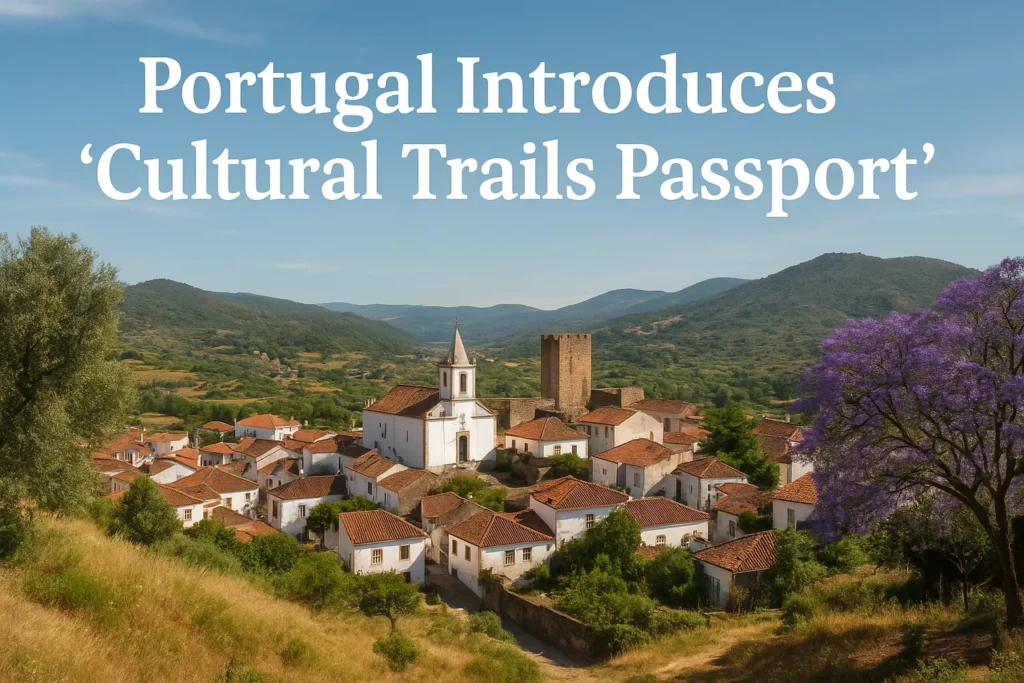

Introduction: A Revolution in Travel Philosophy
In a world increasingly saturated with mass tourism, where visitors often feel like anonymous spectators moving through crowded queues and pre-packaged experiences, a profound counter-movement is emerging from the western edge of Europe. Portugal, a nation whose history is written in the stones of its ancient monasteries, the terracotta of its village rooftops, and the patient hands of its master artisans, has launched an initiative that doesn’t just invite travel—it invites transformation. The Cultural Trails Passport is more than a clever tourism promotion; it is a philosophical statement, a meticulously designed key that unlocks not just places, but the very soul of a nation. It represents a deliberate choice to favor depth over breadth, connection over consumption, and narrative over checklist.
This program emerges as Portugal’s most elegant and sophisticated answer to the global challenge of overtourism. Instead of erecting barriers around its iconic cities of Lisbon and Porto, it has built bridges—beautiful, winding, and rewarding bridges—that lead to its heartland. It recognizes that the country’s true cultural wealth is not concentrated in a handful of famous plazas but is diffusely and richly woven into the fabric of its less-visited regions: the sun-baked plains of the Alentejo, the granite-hewn villages of the Beiras, and the verdant, vineyard-terraced slopes of the Douro. By creating irresistible incentives to explore these areas, the passport performs a vital act of geographic and economic rebalancing. It channels the lifeblood of tourism revenue into communities where it can sustain traditional ways of life, preserve fragile heritage, and empower local custodians of culture.
For the traveler, the promise is unparalleled: the chance to experience a Portugal that feels genuine, undiscovered, and deeply personal. It is the difference between hearing a symphony from outside the concert hall and being invited to sit among the musicians. This master guide is your comprehensive score to that symphony. We will explore the passport’s intricate ecosystem, walk every evocative trail in vivid detail, decode the generous system of rewards, and equip you with the practical wisdom to embark on a journey that will reshape your understanding of what travel can be. Prepare to move from observation to immersion. Your authentic Portuguese epic begins now.
Part I: The Genesis and Architecture of a Travel Revolution
The Philosophical Foundation: From Sightseeing to Story-Living
The Cultural Trails Passport was conceived not in a boardroom seeking profit, but from a place of cultural stewardship. Its architects observed a troubling dichotomy: while iconic sites like the Torre de Belém groaned under the weight of visitor numbers, ancient schist villages in the interior faced gradual depopulation, and master potters wondered if their children would continue a family craft centuries old. The goal became clear: to create a self-sustaining system that values and validates the periphery.
This initiative is a flagship of the “slow travel” movement, aligning with a growing global desire for meaningful, low-impact journeys. It operates on a principle of reciprocal generosity. The traveler offers their time, curiosity, and economic support to lesser-known destinations. In return, Portugal offers not just sights, but stories; not just access, but belonging. The passport reframes the tourist as a “temporary citizen” or a “cultural fellow traveler,” with all the respect and responsibility that entails.
The Operational Blueprint: A Gamified Journey of Discovery
The system’s brilliance lies in its elegant simplicity and psychological appeal, tapping into our innate love for collection, achievement, and exclusive reward.
- The Artefact: The passport is a beautiful, tangible object—a robust booklet of high-quality paper, often featuring commissioned artwork that evokes traditional azulejo patterns or maritime maps. A seamless digital counterpart exists within the official ‘Visit Portugal’ app, featuring interactive maps, audio insights, and real-time logging.
- The Framework of Trails: The country is mapped into curated, thematic circuits. These are not linear A-to-B routes but clusters of sites united by a powerful narrative thread. Key trail families include:
- The Historical Villages Network: Centered on the official Aldeias Históricas de Portugal, a constellation of 12 stunningly preserved, often fortified settlements.
- The Monastic Heritage Corridor: Connecting the great stone “fortresses of faith” that shaped national identity, from Cistercian abbeys to Templar strongholds.
- The Artisan Lifelines: Tracing the living threads of craft, from blacksmiths and bobbin lace makers to contemporary ceramicists and cork designers.
- The Landscapes of Flavor: Intertwining cultural sites with visits to traditional wineries, cheese dairies, olive oil mills, and seasonal harvest experiences.
- The Ritual of Validation: At each designated point on the trail, the traveler seeks a validation stamp. This is not a passive transaction. The stamp is typically held by a person—a museum curator, a village shopkeeper, the artisan themselves. This moment of interaction is the program’s secret heart, forcing a pause and a personal connection.
- The Culmination in Reward: Completing a trail (e.g., collecting 8 stamps out of 10) unlocks the Cultural Access Pass. This is no simple coupon; it is a digital key that grants privileges within Portugal’s national cultural network (DGPC), offering priority entry, exclusive tours, and invitations to events that are otherwise inaccessible.
Part II: The Trails Unfolded – An Atlas of Authenticity
Volume 1: The Historical Villages – Where Stone Holds Memory
These trails lead to places where history is not displayed behind glass but is the very material of daily life. The air feels different here—cleaner, quieter, thick with narrative.
- Monsaraz (Alentejo): Approaching this village is like watching a medieval illumination come to life. It crowns a hill overlooking the vast, mirror-like Alqueva Lake, Europe’s largest artificial lake. Within its crenellated walls, time distills. Whitewashed houses border streets so narrow you can touch both sides. The trail directs you to the Castelo de Monsaraz for your first stamp, where the panoramic view explains its millennia of strategic importance. The second stamp might be found at the Igreja Matriz, its interior lined with eerie tomb slabs, or at a local adega (winery) specializing in the robust reds of the Reguengos region. The experience is one of sublime perspective, both geographical and temporal.
- Piódão (Central Portugal): Nestled in the serpentine folds of the Serra do Açor, Piódão is not so much built as grown from the mountainside. Its houses of local schist stone, with slate roofs and distinctive blue-painted doors and windows, cascade down the slope in a sublime, organic amphitheater. The passport trail here emphasizes harmony with nature. Your stamp quest will lead you to the Igreja de Nossa Senhora da Conceição, its brilliant white facade a startling beacon against the dark stone. A visit to the Centro de Interpretação reveals how this community thrived in near-total isolation for centuries, developing unique traditions and a profound connection to its rugged environment.
- Sortelha (Beira Alta): If Piódão is organic, Sortelha is monumental. Encircled by a formidable belt of granite walls, entering through its Gothic portal feels like stepping into a perfectly preserved 16th-century engraving. The houses seem to erupt from the bedrock itself. The trail here is tactile. You are encouraged to touch the “Pedra da Beça” (a curious, judge’s-seat-like stone), walk the complete circumference of the ramparts, and find your stamp at the small museum. The silence is profound, broken only by the wind and the echo of your own footsteps on centuries-old stone.
- Mértola (Baixo Alentejo): This village is a palimpsest, a living archaeological site. Perched above the Guadiana River, it was a crucial Roman port, a flourishing Moorish capital, and a Christian stronghold after the Reconquista. The passport treats Mértola as an open-air university. One stamp awaits at the Castle, built upon Islamic foundations. Another is at the Mértola Mosque-Catheter—one of the best-preserved rural mosques in the Iberian Peninsula, later converted into a church but retaining its original mihrab (prayer niche). A third might be at the superb Museu de Mértola, whose collections are dispersed in different buildings across town, each dedicated to a historical period (Roman, Islamic, Christian). To complete the Mértola trail is to earn a primer in Mediterranean history.
Volume 2: The Sanctuaries of Stone – Monasteries, Convents, and the Pursuit of the Eternal
This trail explores the complexes where spiritual aspiration, political power, and artistic genius fused to create some of Europe’s most stunning architecture.
- Mosteiro de Santa Maria da Vitória (Batalha): This UNESCO World Heritage site is a hymn in stone to Portuguese independence, built to commemorate the pivotal 1385 Battle of Aljubarrota. The trail here is a lesson in Gothic grandeur and the flamboyant Manueline style that followed. Your journey begins in the soaring, luminous nave, where light filters through stained glass, bathing the tombs of King João I and his English queen, Philippa of Lancaster. The passport then guides you to the Founder’s Chapel, a masterpiece of intricate stone filigree. Its climax is the Unfinished Chapels (Capelas Imperfeitas). This standalone octagonal structure, open to the sky, is a forest of Manueline sculpture run wild—a breathtaking, haunting space that symbolizes both infinite ambition and human limitation. The stamp here is a solemn reminder of projects unfinished and legacies secured.
- Convento de Cristo (Tomar): The headquarters of the Knights Templar in Portugal, this sprawling complex is a labyrinth of symbolism and power. The trail is a deliberate unveiling. It first leads you to the mysterious, 16-sided Charola, the Templar oratory modeled on the Church of the Holy Sepulchre in Jerusalem, where knights allegedly worshipped on horseback. Then, it directs you to the piece de résistance: the Manueline Window of the Chapter House. This is not merely a window; it is a stone manifesto of the Age of Discoveries, a dense tapestry of carved ropes, corals, seaweed, and the Cross of the Order of Christ. The passport becomes a decoder ring, prompting you to find specific symbols and understand their meaning. Finally, you walk through the succession of serene Renaissance cloisters, each with a different character, from the serene Claustro do Cemitério to the grand Claustro de D. João III.
- Mosteiro de Alcobaça: Another UNESCO giant, this Cistercian monastery is an exercise in sublime austerity and profound romance. Its church is the largest in Portugal, a vast space of pure, unadorned Gothic lines that inspires awe through scale and light. The trail here centers on human drama. In the transept lie the twin tombs of King Pedro I and Inês de Castro, his murdered lover. Their beautifully sculpted figures face each other, awaiting a reunion on Judgment Day—a story of tragic love that is Portugal’s national romance. But the passport also guides you to the human-scale spaces: the colossal monastic kitchen with a diverted stream running through it to cook and clean, and the Cloister of Silence, where the only sound is water from the fountain. The contrast between divine aspiration and earthly necessity is laid bare.
- Mosteiro de São Martinho de Tibães (Near Braga): This trail offers a different narrative: one of Baroque opulence, decline, and meticulous rebirth. As the motherhouse of the Benedictine order in Portugal, Tibães was once immensely wealthy. The trail focuses on its glorious 17th- and 18th-century makeover. You witness the explosive gilded woodwork (talha dourada) in the church, a celebration of the divine through sheer exuberant craftsmanship. You stroll through the restored formal gardens. Crucially, you see conservation in action. The passport highlights the workshops where artisans restore paintings, sculptures, and furniture, directly connecting your visit to the ongoing act of preservation. It’s a powerful reminder that heritage is not a static inheritance but a continuous, skilled endeavor.
Volume 3: The Artisan’s Hand – Where Tradition Breathes
This is the most intimate trail, connecting you to the living, breathing practitioners who are the current custodians of Portugal’s material soul.
- The Pottery Universe of Alto Alentejo: The epicenter is São Pedro do Corval, arguably Portugal’s largest single pottery center. The passport doesn’t send you to a generic shop. It directs you to specific, multi-generational workshops like Olaria Planície or Olaria Sousa. Here, you witness the entire cycle: the raw, red Alentejan clay being wedged, thrown on a manual kick-wheel (roda de pé), dried in the sun, and fired in traditional wood-burning kilns. The potter might show you the difference between a talha for wine (porous) and one for oil (sealed with wax). Your stamp is often a small, fired clay disc or the workshop’s own branded stamp. You don’t just buy a pot; you adopt a piece of a continuous, earthly lineage.
- The Azulejo: From Historical Narrative to Contemporary Art: This trail cleverly splits in two. First, the historical path: visiting the Museu Nacional do Azulejo in Lisbon, housed in the Madre de Deus Convent, to understand the 500-year evolution of the craft, from Moorish influences to grand Baroque narratives. Then, the contemporary path: finding your stamp at a working atelier. This could be in Azeitão at Viúva Lamego, one of the oldest factories, still producing traditional patterns, or in Lisbon’s creative hub LX Factory, where young artists like those at Oficina de Azulejaria reinterpret the medium with modern themes. The trail highlights that azulejo is not a relic, but a vibrant, evolving language.
- Filigree: The Lace of Gold in Gondomar: In the northern suburbs of Porto, the tiny, twisting streets of Gondomar are the world capital of gold filigree. The passport guides you to a certified workshop, often a family home where the sound of tiny hammers is constant. You see the fio de água (“water thread”) technique, where gold is drawn into wires finer than a human hair, then painstakingly coiled and soldered into intricate patterns—hearts, flowers, and the sacred Coração de Viana. The stamp collector here learns that each piece is a coded object, laden with symbolism of faith, protection, and love, traditionally given at major life events.
- The Cork Revolution: Portugal produces over 50% of the world’s cork. This trail educates and inspires. It might begin in a “montado” in the Alentejo—a magical, park-like ecosystem of cork oaks, where you learn about the sustainable, nine-year harvest cycle that doesn’t harm the tree. Then, it leads to a transformation center like Corticeira Amorim or a smaller designer like Pelcor, where you see the bark transformed into everything from wine stoppers to fashion accessories, acoustic panels, and even spacecraft insulation. The stamp validates your understanding of this truly sustainable, innovative Portuguese industry.
- The Wool and Loom Weavers of the Interior: In regions like the Serra da Estrela or around Reguengos de Monsaraz, the trail finds the keepers of textile traditions. In small cooperatives or individual workshops, you watch women working giant looms, creating the heavy, striped mantas (blankets) of the Beira region or the delicate colchas (bedspreads) of Arraiolos. The rhythm of the loom is hypnotic. The stamp is a connection to a pre-industrial world of warmth and protection, where every pattern tells a story of community and geography.
The following table provides a framework for constructing a personalized, multi-region artisan trail itinerary:
| Region | Core Craft | Signature Location | Immersive Experience | Cultural Symbol to Acquire |
|---|---|---|---|---|
| Alentejo | Red Clay Pottery | São Pedro do Corval | Throw a small pot on a kick-wheel in a family workshop. | A cântaro (traditional water jar) or a decorative prato (plate). |
| North (Porto) | Gold Filigree | Gondomar | Witness the soldering of a Coração de Viana under a magnifying lamp. | A pair of delicate arrecadas (traditional filigree earrings). |
| Lisbon & Environs | Painted Azulejos | Lisbon/Azeitão | Paint your own tile with a master painter’s guidance. | A hand-painted azulejo panel with a personal or traditional motif. |
| Central Interior | Wool Weaving | Serra da Estrela Region | Try your hand at carding wool or operating a simple loom. | A striped manta alentejana or a pair of woolen slippers. |
| Countrywide (Alentejo focus) | Cork Design | Coruche/Various Design Studios | Design and stamp your own cork notebook or coaster. | A contemporary cork handbag or a set of designer cork placemats. |
| North (Minho) | Woodworking & Figurative Art | Barcelos | Observe the painting of the iconic Barcelos Rooster. | A colorful, hand-painted Barcelos Rooster figurine. |
Part III: The Reward Ecosystem – Privilege, Access, and Belonging
The completion of a trail is not an end, but a graduation. The rewards are designed to deepen your immersion, offering a tier of cultural engagement typically reserved for scholars, patrons, or locals.
The Cultural Access Pass: Your Key to the Inner Circle
This digital token, loaded onto your app or presented as a physical card, unlocks a series of meaningful benefits within Portugal’s Direção-Geral do Património Cultural (DGPC) network and with partner institutions:
- Priority Physical Access: Skip-the-line entry at major sites during peak visiting hours. This is not merely a convenience; it is a gesture of respect for the time you have invested in Portugal’s broader heritage.
- Enhanced Intellectual Access: This is the core luxury. Benefits may include:
- “After-Hours” Visits: Access to a monastery cloister or palace room for a private viewing in the quiet of the evening, with special lighting.
- Conservation Laboratory Tours: A guided visit to the backrooms of a national museum, such as the Museu Nacional de Arte Antiga, to see how paintings and sculptures are restored.
- Curator-Led Insights: Small-group tours of temporary exhibitions or permanent collection highlights with an expert who can share research and anecdotes not found in guidebooks.
- Access to Restricted Archives or Libraries: Permission to visit (though not handle) special collections rooms in places like the Biblioteca do Palácio Nacional de Mafra.
The Invitation to Celebrate: Festivals and Seasonal Rituals
Perhaps the most magical rewards are invitations to authentic, local celebrations. These are not tourist shows, but community heartbeats. Your passport completion might grant you:
- A VIP place at the Festa dos Tabuleiros in Tomar: Held only every four years, this is one of Portugal’s most spectacular festivals. Women parade balancing towering headdresses (tabuleiros) adorned with bread and flowers. An invitation might provide a privileged viewing balcony or an invitation to the related community dinner.
- Reserved seating for a Fado Night in Lisbon: Not in a crowded restaurant for tourists, but in an intimate casa de fado in Alfama or Mouraria, where the connection between singer, guitarist, and audience is palpable and profound.
- Participation in a Harvest Ritual: An invitation to join the annual vindima (grape harvest) at a Douro Valley quinta, including the traditional stomping in the lagar (stone trough) and the celebratory meal with the workers. Or, in the Alentejo, an invitation to the olive harvest and the first tasting of the new oil.
- Tickets to a Sacred Music Concert: Attendance at a concert of polyphonic or Gregorian chant held within the resonant stone acoustics of a monastery like Alcobaça or Santa Cruz in Coimbra.
These experiences dissolve the final barrier between visitor and community. You are no longer just watching; you are, momentarily, included.
Part IV: The Ripple Effect – Your Journey’s Deeper Impact
Choosing the Cultural Trails Passport is an act of conscious, regenerative travel. Your footprint is not merely ecological; it is economic, social, and cultural.
- Economic Justice in Tourism: Your spending in a village café, a rural pousada, or directly with an artisan ensures that tourism revenue reaches the hands that create and maintain the culture you came to see. It supports the family that has run the same workshop for five generations and the young couple who have restored a village house as a guestroom.
- The Argument for Preservation: Visitor numbers are a powerful metric for securing cultural funding. By validating a remote site with your passport stamp, you contribute to a statistic that can be used to argue for restoration grants, infrastructure improvements, and educational programs. Your visit literally makes a case for its continued existence.
- Safeguarding Intangible Heritage: Your genuine interest in a craftsperson’s technique, your question about a local festival tradition, validates that person’s knowledge as valuable. It reinforces their pride and commitment, encouraging them to pass that knowledge on. You help combat what UNESCO calls the “museumification” of culture, keeping it alive and dynamic.
- Personal Alchemy: Ultimately, this journey changes you. You return home not with generic souvenirs, but with specific stories: the name of the potter in São Pedro do Corval, the taste of the cheese from the shepherd you met near Sortelha, the sound of the silence in the Batalha cloisters. You gain a nuanced, empathetic understanding of Portugal that transcends facts—a felt sense of its landscapes, its historical weight, its artistic pride, and the resilient, welcoming character of its people. You become a true ambassador, not for a brand, but for a deeper, more human way of engaging with the world.
Part V: The Master Traveler’s Guide – Strategy, Logistics, and Mindset
Phase 1: The Art of Preparation (Before Departure)
- Acquiring Your Passport: Begin at the definitive source: VisitPortugal.com. Explore the available trails in the “Experiences” section. You can often pre-register for the digital passport via the app. For the physical booklet, the main tourist offices at Lisbon Airport (ASK ME Lisboa) or Porto Airport are your most reliable arrival points.
- Strategic Itinerary Design: This is the most critical step. Do not attempt to be a completionist across regions in one trip. Portugal is deceptively large, and its backroads demand time. Choose one primary trail that aligns with a geographic base.
- Example A: The Northern Soul (10-14 days). Base in Porto. Focus on the Filigree & Gold Trail in Gondomar, the Douro Valley Wine & Landscape Corridor, and day trips to Guimarães (birthplace of the nation) and Braga (religious center). Use Porto as a hub for these radial explorations.
- Example B: The Alentejo Immersion (7-10 days). Base in Évora (a UNESCO city itself). Dedicate days to the Historical Villages circuit (Monsaraz, Marvão), the Pottery Trail in São Pedro do Corval, and the Cork landscape around Coruche. The slow, vast landscape is part of the experience.
- Example C: The Monastic Heartland (7 days). Base in Coimbra or Leiria. This puts you within a 90-minute drive of the “Triangle of Stone”: Batalha, Alcobaça, and Fátima (for modern pilgrimage), with Tomar and Conímbriga also easily accessible. This is a deep dive into medieval and Renaissance power.
- Temporal Intelligence: The shoulder seasons—April to early June and September to October—are ideal. The light is golden, temperatures are mild, and the countryside is either blooming or harvest-ready. The deep summer (July-August) can be punishingly hot in the Alentejo and interior, while winter can be surprisingly cold and damp in the stone villages.
- Essential Reservations: For unique accommodations—a room in a historic pousada (often converted from convents or castles), a stay in a schist village tourism house, or a wine estate (quinta) hotel in the Douro—book at least three to six months in advance, especially if your trip coincides with a local festival noted in the passport rewards.
Phase 2: The Philosophy of the Journey (On the Ground)
- The Transportation Imperative: For all trails except the purely urban (Lisbon azulejos), a rental car is absolutely essential. Portugal’s rural beauty is accessed by car. Embrace the drive—the cork oak forests, the mountain switchbacks, the coastal roads are integral chapters of your story. Purchase a good local SIM card for reliable GPS.
- The Ritual of the Stamp: This is your daily quest. The location is often part of the fun—it might be in the ticket office, but it could also be at the café inside the castle walls, or on the counter of the artisan’s workshop you just toured. Always ask. The interaction with the stamper is a moment of human connection. Show your interest; this often unlocks tips about other hidden spots nearby.
- The Code of Conduct:
- Pace is Sacred: Portugal, especially its interior, operates on a pre-industrial rhythm. Shops close for a long lunch (often 1 PM – 3 PM). Dinner starts late (8 PM at the earliest). Nothing is rushed. Adopt this pace. Spend two hours over a coffee in a village square. It is in these still moments that the place reveals itself.
- Dress as Respect: When entering any church, chapel, or active monastery, cover your shoulders and knees. This is non-negotiable and a sign of basic respect for a living culture, regardless of how many tourists are inside.
- The Photography Contract: Your camera is a privilege, not a right. Always ask for permission before photographing people, especially artisans at work. A smile and a simple “Posso tirar uma fotografia?” is all it takes. Never use flash on ancient frescoes, manuscripts, or delicate textiles.
- The Language of Effort: Portuguese is a beautiful, complex language. Making the effort matters deeply. Master five phrases: Bom dia (Good morning), Por favor (Please), Obrigado (Thank you – male speaker), Obrigada (Thank you – female speaker), Desculpe (Excuse me), Fala inglês? (Do you speak English?). This small effort telegraphs respect and is met with immense goodwill.
- The Economics of Craft: When purchasing directly from an artisan, you are not buying a commodity. You are investing in a lineage of skill and time. Bargaining is inappropriate. The price reflects the hours of labor and the years of mastery. Your purchase is a direct vote for the survival of that craft.
Conclusion: The Trail That Transforms
The Cultural Trails Passport of Portugal is an invitation to a different kind of wealth—not measured in countries visited, but in connections forged; not in photos taken, but in silences absorbed. It argues that the greatest monuments are not always the largest, but often the most sincere: a perfectly thrown clay jug, a village gate that has withstood six centuries of weather, a hymn sung in a Gothic vault.
This journey requires a trade: you exchange the efficiency of the checklist for the richness of the meander. You swap guaranteed Wi-Fi for the guaranteed wonder of a starry Alentejo sky. In return, you receive a story that is uniquely yours. You will carry with you the memory of the potter’s hands, the architect’s sublime vision, the vintner’s pride, and the quiet dignity of a village greeting.
As you close your stamped, note-filled passport at journey’s end, you will realize the physical object is just a souvenir. The real transformation is internal. You will have developed a new lens for seeing the world—one that seeks out depth, values authenticity, and understands travel as a form of gentle, reciprocal exchange. You didn’t just tour Portugal. You engaged with it, supported it, and, in a small but significant way, you helped carry its extraordinary culture forward. The trail may have ended, but the journey—within you—has just begun.
Boa viagem, e até logo. May your path be winding and your discoveries be deep.


