
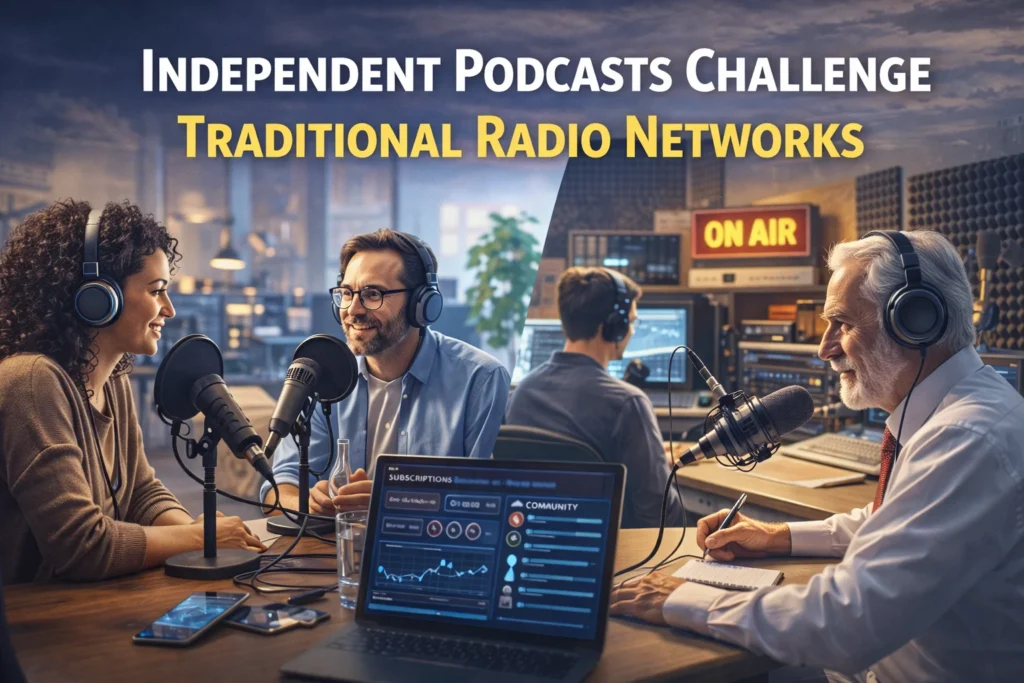

The Dawn of a New Audio Age: From Monolithic Broadcast to Distributed Conversation
The transformation began not with a bang, but with a whisper—a quiet, persistent revolution in how humanity creates and consumes audio that has fundamentally rewritten the rules of media, community, and storytelling. In the sprawling landscape of digital media, a profound shift has occurred almost imperceptibly, moving from centralized towers of broadcast authority to decentralized networks of intimate conversation. This is not merely technological evolution; it represents a philosophical reorientation of the very nature of public discourse, community formation, and personal identity in the 21st century. The story of independent podcasting’s challenge to traditional radio networks is ultimately a story about democratization, about how technology has returned the human voice to the people, and about how authenticity has become the most valuable currency in an increasingly mediated world.
To understand the magnitude of this transformation, we must first appreciate what came before. For nearly a century, radio broadcasting operated on a model of scarcity and control. The electromagnetic spectrum was limited, licenses were difficult to obtain, equipment was prohibitively expensive, and distribution was geographically constrained. This technological reality created a media ecology dominated by institutions—corporations, governments, educational bodies—who served as gatekeepers determining which voices would be amplified and which would remain unheard. The relationship between broadcaster and audience was fundamentally asymmetrical: a few spoke, many listened, with minimal interaction beyond the occasional request line or contest call. Radio shaped national identities, unified communities during crises, introduced new musical genres, and created shared cultural experiences, but it did so within strict parameters defined by commercial interests, regulatory constraints, and technological limitations.
The digital revolution changed everything by transforming scarcity into abundance. The internet eliminated geographical boundaries, digital audio workstations replaced million-dollar studios, and distribution platforms made publishing as simple as uploading a file. What emerged from this technological democratization was podcasting—initially a niche interest of tech enthusiasts in the early 2000s, now a global phenomenon reshaping media consumption patterns. The statistics tell only part of the story: over 4.5 million podcasts exist worldwide, with content published in more than 100 languages, covering every imaginable topic from quantum physics to quilting techniques. In the United States alone, 73% of people aged 12+ have listened to a podcast, representing approximately 209 million Americans. Monthly podcast listenership has grown from approximately 21% of Americans in 2016 to 35% in 2025, with the average weekly listener now spending 6 hours and 39 minutes with podcast content. But these numbers, impressive as they are, fail to capture the cultural significance of this shift—how it has changed not just what we listen to, but how we listen, why we listen, and who gets to speak.
The psychological dimensions of this transformation are equally significant. Traditional radio operated on what media scholars call an “interruption model”—programming was designed to capture attention during specific dayparts, with content structured around commercial breaks, traffic updates, and weather reports that served both practical and revenue functions. Listeners tuned in at specific times, often while engaged in other activities (driving, working, household chores), with the radio providing background companionship rather than focused engagement. Podcasting inverted this model entirely, creating what researchers term “the appointment relationship”—listeners actively choose what to hear, when to hear it, and how deeply to engage. The consumption context shifted from the car and kitchen to headphones during commutes, workouts, walks, and dedicated listening sessions. This shift from passive background to active foreground listening represents a fundamental change in the psychological contract between audio content and its audience.
The economic implications of this transition are profound and multifaceted. Traditional radio economics were built on aggregating mass audiences within geographical markets to sell to advertisers. Success was measured in ratings points, and content decisions were driven by what would attract the largest number of listeners within specific demographics. Podcasting economics, by contrast, operate on what analysts call the “passion economy” principle—value is created not through mass appeal but through deep engagement with specific communities. A podcast about medieval manuscript illumination might have only 5,000 listeners worldwide, but if those listeners are scholars, collectors, and dedicated enthusiasts, they represent a more valuable audience for certain advertisers, patrons, and community-building initiatives than 50,000 casual radio listeners. This represents a complete inversion of traditional media economics, where niche was synonymous with non-viable.
The cultural impact of this democratization extends beyond mere content diversity. Independent podcasting has given voice to perspectives that were systematically excluded from traditional broadcast media due to commercial pressures, geographical limitations, or institutional biases. Queer narratives, indigenous storytelling, disability perspectives, radical political viewpoints, hyperlocal community concerns, and experimental artistic expressions that would never have found space on commercial radio now flourish in the podcast ecosystem. This has created what cultural theorists term a “polyvocal public sphere”—a discursive space where multiple voices speak simultaneously to their respective communities, creating a richer, more complex, and more representative audio landscape than was ever possible under the broadcast model. The cultural conversation is no longer dominated by a few institutional voices but has become a vibrant, sometimes chaotic, chorus of diverse perspectives.
The technological infrastructure supporting this revolution has evolved dramatically since podcasting’s humble beginnings. What started as manual RSS feed creation and direct server uploads has become a sophisticated ecosystem of hosting platforms, distribution networks, analytics services, and monetization tools. Platforms like Apple Podcasts, Spotify, Google Podcasts, and Stitcher have made discovery and consumption seamless for listeners, while services like Anchor, Buzzsprout, Transistor, and Podbean have simplified production and distribution for creators. This infrastructure development has been crucial to podcasting’s growth, lowering technical barriers while simultaneously raising audience expectations for reliability, audio quality, and consistent publishing schedules. The ecosystem now supports everything from amateur hobbyists recording on smartphones to professional production companies creating narrative documentaries with cinematic sound design.
The regulatory dimension presents another fascinating contrast between traditional radio and independent podcasting. Broadcast radio operates within a complex framework of federal regulations covering content (obscenity, indecency, political advertising), technical specifications (signal strength, bandwidth), and licensing requirements. Podcasting, existing primarily on the open internet, operates in a largely unregulated space—a fact that has enabled remarkable creative freedom but has also raised questions about misinformation, hate speech, and content moderation. This regulatory asymmetry has created what legal scholars call a “dual system” of audio media, with broadcasters subject to restrictions that podcasters are free to ignore. This difference has significant implications for content diversity, political discourse, and the nature of public accountability in audio media.
The global dimension of podcasting’s challenge to traditional radio cannot be overstated. While broadcast radio has always been constrained by national borders and regional licensing, podcasts circulate globally from their first moment of publication. A show produced in a Johannesburg township reaches listeners in Tokyo, Berlin, and Buenos Aires simultaneously. This global reach has created unprecedented opportunities for cross-cultural exchange, diaspora community building, and the formation of transnational interest groups. It has also created new challenges around cultural appropriation, linguistic accessibility, and economic disparities in global audio production. The most successful independent podcasters think globally from inception, considering how their content might resonate across cultural contexts and how they might serve international audiences without losing local authenticity.
The temporal dimension of this media shift represents another fundamental transformation. Traditional radio was ephemeral—if you missed a broadcast, it was gone forever unless you happened to record it. Podcasts are permanent—published to the internet where they remain accessible indefinitely, creating what media archivists call a “cumulative knowledge base” that grows with each new episode. This permanence changes the nature of audio content from disposable entertainment to lasting cultural artifact. Educational podcasts become reference materials, interview podcasts become oral histories, documentary podcasts become primary sources. This temporal expansion means podcast creators are building libraries rather than just producing programming, with implications for how we think about audio’s role in knowledge preservation and cultural memory.
The social infrastructure that has emerged around podcasting represents perhaps its most distinctive innovation. Unlike radio’s one-to-many transmission model, successful podcasts typically exist within what sociologists term “participatory ecosystems”—networks of engagement that extend far beyond the audio content itself. These ecosystems include social media communities, live events, patron networks, discussion forums, collaborative projects, and cross-platform content extensions. The podcast becomes not just a product to consume but a hub around which community activity organizes. This transformation of listeners into community members represents a fundamental shift in the social dynamics of media consumption, with implications for everything from marketing to political mobilization to personal identity formation.
The aesthetic evolution of audio storytelling in the podcasting era deserves particular attention. Liberated from the temporal constraints of broadcast schedules (30- or 60-minute blocks with built-in commercial breaks) and the sonic limitations of radio transmission (limited frequency response, compression for broadcast), podcast creators have developed new narrative forms optimized for the digital listening experience. The deep-dive documentary series spanning 8-10 hours, the intimate memoir delivered in seasonal arcs, the conversational show that meanders for three hours without regard for traditional pacing—these formats would be impossible in traditional radio but have become podcasting signatures. This aesthetic freedom has enabled audio storytelling to develop its own distinctive grammar, separate from but related to its broadcast antecedents.
The psychological impact of this media shift on audiences is profound and multifaceted. Research in media psychology suggests that podcast listening activates different cognitive and emotional processes than traditional radio consumption. The combination of choice (active selection of content), control (playback speed, skipping, rewinding), intimacy (headphone listening creating a private soundscape), and parasocial relationship development (the sense of knowing hosts personally) creates what researchers term “deep listening states”—heightened attention, emotional engagement, and information retention. This psychological engagement explains why podcast audiences demonstrate exceptional loyalty, with completion rates for subscribed shows often exceeding 80%, compared to radio’s struggle to maintain audience through commercial breaks and programming changes.
The professional pathways emerging in the podcast ecosystem represent another dimension of its challenge to traditional media structures. Whereas radio careers typically followed institutional tracks (college broadcasting programs, internships at stations, progression through defined roles), podcasting has created what labor economists call a “creator economy” with fluid, self-defined career paths. Producers become hosts, hosts become network founders, hobbyists become professionals through audience support rather than institutional promotion. This democratization of professional opportunity has opened audio media to voices and perspectives that would have been excluded by traditional gatekeeping mechanisms, while also creating new challenges around sustainable livelihoods, professional standards, and career longevity in an increasingly crowded field.
The data revolution underpinning podcasting represents a fundamental shift in how audience relationships are understood and managed. Traditional radio relied on imperfect sampling methods (diaries, telephone surveys) to estimate audience size and demographics. Podcasting generates exact metrics: downloads, listens, completion rates, geographical distribution, listening devices, and engagement patterns. This data richness enables creators to understand their audiences with unprecedented precision, but it also raises ethical questions about privacy, surveillance, and the commodification of attention. The most sophisticated independent podcasters navigate this landscape carefully, using data to better serve their communities while respecting listener autonomy and avoiding the manipulative practices that have undermined trust in other digital media.
The pedagogical implications of podcasting’s rise are particularly significant in educational contexts. While educational radio has existed for decades, its reach was limited by scheduling and distribution constraints. Educational podcasts have become what learning scientists term “just-in-time learning resources”—available on demand to support formal education, professional development, and personal enrichment. Medical students listen to clinical podcasts during commutes, lawyers stay current with legal analysis podcasts, hobbyists master crafts through tutorial podcasts. This represents a democratization of expertise dissemination, breaking knowledge out of institutional silos and making it available to anyone with curiosity and internet access. The implications for lifelong learning, professional development, and educational equity are substantial and still unfolding.
The environmental dimension of this media transition offers interesting contrasts. Traditional radio broadcasting requires significant physical infrastructure—towers, transmitters, studios—with corresponding energy consumption and environmental impact. Podcasting’s infrastructure is primarily digital—server farms, data centers, network infrastructure—with its own environmental footprint but different scale and characteristics. The shift from physical to digital distribution also changes listening contexts: less car radio listening (with associated emissions) versus more headphone listening during walking, public transit, or stationary activities. These environmental implications are rarely discussed but represent another dimension of how media transitions intersect with broader societal shifts.
The preservation challenges posed by podcasting’s digital nature present intriguing contrasts with traditional radio’s archival practices. Radio archives have traditionally been physical—tape libraries, transcription services, institutional collections. Podcasts exist as digital files vulnerable to link rot, platform changes, and technological obsolescence. Initiatives like the PodcastRE project at the University of Wisconsin-Madison are working to preserve this emerging audio culture, recognizing that podcasts represent important cultural artifacts documenting early 21st-century thought, language, and concerns. The ephemerality of digital media creates preservation challenges that radio, for all its limitations, did not face in the same way, raising questions about how we preserve cultural heritage in the digital age.
The philosophical implications of podcasting’s challenge to traditional radio extend to fundamental questions about human communication. Radio represented what media theorist Marshall McLuhan called a “hot medium”—high definition, filled with data, leaving little to the imagination, encouraging passive consumption. Podcasting, with its intimate voice-in-the-ear quality, its allowance for silence and ambiguity, its invitation to deep attention, operates more as what McLuhan would term a “cool medium”—lower definition, requiring listener participation to complete the communication. This shift from hot to cool audio media represents a significant change in how we engage with mediated voices, with implications for attention spans, critical thinking, and the nature of persuasion in the digital age.
The intersection of podcasting with other media trends creates complex synergies and tensions. The rise of smart speakers has returned podcast listening to domestic spaces in ways that resemble radio’s traditional context but with on-demand control. The growth of audiobooks has created audiences accustomed to long-form narrative audio who naturally gravitate to narrative podcasts. The visual turn in social media (TikTok, Instagram Reels) has pushed podcasters to create video versions of their shows, blending audio and visual media in new ways. These cross-platform developments suggest that podcasting is not replacing other media so much as participating in a broader reconfiguration of our media ecology, with audio finding new roles and relationships in a multiplatform environment.
The governance challenges within podcasting communities represent microcosms of broader digital society issues. As podcasts build communities around shared interests, those communities require norms, moderation, conflict resolution mechanisms, and governance structures. Some podcast communities have developed sophisticated self-governing systems, while others struggle with toxicity, exclusion, or domination by vocal minorities. These community governance challenges echo larger questions about how we build healthy digital publics, manage online discourse, and balance freedom of expression with protection from harm. Independent podcasters find themselves not just creating content but building miniature societies, with all the complexities that entails.
The sensory implications of podcasting’s dominance in certain contexts represent another fascinating dimension. In an increasingly screen-saturated world, podcasts offer what media theorists call “ocular relief”—a respite for the eyes while still engaging the mind. This audio-only format allows for multitasking in ways that visual media do not, fitting seamlessly into daily routines. The intimacy of the human voice in the ear creates physiological responses (release of oxytocin, the “bonding hormone”) that visual media typically do not trigger in the same way. These sensory dimensions help explain podcasting’s appeal in our current media environment and suggest why audio may continue to gain importance even as visual media becomes more immersive and demanding of attention.
The narrative possibilities unleashed by podcasting’s formal freedom deserve particular emphasis. Liberated from broadcast schedules, advertising pods, and frequency constraints, podcast creators have developed narrative techniques that would be impossible in traditional radio. The 10-hour investigative documentary unfolding across months, the fictional series with cinematic sound design, the interview that meanders for three hours following organic conversational pathways—these formats have expanded what audio storytelling can achieve. This narrative expansion has attracted creative talent from other media (journalism, film, literature) who see in podcasting possibilities that traditional forms cannot offer, further enriching the medium’s creative development.
The accessibility revolution enabled by podcasting represents one of its most socially significant dimensions. While traditional radio has accessibility requirements under laws like the Americans with Disabilities Act, podcasting’s digital nature enables more sophisticated and customizable accessibility features. Transcripts can be automatically generated (with increasing accuracy), episodes can be speed-adjusted without pitch distortion, chapters allow navigation for those with attention challenges, and descriptive audio can be added for visually impaired listeners. These accessibility features, while not yet universal, point toward a more inclusive audio future where content is designed from inception to serve diverse abilities and preferences—an inclusivity that traditional radio, with its real-time constraints, has struggled to achieve.
The economic diversity within the podcasting ecosystem presents a fascinating contrast to traditional radio’s more homogenized business models. The podcast economy includes everything from hobbyists recording on smartphones with no monetization ambitions to venture-backed networks with millions in revenue, with countless hybrid models in between. This economic diversity creates what economists term a “pluralistic media ecosystem” with multiple viability paths—an important corrective to the concentration and homogenization that has affected other media sectors. The sustainability of this economic diversity remains uncertain as platforms consolidate and advertising dollars concentrate, but for now, podcasting offers more varied economic possibilities than traditional radio ever has.
The geopolitical dimensions of podcasting’s challenge to traditional media structures reveal interesting patterns. In countries with restrictive media environments, podcasts have become tools for circumventing censorship, organizing dissent, and preserving threatened languages and cultures. In democracies, they have fragmented the public sphere while also enabling deeper engagement with specific issues. In developing economies, they have leapfrogged traditional media infrastructure, creating audio cultures less constrained by colonial legacies or institutional inertia. These geopolitical variations suggest that podcasting’s impact is not uniform but interacts with local media histories, political contexts, and technological infrastructures in complex ways that researchers are only beginning to understand.
The epistemological implications of podcasting’s rise warrant serious consideration. Traditional radio journalism operated within established norms of objectivity, balance, and institutional accountability. Podcast journalism has developed alternative epistemologies—embracing subjectivity, perspective, transparency about process, and personal connection with audiences. This represents not necessarily a decline in standards but an expansion of how audio journalism can understand and convey truth. The success of narrative documentary podcasts like “Serial,” “Slow Burn,” and “Scene on Radio” suggests audiences are responding to these alternative approaches to truth-telling, even as concerns about misinformation in the podcast ecosystem persist. This epistemological experimentation represents one of podcasting’s most significant contributions to public discourse.
The therapeutic dimensions of podcast listening represent another fascinating aspect of its cultural significance. Mental health podcasts, meditation guides, anxiety-reducing narrative shows, and communities built around shared psychological experiences have created what some researchers term “audio therapy networks”—informal support systems mediated through podcasts and their associated communities. The intimate voice-in-the-ear experience, the ability to listen privately to discussions of sensitive topics, the sense of connection to hosts and communities facing similar challenges—these qualities make podcasting particularly suited to addressing mental health needs in a stigmatized society. This therapeutic function extends podcasting’s cultural role beyond entertainment and information into the realm of psychological support and healing.
The archival function of podcasts in documenting contemporary culture represents an often-overlooked dimension of their significance. While traditional radio archives exist, they are typically institutional and incomplete. Podcasts collectively create what media historians might call a “folk archive” of early 21st-century concerns, language, anxieties, and hopes. From pandemic diaries to political commentary, from personal memoirs to technical tutorials, podcasts capture the granular texture of daily life and thought in ways that traditional media often misses. Future historians will likely mine podcast archives to understand our era, just as historians now mine letters, diaries, and newspapers from previous centuries. This archival function gives podcasting a cultural significance that transcends its immediate audience numbers or economic impact.
The intersection of podcasting with the broader creator economy reveals interesting synergies and tensions. Podcasters often participate in multiplatform creator ecosystems, extending their content to YouTube, newsletters, social media, and live events. This cross-platform presence creates what media strategists term “distributed authenticity”—maintaining a consistent persona and value proposition across multiple channels while adapting content to each platform’s specific affordances. The most successful independent creators navigate this multiplatform environment skillfully, using each channel to reinforce the others while building resilient audience relationships not dependent on any single platform’s algorithms or policies. This strategic multiplatform approach represents a sophistication rarely required of traditional radio personalities.
The linguistic innovations emerging from podcast culture represent another dimension of its cultural impact. Podcasting has developed distinctive linguistic patterns—conversational yet structured, intimate yet public, spontaneous yet edited. These linguistic patterns are influencing broader communication styles, particularly among younger generations who consume significant podcast content. The “podcast voice”—conversational, confessional, peppered with verbal tics like “um,” “like,” and vocal fry—has become both celebrated and criticized, but its influence on public speech is undeniable. This linguistic dimension reminds us that media technologies don’t just transmit language; they shape how we speak, how we think, and how we relate to one another through words.
The community resilience fostered by podcast networks represents a significant social innovation. During crises like the COVID-19 pandemic, podcast communities often became important sources of information, support, and connection when physical communities were disrupted. This demonstrated podcasting’s capacity to foster what sociologists term “resilient social networks”—communities that can maintain cohesion and mutual support despite physical separation. This capacity for community resilience suggests podcasting may play increasingly important roles in our geographically dispersed, digitally mediated society, providing stable community anchors in an otherwise fluid social landscape.
The aesthetic democratization enabled by podcasting’s technical accessibility represents another important dimension of its cultural significance. Traditional radio production required expensive equipment and specialized training, creating barriers that filtered out certain aesthetic approaches. Podcasting’s lower technical barriers have enabled what media theorists might call “aesthetic pluralism”—a proliferation of sound styles, narrative approaches, and production values. The lo-fi aesthetic of some podcasts is not necessarily a limitation but a deliberate choice that signals authenticity, intimacy, or anti-commercial values. This aesthetic diversity enriches the audio landscape, offering listeners more varied sonic experiences than the relatively homogenized sound of commercial radio.
The neurological implications of podcast listening represent a frontier of emerging research. Early studies suggest that narrative audio engages the brain differently than visual media or music alone, activating networks associated with mental imagery, empathy, and sustained attention. The combination of voice, story, and sound design in narrative podcasts may create particularly powerful neurological engagement, explaining why listeners report such strong emotional connections to favorite shows and hosts. As neuroscience research methods improve, we may gain deeper understanding of why audio storytelling affects us so profoundly, with implications for education, therapy, and communication across all media forms.
The intergenerational dimensions of podcasting’s appeal reveal interesting patterns. While younger demographics show higher adoption rates, podcast listening spans generations in ways that few other contemporary media do. Multi-generational listening occurs around certain podcasts, creating shared cultural references across age groups. Some podcasts specifically bridge generational divides, introducing older listeners to youth culture or younger listeners to historical perspectives. This intergenerational function is particularly valuable in an age when media consumption is increasingly siloed by demographic targeting, suggesting podcasting may play important roles in maintaining cultural continuity across generations.
The environmental soundscape created by podcast consumption represents another subtle but significant dimension of its cultural presence. As millions listen to podcasts through headphones in public spaces, they create what urban theorists might call a “privatized soundscape”—individual auditory bubbles that transform shared public spaces into collections of private auditory experiences. This represents a significant shift from radio’s role in creating shared auditory environments in homes, cars, and workplaces. The social implications of this auditory privatization are complex, potentially reducing spontaneous social interaction while also allowing individuals to curate their sensory experiences more deliberately. This transformation of our shared sonic environment is one of podcasting’s most pervasive but least examined effects.
The pedagogical innovations emerging from educational podcasting deserve particular attention. Beyond simply delivering lectures in audio form, educational podcasters are developing what learning scientists term “audio-pedagogical methods”—teaching approaches optimized for the audio medium. These include narrative explanations that build understanding through story, interview formats that model expert thinking processes, conversational approaches that reduce cognitive load, and serialized structures that build knowledge incrementally. These audio-specific teaching methods represent significant innovations in educational practice, with potential applications far beyond podcasting itself. As educational institutions increasingly incorporate podcasts into their teaching, these audio-pedagogical methods may influence broader educational approaches.
The preservation of endangered languages and oral traditions through podcasting represents one of its most culturally significant applications. Indigenous communities, diaspora groups, and linguistic minorities are using podcasts to document and revitalize languages that traditional media often ignores. These linguistic preservation podcasts serve multiple functions: teaching language, preserving oral literature, creating contemporary content in endangered languages, and building transnational language communities. This linguistic preservation function demonstrates how podcasting’s democratization can serve not just individual expression but cultural survival, providing tools for communities to maintain linguistic heritage in the digital age.
The sensory substitution possibilities enabled by podcasting’s audio-only nature offer intriguing potential for accessibility innovation. For visually impaired users, podcasts provide information and entertainment without visual components. But beyond this obvious accessibility benefit, podcasting also enables what disability researchers term “sensory translation”—converting visual information into rich audio descriptions. Art podcasts that describe visual works in detail, nature podcasts that identify birds by their songs, architectural podcasts that guide listeners through spaces with sound—these formats make visual culture accessible to blind and low-vision users in ways that traditional visual media cannot. This sensory translation function represents one of podcasting’s most important but underrecognized contributions to accessibility and inclusion.
The philosophical questions raised by podcasting’s intimate address warrant serious consideration. The voice-in-the-ear experience creates what philosophers might term an “intersubjective intimacy”—a simulated interpersonal connection that feels genuine despite its technological mediation. This raises questions about authenticity, performance, and self-presentation in digital media. Are podcast hosts presenting their “true selves” or performing carefully constructed personas? Does the intimacy of the medium create unrealistic expectations for transparency? How does this mediated intimacy affect our capacity for unmediated human connection? These philosophical questions are not unique to podcasting, but the medium’s particular intimacy makes them especially salient, inviting reflection on how digital technologies are reshaping human relationships.
The ritual dimensions of podcast consumption represent another layer of its cultural significance. For many listeners, specific podcasts become part of daily or weekly rituals—morning news podcasts with coffee, true crime podcasts during evening chores, narrative podcasts during Sunday walks. These listening rituals provide structure, comfort, and predictability in increasingly fragmented lives. The ritual dimension explains why listeners often feel genuine loss when favorite podcasts end, and why they develop such loyalty to hosts who have become part of their daily routines. This ritual function connects podcasting to older oral traditions where regular storytelling served similar community and psychological functions, suggesting that podcasting may be reviving ancient human practices in digital form.
The cross-cultural pollination enabled by podcasting’s global reach represents one of its most exciting dimensions. Listeners in Nairobi discover podcasts from Oslo, creators in Seoul collaborate with producers in São Paulo, and formats developed in one cultural context are adapted in another. This cross-cultural exchange enriches the global audio landscape, introducing narrative techniques, subject matters, and sonic aesthetics across cultural boundaries. The most interesting podcast innovations often emerge from these cross-cultural exchanges, as creators combine elements from different audio traditions to create hybrid forms. This global creative conversation represents a significant advance over the more nationally bounded worlds of traditional radio, pointing toward more cosmopolitan audio futures.
The memorial function of podcasts represents another poignant dimension of their cultural role. Bereavement podcasts, oral history projects, legacy interview series—these formats use audio’s unique qualities to preserve voices, memories, and stories that would otherwise be lost. The human voice carries emotional information that text cannot capture, making audio particularly suited to memorial purposes. As recording technology becomes ever more accessible, individuals are creating audio memorials for loved ones, communities are documenting their histories, and marginalized groups are preserving testimonies that challenge official narratives. This memorial function gives podcasting a gravitas that contrasts with its reputation as disposable entertainment, connecting it to deeper human needs to remember, honor, and understand our shared past.
The neurological diversity accommodated by podcast listening represents another important dimension of its accessibility. For listeners with attention differences, podcasts offer variable playback speeds that allow customization of information flow. For auditory learners, they provide information in their preferred processing modality. For those with visual processing challenges, they offer an alternative to text-based information. This neurological accommodation is rarely discussed but represents an important aspect of podcasting’s inclusive potential. As our understanding of neurodiversity grows, podcasting’s flexibility may make it an increasingly important medium for ensuring information access across different cognitive styles and processing preferences.
The atmospheric dimension of podcast listening—how it transforms experience of physical spaces—represents another subtle but significant effect. Listeners report that podcasts make mundane tasks enjoyable, transform stressful commutes into learning opportunities, and create companionship during lonely activities. This atmospheric transformation represents what phenomenologists might call an “experiential augmentation”—using media to enrich immediate experience rather than escape from it. This represents a different relationship to media than the immersive absorption of television or the distracted scrolling of social media, suggesting podcasting may model healthier integrations of media into daily life. The atmospheric quality of podcast listening may partly explain its association with improved mental wellbeing in some studies.
The phenomenological experience of podcast listening—what it feels like from the listener’s perspective—deserves closer examination. The combination of intimate address, narrative engagement, and freedom from visual distraction creates what some listeners describe as “flow states” of concentrated attention. The voice seems to speak directly to the individual listener, creating a sense of personal connection despite the knowledge that thousands or millions are hearing the same words. This paradoxical experience—simultaneously personal and mass, intimate and public—represents a distinctive phenomenological configuration that traditional radio rarely achieved. Understanding this phenomenological specificity helps explain podcasting’s unique appeal and suggests why it has captured attention in an era of media abundance.
The civic potential of podcasting represents one of its most promising yet uncertain dimensions. While concerns about misinformation and fragmentation are valid, podcasting also enables what political theorists term “counterpublic formation”—marginalized groups developing their own discursive spaces outside mainstream media. Feminist podcasts, racial justice podcasts, disability advocacy podcasts, and queer community podcasts create spaces for political discussion, community organizing, and identity affirmation that traditional media often excludes. These counterpublic podcasts can then influence broader public discourse, as ideas developed in niche communities spread to wider audiences. This bottom-up political discourse represents a significant alternative to top-down broadcast models of political communication, with potential to make public sphere more inclusive and responsive.
The therapeutic applications of podcasting extend beyond mental health content to include what might be termed “audio therapeutics”—deliberate use of audio to support healing and wellbeing. Binaural beats for relaxation, guided imagery for pain management, narrative distractions during medical procedures, memory stimulation for dementia patients—these therapeutic applications leverage audio’s unique capacities to support health and healing. While still emerging, these applications suggest podcasting’s potential extends far beyond entertainment and information into the realm of healthcare and therapeutic intervention. As research develops, we may discover that audio’s effects on the human nervous system make it particularly powerful for certain therapeutic applications, with podcasting providing an accessible delivery system.
The archival challenges posed by podcasting’s digital ephemerality represent significant concerns for cultural preservation. Unlike radio tapes physically archived in libraries, podcasts exist as digital files vulnerable to link rot, platform disappearance, and format obsolescence. Initiatives like the PodcastRE project, the Internet Archive’s podcast collection, and various library preservation efforts are working to address these challenges, but the scale of the problem is enormous. Each day, thousands of hours of podcast content are created, documenting contemporary culture in real time, but much of it may be lost to future generations without systematic preservation efforts. This preservation challenge represents a cultural emergency that receives far less attention than the preservation of older media forms, yet may be equally important for understanding our historical moment.
The neurological synchronization that may occur during podcast listening represents a frontier of interdisciplinary research. Preliminary studies suggest that when people listen to the same narrative, their brain activity shows similar patterns—a phenomenon researchers term “neural coupling.” This neural synchronization may underlie the sense of shared experience that podcast communities describe, even when members are physically separated. If further research confirms these effects, it would suggest that podcast listening creates literal brain-to-brain connections among community members, providing a biological basis for the medium’s powerful community-building effects. This neurological dimension would connect podcasting to older oral traditions where communal storytelling served similar synchronizing functions for social cohesion.
The metaphysical implications of podcasting’s voice preservation capabilities invite philosophical reflection. For the first time in human history, ordinary voices can be preserved with perfect fidelity and distributed globally. This represents a significant development in what philosopher Walter Ong called “secondary orality”—the return of oral characteristics in electronic media after the age of print. But podcasting represents a new phase beyond Ong’s analysis, combining orality’s interpersonal warmth with digital technology’s precision, permanence, and distribution capacity. This creates what might be termed “tertiary orality”—a mediated voice that is both intimately personal and infinitely reproducible, both ephemeral in its immediate delivery and permanent in its digital preservation. The implications of this development for how we understand voice, presence, and human communication in the digital age are profound and still unfolding.
The cosmological dimensions of podcasting’s reach represent its most literally expansive possibilities. As space exploration advances, podcasts are traveling beyond Earth on digital storage devices, potentially to be discovered by future civilizations or extraterrestrial intelligences. The “Golden Record” on Voyager spacecraft contained sounds of Earth for unknown listeners; today’s podcast archives collectively create a far more comprehensive audio portrait of our planet. This cosmic dimension reminds us that podcasting, for all its mundane daily uses, participates in the human project of creating cultural artifacts that may outlast our civilization. The voices preserved in podcast archives may someday be among the primary records of what it meant to be human in the early 21st century, speaking not just to contemporary listeners but to unknown futures.
The transcendent possibilities of podcasting emerge from its unique combination of intimacy and scale, ephemerality and permanence, individual voice and global reach. In an age of algorithmic optimization and commercial homogenization, podcasting preserves space for human idiosyncrasy, for conversations that meander without evident purpose, for niche interests pursued without commercial justification, for voices that would never pass through traditional media filters. This preservation of the particular, the local, the personal, the idiosyncratic represents podcasting’s most important cultural function—maintaining human diversity in an increasingly standardized digital landscape. The medium’s ultimate significance may lie not in its challenge to traditional radio’s business model but in its challenge to homogenizing forces in digital culture more broadly, preserving space for voices that don’t fit predetermined categories, for conversations that follow their own logic, for communities that form around shared wonder rather than shared identity markers.
The silent revolution continues, one episode at a time, one listener at a time, one voice at a time. It rewrites not just the rules of audio media but potentially the rules of human connection in the digital age, suggesting that even in a world of infinite choice and algorithmic curation, we still hunger for authentic human voices telling stories that matter to them and therefore to us. The microphone has been democratized, and the resulting chorus—sometimes harmonious, often dissonant, always human—is creating a soundscape more diverse, more intimate, and more representative than any single broadcast tower could ever project. This is podcasting’s quiet revolution: not the replacement of one media form with another, but the expansion of who gets to speak and who gets to listen, transforming audio from a one-way broadcast into a global conversation that includes voices previously excluded, stories previously untold, and connections previously impossible. The revolution isn’t being televised; it’s being podcasted, in millions of episodes, in hundreds of languages, reaching ears around the world and perhaps beyond. And in this vast, distributed, intimate conversation, we may be discovering not just new ways to listen, but new ways to be human together in a digital age.



Used Cardtime the other day, the experience was very smooth. Check it out if you love play games: cardtime
Ninong Gaming PH has become my suki! Solid games. Withdrawals are pretty fast too! Give it a whirl! Ito yung link: ninong gaming ph
Paldobet is where it’s at for online betting. Easy to use and they always pay on time. No complaints from me! Try your luck paldobet.