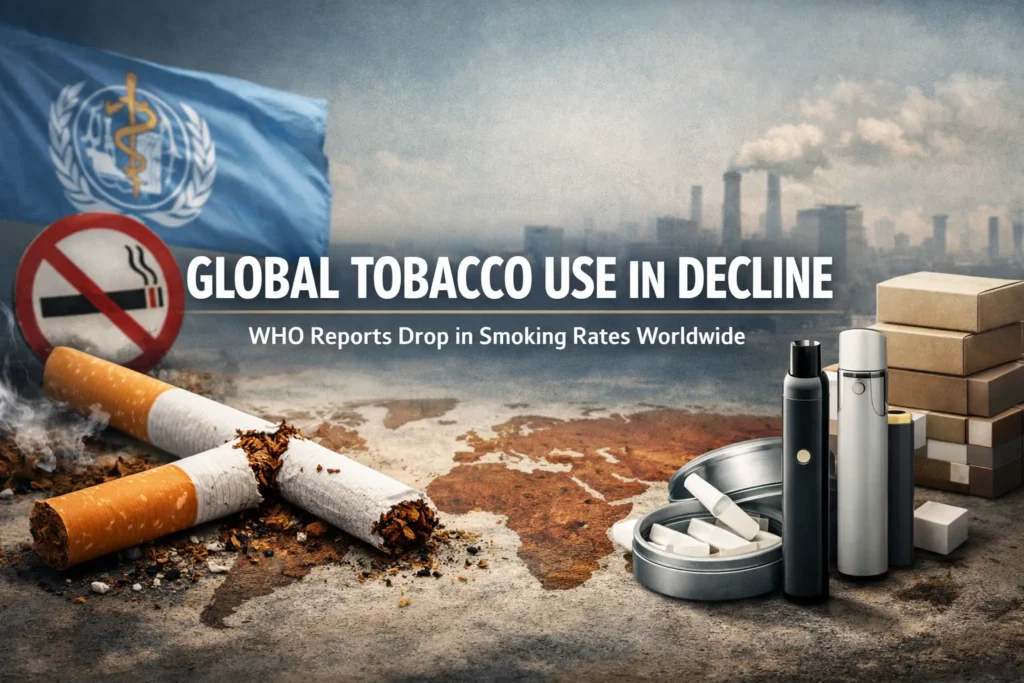

Prologue: The Fog That Covered the Earth
There was a time, not very long ago, when you could walk into any restaurant, any airport, any hospital waiting room, and the air would be thick with smoke. It hung in the sunlight like gray curtains. It stained the ceilings yellow. It lived in the carpets, in the upholstery, in the lungs of everyone who breathed it.
That world is dying.
It is dying slowly, painfully, against the desperate resistance of an industry that made trillions of dollars selling addiction. But it is dying. The latest report from the World Health Organization, released in January 2026, confirms what many public health officials have dared to hope for years: the tide has turned, and it is not coming back.
Today, 5.6 billion people—71% of the global population—live under at least one life-saving tobacco control measure. That is five times the number protected in 2007. If smoking rates had remained frozen at 2007 levels, the world would today contain 300 million more smokers than it actually does.
Three hundred million.
That is the entire population of the United States. That is Indonesia, Brazil, Pakistan, Nigeria, and Bangladesh combined. Those are three hundred million human beings—fathers, mothers, teenagers, grandparents—who are alive, breathing easier, living longer, because the world finally decided to fight back.
But this is not a victory lap. This is not a mission accomplished speech. Because even as the old enemy retreats, a new enemy emerges. It does not carry a pack of Marlboro Reds. It carries a sleek metallic device that looks like a USB drive. It comes in flavors called Blue Razz Ice and Strawberry Watermelon. It hides behind chemical structures altered by a single atom, allowing it to claim, with technical accuracy, that it contains “no nicotine.”
This is the story of how we won the first war. And it is the story of why the second war has already begun.
Part One: The Anatomy of a Miracle
H2: The Unwrapping of a Deadly Habit—How Plain Packaging Changed the Romance of Smoking
To understand how we started winning, you have to understand what we were fighting against.
For nearly a century, the cigarette package was not a container. It was a billboard. It was a status symbol. It was a carefully engineered piece of marketing psychology designed to communicate wealth, sophistication, rebellion, or rugged individualism—depending on which demographic the company was hunting that year.
Marlboro built an empire on the back of a cowboy. Virginia Slims sold emancipation in a white box. Camel used a cartoon character named Joe to teach children to recognize their logo before they could read.
The package was the advertisement. And the advertisement never stopped.
Australia changed that.
In 2012, the country took a gamble that the tobacco industry said would ruin the economy, destroy small businesses, and unleash a tsunami of black market crime. Australia passed the world’s first plain packaging law. No logos. No colors. No glossy finishes. Just a drab olive-green box—Pantone 448 C, officially designated as the ugliest color in the world—covered in photographs of gangrenous feet, cancerous mouths, and dying children in hospital beds.
The industry fought back with everything they had. They sued the Australian government in international courts. They spent millions on advertising campaigns warning that plain packaging would make counterfeiting easier. They predicted chaos.
They lost. Every single case.
And then something remarkable happened. It worked.
Within three years, smoking rates in Australia began their steepest decline in decades. By 2023, daily smoking among adults had fallen to 11.1%—down from 16.4% in 2012. Young people, who had never seen a glamorous cigarette advertisement in their lives, looked at those olive-green boxes and saw exactly what the government wanted them to see: a product that kills you.
The rest of the world watched and learned.
Today, plain packaging laws have been adopted in more than twenty countries, including the United Kingdom, France, Ireland, New Zealand, Norway, Canada, Saudi Arabia, Thailand, Singapore, and Uruguay. What was once considered radical is now considered standard. What was once dismissed as impossible is now described by the WHO as “de rigueur best practice.”
But here is what the tobacco industry never expected: plain packaging didn’t just reduce smoking. It changed the way society talks about cigarettes.
When you remove the branding, you remove the identity. A cigarette is no longer a Marlboro or a Camel or a Winston. It is just a cigarette. It is just a white stick that delivers poison. The romance dies when the logo disappears. And the romance has never come back.
H2: The Hidden Architecture of Control—How MPOWER Built a Fortress Around the World
Plain packaging was powerful. But it was not alone.
In 2008, the WHO launched a framework called MPOWER. It was not a treaty. It was not a law. It was a checklist—six simple, measurable actions that any country could take to reduce tobacco use. Monitor. Protect. Offer. Warn. Enforce. Raise.
Monitor tobacco use and prevention policies.
Protect people from tobacco smoke.
Offer help to quit tobacco use.
Warn about the dangers of tobacco.
Enforce bans on advertising, promotion, and sponsorship.
Raise taxes on tobacco.
Six steps. That was all.
Seventeen years later, those six steps have transformed global public health.
Today, more than 100 countries have implemented comprehensive smoke-free laws, protecting nearly 2 billion people from secondhand smoke in workplaces, restaurants, and public spaces. Forty-four countries now require graphic health warnings covering at least half of the package surface. Thirty-nine countries have banned tobacco advertising entirely.
But the most powerful weapon in the MPOWER arsenal has always been the sixth step: taxation.
The economics are brutally simple. Tobacco products are among the most price-sensitive consumer goods on earth. Raise the price by 10%, and consumption drops by 4% in high-income countries and up to 8% in low- and middle-income countries. Teenagers and young adults are even more sensitive—a 10% price increase can reduce youth smoking by up to 14%.
And yet, for decades, governments were afraid to raise tobacco taxes. They were told it would hurt the poor. They were told it would fuel smuggling. They were told it would be politically unpopular.
The evidence says otherwise.
When the Philippines passed its historic Sin Tax Reform Law in 2012, cigarette taxes increased by more than 500%. Within five years, smoking rates among Filipino adults had dropped from 29.7% to 23.8%. The government collected an additional PHP 134 billion in revenue—money that was earmarked for universal health care. The poor did not suffer. The tobacco industry suffered.
When Turkey increased tobacco taxes to among the highest in Europe, smoking rates fell by more than 13% in less than a decade. When South Africa consistently raised taxes year after year, consumption per capita dropped by more than half.
The pattern is universal. It is predictable. It is irrefutable.
And yet, the global average tobacco tax rate still stands at only 29% of retail price—far below the WHO-recommended minimum of 75%. There is still so much work to do.
H2: The Quiet Revolution—How Cessation Services Became Accessible
For decades, quitting smoking was a lonely endeavor.
If you wanted to stop, you stopped. There were no apps, no helplines, no subsidized nicotine patches. There was just willpower—and willpower, as millions of smokers discovered, is rarely enough to overcome chemical addiction.
That has changed.
Today, more than 30 countries offer comprehensive, publicly funded tobacco cessation services. These are not just hotlines—though hotlines exist and they work. They are integrated systems of support, available in clinics, hospitals, pharmacies, and increasingly, online.
Thailand offers a model worth studying. The country’s smoking rate has declined by more than 20% over the past decade, and cessation services deserve much of the credit. Smokers can call a toll-free number and receive counseling in their native language. They can visit any public hospital and receive free nicotine replacement therapy. They can enroll in group cessation classes led by trained facilitators.
The program reaches rural communities where health infrastructure is limited. Mobile health vans travel to remote villages, offering carbon monoxide testing and brief counseling interventions. Community health workers—ordinary citizens trained in basic cessation techniques—provide ongoing support to smokers attempting to quit.
The results speak for themselves. Thailand’s quit success rates are among the highest in Southeast Asia. The program costs money—approximately US$10 million annually—but it saves far more than it spends. Every baht invested in cessation returns multiple baht in avoided healthcare costs and preserved productivity.
Brazil offers another model. The country’s national health system, SUS, provides free cessation treatment to all citizens. Smokers can access cognitive behavioral therapy and medication through primary care clinics. The program has reached millions of Brazilians and contributed to the country’s steady decline in smoking prevalence.
The challenge now is scaling these programs. Low- and middle-income countries, which bear the heaviest tobacco burden, often lack the resources to implement comprehensive cessation services. International donors have been reluctant to fund treatment programs, preferring to invest in prevention. The imbalance is striking: we spend billions on keeping people from starting to smoke, but pennies on helping them stop.
That is beginning to change. The WHO’s FCTC 2030 project is providing technical assistance to low-income countries seeking to expand cessation services. Bloomberg Philanthropies has funded quitline programs in dozens of countries. The global cessation infrastructure remains inadequate, but it is no longer nonexistent.
H2: The Smoke-Free Generation—How One City Changed the Future
In 2010, the city of Balanga, Philippines, declared war on tobacco.
It was an unlikely battleground. Balanga is not Manila. It is not Cebu. It is a medium-sized city of 100,000 people, known more for its cathedral and its shrimp paste than for public health innovation. But the city’s mayor, Jose Enrique Garcia III, had a vision: a smoke-free generation.
The ordinance he signed was radical. It banned smoking in all public places, including streets and sidewalks. It prohibited the sale of cigarettes within 100 meters of schools. It required vendors to obtain licenses and display graphic health warnings. It established a tobacco control office with enforcement powers.
The tobacco industry fought back. They sued the city. They lobbied the national government. They warned that the ordinance would destroy small businesses and drive smokers to neighboring municipalities.
They lost.
Fifteen years later, Balanga is a different city. Smoking rates have fallen by more than half. The streets are clean. Children walk to school without passing through clouds of secondhand smoke. The city has become a pilgrimage site for public health officials from across Asia, who come to study the Balanga model.
The secret, Mayor Garcia explains, is not the law itself. It is the enforcement.
“We could have passed the strongest ordinance in the world,” he says. “If we didn’t enforce it, it would be worthless paper.”
Balanga enforces. The tobacco control office conducts regular inspections. Violators are fined. Persistent violators face community service. The message is clear: smoking is not banned in theory. It is banned in practice.
The Balanga experiment has inspired similar initiatives across the Philippines and beyond. More than 50 Philippine cities have now enacted smoke-free ordinances. The national government has strengthened its own tobacco control laws. The country that was once a target market for transnational tobacco companies is becoming a leader in the global tobacco control movement.
It began in one city, with one mayor, one ordinance. That is how revolutions start.
Part Two: The Price of Delay
H2: Counting the Cost—The Hidden Billions Draining Latin America’s Economies
While wealthy nations raced ahead with plain packaging and high taxes, much of the developing world was left behind. And the cost of that delay is now being counted in blood and treasure.
Nowhere is this clearer than in Latin America.
In January 2026, a team of researchers published a study in the journal Tobacco Control that should have been front-page news in every country from Mexico to Argentina. They had spent years calculating the true economic burden of tobacco in eight major Latin American nations: Argentina, Brazil, Chile, Colombia, Costa Rica, Ecuador, Mexico, and Peru.
The numbers were staggering.
Every single year, these eight countries lose US$22.8 billion in direct medical costs treating smoking-related diseases. That is money spent on cancer surgeries, heart attacks, stroke rehabilitation, and chronic obstructive pulmonary disease hospitalizations—all of it preventable.
But that is only the beginning.
They lose another US$16.2 billion in productivity. This is not money that is spent. This is money that is never earned. It is the salary of a construction worker in São Paulo who dies at 54, leaving twenty years of wages on the table. It is the income of a teacher in Mexico City who misses six months of work recovering from a tobacco-induced stroke. It is the lifetime earnings of a young lawyer in Bogotá who never becomes a partner because lung cancer takes him at 42.
And then there is the invisible cost.
The researchers calculated that families in these eight countries spend US$10.8 billion annually on informal caregiving. This is not paid home health aides. This is unpaid labor—daughters who quit school, wives who quit their jobs, grandmothers who postpone their own medical care to tend to a husband or father dying of a tobacco-related illness.
Think about what that means.
A teenage girl in rural Peru does not finish high school because her father has emphysema and there is no one else to care for him. A young mother in Guayaquil cannot return to work because her husband’s lung cancer requires round-the-clock attention. An entire generation of women in Latin America is subsidizing the tobacco industry with their time, their education, and their futures.
The researchers ran the numbers again. They asked a simple question: what if these eight countries fully implemented the four core tobacco control policies—higher taxes, plain packaging, advertising bans, and smoke-free zones?
The answer was clear.
They would save 271,000 lives in the next ten years. They would generate US$64 billion in economic gains. They would free millions of women from the unpaid labor of caring for dying men.
This is not about politics. This is not about ideology. This is basic arithmetic.
H2: The Asian Paradox—Growth Amidst Decline
If Latin America represents the cost of delay, Asia represents something more complicated: a paradox.
Globally, smoking rates are falling. But in Asia, the tobacco industry is still growing.
China is the elephant in the room. The China National Tobacco Corporation is not just the world’s largest tobacco manufacturer. It is a state-owned monopoly that generates more than US$300 billion in annual revenue. It employs millions of farmers, factory workers, and retail vendors. It is woven into the fabric of the economy.
And it is killing China.
More than one million Chinese citizens die from tobacco-related diseases every year. That is one death every thirty seconds. By 2030, that number is expected to reach two million annually. Chinese men smoke nearly half of the world’s cigarettes. Lung cancer is now the leading cause of cancer death in China, and tobacco is responsible for the vast majority of cases.
The Chinese government knows this. In recent years, Beijing has taken halting steps toward tobacco control—banning smoking in some public places, requiring health warnings on packages, and even discussing a nationwide smoke-free law. But progress is slow, hampered by the uncomfortable reality that the government is simultaneously the regulator and the beneficiary of the tobacco industry.
Consider the contradictions. China ratified the Framework Convention on Tobacco Control in 2005. It is legally obligated to implement comprehensive tobacco control measures. Yet tobacco advertising remains ubiquitous. Smoking is still permitted in many restaurants and offices. Cigarettes remain among the most affordable consumer goods in the country.
The tobacco industry’s influence extends beyond economics. It permeates culture. Offering a cigarette is a gesture of hospitality, a ritual of social bonding. Refusing one can be interpreted as rudeness. This cultural embeddedness is as formidable an obstacle as any law or regulation.
Change is coming, but slowly. In 2022, Shenzhen became the first Chinese city to ban smoking in outdoor public spaces. Beijing has expanded its smoke-free zones. The national government has proposed raising tobacco taxes, though implementation has been delayed. The arc bends toward progress, but it bends slowly.
Indonesia tells a similar story. With one of the highest male smoking rates in the world—more than 60%—Indonesia remains a bright spot for tobacco companies even as markets elsewhere collapse. Cigarette advertising is still permitted on television. Cigarette sponsorships dominate sporting events. A pack of kretek, the clove-infused cigarettes beloved by Indonesian smokers, can cost less than a dollar.
The result is a public health disaster. More than 200,000 Indonesians die from tobacco-related diseases each year. Childhood stunting, linked to families spending limited income on cigarettes instead of food, affects nearly one in three children. The World Bank has warned that tobacco use is undermining Indonesia’s human capital development, trapping generations in poverty.
President Joko Widodo’s government has shown interest in tobacco control, but progress has been incremental. In 2024, the government raised tobacco excise taxes by an average of 10%—a meaningful increase, but far below what public health advocates had urged. The industry remains powerful, deeply connected to political and economic elites.
India presents a different challenge altogether.
With 267 million tobacco users—second only to China—India is a vast and fragmented market. Cigarettes account for only a fraction of tobacco consumption. The majority of Indian tobacco users consume smokeless products: gutkha, khaini, zarda, paan masala. These products are cheap, widely available, and virtually unregulated.
The Indian government has made progress. In 2023, the Ministry of Health proposed a series of amendments to the Cigarettes and Other Tobacco Products Act that would have banned surrogate advertising, increased the minimum legal age to 21, and eliminated designated smoking areas in restaurants. But the amendments have stalled, caught in the gears of parliamentary procedure and fierce industry lobbying.
Meanwhile, the smokeless tobacco epidemic continues. Oral cancer is the most common cancer among Indian men. The country accounts for one-third of the global oral cancer burden. Tens of millions of Indians, many of them poor and rural, are addicted to products that are slowly, painfully killing them.
Asia is the battlefield where the tobacco war will be won or lost. If smoking rates in China, India, and Indonesia do not decline, global tobacco deaths will continue to rise for decades to come.
H2: The African Frontier—The Industry’s Final Expansion Opportunity
If Asia represents the present challenge, Africa represents the future challenge.
Sub-Saharan Africa has the lowest smoking rates of any world region. Only about 10% of adults use tobacco products, compared to more than 20% in Europe and Asia. But those low rates mask a dangerous trend: while smoking is declining everywhere else, it is stable or increasing in many African countries.
The tobacco industry sees opportunity.
With populations growing, economies expanding, and regulatory frameworks weak, African countries represent the industry’s final expansion frontier. Transnational tobacco companies have invested heavily in the region, building factories, establishing distribution networks, and marketing aggressively.
The marketing is sophisticated. In Nigeria, cigarette brands sponsor music festivals and fashion shows. In Kenya, they advertise on billboards near universities. In South Africa, they have fought tooth and nail against plain packaging legislation, deploying the same arguments—illicit trade, property rights, consumer choice—that failed in Australia and the United Kingdom.
The industry also targets women, who traditionally have very low smoking rates in Africa. Cigarettes are marketed as symbols of modernity, independence, and liberation—the same strategy Virginia Slims used to hook American women in the 1970s.
Public health officials are alarmed. “Africa is ground zero for the next wave of the tobacco epidemic,” said Dr. Matshidiso Moeti, WHO Regional Director for Africa. “If we do not act now, we will be dealing with a full-blown crisis in twenty years.”
The good news is that African governments are not passive. More than 40 African countries have ratified the Framework Convention on Tobacco Control. Several have enacted comprehensive tobacco control laws. Mauritius, as noted, has achieved the highest level of MPOWER implementation. Kenya, Uganda, and Ethiopia have made significant progress.
The challenges remain daunting. Illicit trade undermines tax policies. Limited enforcement capacity weakens regulations. The industry’s economic arguments—jobs, investment, tax revenue—carry weight in countries struggling with poverty and unemployment.
But the momentum is shifting. African public health advocates are organizing, networking, demanding action. The Africa Tobacco Control Consortium coordinates civil society efforts across the continent. The African Union has endorsed tobacco control as a development priority.
The battle for Africa is not lost. It has barely begun.
H2: The Eastern European Tragedy—Post-Soviet Smoking and the Slow Recovery
The collapse of the Soviet Union created many tragedies. One of them was tobacco.
In the chaotic 1990s, as state monopolies crumbled and borders opened, transnational tobacco companies poured into Russia, Ukraine, and the former Soviet republics. They brought Western brands, Western marketing, and Western-style addiction. Smoking rates soared.
The human cost has been staggering. Russia has one of the highest smoking rates in the world, with more than 30% of adults using tobacco. Lung cancer rates have risen sharply. Life expectancy for Russian men—already low by European standards—has been further depressed by tobacco-related disease.
But there is good news, even here.
In 2013, Russia enacted one of the strongest tobacco control laws in the world. It banned smoking in all public places, prohibited tobacco advertising, and required graphic health warnings covering 50% of the package. Subsequent amendments raised tobacco taxes substantially.
The results have been dramatic. Smoking prevalence among Russian adults has declined by more than 20% since the law took effect. Among young people, the decline has been even steeper. The Russian experience demonstrates that even in the most challenging environments, evidence-based policies work.
Ukraine has followed a similar path. Despite political instability and economic crisis, the country has steadily strengthened its tobacco control framework. In 2024, Ukraine banned flavored cigarettes and required plain packaging. Smoking rates have begun to decline.
The post-Soviet space remains a region of concern. Smoking rates in Armenia, Georgia, and Kazakhstan remain high. The tobacco industry continues to resist regulation. But the trajectory, at least, is no longer upward.
Part Three: The Children
H2: The 40 Million Warning Sign—Why Kids Are the Frontline of This War
Here is the number that keeps public health officials up at night.
Forty million.
That is how many children aged 13 to 15 are currently using some form of tobacco product. Forty million teenagers. Forty million developing brains. Forty million potential lifetime customers.
For decades, the tobacco industry insisted it did not market to children. They signed voluntary agreements. They issued press releases. They created youth smoking prevention programs that, independent investigators later proved, were actually designed to make smoking look like an adult activity—and therefore more appealing to teenagers.
We thought we had solved this problem. We thought that if we banned Joe Camel, banned television advertising, banned billboards near schools, we had won.
We were wrong.
The industry didn’t stop marketing to kids. They just changed the product.
They stopped selling Marlboros to children—that was too obvious, too recognizable. Instead, they sold them vapes. Sleek, metallic, high-tech. They sold them in flavors: cotton candy, bubble gum, Froot Loops, gummy bear. They sold them through social media influencers on TikTok and Instagram, promoting “vape tricks” and “cloud chasing” as entertainment.
By the time parents and regulators caught up, it was too late. In the United States, more than one in four high school students was using e-cigarettes. In Canada, youth vaping rates had quadrupled in just four years. In the United Kingdom, disposable vapes—cheap, colorful, impossible to hide—had become the must-have accessory for teenagers.
The WHO’s 2026 World No Tobacco Day theme, “Unmasking the Appeal,” was designed specifically to address this crisis. The data is terrifyingly clear: in countries where data is available, children are nine times more likely than adults to be using e-cigarettes.
Nine times.
This is not a coincidence. This is not a failure of parenting. This is a deliberate, well-funded, carefully executed marketing strategy. The nicotine is the hook. The flavors are the bait. The sleek devices are the delivery mechanism.
“It is a cynical and dangerous strategy,” said Dr. Tedros Adhanom Ghebreyesus, WHO Director-General. “The industry is trying to create a new generation of addiction.”
H2: The Great Vape Crackdown—Australia’s War on the Pink Unicorn
By 2022, Australia had a problem.
Twenty-eight percent of teenagers aged 14 to 17 had tried vaping. Twenty-eight percent. This was not a fringe activity. This was mainstream. School principals reported that students were vaping in classrooms, hiding devices in their sleeves, passing them under desks. Parents found vapes in backpacks, in drawers, in the pockets of jeans thrown in the hamper.
The vapes were not coming from pharmacies or legitimate smoke shops. They were coming from convenience stores, gas stations, and online retailers who shipped them in plain packages from overseas. They were marketed as “nicotine-free,” but when Australian authorities tested them, they found that nearly all contained nicotine—often at levels higher than a pack of cigarettes.
Professor Becky Freeman, a tobacco policy expert at the University of Sydney, described the products as “raspberry-ice-pink-unicorn vapes.” They were not designed to help adult smokers quit. They were designed to appeal to children. The colors, the flavors, the names—everything about them screamed youth marketing.
Australia decided to fight back.
In 2023, the government announced the toughest vaping regulations in the world. They banned the importation of all disposable vapes. They banned all flavors except mint, menthol, and tobacco. They reduced the maximum nicotine concentration to 20 milligrams per milliliter. They required that all vapes be sold in plain, pharmaceutical-style packaging.
Most importantly, they moved vapes out of convenience stores and behind pharmacy counters. If you wanted to buy a vape in Australia, you needed a prescription from a doctor. You needed to demonstrate that you were using it to quit smoking, not to get high. You needed to prove that you were an adult, not a teenager.
The industry screamed. They predicted chaos. They warned of a massive black market. They claimed that adults who relied on vapes to quit smoking would be forced back to cigarettes.
None of it happened.
The black market did grow—but it was serving the teenagers who had been the primary customers all along. Adults who genuinely wanted to quit smoking could still get vapes through legal channels. The convenience stores lost a profitable product line, but they had never been legally entitled to sell it in the first place.
Early data suggests the policy is working. Youth vaping rates in Australia are beginning to decline. The pink unicorn is being driven out of the stable.
H2: America’s Lost Generation—The Flavor Trap
Across the Pacific, the United States offers a cautionary tale.
In 2009, the U.S. Congress passed the Family Smoking Prevention and Tobacco Control Act, giving the Food and Drug Administration authority to regulate tobacco products. Among its provisions was a ban on characterizing flavors—including fruit, candy, and clove—in cigarettes.
It was a landmark achievement. It stripped cigarettes of their candy-coated appeal. It recognized, for the first time, that flavors were not innocent enhancements but deliberate tools of addiction.
But the law had a loophole big enough to drive a truck through. It applied to cigarettes. It did not apply to e-cigarettes.
For the next decade, the e-cigarette industry exploited that loophole with breathtaking cynicism. JUUL launched in 2015 with flavors like mango, crème brûlée, and cool cucumber. By 2018, JUUL controlled 75% of the U.S. e-cigarette market. By 2019, one in four high school students was vaping.
The company insisted it never marketed to children. Internal documents later revealed otherwise.
The company had hired models who looked like teenagers. It had purchased advertising time on Nickelodeon and the Cartoon Network. It had sent representatives into schools, presenting vaping as a “smoking cessation” tool to students who had never smoked a day in their lives.
In 2022, the FDA finally acted. It issued marketing denial orders for all JUUL products, effectively banning them from the U.S. market. JUUL appealed. The FDA stayed its order. As of early 2026, JUUL remains available for sale, its fate tangled in administrative procedure.
But JUUL is no longer the only player. The market has fragmented into hundreds of brands, thousands of flavors, and an endless parade of disposable devices that cost $5, last 600 puffs, and are designed to be thrown away. Elf Bar, Puff Bar, Esco Bar—the names are meaningless, the products interchangeable, the addiction identical.
The result is a generation of American teenagers with nicotine dependency, compromised brain development, and uncertain futures. The long-term health effects of chronic vaping are unknown, but early evidence suggests links to lung injury, cardiovascular disease, and lasting respiratory impairment.
America had the opportunity to close the flavor loophole years ago. It chose not to. Now it is living with the consequences.
H2: The United Kingdom’s Middle Path—Harm Reduction or Harm Prolongation?
The United Kingdom has taken a different approach to youth vaping—one that is closely watched and hotly debated.
British public health authorities have embraced e-cigarettes as a harm reduction tool. The National Health Service promotes vaping as a smoking cessation aid. Vape shops are licensed and regulated, not banned. The official position is that while vaping is not safe, it is substantially safer than smoking, and smokers should be encouraged to switch.
This approach has yielded measurable benefits. Smoking rates in the UK are among the lowest in Europe. Vaping is credited with helping hundreds of thousands of British smokers quit. There is little evidence of widespread youth uptake—at least, not yet.
But the British approach is under strain.
Disposable vapes, cheap and colorful, have flooded the UK market. Brands like Elf Bar and Geek Bar are ubiquitous in corner shops and gas stations. Their flavors—watermelon, blueberry sour raspberry, peach ice—are clearly designed to appeal to young people.
Recent surveys show that youth vaping rates in the UK are rising. One in five 11-to-17-year-olds has tried vaping. One in ten uses vapes regularly. The trend lines are moving in the wrong direction.
British public health officials are grappling with the tension between harm reduction and youth protection. Some advocate for stricter regulations on flavors and marketing. Others warn against overreaction, arguing that restricting access to vapes will drive ex-smokers back to cigarettes.
There is no easy resolution. The UK is conducting a real-time experiment in balancing competing public health goals. The rest of the world is watching closely.
H2: The Flavors That Hook—The Science of Taste and Addiction
Why are flavors so important?
The tobacco industry has always understood what regulators are only beginning to grasp: flavors are not incidental to the appeal of nicotine products. They are essential.
Flavors mask the harshness of nicotine, making it easier for first-time users to inhale deeply and repeatedly. Flavors create positive associations, linking nicotine delivery with pleasant sensory experiences. Flavors differentiate products, allowing brands to cultivate distinct identities and loyal followings.
And flavors, above all, appeal to young people.
Brain science explains why. The adolescent brain is wired to seek novelty and reward. Sweet flavors trigger dopamine release in the same neural pathways that nicotine itself activates. The combination is synergistic—flavors make nicotine more rewarding, and nicotine makes flavors more memorable.
The tobacco industry has spent decades perfecting this synergy. Company documents, revealed through litigation, show that tobacco companies conducted extensive research on flavor preferences among children. They knew that young smokers preferred menthol and candy flavors. They formulated products accordingly.
The same playbook is now being applied to e-cigarettes and nicotine pouches. The flavors are sweeter, the names more whimsical, the packaging more colorful. The target demographic is the same.
Regulators are beginning to respond. The European Union has banned characterizing flavors in heated tobacco products. Canada has restricted menthol in cigarettes. The United States is considering a ban on menthol—a policy that could save hundreds of thousands of lives, particularly among Black smokers, who have been disproportionately targeted by menthol marketing.
But the flavor war is far from over. The industry continues to innovate, introducing new flavor combinations and delivery formats faster than regulators can respond. The cat-and-mouse game continues.
H2: The School-Based Interventions That Actually Work
If flavors are the problem, education is part of the solution.
For decades, schools have attempted to prevent youth tobacco use through education programs. Most of these programs have failed. The classic “scared straight” approach—showing teenagers graphic images of diseased lungs and rotting teeth—has been shown to be ineffective and sometimes counterproductive.
But some programs work.
The Life Skills Training program, developed at Cornell University, has been rigorously evaluated and found to reduce smoking initiation by up to 25%. The program does not focus primarily on tobacco. It teaches generic skills—refusal techniques, assertiveness, emotional regulation—that help adolescents navigate peer pressure and make healthy choices.
The ASSIST program, implemented in the United Kingdom, takes a different approach. It identifies influential students and trains them to act as peer supporters, informally discouraging smoking among their friends. The program reduced smoking rates by more than 20% in rigorous trials.
In India, the MYTRI program combined classroom curricula with school-wide campaigns and parent involvement. It significantly reduced tobacco use among students in Delhi and Chennai.
These programs share common features. They are interactive rather than didactic. They address social influences rather than health consequences. They are implemented over multiple years rather than as one-time assemblies. They engage students as active participants rather than passive recipients of information.
The challenge is scaling them. Evidence-based prevention programs require trained facilitators, ongoing implementation support, and sustained funding. Cash-strapped schools often default to cheaper, less effective approaches. The gap between what works and what is actually delivered remains wide.
Part Four: The New Chemistry
H2: The Synthetic Threat—When Nicotine-Free Is a Lie
Just when regulators thought they had caught up, the industry changed the game.
Welcome to the world of nicotine analogues.
This is the most dangerous frontier of the tobacco war, and it reads like a spy novel. A group of companies—most of them small, agile, operating below the radar of major media—began manufacturing synthetic compounds that are structurally different from nicotine but act on the brain in exactly the same way.
They gave them friendly, innocuous names. Metatine. Ceretine. Imotine. Nicotine by another name.
Here is the legal trick: nicotine is regulated. The FDA can restrict its sale, limit its concentration, require premarket authorization. But a molecule that is not technically nicotine—even if it binds to the same receptors, triggers the same dopamine release, creates the same addiction—falls outside the regulatory framework.
It is a loophole so large you could fly a 747 through it.
In January 2026, the JAMA Network Open published a study that should have set off alarm bells across the public health community. Researchers had purchased nicotine pouches and synthetic oral products marketed as “nicotine-free” and “FDA exempt.” They tested them in a laboratory.
What they found was terrifying.
One brand, called Outlaw, claimed to contain “Nic-Safe”—a proprietary blend they described as nicotinamide, a form of vitamin B3. It contained no nicotinamide. It contained 6-methyl-nicotine, a synthetic analogue that animal studies suggest is more potent and more toxic than natural nicotine.
Another brand, called Sett, claimed to be nicotine-free. It contained detectable levels of actual nicotine.
A third brand simply listed “nicotine analogue” on the ingredient panel, with no further explanation of what that analogue was or how it might affect human health.
These products are being sold in convenience stores, gas stations, and online retailers. They are marketed to young people with flavors like mango, mint, and citrus. They are priced competitively with traditional nicotine products. And they are completely unregulated.
The researchers surveyed young adults about their awareness of these products. The results were alarming. Within less than a year of these products hitting the U.S. market, 20% of adolescents and young adults had already heard of them. Eight percent had used them.
Eight percent.
This is not a niche product. This is a movement. And it is happening in the dark, without oversight, without safety testing, without any meaningful public health intervention.
H2: The Chemistry of Deception—How 6MN Hijacks the Brain
To understand why nicotine analogues are so dangerous, you have to understand how nicotine works.
Nicotine is a clever molecule. It is shaped almost exactly like acetylcholine, a neurotransmitter that your brain produces naturally. When you inhale nicotine, it travels to your brain and slots into receptors designed for acetylcholine. It triggers a release of dopamine. You feel alert, focused, slightly euphoric. You feel good.
The problem is that nicotine doesn’t stay in the receptors very long. Your brain clears it quickly, leaving the receptors empty. You crave that feeling again. So you use more nicotine. The receptors multiply, demanding more and more just to feel normal. You are addicted.
Now imagine a molecule that fits those receptors even more tightly than nicotine does.
That is 6-methyl-nicotine. The “6-methyl” refers to a carbon atom that has been added to the molecular structure. It is a tiny change—a single atom—but it has enormous consequences.
In laboratory studies, 6-methyl-nicotine binds to nicotinic acetylcholine receptors with greater affinity than nicotine itself. It stays in the receptors longer. It triggers a more sustained dopamine release. It may be harder to clear from the brain.
And nobody knows what it does to the human body over twenty years of use.
The companies selling these products did not conduct long-term safety studies. They did not submit their data to the FDA. They did not publish their research in peer-reviewed journals. They simply mixed chemicals in a laboratory, loaded them into pouches, and started selling them.
This is not innovation. This is chemical warfare.
Dr. Bonnie Halpern-Felsher, a professor of pediatrics at Stanford University and an author of the JAMA study, put it bluntly: “We have no idea what these products do to adolescents’ developing brains. We have no idea what happens when you heat these synthetic compounds and inhale them. We have no idea what the cardiovascular effects are. We have no idea about carcinogenicity. We have nothing.”
And yet the products are already on the market, already in the mouths of teenagers, already creating dependency on substances that did not exist five years ago.
H2: The Global Spread—How Analogues Are Crossing Borders
The synthetic nicotine phenomenon began in the United States, but it is spreading rapidly.
In the United Kingdom, where vaping is promoted as a smoking cessation tool by public health authorities, nicotine analogues have begun appearing in products marketed as “dietary supplements” or “natural energy boosters.” They are not classified as tobacco products, so they are not subject to the UK’s strict advertising and packaging regulations.
In New Zealand, which has set an ambitious goal of becoming smoke-free by 2025, regulators are scrambling to understand how synthetic nicotine products fit into their legal framework. Are they tobacco products? Are they therapeutic goods? Are they consumer products? The answers are not clear.
In Brazil, where e-cigarettes have been banned since 2009, nicotine analogues exist in a legal gray area. The ban applies to electronic smoking devices, not to synthetic chemical compounds. Entrepreneurs are exploring ways to market the analogues without the devices, perhaps as dissolvable strips or oral pouches.
In China, where most of the world’s synthetic nicotine is manufactured, the government has taken a permissive approach. Factories operate with minimal oversight. Exports flow freely to markets around the world.
In every country, regulators are playing catch-up. They are reading the same studies, asking the same questions, reaching the same conclusion: the law is not equipped to handle molecules that did not exist when the law was written.
This is the regulatory whack-a-mole of the twenty-first century. Every time you close one loophole, three more open. Every time you ban one product, the industry invents another. It is exhausting. It is expensive. It is endless.
But it is not hopeless.
The Framework Convention on Tobacco Control, the world’s first public health treaty, contains language that can be interpreted broadly enough to cover novel and emerging nicotine products. The treaty’s parties will meet later this year to discuss whether nicotine analogues should be brought under its umbrella. If they agree, countries around the world will have a legal basis to regulate these products.
It will not happen overnight. It will require political will, scientific expertise, and sustained advocacy. But it is possible.
H2: The Heated Tobacco Gambit—IQOS and the Quest for Respectability
While some companies pursue synthetic nicotine, others are betting on heated tobacco.
Philip Morris International, the world’s largest transnational tobacco company, has staked its future on IQOS, a device that heats tobacco rather than burning it. The company claims that IQOS is less harmful than cigarettes because it produces no smoke, only aerosol.
The claim is contested.
Independent research has found that IQOS aerosol contains many of the same toxic chemicals found in cigarette smoke, though generally at lower levels. It is almost certainly less dangerous than smoking. Whether it is safe enough to be marketed as a “harm reduction” product is a different question.
Philip Morris has invested billions in IQOS. The company has rebranded itself as a “smoke-free” company, committed to “delivering a smoke-free future.” It has hired former public health officials, established research collaborations with academic institutions, and lobbied governments to adopt harm reduction policies.
Many public health advocates view these efforts with deep suspicion. They point to the company’s decades of deception about the dangers of cigarettes. They note that Philip Morris continues to sell cigarettes—billions of them—and has no plans to stop. They worry that the smoke-free rhetoric is a sophisticated public relations campaign designed to rehabilitate the industry’s image and forestall more aggressive regulation.
The IQOS experience also highlights the challenges of regulating novel products. The FDA authorized IQOS for sale in the United States as a “modified risk tobacco product”—a designation that allows the company to make reduced-exposure claims in its marketing. Public health groups sued, arguing that the FDA had failed to adequately consider the public health implications. The litigation continues.
Heated tobacco products are now available in more than 70 countries. Their long-term health effects remain unknown. Their role in the tobacco epidemic—whether they accelerate the decline of smoking or perpetuate nicotine addiction—remains contested.
H2: The Nicotine Pouch Phenomenon—White Pouches, Gray Regulation
Nicotine pouches represent another frontier.
These small, white pouches are placed between the gum and lip, delivering nicotine without tobacco. They are descended from Swedish snus, but they contain no tobacco leaf—only nicotine, flavorings, and plant fiber.
The absence of tobacco is legally significant. In many jurisdictions, tobacco products are subject to strict regulations—taxes, warning labels, advertising restrictions—that do not apply to non-tobacco nicotine products. Nicotine pouches slip through these regulatory gaps.
The market has exploded. In the United States, brands like Zyn, On!, and Velo have become ubiquitous in convenience stores and gas stations. Sales have grown by more than 50% annually. Marketing campaigns target young adults with themes of discretion, convenience, and modernity.
The public health implications are uncertain. For smokers who switch completely, nicotine pouches are almost certainly less dangerous than cigarettes. But most users of nicotine pouches are not former smokers. They are young adults who never smoked—and would never have started smoking—but find the pouches appealing.
Are nicotine pouches creating a new population of nicotine addicts? The data is incomplete, but early signs are concerning. Surveys show rapid increases in nicotine pouch use among adolescents and young adults. The products are cheap, accessible, and marketed in ways that appeal to youth.
Regulators are beginning to respond. The FDA has required nicotine pouch manufacturers to submit premarket applications, a process that will subject the products to scientific review. Several European countries have restricted nicotine pouch sales or imposed strict marketing limitations.
But the regulatory response remains fragmented. Nicotine pouches are legal in some countries, banned in others, unregulated in many. The global patchwork creates opportunities for arbitrage and evasion.
Part Five: The Policy Battleground
H2: The Regulatory Whack-a-Mole—How India Is Fighting Back
On the other side of the world, India is fighting a different kind of battle.
India has a comprehensive national ban on e-cigarettes and heated tobacco products. The ban, enacted in 2019, was hailed as one of the strongest tobacco control measures in Asia. It prohibited the manufacture, sale, import, and advertisement of all electronic nicotine delivery systems.
But the industry is nothing if not adaptive.
In recent years, Indian consumers have been introduced to a new category of product: nicotine pouches and dissolving strips that look identical to nicotine replacement therapies but contain much higher concentrations of the drug. These products are sold in sleek tins, flavored with mint and fruit, and marketed to young professionals as a “discreet” and “modern” way to consume nicotine.
The trick is in the labeling.
India’s drug laws exempt nicotine replacement therapies—gums, lozenges, patches—from the strict licensing requirements that apply to cigarettes and other tobacco products. The companies selling these new pouches are arguing that their products are essentially the same as Nicorette gum. They are therapeutic aids. They are smoking cessation tools. They are not subject to the e-cigarette ban.
Public health advocates see it differently.
“This is a textbook example of regulatory arbitrage,” said Dr. Monika Arora, director of the Health Promotion Division at the Public Health Foundation of India. “They are exploiting a loophole in the drug law to circumvent the tobacco law. They are pretending to be medicine to avoid being regulated as poison.”
The Indian government is aware of the problem. In late 2025, the Ministry of Health issued an advisory to state governments, warning them about the proliferation of these products and urging enforcement actions. But enforcement is uneven. Some states have conducted raids and seized inventory. Others have done nothing.
The industry continues to expand. New brands appear every month. Marketing campaigns target college campuses and young professionals. The products are cheap, accessible, and addictive.
India’s experience offers a lesson for the rest of the world: passing a law is not the same as implementing a law. You cannot ban a product and walk away. You have to stand guard at the gate. You have to monitor the market. You have to be vigilant, because the industry is always watching for the next crack to slip through.
H2: The European Divide—Harm Reduction Versus Protection
Europe presents a complicated picture.
The European Union’s Tobacco Products Directive, first adopted in 2014 and revised in 2022, establishes a common regulatory framework for cigarettes, smokeless tobacco, and e-cigarettes across all 27 member states. It sets maximum nicotine concentrations, requires health warnings, and bans characterizing flavors in heated tobacco products.
But the directive leaves significant room for national discretion. And member states have taken very different approaches.
Sweden is the outlier. With the lowest smoking rate in Europe—just 6%—Sweden has embraced snus, a moist smokeless tobacco product that has been used in the country for centuries. Swedish authorities argue that snus, while not harmless, is far less dangerous than cigarettes. They point to the Swedish experience as evidence that providing safer alternatives to smokers can accelerate the decline of smoking.
Public health officials in other countries are skeptical. They note that snus is addictive, causes oral disease, and is associated with pancreatic cancer. They worry that promoting snus as a “harm reduction” tool sends the wrong message—that it is possible to use tobacco safely.
The debate has divided the European public health community. Some advocate for a pragmatic approach, encouraging smokers to switch to less harmful products even if those products are not completely safe. Others insist on a purist approach, arguing that the only acceptable goal is complete abstinence from all nicotine products.
Meanwhile, the industry exploits the division. Tobacco companies have rebranded themselves as “smoke-free” companies, investing heavily in heated tobacco products and e-cigarettes. They present themselves as partners in harm reduction, allies in the fight against smoking. Public health advocates see it as a cynical rebranding effort, an attempt to rehabilitate an industry that has spent decades selling death.
There is no easy answer. Harm reduction has worked for some products in some contexts. But the tobacco industry’s history of deception makes it difficult to trust any product they sell, no matter how much safer they claim it is.
H2: Africa’s Moment—Mauritius Shows the Way
Amidst the complexity and division, there are bright spots.
Mauritius, a small island nation in the Indian Ocean, became the first country in Africa to implement all of the WHO’s MPOWER measures at the highest level of achievement. It has comprehensive smoke-free laws. It has graphic health warnings covering 65% of the package. It has banned tobacco advertising, promotion, and sponsorship. It has raised taxes to among the highest on the continent.
The results are measurable. Smoking rates in Mauritius have declined steadily for more than a decade. Lung cancer incidence has begun to fall. The country has demonstrated that tobacco control is not a luxury of wealthy nations—it is achievable anywhere, with sufficient political will.
Other African countries are following.
Kenya enacted the Tobacco Control Act in 2007 and has steadily strengthened its implementation. Uganda has banned smoking in public places and required large graphic health warnings. South Africa, despite facing fierce industry opposition, has maintained a robust tobacco control program and is currently considering legislation that would mandate plain packaging and ban the display of tobacco products at point of sale.
The challenges are significant. The tobacco industry targets African countries with aggressive marketing campaigns, portraying cigarettes as symbols of modernity and sophistication. Illicit trade undermines tax policies. Limited public health infrastructure makes it difficult to offer cessation services to smokers who want to quit.
But the momentum is unmistakable. African governments are increasingly recognizing that tobacco use is not just a health issue—it is a development issue. It undermines productivity, drains health care budgets, and perpetuates poverty. Controlling tobacco is not a luxury. It is a necessity.
H2: The Latin American Resurgence—From Complacency to Action
Latin America was once a global leader in tobacco control. Brazil, Uruguay, and Panama enacted trailblazing policies that inspired the world. But progress stalled in the 2010s, as economic crises and political instability diverted attention from public health.
That is changing.
In 2024, Mexico enacted one of the strongest tobacco control laws in the Americas. The law banned all forms of tobacco advertising and promotion, prohibited smoking in all public places, and mandated plain packaging. It represented a dramatic reversal after years of industry-friendly policies under previous administrations.
Chile has followed suit. In 2025, the government banned menthol cigarettes and imposed new restrictions on e-cigarette marketing. Smoking rates, which had plateaued, are beginning to decline again.
Brazil remains the regional heavyweight. The country’s smoking rate has fallen by more than 50% since 2006—one of the most dramatic declines ever recorded. Brazilian researchers and advocates have played leadership roles in the global tobacco control movement. The country’s experience demonstrates that sustained, comprehensive action yields results.
The resurgence of Latin American tobacco control is no accident. It reflects the growing influence of regional networks—the Inter-American Heart Foundation, the Union Against Tuberculosis and Lung Disease, the Framework Convention Alliance—that have built capacity, shared knowledge, and mobilized political support.
It also reflects the declining influence of the tobacco industry. Once dominant in Latin American politics, the industry has been weakened by litigation, exposure, and the erosion of its economic power. Governments that once feared industry retaliation now feel emboldened to act.
H2: The Pacific Pioneers—Small Islands, Big Ambitions
Some of the most ambitious tobacco control policies have emerged from the world’s smallest countries.
The Pacific Islands face a unique tobacco challenge. Smoking rates are high—more than 30% of adults in some countries—and health systems are fragile. The tobacco industry has targeted the region with aggressive marketing, presenting cigarettes as symbols of modernity and sophistication.
But the islands are fighting back.
In 2010, the Cook Islands banned the sale of tobacco products to anyone born after January 1, 2004—a “tobacco-free generation” policy that will gradually phase out smoking entirely. The policy survived legal challenges and remains in effect.
Palau has enacted some of the highest tobacco taxes in the world. A pack of cigarettes costs more than $15, putting it out of reach for most young people. Smoking rates have fallen sharply.
Vanuatu, Solomon Islands, and Fiji have all enacted comprehensive tobacco control laws based on the Framework Convention. They have banned smoking in public places, prohibited tobacco advertising, and required graphic health warnings.
The Pacific experience offers lessons for the rest of the world. Small countries can innovate. They can move faster than larger nations with more complex political systems. They can serve as laboratories for policies that, once proven, can be scaled globally.
Part Six: The Economics of Addiction
H2: The $1 Trillion Gorilla—Why Big Tobacco Isn’t Worried
Despite everything—the declining smoking rates, the regulatory crackdowns, the social stigma—the global tobacco market remains astonishingly robust.
In 2026, the industry is expected to generate approximately US$1.0 trillion in revenue. That is trillion with a T. It is roughly equivalent to the entire GDP of Mexico. It is more than the combined revenues of Apple, Amazon, Google, and Microsoft.
And it is growing.
Not rapidly, but steadily. The global tobacco market is projected to expand at a compound annual growth rate of 2.5% through 2030. This is not the trajectory of a dying industry. It is the trajectory of an industry that has successfully adapted to a hostile environment.
How is this possible? If fewer people are smoking, how can the industry be making more money?
The answer is price.
Tobacco companies understand something that many regulators do not: nicotine addiction is not a normal consumer preference. It is a physiological dependency. When you raise the price of insulin, diabetics do not stop buying it. They pay. They sacrifice other things. They go into debt. But they pay.
The same is true for cigarettes. When governments raise taxes and manufacturers pass the increase along to consumers, most smokers do not quit. They grumble, they cut back, they switch to cheaper brands. But they keep buying.
The industry has mastered this dynamic. As volumes decline in wealthy countries, they simply raise prices. Their profit margins expand. Their revenues remain stable. Their shareholders remain satisfied.
And they continue to expand in emerging markets, where populations are young, regulations are weak, and cigarettes are still affordable. Africa, Asia, the Middle East—these are the growth markets. These are the frontiers where the industry sees its future.
The $1 trillion gorilla is not going anywhere.
H2: The Taxation Trap—When Governments Get Addicted
There is a dark irony in the economics of tobacco control.
Tobacco taxes are the single most effective intervention available to public health officials. They reduce consumption. They save lives. They generate revenue that can be used to fund health care programs.
But they also create dependency.
Governments get accustomed to the revenue. They build budgets around it. They rely on smokers to fund schools, roads, hospitals. The very success of tobacco control—the decline in smoking rates—threatens to destabilize those budgets.
This is the taxation trap.
In the Philippines, the Sin Tax Reform Law allocated 80% of incremental tobacco tax revenue to universal health care. It was a brilliant policy innovation, transforming a regressive tax into a progressive investment. But as smoking rates decline, the revenue stream is shrinking. The Department of Health is facing budget shortfalls. Policymakers are scrambling to identify alternative funding sources.
In Egypt, tobacco taxes account for nearly 10% of all government revenue. The government has repeatedly delayed implementing tax increases, fearing that reduced consumption would create a fiscal crisis. Smoking rates remain stubbornly high.
In Indonesia, the tobacco industry employs millions of workers and contributes significantly to regional economies. The government balances public health objectives against economic and political considerations. Progress is slow, incremental, painful.
There is no easy solution to the taxation trap. The long-term answer is diversification—reducing reliance on tobacco revenue and developing alternative sources of funding. But diversification takes time, investment, and political courage. In the short term, governments remain tethered to the very industry they are trying to regulate.
H2: The Illicit Market Myth—How Industry Scare Tactics Backfire
For decades, the tobacco industry has used a simple argument to oppose tax increases: higher taxes will fuel illicit trade.
It is a powerful argument. It appeals to law-and-order conservatives who worry about crime. It appeals to small-business owners who worry about competition from unlicensed vendors. It appeals to consumers who worry about safety and quality.
It is also, in most cases, exaggerated.
Independent research has consistently shown that the relationship between tax levels and illicit trade is not nearly as strong as the industry claims. Countries with high tobacco taxes do not necessarily have high levels of illicit trade. Switzerland, with relatively low taxes, has a significant illicit market. France, with relatively high taxes, has reduced illicit trade through improved enforcement.
The industry’s own documents, revealed during litigation, show that they have deliberately exaggerated the scale of illicit trade to influence policy. They have funded studies designed to produce favorable results. They have lobbied governments to prioritize enforcement over taxation.
The real solution to illicit trade is not low taxes. It is robust enforcement, international cooperation, and supply chain controls. The WHO’s Protocol to Eliminate Illicit Trade in Tobacco Products, which entered into force in 2018, provides a framework for tracking and tracing tobacco products from manufacture to retail. More than 60 countries have ratified it. The rest should follow.
H2: The Livelihood Argument—Tobacco Farming and the Just Transition
One of the tobacco industry’s most effective arguments is also one of its most emotionally powerful: tobacco control destroys livelihoods.
Millions of farmers around the world grow tobacco. In Zimbabwe, tobacco is the second-largest export earner. In Malawi, it accounts for more than half of export revenues. In Indonesia, India, and Brazil, hundreds of thousands of families depend on tobacco cultivation for their survival.
These farmers are not the enemy. They are victims—of poverty, of asymmetric market power, of a crop that is labor-intensive, environmentally destructive, and economically unstable.
Tobacco farming is not a path to prosperity. Studies consistently show that tobacco farmers earn less than farmers growing alternative crops. They are trapped in contract farming arrangements that transfer risk from manufacturers to growers. They face chronic health problems from nicotine absorption and pesticide exposure.
The challenge for tobacco control advocates is to offer a credible alternative. This is the concept of a “just transition”—deliberate policies to help tobacco-dependent communities shift to sustainable livelihoods.
Several initiatives are underway. The WHO’s Tobacco Free Farms project has piloted alternative crop programs in Kenya and Zambia. Farmers were trained to grow beans, sweet potatoes, and other high-value crops. Early results are promising, though scaling remains challenging.
In Brazil, the tobacco industry itself has promoted crop diversification—not out of altruism, but in response to labor concerns and market pressures. Some former tobacco farmers now grow grapes, apples, or vegetables. Their incomes have not collapsed. In some cases, they have improved.
The just transition is not charity. It is an obligation. Countries that have benefited from tobacco taxes and reduced health expenditures owe a debt to the farming communities that supplied the raw material. Repaying that debt is both morally right and politically necessary.
H2: The Shareholder Revolution—Divestment and Engagement
The tobacco industry has long enjoyed comfortable relationships with the financial sector. Pension funds, university endowments, and sovereign wealth funds have held tobacco stocks, attracted by high dividends and steady returns.
That is changing.
In 2020, the world’s largest sovereign wealth fund, Norway’s Government Pension Fund Global, divested from all tobacco companies. It was following a recommendation from its ethics council, which concluded that tobacco investments were incompatible with the fund’s values.
Other investors have taken a different approach. Rather than divesting, they engage—using their shareholder power to pressure tobacco companies to change their practices. They file resolutions, meet with management, demand transparency.
The results have been modest but measurable. Several tobacco companies have published human rights impact assessments, strengthened supply chain oversight, and committed to phasing out child labor. None have stopped selling cigarettes.
Divestment and engagement are not mutually exclusive. Some investors divest from manufacturers while engaging with retailers and distributors. Some exclude cigarette companies but invest in pharmaceutical firms developing cessation products. Some screen tobacco entirely while investing in health care.
The financial case for tobacco divestment is strengthening. As smoking rates decline and regulation tightens, the industry’s long-term prospects are uncertain. Investors who cling to tobacco may find themselves holding stranded assets.
Part Seven: The Human Face
H2: The Last Generation of Smokers—Stories from the End of an Era
Behind every statistic is a human being.
Maria lives in Manila. She is 67 years old and has smoked since she was 16. She started because her older brother smoked, and she wanted to look mature. She continued because she was addicted. She tried to quit a dozen times—cold turkey, nicotine patches, hypnosis, prayer. Nothing worked.
When the Philippines raised tobacco taxes in 2012, the price of Maria’s brand nearly doubled. She could no longer afford a pack a day. She cut back to half a pack. Then a quarter. Then she stopped.
That was eight years ago. Maria is still alive. She has mild COPD and uses an inhaler. But she walked her daughter down the aisle last year. She held her first grandchild. She is one of the 300 million people who are alive today because the world finally started fighting back.
Rajesh lives in Mumbai. He is 34 and has never smoked a cigarette in his life. But he has used gutkha—a smokeless tobacco mixture—since he was 19. He started because his coworkers offered it to him on his first day at a construction site. It helped him stay alert during long shifts. It helped him fit in.
Rajesh has precancerous lesions in his mouth. A doctor spotted them during a routine screening. The lesions are treatable, but Rajesh will need regular monitoring for the rest of his life. He has stopped using gutkha. He wishes he had never started.
Chloe lives in Sydney. She is 17 and was vaping at her desk during biology class until a teacher confiscated her device. She started because her friends were doing it. She liked the flavors—watermelon, mango, mint. She didn’t think it was dangerous because it wasn’t smoking.
When Australia banned disposable vapes, Chloe tried to buy them online. The websites were blocked. She tried to buy them from a convenience store. The store had stopped selling them. She tried to quit and discovered that nicotine withdrawal is real—headaches, irritability, anxiety. She is currently using nicotine gum, trying to wean herself off the addiction she never meant to acquire.
Ahmed lives in Cairo. He is 52 and has smoked two packs a day since he was 20. He knows smoking is killing him. His father died of lung cancer at 61. His mother has emphysema. But cigarettes are cheap in Egypt—less than a dollar a pack—and quitting seems impossible.
Ahmed has tried to quit four times. Each time, he relapsed within weeks. He wishes the government would raise taxes, make cigarettes unaffordable, force him to stop. He knows that sounds strange. But he also knows that his own willpower is not enough.
Elena lives in Moscow. She is 28 and has never smoked. Her father smoked. Her grandfather smoked. Her uncle died of throat cancer when she was 12. When Russia passed its tobacco control law in 2013, Elena was in high school. She grew up in smoke-free restaurants, smoke-free hospitals, smoke-free train stations. She never saw smoking as normal. She never saw it as glamorous.
Elena is part of Russia’s first smoke-free generation. She does not consider herself unusual. She is simply the product of a changed environment.
These are the faces of the tobacco epidemic. They are not villains. They are not fools. They are ordinary people who made ordinary decisions and found themselves trapped in extraordinary circumstances.
The tobacco industry counts on them. It counts on their addiction, their vulnerability, their inability to escape. It has spent a century perfecting the machinery of dependency.
But the machinery is breaking down. One smoker at a time. One policy at a time. One country at a time.
H2: The Advocates—Profiles in Persistence
Behind every policy victory are human beings who fought for it.
Dr. Judith Mackay is a British physician who has spent four decades working on tobacco control in Asia. In the 1980s, when smoking rates in Hong Kong were among the world’s highest, she organized the territory’s first smoke-free campaigns. She faced death threats, industry harassment, and government indifference. She persisted.
Today, Hong Kong has some of the lowest smoking rates in Asia. Dr. Mackay, now in her 80s, continues to work, advising governments and training advocates across the region.
Dr. Mirta Molinari is an Argentine cardiologist who lost her husband to lung cancer. She channeled her grief into activism, founding the Inter-American Heart Foundation’s tobacco control program. She trained hundreds of advocates across Latin America, building the networks that would later pass smoke-free laws in Mexico, Chile, and Brazil.
Muhammad Ziauddin is a Bangladeshi journalist who has spent twenty years exposing tobacco industry misconduct. His investigations have revealed bribery, smuggling, and illegal marketing. He has been sued, threatened, and physically attacked. He continues to write.
These advocates share common traits. They are stubborn. They are evidence-driven. They are motivated not by money or fame but by a deep conviction that the tobacco epidemic is preventable and that they have a responsibility to prevent it.
They are also, increasingly, part of a global movement. The Framework Convention Alliance connects advocates from more than 100 countries. They share strategies, coordinate campaigns, and amplify each other’s voices. They are no longer isolated individuals fighting lonely battles. They are a network.
H2: The Survivors—Living with Tobacco’s Legacy
For every smoker who quits, there are many who cannot. And for every smoker who dies, there are family members who survive.
Terri Hall lost her husband, Brian, to lung cancer in 2012. He was 54 years old. He had smoked since he was 15. He had tried to quit dozens of times. He never succeeded.
After Brian’s death, Terri became an advocate. She joined the Campaign for Tobacco-Free Kids, telling her story to legislators, journalists, and community groups. She has testified before Congress, met with FDA commissioners, and appeared in documentary films.
“I don’t want anyone else to go through what Brian went through,” she says. “I don’t want anyone else to watch someone they love die gasping for air.”
James Okello lost his father to tobacco-related heart disease when he was 12. His father was a tobacco farmer in western Kenya. He grew the crop that killed him.
James now works for the Kenya Tobacco Control Alliance. He organizes community education programs, trains peer educators, and advocates for stronger government policies. He has not smoked a cigarette in his life.
“I see tobacco differently than most people,” he says. “I see it as the thing that took my father away. I see it as the thing that keeps farmers poor. I see it as the thing that kills our people.”
Survivors like Terri and James are the moral conscience of the tobacco control movement. They remind us that this is not an abstract policy debate. It is a matter of life and death.
Part Eight: The Road to 2030
H2: The Five Percent Goal—Is It Achievable?
In 2021, the Australian government announced an ambitious target: reduce national smoking prevalence to 5% or less by 2030.
It was a bold declaration. Australia already had one of the lowest smoking rates in the world—11.6% at the time. But cutting that number in half in less than a decade would require a dramatic acceleration of progress.
The government commissioned a task force, consulted experts, reviewed evidence. The task force delivered its report in 2023, recommending a comprehensive suite of policies: further tax increases, plain packaging enhancements, a ban on online sales, expanded cessation services, and—most controversially—a prescription-only model for e-cigarettes.
Australia adopted most of these recommendations. The results are beginning to appear. Preliminary data suggests that smoking prevalence has continued to decline, though whether it will reach 5% by 2030 remains uncertain.
Other countries are watching closely. New Zealand set a similar target—5% by 2025—but fell short. The UK has committed to being smoke-free by 2030, though its definition of smoke-free is less ambitious. Canada, Ireland, Scotland, and Sweden have all announced endgame targets.
The 5% goal is not arbitrary. It represents the threshold below which smoking ceases to be a mainstream behavior and becomes a marginal activity. It is the point at which the social, cultural, and economic infrastructure of smoking—the convenience store displays, the designated smoking areas, the shared cigarette breaks—begins to collapse.
It is achievable. But it will not happen automatically. It requires sustained political commitment, adequate funding, and relentless implementation. It requires governments to take on powerful interests and overcome entrenched opposition.
The alternative is unacceptable. Every year of delay means more deaths, more disease, more suffering. Every year of delay is a betrayal of the millions of people who have already died and the millions more who will die if we do not act.
H2: The Treaty at 20—Strengthening the FCTC for a New Era
The Framework Convention on Tobacco Control, the world’s first public health treaty, turns 20 years old in 2025.
It has been an extraordinary success. Since the treaty entered into force in 2005, 183 countries have ratified it, committing themselves to evidence-based tobacco control policies. Global smoking rates have declined. Millions of lives have been saved.
But the treaty is showing its age.
When the FCTC was negotiated in the early 2000s, e-cigarettes were a niche product, known only to hobbyists and tinkerers. Heated tobacco products did not exist. Nicotine analogues were confined to chemistry laboratories. The treaty’s framers could not anticipate the technological innovations that would transform the nicotine market.
The treaty’s governing body, the Conference of the Parties, has attempted to adapt. In 2014, it issued a decision affirming that the treaty’s provisions apply to novel and emerging nicotine products. But the decision is non-binding. Implementation has been inconsistent.
Later this year, the Conference of the Parties will meet in Panama. On the agenda: whether to develop a new protocol specifically addressing e-cigarettes, heated tobacco products, and nicotine analogues. It is a contentious issue. Some countries favor aggressive regulation. Others advocate a harm reduction approach. The tobacco industry is lobbying intensively.
The outcome is uncertain. What is certain is that the treaty must evolve or become irrelevant. The tobacco epidemic of 2026 is not the tobacco epidemic of 2005. The tools that worked then must be adapted to meet the challenges of now.
H2: The Litigation Wave—Suing the Industry for Its Crimes
For decades, the tobacco industry operated with impunity. They knew their products killed people. They concealed that knowledge. They denied, deceived, and delayed.
Litigation changed the equation.
The 1998 Master Settlement Agreement between the major tobacco companies and 46 U.S. states was a watershed. The companies agreed to pay $246 billion over 25 years to compensate states for tobacco-related healthcare costs. Internal documents, millions of pages, were made public.
The settlements did not bankrupt the industry. The companies passed the costs along to consumers. But the litigation accomplished something perhaps more important: it exposed the industry’s misconduct.
The revelations were devastating. Documents showed that tobacco companies knew nicotine was addictive by 1963—they just didn’t tell anyone. They knew smoking caused cancer by 1953. They deliberately manipulated nicotine levels to sustain addiction. They targeted children, minorities, and developing countries.
The documentary record is now available to researchers, advocates, and journalists worldwide. It has informed policy, fueled litigation, and shaped public opinion.
Litigation continues. In Canada, a court recently upheld a judgment requiring three tobacco companies to pay $15 billion to Quebec smokers. In Australia, class actions have secured compensation for victims of smoking-related diseases. In Nigeria, advocates are exploring litigation strategies against transnational tobacco companies.
Litigation is not a substitute for regulation. Courts move slowly. Outcomes are uncertain. But litigation can achieve things that legislation cannot: it can hold companies accountable for past misconduct, secure compensation for victims, and force disclosure of internal documents.
The litigation wave is likely to grow. As the health effects of vaping become clearer, plaintiffs will file suits against e-cigarette manufacturers. As nicotine analogues proliferate, they will face legal challenges. The industry that spent decades evading accountability is increasingly being forced to answer for its actions.
H2: The Philanthropic Revolution—How Bloomberg and Gates Changed the Game
Tobacco control has always been underfunded. Governments, particularly in low-income countries, lack resources to implement comprehensive programs. International donors have historically prioritized infectious diseases over non-communicable conditions.
Two men changed that.
Michael Bloomberg, the former mayor of New York City, has committed more than $1 billion to global tobacco control through Bloomberg Philanthropies. His funding has supported policy advocacy, research, and capacity building in more than 100 countries.
The Bloomberg Initiative has achieved measurable results. It has helped pass smoke-free laws in Turkey, tax increases in the Philippines, graphic warning requirements in Thailand. It has trained thousands of advocates, funded hundreds of research studies, and supported governments in implementing evidence-based policies.
The Bill and Melinda Gates Foundation has also invested heavily in tobacco control, with a particular focus on low-income countries. The foundation’s funding has supported tobacco taxation initiatives in Africa and cessation programs in South Asia.
Philanthropic funding is not a substitute for government investment. It is time-limited, priorities-driven, and dependent on the preferences of wealthy individuals. But it has been transformative. It has filled critical gaps, enabled innovation, and built infrastructure that governments can sustain.
The Bloomberg-Gates partnership is a model of strategic philanthropy: focused, evidence-driven, and relentlessly pragmatic. It has saved millions of lives. It has changed the trajectory of the global tobacco epidemic.
H2: The Next Generation—Training Young Leaders
The tobacco control movement is aging. Many of its founders are retired or deceased. The next generation must step up.
Organizations around the world are investing in youth leadership. The Campaign for Tobacco-Free Kids’ International Youth Leadership Program trains young advocates from more than 40 countries. Participants learn advocacy skills, policy analysis, and media engagement. They return home to lead campaigns, organize events, and influence decision-makers.
The Framework Convention Alliance’s Youth Mentorship Program pairs experienced advocates with emerging leaders. The relationships extend beyond formal training, providing ongoing support and guidance.
In Africa, the African Tobacco Control Consortium has established a Young Leaders Fellowship. Fellows spend a year working with partner organizations, developing skills and building networks. Several have gone on to leadership positions in government and civil society.
The investment in young leaders is paying dividends. The tobacco control movement of 2030 will look different than the movement of 2025. It will be younger, more diverse, more global. It will bring new perspectives and new strategies.
It will also face new challenges. The nicotine market of 2030 will be unrecognizable. The next generation of advocates must be equipped to regulate synthetic nicotine, counter digital marketing, and address the health effects of novel products.
They are ready. They are being trained. They are already leading.
Part Nine: The Unfinished Agenda
H2: Menthol—The Last Flavor Standing
Menthol cigarettes are the tobacco industry’s final triumph of marketing over public health.
Menthol is not just a flavor. It is a pharmacological agent. It interacts with nicotine receptors in the brain, enhancing addiction. It numbs the throat, making it easier to inhale deeply. It creates a cooling sensation that masks the harshness of tobacco smoke.
The industry has targeted menthol cigarettes to Black smokers for decades. In the United States, nearly 85% of Black smokers use menthol brands. The result is a profound health disparity: Black men have the highest lung cancer incidence of any demographic group.
The FDA proposed a ban on menthol cigarettes in 2022. The policy was years in the making, supported by extensive evidence and decades of advocacy. It was hailed as the most significant tobacco control measure since the 2009 Flavors Ban.
Then the industry fought back.
They mobilized allies in Congress. They funded opposition campaigns. They argued that a menthol ban would fuel illicit trade and strain police-community relations. They delayed, obstructed, and diluted.
As of early 2026, the menthol ban remains unimplemented. The FDA has not withdrawn the proposal, but neither has it finalized the rule. The tobacco industry has achieved its primary objective: delay.
The fight for a menthol ban is not over. It will resume. It must resume. Menthol cigarettes kill 45,000 Black Americans each year. Every month of delay is a death sentence.
H2: The Gender Gap—Tobacco and Women
Tobacco use has traditionally been a male behavior. In most countries, men smoke at much higher rates than women.
That gap is narrowing.
In some countries—Sweden, Norway, New Zealand—smoking rates are now roughly equal between men and women. In others, female smoking is increasing even as male smoking declines. The tobacco industry has deliberately targeted women, marketing cigarettes as symbols of emancipation and sophistication.
The health consequences are severe. Lung cancer has surpassed breast cancer as the leading cause of cancer death among women in many high-income countries. Women who smoke face unique risks: cervical cancer, premature menopause, complications in pregnancy.
Pregnancy presents a particular challenge. Smoking during pregnancy increases risks of miscarriage, low birth weight, and sudden infant death syndrome. Pregnant women who smoke face stigma and pressure to quit. Many try. Many fail.
Cessation services must be gender-sensitive. Women face different barriers to quitting than men: caregiving responsibilities, lower incomes, higher rates of depression and anxiety. Programs designed for male smokers may not meet their needs.
The tobacco control movement has been slow to recognize gender dimensions of the epidemic. That is changing. Researchers are studying sex differences in nicotine metabolism, cessation outcomes, and tobacco marketing. Advocates are calling for gender-responsive policies and programs.
The work is just beginning.
H2: The Mental Health Connection—Smoking and Psychiatric Illness
People with mental illness smoke at much higher rates than the general population. In the United States, individuals with serious psychological distress account for nearly one-quarter of all cigarette consumption.
The reasons are complex. Nicotine temporarily alleviates some symptoms of depression and anxiety. Psychiatric facilities have historically used cigarettes as behavioral reinforcements. The tobacco industry has targeted mentally ill populations with tailored marketing.
The result is a catastrophic health disparity. People with mental illness die 10 to 20 years earlier than the general population, and smoking is a primary cause.
Mental health advocates are demanding action. They call for smoke-free psychiatric facilities, cessation programs integrated into mental health treatment, and restrictions on tobacco industry marketing to vulnerable populations.
Progress has been slow. Many mental health providers lack training in tobacco cessation. Some remain skeptical that their patients can or should quit. Funding for cessation services in mental health settings is inadequate.
But attitudes are shifting. The New York State Psychiatric Institute went smoke-free in 2015, despite predictions of chaos and patient unrest. The transition was challenging, but it succeeded. Other facilities are following.
Smoking is not a treatment for mental illness. It is a cause of premature death. People with mental illness deserve the same opportunity to live long, healthy lives as everyone else.
H2: The Environmental Toll—Tobacco’s Hidden Damage
The tobacco epidemic damages more than human health.
Cigarette butts are the most littered item on earth. An estimated 4.5 trillion butts are discarded annually. They contain cellulose acetate, a plastic that does not biodegrade. They leach nicotine, heavy metals, and other toxins into soil and water.
Tobacco farming is environmentally destructive. It requires intensive use of chemical fertilizers and pesticides. It depletes soil nutrients. It contributes to deforestation—an estimated 600 million trees are cut down each year to cure tobacco leaves.
Tobacco manufacturing generates hazardous waste. Curing emits greenhouse gases. Packaging consumes paper and plastic. Distribution burns fossil fuels.
The Framework Convention on Tobacco Control recognizes environmental dimensions of the tobacco epidemic. Article 18 obligates parties to protect the environment and the health of persons in relation to tobacco cultivation and manufacture. Implementation has been minimal.
Environmental advocates are increasingly engaging with tobacco control. They call for extended producer responsibility, requiring tobacco companies to finance cleanup of cigarette butt waste. They urge governments to eliminate single-use plastics in cigarette filters. They promote crop diversification as an environmental as well as an economic strategy.
The tobacco industry has noticed. Companies now tout their environmental credentials, publishing sustainability reports and setting emissions reduction targets. Critics dismiss these efforts as greenwashing. They note that the most environmentally friendly cigarette is the one that is never produced.
Epilogue: The Unfinished Puff
The war on tobacco is the greatest public health victory of the twenty-first century.
We have saved 300 million people from becoming smokers. We have outlawed the glamour. We have taxed the profits. We have exposed the lies. We have built a global movement that stretches from Geneva to Manila, from Ottawa to Nairobi, from Brasília to Dhaka.
But wars are not won until the last shot is fired.
Right now, the enemy is hiding in vape shops, in synthetic chemical laboratories, in online stores that don’t check IDs. It is rebranding itself as a technology company, a public health partner, a responsible corporate citizen. It is spending billions of dollars to rehabilitate its image and protect its profits.
It has not surrendered. It has not repented. It has simply adapted.
The decline in global tobacco use is real. It is significant. It is cause for celebration. But it is not inevitable. It is the product of decades of advocacy, research, litigation, and political struggle. It is the work of millions of people—scientists, doctors, teachers, activists, ordinary citizens—who refused to accept that addiction was inevitable.
That work is not finished.
There are still 40 million children using tobacco products. There are still countries where cigarettes are cheaper than bread. There are still synthetic compounds being sold without safety testing. There are still families sacrificing their futures to care for loved ones dying from preventable diseases.
The finish line is in sight. But we have not crossed it.
We cannot afford to rest. We cannot afford to be complacent. We cannot afford to believe that the battle is won when the enemy is still at the gates.
The last puff of the tobacco epidemic is still somewhere in the future. It is our job to bring it closer. One policy at a time. One country at a time. One life at a time.
We have the tools. We have the evidence. We have the movement.
Now we need the will.