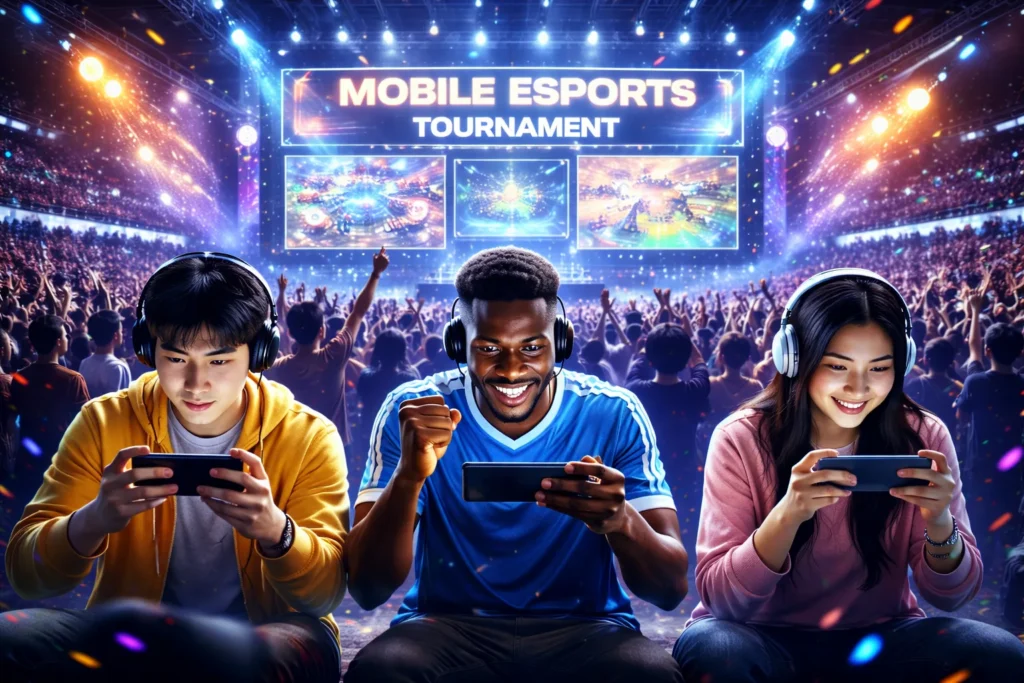

The Quiet Beginning: From Casual Time-Passer to Competitive Obsession
The story of mobile esports begins not with a bang, but with a series of quiet revolutions in how people interacted with their most personal devices. In the late 2000s, as smartphones transitioned from luxury items to global necessities, a handful of forward-thinking developers noticed something peculiar. People weren’t just using their phones for communication—they were filling idle moments with simple games. These early titles, with their basic touch controls and pixelated graphics, held a hidden promise: what if this casual entertainment could become something more competitive? What if the device that connected us to friends and family could also connect us to rivals and teammates in genuine competition?
The earliest experiments in mobile competition were humble affairs. Before organized tournaments existed, competition happened organically—friends comparing high scores on “Snake” on their Nokia phones, office rivals battling for the top spot on a “Bejeweled” leaderboard, siblings passing a single device back and forth in attempts to outlast one another in early endless runners. These informal competitions planted a psychological seed: mobile devices weren’t just for consumption; they could be arenas for skill expression and friendly rivalry.
Simultaneously, in parts of the world where personal computers were rare luxuries and gaming consoles were financially out of reach, smartphones represented something more profound—the only portal to digital entertainment and, potentially, digital competition. In Southeast Asia, Latin America, and parts of Africa, mobile networks spread faster than wired broadband, and relatively affordable smartphones provided access to worlds that were otherwise closed. This geographical and economic reality created the perfect conditions for mobile gaming—and eventually, mobile esports—to flourish first not in the traditional tech hubs of the West, but in these emerging markets.
The First Tournaments: Building Arenas Without Stadiums
The transition from casual competition to organized esports required pioneers—individuals and companies willing to believe that people would watch others play games on small screens. The earliest mobile esports tournaments were almost absurdly modest by today’s standards. They often took place in borrowed spaces—internet cafes that normally hosted PC gaming, convention center corners at broader tech events, or even repurposed restaurant banquet rooms. The production values were minimal: a few phones mounted on stands, a basic livestream setup, and small crowds of curious onlookers.
These early events faced skepticism from multiple directions. Traditional esports communities, centered on complex PC titles like “StarCraft” and “Counter-Strike,” often dismissed mobile gaming as “not real esports.” Technical limitations presented constant hurdles: ensuring stable internet connections for multiple devices, dealing with varying phone models and performance levels, and creating viewing experiences that could translate small-screen action to an audience. Prize pools were measured in hundreds, not millions, of dollars, and participants were typically enthusiasts with day jobs rather than full-time professionals.
Yet despite these challenges, something remarkable happened at these grassroots tournaments. The players exhibited undeniable skill—quick reflexes, strategic thinking, and teamwork that mirrored traditional sports. The audiences, though small, were intensely engaged, reacting to clutch plays with genuine excitement. And perhaps most importantly, the accessibility of the games meant that anyone in attendance could imagine themselves on that stage. Unlike watching a professional “StarCraft” match, where the skill gap felt astronomical to casual observers, mobile games often had lower initial barriers to understanding what separated good play from great play.
Several key titles emerged as the foundation stones of competitive mobile gaming during this formative period. “Clash Royale” demonstrated that strategic depth could exist in short-burst matches perfectly suited to mobile play sessions. “Vainglory” offered a fully-realized MOBA (Multiplayer Online Battle Arena) experience with touch controls that felt surprisingly precise. And various racing games proved that fast-paced action genres could translate to touchscreens. Each successful title expanded the definition of what mobile competitive gaming could be, attracting different player demographics and creating varied spectator experiences.
The Infrastructure Revolution: How Technology Enabled the Boom
The explosive growth of mobile esports in the 2020s wasn’t driven primarily by better games—it was enabled by a convergence of technological advancements that transformed smartphones from limited gaming devices into legitimate competitive platforms. This infrastructure revolution occurred across multiple fronts simultaneously, creating the foundation for the global phenomenon we see today.
The Smartphone Hardware Leap
Between 2015 and 2025, smartphone processing power increased approximately tenfold while display technology underwent multiple generational shifts. Early competitive mobile gaming was constrained by devices that struggled to maintain consistent frame rates during complex action, had noticeable touch input latency, and suffered from rapid battery drain during extended play. The introduction of dedicated mobile gaming chipsets, high-refresh-rate displays (90Hz, 120Hz, and eventually 144Hz), advanced cooling solutions, and larger batteries changed everything. For the first time, smartphones could deliver gaming experiences that felt genuinely responsive and visually competitive with dedicated gaming devices.
Manufacturers quickly recognized gaming as a key differentiator in an increasingly crowded market. Companies like ASUS with its ROG Phone line, Xiaomi with its Black Shark series, and eventually even mainstream manufacturers like Apple and Samsung with gaming-focused features, began optimizing devices specifically for the competitive mobile gamer. Shoulder triggers, touch-sensitive zones, performance modes that maximized frame rate consistency, and network prioritization features became standard in mid-range and premium devices. This hardware evolution created a virtuous cycle: better devices enabled more sophisticated games, which increased player engagement, which drove demand for even better gaming phones.
The Connectivity Transformation
If improved hardware provided the stage for mobile esports, advanced connectivity built the audience. The global proliferation of 4G LTE networks in the 2010s created the first truly mass-market opportunity for competitive mobile gaming by providing sufficient bandwidth and latency for real-time multiplayer experiences. But it was the rollout of 5G networks in the early 2020s that represented the true game-changer for competitive integrity.
Where 4G typically offered latencies between 30-50 milliseconds—acceptable for casual play but problematic for high-level competition—5G networks brought this down to 10 milliseconds or less in optimal conditions. This reduction brought mobile gaming latency in line with wired broadband connections, eliminating what had been a significant competitive disadvantage for mobile players. Suddenly, tournaments could be held in more locations without worrying about finding stable Wi-Fi, and players could practice seriously on cellular connections during commutes or while away from home.
The Streaming Ecosystem
The spectator side of mobile esports required its own technological revolution. Early attempts to broadcast mobile gameplay were often awkward—cameras pointed at small screens, choppy screen mirroring, or complicated cable setups that limited player mobility. The development of low-latency screen mirroring technologies, combined with the rise of accessible streaming software and platforms, solved these problems.
Platforms like YouTube Gaming, Twitch, and later TikTok Live provided the distribution channels, while companies like Streamlabs and Lightstream created tools that made professional-quality streaming accessible to tournament organizers of all sizes. Perhaps most importantly, mobile-first streaming platforms in key growth markets—such as Nimo TV in Southeast Asia and Douyu in China—recognized mobile esports as a primary content category early and built features specifically for this audience.
The viewing experience itself evolved through technological innovation. Interactive overlays that displayed real-time statistics, multi-view setups that allowed spectators to watch multiple player perspectives simultaneously, and augmented reality elements that blended digital game elements with physical stages all elevated mobile esports broadcasts from simple gameplay streams to polished entertainment productions.
The Regional Powerhouses: How Geography Shaped the Mobile Esports Landscape
Unlike traditional sports or even PC-based esports, which often followed established paths of development from West to East, mobile esports developed distinct regional identities from its inception. The unique cultural, economic, and technological circumstances in different parts of the world created varied competitive ecosystems, each with its own strengths, traditions, and stars.
Southeast Asia: The Incubator of Champions
No region has embraced mobile esports more completely than Southeast Asia. Countries like the Philippines, Indonesia, Malaysia, Thailand, and Vietnam didn’t just adopt mobile gaming—they made it central to their digital cultures. Several factors converged to create this perfect environment:
- Mobile-First Digital Adoption: With PC and console penetration relatively low compared to other regions, smartphones became the primary gaming device for an entire generation.
- Affordable Data Plans: Competitive mobile data pricing made always-on connectivity the norm rather than the exception.
- Cultural Acceptance: Gaming faced less cultural stigma than in some Western countries, allowing passionate fandom to develop more freely.
- Social Gaming Traditions: The region had strong existing traditions of social gaming in internet cafes, which translated naturally to mobile platforms.
The Philippines emerged as an early powerhouse, particularly in Mobile Legends: Bang Bang. Filipino teams like Bren Esports (M2 World Champions) and Blacklist International (M3 World Champions) set early competitive standards with their disciplined playstyles and innovative strategies. Indonesia, with its massive population and incredibly passionate fanbase, became the spiritual home of mobile esports fandom. Indonesian viewership records for tournaments regularly dwarf those from other regions, and local tournaments fill arenas with thousands of screaming fans.
What makes Southeast Asia particularly fascinating is how different countries developed distinct competitive identities within the same games. Thai teams in “Arena of Valor” became known for their aggressive early-game strategies. Vietnamese “Free Fire” squads perfected zone-control tactics in battle royale matches. Malaysian organizations pioneered professional management approaches that balanced player development with commercial sustainability. This regional diversity within proximity created natural rivalries that fueled fan engagement across national borders.
China: The Industrial Powerhouse
While Southeast Asia provided the passion, China built the infrastructure. Chinese companies like Tencent (publisher of “Honor of Kings” and “PUBG Mobile”) and Moonton (developer of “Mobile Legends: Bang Bang,” later acquired by ByteDance) didn’t just create successful mobile games—they engineered complete competitive ecosystems. The Chinese approach to mobile esports has been characterized by scale, vertical integration, and commercialization.
“Honor of Kings” (known as “Arena of Valor” internationally) demonstrates the Chinese model at its most formidable. With over 100 million daily active users at its peak, the game’s domestic ecosystem operates on a scale unimaginable elsewhere. The Honor of Kings Professional League (KPL) features city-based franchises, celebrity investors from traditional sports and entertainment, and production values that rival major television broadcasts. Chinese teams have dominated international competition when they’ve participated, though the primary focus has remained on the massive domestic market.
What China contributed most significantly to global mobile esports was proof of concept—evidence that mobile competitive gaming could support fully professional leagues with player contracts, coaching staffs, training facilities, and lucrative sponsorship deals. The business models pioneered in China, particularly around integrating esports with broader entertainment ecosystems, have been studied and adapted worldwide.
Latin America: The Passionate Contender
Latin America’s mobile esports story is one of explosive growth against economic constraints. In countries like Brazil, Mexico, Argentina, and Chile, high import taxes made gaming PCs and consoles prohibitively expensive for many, while smartphones offered a more accessible entry point to digital entertainment. This economic reality, combined with the region’s existing passion for gaming and football-style fandom, created ideal conditions for mobile esports to flourish.
Brazil emerged as Latin America’s mobile gaming capital, particularly for battle royale titles. “Free Fire,” developed by Singapore-based Garena but finding its most passionate audience in Brazil, became a cultural phenomenon. At its peak, “Free Fire” tournaments in Brazil drew television-level viewership, with local stars achieving celebrity status. The game’s shorter match length (10-15 minutes compared to “PUBG Mobile’s” 30+ minutes) and lower hardware requirements made it perfectly suited to Brazilian playing habits and device capabilities.
Mexican teams found success in different titles, particularly “Clash Royale” and later “Brawl Stars,” demonstrating strategic depth in seemingly simpler games. Argentine organizations, facing significant economic challenges including currency instability, developed innovative approaches to player development and monetization that emphasized digital revenue streams over traditional sponsorship.
Latin America’s contribution to global mobile esports culture has been its unmistakable passion. The energy of Brazilian crowds, the creative team branding from Mexican organizations, and the underdog narratives from smaller markets have added emotional depth to the competitive landscape. When Latin American teams compete internationally, they often bring playing styles and strategies that differ markedly from Asian or North American approaches, creating exciting clashes of competitive philosophy.
The Middle East and South Asia: The Next Frontiers
More recently, two regions have begun making their mark on the global mobile esports stage: the Middle East and South Asia. Their trajectories, while both promising, follow different paths shaped by their unique circumstances.
The Middle East, particularly Saudi Arabia and the United Arab Emirates, has approached mobile esports with strategic investment and vision. Recognizing esports as both an economic opportunity and a tool for youth engagement and tourism development, governments and sovereign wealth funds have made substantial investments. Saudi Arabia’s hosting of the inaugural Esports Nations Cup in 2026 represents this strategic approach—using major tournaments as catalysts for ecosystem development. The region’s advantages include high disposable income, excellent infrastructure, and geographic positioning as a bridge between European and Asian markets.
South Asia, led by India and Pakistan, represents perhaps the largest untapped potential market for mobile esports. With enormous youth populations, rapidly improving connectivity, and a historical affinity for cricket (a sport with strategic similarities to many esports titles), the region seems primed for mobile gaming growth. However, regulatory challenges, particularly in India where relations with Chinese companies have impacted game availability, have created a more fragmented landscape. Despite these hurdles, local tournaments are growing, homegrown stars are emerging, and international publishers are increasingly tailoring their approaches to South Asian preferences.
The Business of Competition: Building Sustainable Ecosystems
The transformation of mobile esports from grassroots tournaments to a multibillion-dollar industry required more than just passionate players and audiences—it required sustainable business models that could support professional organizations, tournament operators, content creators, and all the ancillary roles that comprise a modern sports ecosystem. This business evolution has been one of mobile esports’ most significant achievements, creating economic opportunities across global supply chains.
Revenue Stream Diversification
Early mobile esports tournaments relied heavily on two funding sources: game publisher subsidies and small sponsorship deals from companies targeting gaming audiences. While these provided essential seed funding, they didn’t represent a sustainable long-term model. The industry’s maturation has seen a dramatic diversification of revenue streams:
- Media Rights: As viewership numbers reached the millions, traditional and digital broadcasters began paying for exclusive rights to tournaments. Mobile-first platforms like TikTok and YouTube have been particularly aggressive in securing mobile esports content, recognizing its appeal to younger, globally distributed audiences.
- Sponsorship Tiers: Sponsorship evolved from simple logo placement to integrated partnerships. Major non-endemic brands like Coca-Cola, McDonald’s, and Mercedes-Benz now sponsor mobile esports events and teams, bringing mainstream marketing budgets into the ecosystem. These partnerships often extend beyond traditional advertising to include product integrations, co-branded content, and community initiatives.
- Merchandising and Licensing: Successful teams and tournaments have developed sophisticated merchandising operations, selling everything from jerseys and accessories to digital collectibles. Licensing deals extend brands into physical retail, collaborations with other games, and even appearances in broader media.
- Ticketing and Live Experiences: While digital viewership represents the largest audience, live events have become significant revenue drivers. Major tournaments sell thousands of tickets, with premium experiences commanding prices comparable to traditional sporting events or concerts.
- Content Monetization: Beyond tournaments, the daily content ecosystem—streaming, video-on-demand, social media, and educational content—generates substantial revenue through advertising, subscriptions, and direct support from fans.
The Professionalization of Teams
Mobile esports organizations have evolved from informal groups of friends to professionally managed businesses with diverse revenue streams and long-term strategic planning. This professionalization has occurred across several dimensions:
- Player Contracts and Welfare: Standardized player contracts now include not just salaries and prize money shares, but also provisions for health insurance, retirement savings, mental health support, and career transition assistance. The best organizations provide structured environments with coaching, analysts, sports psychologists, nutritionists, and physical trainers.
- Business Operations: Successful teams now employ professionals in marketing, sponsorship sales, finance, legal, community management, and content production. This business infrastructure allows organizations to build sustainable models rather than relying solely on tournament winnings.
- Revenue Diversification at Team Level: Forward-thinking teams have moved beyond sponsorship as their sole revenue source. Many now operate their own content networks, run educational programs and camps, develop and sell proprietary training tools, and even invest in or incubate new gaming-related startups.
- Geographic Expansion: The most successful mobile esports organizations have expanded beyond their home regions, fielding teams in multiple games and regions. This diversification reduces risk and creates global brand recognition.
League Structures and Governance
As mobile esports matured, informal tournament circuits gave way to structured league systems modeled after traditional sports. These leagues provide stability, regular content for fans, and predictable revenue streams for participants. Key developments in league structuring include:
- Franchise Models: Some leagues have adopted franchise systems where teams pay entry fees for permanent spots, creating stability and encouraging long-term investment in brand building and player development. The Mobile Legends Professional League (MPL) in several Southeast Asian countries uses this approach.
- Promotion and Relegation: Other leagues maintain more open systems with promotion and relegation between tiers, ensuring competitive integrity and opportunity for rising teams. This model is common in European mobile esports scenes.
- Revenue Sharing: Advanced leagues implement revenue sharing from media rights, sponsorship, and merchandise, ensuring that success benefits all participants and creating more equitable ecosystems.
- Collective Bargaining: Player associations have formed in some leagues, giving competitors a voice in rulemaking, revenue distribution, and working conditions.
Investment and Valuation Growth
The business community’s perception of mobile esports has transformed from skepticism to enthusiastic investment. This shift is reflected in several trends:
- Venture Capital and Private Equity: Investment firms that once focused exclusively on traditional tech startups now allocate portions of their portfolios to gaming and esports companies, with mobile-focused ventures receiving increasing attention.
- Traditional Sports Cross-Over: Professional sports teams from football, basketball, and other traditional sports have invested in or created their own mobile esports divisions, bringing sports management expertise and additional capital to the space.
- Public Markets: Several mobile gaming and esports companies have gone public through traditional IPOs or SPAC mergers, though with mixed results that highlight the sector’s ongoing maturation process.
- Strategic Corporate Investment: Major technology, media, and telecommunications companies have made strategic investments in mobile esports as part of broader content and engagement strategies.
The Games Themselves: Evolving Design for Competition
The games that have succeeded in mobile esports share common design principles that balance accessibility with competitive depth, accommodate mobile-specific constraints, and create compelling spectator experiences. The evolution of these design principles represents one of the most important—and often overlooked—aspects of the mobile esports story.
Accessibility as a Design Philosophy
Unlike PC or console games that often assume players will invest significant time learning complex control schemes and mechanics, successful mobile esports titles typically follow an “easy to learn, difficult to master” design philosophy. This approach serves several crucial functions:
- Lowering Entry Barriers: Simplified basic controls allow new players to participate meaningfully almost immediately, expanding the potential player base dramatically.
- Accommodating Play Patterns: Mobile gaming sessions are often shorter and more fragmented than dedicated gaming sessions. Games designed for competition typically feature match lengths between 10-20 minutes, allowing completion during commutes, breaks, or other interstitial moments.
- Progressive Complexity: While basic mechanics are simple, layers of strategic depth reveal themselves as players advance. This progressive learning curve keeps players engaged over the long term while allowing skill differentiation at competitive levels.
- Touch-Optimized Interfaces: Control schemes are designed specifically for touchscreens rather than adapted from mouse-and-keyboard or controller inputs. This optimization makes skilled play feel natural on mobile devices rather than frustratingly imprecise.
Spectator-First Considerations
Modern mobile esports titles are designed with spectators in mind from their earliest development stages. This represents a significant shift from earlier competitive games, where viewing considerations were often an afterthought. Key spectator-focused design elements include:
- Visual Clarity: Even on small screens, important information—health bars, cooldown indicators, team affiliations—is immediately apparent through careful use of color, iconography, and visual effects.
- Camera Intelligence: Games often feature automated camera systems that follow the most important action, making broadcasts more accessible to casual viewers who might struggle with manually controlled viewing.
- Information Layering: Critical information is presented immediately, while deeper statistics and analysis are available through overlays for more dedicated viewers. This layered approach caters to both casual and hardcore audience segments.
- Moment Identification: Design elements naturally create and highlight “big moments”—dramatic team fights, last-second objectives, comeback scenarios—that provide natural narrative peaks for broadcasts.
Balancing for Competition
Game balance—ensuring that no single strategy, character, or item becomes overwhelmingly dominant—is crucial for any competitive title. Mobile games face unique balancing challenges:
- Frequent Updates: The live-service model common in mobile gaming allows for frequent balance adjustments, but these changes must be carefully managed to avoid alienating players who have invested time mastering specific strategies.
- Regional Meta-Variation: Because mobile games often have massive global player bases with limited cross-region play until tournament levels, distinct regional “metas” (dominant strategies) can develop. Tournament play becomes particularly exciting when these different approaches clash.
- Device Consideration: Balancing must account for performance differences across the wide range of devices used to play mobile games, ensuring that competitive integrity isn’t compromised by hardware limitations.
Monetization Without Pay-to-Win
Perhaps the most delicate design challenge for mobile competitive games is implementing monetization systems that generate revenue without creating “pay-to-win” scenarios where spending money provides direct competitive advantages. Successful titles have developed several approaches to this challenge:
- Cosmetic-Only Monetization: Many competitive mobile games follow the model established by PC titles like “League of Legends,” where spending money only affects visual appearance rather than gameplay capabilities.
- Progression Acceleration: Some games allow players to pay to unlock characters or items more quickly, but ensure these elements can also be obtained through gameplay and don’t provide overwhelming advantages.
- Battle Pass Systems: Season-long battle passes provide a mix of cosmetic items and progression resources, creating recurring revenue while giving all players clear goals and rewards.
- Tournament Entry Fees: Some games incorporate small entry fees for competitive tournaments, with prize pools funded by these fees. This model creates direct connections between competitive play and monetization.
The Player Journey: From Casual to Professional
The path to becoming a professional mobile esports player differs markedly from traditional sports or even PC esports pathways. Understanding this journey reveals much about the unique nature of mobile competition and its role in creating opportunities across diverse global communities.
Discovery and Early Development
For most professional mobile gamers, their competitive journey begins not in organized settings but in casual play with friends or solo matchmaking. The discovery process typically follows several patterns:
- Organic Skill Recognition: Players notice they’re consistently performing well in public matches, often ranking at the top of leaderboards or receiving positive feedback from teammates and opponents.
- Community Identification: Online communities—Discord servers, in-game clans, social media groups—often serve as talent identification networks. Exceptionally skilled players gain reputations within these communities.
- Content Creation Exposure: Some players are discovered through streaming or video content where their skills are publicly demonstrated to broader audiences.
- Tournament Performance: Amateur tournaments provide proving grounds where unknown players can attract attention through standout performances against established competitors.
The accessibility of mobile gaming means this discovery phase can happen anywhere—a student in rural India, a factory worker in Brazil, or a small business owner in Indonesia might all discover exceptional talent through the same games played during breaks or after work. This geographic and socioeconomic diversity in talent discovery represents one of mobile esports’ most democratizing features.
The Amateur to Semi-Professional Transition
Moving from casual excellence to organized competition represents the first major hurdle for aspiring professionals. This transition typically involves several stages:
- Forming or Joining a Team: Individual players either form teams with others they’ve met through matchmaking or community networks or try out for existing amateur organizations.
- Structured Practice: Casual play gives way to scheduled practice sessions, often balancing competitive aspirations with education or employment commitments.
- Local Tournament Participation: Teams begin entering online or local live tournaments, gaining experience in organized competition and building competitive resumes.
- Initial Sponsorship or Support: Successful amateur teams might attract small sponsorships from local businesses or in-kind support from gaming-related companies.
This transitional phase presents significant challenges, particularly in regions without established developmental pathways. Players often must self-fund travel to tournaments, balance practice with other responsibilities, and navigate the uncertainty of whether their investment of time will lead to professional opportunities. Organizations like gaming cafes, educational institutions, and community centers sometimes provide crucial support during this phase by offering practice spaces, organizing local competitions, or providing mentorship.
Reaching Professional Status
The definition of “professional” status varies across regions and games but typically involves some combination of the following:
- Contractual Employment: Signing a contract with an organization that provides a regular salary, benefits, and structured support in exchange for competitive performance and brand representation.
- Full-Time Commitment: Transitioning to gaming as a primary occupation rather than a side activity alongside education or other employment.
- Tournament Eligibility: Gaining access to professional-level tournaments with significant prize pools and media coverage.
- Organizational Infrastructure: Receiving support from coaches, analysts, and other staff dedicated to improving team and individual performance.
The professionalization process has accelerated as mobile esports ecosystems have matured. Where early professionals often had to create their own structures and opportunities, today’s rising players can follow more established pathways through academy teams, structured league systems, and organized scouting networks.
Career Longevity and Transition
Like traditional athletes, mobile esports professionals face questions about career duration and post-competitive transitions. Several factors influence career longevity:
- Game Longevity: Professionals’ careers are tied to the ongoing popularity and competitive relevance of their primary game. Players who can successfully transition between titles often extend their careers.
- Physical and Mental Health: The demanding practice schedules and competitive pressure of professional gaming can lead to burnout or health issues. Organizations with strong player welfare programs typically see longer average career spans.
- Skill Adaptation: As games evolve through updates and meta-shifts, players must continuously adapt their skills and strategies. Those who demonstrate learning agility often maintain competitive relevance longer.
Post-competitive career paths have diversified as the industry has matured. Former players now commonly transition into:
- Coaching and Analysis: Applying their competitive knowledge to develop new generations of players.
- Content Creation and Broadcasting: Leveraging their name recognition and expertise to build audiences as streamers, commentators, or analytical content creators.
- Organizational Roles: Moving into management, operations, or business development roles within esports organizations.
- Entrepreneurship: Launching gaming-related businesses, from training platforms to merchandise lines.
The existence of these post-competitive pathways makes professional mobile gaming more sustainable as a career choice and helps the industry retain valuable institutional knowledge as it continues to evolve.
Spectator Experience Evolution: From Niche to Mainstream
The way audiences engage with mobile esports has transformed dramatically since the first tournaments, driven by technological innovation, production quality improvements, and deeper understanding of what makes competitive viewing compelling. This evolution in spectator experience has been crucial to mobile esports’ journey from niche interest to mainstream entertainment.
Broadcast Production Quality
Early mobile esports broadcasts often resembled technical demonstrations more than polished entertainment productions. Today’s major tournaments feature production values that rival traditional sports broadcasts, incorporating:
- Multiple Camera Angles: Including player perspectives, overhead map views, cinematic third-person shots, and crowd reactions.
- Real-Time Data Integration: Overlays displaying player statistics, item builds, cooldown timers, and predictive analytics that enhance understanding of in-game situations.
- Professional Commentary Teams: Pairs or trios of commentators providing play-by-play calling, strategic analysis, and color commentary tailored to different audience knowledge levels.
- Pre and Post-Game Analysis: Studio segments featuring former players and analysts breaking down strategies, predicting match outcomes, and reviewing key moments.
- Player and Coach Interviews: Human interest content that helps audiences connect with competitors as individuals rather than just in-game avatars.
This production quality escalation has required significant investment in equipment, software, and personnel. The learning curve has been steep, with production teams adapting techniques from traditional sports broadcasting while inventing new approaches specific to gaming content. The result is that today’s viewers can choose between highly polished mainstream broadcasts and more intimate community-focused streams, catering to different preferences within the same ecosystem.
Interactive and Participatory Viewing
Unlike traditional sports broadcasting, which remains largely a one-way experience, mobile esports has pioneered interactive viewing formats that actively involve the audience. These participatory elements include:
- Predictive Features: Viewers can predict match outcomes, player performance milestones, or in-game events through integrated platforms, often earning rewards for accuracy.
- Audience-Controlled Elements: Some broadcasts incorporate audience voting on elements like player of the match awards or even in-game cosmetic choices during exhibition matches.
- Integrated Chat and Social Features: Rather than treating chat as a separate experience, modern broadcasts often integrate audience reactions and commentary directly into the viewing interface through moderated highlights or real-time sentiment analysis.
- Multi-Stream Options: Viewers can often choose between different broadcast languages, commentator teams, or even focused streams following specific players throughout a match.
These interactive elements transform passive viewing into active participation, creating stronger engagement and community bonds among viewers. They also provide valuable data to tournament organizers and sponsors about audience preferences and behaviors.
Cross-Platform Viewing Optimization
Recognizing that mobile esports audiences consume content across diverse devices and platforms, producers have optimized viewing experiences for different contexts:
- Mobile-First Streams: Vertical format broadcasts designed specifically for smartphone viewing during commutes or other mobile situations, with simplified graphics and interface elements sized for smaller screens.
- Social Media Integration: Short-form highlights, behind-the-scenes content, and interactive polls distributed through TikTok, Instagram, and Twitter to reach audiences who might not watch full broadcasts.
- Second-Screen Experiences: Companion apps and websites that provide deeper statistics, alternative camera angles, and social features that complement rather than duplicate the main broadcast.
- Traditional Television Adaptations: For broadcasts on linear television, adjusted pacing, additional explanatory content, and modified graphics that accommodate audiences less familiar with gaming conventions.
This platform-agnostic approach recognizes that the same viewer might watch a full tournament broadcast on a television at home, catch highlights on a smartphone during a break at work, and engage with community discussion on a tablet before bed. Creating cohesive experiences across these different contexts represents a significant production challenge that mobile esports has addressed more effectively than many traditional media properties.
Educational Content Integration
As mobile esports seeks to expand beyond its core audience, educational content has become increasingly integrated into viewing experiences. This includes:
- Beginner-Friendly Broadcasts: Alternate streams with additional explanation of game mechanics, terminology, and strategies for new viewers.
- Tutorial Segments: Short educational segments during pre-game shows or breaks explaining specific game elements or common strategies.
- Skill Comparison Visualizations: Graphics that help viewers understand the difficulty and significance of professional plays by comparing them to more common actions.
- Historical Context: References to past tournaments, player legacies, and evolving team rivalries that help new viewers understand current narratives.
By lowering the knowledge barrier to enjoyment, these educational elements help mobile esports reach broader audiences while still satisfying dedicated fans with deep strategic analysis.
Cultural Integration: Beyond Gaming
The impact of mobile esports extends far beyond gaming communities, influencing broader culture, education, and even traditional sports. This cultural integration represents both a measure of the phenomenon’s significance and a driver of its continued growth.
Mainstream Media Recognition
Mobile esports has achieved visibility in traditional media outlets that once ignored or dismissed competitive gaming:
- News Coverage: Major tournaments now receive coverage in mainstream news publications, business journals, and entertainment media, often focusing on record-breaking viewership, economic impact, or human interest stories about players.
- Documentary and Film Interest: The compelling narratives of underdog teams, regional rivalries, and player journeys have attracted documentary filmmakers and streaming services, bringing mobile esports stories to non-gaming audiences.
- Academic Study: Universities and research institutions have begun studying mobile esports from sociological, economic, psychological, and technological perspectives, lending academic legitimacy to the field.
- Cultural Commentary: Mobile esports has entered broader cultural conversations about technology’s role in society, the nature of competition in the digital age, and the globalization of entertainment.
This mainstream recognition creates a virtuous cycle: media coverage introduces mobile esports to new audiences, which drives growth, which leads to more coverage. It also helps normalize competitive gaming as a legitimate form of entertainment and career path, reducing stigma and encouraging broader participation.
Influence on Traditional Sports
The relationship between mobile esports and traditional sports has evolved from mutual suspicion to increasing collaboration and cross-pollination:
- Ownership and Investment: Professional sports teams and athletes from football, basketball, motorsports, and other traditional sports have invested in mobile esports organizations, bringing sports management expertise and capital to the space.
- Broadcast Innovation: Traditional sports broadcasts have begun adopting production techniques pioneered in esports, particularly around data visualization, interactive elements, and multi-platform distribution.
- Youth Engagement Strategies: Traditional sports organizations study mobile esports’ success in engaging younger audiences, applying lessons to their own digital and community initiatives.
- Training Method Cross-Pollination: Concepts like video review, statistical analysis, and sports psychology, long established in traditional sports, have been adapted for esports, while traditional sports are beginning to explore gaming-based cognitive training tools.
This convergence is creating hybrid opportunities for professionals who understand both worlds, from sports marketers applying traditional sponsorship models to esports to former athletes transitioning to esports commentary with their understanding of high-pressure competition.
Educational Applications
Educational institutions at various levels have begun incorporating mobile esports into their programs, recognizing benefits beyond mere entertainment:
- STEM Education: Game design, statistics analysis, broadcast technology, and strategy development all provide engaging pathways to science, technology, engineering, and mathematics concepts.
- Soft Skill Development: Team-based competition develops communication, collaboration, strategic thinking, and emotional regulation skills applicable to academic and professional contexts.
- Career and Technical Education: Secondary schools and community colleges are developing esports-focused programs that prepare students for careers in gaming-adjacent fields like streaming production, marketing, event management, and business operations.
- Scholarship Opportunities: Universities are offering esports scholarships similar to traditional athletic scholarships, providing educational access to students with demonstrated competitive achievement and commitment.
These educational applications help legitimize mobile gaming as more than just a leisure activity while creating structured pathways for young people to develop skills with both recreational and professional applications.
Community and Social Impact
At the grassroots level, mobile esports has become a significant community-building force, particularly in regions with limited alternatives for structured youth activities or digital social connection:
- Community Centers and Cafes: Gaming cafes and community centers that host mobile esports viewing and participation have become important social hubs, particularly in urban areas with limited public gathering spaces.
- Intergenerational Connection: Unlike some gaming communities that segment strongly by age, mobile gaming’s accessibility has created spaces where younger and older players interact, with family members sometimes competing on the same teams or against each other.
- Identity and Representation: For communities historically underrepresented in traditional sports or mainstream media, mobile esports provides opportunities for recognition and achievement based solely on skill and dedication.
- Charity and Social Initiatives: Tournaments and streams often incorporate charity fundraising components, while gaming organizations increasingly engage in community outreach and social responsibility initiatives.
These community impacts, while difficult to quantify, represent some of mobile esports’ most meaningful contributions beyond entertainment and economic metrics. They demonstrate how digital competition can foster real-world social connection and positive development.
The Global Tournament Circuit: Creating a Sporting Calendar
As mobile esports has matured, what began as sporadic tournaments has evolved into a structured global circuit with defined seasons, premier events, and qualifying pathways. This tournament ecosystem provides competitive opportunities at all levels while creating consistent content for audiences throughout the year.
Tiered Tournament Structures
Modern mobile esports ecosystems typically feature multi-tiered tournament structures that serve different functions:
- Premier Global Events: The highest-level tournaments featuring the world’s best teams competing for the largest prize pools and most prestigious titles. Examples include the MLBB M-Series World Championships, PUBG Mobile Global Championship, and Free Fire World Series.
- Regional Leagues: Season-long competitions in specific geographic regions that determine regional champions and qualifiers for global events. These leagues provide consistent content for local audiences and development pathways for regional talent.
- Qualifying Circuits: Open tournaments that allow amateur and semi-professional teams to earn spots in regional leagues or direct qualification to global events. These circuits serve as talent discovery mechanisms and maintain competitive openness.
- Invitational Exhibitions: Special events that bring together top teams for non-standard formats, charity fundraisers, or cross-game competitions. These events often feature innovative rulesets and formats that wouldn’t work in standard competitive contexts.
- Amateur and Grassroots Competitions: Community-organized tournaments at local gaming cafes, educational institutions, or online platforms that serve as entry points for new competitors and community-building events.
This tiered structure creates multiple pathways to the top level while ensuring that elite competition remains accessible only to genuinely exceptional teams. It mirrors the promotion and relegation systems in traditional sports leagues while accommodating the global nature of mobile gaming.
Geographic Rotation and Global Inclusion
Unlike traditional sports where premier events often remain in established markets, mobile esports has deliberately rotated major tournaments through different global regions:
- Southeast Asian Hosting: Indonesia, the Philippines, and Singapore have regularly hosted world championships, recognizing the region’s status as the heartland of mobile esports fandom.
- Middle Eastern Expansion: Saudi Arabia and the United Arab Emirates have emerged as major hosts through strategic investment in event infrastructure and bidding for premier tournaments.
- European Entry Points: Turkey’s hosting of the MLBB M8 World Championship in 2027 represents mobile esports’ first premier tournament in Europe, testing the waters for broader Western adoption.
- Americas Development: The United States, Brazil, and Mexico have hosted significant regional tournaments, with full world championships likely as audience and infrastructure continue developing.
This geographic rotation serves multiple purposes: it rewards passionate regional fanbases with live events, tests games’ appeal in new markets, distributes economic benefits across regions, and demonstrates the truly global nature of mobile competition. It also creates interesting narrative dynamics as teams compete in unfamiliar environments far from their home support.
Seasonal Narrative Construction
Modern tournament circuits are designed to create compelling seasonal narratives that maintain audience engagement across multiple months:
- Season-Long Storylines: League formats allow rivalries to develop, underdog stories to unfold, and redemption arcs to play out over weeks or months rather than single tournaments.
- Playoff Tension: Season-ending playoffs with elimination formats create high-stakes scenarios where regular season performance translates to postseason advantage but doesn’t guarantee success.
- International Showdowns: Global tournaments bring together regional champions with distinct playing styles and strategies, creating clashes of competitive philosophy that transcend individual matches.
- Off-Season Content: Even during competitive breaks, content continues through roster changes, transfer drama, preseason exhibitions, and behind-the-scenes documentary content.
These narrative elements transform tournaments from isolated events into chapters in ongoing stories, giving audiences reasons to follow beyond individual matches. They also provide natural hooks for media coverage and community discussion between competitions.
Economic Impact Distribution
The global tournament circuit serves as a mechanism for distributing the economic benefits of mobile esports across the ecosystem:
- Direct Prize Money: Tournament winnings provide income for players and organizations, with major events offering life-changing sums to champions.
- Host City Benefits: Cities that host major tournaments experience economic boosts from visitor spending, media exposure, and infrastructure utilization.
- Content Creation Opportunities: Tournaments generate content not just for official broadcasts but for community creators, analysts, and media outlets covering the events.
- Sponsorship Activation: Tournaments provide platforms for sponsors to engage with audiences through activations, advertising, and experiential marketing.
As the circuit has grown more structured, these economic benefits have become more predictable and sustainable, allowing organizations to plan longer-term investments in player development, content creation, and business operations.
Technological Frontiers: The Next Generation of Mobile Competition
Even as mobile esports enjoys unprecedented growth, technological innovation continues to expand the possibilities for how, where, and what people compete in on mobile devices. These emerging technologies promise to shape the next chapter of the mobile esports story.
5G and Edge Computing
While 5G networks have already improved mobile gaming experiences, their full potential remains largely untapped for competitive gaming:
- Cloud Gaming Integration: High-speed, low-latency 5G connections could enable true cloud gaming experiences on mobile devices, allowing players to access graphically intensive games without needing powerful local hardware. This could dramatically expand the library of games available for mobile competition.
- Edge Computing Applications: Processing game logic on network edges rather than locally could reduce latency further while enabling more complex game worlds and physics.
- Augmented Reality Multiplayer: 5G’s bandwidth and latency characteristics could support persistent, shared augmented reality experiences that blend digital competition with physical environments.
- Tournament Infrastructure: Dedicated 5G networks at tournament venues could provide perfectly consistent connectivity for competitors, eliminating variance in connection quality as a competitive factor.
As 5G networks achieve broader coverage and reliability, tournament organizers and developers will increasingly design experiences that assume rather than accommodate mobile connectivity limitations.
Augmented and Virtual Reality
While VR gaming has largely remained separate from mobile esports, AR (Augmented Reality) represents a particularly promising frontier for mobile competition:
- Location-Based Competition: Games like “Pokémon GO” have demonstrated the appeal of gaming that incorporates physical movement and real-world locations. Competitive formats for such games could create entirely new tournament structures.
- Mixed Reality Spectatorship: AR could allow live audiences to view digital game elements overlaid on physical stages, bridging the gap between in-person and digital viewing experiences.
- Training and Analysis Tools: AR applications could help players analyze gameplay by visualizing game data in three-dimensional space or simulating opponent positions during review sessions.
- Accessibility Adaptations: AR interfaces could make games more accessible to players with different physical abilities by adapting control schemes or information presentation to individual needs.
The challenge for AR competition will be creating formats that are accessible to broad audiences rather than requiring specific hardware or locations. The most successful implementations will likely enhance rather than replace existing competitive experiences initially.
Artificial Intelligence Integration
AI technologies are beginning to influence mobile esports in several ways:
- Training Partners and Analysis: AI opponents that adapt to player skill levels and strategies could provide more effective practice tools than static bots or human opponents of inconsistent skill.
- Automated Production Assistance: AI could help broadcast teams by automatically identifying important moments, suggesting camera angles, or generating statistical insights in real time.
- Talent Identification: Pattern recognition algorithms could analyze gameplay data to identify promising players who might otherwise be overlooked by traditional scouting.
- Personalized Viewing Experiences: AI could customize broadcasts for individual viewers based on their knowledge level, preferred teams, or viewing history, creating personalized narrative emphasis and explanatory content.
The ethical implementation of AI in competitive contexts will require careful consideration, particularly around transparency, fairness, and data privacy. However, responsibly applied AI could significantly enhance both competitive and spectator experiences.
Cross-Platform and Cross-Reality Competition
As gaming becomes increasingly platform-agnostic, the very definition of “mobile esports” may expand:
- True Cross-Platform Play: Games that allow seamless competition between mobile, console, and PC players could create unified competitive ecosystems, though balancing fairness across different control schemes presents significant challenges.
- Progressive Game Experiences: Games that allow players to begin experiences on mobile and continue them on other platforms could create new forms of competition that aren’t confined to single sessions or devices.
- Hybrid Physical-Digital Competitions: Formats that combine mobile gaming with physical challenges or locations could appeal to audiences interested in both gaming and traditional sports.
These developments could make mobile devices the entry point to broader competitive gaming ecosystems rather than self-contained competitive platforms, further increasing their centrality to the global esports landscape.
Challenges and Controversies: Navigating Growth
Despite its remarkable success, mobile esports faces significant challenges and controversies that will shape its continued development. How the industry addresses these issues will determine whether it achieves long-term stability and legitimacy or succumbs to the pitfalls that have derailed other rapidly growing sectors.
Competitive Integrity Concerns
As prize pools and prestige have grown, so have incentives to compromise competitive fairness:
- Cheating and Exploitation: Mobile platforms present unique vulnerabilities to cheating through modified game clients, input automation, network manipulation, and device-level hacks. Detection and prevention require continuous investment and adaptation as cheating methods evolve.
- Match-Fixing and Gambling: The global nature of competition, with varying legal frameworks and enforcement capabilities, creates opportunities for match-fixing. Collaboration between tournament organizers, law enforcement, and gambling regulators will be necessary to maintain integrity.
- Device and Network Disparities: Despite improvements, differences in device performance and network quality can still create competitive advantages unrelated to skill. Standardizing tournament equipment and connectivity helps but doesn’t address disparities in practice environments.
- Region-Locked Content and Balancing: Games often release content at different times in different regions or implement balance changes based on regional data, creating temporary competitive asymmetries in international tournaments.
Addressing these integrity concerns requires transparent rulemaking, consistent enforcement, technological safeguards, and education about competitive ethics throughout the ecosystem. The credibility of mobile esports as legitimate competition depends on audiences believing that results reflect skill rather than manipulation or unfair advantage.
Player Welfare and Labor Issues
The professionalization of mobile gaming has exposed significant player welfare challenges:
- Career Sustainability: The average competitive career remains short, with uncertain income trajectories and limited post-career support systems in many regions.
- Health Impacts: Intensive practice schedules can contribute to repetitive strain injuries, sleep disorders, and mental health challenges. Organizations vary widely in their support for player health and wellness.
- Exploitative Contracts: Young players, particularly in regions with less developed esports ecosystems, may sign contracts with unfavorable terms due to lack of representation or understanding of their rights.
- Content Creation Pressure: Many players face expectations to maintain streaming and content creation schedules alongside competitive practice, leading to burnout.
Developing industry standards for player contracts, health support, and career transition assistance will be crucial for the long-term health of the competitive scene. Player associations and collective bargaining could help ensure that player welfare keeps pace with industry growth.
Monetization and Sustainability Tensions
Balancing player and viewer experience with financial sustainability presents ongoing challenges:
- Free-to-Play Pressures: The free-to-play model that enables massive player bases also creates constant pressure to monetize through methods that don’t compromise competitive integrity.
- Sponsorship Integration: As non-endemic sponsors enter the space, balancing their visibility needs with viewer experience requires careful negotiation and creative integration.
- Revenue Distribution: Ensuring that revenue flows to players, teams, and tournament organizers in sustainable proportions is crucial for ecosystem health but challenging given power imbalances between different stakeholders.
- Economic Cycle Vulnerability: As a relatively new industry, mobile esports may be particularly vulnerable to broader economic downturns that could reduce sponsorship budgets and discretionary spending.
Diversifying revenue streams, developing fair revenue sharing models, and building financial reserves during growth periods could help the industry weather inevitable economic fluctuations.
Cultural and Regulatory Adaptation
Mobile esports’ global nature requires navigation of diverse cultural and regulatory landscapes:
- Content Regulation: Games must adapt to different national standards regarding violence, representation, and cultural sensitivities, sometimes creating fragmented competitive experiences.
- Gambling Legislation: The relationship between esports and gambling varies significantly by jurisdiction, creating complex compliance challenges for tournament organizers with global audiences.
- Youth Protection: Balancing youth participation with appropriate safeguards requires age verification systems, parental controls, and content moderation that work across different cultural contexts.
- Data Privacy: Complying with varying data protection regulations while maintaining competitive integrity and personalized experiences presents technical and legal challenges.
Successful global operators will need to develop flexible approaches that respect local norms while maintaining consistent competitive standards. This may involve regional adaptations of games, tournaments, and business practices rather than one-size-fits-all approaches.
The Future Trajectory: Where Mobile Esports Goes Next
Based on current trends and emerging technologies, several developments seem likely to shape mobile esports in the coming years. These trajectories suggest both continued growth and evolution in how mobile competition is organized, experienced, and integrated into broader culture and technology ecosystems.
Mainstream Cultural Integration
Mobile esports will likely continue its journey from niche interest to mainstream entertainment:
- Broadcast Television Adoption: As audience numbers justify carriage fees, more mobile esports content will appear on traditional television networks, particularly in regions with strong existing fanbases.
- Celebrity Cross-Pollination: Increased participation from mainstream celebrities as team owners, event hosts, or even competitors in exhibition matches.
- Educational Institution Embrace: More schools and universities will incorporate mobile esports into extracurricular activities, scholarship programs, and even curricula.
- Corporate Wellness Programs: Forward-thinking companies may incorporate team-based mobile gaming into employee engagement and wellness initiatives, recognizing their potential for building collaboration and strategic thinking skills.
This mainstreaming will likely accelerate as demographic shifts bring generations raised with mobile gaming into positions of cultural and economic influence.
Olympic and Multi-Sport Event Inclusion
The inclusion of mobile esports in the Asian Games represents a likely precursor to broader recognition:
- Asian Games Refinement: The 2026 Asian Games will provide valuable lessons about integrating esports into multi-sport events that could inform future inclusions.
- Commonwealth Games Exploration: As a more innovation-friendly multi-sport event, the Commonwealth Games might experiment with esports demonstrations or exhibitions.
- Olympic Movement Engagement: While full Olympic inclusion faces significant hurdles, demonstration events or parallel festivals during Olympic Games seem increasingly plausible within the next decade.
- Regional Games Integration: Pan American Games, African Games, and other regional multi-sport events may incorporate esports to engage younger audiences and reflect digital sporting trends.
Such inclusions would represent the ultimate recognition of mobile esports as legitimate competition while introducing it to entirely new audiences unfamiliar with gaming culture.
Specialization and Niche Development
As the mobile esports ecosystem matures, increased specialization seems likely:
- Game Genre Specialization: Different regions may develop particular expertise in specific game genres, much as different countries excel in different traditional sports.
- Demographic Targeting: Tournaments and leagues may increasingly target specific demographic segments beyond age and gender, such as educational institutions, professional affiliations, or geographic communities.
- Format Innovation: Experimental tournament formats with unique rules, team compositions, or scoring systems could appeal to niche audiences while testing concepts that might eventually influence mainstream competition.
- Accessibility-Focused Competition: Leagues and tournaments designed specifically for players with disabilities could utilize mobile gaming’s adaptability to create more inclusive competitive experiences.
This specialization could help mobile esports reach total addressable markets larger than any single traditional sport while creating more tailored experiences for different audience segments.
Convergence with Traditional Entertainment
The boundaries between mobile esports and other entertainment forms will likely continue to blur:
- Interactive Tournament Narratives: Tournament formats that incorporate scripted narrative elements, character development, and dramatic reveals could appeal to audiences who enjoy reality competition shows or serialized drama.
- Music and Performance Integration: Deeper collaborations between tournament organizers and musical artists, potentially with in-game performances or music-driven game modes.
- Franchise Media Expansion: Successful teams and tournaments may expand into traditional media like comics, animation, or film, creating transmedia narratives that extend beyond competition.
- Location-Based Entertainment Partnerships: Tournament viewing experiences integrated into theme parks, cinemas, or other location-based entertainment venues.
These convergences could create hybrid entertainment forms that appeal to both gaming enthusiasts and broader entertainment audiences, further expanding mobile esports’ cultural footprint.
Conclusion: The Democratization of Global Competition
The story of mobile esports is fundamentally about access—not just to games, but to recognition, community, and opportunity. In a world increasingly divided by economic disparity, educational access, and geographic privilege, the smartphone has become an unlikely equalizer, creating a global arena where talent and dedication matter more than pedigree or privilege.
The journey from casual time-passer to professional career path, from niche hobby to mainstream entertainment, from regional curiosity to global phenomenon—this trajectory demonstrates something profound about the human desire for competition, community, and recognition. Mobile esports has tapped into these universal desires while overcoming traditional barriers that have limited who can participate in and benefit from organized competition.
As we look to the future, several truths seem self-evident: mobile devices will only become more capable, global connectivity will only improve, and the appetite for digital competition and community will only grow. Within this context, mobile esports seems poised not just for continued growth but for increasing cultural significance.
The revolution that began with friends comparing high scores on simple games has evolved into a global industry that creates careers, shapes culture, and connects communities across traditional boundaries. Yet at its heart, it remains true to those humble beginnings—the fundamental human joy of testing skills against others, of striving for excellence, of shared moments of triumph and defeat.
The arena is in our pockets, the athletes could be anyone with talent and determination, and the next champion might come from anywhere on the planet. This democratization of competition represents mobile esports’ most significant achievement and its most promising future. The game has changed forever, and everyone is invited to play.