
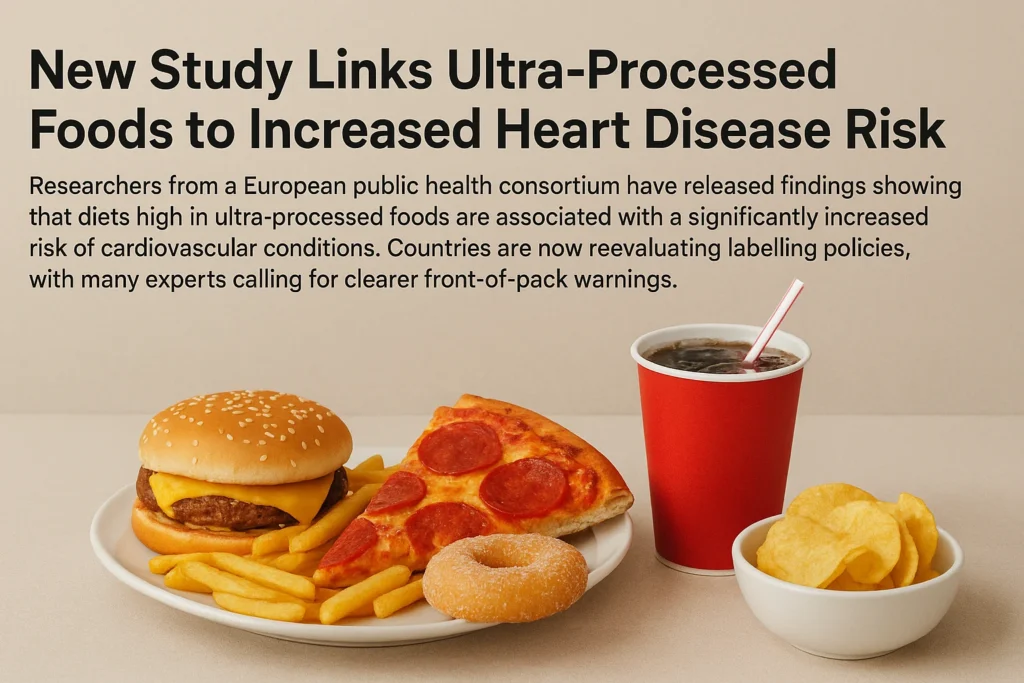

The Supermarket Awakening: A Moment of Reckoning in Aisle Seven
It began, as profound realizations often do, in the most ordinary of places. For Maria, it was a Tuesday evening in the brightly lit, softly humming aisle of her local supermarket. Her cart was a curated monument to modern convenience: vibrant boxes of cereal promising essential vitamins and animated characters, soft white bread perfect for small hands, individually wrapped snacks for hurried lunchboxes, and a few frozen pizzas standing guard against the chaos of weekday evenings. This was her weekly ritual, a practiced dance of efficiency born from a life balanced between work, family, and the relentless tick of the clock.
She moved on autopilot, her mind already at home, mentally arranging the evening’s schedule. Her hand reached for the familiar blue container of “Sunrise Berry Blast” yogurt, a staple in her children’s breakfast rotation. But this time, her fingers hesitated mid-air. A stark, black-and-white, stop-sign-shaped label on a competitor’s tub arrested her attention. It screamed, in bold, uncompromising letters: “EXCESO AZÚCARES AÑADIDOS” — “EXCESS ADDED SUGARS.”
The label was a visual shout in a sea of whispered marketing promises. It felt like a public accusation. Slowly, almost hesitantly, she picked up her usual brand, the one with the cheerful sun logo and pictures of plump, happy berries. There, tucked in the lower corner, was a smaller, but equally stark, octagonal warning. She had never noticed it before. How long had it been there? How many of these had she blindly tossed into her cart?
A fragmented memory surfaced—a news segment playing on the kitchen television while she packed school bags. A researcher with a calm, serious face was talking about a massive new study, one of the largest ever conducted, linking diets high in “ultra-processed foods” to a significantly increased risk of heart disease, stroke, and premature death. She had half-listened, dismissing it as another confusing health scare, background noise to the morning rush.
But now, standing in this fluorescent-lit canyon of packaged goods, the term “ultra-processed” ceased to be an abstraction. It became the box in her hand, the bread in her cart, the frozen dinner she relied on. That small, stop-sign label was a crack in the foundation of her trusted food environment, and through it, she glimpsed a different, more unsettling reality—one where convenience came with a hidden, and potentially grave, cost.
Maria’s moment of clarity is not an isolated incident. It is a scene playing out in supermarkets from Santiago to Seoul, from Mexico City to Melbourne. It is the beginning of a global consumer awakening, a collective questioning of a food system that has, over the course of mere decades, fundamentally transformed what we eat. This is the story of that transformation. It is the story of the scientific detectives connecting the dots between our diet and our health, of the policymakers grappling with a slow-motion public health crisis, and of the silent, pervasive dietary intruder that has woven itself into the very fabric of our lives, our cultures, and our well-being.
The Gathering Storm: A Tidal Wave of Scientific Evidence Confirms Our Fears
For years, the warnings from the scientific and public health communities were like distant thunder on a summer afternoon—audible, vaguely concerning, but easy to ignore for the sake of immediate convenience. A handful of studies would be published, discussed in academic circles, and then fade from public view, unable to compete with the multi-billion-dollar marketing engines of the food industry.
That changed, decisively and irrevocably, with the release of a landmark research analysis in 2025. A consortium of European researchers, part of a large public health collaboration, presented their findings at a major international cardiology conference. Their work was not just another incremental study; it was a comprehensive systematic review and meta-analysis, the highest standard of evidence in medical science. This meant they hadn’t conducted a new experiment, but had instead gathered, scrutinized, and synthesized the data from 41 separate, long-term observational studies conducted across the globe, involving a staggering pool of over 8 million adults.
The results, published in a leading medical journal, were unequivocal and alarming. They painted a consistent and disturbing picture: higher consumption of ultra-processed foods was directly and dose-dependently associated with a significantly increased risk of a devastating portfolio of serious health conditions.
The litany of harm included:
- Hypertension: The silent precursor to so much cardiovascular damage.
- Cardiovascular Disease: Including coronary artery disease, heart attacks, and heart failure.
- Cerebrovascular Disease: Encompassing strokes and transient ischemic attacks (TIAs).
- Certain Cancers: Particularly those linked to metabolic and inflammatory pathways.
- Digestive Disorders: Including inflammatory bowel disease and functional gut problems.
- All-Cause Mortality: The ultimate endpoint—a higher risk of dying prematurely from any cause.
Perhaps the most compelling, and terrifying, part of the findings was the clear dose-response relationship. This is an epidemiological term for a simple, brutal reality: the more you consume, the higher your risk. It removes the ambiguity of “everything in moderation” by showing that there is no perfectly safe level—only gradients of risk. The study quantified this with chilling precision. The analysis found that for every additional 100 grams of ultra-processed food consumed daily—roughly the weight of one small cereal bar, a half-cup of a sugary drink, or a small bag of chips—the risk of developing hypertension increased by 14.5% and the risk of suffering a major cardiovascular event, like a heart attack or stroke, increased by 5.9%.
Dr. Xiao Liu, one of the lead researchers from the Department of Cardiology at Sun Yat-sen Memorial Hospital, broke down the problem in plain language during a press conference. He explained that ultra-processed foods are fundamentally engineered to be “hyper-palatable.” They are typically loaded with a trifecta of refined sugars, unhealthy saturated and trans fats, and massive amounts of sodium, while being systematically stripped of the protective, beneficial nutrients our bodies need to thrive.
“They offer what we call ’empty calories’ or, more accurately, ‘negative calories,'” Dr. Liu stated. “They are high in caloric density but extremely low in nutritional density. In essence, they fill our stomachs and provide a quick hit of energy, but they simultaneously starve our cells of the vitamins, minerals, fiber, and phytonutrients they require to function, repair themselves, and fight off disease. It is a recipe for long-term physiological disaster.”
This landmark study was not a lone voice. It was the crest of a wave that had been building for years. It built upon the work of pioneers like Dr. Carlos Monteiro in Brazil, who developed the NOVA food classification system, and earlier studies like the Seguimiento Universidad de Navarra (SUN) project in Spain, which had been following thousands of graduates for years, consistently finding that those in the highest quartile of ultra-processed food consumption had a significantly higher risk of death from all causes.
The evidence was no longer just knocking at the door; it was breaking it down.
Knowing the Enemy: Demystifying the NOVA Food Classification System
To confront this pervasive threat, we must first learn to identify it. The term “ultra-processed food” can feel vague and accusatory, applied to everything from a loaf of bread to a candy bar. The clarity we need comes from the NOVA food classification system, a brilliant and influential framework developed by a team of Brazilian scientists at the University of São Paulo. NOVA has since been adopted and endorsed by major global health bodies, including the United Nations’ Food and Agriculture Organization (FAO) and the Pan-American Health Organization (PAHO).
Unlike traditional nutrition guides that categorize foods by their nutrient content (fats, carbs, proteins), NOVA classifies all foods based on the nature, extent, and purpose of the processing they undergo. It divides our food supply into four distinct groups, creating a clear map from the farm to the factory.
Group 1: Unprocessed or Minimally Processed Foods
This group forms the absolute foundation of a healthy human diet. It includes the basic, recognizable building blocks of nutrition:
- Fresh, frozen, or dried fruits and vegetables.
- Legumes: Lentils, chickpeas, black beans.
- Nuts and seeds, plain and unsalted.
- Meat, poultry, fish, and seafood, in their fresh or frozen state.
- Eggs.
- Milk, plain yogurt (without added sugars or flavors).
- Whole grains like brown rice, oats, quinoa.
- Herbs and spices.
“Processing” in this group is minimal and primarily for the purpose of preservation, safety, or making the food edible. It includes processes like pasteurizing milk, freezing vegetables, fermenting yogurt, vacuum-packing meat, or grinding coffee beans. The food remains largely recognizable as what it originally came from.
Group 2: Processed Culinary Ingredients
These are substances derived from Group 1 foods or from nature, used to prepare, season, and cook Group 1 foods. You wouldn’t typically sit down to eat a bowl of these.
- Oils: Olive oil, sunflower oil, coconut oil.
- Fats: Butter, lard.
- Sugars: White sugar, brown sugar, honey, maple syrup.
- Salt and vinegar.
These ingredients are essential for turning Group 1 foods into diverse, palatable, and culturally specific meals. They are the tools of the kitchen, not the meal itself.
Group 3: Processed Foods
These are simple, recognizable products made by combining Group 1 and Group 2 foods, usually through traditional preservation methods.
- Canned vegetables (in water and salt).
- Canned fish (like tuna or sardines in oil or water).
- Salted or sugared nuts and seeds.
- Smoked or cured meats (like traditional ham or bacon, though many modern versions slip into Group 4).
- Freshly made, simple cheeses (like mozzarella or feta).
- Simple, traditionally made breads (with just flour, water, yeast, and salt).
These foods are often made using methods like fermentation, pickling, and salting that humans have used for centuries. They are a step away from whole foods but are still familiar and recognizable in form.
Group 4: Ultra-Processed Foods (UPFs)
This is the category under the microscope, the heart of the modern public health debate. These are not merely modified foods, but industrial formulations. They are typically created entirely in factories from substances that are rarely, if ever, found in a home kitchen.
The ingredients in UPFs can be divided into two main classes:
- Substances Extracted from Foods: These include things like high-fructose corn syrup, maltodextrin, hydrogenated oils, protein isolates (soy, whey), and mechanically separated meat. These are often the “building blocks” of the product.
- Cosmetic Additives: These are used to mask undesirable qualities of the final product (like the off-flavors of processing) and to create an irresistible, hyper-palatable experience. They include artificial flavors, colors, emulsifiers, sweeteners, thickeners, and glazing agents.
Common examples of UPFs include:
- Sugar-sweetened beverages (sodas, energy drinks, “vitamin” waters).
- Mass-produced packaged breads and buns (often containing emulsifiers and preservatives not found in simple bread).
- Sweet or savory packaged snacks (chips, cookies, crackers, candy).
- Chocolate bars and “energy” or “protein” bars.
- Ice cream and frozen desserts.
- Most breakfast cereals, especially those with added sugars, colors, and marshmallows.
- Pre-made frozen and shelf-stable meals (pizzas, pasta dishes, chicken nuggets, instant noodles).
- Reconstituted meat products (hot dogs, sausages, fish sticks).
- Fruit-flavored yogurts and dairy desserts.
- Margarines and spreads with high levels of trans-fats.
The key identifier of a UPF is its list of ingredients. It will often read like a chemical inventory, filled with items you wouldn’t recognize or have in your own pantry. These products are designed for profit, hyper-palatability, ready-to-eat convenience, and long shelf-life. They are often marketed aggressively with health claims (“high in fiber!”, “a good source of protein!”, “low-fat!”) that cleverly distract from their overall unhealthy, ultra-processed nature.
The Unseen Assault: The Multifaceted Ways UPFs Harm Our Bodies
The damage caused by a diet high in ultra-processed foods is not the result of a single villainous ingredient, like sugar or fat. It is a slow, insidious, and multifaceted assault on our biological systems—a cascade of interconnected problems that interact, amplify each other, and ultimately compromise our health from the inside out. Scientists have identified several key, interlocking pathways through which UPFs wreak havoc.
1. The Nutritional Downfall and Displacement
At its most basic level, a diet high in UPFs displaces a diet rich in whole foods. This is known as the “displacement effect.” When your daily caloric intake is dominated by chips, soda, and frozen pizza, there is simply less room and less appetite for leafy greens, fiber-rich legumes, and antioxidant-packed berries. This leads to critical deficiencies in dietary fiber, vitamins (A, C, D, E, K, B-complex), essential minerals (magnesium, potassium, zinc), and phytonutrients. These are not optional extras; they are the essential tools our cells use to conduct billions of biochemical reactions every second, to protect themselves from damage, to communicate with each other, and to keep our cardiovascular system resilient and responsive. A body running on empty calories is like a high-performance engine trying to run on contaminated fuel; it will eventually break down.
2. The Gut Microbiome Sabotage
Our gastrointestinal tract is home to a vast, complex ecosystem of trillions of bacteria, viruses, and fungi, collectively known as the gut microbiome. We are only beginning to understand its profound influence on our overall health. It plays a crucial role in training our immune system, synthesizing essential vitamins, regulating our metabolism, and even influencing our mood and brain function through the gut-brain axis. A diverse and balanced microbiome is a cornerstone of health.
Diets high in UPFs are devastating to this internal ecosystem. The lack of dietary fiber—the preferred food for our beneficial gut bacteria—starves them. Simultaneously, certain common food additives, particularly artificial sweeteners and emulsifiers (like polysorbate-80 and carboxymethylcellulose), have been shown in laboratory studies to damage the protective mucus lining of the gut and directly reduce microbial diversity. This can lead to a condition often referred to as “leaky gut” or increased intestinal permeability, where the tight junctions between the cells of the intestinal wall become loose, allowing undigested food particles, bacteria, and toxins to seep into the bloodstream.
The body recognizes these foreign invaders and mounts a constant, system-wide immune response. This state of chronic, low-grade inflammation is a known driver of atherosclerosis (the hardening of arteries), insulin resistance, and countless other chronic diseases. The gut, once a well-fortified border, becomes a site of constant skirmishes that spill over into the rest of the body.
3. The Metabolic Rollercoaster
The specific combinations of refined carbohydrates, unhealthy fats, and free sugars in UPFs are engineered for rapid digestion and absorption. Think of a fluffy white bread or a sugary soda—they require very little work from our digestive system. This causes blood glucose levels to spike dramatically shortly after consumption. In response, the pancreas releases a massive surge of insulin, the hormone responsible for shuttling glucose from the blood into our cells for energy.
This violent swing often leads to a subsequent “crash” as the insulin clears the blood sugar too effectively. This crash triggers fatigue, brain fog, and intense cravings for more quick-energy food, creating a vicious cycle of consumption. Over time, our cells become numb to the constant high levels of insulin—a condition known as insulin resistance. This is the fundamental defect underlying type 2 diabetes, which is itself a major, independent risk factor for heart attack, stroke, and kidney disease.
4. The Additive and Chemical Cocktail
While many of the thousands of food additives used in UPFs have been granted “Generally Recognized as Safe” (GRAS) status by regulatory bodies based on testing in isolation, scientists are only beginning to understand the potential “cocktail effect” of consuming dozens of different artificial colors, preservatives, flavor enhancers, and emulsifiers on a daily, lifelong basis. The long-term cumulative impact of this chemical soup is largely unknown. As previously mentioned, emerging research on emulsifiers points to their potential role in gut inflammation and metabolic disease, raising red flags about the safety of chronic exposure.
The Pan-American Health Organization (PAHO) has clearly identified the consequences of this multi-system assault. High blood pressure, high fasting blood sugar (a marker of insulin resistance), and overweight/obesity—all conditions directly driven by diets high in ultra-processed foods—are the top three risk factors for mortality in the Americas. This is not a coincidence; it is a direct, predictable consequence of the food environment we have created.
The Global Policy Response: Front-of-Package Warning Labels Become the New Frontline
Confronted with this undeniable and escalating public health crisis, governments around the world are moving from passive discussion to active intervention. The most powerful, visible, and politically contentious tool in this new public health arsenal is mandatory Front-of-Package (FOP) nutrition labeling. The goal is simple yet revolutionary: to empower consumers like Maria to make healthier choices in a split second, at the point of sale, without needing a degree in nutritional science to decipher the dense, numerical fine print on the back of a package.
The U.S. Steps Cautiously into the Fray
For decades, the United States has relied on the “Nutrition Facts Panel,” a detailed, black-and-white label typically found on the back or side of packaging. While informative for those who take the time to study it, it is widely recognized as confusing and ineffective for quick decision-making.
In a significant policy shift, the U.S. Food and Drug Administration (FDA) announced in 2024 a proposed rule for a standardized front-of-package nutrition labeling scheme. Then, in a move that highlighted the complexity and high-stakes nature of the decision, they announced in May 2025 an extension of the public comment period on the proposal. This signaled the fierce debate happening behind the scenes, with food industry lobbyists on one side and public health advocates on the other.
The FDA’s proposed design, dubbed the “Nutrition Info box,” is a simple, black-and-white graphic that would sit prominently on the front of packaged foods. This box would clearly state whether the product contained a “Low,” “Medium,” or “High” amount of three key nutrients: saturated fat, sodium, and added sugars—the very nutrients that the Dietary Guidelines for Americans consistently advise the public to limit.
While less aggressive and interpretive than the stop-sign warnings used in other countries, this initiative represents a potential sea change in American food policy. Its stated aim is to provide an “accessible, at-a-glance” tool for busy shoppers to understand how a food fits into a healthy dietary pattern, and to encourage industry to reformulate its products to achieve more favorable “Low” ratings.
The Latin American Laboratory: A Proof of Concept
While the U.S. deliberates, several countries in Latin America have become real-world laboratories, implementing and studying some of the world’s most stringent and effective FOP warning systems.
Chile led the charge. In 2016, it became the first country in the world to implement a comprehensive law that included mandatory, prominent black stop-sign labels (“Alto en…”) on the front of packages of foods and drinks high in sugar, salt, saturated fat, or calories. The law also included other powerful measures, such as banning the sale of these labeled products in schools and prohibiting the marketing of them to children.
The results, studied extensively in the years since, have been nothing short of remarkable. Research published in leading journals like The Lancet and PLOS Medicine showed that the law achieved exactly what it set out to do:
- Consumer Behavior Shift: After the law was implemented, the percentage of Chilean households purchasing sugary drinks plummeted by nearly 25%. Purchases of “high-in” breakfast cereals and sweet snacks also saw significant declines.
- Industry Reformulation: Perhaps even more impactful, the policy forced the food industry to reformulate its products on a massive scale. To avoid the dreaded black octagons and the associated sales and marketing restrictions, companies reduced sugar and salt levels in everything from cereals and cookies to sodas and processed meats. One study found that over 30% of food and drink categories had been reformulated within the first two years of the law.
Inspired by Chile’s success, Peru, Mexico, Uruguay, and Argentina quickly followed with similar, though not identical, warning label models. This created a powerful regional bloc demonstrating that when public health policy is bold, clear, and uncompromising, it can reshape the entire food supply for the better, turning a public health tool into a powerful market force.
The PAHO has been a staunch advocate for these warning label systems, arguing that they are the most effective model within the reality of the modern supermarket. Shoppers are rushed, overwhelmed by choice, and make decisions in a matter of seconds. A clear, interpretive, and negatively framed warning—like a “HIGH IN” octagon—is far more effective at steering people away from unhealthy options than a complex, numerical traffic-light system (which can be confusing) or a detailed Nutrition Facts panel (which requires time and mathematical skill to interpret). The warning label cuts through the marketing noise with a simple, authoritative message of caution.
The Consumer Transparency Revolution: Demanding to Know the Whole Story
The global push for clearer front-of-package labels is just the most visible tip of a much broader and deeper cultural shift. Today’s consumers, armed with smartphones and a growing sense of skepticism, are no longer passive recipients of what the food industry offers. They are increasingly curious, connected, and empowered, demanding a level of honesty and transparency that was unimaginable even a generation ago.
Recent market research from organizations like the Food Industry Association (FMI) reveals a profound change in the consumer mindset. Their “Transparency Trends” reports consistently show that a significant and growing majority of shoppers—over three-quarters—now say that transparency is a “very” or “extremely” important factor in their purchasing decisions. This demand is especially strong among millennials, Gen Z, and parents, who are reading ingredient lists with the critical eye of a detective and using their phones to instantly look up brands, sourcing claims, and corporate practices.
What Does Modern Food Transparency Look Like?
It goes far beyond just calories and fat content. The modern informed shopper wants to know the entire story behind their food:
- The “Clean” and Comprehensible Ingredient List: They overwhelmingly prefer products with short, simple lists filled with ingredients they recognize, can pronounce, and would theoretically find in a home kitchen. The presence of artificial sweeteners (aspartame, sucralose), artificial colors (Red 40, Yellow 5), and mysterious preservatives (BHT, sodium benzoate) is becoming a major purchase deterrent.
- The Story of Origin and Sourcing: Where did this food actually come from? How was it grown? Was it produced sustainably and ethically? Certifications like “USDA Organic,” “Fair Trade,” “Non-GMO Project Verified,” and “Animal Welfare Approved” act as trusted shortcuts for these values, providing a layer of verification.
- The “Why” Behind the Product and the Company: Why did the company change a recipe? Why did the price increase? What are the brand’s values concerning the environment and its workers? Brands that communicate openly and honestly about these sometimes-uncomfortable topics, linking them to a narrative of quality, fairness, or customer commitment, are building deep, lasting trust with their customers.
This hunger for knowledge represents a fundamental rejection of the opaque, “trust us, it’s fine” approach that characterized the food industry for decades. Consumers are no longer willing to be kept in the dark. They are voting with their wallets for honesty, integrity, and a clear window into how their food is made, from seed to shelf.
The Industry Adaptation: The Great Reformulation and the Rise of “Clean Label”
Faced with the triple threat of mounting scientific evidence, shifting government regulations, and rapidly changing consumer demands, the global food industry finds itself at a historic crossroads. The old business model—prioritizing extreme shelf-life, low cost, and hyper-palatability above all else—is increasingly becoming a liability. The most forward-thinking companies are recognizing that transparency, health, and sustainability are not just annoying regulatory hurdles, but powerful sources of competitive advantage and brand loyalty in the 21st century.
The Great Reformulation
The most direct and widespread corporate response has been a quiet but massive, multi-year effort to reformulate thousands of legacy products. In regions that have implemented warning labels, this is not optional; it is a commercial necessity. To avoid the stigma and sales impact of a black “HIGH IN” octagon on their packaging, companies are racing to reduce sugar, salt, and unhealthy fats across their portfolios.
This is a complex and expensive food science challenge. Removing sugar, for instance, doesn’t just affect sweetness; it can alter texture, volume, browning, and preservation. Reducing fat can impact mouthfeel and flavor release. Replacing artificial colors can lead to less visually appealing products. Despite these challenges, the industry is proving it can be remarkably innovative and adaptive when the market and regulatory incentives are aligned.
The “Clean Label” Movement as a Marketing Cornerstone
Many brands, particularly newer, agile start-ups, are now leading with “clean label” as their primary marketing position. This goes beyond mere reformulation to embrace a whole philosophy of simpler, more recognizable, and less processed ingredients. These brands are proudly and loudly announcing the removal of artificial colors, flavors, and preservatives. They are highlighting what is in the product—like whole grains, real fruit, simple spices, and recognizable sweeteners like honey or maple syrup—rather than what has been taken out. This “clean label” claim resonates powerfully with the transparency demands of modern consumers.
Leveraging Technology for Radical Trust
Innovative companies are now using digital technology to provide a level of traceability and storytelling that was once impossible.
- QR Codes: A simple scan of a code on the package with a smartphone can take a consumer to a website or video telling the story of a product’s journey from a specific farm to the shelf, introducing the farmers, showing the production process, and providing detailed nutritional and sourcing information.
- Blockchain Technology: Some companies are piloting the use of blockchain—a secure, decentralized digital ledger—to create immutable, tamper-proof records of a food’s origin. This allows consumers to verify claims about sustainability, organic status, and ethical sourcing with a level of certainty never before possible. For example, a consumer buying a package of salmon could theoretically trace it back to the specific fishery where it was caught.
This technological push is not just a marketing gimmick; it is a direct, sophisticated response to the consumer demand for radical transparency. It turns a packaged product from a mysterious, sealed object into a node in a transparent, information-rich network.
Empowering the Individual: A Practical Guide to Navigating the New Food Landscape
While systemic change—through government policy and industry reformulation—is essential for creating a healthier food environment for everyone, we are not powerless as individuals. The new landscape of warning labels, “clean label” marketing, and digital information provides us with more tools than ever to take control of our health and the health of our families. Here is a practical, actionable guide to making better choices in the age of ultra-processed foods.
1. Become a NOVA Detective in the Aisles
The single most powerful skill you can develop is the ability to spot a UPF quickly and reliably. When shopping, make a non-negotiable habit of reading the ingredient list.
- Ask the “Kitchen Test” Question: “Would I find this ingredient in a home kitchen, or would I need a chemistry set?” If you see substances like “soy protein isolate,” “carboxymethylcellulose,” “mono- and diglycerides,” “high-fructose corn syrup,” or “artificial flavor,” you are likely holding an ultra-processed product. Opt for the alternative with a simpler, shorter list.
- Heed the Warning Labels: In countries that have implemented them, let the “HIGH IN” octagons be your red flags. Use them to quickly filter out the least healthy options. Even in countries without formal warning labels, you can mentally check for high levels of sugar, sodium, and saturated fat on the Nutrition Facts Panel.
2. Strategize Your Shopping: The Perimeter Principle
This is classic advice for a reason, because it works. Most supermarkets are architecturally designed with whole, minimally processed foods on the outer edges: the fresh produce section, the butcher counter, the fishmonger, the dairy aisle, and the eggs. The inner aisles are often dominated by packaged, shelf-stable, ultra-processed goods. Make it a rule to fill 80-90% of your cart from the perimeter first. Venture into the inner aisles with a specific, deliberate purpose—to get olive oil, oats, canned beans, or spices—not to wander and be seduced by marketing.
3. Embrace “Roughly Right” and Simple Home Cooking
You do not need to become a gourmet chef or spend hours in the kitchen every day. The goal is not perfection, but consistent progress away from reliance on ready-to-eat industrial formulations. Simple meals are often the healthiest and most satisfying.
- Master a Basic Template: A balanced plate can be simple: a portion of protein (like grilled chicken, fish, tofu, or lentils), a complex carbohydrate (like quinoa, brown rice, or sweet potato), and a large portion of colorful vegetables (steamed, roasted, or raw).
- Batch Cook on Weekends: Preparing large batches of grains, roasting a tray of mixed vegetables, and grilling some chicken breasts or cooking a pot of lentils can make assembling healthy weekday meals a matter of minutes, not hours.
4. Redefine “Convenience”
Convenience does not have to mean a frozen pizza or a fast-food drive-through. True, healthy convenience can be:
- A bowl of oatmeal with berries and nuts (takes 5 minutes to make).
- Canned beans (a Group 3 processed food) rinsed and tossed into a salad or scrambled with eggs.
- Pre-cut vegetables and pre-washed salad greens from the grocery store.
- A smoothie made with frozen fruit, a handful of spinach, and plain yogurt.
- A can of sardines or tuna on whole-grain crackers.
5. Be the Change for the Next Generation
One of the most powerful and lasting impacts we can have is on the developing palates and eating habits of our children. Involve them in cooking, even in small ways. Talk to them about where food comes from—take them to a farmer’s market if you can. Help them understand that heavily packaged, sugary snacks are “sometimes foods,” not everyday staples. By building their taste for and appreciation of whole foods from an early age, we can equip them with the tools and preferences to protect their long-term health for a lifetime.
The Path Forward: Redefining Our Relationship with Food
The story of ultra-processed foods is more than a public health warning or a collection of scientific studies; it is a catalyst for a profound cultural and personal reevaluation. We are being asked to reconsider what food truly is, what purpose it serves in our lives, and what we value in the systems that produce it.
Is food merely fuel, a commodity to be consumed as quickly and cheaply as possible? Or is it something more fundamental—a source of nourishment, a centerpiece of community and family, a connection to nature and culture, a foundational pillar of our health and well-being?
The journey ahead requires a collective, multi-faceted effort. It needs courageous policymakers to stand up to powerful industry interests and enact bold, evidence-based regulations like mandatory, interpretive warning labels. It needs innovative and ethical food companies to prioritize long-term public health and planetary sustainability over short-term quarterly profits. It needs continued, independent scientific research to further unravel the complex ways these industrial formulations affect our bodies and minds.
But most importantly, it requires us—the consumers, the citizens, the parents, the community members—to recognize and use our immense power. It is the power of our attention, our curiosity, our voices, and, ultimately, our wallets. Every time we choose a whole food over a highly processed one, every time we read a label with a critical eye, every time we cook a simple meal at home, and every time we ask a company or a politician for more transparency and better policies, we cast a vote for a different kind of food future.
Maria left the supermarket that Tuesday evening with a different cart. The brightly colored cereal was replaced by a container of plain oatmeal and a bunch of bananas. The “fruit” yogurt was swapped for plain Greek yogurt she could sweeten herself with a drizzle of real honey and fresh berries at home. The packaged white bread was left on the shelf in favor of a denser, seeded loaf from the in-store bakery with a simple, recognizable ingredient list.
It felt a little more challenging, a little less convenient. It required a bit more thought. But as she pushed her cart towards the checkout, the processed foods she was leaving behind seemed a little less appealing, their marketing a little less convincing. She felt a sense of clarity and purpose she hadn’t felt in years. The silent intruder had been seen, identified, and understood. And in the light of that understanding, its power was already beginning to fade. The fight for our health, for our children’s future, one conscious meal at a time, had truly begun.


Bets74 caught my eye recently. They seem to have a decent platform and a wide variety to bet on. Don’t take my word for it, see for yourself bets74!
Hey all. c555gameonline is not the worst way you can spend a few hours. They have some alright games. Visit c555gameonline and see if you can find anything that you like.
What’s up y’all? Checked out c555. Seems good. Give c555 a try!
Thank you for your sharing. I am worried that I lack creative ideas. It is your article that makes me full of hope. Thank you. But, I have a question, can you help me?
Thank you for your sharing. I am worried that I lack creative ideas. It is your article that makes me full of hope. Thank you. But, I have a question, can you help me? https://www.binance.com/register?ref=IXBIAFVY
Your point of view caught my eye and was very interesting. Thanks. I have a question for you.
Your article helped me a lot, is there any more related content? Thanks!