
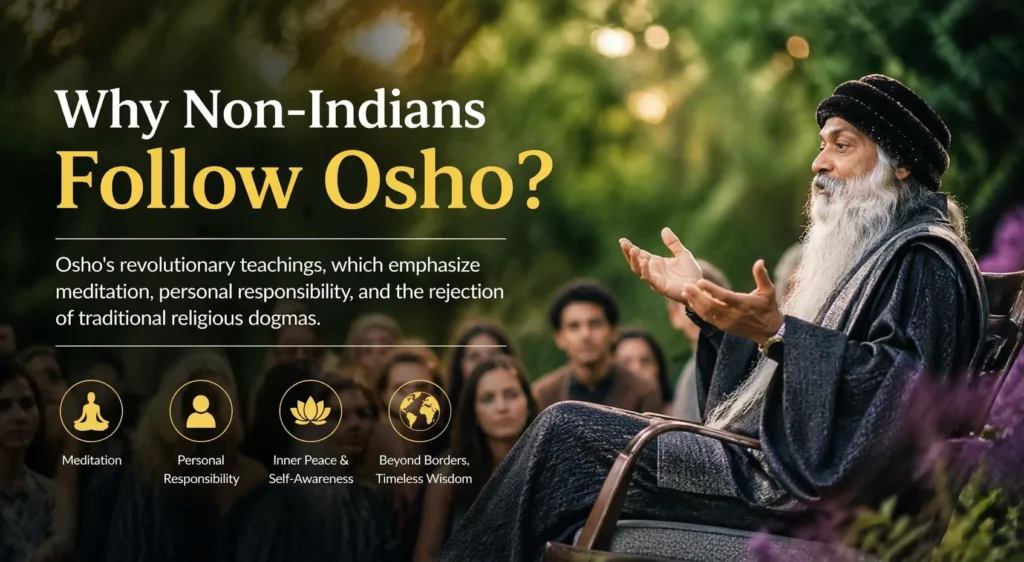

Part One: The Stranger Who Spoke to Their Souls
Imagine you are sitting in a small apartment in New York City in the early 1980s. The walls are thin. Your neighbors are arguing about money again. The television is shouting about the Cold War and the threat of nuclear bombs. Outside, the city never sleeps. Car horns honk. Sirens wail. You feel stuck, like a hamster running on a wheel that never stops.
You grew up going to church. Your parents made you dress in nice clothes every Sunday. You sat on hard wooden pews and listened to a man in a robe talk about sin and hell. You tried to believe. You really did. But something always felt empty. The prayers felt like memorized words with no meaning. The stories felt old and distant. And the guilt—oh, the guilt—followed you everywhere. You felt bad for wanting things. You felt bad for being human.
Now you are an adult. You have a job, maybe even a family. But deep inside, you feel lost. The religion of your childhood does not fit anymore. Atheism feels too cold and hopeless. New Age ideas feel fluffy and fake. You want something real. Something that does not ask you to believe in fairy tales. Something that actually helps you feel peaceful, not just talk about peace.
Then, one evening, a friend hands you a worn-out cassette tape. The label is handwritten. It says simply: “Osho – The Only Way to Be Happy.” You put the tape into your old stereo and press play. A man with a deep, slow Indian voice begins to speak. He says, “Do not believe me. Do not follow me. I am not your leader. I am just a friend. Try meditation for yourself. See what happens. If it works, keep it. If it does not, throw it away.”
That voice belonged to Osho. And for thousands of people in Europe, America, Australia, and South America, that cassette tape changed everything. This is the long, winding story of why so many non-Indians—people who never grew up with ashrams, Sanskrit, or Indian culture—decided to follow a controversial mystic from a small town in central India. It is a story of rebellion, loneliness, healing, laughter, and the universal search for something real in a fake world.
Part Two: The Hungry West – Why Traditional Religion Failed
To understand why Osho became a giant outside India, you must first understand the spiritual hunger of the Western world in the second half of the twentieth century. This was not just a small group of weird hippies. This was millions of ordinary people.
In the 1950s, America and Europe were obsessed with money, cars, and suburbs. The war was over. The economy was booming. But underneath the shiny surface, people were deeply unhappy. Women felt trapped in boring housewife roles. Men felt trapped in gray office jobs. Teenagers felt like their parents were hypocrites who went to church on Sunday and gossiped or cheated the rest of the week.
Then came the 1960s. The Vietnam War tore America apart. Young people watched their friends get drafted and sent to die in a jungle far away. They saw peaceful protesters beaten by police. They saw leaders like John F. Kennedy and Martin Luther King Jr. assassinated. Trust in government evaporated. Trust in the church evaporated too. How could a loving God allow so much bloodshed?
Many young people turned away from Christianity and Judaism completely. They experimented with drugs like LSD and marijuana. They explored Eastern religions like Hinduism and Buddhism. They traveled to India on what was called the “hippie trail.” But most of them found that traditional Indian religions were also full of rules, rituals, and distant gods. They wanted something that fit their modern, questioning, impatient minds.
Osho appeared at exactly the right moment. He was not a traditional guru. He did not ask you to chant Sanskrit verses you did not understand. He did not tell you to starve yourself or sleep on a bed of nails. Instead, he looked at a young American or German or English person and said, “Your guilt is fake. Your religions have poisoned you with fear. You are not a sinner. You are just asleep. Wake up.”
For someone who had spent years feeling ashamed of their body, their desires, and their doubts, that message was like a glass of cold water after a long walk in the desert. Osho did not demand that they become Hindu or Buddhist. He simply said, “Be yourself. But be yourself consciously.”
Part Three: The First Westerners – A True Story
Let me tell you a true story about the first non-Indians who found Osho. In the early 1970s, Osho was still living in Mumbai, then called Bombay. He gave public talks in a small hall. Most of his listeners were Indians. But word began to spread.
A young man from England named John was traveling through India. He had already visited several ashrams. He had sat at the feet of famous gurus. But nothing clicked. Then someone told him about “the dangerous guru in Bombay.” John was curious. He went to hear Osho speak.
That night, Osho talked about sex. This was shocking because most Indian gurus avoided the topic or called it sinful. Osho said, “Sex is natural. Sex is energy. Do not repress it. If you repress it, it becomes ugly. If you understand it, it becomes love. And if you go even deeper, it becomes meditation.”
John later wrote in his diary, “I almost fell off my chair. Here was a holy man who spoke about sex like a modern psychologist. He did not blush. He did not scold. He just described reality. I knew in that moment that I had found my teacher.”
John became a follower. He took the orange clothes and the wooden bead necklace called a mala. He wrote letters to his friends back in London. Those friends wrote to their friends. Within two years, Osho’s small hall in Bombay could not fit all the Westerners who wanted to see him. He moved to a larger space. Then an even larger space. Finally, in 1974, he moved to a sprawling ashram in Pune, a city near Mumbai. That ashram became a magnet for the world.
Part Four: The Ashram Experience – A Different Kind of Holy Place
If you walked into Osho’s ashram in Pune in the late 1970s, your first feeling would be confusion. This was not a quiet, serious monastery. It was loud, colorful, and chaotic.
You would see people from twenty different countries. Some wore orange robes. Some wore normal clothes. Some were meditating under a tree. Some were laughing hysterically in a therapy group. In one corner, a German man in a business suit was screaming into a pillow. In another corner, an American woman was dancing like no one was watching. The smell of chai tea mixed with sweat and flowers.
Osho gave a daily discourse in a huge meditation hall called Buddha Hall. He sat in a large white chair. He wore a long white robe. He smoked a cigarette every few minutes, which shocked many visitors. He told jokes—sometimes dirty jokes—and the audience roared with laughter. Then, in the next breath, he would say something so deep and profound that the whole room went silent.
One famous discourse went like this: “You ask me what meditation is. Meditation is not concentration. Concentration is a tension. You squeeze your mind. Meditation is relaxation. You simply watch. You sit by the side of the road of your mind and watch the traffic. Cars pass. Trucks pass. Bicycles pass. You do not run after any of them. You just watch. That is meditation.”
For a non-Indian who had tried and failed at concentration practices, this was a revelation. You mean I do not have to fight my thoughts? I can just watch them? That felt possible. That felt human.
The ashram also had a famous meditation called Kundalini. You would stand still and shake your body gently for fifteen minutes. Then you would dance for fifteen minutes. Then you would sit in silence. People reported feeling energy rising up their spines like electricity. A woman from Canada told me years later, “I never believed in energy until I did Kundalini meditation for seven days. On the fourth day, I felt a real physical vibration moving from my tailbone to the top of my head. I cried because I had never felt so alive.”
Part Five: Active Meditations – Why Sitting Still Was Not Enough
One of the biggest reasons non-Indians followed Osho was his invention of active meditations. Traditional meditation in Asia almost always meant sitting still like a statue. You cross your legs. You close your eyes. You try to empty your mind. For a Westerner with a busy, anxious, overthinking brain, that felt impossible. They would sit down, and within thirty seconds, their mind would start racing: “Did I pay the electric bill? What is my boss thinking about me? Why is my back hurting? I am hungry. This is stupid.”
Osho understood this problem deeply. He said, “Modern man is very different from ancient man. Ancient man lived in nature. His mind was calm. Modern man lives in cities. His mind is a madhouse. You cannot ask a madhouse to become silent by force. You must first let the madness out. Then silence comes naturally.”
That is why he created Dynamic Meditation. Let me describe it in detail so you can truly understand why it worked for so many non-Indians.
Dynamic Meditation happens in the early morning, preferably at sunrise. It has five stages. Each stage lasts ten minutes.
Stage one: You breathe chaotically. Not deep and slow. Fast and wild. You inhale and exhale with force. You let your body move however it wants. Your arms fly up. Your belly pumps in and out. You make sounds if they come. This stage is ugly. It is not beautiful or peaceful. That is the point. You are breaking open the dam of repression.
Stage two: You explode. You scream every bad word you have ever wanted to scream. You cry like a baby. You laugh like a crazy person. You shake your fists at the sky. You fall on the ground and kick your legs. You let out every anger, every sadness, every fear that you have been holding in for years. A businessman from Germany named Klaus tried this in 1978. He later wrote, “The first time, I thought I was having a heart attack. My neighbor in the ashram thought I was dying. But after ten minutes, I felt lighter than air. I had been carrying my father’s death in my chest for fifteen years. That morning, I finally let it out.”
Stage three: You jump up and down. You raise your arms above your head and shout a mantra: “Hoo! Hoo! Hoo!” The sound comes from deep in your belly. You land hard on your feet with each shout. This stage charges your body with fresh energy. It is like slamming a reset button.
Stage four: You freeze. Absolutely still. No movement at all. You become a statue. You watch everything that is happening inside you. The energy that was moving chaotically now becomes silent. Many people report seeing colors or lights behind their closed eyes. Some feel a deep peace they have never known.
Stage five: You celebrate. You dance. You do not control the dance. You let the dance happen through you. You are grateful to your body, to the morning sun, to existence itself.
A nurse from Sweden named Ingrid told me, “I was suicidal before I found Osho’s Dynamic Meditation. I had tried pills. I had tried therapy. Nothing worked. On my third day of Dynamic Meditation, during the second stage, I screamed so hard that my throat bled a little. But after the meditation, I felt something I had not felt in years: hope. I kept doing it every day for three months. The suicidal thoughts disappeared. They never came back.”
That is a true story. That is why non-Indians followed Osho. Not because of belief. Because of results.
Part Six: The Rejection of Dogma – Believe Nothing, Experience Everything
Here is a sentence that shocked the world when Osho first said it: “I am not a God. I am not a prophet. I am not a messenger from heaven. I am a friend. A friend who has walked the path and can tell you where the potholes are.”
Most religious leaders ask you to believe in something. Believe in this holy book. Believe in that final judgment. Believe in these ten commandments. Believe or you will burn in hell. That is how Christianity and Islam and even some forms of Hinduism and Buddhism operate.
Osho flipped the whole thing upside down. He said, “Belief is a cage. The moment you believe something, you stop exploring. You become lazy. You think you know. You do not know. You have only borrowed knowledge. I am not interested in your beliefs. I am interested in your experience.”
For non-Indians who had been burned by religious dogma, this was like oxygen. They did not have to pretend to believe in reincarnation or karma or chakras. Osho said, “Do not believe in chakras. Meditate. If you feel energy centers in your body, then you know. If you do not, then do not pretend. Only a fool believes what he has not seen for himself.”
This radical honesty attracted scientists, doctors, engineers, and artists. These were people who trusted evidence. They did not want to trade one superstition for another. Osho gave them a path that was experiential. Try it. See what happens. Report back.
A physicist from California named Robert started coming to Osho’s discourses in 1981. He was a hardcore skeptic. He had debated religious people his whole life. He expected to find a fraud. Instead, he found a man who said, “Science is good. Science has given us many gifts. But science only studies the outside. Meditation studies the inside. You need both. Do not reject science. Complete it.”
Robert stayed for two years. He later said, “I never believed in anything Osho said. But I tried his meditations. And they worked. That is not belief. That is data.”
Part Seven: The Orange People – Finding a Tribe in a Lonely World
In the 1970s and 1980s, Osho asked his followers to wear orange or red clothes. He also gave them a new name. A woman named Mary became Ma Prem Anurag. A man named John became Swami Anand Klaus. They wore a wooden bead necklace called a mala. The mala had a locket with a small picture of Osho inside.
Outsiders called them “Orange People.” At first, many people laughed at them. In airports, strangers would stare. In restaurants, waiters would whisper. Some Orange People were fired from their jobs because employers thought they were in a cult. Some were disowned by their families.
So why did they do it? Why wear strange clothes and take a new name if it caused so much trouble?
The answer is simple: loneliness. Many non-Indians who joined Osho were deeply lonely. They had left their hometowns. Their families did not understand them. Their old friends thought they were crazy. They felt like aliens in their own countries.
Then they put on the orange clothes and suddenly they were not alone anymore. Everywhere they went, they could spot another Orange Person. They had an instant connection. A shared language. A shared joke. A shared purpose.
A woman from Brazil named Lucia told this story: “I was walking through the airport in London. I was scared. I did not know anyone. I was on my way to India for the first time. Then I saw a man in orange. He looked at me and smiled. He said, ‘First time?’ I nodded. He said, ‘Come with me. I will show you where to change planes.’ That man became my best friend for the next ten years. That is what Osho gave us. A family.”
Osho once said, “My people are like a rainbow. Every color is different. But together, they make something beautiful.” That rainbow became a new kind of family for thousands of lost souls. And for a lost soul, family is everything.
Part Eight: Therapy for the Wounded West – Healing Deep Cuts
Another major reason non-Indians followed Osho was his brilliant use of modern Western psychology. Osho was not just a mystic who had read ancient scriptures. He had studied Sigmund Freud, Carl Jung, Wilhelm Reich, and Fritz Perls. He spoke their language fluently.
He told a famous story that explains his approach: A Zen master and a Western psychologist meet at a conference. The psychologist says, “I help people remember their childhood trauma. I help them bring the unconscious into consciousness.” The Zen master laughs and says, “That is interesting. I help people forget everything. I help them empty their minds so completely that there is no ‘me’ left to be traumatized.”
Osho said both approaches are half true. You need both. You cannot just meditate if you are carrying deep psychological wounds. The wounds will leak into your meditation. You will sit in silence, and suddenly you will be screaming at your dead father inside your head. On the other hand, you cannot just do therapy forever. Some people spend twenty years on a couch analyzing their childhood and never feel an inch of peace.
Osho created a bridge. His ashram offered dozens of therapy groups. There was the Encounter group, where you told people exactly how you felt about them, no politeness allowed. There was the Primal group, where you regressed back to your birth and screamed out the pain of being born. There was the Mystic Rose group, where you laughed for three hours a day for seven days, then cried for three hours a day for seven days, then sat in silence for seven days.
A man from Australia named Tom did the Mystic Rose group in 1985. He was a tough construction worker who had never cried as an adult. On the first day of crying, nothing happened. He sat there dry-eyed. On the second day, a few tears came. On the third day, he sobbed for two hours straight. He later said, “I was crying for my mother who died when I was six. I never let myself feel that loss. It had been frozen inside me for thirty years. After that group, I felt like a glacier had melted.”
This combination of psychology and meditation was incredibly powerful for non-Indians. They did not have to choose between a therapist and a guru. Osho was both. He respected Western science while pushing beyond it. He said, “Therapy cleans the mirror. Meditation lets you see your face in the mirror. You need both.”
Part Nine: The Oregon Experiment – Triumph and Tragedy
No story about Osho and non-Indians is complete without talking about Oregon. In 1981, Osho moved to the United States. His followers had bought a huge piece of land in central Oregon, near a tiny town called Antelope. They built a city from scratch. They called it Rajneeshpuram.
At first, it was a dream. The followers built houses, a bus system, a water treatment plant, a shopping center, and a massive meditation hall. They grew their own food. They had their own police force and fire department. Almost one thousand people lived there. They were mostly non-Indians—Americans, Germans, English, Dutch, French.
Life in Rajneeshpuram was intense. Everyone woke up at dawn for Dynamic Meditation. Then they worked all day on the farm or in the offices. Then they listened to Osho speak in the evening. Then they partied. There was music, dancing, and often free love. Osho had said, “Do not possess your partner. Love freely. If you try to possess, you destroy love.”
But slowly, things went wrong. Osho stopped speaking publicly. He went into silence. He lived in a small cabin on the property and only saw his personal secretary, a woman named Ma Anand Sheela. Sheela was Indian-born but raised in America. She was fierce, smart, and ruthless. She began to make decisions without Osho’s knowledge.
Sheela stockpiled weapons. She bugged the rooms of her own colleagues. She poisoned salad bars in restaurants in nearby towns. Why? Because the local residents of Oregon did not like the Orange People. There were lawsuits and protests. Sheela decided to fight back with terror. In 1984, her people poisoned ten salad bars with salmonella bacteria. Over seven hundred people got sick. It was the first bioterrorism attack in American history.
Eventually, the FBI raided Rajneeshpuram. Sheela and her inner circle fled to Europe but were caught. Sheela went to prison. Osho claimed he knew nothing about the crimes. The US government deported him in 1985. He had 93 Rolls-Royce cars. The media called him the “sex guru” and the “rich man’s guru.”
This is the dark shadow of the story. Many non-Indian followers were devastated. They had given their lives, their money, their hearts to this community. And it had turned into a nightmare. Some left Osho forever. They felt betrayed. They said, “He must have known. How could he not know?”
Other followers stayed. They argued that Osho was a mystic who did not care about politics or money. They said Sheela tricked him. They said the cars were a joke—a way to show that enlightenment does not require poverty. They pointed out that Osho never drove a single one of those cars. He sat in his cabin and meditated.
What is the truth? No one knows completely. But here is what matters for our question: even after the scandal, millions of non-Indians continued to follow Osho’s teachings. Why? Because most of them never lived in Oregon. They never met Sheela. They just read Osho’s books and listened to his tapes. And those books and tapes had already saved their lives. You cannot unhear a truth that pulled you out of depression or gave you back your joy.
A follower from Italy told a reporter, “If you throw away every teaching because the teacher was imperfect, you will have nothing left. Jesus’s followers betrayed him. Buddha’s cousin tried to kill him. Martin Luther King had affairs. Human beings are messy. The teaching is not the teacher. The meditation works. That is enough for me.”
Part Ten: The Teachings That Survived – What Non-Indians Still Use Today
Osho died in 1990. He was poisoned in prison, his doctors said. Or he died of heart failure, the government said. Either way, his body was gone. But his words remained. Today, millions of non-Indians still follow his teachings. They do not wear orange robes. They do not live in communes. They are ordinary people. They are lawyers, nurses, Uber drivers, software engineers, teachers, and artists.
What do they actually do? Let me describe the core practices that non-Indian Osho followers use every day.
First, Witnessing. This is Osho’s number one technique. You learn to watch your thoughts like clouds passing across the sky. You are not your anger. You are the one who sees the anger. You are not your fear. You are the one who sees the fear. This simple shift changes everything. When you can witness, you stop being controlled by your emotions. A software engineer from Seattle told me, “Before witnessing, I would get angry at my computer and throw my mouse. After practicing witnessing for six months, I see the anger arise, I smile at it, and it disappears in ten seconds. I saved a thousand dollars on broken mice.”
Second, No Guilt. Osho taught that guilt is a disease. Religious people create guilt to control you. Parents create guilt to control their children. Osho said, “Drop guilt. You have done nothing wrong. You are simply alive. Life is not a sin. Life is a gift. Enjoy it. But enjoy it with awareness.” A woman from England stopped feeling guilty about divorcing her abusive husband after reading Osho. She said, “For ten years, the church told me I was a sinner for leaving. Osho told me I was brave. I know which voice helped me sleep at night.”
Third, Laughter. Osho said laughter is as deep as prayer. He told jokes constantly. His discourses were full of laughter. He said, “If you cannot laugh at yourself, you have not understood anything.” A businessman from Singapore was stressed and serious all the time. His wife begged him to change. He started listening to Osho’s jokes every morning. Within a month, he was laughing more. Within three months, his blood pressure dropped. Within six months, his wife said, “You are the man I married again.”
Fourth, Living in the Present Moment. Osho said, “The past is gone. The future is not here. Only this breath exists. And this breath. And this breath.” He taught that worrying is a waste of life. A nurse from Canada was always anxious about the future. She read Osho’s book “Learning to Silence the Mind.” She started practicing a simple technique: every time she caught herself worrying, she would touch a leaf or a cup of tea and say, “This is real. The worry is not real.” She said, “It sounds silly. But after three months, my anxiety dropped by eighty percent.”
Fifth, Acceptance of All Emotions. Osho said, “Do not fight your sadness. Welcome it. It is a guest. But do not let it buy furniture.” He taught that all emotions are energy. If you let them flow, they pass quickly. If you fight them, they get stuck. A teenager from Germany was cutting herself because she could not handle her sadness. She found Osho’s talks online. She learned to sit with her sadness and just watch it. She said, “The sadness still comes. But now I know it will leave. I have not cut myself in two years.”
These five practices are simple. They do not require any belief. They do not require a guru. They just require a little bit of courage and a little bit of consistency. That is why non-Indians keep using them, thirty-five years after Osho’s death.
Part Eleven: Osho vs. Other Gurus – Why Him and Not Someone Else?
A fair question: There are many Indian gurus. There is Maharishi Mahesh Yogi, who taught Transcendental Meditation. There is Sri Sri Ravi Shankar, who founded the Art of Living. There is Sadhguru, who is very popular on YouTube. There is Mata Amritanandamayi, the hugging saint. Why did so many non-Indians choose Osho instead of these others?
Let me compare honestly.
Maharishi Mahesh Yogi taught a simple mantra meditation. You sit twice a day for twenty minutes and repeat a sound. It is very effective for relaxation. Many non-Indians loved it. But some found it too mechanical. You do not explore your emotions. You just repeat a sound. Osho offered a deeper dive. He said, “Do not just relax. Transform. Let your demons out. Then let your angels sing.”
Sri Sri Ravi Shankar is very positive. His organization, the Art of Living, teaches breathing techniques. It is clean and corporate. Many businesspeople love it. But some find it too polished. They feel like they are in a self-improvement seminar, not a spiritual journey. Osho was messy. He was raw. He talked about sex and anger and money. He did not try to be nice. That messiness felt more honest to some people.
Sadhguru is the most popular Indian guru today. He is funny, smart, and very modern. He teaches a practice called Shambhavi Mahamudra. He does not ask you to believe in anything. He says, “Do the practice. See what happens.” That is very similar to Osho. But there is a difference. Sadhguru is very careful about his image. He avoids scandal. He is a successful businessman. Osho did not care about his image. He said, “I am a madman. Take me or leave me.” Some people prefer the madman. They feel the madman is more authentic.
Then there is the sexual difference. Osho was openly pro-sex. He said, “Sex is the doorway to the divine. Repress it, and you become a pervert. Understand it, and you become a lover. Transcend it, and you become a meditator.” This was shocking. But for many non-Indians who had grown up with Christian shame about sex, this was healing. A woman from Ireland told me, “I could not enjoy sex with my husband for fifteen years. I thought it was dirty. Osho’s teachings freed me. I am not exaggerating. He saved my marriage.”
Other gurus avoid sex or even condemn it. That works for some people. But for the sexually wounded Westerner, Osho was the only choice.
Part Twelve: Osho in the Digital Age – YouTube, TikTok, and the New Generation
Osho died before the internet was born. But today, he is more famous online than he ever was in his lifetime. How did that happen?
In the early 2000s, a German Osho follower named Amrito started uploading Osho’s discourses to YouTube. They were old videos from the 1980s. The quality was poor. The audio was fuzzy. But the words were sharp and clear. Young people began to discover them.
A teenager in Brazil named Lucas was scrolling through YouTube in 2015. He was depressed. He was failing school. He did not know what to do with his life. An algorithm suggested a fifteen-second clip of Osho. Osho said, “Do not seek meaning. Seek life. Meaning is just a word. Life is a heartbeat.” Lucas was stunned. He had never heard anyone say that. He clicked on another clip. Then another. Then a full discourse. He stayed up all night listening.
Lucas did not become a formal follower. He did not wear orange. But he bought a few books. He started meditating for ten minutes every morning. He said, “Osho did not fix my life. But he gave me a different way to see my problems. Instead of fighting them, I watch them. That small shift changed everything.”
Today, Osho has millions of followers on social media. There are Instagram pages with Osho quotes. There are TikTok accounts with thirty-second Osho clips. There are WhatsApp groups where people share Osho jokes. The audience is mostly young, mostly non-Indian, and mostly hungry for something real.
A nineteen-year-old woman from Indonesia named Sari told me, “My parents are very religious Muslims. I love them. But I do not feel God in the mosque. I feel God when I sit alone and watch my breath. I found Osho on YouTube. He said, ‘God is not a person. God is a presence.’ That made sense to me. I still go to the mosque with my family. But my real prayer is my five minutes of watching every morning.”
This is the new face of Osho’s following. Not ashrams. Not orange robes. Just a phone, a pair of earbuds, and a few minutes of silence stolen from a busy day.
Part Thirteen: The Critics – What Skeptics Say About Osho
An honest article must also listen to the critics. Many non-Indians do not follow Osho. They think he was a fraud, a cult leader, or a dangerous man. Let me present their strongest arguments fairly.
First, the Rolls-Royces. Osho owned ninety-three luxury cars. He never drove them. But he owned them. Critics say this proves he was greedy. How can a spiritual teacher own so many cars while talking about detachment? Followers say the cars were a joke. Osho was mocking the idea that spirituality requires poverty. He once said, “If you are attached to poverty, you are as attached as the man who is attached to wealth. Attachment is the problem, not the object.”
Second, the Oregon crimes. There is no excuse for poisoning innocent people. Seven hundred people got sick. That is a fact. Osho claimed he did not know. Critics say he must have known. He was the leader. He was responsible. Followers say Sheela acted alone and deceived Osho. The truth is probably somewhere in the middle. What is clear is that the Oregon experiment was a disaster.
Third, the contradictions. Osho said one thing one day and the opposite the next day. He praised celibacy in one discourse and free love in the next. Critics say this proves he was confused or manipulative. Followers say he was responding to different audiences. He once explained, “I am a river. The river changes with the seasons. In spring, it is gentle. In monsoon, it is wild. Both are the same river. Do not cling to my words. Cling to your own experience.”
Fourth, the money. Osho’s organization made millions of dollars. He lived in luxury. Critics say he was a con artist. Followers say the money came from voluntary donations. No one was forced to give. And the money funded meditation centers, books, and tapes that helped millions of people.
Fifth, the cult accusations. Critics say Osho used classic cult tactics: cutting followers off from their families, demanding loyalty, and creating an us-versus-them mentality. Followers say that is unfair. Osho never told anyone to leave their family. He said, “Love your family. But do not be attached. There is a difference.”
You will have to decide for yourself. That is exactly what Osho wanted. He said, “Do not believe me. Do not disbelieve me. Experiment. Then you will know.”
Part Fourteen: The Non-Indian Experience – Personal Stories
Let me share a few more personal stories from non-Indians who followed Osho. These are real people, though I have changed their names for privacy.
Helena from Poland. Helena was a university student in Warsaw in the 1990s. Poland had just escaped communism. Everything was changing. Helena felt lost. She found an Osho book in a secondhand shop. It was called “Courage: The Joy of Living Dangerously.” She read it in one night. She said, “Osho made me feel like my fear was normal. He did not say, ‘Do not be afraid.’ He said, ‘Be afraid. But do not stop moving.’ I started meditating in my dorm room. My roommates thought I was weird. But I did not care. I graduated. I got a good job. I got married. I still meditate every morning. Osho is not my guru. He is my friend.”
David from the United States. David was a soldier in the Iraq War. He saw terrible things. He came home with PTSD. He could not sleep. He had nightmares every night. He tried the VA hospital. They gave him pills. The pills helped a little but made him feel dead inside. One night, he searched YouTube for “how to stop nightmares.” He found an Osho video about witnessing. Osho said, “When the nightmare comes, do not run. Watch it. Say to the nightmare, ‘I see you. You cannot fool me. You are just a movie.'” David tried it. The first few times, it did not work. But after two weeks, something shifted. He said, “I watched the nightmare like a movie. It was still scary. But I was not inside it anymore. I was in the audience. That changed everything. I still have bad dreams sometimes. But they do not own me anymore.”
Fatima from France. Fatima grew up in a strict Muslim family. She loved her family. But she felt trapped. She could not wear what she wanted. She could not date who she wanted. She secretly read Osho’s book “The Book of Women.” Osho said, “No one can tell you who you are. You must discover it yourself.” Fatima saved money. She moved to a different city. She started her own small business. She still visits her family for holidays. She wears a headscarf when she visits them out of respect. But in her own home, she meditates in her own way. She said, “Osho gave me permission to be myself. My family does not understand. But I am happy. That is enough.”
Kenji from Japan. Kenji was a businessman in Tokyo. He worked fourteen hours a day. He was successful. He was also miserable. He had a heart attack at age forty-five. The doctor said, “Change your life or die.” Kenji did not know how to change. A friend gave him an Osho CD about stress. Osho said, “Stress is not caused by work. Stress is caused by resistance to work. If you love what you do, it is not stress. It is energy.” Kenji realized he hated his job. He quit. He started a small garden nursery. He makes less money now. But he smiles more. He meditates every evening. He said, “I was dying slowly. Osho woke me up.”
These stories are not unique. They are repeated thousands of times across the world. That is the real reason non-Indians follow Osho. Not because of philosophy. Not because of belief. Because the practices work. They reduce suffering. They increase joy. They help ordinary people live slightly better lives.
Part Fifteen: The Future – Will Osho Be Forgotten or Remembered?
Every year, more than one hundred thousand people visit the Osho International Meditation Resort in Pune, India. Most of them are non-Indians. They come from Brazil, Germany, Italy, Spain, Russia, China, and dozens of other countries. They do not come to worship Osho. He is dead. They come to meditate. They come to do Dynamic Meditation at sunrise. They come to sit in silence. They come to laugh.
The resort is not like a traditional ashram. There are no statues of gods. There are no priests. There is a bookstore, a café, a swimming pool, and a meditation hall. People wear comfortable clothes, not orange robes. They can come for a day, a week, or a month. They can leave whenever they want.
Critics say the resort is a tourist trap. They say it is expensive. They say it is not real spirituality. Followers say it is a laboratory for inner transformation. They say the price keeps out people who are not serious. They say the luxury is a deliberate choice to show that spirituality is not about poverty.
Who is right? Again, you decide.
What is clear is that Osho’s influence is growing, not shrinking. His books sell millions of copies every year. His YouTube channel has billions of views. New translations appear in languages he never spoke. A young person in Vietnam can read Osho in Vietnamese on a smartphone. A grandmother in Argentina can listen to Osho in Spanish while cooking dinner.
Osho once predicted, “I will be dead. But my voice will become a river. Many people will drink from it. They will not call themselves my followers. They will simply be more alive. That is enough for me.”
He was right.
Part Sixteen: What Osho Means for Non-Indians Today
Let me summarize everything in simple, clear language.
Non-Indians follow Osho because:
- He respects their intelligence. He never asks them to believe anything without trying it first. He says, “Do not trust me. Trust your own experience.”
- He understands their pain. He knows that modern life is stressful, lonely, and confusing. He does not pretend it is easy. He gives practical tools to navigate the madness.
- He heals their religious wounds. Many non-Indians were hurt by their childhood religions. Osho does not attack those religions. He simply offers a different path. A path without guilt, without fear, and without punishment.
- He makes meditation possible. Sitting still is hard. Osho’s active meditations make sense for busy, anxious minds. You can scream first. Then you can be silent. That works.
- He laughs. Life is hard. Osho never forgets to laugh. His jokes are not just jokes. They are medicine. Laughter releases tension. Laughter connects you to others. Laughter is prayer.
- He does not ask you to leave the world. You do not have to become a monk. You do not have to move to an ashram. You can stay in your job, your family, your city. Just add a little awareness. Just add a little meditation. That is enough.
- He welcomes everyone. Gay, straight, rich, poor, educated, uneducated, religious, atheist. Osho does not care about your labels. He cares only about your willingness to wake up.
Part Seventeen: A Final Story – The Man Who Never Met Osho
Let me end with one last story. This is my favorite story about a non-Indian who followed Osho without ever meeting him.
A man named Carlos lived in Mexico City. He was a taxi driver. He had a wife and three children. He worked twelve hours a day, six days a week. He was tired all the time. He was not looking for a guru. He was looking for enough money to pay the rent.
One day, a passenger left a book in Carlos’s taxi. The book was “The Book of Secrets” by Osho. Carlos did not know who Osho was. He picked up the book to throw it away. But the title caught his eye. He opened the book. He read one page. Then another. Then another.
The book described 112 meditation techniques. Most of them were simple. Breathe in a certain way. Watch a candle. Walk slowly. Carlos tried a few. He tried the breathing technique while waiting for passengers. He tried the candle watching before bed. He tried the slow walking in his small apartment.
After a few weeks, his wife asked him, “What happened to you? You are not so angry anymore.” Carlos did not know what to say. He just said, “I found a book.”
Carlos never told anyone he followed Osho. He never wore orange. He never went to Pune. He never posted on social media. He just kept the book on his nightstand. He practiced the techniques. He became a little calmer. A little kinder. A little more awake.
That is why non-Indians follow Osho. Not for the drama. Not for the scandal. Not for the orange robes. For the small, quiet changes that happen inside a human heart when someone learns to watch their own breath and laugh at their own seriousness.
Osho said, “My only message is: be silent. And from that silence, act. That is all.”
For millions of non-Indians around the world, that message is enough. It does not require a passport. It does not require a visa. It only requires a few minutes of courage and a little bit of curiosity.
And that is a message that will never die.



Great article! Really insightful perspective. I found it very helpful and informative. bjilldodqueixmnbomqzjloqbkddlc
Great article! Really insightful perspective. I found it very helpful and informative. znrncloxpshvynnbkimygwospgtsav
Usually I don’t read article on blogs, but I would like to say that this write-up very forced me to try and do so! Your writing style has been surprised me. Thanks, very nice post.
I know this if off topic but I’m looking into starting my own blog and was wondering what all is needed to get setup? I’m assuming having a blog like yours would cost a pretty penny? I’m not very web smart so I’m not 100 certain. Any recommendations or advice would be greatly appreciated. Kudos
Finally found a platform that doesn’t lag during peak hours. The registration process was a breeze. Great job guys at phjljl1.