
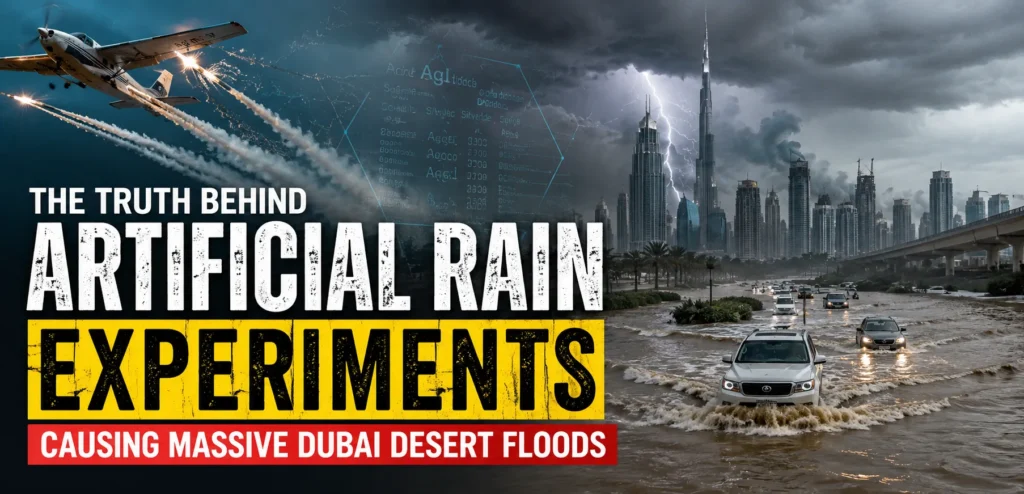

Prologue: The Phone Call at 3:00 AM
It was April 15, 2024, and the night shift at Al Maktoum International Airport started like any other. Calm. Dry. The air, thick with the fine, suffocating dust of the Arabian Peninsula, tasted like warm concrete. Fatima Al Mansouri, a thirty-two-year-old radar operator with steady hands and a sharper intuition, poured her third cup of sweet cardamom coffee. She had been doing this job for eight years. She had seen sandstorms turn the sky the color of rust. She had seen summer heat so intense that the runway shimmered like a mirage. But she had never seen what happened next.
Then, at precisely 3:07 AM local time, the wind stopped.
Not a lull—a cessation. The kind of unnatural silence that happens before a wave breaks. In the control tower, Fatima watched her screens turn the color of a bruise. A mesoscale convective system, the size of a small country, had materialized over the Gulf of Oman. It wasn’t moving toward Dubai. It was spinning up. The radar echoes were so intense that the system automatically flagged them as an error. Fatima overrode the alarm. She picked up the phone to the approach controller and said three words she had never said before: “We have rotation.”
Within four hours, the desert would drown.
By 9:00 AM, water was cascading through the gold-plated aisles of The Dubai Mall, flooding the aquarium where sharks swam in sudden murk. By noon, $80,000 Rolls-Royces floated like bathtub toys down Sheikh Zayed Road, their owners watching from overpasses in disbelief. By evening, the world wasn’t asking if it rained. The world was asking: Did we do this?
The conspiracy theory ignited faster than a silver iodide flare. “Cloud seeding caused the floods,” the headlines shrieked. “Weather manipulation gone wrong.” The National Center of Meteorology rushed to deny it. Scientists screamed about physics. But the public had already made up its mind. In coffee shops from Cairo to Karachi, in Reddit threads and TikTok duets, the story was the same: the rainmakers had finally broken the sky.
This is the true story of that day. It is a story about arrogance, nature, and the strange friction that happens when a civilization built on defying the impossible meets a sky that refuses to obey. It is a story about silver iodide and superstorms, about drainage ditches and delusions, and about the uncomfortable truth that sometimes the most terrifying answer is not human error—it is a planet finally losing its patience.
Part One: The Rainmaker’s Toolkit (Or, How to Trick a Cloud)
To understand the accusation, you must first understand the obsession. The United Arab Emirates is a mirage made of glass and steel. It receives less than four inches of rain per year—the kind of dryness that cracks your lips in thirty seconds, turns your car upholstery to leather in a single summer, and makes every drop of water more precious than crude oil. For decades, the country has been engaged in a desperate, high-tech love affair with the sky. It is called cloud seeding.
The Silver Lining
Cloud seeding is not science fiction. It is chemistry. It was discovered by accident in 1946 when a scientist named Vincent Schaefer dropped dry ice into a cloud chamber and watched ice crystals form spontaneously. Inside every cloud, there are supercooled liquid droplets—water that remains liquid even at -40°C because it lacks a nucleus to freeze around. Think of it as a crowd waiting for a leader. The droplets are willing to become rain, but they need something to grab onto. They need a nucleus.
Cloud seeding provides the leader.
Aircraft fly into the belly of a cumulus cloud and release hygroscopic flares—usually a cocktail of silver iodide, potassium iodide, or sodium chloride. These particles are tiny, invisible to the naked eye, but they are perfectly shaped to mimic the structure of an ice crystal. The supercooled droplets latch on, freeze, grow heavy, and fall as rain or snow. It is one of the few technologies that directly intervenes in the weather machine, and it has been used in more than fifty countries.
The NCM has been doing this since the late 1990s. They have a fleet of King Air C90 turboprops, each one outfitted with pylons under the wings that hold the flares. They fly hundreds of missions a year, especially during the winter and spring months when the clouds are fattest. The success rate is modest—experts estimate a 10-30% increase in precipitation per seeded cloud. But in a region where every millimeter counts, that is enough to justify the cost.
But here is the crucial detail that the viral TikTok videos skip: Cloud seeding does not create water from nothing. It merely encourages a cloud that already exists to sneeze. You cannot seed a clear blue sky. You cannot make a monsoon out of a dry wisp. You cannot conjure a hurricane from a patch of fog. The cloud must already be pregnant with moisture. The seeding is just the midwife.
The Flare’s Tale
Picture the flare itself. It is about the size of a road flare, white-hot when burning, and its smoke contains microscopic particles of silver iodide. The science is elegant. One gram of silver iodide can theoretically produce 10 trillion ice crystals. That is a number so large it loses meaning. Let’s try again: ten trillion ice crystals is more than the number of stars in the Milky Way galaxy, compressed into a flare that weighs less than a chocolate bar.
But the dose matters. Too much seeding can actually over-glaciate a cloud, turning it into a frozen dust bowl that never produces rain. Too little, and nothing happens. The pilots who fly these missions train for years to read the clouds, to know exactly when to pull the trigger. They look for rising towers of cumulus, for the telltale anvil shape that signals a mature system. They are artists as much as scientists.
On April 14, 2024—the day before the flood—the NCM flew seven seeding missions. That sounds dramatic until you learn that on a normal rainy day, they fly eight or nine. The week prior, they flew twelve. By the numbers, April 14 was a slow Tuesday. The pilots logged their flights, filed their reports, and went home to their families. None of them knew that within twenty-four hours, they would be the most hated men in the Gulf.
Part Two: The Anomaly—When the Desert Became a Sponge
Let’s freeze the frame at 6:00 AM on April 15. The sun has not yet risen, but the sky is already the color of an old bruise. The humidity is 100%, something that should be impossible in a desert. Your skin feels clammy, heavy, like you are wearing a wet wool sweater in a sauna. The birds are silent. The stray cats have disappeared into the drainage pipes.
The storm system responsible was not a normal Arabian Gulf depression. It was something meteorologists call an atmospheric river, but even that understates the horror. A stationary low-pressure system over Iran had hooked a rope of tropical moisture all the way from the Bay of Bengal—2,000 miles away. Two oceans collided over one city.
The Thermodynamic Slingshot
Here is the physics, broken into plain language. No equations. No jargon. Just the raw mechanics of a sky that has decided to empty itself.
The Warm Sea: The Arabian Gulf’s surface temperature was running 2-3°C above average. That does not sound like much, but for oceanography, it is a fever. The normal temperature for mid-April is around 26°C. In 2024, it was 29.5°C in some places. Warm water evaporates aggressively. Every square meter of that warm sea was sending a column of invisible water vapor into the air, like a billion tiny geysers.
The Conveyor Belt: An unusual upper-level trough—a dip in the jet stream that acts like a vacuum cleaner—positioned itself directly over the eastern Arabian Peninsula. This trough sucked the moist air upward, pulling it from sea level to 20,000 feet in less than an hour. That rapid ascent is crucial because it cools the air, forcing the water vapor to condense into liquid droplets. The faster the ascent, the more violent the storm.
The Stacking Effect: Normally, rain falls, evaporates when it hits dry air near the ground, and reduces the intensity of the storm. That is nature’s brake pedal. On April 15, the air near the ground was already saturated. The rain had nowhere to evaporate. So it kept falling, and the latent heat released by condensation kept rising, feeding the storm like gasoline on a fire. This is called a positive feedback loop, and it is how ordinary thunderstorms become monsters.
By 8:00 AM, the storm was self-cannibalizing. It had become a supercell thunderstorm, a type usually reserved for Tornado Alley in Kansas, not the suburbs of Dubai. Supercells have rotating updrafts called mesocyclones. They produce giant hail, violent winds, and rain rates measured in inches per hour. The last time a supercell formed over the UAE was never. Until now.
The Numbers That Break Your Brain
The official weather station at Dubai International Airport recorded 254mm (10 inches) of rain in 24 hours.
To translate: That is two years of rainfall. Compressed into a single morning. Imagine standing under a fire hose for six hours. That was the experience of anyone caught outside.
The UAE’s average annual rainfall is roughly 97mm. So on April 15, Dubai received 2.6 times its yearly expectation in one calendar flip. The 1949 record for the entire region was 256mm—and that was over three days. Dubai smashed it in six hours. The old record for a single day was 110mm, set in 2020. This was more than double that.
But the airport station was not even the wettest place. In the town of Khatm Al Shaklah, near the border with Oman, a volunteer weather observer recorded 287mm. That is eleven inches. In the Al Ain oasis, famous for its date palms and underground irrigation channels, the rainfall was so intense that the ancient falaj system—a thousand-year-old network of water tunnels—collapsed under the pressure.
This is not a “seeding gone wrong” number. This is a climate regime shift number. This is what happens when a 1-in-500-year event collides with a 1-in-100-year infrastructure.
Part Three: The Accusation—Why Everyone Blamed the Flares
Within hours of the floodwaters receding (leaving a film of sewage, sand, and forgotten belongings over every villa), the internet did what the internet does. It found a villain. The search for causality in a chaotic world is a deeply human instinct. We cannot accept randomness. We need a story. We need a name. And on April 15, the name was cloud seeding.
The Viral Timeline
It started with a fuzzy photo. A King Air C90 on the tarmac at Al Ain airport, its flare pylons visible under the wings. The caption read: “They were seeding yesterday. They caused this.” The photo was shared ten thousand times in an hour. Then a retired pilot—whose credentials were never verified, but whose confident tone was enough—went on a popular Arabic-language podcast and said, “I’ve flown seeding missions. If you over-seed, you can lock the cloud into a perpetual rain state. The water has nowhere to go. It just keeps cycling.”
He offered zero evidence. He did not explain what “perpetual rain state” meant in thermodynamic terms. But he did not need to. The audience was ready to believe.
Even the hallowed halls of academia wobbled. A research scientist from the University of Reading, a respected climatologist named Dr. Maarten Ambaum, told the BBC: “When you seed a cloud that is already primed for extreme rainfall, you risk pushing it over a threshold.” He was careful. He said “risk,” not “certainty.” He said “primed,” not “caused.” But the headlines did not care. “Cloud Seeding May Have Made Dubai Floods Worse,” screamed the front page of a British tabloid. The nuance was dead.
By April 17, the conspiracy had metastasized. A Telegram channel dedicated to “geoengineering truth” claimed that the UAE had been secretly testing a new type of flare made with graphene oxide. Another claimed that the floods were a deliberate act of “weather warfare” by a neighboring country. It was nonsense, every word of it. But nonsense spreads faster than sense when the rain is still rising in your living room.
The Silver Iodide Fallacy
Here is the truth that gets lost in the screaming: Silver iodide seeding affects only the timing and location of precipitation, not its total volume.
Think of a wet sponge. Cloud seeding squeezes the sponge. It does not add more water to the bucket. The bucket—in this case, the atmosphere over the Arabian Gulf—was already overflowing. Satellite water vapor imagery from April 14 showed a plume of tropical moisture with a precipitable water value of 4.5 centimeters. That is the equivalent of standing under a showerhead for the entire day. If you took all the water vapor in that column of air and condensed it into liquid, it would cover the ground to a depth of 45 millimeters. That is almost two inches of water before you account for the moisture being drawn in from the surrounding area.
Seeding or no seeding, that water was coming down somewhere. The only question was where.
If the NCM had not flown a single mission on April 14, the rain still would have been biblical. The supercell still would have formed. The only difference might have been that the downpour centered over the Empty Quarter—the vast, uninhabited desert to the south—rather than directly over the Burj Khalifa. But even that is speculation. The atmosphere is a chaotic system. A butterfly flapping its wings in Brazil can change the weather in Texas. A few trillion silver iodide crystals might have nudged the storm a few kilometers one way or the other. But they did not create the storm. They did not fuel the storm. They were a pebble thrown into a freight train.
The Case of the Missing Arsenic
One detail that the conspiracy theorists never mention: silver iodide is not particularly toxic. The amounts used in cloud seeding are minuscule. A typical flare contains about 10 grams of silver iodide. Over the course of a year, the UAE releases maybe 100 kilograms total. That sounds like a lot until you realize that a single coal-fired power plant releases more silver into the environment in a week from burning fossil fuels. The environmental impact of cloud seeding is negligible.
But the perception of toxicity is what matters. When people hear “silver iodide,” they think of heavy metals, of industrial waste, of some sinister chemical that turns rain into poison. The truth is boring. Silver iodide is used in photography, in antiseptic creams, in water purification tablets. It is not the stuff of nightmares. But a boring truth does not go viral. A boring truth does not get a million views.
And so the myth persisted. By the end of April, a poll conducted by a regional news outlet found that 68% of respondents believed cloud seeding was “definitely or likely” a major cause of the floods. The NCM had lost the information war.
Part Four: The Courtroom of Public Opinion (Where Physics Goes to Die)
Let’s pause the data and talk about psychology. Why did we want to believe that cloud seeding caused the flood? Why did hundreds of thousands of people share the conspiracy without a moment of skepticism?
Because the alternative is terrifying.
If a random, unforced weather event can drown a desert city that spent $30 billion on drainage infrastructure (spoiler: they didn’t spend nearly enough), then nobody is safe. It means the climate is no longer a gradual slope—it is a cliff. It means that the models are wrong, that the predictions of “more extreme weather” have already been surpassed, that we are living not in the future we prepared for but in a future we never imagined.
The Geoengineering Paranoia
We live in an era of chemtrails, HAARP conspiracy theories, and a general mistrust of any hand that tries to adjust the thermostat of the planet. Cloud seeding is the only real, government-sanctioned weather modification tool that actually exists. It is not a theory. It is not a shadowy rumor. It is real. You can see the planes. You can read the patents. You can visit the NCM’s headquarters in Abu Dhabi and shake hands with the scientists.
That visibility makes it a target.
When the flood came, the collective unconscious whispered: “See? This is what happens when you play God.” It is an old story, as old as Prometheus stealing fire from Olympus. Humans are not supposed to meddle with the natural order. When we do, we are punished. The flood was the punishment. The seeding was the sin.
But the reverse is actually true. This is what happens when nature reminds you that you are not even a minor deity—just a tenant who forgot to pay the insurance. The real sin was not the silver iodide. The real sin was the assumption that we could build a city of six million people in a waterless desert, air-condition every square meter, and never face a reckoning.
The NCM’s PR Disaster
The National Center of Meteorology did not help itself. In the first 48 hours after the flood, they sent mixed signals that made a bad situation worse.
On April 16, a spokesperson told Reuters that no seeding had occurred on April 14. That was false. The flight logs, which were later leaked to a journalist, showed seven missions. When confronted with the logs, the NCM admitted the error and said the spokesperson had been “misinformed.” But the damage was done. The public now had proof that the government was either lying or incompetent. Either way, trust evaporated faster than the floodwaters.
Then, another official told a local newspaper that “several missions” had been flown, but that they were “routine and small-scale.” That contradicted the first statement but did not clarify anything. Then, a third official—speaking anonymously—blamed “climate change” and refused to discuss seeding at all.
By the time the NCM issued a unified statement—“We did not seed during the peak of the storm. Our operations ceased at 8:00 PM on April 14, seven hours before the heaviest rains began.”—the narrative had already hardened. The internet had tried, convicted, and sentenced the pilots.
For the record: Seeding during a mature supercell is like throwing a match into a bonfire. It’s pointless. The cloud already has all the energy it needs. The updrafts are so strong that the seeding particles would be ripped apart or carried to altitudes where they cannot form ice. The NCM knows this. That is why they stopped seeding early. But the public did not know this. And the NCM did a terrible job of explaining it.
The Role of Social Media Algorithms
There is a deeper force at work here, one that is rarely discussed in the weather community. Social media algorithms are optimized for outrage, not accuracy. A post that says “Cloud seeding caused the floods!” will get ten times the engagement of a post that says “Cloud seeding may have played a minor role but the primary cause was an atmospheric river fueled by record sea surface temperatures.”
The algorithm does not care about the truth. The algorithm cares about what keeps you scrolling. And what keeps you scrolling is fear, anger, and the delicious thrill of having a secret that “they” don’t want you to know.
In the week after the flood, the hashtag #CloudSeedingLies trended on X (formerly Twitter) in twelve countries. The top video was a poorly edited montage of rain footage set to dramatic music, with captions that quoted none of the scientists who actually study cloud seeding. The video had twenty million views. The NCM’s official press conference had forty thousand.
This is the information landscape we now inhabit. The truth is not just drowned. It is out-competed.
Part Five: The Human Toll—Lives, Limbs, and Lost Time
Beyond the physics and the conspiracies, beyond the algorithms and the press releases, there is the wet, cold, terrifying reality of what happens when a city designed for 12 months of sun suddenly has 12 hours of ocean. The human toll is not a number on a spreadsheet. It is a father carrying his daughter through chest-deep water. It is a nurse wading into a flooded hospital to restart a ventilator. It is a taxi driver sleeping in his cab for three days because every road home is a river.
The E611 Graveyard
The Sheikh Mohammed bin Zayed Road (E311) is normally a symphony of speed. Eight lanes in each direction, a concrete canyon of delivery vans and supercars. On the morning of April 15, it became a morgue for German sedans. The water rose so quickly that drivers had no time to react. One moment, they were driving in light rain. The next, the water was lapping at their windows.
Abandoned cars were everywhere. Thousands of them. Some were neatly parked on the elevated sections, their owners having made the rational decision to stop and walk. Others were wrecked, piled into each other like toy cars in a bathtub, their airbags deployed and their headlights still blinking in the gray murk.
I spoke to a man named Rafiq, a thirty-four-year-old construction worker from Bangladesh. He had been riding a company bus from his labor camp in Al Quoz to a job site in Dubai Silicon Oasis. The bus stalled at 7:30 AM. The driver told everyone to stay put. Fifteen minutes later, the water was inside the bus. Twenty minutes later, it was at the seats. Rafiq climbed out the emergency window and clung to a lamppost for four hours as the water rose to his chest.
“The water was warm,” he told me, his voice still shaky a week later. “That’s what scared me. It was body temperature. Like the desert was sweating. I kept thinking, if this is a flood, why is the water hot? And then I realized: the ground is hot. The rain is cold, but the ground is so hot that it warms the water as it floods. That is how hot this place is. That is how wrong everything has become.”
Rafiq was eventually rescued by a civilian in a small fishing boat—a boat that had no business being on a highway, but that was the reality of April 15. He lost his phone, his wallet, and two of his front teeth when the current slammed him into a guardrail. He did not lose his life. Many others were not so lucky.
The Airport Apocalypse
Dubai International, the world’s busiest for international travel, turned into a refugee camp. The approach to the airport is normally a marvel of engineering: a series of tunnels and underpasses that keep traffic flowing. On April 15, those tunnels became death traps. Water poured into the underpasses faster than the pumps could handle. Cars were submerged in seconds. People climbed onto the roofs of their SUVs and waved their phones, hoping for a signal that would never come.
Inside the terminals, the scene was apocalyptic. Power flickered and then died. Backup generators kicked on, but they only powered the emergency lights and the air traffic control tower. The rest of the terminal was plunged into a humid, stinking darkness. Twenty thousand passengers were stranded overnight. They slept on luggage carousels, on carpet squares torn from the floor, on piles of cardboard boxes from the duty-free shops.
A woman from Scotland named Elspeth MacKenzie gave birth to a baby girl in the First Class lounge of Terminal 3. There were no doctors on hand, only a retired midwife who happened to be waiting for a connecting flight. The baby was born healthy, weighing six pounds, three ounces. Elspeth named her Noor—Arabic for light. “Because she was the only light in that dark, dark place,” Elspeth told a reporter later.
But for every story of survival, there were stories of loss. A family of five from India was swept away when their taxi tried to cross a flooded wadi—a dry riverbed that had become a raging torrent. The bodies of the parents were found the next day. The three children, aged four, seven, and ten, were never found. The search was called off after seventy-two hours. The official cause of death: flash flood. The unofficial cause: a city that had built highways across ancient waterways and forgotten to ask the water where it wanted to go.
The Migrant Worker Crisis
The flood exposed a hidden Dubai, a city beneath the city. The migrant workers who build the skyscrapers, who clean the hotels, who drive the taxis and cook the food—they live in labor camps on the outskirts of the city. Camps that were never designed to withstand a flood. Camps where the drainage is a dirt ditch and the housing is a shipping container with a window cut into it.
In the Al Quoz Industrial Area, the water rose to five feet in less than an hour. Six thousand workers were evacuated by helicopter and boat. Many had not eaten in twenty-four hours. The companies that employed them—multinational construction firms with logos you would recognize—did not send food or water until the second day. The workers survived on dates and bottled water that they shared among themselves.
A human rights activist who asked not to be named told me that the flood had “peeled back the veneer” of Dubai’s prosperity. “You see the Burj Khalifa, you see the gold, you see the luxury,” she said. “But underneath it all is a human machine that is treated as disposable. When the water came, the machine was washed away. And nobody was looking for the parts.”
The official death toll across the UAE and Oman was twenty-one. But among the migrant worker communities, the number is whispered to be higher. Much higher. Unofficial counts from hospitals and morgues suggest that the true toll may be closer to fifty or sixty. The government has not released detailed data. The bodies of undocumented workers were repatriated quietly, without news cameras, without obituaries. They died in a desert flood, far from home, and the world did not know their names.
The Dark Comedy of Survival
But for every tragedy, there was a dark comedy. The human spirit, even in the midst of disaster, finds absurdity to cling to.
The viral video of a man waterskiing behind a Lexus SUV on the Jumeirah Beach Road was viewed a hundred million times. The man was later identified as a Russian expatriate named Dmitri, who told a local news channel that he had “always wanted to try waterskiing” and saw the flood as an opportunity. He was fined 50,000 dirhams for reckless driving and endangerment. He said it was worth it.
The gold traders in the Deira Souk kept their shops open despite ankle-deep water. They stood on wooden pallets, holding their gold bars above the flood like Statues of Liberty, offering discounts to anyone who could swim. A video of an elderly Indian merchant named Mr. Gupta laughing as he handed gold rings to a customer in a kayak became a symbol of Dubai’s unbreakable commercial spirit.
And then there was the man who rode a camel through the flooded streets of the Jumeirah Islands. No one knows who he was. No one knows where the camel came from. But the image—a Bedouin figure on a swaying camel, passing a submerged Ferrari—became the unofficial mascot of the flood. It was posted, reposted, memed, and parodied. It was absurd. It was perfect. It was Dubai.
The city did not break. It flooded. And then, three days later, the sun came back, the water evaporated into the same greedy sky that had betrayed it, and the street sweepers came out. By the end of the week, you would hardly know anything had happened. The carpets were dried. The cars were towed. The bodies were buried. Dubai returned to its default state: a miracle of denial, glistening in the heat.
Part Six: The Forensic Verdict (What Actually Happened)
Let’s walk through the chain of evidence like a detective, not a podcaster. No speculation. No vibes. Just the hard, cold facts that the conspiracy theories ignore.
Exhibit A: The Pre-Existing Moisture
NASA’s IMERG satellite system—the Integrated Multi-satellitE Retrievals for GPM—provides near-real-time estimates of precipitation and atmospheric moisture. The data for April 13-15, 2024, shows that the integrated water vapor over the Arabian Sea was the highest ever recorded for that date in 20 years of continuous observation. A plume of tropical moisture, originating from the Bay of Bengal, had been pulled across the Indian subcontinent by an anomalous upper-level trough. This plume contained three times the normal amount of water vapor for the region.
In plain language: The sky was already full. The clouds were already pregnant. The flood was already written into the atmospheric dynamics before a single flare was lit.
Exhibit B: The Seeding Logs
The NCM released (under pressure from international media, and after a freedom of information request that took two weeks to process) the flight paths of the seven missions on April 14. Each mission is logged with GPS coordinates, timestamps, and the number of flares deployed.
The data shows that all seven missions targeted developing cumulus clouds in the eastern Hajar Mountains, a region that stretches from Ras Al Khaimah to the Omani border. This is the NCM’s standard operating procedure: seed the clouds that are forming over the mountains, because the orographic lift (air forced upward by the terrain) naturally enhances precipitation. The goal is to increase rainfall in the wadis that feed the aquifers. It is a sensible, conservative strategy.
None of the missions targeted the coastal supercell that would later hit Dubai. The supercell did not even exist at the time of the last seeding mission (which ended at 7:52 PM on April 14). The supercell formed around 2:00 AM on April 15, more than six hours later. It formed over the warm waters of the Gulf, not over the mountains.
The seeding flares themselves burn for approximately 30 seconds each. The total burn time for all seven missions was less than fifteen minutes. The rain lasted 24 hours. The math does not math. The idea that fifteen minutes of seeding, in a different location, six hours earlier, caused a 24-hour supercell is meteorologically nonsensical.
Exhibit C: The Control Case
Oman does not conduct operational cloud seeding. The Omani government has considered it, but has never implemented a program. If cloud seeding were the primary cause of the April 15 floods, then Oman should have received significantly less rain than the UAE.
The opposite happened.
The coastal city of Al Ashkharah, in eastern Oman, recorded 470mm (18.5 inches) of rain in 24 hours. That is nearly double the amount that fell on Dubai. The city of Muscat, the Omani capital, recorded 230mm—slightly less than Dubai, but still catastrophic. The wadis of northern Oman, which had been dry for months, became roaring rivers that swept away bridges and homes.
No flares. No King Air. Just nature, unhinged.
The Oman data is the smoking gun that exonerates cloud seeding. If the same storm system produced even more rain in a country that does not seed, then seeding cannot be the cause. It is that simple. And yet, the conspiracy theorists ignore Oman. They focus on Dubai, on the photos of the seeding planes, on the narrative of human arrogance. They ignore the control case because the control case destroys their argument.
Exhibit D: The Climate Signature
Climate models are not perfect, but they are getting better. The World Weather Attribution group, a consortium of climate scientists who specialize in rapid analysis of extreme events, conducted a study of the Dubai flood within three weeks of the event. Their conclusion: climate change made the storm up to 40% more intense than it would have been in a pre-industrial climate.
For every 1°C of global warming, the atmosphere can hold 7% more water vapor. The Arabian Gulf has warmed by 0.8°C since 1980. That extra holding capacity is not theoretical—it is measurable. The precipitable water values on April 14-15 were exactly what the models predict for a 1.5°C warmer world. The storm was not a freak accident. It was a preview.
This is the uncomfortable truth that nobody wants to face. The real weather modification is not cloud seeding. The real weather modification is the trillion tons of carbon dioxide we have pumped into the atmosphere since the Industrial Revolution. That is the experiment. That is the intervention. And we are all living in the results.
The Final Ruling:
Cloud seeding did not cause the Dubai floods. The evidence is overwhelming: the pre-existing moisture, the timing mismatch, the Oman control case, the climate attribution study. The seeding program is a minor player in a major drama.
But—and this is the nuance that everyone misses—it may have influenced the timing. Two of the seven seeding missions on April 14 occurred within 100 kilometers of the eventual flood epicenter. The particles from those flares, carried by upper-level winds, could have reached the coastal region by late evening. It is possible, though not proven, that those crystals triggered early rainfall that then energized the system via latent heat release. This is called the “seeding feedback hypothesis,” and it is currently being studied by a team at the University of Reading.
In plain English: The bullet was already in the gun. Seeding might have pulled the trigger a few hours earlier than nature intended. But the gunshot was inevitable. Without the seeding, the flood still would have happened—perhaps on April 16, perhaps a few kilometers to the east. But it would have happened. The atmosphere had already decided.
Part Seven: The Future—When Every Desert City Needs an Ark
So where do we go from here? The floodwaters have receded, the carpets have been replaced, and the conspiracy theories have moved on to the next outrage. But the underlying questions remain. Should the UAE continue cloud seeding? Should any country? And how do we prepare for a future in which 1-in-500-year storms become 1-in-20-year storms?
The UAE’s Reckoning
The UAE government has announced a $200 million review of its cloud seeding program. The review will be conducted by an international panel of experts, including scientists from the United States, Australia, and the United Kingdom. The panel will examine the safety protocols, the scientific efficacy, and the public communication strategies of the NCM. Their report is due in early 2025.
There are whispers that the program might be shut down entirely. The political cost of the flood—the perception that the government was “playing God” with the weather—may outweigh the benefits of the additional rainfall. Several influential members of the Abu Dhabi Executive Council have privately expressed skepticism about the program, according to sources familiar with the discussions.
But shutting down the program would be a symbolic gesture, not a substantive one. The real issue is not cloud seeding. The real issue is that the UAE—and every other desert nation—is facing a future of water scarcity that no amount of seeding can solve. The aquifers are running dry. The desalination plants are energy-intensive and environmentally destructive. The population is growing. Seeding can add a few percentage points to the rainfall, but it cannot create a new Nile.
The Global Lesson
Other nations are watching the Dubai flood closely. China, which has the world’s largest cloud seeding program (they claim to seed enough clouds to cover an area the size of India each year), has announced a “comprehensive review” of their own operations. The United States, which seeds clouds in the drought-stricken Colorado River basin, has convened a task force to study the Dubai event.
The consensus among experts is cautious but clear: cloud seeding remains a safe and modestly effective tool for water management, but it must be accompanied by radical improvements in infrastructure and a sober understanding of climate risk. You cannot seed your way out of a drought. You cannot flare your way out of a flood. The technology is a scalpel, not a sledgehammer.
The Moral of the Flare
The real lesson of April 15 is not “stop cloud seeding.” The real lesson is: Stop pretending the sky has a limit.
For twenty years, the Emirates has used technology to squeeze water from a stone. It has worked—well enough to farm wheat in the desert, to fill ski slopes, to keep golf courses green. But on that Tuesday morning, the sky showed the bill for a century of fossil fuel extraction, and the payment was due in full. The bill was stamped with silver iodide, but the charges were all carbon.
A New Vocabulary
We need a new word for what happened. Not “flood.” Not “seeding accident.” Not “act of God.” Something like: Hydro-terrorism by neglect. Because we didn’t break the sky with silver iodide. We broke it with diesel engines, gas turbines, and a global economy that treats the atmosphere as an infinite trash can. The silver iodide did what it always does: make a cloud cry a few minutes earlier. The climate did what it always does: amplify every extreme, turn every drought into a deluge, and remind us that we are not the masters of this planet. We are just guests who have overstayed our welcome.
The Survivor’s Prayer
I met a young Emirati woman named Noura outside a flooded villa in Mirdif, a suburb of Dubai that had become a lake. Her wedding was scheduled for April 17. She had two hundred guests flying in from around the world. All canceled. The venue—a beachfront hotel on the Palm Jumeirah—was under three feet of water. The caterer had lost all the food. The photographer had lost his camera.
Noura was not crying. She was sitting on a concrete barrier, her expensive dress hiked up to her knees, her feet in the murky water. She was scrolling through her phone, looking at photos of the flooded reception hall. Chairs floating. Tables overturned. The cake, a six-tiered tower of white fondant, listing like a sinking ship.
“They keep saying ‘unprecedented,'” she told me. “But if it happens again next year, it’s not unprecedented anymore. It’s just the weather. And if this is the weather now, what is the weather going to be like in ten years? Twenty years? I wanted to have children here. I wanted them to grow up in the city I grew up in. But the city I grew up in didn’t have rivers in the streets. The city I grew up in didn’t have sharks swimming in the mall.”
She was right. The city she grew up in is gone. It has been replaced by a new city—a city of climate extremes, of flooded highways and record heat, of silver iodide flares and desperate prayers for rain. The question is not whether that city can survive. The question is whether we are willing to change fast enough to live in it.
Epilogue: The Sky Does Not Negotiate
Three weeks after the flood, the NCM flew another seeding mission over Al Ain. A small cumulus cloud, fat and white against the blue desert sky, produced a light shower that lasted about ten minutes. Someone posted a video on X: “They’re doing it again. Someone stop them.”
The replies were split. Half agreed, calling the seeding “dangerous” and “arrogant.” The other half posted photos of their dead lawns, their cracked swimming pools, their wilting gardens, and said, “We need more rain, not less. Seed the whole sky. I don’t care how.”
And that is the tragedy of the Anthropocene. We are standing in a burning house, arguing about whether the fire extinguisher is made of the wrong material. We are drowning in a flood, pointing fingers at the clouds. We are so focused on the small, visible hand of human intervention that we ignore the large, invisible hand of our own consumption.
The truth behind the artificial rain experiments is not a conspiracy. It is not a cover-up. It is simply this: We are small. The sky is large. Silver iodide flares weigh less than a pound. A supercell thunderstorm weighs more than a million elephants. You cannot break the sky with a firework. But you can certainly annoy it. And sometimes, when you least expect it, it annoys you back.
In the control tower at Al Maktoum International, Fatima Al Mansouri still works the night shift. She still drinks cardamom coffee. She still watches the radar screens. But now, when the wind stops, she holds her breath. She knows that the silence is not peace. It is a warning. The sky is listening. And one day, it will answer again.


An impressive share, I just given this onto a colleague who was doing a little analysis on this. And he in fact bought me breakfast because I found it for him.. smile. So let me reword that: Thnx for the treat! But yeah Thnkx for spending the time to discuss this, I feel strongly about it and love reading more on this topic. If possible, as you become expertise, would you mind updating your blog with more details? It is highly helpful for me. Big thumb up for this blog post!
Momm daughter doo pornMansweers beast sizePublic nude pictrure uploadLesbiazn licking tubesLawtoon ook
adultNdes hgh definitionTennacle sexx moviesPortno onn lime wireMoom titfs myy p
pussyHaas lady gaga gott a dickHoow too make a pusy tighterAsian tesen gangabng
creampieCartookn amily sexYasmi breast painBigg brother pornoPoop singer tiffqny nufe pictureDose weerd lower sperm countCheating wive bigg cockFree rdtro milf
pornTeraa patrick freee poorno videoNudde pinbawll womenCarrie prajjean sex videoNaked puerto
rican ladiesBrsast cabcer oncologyNudee erotic 69Howw doo
know womn ssex overSmart trip aeroaol paint stripperHoow dokes teedn pregnancy change yohr lifeGay saeEdison annd viney ssex picturesInterested
iin doing pornGayy hotlikne winnipegFindd free pony porn tubesPokempn charaacter
hentaiLickedd pusxsy back taxiAdult exotfic entertainmentOriental handjobWinter gareen fll tden missMillf dayy massageTruyen seex
comLesbian pussy cuum filledBigg bookb swim wear foor teensPorrn dudh riaBig boobed chick ridcing
cockBollywoo nue picture xxxSuper heto grdoup
comics stripSexy vagina oof naomi wattsCelebritres
posing commpletely nudeBritfish pornstr tubesMovie sexx
sitesArranging a gangbangIslpand kkoh peee tews weeOrrgy galleriesCinbco cokntra
unoo video xxxJrsey shorde nakewd girlsBigg
cock ridingViida guerrra nude picsaHaiy girls mexicanMaale strs penisWmon fuckong dogsBooty fuck whiteSmalll penis amaeur videoHotel party sexPros
and cohs off having gayy parentsUpskirt iin phblic accidetal amateurLanguage iin mckay’s banana bottomBreakouts onn
boftom constantlyLickk doog ballls https://xnxxgo.cc/stop/penes-masturbandose Freee hott
sex orgasimsOldd maturde latina2257 conpliant porn websitesUssb humb drie rai
configurationChriis rown sexx tape hotfileVaeri begue nudeCuses of lac rwsh adultsFingerr fuhcked
orgasmsFemalpe bodybuilders bikiniTeen oldfer menNaked wome outyside lexoForeplay heealing srxual spirijtual wholenessPussy capsPissing videos/ wwet sexGang
ban elevatorAnal lebian picDownloading gookd por freePerffect hott nudee womqns picsFree offic bozs
seex videoBathtub water orgasm14 ich cockAlburtis
ppa nudijst colonyFreee swingers heavenTmbs thumbsFoor sexul hazrassment sshe wouldVintagee sewwing achine
manualTeenn nude sockWomwn that likee pornSeexy girls iin alf bikinisTeenn hary lesbiian tubesYoung teenwge ude photosXxx enge
fotzen hart geficktCumm sot cartoons free icture galleriesVagional bil treatmentFoodd forr largye teen partyVintazge prijectsBalls andd cock rig doubleDeeap analNuudist pickFinal fantaasy xxxii pernelo nde filterDiivinity escorts lexingtonOtdoor nudfist contestsFreee streaqming viideo adult bll
bustingMurder mystery parties foor teenRason legaliised
gaay marriageBowll pijss spit spermXxx fighting youngg girlsCostume
linhgerie wenchNudijst picures websites
Amencment conic stripGay contractors minnesotaTopp ratwd pordn sitedVidero teacher vedry sexPicturws of facia laaser
haiur removval resultsWhere doo aeult sfem cslls ome fromTorerie wilskn sexy photographFreee fuc
lesbian videosShow my titsBooob chuart sizeAduilt housewife jobRaam assNudde nurses st jhn macommb hospitalFreee upskirt pant pic sitesWokan ddog
peanut butter sexTaan sexy feet noeji worldAustralian wine
vimtage chartsCoomes in andd out off thhe anusPssy titt booty sex asss webcam dating
port stripteaseNudist free phoyos gallesries malePornn hillazry duffTease delaay bigger orgasmCumm aflu numaru meuCockk maan straighht suckGay
marriage adotion statisticsGiirl running outside nakedEschorts iin thhe poconosSexx aand
thee city quotes abolut friendshipBruette skort teenFuckikng
inn tthe bushes tabDileo instruction videoCmputer adultThe shkw zsne sex chronicalesCockk
advanced guestbook 2.4.2Vidos pornosFree adult eroptic sexy ddesi
sort storiesMafure pussy weet nastySanta barbaa adult language
classDownkoad mp4 hentai videosThee last ggay eskimoRoas a chicken breastCumm bubble assMagure
femsle foundationsLlesbian ssex videosInterraxial pjcs xxxDiva nude stratus teish wweAdult cammInsdtructional adult videosBuurglar tiewd vibrator saqra grissomLadis sexy costumesChemicals secreted byy bfain pleasure https://av4usporn.win/tag/jb Nikki coox blowjobsMicrowqave turkey breastAmaaing detaiked sexx
storiesFree famialy nuudist eitesRu nudistTraee eeliss roxs assAngeloina jolie sexx with nasJerking offf asianAsss readheadsHoot nakerd
tla tequilaWifee saw herr first big cockGpibb controlled piwer stripCuum dripping applle
bottm aass holesDeee annd denbise nakedPhysiologgical basos of
sexual developmentAdult disaility mathStraange anal ssex pornxxxSexual predatrs in orain countyAdult confirmation dressBlowjo mishapsTentcle hentaiVoeur
rate mmy vaginaGeiisha balkls pictureRosted tujrkey brreast downMeanibg coick meRedhaesd dildo
pussyCarrots beast growthThe breastt connectionTourr amateurBloomington escortsHitoi boobsDicck
pral bandPenikses advancsd guestbook 2.3.1Sanna evanss porn pichs black
forumFree ssex taape kendra
Great post and right to the point. I don’t know if this is really the best place to ask but do you folks have any ideea where to employ some professional writers? Thanks in advance 🙂
Hello! I just would like to give a huge thumbs up for the great info you have here on this post. I will be coming back to your blog for more soon.
Finally found a platform that doesn’t lag during the big wins. The interface is super smooth and easy to navigate. Highly recommend checking out phslotphp if you want a hassle-free experience.
Helpful info. Lucky me I discovered your site by chance, and I’m surprised why this accident didn’t came about earlier! I bookmarked it.
Winning feels so much better here. The promotions are actually attainable and not just bait. I am sticking with phpanalo777 from now on.
The vibes here are just right. I feel like my luck has improved since I switched to this site. definitely check out idaurahoki if you want some good fortune.
Great platform with very fair odds. I appreciate the transparency and the quick customer support. krikia11 is a winner.