
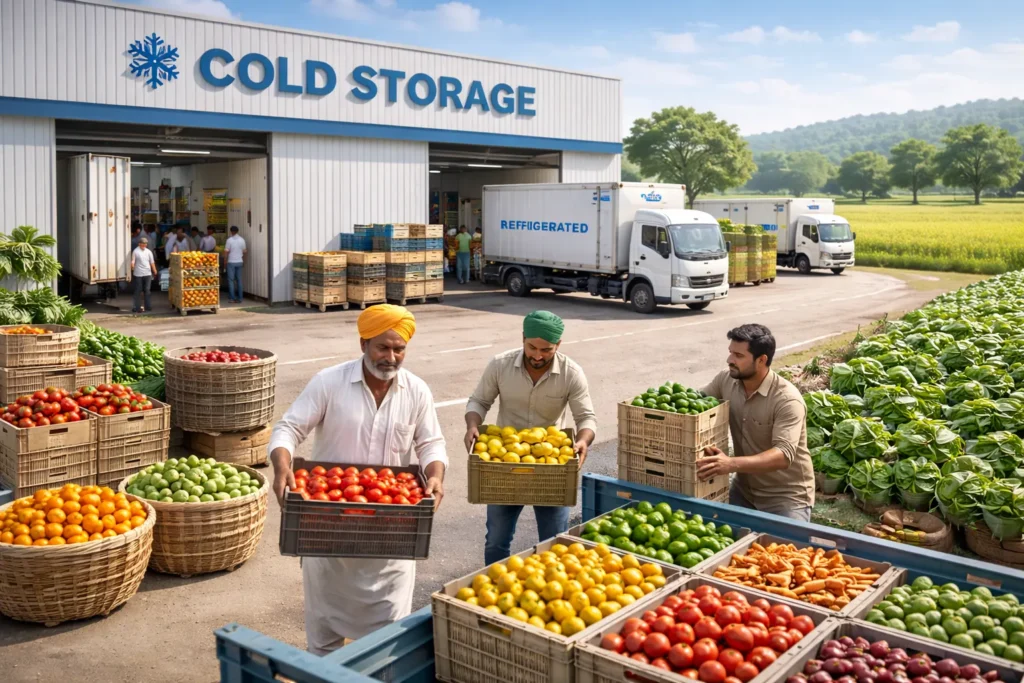

Prologue: The Unseen Symphony
The Salinas Valley at dawn is a study in contrasts. A low, persistent fog—the “marine layer”—clings to the earth, a natural coolant bestowed by the nearby Pacific. Within this mist, the sharp geometry of industrial agriculture unfolds: mile upon mile of perfect lettuce rows, the metallic glint of irrigation pivots, and the distant, beetle-like shapes of harvesting machines. For Maria Gonzalez, a third-generation steward of this land, this hour was once defined by a paradox. The very fog that preserved the dew on the leaves would burn off by mid-morning, unleashing a sun that turned her harvested crop from an asset into a liability with terrifying speed.
Her grandfather, Pedro, spoke of “la carrera contra la muerte”—the race against death. Once a head of romaine was cut, a biological countdown began, measured not in days, but in hours. The ice in the railcar was a gamble; the buyer’s promise was a hope. The anxiety was a heirloom, passed down with the land.
Today, Maria stands at the same field’s edge, but her gaze is not on the vanishing fog. It is on a live dashboard streaming to her tablet. The screen shows a serene, cascading waterfall of data: pallet IDs, core temperatures, humidity readings, ethylene levels, and estimated freshness windows—all emanating from the Salinas Valley Logistics Hub, a 1.2-million-square-foot monument to controlled climate five miles west. Her morning harvest, now hydro-cooled and palletized, is not in a race. It is in a state of graceful, digital suspended animation.
This quiet scene is a single note in a vast, emerging national symphony. From the apple-ringed basins of Washington to the citrus-scented groves of Florida, from the dairy-dotted hills of Wisconsin to the sprawling tomato fields of the Mid-Atlantic, America is conducting a profound and deliberate experiment. We are weaving a new biological and logistical reality—a continuous, intelligent, and resilient cold chain—that is systematically dismantling the ancient tyranny of perishability. This is not merely an expansion of infrastructure; it is the creation of a new temporal landscape for our food, a landscape where time is no longer an enemy to be outrun, but a dimension to be thoughtfully managed.
This is the story of that great weaving. It is an epic spanning biochemistry, quantum physics, climate science, economic theory, and human resilience. It is the chronicle of how we are moving from a fragile, loss-ridden food system to one of robust, intelligent abundance. Welcome to the Ice Age of Abundance.
BOOK ONE: THE KINGDOM OF LOSS – Mapping the Anatomy of an Ancient Inefficiency
To comprehend the magnitude of the present transformation, we must first excavate the fossilized layers of the system it replaces. For over a century, the American food machine operated on a foundation of accepted, catastrophic waste. This was not a simple failing of technology; it was a complex ecosystem of perverse incentives, biological inevitabilities, and fractured logistics.
Chapter 1: The Alchemy of Decay – Turning Sunlight, Soil, and Sweat into Methane
The statistics of the old paradigm read like a chronicle of a silent famine occurring amidst plenty. Prior to the current cold chain renaissance, approximately 40% of the food produced in the United States went uneaten. Within the fresh produce sector—the most vulnerable to time—the numbers were even more stark: 20-25% was lost between farm gate and retail shelf. This was not “food waste” in the common consumer sense; this was systemic food cancellation.
The lifecycle of a single, lost peach reveals the horrifying alchemy:
- Phase 1 – Resource Absorption: The peach tree drew 45 gallons of water from an increasingly strained aquifer. It absorbed nutrients from soil maintained by fertilizer, much of it synthesized from natural gas. Diesel fuel powered the tractor for pruning, spraying, and harvesting. Countless hours of skilled human labor—pruning in winter, thinning in spring—were invested.
- Phase 2 – The Perishability Trigger: The peach was picked at perfect “full slip” ripeness. At that moment, its respiration rate spiked. It began to convert its complex sugars into simple ones, then into CO2 and heat—literally consuming itself. Ethylene gas, its internal ripening hormone, flooded its tissues and seeped into the air around it.
- Phase 3 – The Fractured Journey: It was placed in a bin, transported on a flatbed truck (not refrigerated) to a packing house miles away, where it sat on a sun-baked dock. It was sorted, sometimes waxed, and packed into a cardboard box. That box was loaded onto a refrigerated trailer, but the “field heat” trapped within the pallet’s core struggled against the circulating cold air. The trailer made its way to a distributor, where the peach might wait for days before its final leg to a grocery store.
- Phase 4 – The Final Transmutation: If bruised, overheated, or simply too old upon arrival, the peach was rejected. It was pulled from the system. Its final destination was typically a landfill. There, buried under tons of waste, it underwent anaerobic decomposition. The carbon sequestered from the air, the energy from the sun, the minerals from the soil—all were metabolized by microbes into methane (CH4), a greenhouse gas with 80 times the warming potency of carbon dioxide over a 20-year period.
This was the secret equation of the old system: Precious Resources + Human Labor + Time = Methane. It was an economic and environmental ouroboros, a snake eating its own tail and exhaling poison.
Chapter 2: The Economic Vortex – How Perishability Created a Cycle of Poverty and Powerlessness
The financial architecture built upon this biological reality was inherently exploitative. The core mechanism was time-price pressure, a force that distorted markets and disempowered producers.
Imagine a market with two participants: Farmer A, with 10,000 pounds of ripe strawberries that will become valueless in 72 hours, and Buyer B, who knows this. Buyer B is not purchasing fruit; he is purchasing risk mitigation. His offer price is not based on the cost of production or intrinsic value, but on his calculation of that risk. This created a permanent buyer’s market at the point of harvest.
For small and mid-sized farmers like Samuel Chen of Fresno, this dynamic was a trap. “The buyers would come during the peak glut,” he recalls. “They’d see the fruit on the trees, they’d see the sweat on our brows, and they’d name a price. It was often below our break-even point. Our choice was to take a known loss today, or gamble on a total loss tomorrow. We called it ‘suicide pricing.’ It wasn’t business; it was extortion.”
This system:
- Suppressed Innovation: Why invest in delicate, flavorful heirloom varieties if they couldn’t survive the journey? The market selected for durability over taste, for thickness of skin over nutritional density.
- Discouraged Diversification: Sticking to a single, hardy commodity crop was safer than experimenting with high-value, perishable specialty items.
- Fueled Farm Consolidation: Only the largest operations could afford their own on-farm cold storage or withstand the price volatility. This accelerated the trend toward industrial-scale agriculture and the hollowing out of rural communities.
- Eroded Mental Health: The psychological burden was immense. “You’re not just a farmer,” explains Dr. Arlene Mitchell. “You’re a gambler with your family’s future on a single, perishable hand. The chronic stress of that ‘perishability anxiety’ is a root cause of the depression and despair plaguing our farming communities.”
Chapter 3: The Fractured Landscape – A Nation of Food Deserts and Glutted Markets
The inefficiency rippled outwards, distorting geography itself. Regions without nearby cold storage became nutritional deserts in reverse—places that produced food but could not reliably keep it or add value to it. A tomato grown in southern New Jersey might rot because the nearest cooler was three hours away in Pennsylvania, while a supermarket in Trenton imported tomatoes from Mexico.
Simultaneously, harvest seasons created violent market gluts. The entire Georgia peach crop would descend on the market in a six-week window, crashing prices and forcing farmers to dump surplus. There was no “buffer,” no ability to smooth supply over time. The system was both rigid and fragile, prone to cascading failure from a single broken truck or a delayed buyer.
This was the Kingdom of Loss: a realm where biology dictated economics, where waste was woven into the business model, and where the farmer, the most essential actor, was rendered a powerless pawn. It was against this bleak geography that the first maps of a new, colder world were being drawn.
BOOK TWO: THE ARCHITECTURE OF SUSPENDED ANIMATION – Engineering the New Cold Chain
The revolution against decay is not fought with a single weapon, but with a seamlessly integrated arsenal of physics, data, and strategic geography. The modern cold chain is a physiological intervention for food, a logistical ballet, and a masterclass in thermodynamic engineering.
Chapter 4: The First Law of Cold: Arresting Field Heat – The Battle for the First Hour
The entire enterprise hinges on one principle: The fastest way to extend shelf life is to remove field heat at terminal velocity. Every minute a harvested product spends above its optimal storage temperature consumes days of its future.
This has given rise to the strategic doctrine of The First Mile. New infrastructure is deployed not as a distant destination, but as an immediate extension of the field itself.
- Origin Hubs: These are the D-Day landing crafts of the cold chain. Built within a 20-mile radius of dense production regions (the Salinas Valley, Yakima Basin, Imperial Valley), they exist for one purpose: to accept, grade, and violently cool incoming harvests within 60 minutes of cutting. Their location is their superpower.
- Gateway Hubs: Positioned at the strategic crossroads of the American hinterland—near I-5 in California, I-95 in the Mid-Atlantic, I-35 in Texas—these are the Grand Central Stations of cold. They don’t just store; they consolidate. A half-load of peppers from Mexico meets a half-load of Wisconsin cheese, forming a full, efficient truckload bound for a specific retailer in the Northeast.
Chapter 5: The Cryogenic Toolkit: From Hydro-Shock to Hyperbaric Sleep
Within these hubs, cooling is not a monolithic process. It is a bespoke application of physics tailored to the cellular structure of each commodity.
- Hydro-Chilling (Liquid Immersion): For leafy greens, asparagus, sweet corn. Produce is conveyed through a torrent of ice-water (≈33°F). Water’s thermal conductivity is 25 times greater than air. In 10-15 minutes, a pallet’s core temperature plummets from 80°F to 40°F, arresting cellular respiration instantly. It is a controlled, gentle shock therapy.
- Vacuum Cooling: The most elegant solution for leafy vegetables. Produce is rolled into a massive, sealed steel chamber. Powerful pumps evacuate the air, lowering the pressure. At this reduced pressure, water evaporates from the surface of the leaves at a much lower temperature. This phase change (liquid to vapor) absorbs massive amounts of latent heat from the leaves themselves, cooling them from the inside out. It is uniform, rapid, and minimizes water loss.
- Forced-Air / Pressure Cooling: Pallets are placed against a sealed wall with powerful fans that pull cold air directly through the packaging vents and the product itself. This is 4-10x faster than traditional room cooling and is standard for berries, grapes, and stone fruit.
- The Majesty of Controlled Atmosphere (CA) Storage: This is the pinnacle of preservation technology. Here, engineers don’t just control temperature; they design an artificial atmosphere. In a hermetically sealed room:
- Oxygen is reduced from 21% to as low as 1-2%.
- Carbon dioxide is elevated to 1-5%.
- Ethylene gas is continuously scrubbed by catalytic converters.
- Temperature is held within a 0.5°F variance.
In this environment, an apple’s respiration slows to a bare metabolic whisper. It is not frozen; it is placed in a state of hyperborean sleep. A Gala apple stored in October in Washington state can be awakened in June, its crispness, acidity, and flavor profile virtually unchanged. This single technology transformed apple-growing from a seasonal trade into a year-round enterprise.
- The Frontier: Hypobaric and Hyperbaric Storage: Experimental facilities are now testing low-pressure (hypobaric) and high-pressure (hyperbaric) environments. The theory suggests that these conditions can further suppress microbial growth and enzymatic activity, potentially extending the life of the most delicate tropical fruits—mangoes, papayas, passion fruit—by orders of magnitude.
Chapter 6: The Digital Nervous System – The Internet of Cold Things
The physical infrastructure is inert without its digital consciousness. The modern cold chain is a vast, sensing organism.
Every pallet, every trailer, every cold room is now instrumented with a suite of telemetric sentinels:
- Thermocouples: Measure core product temperature.
- Humidity Sensors: Monitor relative humidity to prevent desiccation.
- Ethylene Analyzers: Detect the ripening hormone in parts per billion.
- Three-Axis Accelerometers: Record any impacts or drops that could cause bruising.
- GPS Trackers: Provide real-time location.
This data streams via cellular or LPWAN networks to cloud platforms like Tive, Sensitech, or Monnit. For the first time in history, a head of cauliflower has a digital twin—a virtual representation that reports its vital signs continuously.
The implications are profound:
- Proactive Alerts: Maria Gonzalez receives a push notification: “Pallet #B42, Romaine Hearts: Ambient temp drift detected at Chicago Hub. Corrective action initiated.” The problem is solved before the product is damaged.
- Predictive Analytics: Machine learning algorithms analyze historical temperature data and real-time performance to predict equipment failures days in advance, shifting from preventive to predictive maintenance.
- Chain of Custody: An immutable digital ledger records every temperature reading, every handoff, creating a forensic record of quality. The question “Who let this warm?” is replaced by the data showing exactly when and where it happened.
This is the Internet of Cold Things (IoCT), and it has turned the black box of transit into a transparent, accountable pipeline.
BOOK THREE: THE GREAT THAW – The Economic and Social Renaissance
The cold chain is not an end in itself. It is an enabler, a catalyst releasing pent-up economic potential and social cohesion in the heart of rural America. Its impact is a story of empowerment, stability, and revived communities.
Chapter 7: The Emancipation of the Producer – From Peon to Partner
Access to reliable, proximate cold storage is the single greatest lever for changing a farmer’s fate. It transforms their relationship with time, and therefore, with the market.
- The Power of the Pause: The most fundamental shift. A farmer is no longer a forced seller. They can harvest at peak quality and wait. They can bypass the harvest glut and target periods of higher demand. This simple ability to decouple harvest from sale redistributes power from the consolidated buyer to the dispersed producer.
- Market Access & Diversification: With a “cold bank account,” a farmer can fulfill contracts for grocery chains, school districts, or restaurant groups that require consistent, weekly supply. This unlocks premium markets. It also encourages crop diversification. A Midwestern grain farmer can now risk planting a few acres of high-value blackberries or edamame, knowing they can be preserved.
- Value Capture through Processing: Cold storage is the gateway to value-added products. A blueberry farmer can now freeze a portion of the crop for sale to bakers or smoothie manufacturers year-round, capturing more of the final retail dollar. On-farm micro-processing—for jams, dried fruits, fermented vegetables—becomes viable.
- The Return of Flavor: Heirloom and specialty varieties, long abandoned for their poor shipping quality, are making a comeback. The Cherokee Purple tomato, the Cox’s Orange Pippin apple—their delicate textures and complex flavors can now survive the gentle, cold journey to a chef’s kitchen or a farmer’s market stand. This is a renaissance of biodiversity and taste.
Samuel Chen’s story embodies this shift. “Two seasons ago, the early peach market collapsed. Instead of selling at a loss, I routed 60% of my best ‘Elegant Lady’ crop to a CA facility. For eight weeks, I watched the market. When a late-season festival created demand, I released them. The price was 40% higher. That premium didn’t just save my season; it funded a new irrigation system and a college fund for my daughter. That cooler didn’t store my peaches; it stored my options.”
Chapter 8: Rural Reawakening – Jobs, Skills, and Revitalized Towns
The construction of a major cold storage facility is a transformative economic event for a rural county.
- High-Skill, High-Wage Careers: These are not minimum-wage warehouse jobs. They demand ammonia refrigeration technicians (a highly certified trade paying $80,000+), logistics analysts, food safety managers, automation engineers, and data scientists. They offer career ladders in places that have seen steady brain drain for decades.
- The Educational Ripple: Community colleges are rapidly developing credentialing programs in refrigeration technology and cold chain management. In Warsaw, North Carolina, a partnership between the local college and the “Carolina Cold Connect” hub guarantees internships and job placement, keeping young talent in the community.
- Ancillary Economic Activation: Trucking firms, packaging suppliers, equipment mechanics, and even local diners and motels see renewed business. The facility becomes an economic anchor, increasing the local tax base and funding improvements to schools, parks, and infrastructure.
Chapter 9: The Consumer’s Unseen Dividend – Quality, Safety, and Stability
While the revolution is backstage, the audience reaps the benefits in their daily lives.
- The Quality Revolution: The most tangible change is in the eating experience. Raspberries that don’t mold in two days. Salad greens that stay crisp for a week. A peach that actually tastes like a peach, not cardboard. This extended peak-quality window also reduces household food waste.
- Enhanced Food Safety: Pathogenic bacteria like Listeria and E. coli multiply in the “temperature danger zone” (40°F – 140°F). An unbroken cold chain minimizes time in this zone, making the food supply inherently safer. It is a foundational public health intervention.
- Nutritional Preservation: Vitamins (especially Vitamin C and some B vitamins) are highly susceptible to heat degradation. Immediate cooling “locks in” the nutritional value harvested from the field. The spinach you eat is genuinely more nutritious than it was a generation ago.
- Price Moderation & Stability: While not causing dramatic deflation, a more efficient system removes a major source of cost volatility. When 20% of a crop isn’t lost, the price of the remaining 80% doesn’t have to spike to cover the loss of the whole. It creates a buffer against the shocks of weather and logistics.
BOOK FOUR: THE MOSAIC OF INNOVATION – Case Studies from the Frozen Frontier
The cold chain renaissance is not a uniform blanket; it is a quilt of tailored solutions adapted to specific crops, climates, and communities.
Chapter 10: The Desert’s Solar-Powered Oasis – Imperial Valley, California
In the extreme heat of the Imperial Valley, where temperatures regularly hit 115°F, cooling is an energy-intensive lifeline. The SunCool Agri-Hub tackles this head-on. Its vast roof is a 12-megawatt solar array, generating 150% of its own energy. Excess power is sold to the grid during peak afternoon demand. At night, using cheaper power, it freezes massive tanks of a glycol solution—a “thermal battery.” This stored cold is then used to chill the facility during the scorching day. It is a net-energy-positive food preservation plant, a model for sustainable cold chain operations in the age of climate change.
Chapter 11: The Cooperative Model – The Ohio River Valley
For small-scale Amish and Mennonite farmers in Ohio, individual cold storage was financially impossible. Their solution was collectivist. Forming the “Valley Fresh Cooperative,” twelve families pooled resources and secured a USDA grant to build a shared, 20,000-square-foot cooling and packing facility. By aggregating their green beans, tomatoes, and melons, they can now meet the volume requirements of supermarkets in Cincinnati and Columbus, selling under a unified brand. “The Englisch market runs on consistency,” says elder farmer Amos Miller. “This cooler lets us keep our ways and meet theirs. It gives us a fair seat at the table.”
Chapter 12: The Portside Paradigm – Savannah, Georgia
At the Port of Savannah, a critical bottleneck was the “reefer plug” shortage for refrigerated shipping containers. The Garden City Cold Terminal innovated with a “strip and ship” model. Incoming containers of frozen poultry or chilled pork from the Midwest are immediately emptied into the terminal’s massive -10°F freezers or chillers. The empty container is returned to the port for rapid reuse. The product waits efficiently in the terminal, to be loaded directly into the hull of a ship at the exact moment of departure. This has cut port dwell time for perishables by over 70%, supercharging U.S. agricultural exports.
Chapter 13: The Mobile Micro-Cold – Democratizing Access
For remote or highly diversified farms, the hub may still be too far. Enter the mobile cold unit. Companies like Arctic Pod deploy solar- and battery-powered refrigerated containers that can be dropped on a farm for the season. A cut-flower grower in Vermont can pre-cool her peonies at the field’s edge. A rancher in Montana can dry-age beef in a mobile, humidity-controlled cold room. This brings the first, most critical link of the chain to the “last acre,” democratizing technology for the smallest producer.
BOOK FIVE: THE FROST HEAVES – Confronting the Challenges of Scale
The path forward is not without significant obstacles. Building a resilient, equitable, and sustainable cold chain requires navigating profound challenges.
Chapter 14: The Energy Imperative – The Carbon Cost of Cold
Refrigeration is energy-hungry. The sector is a significant user of electricity and, until recently, relied on potent greenhouse gases (HFCs) as refrigerants.
- The Refrigerant Transition: The industry is undergoing a painful but necessary shift to natural refrigerants: Ammonia (NH3), Carbon Dioxide (CO2), and Propane. These have zero or negligible global warming potential but require higher pressures and more skilled handling. It’s a multi-billion-dollar retrofit.
- The Renewable Integration Mandate: New facilities must be designed as energy-positive nodes. Solar canopies, geothermal exchange, and wind-power purchase agreements are moving from “green branding” to economic and operational necessity.
- Grid Interaction: Future facilities will act as virtual power plants. By modulating their massive cooling loads in response to grid signals (a concept called “demand response”), they can help stabilize the electrical grid during peaks, turning a cost center into a revenue stream.
Chapter 15: The Labor Conundrum – Building a 21st-Century Workforce
The human capital challenge is acute. These facilities need a blend of old-world mechanical skill and new-world digital fluency.
- The Ammonia Technician Crisis: There is a national shortage of certified industrial ammonia refrigeration technicians. These are high-stakes jobs; an ammonia leak can be deadly. Intensive, hands-on apprenticeship programs are critical.
- The Data-Driven Farmhand: The new agricultural worker needs to interpret sensor data, manage warehouse robotics, and understand blockchain-based traceability. Agricultural education is being radically reimagined.
- Rural Retention: Offering competitive, high-tech careers in rural areas is a powerful tool to reverse decades of brain drain and rebuild the social fabric of heartland communities.
Chapter 16: The Equity Question – Avoiding a New Agricultural Monopoly
There is a dangerous paradox: infrastructure that could democratize opportunity could also cement corporate control if access is not guaranteed.
- The Threat of Gatekeeping: If large agribusinesses own the only hubs in a region, they can prioritize their own product and charge prohibitive rates to independents.
- The Cooperative Imperative: Policy must actively support farmer-owned cooperatives and third-party, open-access facilities. USDA grants and loan programs are increasingly targeting projects with clear equity and access plans.
- The “Last Acre” Problem: Cold storage is useless if a farmer can’t afford harvest labor, bins, or short-haul trucking to get to it. Support must be holistic, bundling cold chain access with other critical services.
Chapter 17: The Final Frontier – Conquering the Last Mile
The chain remains most vulnerable where it meets the consumer: the final delivery to small stores, restaurants, and food banks.
- The Food Bank as Hub: Reimagining regional food banks as active cold chain nodes, with blast freezers and chillers, allows them to rescue and store vast quantities of perishable donations for systematic redistribution.
- Micro-Fulfillment Centers: In urban areas, small, automated cold storage pods located in dense neighborhoods can act as hubs for last-mile delivery via electric cargo bikes, eliminating the need for large, idling refrigerated trucks in city centers.
- Consumer Tech: Smart home refrigerators that track inventory and freshness, integrated with delivery apps, could perfect household-level management, closing the final loop in the waste-reduction cycle.
BOOK SIX: VISIONS FROM THE VORTEX – The Next Generation of Cold
The current revolution is merely the foundation. The next decade will see the cold chain evolve from a logistical tool into an intelligent, predictive, and biotechnological ecosystem.
Chapter 18: Artificial Intelligence – The Prescient Chain
AI will move from monitoring to autonomous orchestration.
- Predictive Shelf Life Algorithms: By analyzing real-time sensor data, initial quality metrics, and even genetic profiles of the produce, AI will dynamically calculate the remaining shelf life of every individual pallet. Logistics will be optimized not just for speed, but for maximizing freshness at the point of sale.
- Prescriptive Maintenance: Vibration, acoustic, and thermal imaging sensors, fed into AI models, will predict compressor failures or insulation breakdowns weeks in advance, eliminating unplanned downtime.
- Autonomous Logistics Networks: AI will manage entire fleets of autonomous refrigerated trucks and robotic warehouse systems, dynamically rerouting shipments around weather, traffic, or demand shifts in real-time, creating a self-healing, resilient network.
Chapter 19: Biomimicry and Bio-Preservatives – Learning from Nature
The ultimate goal is to reduce the energy needed for preservation by enhancing the food’s own defenses.
- Edible, Intelligent Coatings: Nano-scale coatings derived from chitosan (shellfish), alginate (seaweed), or plant-based lipids can form a breathable, protective “second skin” that slows moisture loss and oxidation, extending shelf life without plastics or refrigeration.
- CRISPR for Resilience: Gene editing will target traits beyond yield and pest resistance, focusing on post-harvest robustness—slower softening, reduced ethylene production, enhanced antioxidant levels. We will breed fruits and vegetables that are inherently longer-lasting.
- Hypobaric & Hyperbaric 2.0: Next-generation pressure-based storage, made economically viable by new materials and engineering, could make the energy-intensive practice of freezing obsolete for many fruits, preserving fresh-like texture for months.
Chapter 20: Blockchain and the Transparent Tomato – The Era of Radical Provenance
Full, immutable traceability will become a default expectation, not a luxury.
- From Farm to Fork, Digitally: Every crate will have a digital passport on a blockchain. Scan a code and see the farm’s location, harvest time, the temperature every minute of its journey, its carbon footprint, and even the name of the technician who performed its final inspection.
- Smart Contracts for Fair Trade: Payments to farmers could be automated via smart contracts that trigger upon verified delivery at a specified quality metric, ensuring instant, fair payment and eliminating financial disputes.
- Building Consumer Trust: In an era of food safety scares and greenwashing, this radical transparency will rebuild consumer confidence, allowing them to vote with their dollars for the systems they believe in.
Chapter 21: The Distributed, Decentralized Grid – Cold Storage as a Civic Utility
The cold chain will become a two-way partner in national energy resilience.
- Thermal Energy Storage (TES): Facilities will freeze water or salt solutions at night (using excess wind or solar power) and use that “stored cold” to cool the building during the day, flattening the demand curve on the grid.
- Grid-Services Provider: By agreeing to rapidly shed their enormous electrical load for short periods during peak demand, cold storage facilities will act as virtual power plants, getting paid for providing grid stability—a new revenue stream that can lower costs for farmers.
- The Renewable-Powered Food System: The integration of on-site generation, storage, and smart grid interaction will culminate in a food preservation network that is not just energy-efficient, but actively grid-positive and regenerative.
Epilogue: A New Covenant – The Rhythm of Managed Time
Maria Gonzalez closes her tablet as the last light fades from the Salinas Valley. The data stream continues, a silent, steady pulse in the digital ether, representing the secure state of her day’s work. The “carrera contra la muerte” her grandfather knew is over. In its place is a collaboration with time.
This is the profound philosophical shift at the heart of the cold chain revolution. We are no longer helpless before biological inevitability. We are learning to orchestrate it. We are moving from an economy of extractive urgency to one of stewarded abundance.
The benefits cascade: The farmer regains dignity and agency. Rural communities find new purpose and skilled vocations. Our natural resources—water, soil, fossil fuels—are treated with the respect they deserve, not squandered. The consumer receives food that is safer, more nutritious, and more flavorful. The climate benefits from a drastic reduction in both waste and the potent methane it produces.
The great hum rising from the landscapes of America is more than machinery. It is the sound of a system healing itself. It is the sound of intelligence being applied to longevity, of respect being paid to ripeness, of a future being built where nothing of value—not the fruit, not the labor, not the resources, not the opportunity—need be lost in the perilous, warm space between.
From the field to the fork, we are forging a new covenant. It is a promise of resilience, of equity, and of plenty. It is a future that is not just cold, but profoundly, intelligently, alive.


