
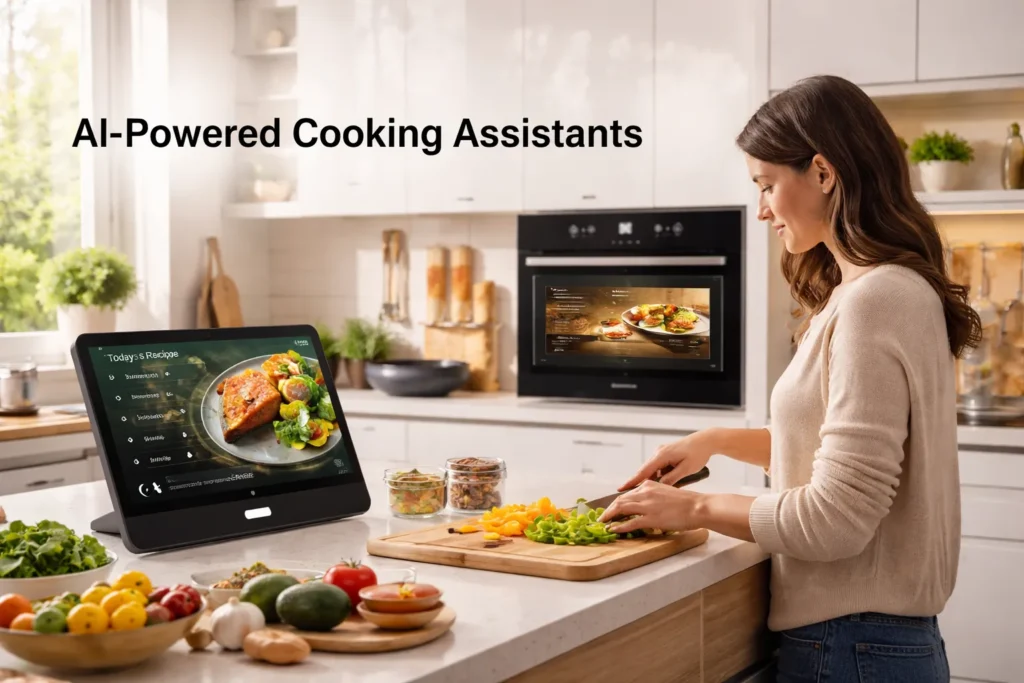

It was a Tuesday evening, and Maria stood in front of her open refrigerator, feeling the cold air hit her face. She was tired. The last thing she wanted to do was figure out what to cook for her family. She had half a bag of spinach, some leftover chicken from the night before, and a block of feta cheese that was nearing its expiration date. Her two kids were arguing in the living room about whose turn it was to choose the TV show. Her phone was buzzing with work emails from a client who needed revisions by morning. The dishwasher was beeping because it needed to be emptied. And the clock was ticking toward the usual dinner-time chaos when everyone gets hangry and patience runs thin.
Three years ago, Maria would have sighed, closed the door, and ordered a pizza. She would have felt guilty about the money spent on delivery fees and the vegetables left to rot in the crisper drawer. She would have dealt with the kids complaining about pizza again, and she would have gone to bed feeling like she had failed at the simple task of feeding her family a decent meal. But tonight, she simply tapped a screen on her countertop. “Hey, CookBot,” she said. “What can I make with spinach, chicken, and feta?”
Within seconds, a friendly voice responded. It didn’t sound robotic or cold. It sounded warm, almost like a friend who had been waiting for her to ask. “Good evening, Maria. I see you have about six ounces of spinach, two chicken breasts, and a block of feta. I have three suggestions. A Mediterranean chicken skillet that takes twenty-five minutes. A spinach and feta stuffed chicken breast that takes forty minutes. Or a quick chicken pita sandwich that takes fifteen minutes if you’re in a hurry.”
She chose the skillet. As she pulled out a pan, a tablet mounted to her cabinet lit up with step-by-step instructions. The font was large and easy to read from across the counter. The background was a soft, non-glaring gray that didn’t strain her eyes. When she wasn’t sure if the chicken was cooked through, she didn’t have to guess. A small smart thermometer in the pan told the app the internal temperature, and the voice calmly said, “Two more minutes, Chef. You’re doing great. The internal temperature is one hundred fifty-five degrees. We’re aiming for one hundred sixty-five.”
Her daughter wandered into the kitchen and asked what smelled so good. Her son paused his video game to peek at the tablet screen, curious about the colorful photos of the finished dish. For the first time that day, Maria felt like she had things under control.
This is not a scene from a futuristic sci-fi movie. This is the modern kitchen. Artificial intelligence has quietly slipped into our homes, not as a robot that pushes us out of the way or a machine that replaces our hands, but as a helpful assistant standing right beside us, watching, listening, and waiting to help. We are entering a new era of cooking, where technology is no longer just a timer on the microwave or a button on the toaster. It is becoming a partner in the creative, messy, and deeply human act of making food. It is learning our habits, adapting to our mistakes, quietly celebrating our successes, and gently guiding us when we stumble. It is turning the kitchen from a place of stress into a place of possibility.
From Scratched Recipe Cards to Smart Screens
To understand how big this shift is, we have to think about how we used to learn to cook. For most of human history, cooking skills were passed down through generations in a very personal, intimate way. You stood next to your grandmother and watched her hands. You learned that a pinch of salt meant the amount between her thumb and forefinger, not the precise measurement you’d find in a cookbook. You learned that the dough was ready when it felt like a baby’s cheek, soft and resilient. You scribbled notes on stained index cards, often with splatters of vanilla extract or tomato sauce marking the pages of a well-loved cookbook that had been in the family for decades. If you got stuck, you called your mom, hoping she was home to talk you through the roux that had turned into a lumpy mess or the pie crust that kept crumbling apart.
Then came the internet, and everything changed in ways we are still trying to understand. Suddenly, we had millions of recipes at our fingertips. Websites like Allrecipes, Epicurious, Food Network, and later YouTube and TikTok, gave us access to cooking knowledge that would have taken a lifetime to collect otherwise. We could watch a chef in Italy make pasta from scratch, her hands moving with the confidence of generations. We could watch a grandmother in Louisiana make gumbo, explaining the importance of the roux color with the patience of someone who had taught a hundred people before us. We could learn about fermentation from a expert in Korea or about bread baking from a baker in France.
But even with all that access, there was still a disconnect. A recipe on a phone screen doesn’t know if you’ve run out of paprika. It doesn’t care if you hate chopping onions or if you’re allergic to garlic. It doesn’t know that your oven runs hot or that your kitchen is cold because the window is drafty. It just sits there, expecting you to follow it perfectly, with no room for error or improvisation. If you made a mistake, the recipe had no mercy. It didn’t know how to help you fix it. You were on your own, scrolling back up through paragraphs of text, trying to figure out where you went wrong.
Today, the technology is flipping that script entirely. Instead of us serving the recipe, the recipe is starting to serve us.
The new wave of AI-powered cooking assistants is designed to be flexible, adaptable, and forgiving. They understand that life is messy. They know that sometimes you don’t have an ingredient, or sometimes you have too much of something that is about to go bad. They know that sometimes you’re cooking with a toddler hanging on your leg, or you’re trying to finish dinner before the delivery driver arrives with a package that requires a signature. These smart systems act like a patient friend standing next to you, offering suggestions, adapting to what you have, and never making you feel foolish for asking a question.
This shift represents a fundamental change in the relationship between humans and their kitchens. For the first time, the kitchen is becoming a two-way conversation. We tell the kitchen what we have, and the kitchen tells us what we can become. We ask questions, and the kitchen answers. We make mistakes, and the kitchen helps us fix them. It’s no longer a one-sided relationship where we do all the work and hope for the best. It’s a partnership.
The Brain on Your Countertop
So, what exactly is an AI cooking assistant? If you break it down to its simplest form, it is a combination of hardware and software that uses artificial intelligence to make cooking easier, more enjoyable, and more successful. You might have seen these devices in stores or in advertisements. Some look like smart speakers with screens, sitting quietly on the counter until you call their name. Others are high-tech ovens that can recognize what you put inside them and adjust their temperature accordingly without you having to press a single button. There are even countertop appliances that weigh your ingredients and cook them perfectly without any input from you, turning out everything from perfectly poached eggs to slow-braised short ribs with no human intervention beyond loading the ingredients and pressing start.
But the “AI” part is what makes them truly special. Unlike a regular kitchen scale or a basic timer that does exactly what you tell it and nothing more, these assistants learn. They observe. They adapt. They get better over time.
Let’s unpack what learning means in this context. When you use a traditional appliance, it behaves the same way every single time, regardless of what you’re cooking, regardless of your preferences, regardless of the conditions in your kitchen. A toaster doesn’t care if you like your bagel dark or light; it just toasts until you pop the lever, and if you forget to adjust the setting, you get burnt toast. A basic oven doesn’t adjust its temperature based on what you’re cooking or how full the oven is; it just heats to whatever number you set, even if that number is wrong for the recipe you’re following. But an AI-powered device observes your behavior, notes your preferences, and builds a profile that becomes more accurate the more you use it.
For example, the first time you use a smart oven, you might have to tell it what you are cooking. You might select “salmon” from a menu and confirm the weight. You might tell it whether you want it rare, medium, or well-done. But after a few uses, it starts to recognize patterns. If you often cook salmon on Tuesdays, it might preheat to the perfect temperature for salmon before you even ask, based on your historical data. If you frequently use gluten-free flour in your baking, the recipe app will start prioritizing gluten-free suggestions without you having to filter them every time, learning from your choices what matters to you. If it notices that you always add an extra minute to the cooking time for roasted vegetables because you like them extra crispy and caramelized, it will start automatically adjusting the suggested time for you, saving you the step of overriding the default settings.
This is the magic of machine learning, a type of artificial intelligence where the system gets smarter and more personalized the more you use it. It’s like having a sous-chef who watches how you work, notices your habits, and remembers your preferences so they can anticipate your next move and have everything ready before you even ask. It’s not just a machine sitting there waiting for commands. It’s a personalized tool that becomes more valuable, more intuitive, and more helpful the longer you own it.
Behind the scenes, these assistants are processing massive amounts of data. They are connected to cloud servers that hold thousands of recipes, nutritional databases, cooking techniques, and instructional videos. But they are also processing your local data—your family’s taste preferences, your cooking speed, your dietary restrictions, your favorite cuisines, the times of day you usually cook, even the types of music you like to listen to while you’re in the kitchen. The combination of global culinary knowledge and deep personalization is what makes these devices feel almost human. They don’t feel like generic machines. They feel like they know you.
Solving the “What’s for Dinner?” Dilemma
One of the biggest stressors for families, according to countless surveys and psychological studies, is the daily question: What’s for dinner? It causes what psychologists call decision fatigue. You stand in the grocery store aisle, exhausted from work, staring at the endless rows of options, unsure of what to buy. Or you stand in front of the open refrigerator at 6 PM, the cold air hitting your face, and you freeze. Nothing looks appealing. Nothing seems easy. You’ve made spaghetti three times this week already. You’re out of ideas.
This decision fatigue is real, and it takes a toll. When we are presented with too many options, our brains freeze up. We end up making the same three meals over and over again because it’s easier than deciding on something new. We fall into ruts. We get bored. We order takeout more often than we’d like to admit. And then we feel guilty about the money spent and the nutrition compromised.
AI cooking assistants are uniquely suited to solve this problem. They do this through a process called “ingredient recognition” combined with sophisticated personalization algorithms. But it goes much deeper than just scanning what’s in your fridge and spitting out a list of recipes.
Let’s go back to Maria. When she opened her fridge, her AI assistant didn’t just guess what she had based on a vague inventory list. In many modern setups, the system allows her to scan her grocery receipts when she gets home from the store, or even use a camera inside the fridge that automatically logs what is in stock. The AI knows she has spinach, chicken, and feta. But it also knows something else. It knows her family’s dietary preferences because it has been tracking them for months. Maria has a teenager who is trying to eat more protein to support his growth spurts and sports activities, and a younger child who hates spicy food and has a mild allergy to tree nuts. The AI filters out any recipe with chili flakes or almonds without Maria having to remember to set those filters every single time. It looks at the nutritional goals Maria set up last month—lower carbs for herself because her doctor recommended it to manage her blood sugar—and suggests a version of the Mediterranean skillet that uses less rice and more vegetables.
But the magic doesn’t stop there. The AI also considers the time of day, the day of the week, and even the weather. If it’s a Tuesday and Maria usually has soccer practice at 6 PM, the assistant will prioritize meals that take under thirty minutes from start to finish. If it’s a rainy Sunday afternoon, it might suggest a longer, more involved recipe like homemade bread or a slow-cooked stew that fills the house with comforting aromas and gives the family something to do together while the rain patters against the windows. If it’s the middle of summer and the kitchen is hot, it will suggest no-cook meals or dishes that use the grill or the Instant Pot to minimize heat in the kitchen.
It isn’t just listing recipes. It is curating a solution based on a complex web of variables that the human brain simply doesn’t have the bandwidth to process after a long day at work, after dealing with kids, after answering emails, after all the other demands of modern life. It is taking the mental load off the cook and handling the logistics so the cook can focus on the enjoyable parts.
This reduces food waste significantly. When you know exactly what to do with the leftover ingredients in your crisper drawer, you throw away less food. According to environmental studies from organizations like the Natural Resources Defense Council and the Food and Agriculture Organization of the United Nations, a huge percentage of household waste comes from fresh produce that goes bad before we figure out how to use it. AI assistants act like a safety net, catching those forgotten vegetables—the wilting kale, the softening avocados, the slightly bruised apples, the celery that’s lost its crunch—before they turn into compost. They turn potential waste into meals.
The Joy of Hands-Free Guidance
Once you have a plan, the real cooking begins. This is where the assistant shifts roles entirely. It goes from being a librarian—finding and organizing information—to being a coach standing right beside you, watching your every move, ready to step in when things start to go sideways, ready to offer encouragement when you’re doing well.
If you have ever tried to follow a complicated recipe on your phone, you know the struggle intimately. Your screen gets covered in flour or olive oil. You have to wash your hands, dry them thoroughly, and then scroll down to the next step, all while something is sizzling on the stove. You miss a line because you scrolled too fast and accidentally add salt twice. You try to use voice commands, but your phone doesn’t understand “Hey Siri, what comes after deglaze?” The result is often frustration, a messy phone, and a meal that doesn’t turn out the way you hoped. Sometimes the frustration is enough to make you swear off trying new recipes altogether.
AI-powered assistants solve this with voice control and real-time adjustments that feel almost magical in their responsiveness.
Imagine you are making a delicate caramel sauce. Sugar is one of the trickiest ingredients to work with in the kitchen. It goes from perfect to burnt in a matter of seconds, often without any visible warning. If you look away for five seconds to check on the pasta water or to answer a child’s question, the sugar can cross the line from golden amber to acrid black. A traditional recipe would say, “Cook until amber colored.” But what does amber look like in your kitchen lighting? Is it a light amber or a dark amber? The difference between the two is the line between buttery, rich caramel and bitter, unusable tar.
With a smart assistant, you don’t need to guess. Using a connected thermometer that clips onto your pot or a camera that attaches to your range hood, the system monitors the temperature and color in real time, sampling the data multiple times per second. Instead of just telling you the temperature in numbers, which would require you to know what temperature corresponds to the perfect caramel, it speaks to you in human terms. It might say, “Stir gently. The sugar is starting to turn golden at the edges. In about thirty seconds, remove from heat.” It watches the bubbles, the color gradient from the edges to the center, and even the smell through sensors that detect volatile compounds, and it makes the judgment call for you.
It guides you with the patience of a cooking instructor who has all the time in the world and has taught this recipe a thousand times. If you wander away from the stove to answer the doorbell, the assistant will remind you when to come back. “Your sauce is approaching the target temperature. Please return to the stove.” If you are using a smart pan that communicates wirelessly with the stove, the burner might even lower the heat automatically when the liquid starts to boil over, preventing that dreaded mess on the stovetop that takes forever to clean.
This technology is a game-changer for beginner cooks. It removes the fear of failure that keeps so many people from trying to cook. When someone has never roasted a whole chicken before, the idea of cooking a bird can be genuinely terrifying. Will it be raw in the middle? Will the skin be rubbery and pale? Will the breast dry out while the thighs are still undercooked? An AI assistant can walk them through it step by step, adjusting the oven temperature in real-time based on the internal temperature of the bird, ensuring the breast doesn’t dry out while the thighs finish cooking. It can even tell them when to flip the bird for even browning and when to let it rest before carving.
For experienced cooks, it’s equally valuable in a different way. It handles the boring stuff—the timing, the temperature monitoring, the mental checklist of what comes next—so the cook can focus on the artistry. They can play with spices, experiment with flavor combinations, focus on the presentation, and enjoy the company of their guests rather than hovering over the oven with a meat thermometer, refreshing a timer on their phone, or flipping through a cookbook with greasy fingers.
The Rise of the Smart Appliance Ecosystem
It is not just about the tablet on your wall or the smart speaker on your counter. The AI revolution is spreading to the appliances themselves, transforming the entire kitchen into an interconnected ecosystem where everything works together seamlessly, sharing data and coordinating actions to make cooking as effortless as possible.
Smart Ovens: These are perhaps the most impressive pieces of technology entering the market, and they represent the biggest leap forward in oven technology since the introduction of the self-cleaning feature decades ago. Companies are now producing ovens that use internal cameras, thermal sensors, and artificial intelligence to identify what you are cooking and adjust the cooking parameters automatically. You can put a frozen pizza in the oven, and instead of setting a timer for twelve minutes and hoping for the best while you do something else, the oven watches the pizza. It uses computer vision to recognize the crust color, the melt of the cheese, the browning of the pepperoni, and the bubbling of the sauce. It knows when the cheese is perfectly bubbly with those characteristic brown spots and the crust is crisp and golden. It turns itself off at the exact moment of perfection, even if that moment happens three minutes earlier or later than the box suggested based on your specific oven’s characteristics.
But it gets even more sophisticated. If you’re cooking a roast chicken with vegetables, the oven can recognize that you have two different types of food with different optimal cooking temperatures. It can use multiple heating elements and fans to create different temperature zones inside the same cavity, ensuring that the vegetables caramelize beautifully while the chicken stays juicy. Some high-end models can even combine steam and convection heat, using humidity sensors to ensure bread has the perfect crust, crisp and crackly on the outside while soft and airy on the inside.
Smart Induction Cooktops: Induction cooking has been around for a while, and it’s already faster, more efficient, and safer than gas or electric resistance cooking. The heat is instant, and the surface stays cool to the touch except where the pan is sitting. But with AI integration, these cooktops are getting exponentially smarter. They can recognize which pan you placed on which burner through weight sensors and magnetic signatures. If you move a pot from the back burner to the front because you need more space, the settings follow it automatically. You don’t have to reprogram the temperature or remember which burner you had set to high. The cooktop just knows.
These cooktops also come with safety features that are incredibly useful for busy families with young children or for anyone who gets distracted easily. If the cooktop detects that a pot has boiled dry because the temperature of the pan is rising too quickly, it automatically shuts off that burner before any damage occurs. If a child touches the surface, it remains cool except where the pan is actively heating, so there’s no risk of burns. Some models can even sync with your recipe app so that when the recipe says “bring water to a boil, then reduce to a simmer,” the cooktop does that automatically, adjusting the power level at the right moment without you having to touch anything.
Smart Refrigerators: The refrigerator has become the command center of the smart kitchen, the hub that connects all the other appliances and coordinates the flow of information. Modern smart fridges are equipped with interior cameras that take a photo every time you close the door, creating a visual inventory that you can access from anywhere. You can check what’s inside from your phone while you’re standing in the grocery store, eliminating the dreaded “did we have eggs?” moment and the subsequent purchase of a third dozen.
These fridges also have large touch screens on the doors that can display recipes, stream music and video, show family calendars and to-do lists, and even function as digital photo frames. The AI inside can track expiration dates with remarkable accuracy. When you put a carton of milk in, you can tell the fridge when it expires, or it can read the date from the label using optical character recognition. As the expiration date approaches, it sends a gentle notification to your phone or displays a reminder on the door: “Your milk expires tomorrow. Here are three recipes that use milk so nothing goes to waste.”
Some smart fridges can even suggest recipes based on what’s inside, acting as a secondary cooking assistant that works in tandem with your countertop device. They can tell you when you’re running low on staple items and automatically add them to your shopping list. They can coordinate with your spouse’s shopping list so you don’t both come home with a gallon of milk.
Multicookers and Smart Scales: Even the small appliances are getting the AI treatment, and the results are impressive. High-tech multicookers, which combine the functions of a pressure cooker, slow cooker, rice cooker, steamer, yogurt maker, and more, now have built-in sensors that weigh the food inside. If a recipe calls for two pounds of beef, but you only have one and a half pounds, the machine recalculates the cooking time and liquid ratios automatically. You don’t have to do the math or worry about the final result being dry or undercooked. The machine handles it.
Smart scales can connect to your tablet or phone via Bluetooth or Wi-Fi and tell you when you’ve poured exactly the right amount of flour, eliminating the need for measuring cups and the mess that comes with them. They can also combine ingredients in real time, so if you’re baking and you accidentally add too much sugar because your hand slipped, the scale can calculate how much more of the other ingredients you need to add to maintain the correct ratios. It can even guide you through the entire recipe, telling you when to add each ingredient and when to stop pouring.
Smart Dishwashers: Even the cleanup process, which is often the least enjoyable part of cooking, is getting smarter. AI-powered dishwashers can sense how dirty your dishes are based on the cloudiness of the water and the amount of food particles detected, and they adjust the cycle length, water temperature, and water pressure accordingly. They can detect which cycle uses the least amount of energy for that specific load, saving electricity and water. Some models even have a “top rack only” option for when you only have a few glasses to clean, using a fraction of the water and energy of a full cycle. They can notify you when the rinse aid is low and even order more from your preferred online retailer automatically. They can learn your usage patterns and suggest running the dishwasher at off-peak energy hours to save money.
Encouraging Healthier Habits Without the Lecture
One of the most promising aspects of AI in the kitchen, and one that has the potential to make a real difference in public health, is its ability to encourage healthier eating habits. But unlike a diet app that shames you for eating a cookie or a fitness tracker that guilts you for skipping a workout, these cooking assistants take a gentle, supportive, and positive approach that is far more effective over the long term.
Let’s say you have a goal to eat more fiber because your doctor mentioned it at your last checkup, maybe in the context of cholesterol management or digestive health. The assistant doesn’t just tell you to eat broccoli. That would be annoying, unhelpful, and frankly a bit condescending. Instead, it works with your existing preferences. When you search for “pasta,” which you love and aren’t going to give up, it might suggest a recipe for chickpea pasta with a lentil sauce. It shows you the nutritional comparison side by side, not as a lecture but as information. “This recipe has fifteen grams of fiber, compared to four grams in your usual recipe. It also has eight more grams of protein and half the net carbs.” It’s not forcing you to change. It’s presenting you with options and letting you make an informed choice.
If you have specific medical dietary needs—like low sodium for high blood pressure, low sugar for diabetes, low FODMAP for irritable bowel syndrome, or gluten-free for celiac disease—the AI can scan thousands of recipes instantly to find ones that fit your exact requirements. It can also modify existing recipes in real time, which is a game-changer for people with dietary restrictions who are tired of eating the same limited set of foods.
If you find a chocolate cake recipe you love from a food blog, you can paste the link into the assistant, and it will analyze the ingredients line by line. It can suggest substitutions to reduce the sugar by thirty percent without ruining the texture, or swap out butter for applesauce or Greek yogurt to lower the saturated fat content. It can replace all-purpose flour with almond flour or a gluten-free blend and calculate the necessary adjustments to the liquid ingredients to maintain the right consistency. It can even calculate the new nutritional information based on the swaps you’ve made, so you know exactly what you’re eating.
For families with picky eaters, this is a lifesaver. Parents can use the AI to find recipes that hide vegetables in ways their kids will actually eat without complaint. It can suggest pureeing cauliflower into mac and cheese, blending zucchini into brownies where it adds moisture without flavor, or finely chopping mushrooms into meatballs where they blend in with the ground meat. The AI can also help with portion control, which is one of the hardest parts of maintaining a healthy diet in a culture where restaurant portions have distorted our sense of what a normal serving looks like.
When plating dinner, a smart scale connected to the app can tell you exactly how much to serve based on the nutritional goals of each family member. It might say, “For Dad’s weight loss goal, serve six ounces of salmon. For the teenager’s muscle gain goal, serve eight ounces of salmon with an extra half cup of rice. For Mom’s diabetes management, serve six ounces of salmon with double vegetables instead of rice.” It takes the guesswork out of portion sizes and makes it easy to feed a family with different needs without cooking multiple separate meals.
Beyond physical health, these assistants are also starting to address mental and emotional well-being in the kitchen. Some newer models have mood detection capabilities. If you seem stressed—maybe your voice is tight and clipped, maybe you’re moving frantically, maybe you’ve been in the kitchen for a long time without a break—the assistant might suggest a calming playlist, slow down the recipe instructions, or offer a quick breathing exercise while something is baking or simmering. It recognizes that cooking should be a stress reliever, not a stressor, and it tries to create an environment that supports that.
Reducing Food Waste: A Financial and Environmental Win
We touched on this earlier, but it is worth diving deeper because the numbers are staggering and the implications are enormous. Food waste is a massive problem on a global scale, but it’s also a deeply personal problem that affects every household’s budget and every family’s sense of responsibility toward the environment.
Globally, about one-third of all food produced for human consumption is wasted. That’s approximately 1.3 billion tons of food every year. In the average American household, the numbers are even more alarming. The average family of four throws away roughly $1,500 worth of food annually. That’s money that could have gone toward a vacation, a new appliance, college savings, or simply less financial stress. When you throw away food, you are not just wasting the food itself. You are wasting the water, energy, fertilizer, labor, transportation fuel, and packaging that went into producing, processing, and delivering that food. You are also contributing to methane emissions in landfills, which is a potent greenhouse gas with more than twenty-five times the warming potential of carbon dioxide.
AI cooking assistants are arguably the most effective tool we have in our homes to fight this waste on a personal, practical level.
First, there is the inventory management we discussed earlier. But let’s get into the specifics. Some smart refrigerators now have internal cameras with AI that can identify individual items with impressive accuracy. They don’t just see a blob of green in the crisper drawer; they recognize that it’s a bunch of kale, and they can tell the difference between kale and collard greens and Swiss chard. They can track how long that kale has been in there. If it’s been five days and kale typically lasts seven before it starts to wilt, the system sends a gentle notification: “Your kale is still good, but it’s best used today or tomorrow. How about a kale and white bean soup or a kale and feta omelet for breakfast?”
Second, there is the “scraps” feature that is becoming standard in most AI cooking apps. Many of these apps now have a dedicated function where you can list your “odds and ends”—the bits and pieces that often get thrown away because they seem useless. If you have carrot tops, parmesan rinds, stale bread that’s too hard for sandwiches, onion skins, celery ends, and a few mushrooms that are starting to wrinkle, the AI can tell you how to turn those into a delicious vegetable stock that will be the foundation for soups and risottos all week. It can turn stale bread into breadcrumbs for topping casseroles, or into croutons for salads, or into the base for a savory bread pudding. It can turn carrot tops into a pesto that tastes surprisingly fresh and bright. It treats scraps as ingredients, not garbage, and that shift in mindset is powerful.
Third, AI can help with meal planning to prevent over-purchasing in the first place. When you create your grocery list through the assistant, it can analyze your planned meals for the week and suggest buying smaller quantities of perishable items. If you only need half a bunch of cilantro for one recipe, it will remind you to buy only what you need, or it will suggest another recipe later in the week that uses the remaining cilantro so nothing goes to waste. It can even coordinate with your partner’s shopping list if you share the same account, so you don’t both come home with a gallon of milk or two bags of lemons.
Fourth, AI can help with proper food storage, which is a major factor in food waste that most people don’t think about. Different fruits and vegetables produce different levels of ethylene gas, which can cause nearby produce to ripen and spoil faster. The AI can tell you which foods should never be stored next to each other, which foods should go in the high-humidity drawer versus the low-humidity drawer, and which foods are best kept on the counter rather than in the fridge. This knowledge alone can extend the life of fresh produce by days or even weeks.
This shift saves the average family hundreds of dollars a year. If you conservatively estimate that a family throws away $50 worth of food per month, that’s $600 a year. AI can easily cut that waste in half, putting $300 back in your pocket while also doing something good for the planet. For families on tight budgets, that $300 can make a real difference.
The Storyteller in the Kitchen: Making Cooking Fun Again
Beyond the practical benefits—the time saved, the waste reduced, the health improved, the money kept in your pocket—there is a softer benefit to these AI assistants that is just as important, maybe even more important in the long run. They are bringing joy, curiosity, and wonder back to cooking.
For a long time, cooking became a chore for many people. It was something you had to do after work, another item on the to-do list sandwiched between picking up the kids and helping with homework, between answering emails and folding laundry. The joy of discovery, the excitement of trying a new cuisine, the pleasure of creating something with your hands and sharing it with people you love—all of that got lost in the rush of modern life. Cooking became a burden, not a pleasure.
These devices are designed to bring that magic back. They often have “storytelling” features that add context, history, and narrative to the cooking experience, transforming it from a task into an adventure.
When you are making a traditional dish, like Pad Thai, the assistant might share a short history of the dish while you’re waiting for the water to boil or the noodles to soak. “Pad Thai was actually created in the 1930s as part of a national campaign to build a unified Thai identity and reduce rice consumption during an economic crisis. It combines Chinese stir-fry techniques with Thai flavors like tamarind, fish sauce, and palm sugar. Street vendors in Bangkok still make it fresh in giant woks, and each region has its own variation.” Suddenly, you’re not just making dinner; you’re connecting with a culture, a history, and a story that spans nearly a century.
If you’re making Beef Bourguignon, the assistant might tell you about the region of Burgundy in France, where the dish originated, and how it was traditionally a peasant dish made with tough cuts of meat that required long, slow cooking to become tender. It might tell you how it became famous in America because of chefs like Auguste Escoffier and later Julia Child, who spent years perfecting her version of the recipe. It might even tell you about the wine that gives the dish its name, explaining how the red Burgundy wine from that region has a specific flavor profile that comes from the limestone soil and the particular grape varietals grown there.
For people who live alone, cooking can feel lonely. There’s no one to chat with while you chop vegetables, no one to ask for an opinion on the seasoning, no one to share a taste with and say “this needs a little more salt” or “I think it’s perfect.” An AI assistant provides a friendly presence. It cracks jokes, plays music, offers encouragement, and engages in conversation. “That flip was perfect! Gordon Ramsay would be proud.” “Wow, your knife skills are really improving. Remember when you first started and you chopped everything into different sizes? Look at you now.” It can even ask about your day, remind you of upcoming events, suggest a wine pairing based on what you’re cooking, or tell you a fun fact about the ingredient you’re using.
For families, it creates a collaborative environment that gets everyone involved. Kids are often fascinated by the technology. They love tapping the screen to start the next step or watching the camera inside the oven to see the bread rise in real-time, the dough slowly transforming into a golden loaf. They love giving voice commands to the assistant, feeling like they’re in control. It gets them involved in the kitchen in a way that a paper recipe or even a parent’s verbal instruction never could. They become curious about where food comes from, how flavors combine, why certain techniques work, and what makes a dish from one culture different from a dish from another. It turns cooking into a family activity rather than a parent’s solo chore, and it creates memories that last long after the meal is over.
Are There Downsides? The Balance of Tech and Touch
Of course, with any new technology, especially one that enters such a personal and intimate space as the kitchen, there are legitimate concerns. Critics of AI cooking assistants worry that we might lose something essential. If a machine is always telling us when the chicken is done, will we ever learn to judge it ourselves by touch and sight? If an oven always sets the perfect temperature, will we understand the difference between a hot oven and a moderate one, and will we know how to adjust when a recipe calls for a temperature that doesn’t match our oven’s quirks? If a scale always measures the flour, will we ever learn what a cup of flour feels like in our hands, and will we be able to bake when the scale’s battery dies or the internet goes out?
This is a valid point, and it’s one that everyone who embraces this technology should consider seriously. Cooking is a sensory experience. It involves smell, sound, sight, touch, and even taste at every stage. The hiss of a roux when the flour hits the butter, the smell of garlic hitting hot oil, the sound of a steak sizzling to indicate the perfect sear, the way dough feels when it’s been kneaded enough, the way a tomato smells when it’s perfectly ripe—these are things that experience teaches us, and they are part of the joy of cooking. There is a legitimate fear that if we rely too heavily on technology, we might lose that sensory knowledge, and with it, the soul of cooking.
However, proponents argue that AI actually helps accelerate that learning rather than replacing it. By removing the fear of failure, it allows people to experiment more and learn through doing. When you have a safety net—an oven that won’t burn your bread, a thermometer that will alert you before you overcook the steak—you are more willing to try things that you might have been afraid to attempt. You might try baking sourdough, which is notoriously difficult and requires precise timing and temperature control. You might try making a delicate hollandaise sauce, which is easy to break if the temperature isn’t right. And each time you succeed, you learn something. You notice that the dough felt a certain way, that the sauce looked a certain color at the right moment, that the steak sizzled in a particular pattern when it hit the pan.
The AI is not a crutch that prevents you from learning. It’s training wheels that let you build confidence and skill without the discouragement of repeated failures. Eventually, you may not need the AI for certain dishes anymore because you’ve internalized the knowledge. But it was there to help you get to that point.
Another concern is privacy. These devices have cameras and microphones in the kitchen, which is one of the most private and intimate spaces in the home. That’s a legitimate concern that consumers should take seriously. Companies that make these products have to be transparent about how they use data. Most modern systems allow you to control the privacy settings with granular detail, ensuring that the camera only activates when you specifically want it to, or that audio is processed locally on the device rather than being sent to the cloud. You can usually mute the microphone with a physical switch, and you can review and delete your data history at any time. It’s important for consumers to research these settings and choose products from companies with strong privacy policies and a track record of protecting user data.
There is also the issue of cost. High-end smart ovens, refrigerators, and integrated systems can cost thousands of dollars. This technology is currently more accessible to families with higher incomes, which raises questions about equity and access. Will this technology widen the gap between those who can afford convenience and those who can’t? However, as with all technology, prices tend to come down over time. We are already seeing more affordable smart speakers with cooking skills, and subscription-based recipe apps that offer many of the same AI features without requiring a full appliance upgrade. Smart thermometers that connect to your phone cost under fifty dollars. Smart plugs that can turn your slow cooker on and off remotely cost even less. The technology is becoming more accessible every year.
Finally, there is the risk of over-reliance. If the power goes out or the internet fails, do you still know how to cook a simple meal? This is a valid concern, and it points to the importance of using these tools as enhancements rather than replacements. The goal should be to use these tools to enhance our skills, build our knowledge, and reduce stress, not to become dependent on them for every meal. The best AI assistants are the ones that teach you as they go, explaining the “why” behind each step so that you learn the principles, not just the process. They should be making you a better cook, not just a cook who can only cook with their help.
The Future of the AI Kitchen
As we look ahead to the next five, ten, and twenty years, the integration of AI in the kitchen is only going to deepen. We are moving toward a “connected kitchen” where every appliance talks to each other, where data flows seamlessly between devices, and where the kitchen becomes a truly intelligent space that anticipates your needs before you even express them.
Imagine this scenario in the near future. You are at work. Your AI assistant, which is integrated across your phone, your car, and your home, knows it is your partner’s birthday. It has been tracking your conversations and noticed you mentioned wanting to make a special dinner. It suggests a menu based on your partner’s favorite cuisines, the ingredients you currently have at home, the time you have available tonight, and even the weather forecast. You approve it with a single tap on your phone while you’re in the elevator leaving the office.
When you get home, the smart fridge has already pre-chilled the wine to the perfect serving temperature for that specific vintage. The oven preheats automatically when you are ten minutes away from home, using your phone’s location data to know exactly when to start. As you cook, the countertop assistant projects the recipe onto the countertop in front of you, using augmented reality to show you exactly where to place your ingredients and what the food should look like at each stage. You don’t have to touch a screen with messy hands because the system uses gesture recognition—you can wave to advance to the next step, pinch to zoom in on a detail, or hold up an ingredient for identification.
When you sit down to eat, the assistant dims the smart lights in the dining room to create ambiance, adjusts the thermostat so the room is comfortable, and plays your partner’s favorite playlist through the speakers in the ceiling. After dinner, as you’re relaxing, the assistant asks if you want to save the recipe to your favorites and suggests similar dishes you might enjoy based on your partner’s reaction.
Later that night, after you load the dishwasher, it notifies you that you are low on dish soap and adds it to your grocery list automatically. It also notices that you used the last of the olive oil, the Parmesan cheese, and the balsamic vinegar, and suggests adding those to the list as well. In the morning, the grocery list will be waiting for you, organized by aisle in your preferred store, ready for pickup or delivery.
This level of connectivity might sound overwhelming to some, and it’s true that there is a risk of over-engineering something that should be simple. But the technology is designed to be invisible. You don’t interact with it because you have to; you interact with it because it makes your life easier and gives you back time and mental energy that you would otherwise spend on logistics. It’s like having a very efficient personal assistant who handles all the small tasks so you can focus on the big ones—like enjoying time with your family and creating something delicious.
We are also seeing the rise of AI that understands cultural and emotional context in more sophisticated ways. Future assistants might know that when you search for “chicken soup,” you aren’t just looking for a recipe; you are feeling under the weather and need comfort. It will recommend the recipe that your grandmother used to make, if it has that data from your family cookbook scans, or a recipe known for its healing properties, perhaps with extra ginger and turmeric to boost your immune system. It might even suggest that you add a note to the recipe about how it made you feel, creating a digital family cookbook that captures not just ingredients but memories and emotions.
Another exciting frontier is AI that can analyze your cooking in real time and offer advanced technique coaching. Imagine trying to learn how to flip a pancake perfectly. The AI watches your motion through a camera mounted above the stove, analyzes your speed, angle, and timing, and gives you precise feedback. “You’re flipping too early. Wait until you see at least three bubbles form on the surface and the edges look set. Then use a quick, confident wrist motion—faster than you think you need to.” It becomes a virtual cooking school that can teach you anything from basic knife skills to advanced pastry techniques.
There is also potential for AI to help with dietary restrictions that go beyond simple allergies, using the latest research in nutrition science. As our understanding of the gut microbiome, metabolic health, and food sensitivities grows, AI could help manage complex conditions by suggesting meals that not only avoid triggers but actively support healing. It could track how different foods affect your energy levels, sleep quality, and digestive comfort, and use that data to refine its recommendations over time.
Embracing the Assistant
Change can be hard. Some purists believe that cooking should be done the “old way”—with sweat, intuition, a little bit of chaos, and a willingness to fail and learn from failure. They argue that the mess, the mistakes, and the happy accidents are what make cooking special and what connect us to generations of cooks who came before us. There is a deep satisfaction in making a meal entirely from scratch, using nothing but your own knowledge, your own hands, and perhaps a well-worn cookbook with notes in the margins. And there is beauty in that perspective. No one is suggesting that this way of cooking should disappear.
But for the majority of people—the busy parents juggling careers and childcare, the college students living on their own for the first time with no cooking experience, the retirees looking to cook healthy meals without the complexity of advanced techniques, the young professionals who want to eat well but don’t have years of kitchen experience, the people with disabilities that make traditional cooking difficult—AI cooking assistants are a blessing.
They represent a shift from “figure it out yourself” to “we can figure it out together.” They lower the barrier to entry so dramatically that people who never thought they could cook are suddenly making meals they’re proud of. If you have always been afraid of cooking because you burned toast as a kid or because your parents never taught you or because you had a bad experience with a complicated recipe that went wrong, these tools give you the confidence to try again. They make it safe to fail because they catch you before the failure happens, guiding you back onto the right path before things go wrong.
If you are an experienced cook, they free up your mental energy so you can focus on the parts of cooking you actually enjoy. They handle the math so you can focus on the art. They handle the timing so you can focus on the company. They handle the inventory so you can focus on the flavor. They don’t replace your expertise; they support it, allowing you to cook more ambitiously and more creatively than you might have time for otherwise.
These tools are not about replacing the human element in cooking. They are about amplifying it. They are about making it easier for more people to experience the joy of creating food for themselves and the people they love. They are about reducing the barriers that keep people out of the kitchen and turning cooking from a source of stress into a source of satisfaction.
A Day in the Life with an AI Kitchen
To really understand the impact and to see how all these pieces fit together, let’s walk through a full day in the life of a family using these tools. This is not a hypothetical future scenario. This is happening now in homes around the world.
It’s 6:30 AM. Sarah’s alarm goes off, but she doesn’t need to rush to the kitchen immediately. Her smart coffee maker, connected to her AI assistant and her fitness tracker, has already brewed her favorite medium roast based on her sleep data. It knows she slept lightly last night and might need an extra boost, so it brewed a slightly stronger batch than usual. She gets up when her body is naturally in a light sleep phase, feeling more refreshed than she expected.
As she walks into the kitchen, the assistant greets her. “Good morning, Sarah. It’s going to be a busy day. You have a meeting at 9 AM, and it’s supposed to rain this afternoon. I’ve adjusted the lunch suggestion to a warm soup that uses the vegetables from yesterday’s dinner. Your kids have their school projects due Friday, so I’ve added reminders to help them finish tonight.”
She makes breakfast quickly. The assistant guides her through a new smoothie recipe that incorporates the spinach that was starting to wilt. She doesn’t have to think about it; she just follows the voice instructions while packing her kids’ lunches and reviewing her calendar for the day. The smoothie is delicious, and she feels good about using up the spinach.
At 10 AM, Sarah is at work. Her phone buzzes. It’s the assistant. “Your husband just left the grocery store. He bought the ingredients for tonight’s dinner. The salmon looks fresh from the seafood counter. I’ve updated the cooking time accordingly—fresh salmon typically cooks a minute or two faster than previously frozen. I’ve also noticed that he bought extra lemons. Would you like me to add a lemon dessert to tonight’s menu? There’s a simple lemon sorbet that takes five minutes to prepare.”
She approves the dessert with a tap.
At 4 PM, Sarah’s teenage son gets home from school. He’s hungry after basketball practice. He asks the assistant for a snack. It suggests a yogurt parfait using the granola and berries in the fridge, and it reminds him to drink water because his fitness tracker shows he’s dehydrated from practice. He makes it himself, following the simple instructions on the kitchen tablet, and he feels good about being independent in the kitchen.
At 6 PM, Sarah arrives home. The oven is preheating to the exact temperature the assistant calculated for the salmon and the roasted vegetables that will accompany it. The assistant reminds her that the salmon needs to come to room temperature for about fifteen minutes before cooking, so she takes it out of the fridge and sets it on the counter. She starts cooking, and the assistant walks her through a lemon-dill sauce that she’s never made before.
It’s easy. The instructions are clear, and the assistant notices when she’s about to add too much salt. “Hold off on the salt, Sarah. The capers in this recipe are already salty. Let’s taste it first before adding more.” She tastes it and realizes the assistant was right. The sauce is perfect without the extra salt.
Dinner is served at 7 PM. The family sits down together. The assistant dims the lights and plays the quiet jazz playlist that the family has come to associate with dinner time. The meal is a success. Everyone loves the salmon. Her son has seconds. Her daughter asks if they can have the lemon sorbet for dessert.
After dinner, Sarah loads the dishwasher while her kids clear the table. The assistant scans the leftovers that go into the fridge. “You have enough salmon for two lunches tomorrow. You also have about a cup of roasted vegetables. I’ve added them to your meal plan for tomorrow’s lunch bowls.”
At 10 PM, Sarah is relaxing on the couch with a book. The assistant gives her a summary of the next day’s weather, appointments, and reminders. It asks if she wants to review the meal plan for the rest of the week. She does a quick scan, approves the grocery list, and the order will be ready for pickup tomorrow afternoon at her preferred store.
She goes to bed feeling calm. The mental load of managing the household—the meals, the shopping, the timing, the coordination—has been shared with a tool that never gets tired, never forgets, and never judges. She didn’t have to make a single decision about what to cook today. She didn’t have to write a grocery list or remember what she already had. She didn’t have to stand over the stove watching a thermometer. She got to enjoy cooking and enjoy her family, and that felt like a gift.
Conclusion: The Recipe for Tomorrow
As we stand at the intersection of tradition and technology, at the place where grandmother’s recipe cards meet cloud computing and machine learning, it is clear that AI-powered cooking assistants are not a passing fad or a luxury for the wealthy. They are solving real, tangible problems that have plagued home cooks for generations: the stress of meal planning, the guilt of food waste, the intimidation of complex techniques, the struggle to maintain healthy diets in a busy world, the difficulty of feeding a family with different needs and preferences.
They are turning the kitchen from a place of stress into a place of creativity. They are teaching a new generation how to cook in a language they understand—interactive, visual, responsive, forgiving. They are helping us waste less, save more, and eat better. They are giving us back time that we used to spend on logistics and giving us the mental space to focus on what actually matters.
But perhaps most importantly, they are giving us back something we thought we had lost: the joy of cooking. When the logistics are handled, when the timing is managed, when the inventory is tracked, when the instructions are clear, we are free to focus on the joyful parts. The joy of smelling fresh herbs and knowing they came from our garden. The joy of tasting a sauce and adjusting the seasoning to our exact preference. The joy of watching bread rise and transform in the oven. The joy of sitting down with people we love and sharing something we created with our own hands, with a little help from a silent sous-chef who never takes credit.
The kitchen has always been the heart of the home. It’s where we nourish our bodies, celebrate our cultures, connect with our families, and create memories that last a lifetime. It’s where we pass down traditions and start new ones. It’s where we go when we need comfort and where we gather when we have something to celebrate. Now, for the first time, the heart has a brain. It has memory. It has a voice. It has the ability to learn and adapt and grow with us.
And if we use it wisely, if we see it as a tool to enhance our skills rather than replace them, it will help us become better cooks, more mindful eaters, and happier people. It will help us spend less time worrying about what to cook and more time enjoying the people we cook for. It will help us waste less and save more. It will help us feel confident in the kitchen, even when we’re tired, even when we’re busy, even when we’re sure we have nothing to cook.
So the next time you are staring into the refrigerator, feeling stuck, tired, overwhelmed, or just out of ideas, remember that help might be closer than you think. It’s waiting, ready to preheat, ready to measure, ready to guide, and ready to tell you, with quiet confidence and just a touch of warmth, “You’ve got this.”
The future of cooking is not about robots taking over the kitchen. It’s about technology stepping back, quietly handling the details, and letting the humans do what humans do best: create, share, enjoy, and connect. It’s about making sure that everyone, regardless of skill level or experience, can experience the simple, profound pleasure of cooking a good meal for the people they love. And that is a future worth cooking for.



NativeGut is a precision-crafted nutritional blend designed to nurture your dog’s digestive tract.
GL Pro is a natural dietary supplement formulated to help maintain steady, healthy blood sugar levels while easing persistent sugar cravings.
Backbiome is a naturally crafted, research-backed daily supplement formulated to gently relieve back tension and soothe sciatic discomfort.
ViriFlow is a dietary supplement formulated to help maintain prostate, bladder, and male reproductive health. Its blend of plant-based ingredients is designed to support urinary comfort and overall wellness as men age.
Visium Pro is an advanced vision support formula created to help maintain eye health, sharpen visual performance, and provide daily support against modern challenges such as screen exposure and visual fatigue.
Prostadine concerns can disrupt everyday rhythm with steady discomfort, fueling frustration and a constant hunt for dependable relief.
Backbiome is a naturally crafted, research-backed daily supplement formulated to gently relieve back tension and soothe sciatic discomfort.