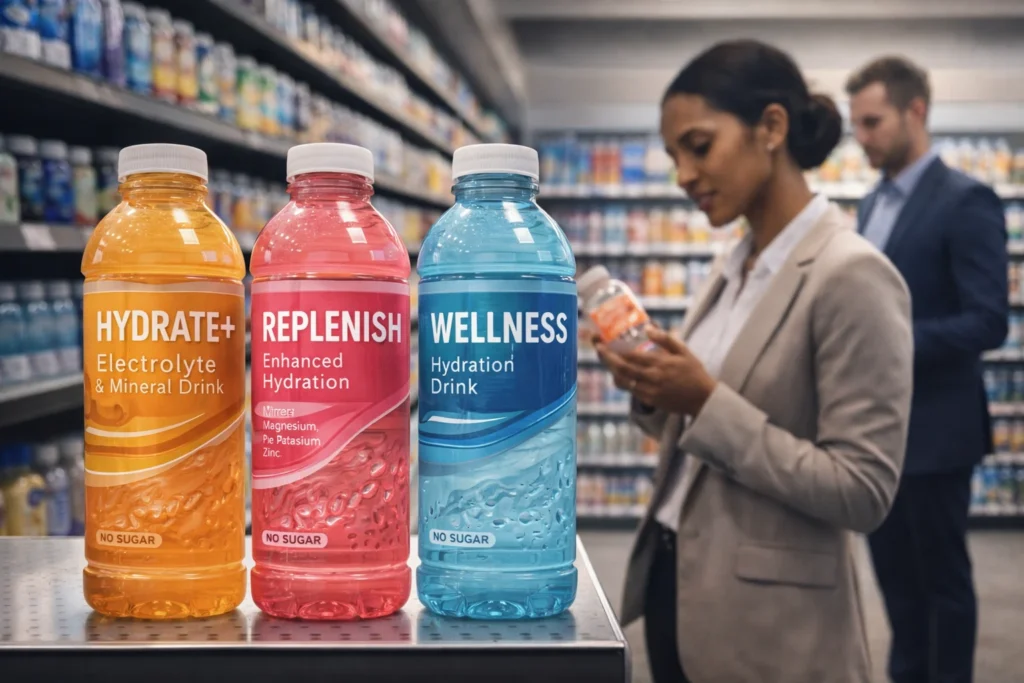

The morning light filters through the floor-to-ceiling windows of a downtown Austin coffee shop. It’s 7:45 a.m., and the line is already out the door. But something interesting is happening at the front of that line. People aren’t just ordering lattes and cappuccinos anymore. They’re reaching into the refrigerated case and pulling out brightly colored cans with names like “Brain Boost,” “Immune Support,” and “Daily Rise.” They grab them alongside their morning coffee, sometimes instead of it. The barista, a young woman named Maya with colorful sleeves of tattoos, rings up order after order without blinking. She’s watched this transformation happen in real-time over the past three years.
“At first, it was just a few health-conscious regulars,” Maya explains while steaming milk for a customer. “Then it became the remote workers who camp out here all day. They’d buy one in the morning and another after lunch. Now? Everyone from construction workers to yoga moms to tech bros in suits. It’s like water became boring overnight and this is the new thing.” She gestures to the crowded cooler. “We can barely keep them in stock.”
What Maya is witnessing from behind the counter isn’t just a passing fad. It’s a full-blown global phenomenon that has completely reshaped the beverage industry. The numbers tell a staggering story. Global sales of functional hydration drinks have surged past $30 billion annually, with some analysts projecting the market to nearly double within the next five years. To put that in perspective, that’s more than the entire global movie ticket sales in a pre-pandemic year. It’s bigger than the craft beer boom at its peak. It’s a tidal wave of consumer behavior change that has left industry experts scrambling to keep up.
But to really understand why this is happening, you have to look beyond the spreadsheets and sales charts. You have to look at the people buying these drinks. You have to understand their mornings, their afternoons, their slumps and surges, their hopes for feeling just a little bit better in a world that seems designed to make them feel exhausted. The story of functional hydration is ultimately a story about us—about how we live now, what we value, and what we’re willing to try when plain water just doesn’t seem like enough anymore.
Chapter One: Beyond the Gatorade – A New Kind of Thirst
Let’s rewind the clock about fifty years. The year is 1965. The place is the University of Florida. A group of Gators football coaches are desperate. Their players are wilting in the brutal heat, cramping up, losing weight during practices, and generally struggling to perform. They go to a team of researchers and ask for help. What do these players need? What are they losing when they sweat so much? The researchers get to work, studying the fluids and electrolytes leaving the players’ bodies. Their creation becomes known as Gatorade, and it changes everything.
For decades, that was the template. Sports drinks were for sports. They came in bright, almost radioactive colors. They tasted aggressively sweet. Their commercials featured sweat-drenched athletes collapsing at finish lines and then chugging from coolers. The message was simple, clear, and narrowly focused: If you are doing something physically extreme, this drink is for you. If you are sitting on a couch, maybe stick to water.
That template worked beautifully for a long time. Gatorade and its rival Powerade became synonymous with athletic performance. They dominated school sidelines, gym bags, and marathon water stations. They built an empire on the backs of quarterbacks and point guards. But somewhere along the way, the world started to change in ways that the old guard didn’t fully anticipate.
The change didn’t happen overnight. It crept in slowly, like the afternoon fatigue that millions of office workers started noticing around 2:30 p.m. It came in the form of longer work hours, more screen time, and a growing sense that modern life was creating a different kind of exhaustion—one that wasn’t necessarily about physical exertion. People weren’t running marathons, but they felt just as drained. They weren’t losing fluids on a football field, but they were definitely feeling dehydrated after eight hours in an air-conditioned office staring at glowing rectangles.
Enter a new generation of beverage entrepreneurs. These weren’t former athletes or sports drink executives. They were people who had experienced their own version of the afternoon slump and wondered why there wasn’t a better option. They looked at the energy drink market, dominated by loud, aggressive brands promising extreme performance and often delivering jitters and crashes. They looked at the soda market, which was steadily declining as consumers became more aware of sugar’s dangers. They looked at plain water, which was undeniably healthy but also, let’s be honest, a little boring.
What if, they asked, you could create something in the middle? What if a drink could be hydrating like water, slightly energizing like coffee, and carry some actual functional benefits like a multivitamin—all without the sugar crash or artificial nonsense? What if you didn’t have to be an athlete to deserve a drink that actually did something for your body?
That simple question sparked a revolution. The new wave of functional hydration drinks completely reframed the conversation. They moved hydration from the realm of sports performance into the realm of everyday wellness. They democratized the concept of electrolyte replenishment. They said, in essence, that your busy, stressful, screen-filled life is its own kind of athletic event. You deserve support too.
This repositioning was absolutely brilliant in its simplicity and devastatingly effective in its execution. By stepping away from the narrow identity of “sports drink,” these new products opened themselves up to literally billions of potential new customers. Anyone who had ever felt tired, anyone who had ever forgotten to drink enough water, anyone who had ever wished for a little mental clarity in the middle of a chaotic day—these were all potential converts.
The old guard initially dismissed the trend. Gatorade had tried its own “Gatorade G Series” with products positioned for before, during, and after workouts. Powerade had experimented with different formulations. But these were still fundamentally sports products wearing different clothes. They couldn’t escape their own identity. The new brands had no such baggage. They were free to define themselves entirely on their own terms.
And define themselves they did. With sleek packaging, sophisticated flavor profiles, and messaging that spoke directly to the exhausted professional rather than the elite athlete, they carved out a space that simply hadn’t existed before. It wasn’t just a new product category. It was a whole new way of thinking about why we drink what we drink.
Chapter Two: The Science of Thirst – Understanding Hydration at the Cellular Level
To truly appreciate what functional hydration drinks offer, it helps to understand what happens in your body when you’re dehydrated. The process is more complex and more consequential than most people realize.
Your body is roughly sixty percent water. This water isn’t just floating around randomly; it’s distributed in specific compartments with specific jobs. About two-thirds of it is inside your cells—this is called intracellular fluid. The remaining third is outside your cells—in your blood, in the spaces between cells, and in other bodily fluids. This balance between inside and outside is crucial for every aspect of your function.
Water moves constantly between these compartments, driven by the concentration of dissolved substances like sodium, potassium, and glucose. Think of it like a seesaw. When the concentration of these substances is higher inside your cells, water moves in. When it’s higher outside, water moves out. This movement is how your cells get the water they need and how your body maintains the right balance.
When you become dehydrated, the concentration of sodium and other electrolytes in your blood increases. Your body detects this change and responds in several ways. Your kidneys start conserving water, producing more concentrated urine. Your thirst mechanism kicks in, prompting you to drink. Your blood volume may decrease slightly, which can affect blood pressure and the delivery of oxygen and nutrients to your tissues.
Even mild dehydration—losing just one to two percent of your body weight in water—can have noticeable effects. Studies have shown that this level of dehydration can impair cognitive function, particularly attention, memory, and mood. You might feel more tired, more irritable, less able to concentrate. Physical performance declines too, with endurance and strength both affected.
Moderate dehydration, losing three to five percent, brings more serious consequences. Your body’s ability to regulate temperature is impaired, increasing the risk of heat exhaustion. Your heart has to work harder to pump blood. You might experience headaches, dizziness, and significant fatigue. Your risk of kidney stones and urinary tract infections increases over time.
Severe dehydration is a medical emergency. When you lose more than five to ten percent of your body weight in water, your organs can start to fail. Your blood pressure drops dangerously. Your kidneys shut down. You can become confused, delirious, eventually unconscious. This level of dehydration is thankfully rare outside of extreme situations like desert survival or severe illness.
The electrolytes in functional hydration drinks—sodium, potassium, magnesium, calcium—play specific roles in preventing and reversing dehydration. Sodium helps your body retain water, slowing the rate at which you lose it through urine. Potassium helps water move into your cells, where it’s needed for function. Magnesium is involved in hundreds of enzymatic reactions, many of which are affected by hydration status. Calcium is essential for muscle contraction and nerve signaling.
But hydration isn’t just about water and electrolytes. It’s also about the rate at which fluids empty from your stomach and absorb into your bloodstream. Plain water absorbs quickly, which is good for rapid rehydration. But if you add the right balance of electrolytes and a small amount of sugar, you can actually speed up absorption. This is because sugar and sodium are absorbed together through specialized transporters in your intestinal wall, and water follows along. This principle, discovered in the 1960s and applied in oral rehydration therapy for diarrhea, is the same science that makes sports drinks effective.
The sugar in traditional sports drinks serves this functional purpose—it’s not just for taste. The World Health Organization’s oral rehydration solution formula includes sugar specifically to enhance sodium and water absorption. The problem is that traditional sports drinks use far more sugar than necessary for this effect, turning a functional ingredient into a source of empty calories.
Modern functional hydration drinks take a more nuanced approach. Some use small amounts of sugar, just enough to facilitate absorption without adding significant calories. Others use alternative carbohydrates that serve the same purpose. Some rely primarily on electrolytes, accepting somewhat slower absorption in exchange for lower sugar. The right choice depends on your specific needs and circumstances.
The concept of “optimal hydration” varies by individual and situation. A marathon runner losing liters of sweat per hour has different needs than an office worker sitting at a desk. Someone with kidney disease may need to restrict certain electrolytes. Someone with high blood pressure may need to watch sodium intake. There’s no one-size-fits-all formula, which is why understanding the basics helps you make better choices.
Chapter Three: The Urban Professional – Ground Zero for the Boom
If you want to understand the engine driving this multi-billion dollar surge, you need to spend a day in the life of someone like Marcus Chen. Marcus is 34 years old. He lives in a high-rise apartment in downtown Seattle. He works as a product manager for a mid-sized tech company. His life, like the lives of millions of urban professionals around the world, is a masterclass in modern exhaustion.
Marcus’s alarm goes off at 6:15 a.m. He immediately checks his phone—a habit he knows is bad but can’t seem to break. There are already fourteen Slack messages from colleagues in different time zones. His brain, still foggy with sleep, tries to process work problems before his feet have even touched the floor. He stumbles to the bathroom, showers quickly, and grabs a protein bar on his way out the door.
The commute is forty-five minutes of standing on a crowded train, packed in with hundreds of other people all staring at their own phones. The air is dry and recycled. By the time he reaches his office, Marcus already feels slightly depleted. He hasn’t had anything to drink except a few sips of water before leaving. His mouth feels sticky. His eyes feel tired.
At his desk, he faces the morning routine: two monitors glowing, emails piling up, meetings scheduled back-to-back starting at 9 a.m. He grabs a coffee from the kitchen. It helps, temporarily. But he knows from experience that by early afternoon, the caffeine will wear off and he’ll be left feeling more tired than before.
Lunch is eaten at his desk while reviewing documents. He barely tastes it. The afternoon stretches ahead like a desert. Around 2:30 p.m., the familiar fog rolls in. His focus scatters. His eyes feel heavy. He checks the clock and realizes he still has four hours of work ahead, plus a networking event in the evening. The thought is almost physically painful.
This is the exact moment when Marcus, like millions of others, reaches for something different. In his desk drawer, he keeps a variety pack of functional hydration drinks he ordered online. He pulls out a can, pops the top, and takes a long sip. It’s cold, slightly sweet, and flavored like cucumber and melon. It feels refreshing in a way that water sometimes doesn’t. Within twenty minutes, he notices a subtle shift. The brain fog doesn’t completely disappear, but it lifts enough for him to focus. He feels more present, less like he’s moving through molasses.
Marcus’s story plays out millions of times every single day in cities across the globe. The urban professional has become ground zero for the functional hydration boom for several interconnected reasons that together create the perfect storm of demand.
First, there’s the nature of modern knowledge work itself. Contrary to what some might think, sitting at a desk all day is genuinely exhausting. Not in the same way that physical labor is exhausting, but exhausting nonetheless. The constant cognitive demands, the emotional labor of meetings and collaboration, the never-ending stream of decisions both large and small—it all takes a toll. The brain, which represents only about two percent of body weight, consumes roughly twenty percent of the body’s energy. When you’re doing intense mental work for hours on end, you are literally depleting your resources.
Second, urban professionals face unique environmental challenges. They spend their days in climate-controlled buildings that recirculate dry air, which accelerates water loss from the body. They stare at screens for eight, ten, twelve hours a day, which can cause eye strain and headaches that are exacerbated by dehydration. They often rely on coffee as their primary beverage, which has a mild diuretic effect, potentially contributing to the very dehydration they’re trying to combat.
Third, there’s the psychological dimension. Urban professionals, particularly those in their twenties and thirties, have grown up in an era of unprecedented access to health information. They know about electrolytes. They know about B vitamins. They know about the importance of hydration for cognitive function. This knowledge creates a kind of awareness that previous generations simply didn’t have. When they feel the afternoon slump coming on, they don’t just accept it as an unavoidable part of the workday. They look for solutions.
Fourth, there’s the convenience factor. These drinks come in portable, shelf-stable cans that can be stashed in a desk drawer, carried in a backpack, or grabbed from an office fridge. They don’t require preparation. They don’t need to be kept ice cold to be palatable. They fit seamlessly into the rhythm of a busy professional day in a way that a smoothie or a fresh-pressed juice simply cannot.
Fifth, there’s the social signaling aspect. In many professional environments, what you consume has become a subtle form of self-expression. Grabbing a functional hydration drink from the office kitchen sends a message to colleagues: I care about my health. I’m optimizing my performance. I’m part of the wellness culture. It’s not quite as overt as wearing Lululemon or carrying a Yeti cup, but it’s in the same family of behaviors that signal belonging to a certain tribe.
Finally, there’s the simple fact that for many urban professionals, the line between work and life has blurred to the point of invisibility. They’re expected to be “on” during work hours, but also responsive in the evenings, and somewhat available on weekends. This always-on expectation creates a constant low-grade demand for energy and focus that plain water just doesn’t address. Functional drinks, with their promise of sustained mental clarity without the crash, seem tailor-made for this reality.
The data backs up this focus on urban professionals. Market research consistently shows that the heaviest users of functional hydration drinks are college-educated adults in metropolitan areas, working in professional or creative fields, with incomes above the national average. They’re not athletes, at least not in the traditional sense. They’re people like Marcus, trying to navigate demanding lives with a little more ease and a little less exhaustion.
Chapter Four: What’s Actually in the Can? A Simple Breakdown
Walk into any store that sells these drinks—and these days, that’s pretty much every store—and you’ll be confronted by a wall of claims. Electrolytes! Antioxidants! Adaptogens! Nootropics! Prebiotics! The language can feel overwhelming, almost designed to confuse. But beneath the marketing jargon, there’s actual science, and understanding the basics isn’t as hard as it seems.
Let’s start with the foundation of almost every functional hydration drink: electrolytes. These are minerals that carry an electric charge when dissolved in body fluids like blood and sweat. The main players are sodium, potassium, calcium, and magnesium. Their job is absolutely fundamental to how your body works. They regulate nerve function, muscle contraction, hydration levels, and blood pH. When you sweat, you lose both water and electrolytes. If you only replace the water, you can actually dilute the electrolytes remaining in your body, which is why drinking too much plain water during intense activity can sometimes cause problems.
Sodium is perhaps the most misunderstood electrolyte. For years, we’ve been told to avoid salt, and for good reason—excess sodium in the diet is linked to high blood pressure and other health issues. But sodium is also essential. It helps your body retain water, which is why you might notice that after drinking a beverage with sodium, you feel more hydrated for longer. The key is balance. Functional hydration drinks typically contain a fraction of the sodium found in traditional sports drinks, often around 100 to 200 milligrams per serving, which is enough to aid hydration without pushing most people over their daily limits.
Potassium works alongside sodium to regulate fluid balance. While sodium helps your body hold onto water, potassium helps it move water into cells where it’s needed. This sodium-potassium pump is one of the most fundamental processes in human biology. Without enough potassium, you can experience muscle cramps, weakness, and fatigue. Many functional drinks get their potassium from ingredients like coconut water powder or potassium citrate.
Magnesium is involved in hundreds of biochemical reactions in the body, including protein synthesis, muscle and nerve function, blood glucose control, and blood pressure regulation. It’s also notoriously difficult to get enough of from diet alone. Magnesium deficiency is relatively common and can manifest as muscle twitches, mental fog, and trouble sleeping. Some functional drinks include magnesium specifically to address these issues.
Calcium, while best known for bone health, is also crucial for muscle contraction and nerve signaling. You’ll see it in some formulations, particularly those targeting recovery after physical activity.
Beyond the core electrolytes, functional hydration drinks often include a variety of vitamins. The B-complex vitamins are especially common. Thiamine (B1), riboflavin (B2), niacin (B3), pantothenic acid (B5), pyridoxine (B6), biotin (B7), folate (B9), and cobalamin (B12) all play roles in converting food into energy. When you see a drink claiming to support energy, it’s often the B vitamins doing the work. They don’t provide energy in the way that caffeine does—they don’t stimulate the nervous system. Instead, they help your body more efficiently use the energy from the food you’ve eaten.
Vitamin C and zinc have become particularly popular additions in recent years, for obvious reasons. Both are associated with immune function, and in a world where infectious disease is a constant concern, anything that promises immune support has built-in appeal. Vitamin C is also an antioxidant, meaning it helps protect cells from damage caused by free radicals. Zinc is involved in numerous aspects of cellular metabolism and is essential for the proper function of the immune system.
Now we get to the more exotic ingredients, the ones that sound like they belong in a herbalist’s shop rather than a beverage factory. Adaptogens are a class of herbs and mushrooms that are believed to help the body resist stressors of all kinds—physical, chemical, or biological. The concept comes from traditional medicine systems, particularly in Asia, and has been embraced by the wellness industry with considerable enthusiasm.
Ashwagandha is one of the most common adaptogens you’ll see on labels. It’s an herb used for centuries in Ayurvedic medicine, traditionally to help the body handle stress and anxiety. Some modern research suggests it may lower cortisol levels, the hormone associated with stress. If you’re drinking something with ashwagandha, the idea is that it might help you feel more balanced and less reactive to the pressures of the day.
Rhodiola rosea is another popular adaptogen, often associated with fighting fatigue and improving mental performance under stress. It grows in cold, mountainous regions of Europe and Asia and has been used traditionally to increase physical endurance and resist altitude sickness. Today, it’s marketed as a cognitive enhancer, something to help you push through mental exhaustion.
Lion’s mane mushroom has become something of a celebrity in the functional beverage world. It’s a shaggy white mushroom that looks, as the name suggests, somewhat like a lion’s mane. Traditional uses include improving digestion and reducing inflammation, but modern interest focuses on its potential cognitive benefits. Some studies suggest it may stimulate the growth of brain cells and improve memory, though research is still in early stages.
L-theanine is an amino acid found in tea leaves. It’s often paired with caffeine because the combination seems to produce a smoother, more focused energy than caffeine alone. L-theanine promotes alpha brain waves, which are associated with a state of “relaxed alertness.” If you’ve ever felt that coffee makes you jittery but a good cup of tea makes you calmly focused, L-theanine is likely the reason.
Nootropics is a broader category that includes any substance that may enhance cognitive function. Some functional drinks include nootropic ingredients like phosphatidylserine, which is involved in cell membrane health, or bacopa monnieri, an herb used in traditional medicine for memory enhancement. The line between adaptogens and nootropics can be blurry, and many drinks contain ingredients that could be classified as either or both.
Prebiotics and probiotics represent another frontier in functional beverages. Probiotics are beneficial bacteria that live in your gut and support digestion and immune function. Prebiotics are types of fiber that feed those beneficial bacteria. Including either in a shelf-stable beverage is technically challenging—live probiotics need refrigeration to survive—but some brands have found ways to incorporate them, often through spore-forming bacteria that can survive at room temperature.
The rise of gut health as a wellness priority has driven interest in these ingredients. Scientists have discovered that the gut microbiome influences far more than just digestion. It’s linked to mood, immune function, even weight regulation. A drink that supports gut health, therefore, is theoretically supporting whole-body health in ways that extend far beyond simple hydration.
It’s important to note that the amounts of these ingredients in a single can vary widely between brands. Some functional drinks contain clinically significant doses, meaning amounts that have been shown in studies to produce effects. Others contain only trace amounts, more marketing than medicine. The difference isn’t always obvious from the front of the can, which is why reading the fine print matters.
Chapter Five: From the Gym to the Boardroom – The Marketing Shift
To understand how functional hydration drinks achieved their current dominance, you have to look at the pictures. Not the ingredients, not the science, but the actual photographs and videos used to sell these products. The visual language tells the real story of how a category transforms itself.
Go back and look at sports drink advertising from the 1990s and 2000s. The imagery is remarkably consistent. Sweat. Lots of sweat. Muscles straining. Faces contorted in effort. Finish lines crossed with arms raised in triumph. The settings are basketball courts, football fields, marathon routes, boxing rings. The people are athletes, clearly and unmistakably. The message is encoded in every frame: this is a product for people who push their bodies to the absolute limit.
Now look at a modern functional hydration advertisement. The difference is stark and telling. You might see a person sitting at a clean, modern desk, natural light streaming through nearby windows. A sleek laptop is open. A notebook with elegant handwriting sits nearby. And there, next to the coffee mug, is a can of functional hydration drink. The person looks calm, focused, composed. They’re not sweating. They’re not straining. They’re thinking.
Another common scene: someone in comfortable but stylish athleisure wear, perhaps just finished with a yoga class or a morning run, sitting on a bench in a park. They’re looking at their phone, or maybe just watching the clouds. The drink is in their hand, condensation beading on the can. The vibe is peaceful, balanced, in control.
The settings have shifted from specialized athletic spaces to the everyday environments where most people actually spend their time: offices, homes, coffee shops, parks, public transportation. The people have shifted from elite athletes to regular humans with regular lives. The activities have shifted from extreme physical exertion to the normal challenges of modern existence: working, thinking, commuting, recovering from a late night.
This visual rebranding was absolutely intentional and absolutely crucial to the category’s success. The new brands understood something fundamental: most people don’t identify as athletes. Even people who exercise regularly—and many don’t—don’t see themselves as part of the athletic tribe that traditional sports drinks catered to. By moving the imagery into everyday settings, the brands invited everyone to see themselves as potential customers.
The language changed just as dramatically. The old vocabulary was all about competition and domination: crush it, beat them, push harder, go longer. The new vocabulary is about balance, support, and wellness: find your flow, support your immune system, reclaim your focus, feel like yourself. The difference reflects a fundamental shift in what these drinks promise to deliver.
Consider the name changes. Traditional sports drinks had names like “Fierce,” “Rip It,” “Crush,” “Frost.” They sounded like video game power-ups or energy drink challengers. The new generation has names like “Peace,” “Flow,” “Rise,” “Bloom.” They sound like states of being, like aspirations rather than declarations of war.
The packaging evolved accordingly. Gone are the neon colors and aggressive graphics. In their place, minimalist designs with muted palettes, elegant typography, and plenty of white space. The cans look good on a desk. They photograph well for Instagram. They don’t scream for attention; they whisper for consideration.
This marketing shift also involved a careful repositioning of who the “expert” is. Traditional sports drinks featured athletes as spokespeople—Michael Jordan, Peyton Manning, Serena Williams. The message was: these elite performers trust our product, so you should too. The new brands feature a different kind of authority: nutritionists, wellness coaches, mindfulness experts. Sometimes they feature no famous faces at all, letting the product and its aesthetic speak for itself.
The result is that functional hydration drinks have become lifestyle products rather than performance products. They’re sold not just in the sports drink aisle but throughout the store: near the checkout, in the refrigerated section with premium beverages, in the wellness and supplement area. They’ve escaped the category box that once contained them and spread out across the retail landscape.
This expansion has been enormously successful with female consumers, a demographic that traditional sports drinks largely failed to connect with. Women were always part of the market—they drink beverages too—but they rarely saw themselves reflected in the aggressive, male-dominated sports drink advertising. The new aesthetic, with its emphasis on balance, wellness, and self-care, resonates much more strongly across gender lines. Many functional hydration brands report that their customer base is roughly evenly split between men and women, a balance that traditional sports drinks never achieved.
The shift from gym to boardroom also opened up new usage occasions. A sports drink feels weird to drink at 3 p.m. on a Tuesday at the office. It’s associated with physical activity, and sitting at a desk isn’t that. A functional hydration drink, with its sleek packaging and wellness messaging, feels perfectly appropriate. In fact, drinking one at work can feel like a small act of self-care, a moment of attention to your own needs in the middle of a demanding day.
Chapter Six: The Taste Test – Making “Good for You” Taste Good
Let’s be honest about something that everyone knows but few say out loud: for a very long time, healthy drinks tasted terrible. They were punishments in liquid form, things you endured rather than enjoyed. The texture was often chalky. The flavors were either aggressively artificial or aggressively nonexistent. The sweeteners left strange lingering aftertastes that coated your tongue for hours. Drinking something because it was good for you felt like a chore, an obligation, a daily dose of misery in the name of wellness.
The functional hydration revolution succeeded in large part because it finally solved this problem. The brands that won—the ones that grew from nothing into household names—were the ones that figured out how to make something that was both genuinely beneficial and genuinely delicious. They cracked a code that had baffled beverage makers for decades.
The flavor evolution is worth tracing. Traditional sports drinks went all-in on fruit flavors, but not real fruit flavors. They created flavor experiences that existed only in the laboratory: “Arctic Blitz,” “Fruit Punch Blast,” “Citrus Surge.” These were flavors designed to be bold, bright, and instantly recognizable, but they had no connection to anything growing in nature. They were pure food science, and they tasted like it.
The new generation took a radically different approach. They looked to the actual produce section for inspiration. Cucumber appeared, not as a supporting note but as a star. Lime became ubiquitous, often paired with mint or agave. Watermelon showed up in more subtle, less candy-like expressions. Grapefruit, blood orange, yuzu, passion fruit—these were flavors with actual references in the real world, flavors that people could identify from their own kitchen counters.
This shift toward naturalistic flavors changed the entire experience of drinking these products. Instead of tasting like something invented in a lab, they tasted like something that could have been squeezed from actual fruit. The flavors were more subtle, more complex, more interesting. They didn’t assault your taste buds; they invited you to pay attention.
The sweetening strategy was equally important. Traditional sports drinks were essentially soda with electrolytes—loaded with sugar or high-fructose corn syrup. A 20-ounce Gatorade contains about 34 grams of sugar, roughly the same as a can of Coke. That much sugar creates its own problems: blood sugar spikes and crashes, empty calories, and for some people, digestive issues.
The new brands needed a different approach. They couldn’t use artificial sweeteners like aspartame or sucralose—those carried their own baggage and had fallen out of favor with health-conscious consumers. They needed something that tasted good, had minimal calories, and came from a source that people could feel good about.
Stevia emerged as the front-runner. It’s derived from the leaves of the Stevia rebaudiana plant, which has been used for centuries in South America. The sweet compounds in stevia leaves, called steviol glycosides, are intensely sweet—hundreds of times sweeter than sugar—but contain no calories and don’t raise blood sugar. The challenge was that early stevia formulations had a distinct bitter aftertaste that many people found off-putting. Over time, processors developed better extraction and formulation methods that minimized this issue. Modern stevia-sweetened beverages taste remarkably clean.
Monk fruit emerged as another popular option. Also known as luo han guo, this small green melon has been used in traditional Chinese medicine for centuries. Its sweetness comes from compounds called mogrosides, which are even sweeter than stevia and have no bitter aftertaste. Monk fruit sweetener is more expensive than stevia, which is why you see it less frequently, but it’s prized for its clean flavor profile.
Some brands use a blend of both, leveraging the strengths of each to create a more balanced sweetness. Others use small amounts of real sugar or fruit juice, keeping total sugar low while benefiting from the more familiar taste profile that sugar provides. The goal across the board is the same: create a drink that is sweet enough to be enjoyable but not so sweet that it feels like a dessert.
The texture revolution deserves mention too. Traditional sports drinks are thin and watery, which makes sense for rapid hydration but doesn’t create a particularly satisfying mouthfeel. Some of the new functional drinks have experimented with slightly thicker textures, sometimes achieved through the addition of coconut water or other natural thickeners. The result is a drink that feels more substantial, more like you’re actually consuming something rather than just wetting your mouth.
Temperature matters more than you might think. These drinks are designed to be enjoyed cold, and many people report that the experience of drinking one is as much about the sensation of cold refreshment as it is about the flavor. The cans are designed to be pleasant to hold, with a smooth surface that feels good against your palm. The pop of the tab, the fizz of carbonation in some varieties, the first cold sip—these are all part of a carefully engineered sensory experience.
The flavor innovation hasn’t stopped. Brands continue to experiment with increasingly sophisticated combinations. You’ll find drinks flavored with elderflower, hibiscus, lemongrass, ginger, turmeric, and rose. Some taste more like fancy cocktails than health beverages. The boundaries between functional drink, spa water, and craft soda have blurred to the point of invisibility.
This focus on taste has been essential to the category’s growth because it solves the compliance problem. People will only drink something regularly if they actually enjoy it. A drink that tastes amazing but has no health benefits will be consumed for pleasure. A drink that has amazing health benefits but tastes terrible will be consumed once, maybe twice, and then abandoned. The functional hydration winners found the sweet spot where pleasure and purpose intersect, creating products that people reach for because they want to, not because they feel they should.
Chapter Seven: A Word from the Experts – Reading the Fine Print
For all the enthusiasm surrounding functional hydration drinks, there’s a quieter conversation happening among nutrition experts, dietitians, and medical professionals. It’s not a conversation about whether these drinks are good or bad—that’s too simple. It’s a conversation about how to think about them clearly, how to separate genuine benefit from clever marketing, and how to help consumers make informed choices.
Dr. Elena Rodriguez has been a registered dietitian for nearly twenty years. She’s watched countless nutrition trends come and go, from fat-free everything to the keto explosion to the current functional beverage boom. From her office in Portland, she counsels clients on how to navigate the increasingly confusing world of food and drink choices. Her perspective on functional hydration is characteristically balanced.
“Here’s what I tell people,” she says, leaning back in her chair. “These drinks are not magic. They’re not going to fix a poor diet or compensate for chronic dehydration. But they’re also not evil. They can be a useful tool for certain people in certain situations. The key is understanding what you’re actually getting.”
Dr. Rodriguez pulls a can from a stash she keeps for teaching purposes. She turns it so the front label faces her imaginary client. “This is where they get you,” she says, pointing to the bold claims. “Immune support. Brain health. Energy. These are all real things, but they’re vague. The question is, what’s actually in here, and how much?”
She flips the can to show the nutrition facts panel and ingredient list. “This is where the truth lives. And most people never look at it.”
The first thing Dr. Rodriguez checks is sugar content. “Some of these drinks are surprisingly high in sugar,” she explains. “They market themselves as healthy, but if you look closely, they might have fifteen or twenty grams per serving. That’s better than soda, which can have forty, but it’s still significant. If you’re drinking these multiple times a day, that sugar adds up.”
She points to a line on the label. “Total carbohydrate. Look here. Even if the sugar is low, some drinks use other carbohydrates that still affect your blood sugar. It’s not necessarily bad, but you should know.”
Next, she examines the electrolyte numbers. “Sodium is interesting,” she says. “Most of us get plenty of sodium from our diet. We don’t need more. But if you’re someone who exercises heavily, or if you sweat a lot, or if you’ve been sick with vomiting or diarrhea, you might actually need the extra sodium. The same with potassium. It’s about matching the drink to your specific situation.”
The vitamin content gets a careful look. “B vitamins are water-soluble,” Dr. Rodriguez explains. “If you take too much, you’ll just pee it out. They’re generally safe, even in relatively high amounts. But fat-soluble vitamins like A, D, E, and K can accumulate in your body. If a drink has those, you need to be more careful about cumulative intake.”
She’s particularly interested in the more exotic ingredients. “Adaptogens, nootropics, herbal extracts—these are less regulated than vitamins and minerals. The FDA doesn’t approve them before they go to market. The company is responsible for making sure they’re safe and that the label is truthful, but there’s less oversight. With these ingredients, the dose matters enormously. A tiny amount might do nothing. A large amount might have effects you don’t want.”
Dr. Rodriguez pulls up a research database on her computer. “I can look up studies on ashwagandha, for example. There’s some good evidence it reduces stress and cortisol. But the doses used in studies are often higher than what’s in a single can of drink. So if you’re drinking one, you might get some benefit. If you’re drinking it for the adaptogens, you might be disappointed.”
She also raises the issue of interactions. “If you’re on medication, you need to be careful with some of these herbal ingredients. St. John’s Wort, for example, interacts with a huge number of drugs. It’s not common in these drinks, but others might have effects you don’t expect. If you have any medical conditions or take any medications, it’s worth checking with a pharmacist or doctor before making these drinks a regular habit.”
The conversation turns to cost. Functional hydration drinks are expensive compared to plain water, often costing two or three dollars per can. “For some people, that’s fine,” Dr. Rodriguez says. “It’s a convenience product, a treat, a tool. But if you’re on a tight budget, you can get the same nutrients from food for much less money. An orange has vitamin C, potassium, and hydration. A handful of nuts has magnesium. A banana has potassium and B vitamins. You don’t need a fancy can.”
She emphasizes that for most people, most of the time, plain water is perfectly adequate. “The human body evolved over millions of years drinking water. It’s really good at maintaining balance. Unless you’re sweating heavily or sick, water is all you need. These drinks are for specific situations or for people who struggle to drink enough plain water and need something more appealing.”
Dr. Rodriguez’s final advice to clients is simple. “Read the label. Know what you’re buying. Don’t believe the front-of-package claims without checking the back. And think about why you’re drinking it. If it’s because you like the taste and it helps you stay hydrated, great. If it’s because you think it’s going to transform your health, you might be setting yourself up for disappointment.”
This balanced perspective—neither dismissive nor credulous—represents the mainstream view among nutrition professionals. Functional hydration drinks can be part of a healthy lifestyle, but they’re not a substitute for the fundamentals: adequate sleep, regular exercise, whole foods, and plain water. They’re supplements, not solutions. And like any supplement, they work best when used thoughtfully and intentionally.
Chapter Eight: The Big Players vs. The Plucky Newcomers
The beverage aisle has become a battleground, and the war being fought there is a classic business story. On one side stand the giants, the titans of industry with decades of experience, massive distribution networks, and marketing budgets that could fund small countries. On the other side are the upstarts, the entrepreneurs who started in their kitchens, the brands built on Instagram and word of mouth, the companies that grew from nothing into genuine threats seemingly overnight.
The giants, of course, are Coca-Cola and PepsiCo. Between them, they control a staggering percentage of everything people drink in many parts of the world. Coke owns Dasani, Smartwater, Vitaminwater, and a portfolio of other brands. Pepsi owns Aquafina, Gatorade, Propel, and LifeWtr. For years, these companies dominated the beverage landscape through a combination of brand power, distribution muscle, and sheer scale.
But the functional hydration boom caught them somewhat off guard. The new brands weren’t playing by the old rules. They weren’t trying to compete on price or shelf space alone. They were building emotional connections with consumers, creating communities, telling stories that resonated in ways that corporate marketing couldn’t easily replicate. They were nimble, responsive, and deeply in tune with cultural shifts.
The response from the giants has been characteristically strategic. First, they’ve acquired successful upstarts. When a small brand proves itself, when it builds a loyal following and demonstrates staying power, the big companies often come calling with acquisition offers. This happened repeatedly throughout the 2010s and continues today. The founders get rich, the brand gets access to massive distribution, and the giant gets a foothold in a growing category without having to build from scratch.
Second, the giants have launched their own competing products. Sometimes these are new brands created specifically to target the functional hydration space. Sometimes they’re extensions of existing brands—a new line of Gatorade positioned for everyday hydration rather than sports performance, for example. These launches come with the full weight of corporate marketing behind them, which means they can achieve national awareness very quickly.
Third, the giants have leveraged their distribution advantages. Getting a product into every Walmart, every Target, every Kroger, every convenience store in the country is enormously difficult and expensive. The big companies already have those relationships. They can put their products everywhere, making it hard for smaller brands to compete for physical shelf space.
The plucky newcomers have responded by doubling down on what makes them different. They emphasize their authenticity—the founder’s story, the mission-driven approach, the connection to community. They build direct-to-consumer sales channels that bypass traditional retail entirely, selling subscriptions and variety packs through their websites. They partner with influencers who genuinely believe in the product, generating authentic word-of-mouth that money can’t buy.
The newcomers also innovate faster. While a giant might take years to develop and launch a new flavor, a small brand can move in months. They can experiment with unusual ingredients, limited editions, and creative collaborations. They can respond immediately to consumer feedback. This agility is a genuine competitive advantage in a market where tastes change quickly.
The design advantage belongs to the newcomers as well. The giants often struggle with packaging that feels corporate, generic, safe. The newcomers take risks with their visual identity—bold colors, unusual shapes, distinctive typography. Their cans look good on Instagram, which matters enormously in a visual culture. A beautifully designed can photographed in natural light can generate more marketing value than a thirty-second television commercial.
The relationship with retailers has also evolved. While the giants can guarantee placement, the newcomers often have to earn it through demonstrated demand. This has led to creative strategies: pop-up shops, sampling events, partnerships with complementary brands. Some newcomers have focused on winning in specific channels first—independent coffee shops, boutique fitness studios, upscale grocery stores—before attempting broader distribution.
The pandemic created interesting dynamics in this competition. Supply chain disruptions affected everyone, but the giants had more resources to navigate them. At the same time, the surge in e-commerce benefited direct-to-consumer brands that had already built online sales capabilities. The overall effect was to accelerate trends that were already in motion: more online shopping, more attention to health, more interest in functional products.
Looking ahead, the battle shows no signs of cooling. The category continues to grow, which means there’s room for both giants and newcomers. The giants will likely continue acquiring successful smaller brands while also building their own. The newcomers will continue innovating and building communities, knowing that their ultimate fate may be acquisition by one of the giants. It’s a cycle that has played out in countless industries, and beverages are no exception.
For consumers, this competition is mostly good news. It drives innovation, keeps prices competitive, and ensures a steady stream of new products to try. The downside is that it can be overwhelming—so many choices, so many claims, so many brands vying for attention. Navigating the beverage aisle requires more discernment than ever before.
Chapter Nine: Social Media’s Favorite Accessory – The Visual Appeal
There’s a reason why functional hydration drinks have become ubiquitous on social media, and it’s not just because people like the taste. These drinks are, quite simply, visually perfect for the platforms they inhabit. They were made for Instagram in the same way that sunsets were made for photographs.
Consider the typical social media post featuring a functional hydration drink. The can is sleek and minimalist, often with a matte finish that doesn’t reflect harsh light. The colors are carefully chosen—soft pastels, muted earth tones, occasional pops of brightness that don’t overwhelm. The design leaves plenty of white space, which photographs beautifully and leaves room for the environment to show through.
The drink itself contributes to the visual appeal. Condensation beads on the cold can, catching the light. If the drink is poured into a glass, the liquid has a subtle color—pale pink from hibiscus, soft yellow from lemon and ginger, clear with hints of green from cucumber. Ice cubes float, slowly melting. A slice of real fruit rests on the rim or sits nearby.
The settings are equally curated. The drink appears on a desk with a laptop and a notebook, suggesting productivity and focus. It sits on a yoga mat after a workout, suggesting wellness and self-care. It’s held by someone in athleisure wear, caught mid-sip with eyes closed in apparent satisfaction. The backgrounds are clean, well-lit, aesthetically pleasing.
This visual appeal isn’t accidental. The brands design their products with social media in mind. They understand that every can sold to a customer who posts about it is free advertising. They create packaging that people want to share, that makes them look good by association. A photo with a beautiful can suggests that the person in the photo has good taste, cares about their health, and is part of a certain cultural tribe.
The hashtags that accompany these posts tell their own story. #Hydration #Wellness #SelfCare #MorningRoutine #ThatGirl #CleanLiving #FunctionalBeverages. These aren’t just descriptors; they’re aspirations. They’re invitations to a lifestyle that the poster is claiming, at least for the moment, through the simple act of holding a can.
The timing of posts matters too. Morning posts feature drinks as part of a productive start to the day. Afternoon posts show them as a solution to the slump, a pick-me-up that’s healthier than coffee. Evening posts might feature non-caffeinated versions as a way to wind down, a signal that self-care continues even at the end of the day.
The rise of video content, particularly on TikTok and Instagram Reels, has created new opportunities. Unboxing videos show new flavors being revealed. “What I eat in a day” videos include the drink as a regular feature. Taste tests capture authentic reactions. Morning routines show the drink being grabbed from the fridge alongside breakfast. These videos feel more personal, more immediate, more real than static images.
The influencer relationship has become central to marketing strategies. Brands send free product to influencers with the right aesthetic and audience. In return, the influencers feature the drinks in their content. The best partnerships feel authentic, like the influencer genuinely loves the product and incorporates it naturally into their life. The worst feel like paid advertisements, which audiences quickly learn to scroll past.
What’s interesting is how this social media presence feeds back into real-world behavior. People see these drinks on their feeds enough times that they become curious. They want to try the thing everyone is talking about. When they finally buy one, they’re not just buying a beverage; they’re buying an experience they’ve already imagined through countless posts. And then, often, they post about it themselves, continuing the cycle.
The result is that functional hydration drinks have become what marketers call “aspirational commodities.” They’re physical objects that carry symbolic weight. Drinking one signals something about who you are and who you want to be. It’s a small, accessible way of participating in a larger cultural conversation about wellness, self-care, and intentional living.
This symbolic dimension helps explain why people are willing to pay premium prices for what is, after all, mostly water with some added minerals. The value isn’t just in the liquid; it’s in what the liquid represents. It’s in the feeling of being the kind of person who drinks this kind of drink, who cares about this kind of thing, who belongs to this particular tribe.
The phenomenon extends beyond individual posts to entire social media trends. Challenges emerge—people trying every flavor of a particular brand and ranking them. Comparisons arise—this brand versus that brand in blind taste tests. Recommendations spread—if you like this, you’ll love that. The drinks become part of the social media conversation in ways that feel organic and community-driven, even when brands are carefully orchestrating behind the scenes.
The visual consistency across posts creates a kind of collective aesthetic. Scroll through enough wellness content, and you’ll start to notice patterns: the same angles, the same lighting, the same compositions. The drinks become visual shorthand for a particular way of living. They’re recognizable even without logos, just from their distinctive shapes and colors.
This visual language has spread beyond social media into the broader culture. You see it in magazine advertisements, on billboards, in television commercials. The aesthetic that was born on Instagram has become the default for an entire category. Even traditional brands have adapted their look to fit this new visual paradigm.
Chapter Ten: Sustainability Sips – The Eco-Friendly Angle
The same consumers who care about what goes into their bodies increasingly care about what their consumption does to the planet. This dual concern has forced the functional hydration industry to confront uncomfortable questions about packaging, sourcing, and environmental impact. The answers aren’t always pretty, but the industry is slowly evolving in response to pressure from customers who demand more.
The most visible sustainability issue is packaging. Functional hydration drinks are overwhelmingly sold in single-use containers—aluminum cans, plastic bottles, glass bottles. Each of these has an environmental footprint. The energy to produce them, the resources to transport them, the waste when they’re discarded—it all adds up.
Aluminum cans have emerged as the preferred option for many brands. Aluminum is infinitely recyclable, meaning it can be melted down and reformed into new cans without losing quality. Recycling aluminum uses about 95 percent less energy than producing new aluminum from raw materials. In places with strong recycling programs, aluminum cans have a relatively good environmental profile.
But “recyclable” isn’t the same as “recycled.” A can that ends up in a landfill doesn’t deliver on its environmental promise. Recycling rates vary dramatically by region and by material type. In some parts of the world, the majority of aluminum cans are recycled. In others, they’re not. A brand can choose the most recyclable packaging in the world, but if their customers don’t actually recycle it, the benefit is lost.
Plastic bottles present different challenges. They’re lighter than glass or aluminum, which means lower transportation emissions. But plastic recycling is more complicated than aluminum recycling, and rates are generally lower. Plastic can also degrade in quality when recycled, meaning it can only be recycled a limited number of times before it becomes unusable. And plastic pollution, particularly in oceans, has become a visible and emotional issue that consumers care deeply about.
Some brands have experimented with alternative materials. Boxed water, packaged in paper-based cartons similar to juice boxes, offers lower carbon footprint and higher renewable content. But these packages often contain plastic liners that complicate recycling. Plant-based plastics, made from corn or sugarcane instead of petroleum, address the fossil fuel issue but still face end-of-life challenges. There’s no perfect solution, only trade-offs.
Beyond packaging, there’s the question of ingredients. Many functional drinks contain exotic components—adaptogens from the Himalayas, fruits from the Amazon, mushrooms from remote forests. Sourcing these ingredients responsibly requires attention to labor practices, ecosystem impacts, and supply chain transparency. Some brands have embraced fair trade certification or direct relationships with growers. Others are less transparent about where their ingredients come from.
The water itself raises sustainability questions. In an era of increasing water scarcity, bottling water for sale can seem questionable, especially when it’s shipped long distances. Some brands have responded by sourcing from protected springs with sustainable yields. Others use municipal water supplies that are then filtered and treated. The difference matters, though it’s rarely visible to consumers.
Carbon footprint has become a focus for the most environmentally conscious brands. Some calculate the total emissions associated with their products—from ingredient production through manufacturing through transportation through disposal—and then purchase carbon offsets to compensate. Others are investing in regenerative agriculture practices that can actually sequester carbon in soil, turning their supply chain from a problem into a solution.
The rise of reusable packaging represents another frontier. A few brands have experimented with returnable glass bottles, collected and refilled through partnerships with retailers. Others offer concentrated powders or syrups that consumers mix with their own water at home, eliminating single-use packaging entirely. These approaches face logistical challenges—people are busy, convenience matters—but they point toward a potentially more sustainable future.
For consumers trying to make ethical choices, the landscape is confusing. A brand that talks endlessly about sustainability on its website might still use plastic packaging that’s rarely recycled. A brand that says nothing about the environment might quietly use infinitely recyclable aluminum with high recycled content. The signals don’t always align with reality.
What’s clear is that the conversation around sustainability isn’t going away. Younger consumers, in particular, consistently say they’re willing to pay more for products that align with their values. They’re paying attention to packaging, to sourcing, to corporate behavior. Brands that ignore these concerns do so at their peril. The functional hydration industry, built on promises of health and wellness, faces particular scrutiny. If you’re claiming to support personal health, you’d better be supporting planetary health too.
The challenge is that sustainability often conflicts with other priorities. Glass is infinitely recyclable but heavy, which increases transportation emissions. Plastic is lightweight but problematic at end of life. Local sourcing reduces transportation but may not be possible for exotic ingredients. There are no easy answers, only difficult trade-offs.
Some brands have embraced transparency as a solution. They publish detailed information about their supply chains, their packaging choices, their carbon footprint. They invite scrutiny rather than avoiding it. This transparency builds trust, even when the answers aren’t perfect. Consumers can see that the brand is trying, that they’re engaged with the issues, that they’re committed to improvement over time.
The most innovative brands are thinking beyond incremental improvements to fundamental redesign. What if the drink could be delivered in a dissolvable pod? What if the packaging could be composted at home? What if there was no packaging at all—a dispenser that mixes the drink on demand? These ideas are speculative today but could become mainstream tomorrow.
Chapter Eleven: The Global Picture – Thirsty from Tokyo to Texas
The functional hydration boom is a global phenomenon, but it doesn’t look the same everywhere. Different cultures have different relationships with beverages, different health concerns, different flavor preferences. The result is a fascinating patchwork of local adaptations and global trends.
Start in Japan, where the concept of functional beverages has deep roots. For decades, Japanese consumers have had access to an astonishing variety of drinks targeting specific health needs. Want clearer skin? There’s a drink for that. Need to recover from a late night of drinking? There’s a drink for that. Feeling run down? There’s a drink for that. The category, known as “health drinks” or “energy drinks” in the Japanese context, has been part of daily life for generations.
Japanese convenience stores, or konbini, are temples of functional hydration. Rows upon rows of small bottles line the shelves, each with specific claims and targeted benefits. The portions are smaller than American servings—typically 100 to 200 milliliters—reflecting a cultural preference for variety and moderation. You might drink one thing in the morning, something else in the afternoon, something else in the evening, each chosen for its specific function.
The flavors in Japan reflect local preferences. Yuzu, a citrus fruit, appears frequently. So does matcha, umeshu (plum), and various regional fruits. The sweetness level is generally lower than in Western drinks. The texture can be thicker, almost syrupy in some traditional health drinks. The experience of drinking is more medicinal, more obviously about function rather than pleasure.
Japanese consumers are also notably sophisticated about reading labels and understanding ingredients. They’ve grown up with functional beverages and know what to look for. This creates pressure on brands to deliver genuine benefits rather than just marketing. The Japanese market is one of the most demanding in the world, and brands that succeed there often have an easier time elsewhere.
South Korea has its own vibrant functional beverage culture, heavily influenced by the country’s obsession with skincare. Drinks containing collagen, hyaluronic acid, and other beauty-focused ingredients are common. The logic is straightforward: what you put into your body affects how you look. Drinking for beauty is as natural as applying serums and creams.
The Korean approach to functional beverages is also shaped by the country’s intense work culture. Long hours, high stress, and constant pressure create demand for products that support energy, focus, and recovery. Functional drinks are positioned as tools for survival in a demanding environment, much as they are for urban professionals in the West.
China represents a massive and rapidly growing market for functional beverages. Traditional Chinese medicine concepts influence many products, with ingredients like goji berries, ginseng, and jujube appearing frequently. The scale is staggering—hundreds of millions of potential consumers, many of them newly affluent and eager to participate in wellness trends. International brands have rushed to establish presence, often adapting their formulations to local tastes and regulatory requirements.
The Chinese market is also notable for its e-commerce sophistication. Many functional beverage brands sell primarily through platforms like Tmall and JD.com, using social media and live-streaming to reach consumers. The direct-to-consumer model that is still emerging in the West is already mature in China, creating opportunities for new brands to scale quickly without traditional retail distribution.
Moving to Europe, the picture shifts again. In the United Kingdom, functional hydration has exploded in popularity, particularly among younger consumers. The aesthetic is similar to the American market—sleek cans, minimalist design, wellness messaging—but the flavors tend toward the more subtle and sophisticated. Elderflower, cucumber, and bergamot appear alongside the more expected citrus and berry options. The market is highly competitive, with both international giants and homegrown brands vying for attention.
The UK market is also shaped by the country’s strong tea culture. Many functional drinks position themselves as alternatives to afternoon tea, offering a similar ritual of taking a moment for yourself while delivering functional benefits. This positioning has proven successful with office workers and creatives who appreciate the ritual as much as the drink itself.
Germany brings its own cultural lens to functional beverages. The country’s long tradition of herbalism and natural medicine creates a receptive audience for products with plant-based ingredients. But Germans are also famously skeptical of marketing claims, preferring products that are transparent about what they contain and what they do. Brands that succeed in Germany tend to be those that emphasize quality ingredients and clear benefits rather than vague wellness promises.
The German regulatory environment is also more demanding than in many other countries. Health claims must be substantiated, and products that make unauthorized claims can face serious consequences. This has created a market where functional beverages tend to be more scientifically grounded and less hype-driven than in some other regions.
France, with its deep food culture, approaches functional beverages somewhat differently. The French have traditionally been suspicious of anything that smacks of “health food,” preferring to get their nutrition from well-prepared meals rather than packaged products. But younger French consumers, exposed to global trends through social media, are increasingly open to functional drinks. The market is growing, though more slowly than in some other countries.
French brands often emphasize the pleasure aspect of their products, positioning them as treats that happen to be healthy rather than health products that happen to be drinkable. This approach aligns with French food culture, which prioritizes enjoyment alongside nutrition.
The Middle East presents unique opportunities and challenges. In hot climates where dehydration is a genuine health concern, functional hydration drinks have obvious appeal. But the region also has cultural specificities around beverage consumption—the importance of hospitality, the tradition of sharing tea and coffee, the religious prohibition on alcohol that makes non-alcoholic beverages more central to social life. Brands that succeed here are those that respect these cultural contexts while offering genuine functional benefits.
The Gulf states, in particular, have become hubs for wellness tourism and luxury health experiences. Functional beverages fit naturally into this environment, positioned as premium products for discerning consumers. High-end hotels, spas, and fitness clubs stock these drinks, creating an association with luxury and exclusivity.
Australia and New Zealand have embraced functional hydration with enthusiasm. The outdoor lifestyle, the emphasis on sports and fitness, the relatively warm climate—all create favorable conditions. Local brands have emerged, often featuring native ingredients like Kakadu plum (high in vitamin C) or lemon myrtle. The market is competitive but still growing, with plenty of room for innovation.
The Australian market is also notable for its strong cafe culture. Many functional drinks are sold alongside coffee in independent cafes, positioned as alternatives for customers who want something different. This channel has been crucial for new brands building awareness and trial.
South America, particularly Brazil, has its own functional beverage traditions that intersect with the global trend. Coconut water, long consumed for hydration, has gone global. Guarana, a caffeine-rich Amazonian fruit, appears in energy drinks worldwide. Açaí bowls have become an international phenomenon. The flow of ideas and ingredients is increasingly bidirectional—global brands incorporating South American ingredients, South American brands adopting global marketing approaches.
Brazilian consumers are also highly receptive to functional beverages, with a strong cultural emphasis on health, beauty, and vitality. The market is large and growing, though economic instability creates challenges for premium-priced products.
What connects all these markets is the underlying human need. Whether in Tokyo or Texas, London or Lima, people are looking for ways to feel better, to have more energy, to support their health in the midst of busy lives. The specific drinks may differ, the flavors may vary, the ingredients may reflect local traditions, but the fundamental desire is the same. That’s what makes functional hydration a truly global phenomenon, not just a trend confined to one region or culture.
Chapter Twelve: What’s Next? The Future of the Functional Drink
Predicting the future is always risky, but the trajectory of functional hydration is clear enough to make some educated guesses about where the category is heading. The trends already visible today will likely accelerate and intensify, creating a beverage landscape that looks quite different from today’s.
Personalization is perhaps the biggest frontier. Today’s functional drinks are one-size-fits-all—the same formulation for every customer. Tomorrow’s drinks may be tailored to individual needs based on genetics, activity levels, health goals, and even real-time biometric data. Imagine a drink formulated specifically for your DNA, addressing your particular vulnerabilities and optimizing your particular strengths. Or a drink that adjusts its electrolyte content based on data from your smartwatch, giving you more sodium on days when you’ve sweat heavily and less on sedentary days.
This level of personalization is technically feasible today. Genetic testing is increasingly affordable. Wearable devices collect continuous health data. Manufacturing technology allows for small-batch production. The missing piece is the integration—a seamless system that translates data into a personalized beverage and delivers it conveniently. Several companies are working on exactly this, and the first products are likely to appear within the next few years.
The implications are profound. Instead of choosing from a limited set of options, consumers could have beverages formulated specifically for them, updated as their needs change. A morning drink might be different from an evening drink. A workout day drink might be different from a rest day drink. The concept of a “standard” functional beverage could become obsolete.
Gut health will continue to be a major focus. The science of the microbiome has exploded in recent years, revealing connections between gut bacteria and everything from mood to immunity to weight. Beverages that support gut health—through probiotics, prebiotics, or postbiotics—will multiply. The challenge of keeping live bacteria stable in a shelf-stable product will be solved through better technology, making probiotic drinks more common and more effective.
The next frontier in gut health may be psychobiotics—bacteria that influence mood and mental health through the gut-brain axis. Early research suggests that certain strains may help with anxiety, depression, and stress. If these findings hold up, beverages containing these strains could become a new category of mental wellness products.
Brain function represents another growth area. As the economy becomes increasingly knowledge-based, products that support cognitive performance will find a ready market. Nootropic ingredients, already appearing in some functional drinks, will become more sophisticated and more targeted. Drinks for focus, for creativity, for memory, for mental stamina—each addressing a different cognitive need—will proliferate.
The science of nootropics is still young, and many ingredients have limited evidence behind them. But as research accumulates, the claims will become more specific and more reliable. Consumers will be able to choose drinks based on the cognitive benefits they need at a particular moment, much as they now choose drinks based on flavor.
The line between food and beverage will continue to blur. Already we have drinks that contain protein, fiber, healthy fats—components traditionally associated with solid food. This trend will accelerate, with beverages functioning more like meal replacements or nutritional supplements. A single can might provide not just hydration and electrolytes, but also a significant portion of your daily protein requirement, along with vitamins, minerals, and functional ingredients.
These “food in a can” products appeal to consumers who are short on time but want to maintain nutrition. They’re convenient, portable, and shelf-stable. They can be consumed anywhere, anytime. For a population that’s increasingly busy and increasingly health-conscious, they represent an attractive option.
Sustainability will move from differentiator to requirement. The brands that survive and thrive will be those that solve the packaging problem, that source ingredients responsibly, that minimize their carbon footprint. Consumers, particularly younger ones, will simply assume these things rather than treating them as bonuses. Brands that can’t demonstrate genuine sustainability will be left behind.
The sustainability challenge will drive innovation in materials, logistics, and business models. We may see the rise of returnable packaging systems, similar to the milk delivery of an earlier era. We may see concentrated formats that reduce shipping weight and packaging. We may see local production that eliminates long-distance transportation. The solutions will be as diverse as the brands that develop them.
Regulation will likely increase. As functional claims become more common and more specific, regulators will pay closer attention. The line between food and drug will be tested. What can a company say about its product without crossing into medical claims? How much evidence is required to support a functional benefit? These questions will be fought out in courts and regulatory agencies, with outcomes that shape the industry for years to come.
Some brands are already preparing for this by investing in clinical research. They want to have the evidence ready when regulators come calling. Others are taking a more cautious approach, keeping claims vague enough to avoid scrutiny. The regulatory environment will ultimately determine which strategy proves more successful.
The retail channel will continue to evolve. Direct-to-consumer sales will grow, particularly for personalized products. Brick-and-mortar retail will remain important but will look different—more experiential, more focused on discovery and trial. The convenience store of the future might look more like a wellness hub, with functional beverages occupying center aisle.
The subscription model, already common for many consumer products, will likely expand in beverages. Imagine a monthly delivery of drinks tailored to your needs, with flavors rotating based on your preferences. The convenience of automatic delivery, combined with the personalization of custom formulations, creates a compelling value proposition.
International expansion will accelerate. Markets that are currently underdeveloped for functional hydration will grow as incomes rise and awareness spreads. Africa, Southeast Asia, and parts of Latin America represent enormous potential. The brands that establish presence early in these markets will have long-term advantages.
The challenge in these emerging markets will be price. Functional drinks are expensive compared to local alternatives. Brands will need to find ways to reduce costs while maintaining quality. Local production, simpler packaging, and adapted formulations may all play a role.
The wild card is technology that doesn’t exist yet. A breakthrough in ingredient delivery could make current formulations obsolete. A new scientific discovery could open entirely new functional categories. A shift in consumer values could redirect the entire industry. The only certainty is change.
Chapter Thirteen: The Economics of Thirst – Understanding the Business Behind the Boom
Behind every can of functional hydration drink is a complex web of economics that determines what ends up on store shelves and what price consumers pay. Understanding this business side helps explain why some products succeed and others fail, why prices are what they are, and why the category has grown so explosively.
Start with the cost of goods sold—the actual expenses of making the product. For a typical functional hydration drink, the largest component is water, but water is cheap. The expensive parts are the functional ingredients—electrolytes, vitamins, adaptogens—and the packaging. A high-quality aluminum can with an attractive design might cost fifty cents or more before it’s filled. The ingredients add another twenty to fifty cents, depending on what’s included. By the time the drink is manufactured, the cost is typically between one and two dollars.
Then comes the distribution. Getting the product from the factory to the store involves transportation, warehousing, and logistics. For a heavy product like beverages, transportation costs are significant. A pallet of drinks weighs hundreds of pounds and requires fuel to move. These costs add another layer to the final price.
Marketing is another major expense. Building a brand requires advertising, social media presence, influencer partnerships, sampling programs, and more. For a new brand, marketing can easily consume more money than manufacturing. Even established brands spend heavily to maintain awareness and attract new customers.
Retailers take their cut too. A store that stocks a product needs to make money on it. The markup varies by channel—convenience stores typically take a higher percentage than grocery chains—but it’s always substantial. A drink that costs two dollars to make and distribute might sell to the retailer for three dollars, who then sells it to you for four or five.
This economics explains why functional drinks are expensive. They’re not just selling water; they’re selling ingredients, packaging, distribution, marketing, and retail margin. Every step in the chain adds cost, and the final price reflects all of them.
The economics also explains the pressure to scale. A small brand making a thousand cans has much higher per-unit costs than a large brand making a million. The fixed costs—marketing, research, equipment—are spread over fewer units. This is why many small brands eventually seek acquisition or investment: they need capital to scale up and achieve competitive costs.
The rise of direct-to-consumer sales has changed the economics somewhat. By selling online and shipping directly to customers, brands can capture some of the margin that would otherwise go to retailers. But they take on the cost of shipping, which for heavy beverages is substantial. The trade-off is often worth it, particularly for building customer relationships and gathering data.
Subscription models improve the economics by providing predictable revenue and reducing customer acquisition costs. A customer who signs up for monthly deliveries is worth more over time than a customer who buys once. Brands invest heavily in converting one-time buyers into subscribers.
The economics also drives innovation in formats. Powders and concentrates are much cheaper to ship than ready-to-drink beverages. A tiny packet of powder can make a liter of drink, reducing transportation costs by ninety percent or more. This format is growing rapidly, particularly for online sales.
The competitive dynamics are fascinating. A new brand can enter the market with a compelling product and build a loyal following, but the giants are always watching. If a small brand succeeds, it becomes an acquisition target. If it refuses to sell, it faces competition from the giants’ own versions, backed by massive marketing budgets and distribution advantages.
For consumers, understanding the economics doesn’t change the experience of buying a drink, but it does provide context. That five-dollar can at the specialty store reflects real costs, not just corporate greed. And the two-dollar can at the grocery store reflects the efficiency of scale. Both have their place in the market.
Chapter Fourteen: The Ritual of Hydration – Why We Drink What We Drink
Beyond the science and the business, there’s something deeper at play in the rise of functional hydration drinks. They’ve become part of daily rituals, small ceremonies that structure our days and give us moments of intentionality in otherwise chaotic schedules.
Think about the morning coffee ritual for millions of people. The grinding of beans, the smell of brewing, the warmth of the mug, the first sip—it’s not just about caffeine. It’s about transition, about moving from sleep to wakefulness, about claiming a few minutes for yourself before the demands of the day begin. The coffee ritual is as psychological as it is physiological.
Functional hydration drinks are creating their own rituals. For some, it’s the mid-morning can, opened at the desk as a signal that the day is truly underway. For others, it’s the post-workout drink, a reward for effort and a marker that the exercise portion of the day is complete. For still others, it’s the afternoon pick-me-up, a moment to step away from the screen and reset.
These rituals matter. They give structure to formless days. They create small islands of intention in oceans of reaction. They’re ways of caring for ourselves that don’t require hours of meditation or elaborate self-care routines. A can opened with awareness can be a form of mindfulness, however modest.
The ritual aspect also explains why flavor matters so much. A drink that tastes good is a pleasure to consume, and pleasure is part of ritual. The specific flavor becomes associated with the moment—this taste means it’s time to focus, that taste means recovery, another taste means winding down. The flavors become cues, triggering the psychological state associated with the ritual.
The packaging contributes too. A sleek can feels different in the hand than a plastic bottle. The act of pulling the tab, hearing the pop, feeling the release of pressure—these are sensory experiences that become part of the ritual. Good design enhances these moments, making them more satisfying.
For many people, the ritual extends to sharing. Offering someone a functional drink can be an act of care, a way of saying “I see you’re tired” or “I want you to feel better.” The drinks become social objects, shared among friends and colleagues. This social dimension reinforces their place in daily life.
The ritual also connects to identity. Choosing a particular brand, a particular flavor, a particular function—these choices express who we are and who we want to be. The person who drinks the brain-focused formula is signaling something about their values. The person who drinks the immune-support formula is signaling something else. These signals are subtle but real.
The rise of functional hydration drinks has coincided with a broader cultural interest in mindfulness and intentional living. People are looking for ways to be more present, more deliberate, more in control of their experience. A daily drink ritual, chosen with awareness and consumed with attention, fits perfectly with this orientation.
There’s something almost ancient about this, despite the modern packaging and marketing. Humans have always used beverages in ritual—tea ceremonies in Japan, coffee ceremonies in Ethiopia, mate circles in South America. We’ve always understood that what we drink, and how we drink it, can be meaningful. Functional hydration drinks are just the latest expression of this enduring human practice.
Chapter Fifteen: Your Takeaway – Finding Your Perfect Sip
Standing in the beverage aisle, confronted by dozens of colorful cans making dozens of competing claims, it’s easy to feel overwhelmed. How do you choose? What should you look for? What actually matters? The answers depend on who you are, what you need, and what you value.
Start with your own situation. Why are you considering a functional hydration drink in the first place? Are you struggling with afternoon fatigue? Are you trying to drink more water but finding plain water boring? Are you looking for immune support during cold and flu season? Are you exercising heavily and needing electrolyte replacement? Different needs point toward different products.
If your primary issue is afternoon fatigue, look for drinks with B vitamins and possibly some caffeine. The B vitamins help your body convert food into energy, while caffeine provides the stimulant effect. The combination, especially when paired with L-theanine for smoothness, can provide a gentler lift than coffee alone.
If you’re just trying to stay hydrated and plain water doesn’t appeal, look for drinks with minimal added ingredients—just electrolytes for flavor and function, maybe some light natural sweetener. These drinks make hydration more interesting without adding complexity you don’t need.
If immune support is your concern, seek out drinks with vitamin C, zinc, and maybe elderberry or other traditional immune herbs. The doses matter—look for amounts that are meaningful, not just trace.
If you’re exercising heavily, particularly in hot conditions, you need electrolyte replacement. Look for drinks with higher sodium and potassium content, formulated specifically for rehydration after significant sweat loss. These are closer to traditional sports drinks in function, even if they look different.
If you’re interested in stress reduction, adaptogens like ashwagandha or rhodiola might be appealing. Look for drinks that disclose the actual doses of these ingredients, and consider whether the amount in a single serving aligns with amounts used in research.
Beyond function, consider your taste preferences. Do you like sweet drinks or more subtle flavors? Do you prefer carbonation or stillness? Do you want something that feels like a treat or something that feels purely functional? Sample different options to find what you genuinely enjoy.
Consider your values. Do you care about packaging sustainability? Look for brands that use recycled materials or innovative packaging solutions. Do you care about ingredient sourcing? Look for transparency about where ingredients come from. Do you care about corporate ethics? Research the companies behind the brands.
Consider your budget. These drinks are expensive compared to tap water. If cost is a concern, think about whether you need them every day or only on specific occasions. A can a day adds up quickly; a can a few times a week is more manageable.
Consider the bigger picture. Functional hydration drinks can be a helpful tool, but they’re not a solution to fundamental health issues. Adequate sleep, regular exercise, whole foods, and plain water remain the foundation. These drinks are supplements to that foundation, not replacements.
The beauty of the current moment is the abundance of choice. There’s a functional hydration drink for almost every need, every taste, every budget. The challenge is finding the ones that work for you. That requires experimentation, attention, and a willingness to read labels and think critically about claims.
But it also requires a certain lightness. These are, after all, just drinks. They can make your day a little better, your hydration a little easier, your afternoon slump a little more manageable. They can’t transform your life. They can’t solve deeper problems. They can, at best, be a small part of a larger approach to feeling good.
So by all means, explore the beverage aisle. Try the cucumber mint. Sample the blood orange. Experiment with adaptogens and nootropics. Find the flavors and functions that make you feel a little more like yourself. Just do it with open eyes and reasonable expectations. The perfect sip is out there, waiting to be discovered.
The story of functional hydration is still being written. New brands appear every month. New ingredients emerge from research. New flavors tempt our palates. The category will continue to evolve, shaped by consumer demand, scientific discovery, and competitive dynamics. What’s certain is that the thirst that drives it—the desire to feel a little better, to function a little more effectively, to care for ourselves in small but meaningful ways—isn’t going away. If anything, it’s growing.
The next time you pop open a can of functional hydration drink, take a moment to appreciate what’s inside. Not just the water and electrolytes and vitamins, but the decades of science, the years of product development, the complex economics, the cultural shifts, the personal rituals that brought that can to your hand. You’re participating in something larger than simple refreshment. You’re part of a global movement toward more intentional living, one sip at a time.
And if all you get from it is a moment of refreshment on a hot day or a small boost through the afternoon slump, that’s enough too. Sometimes a drink is just a drink. But in a world that asks so much of us, even that can feel like a small act of kindness toward ourselves.