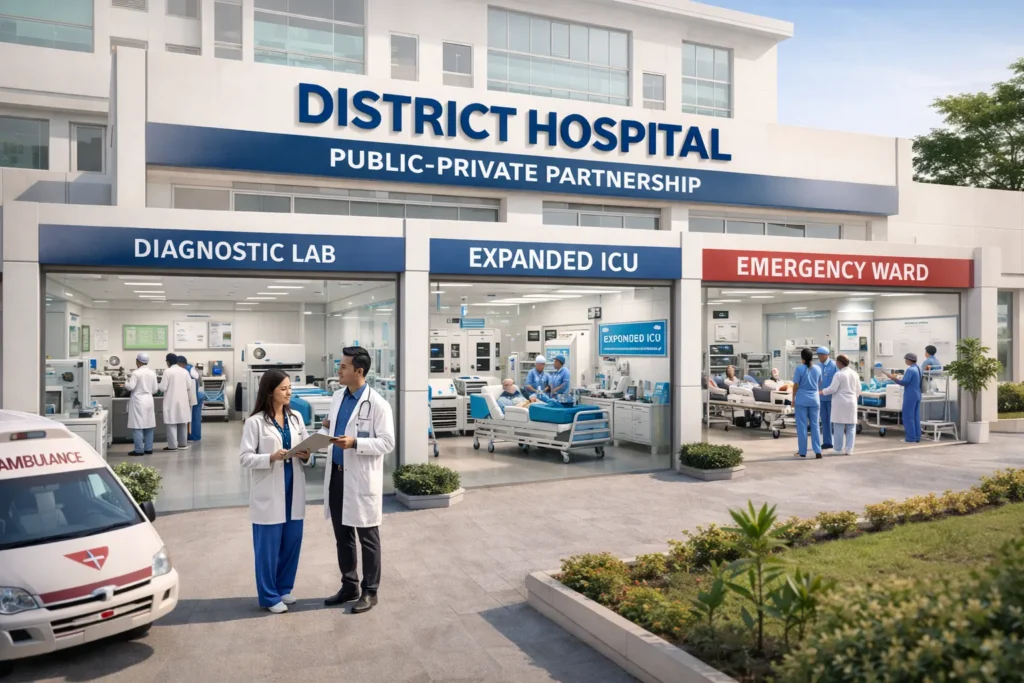

For generations, the story of healthcare in rural and small-town India was a tale of two maps. One map showed the geography of the nation—its sprawling districts, its teeming villages, its remote hamlets nestled in hills and valleys. The other map showed the geography of hope—a constricted, desperate network of roads all flowing toward a handful of bursting metropolitan centers. This second map was drawn not by cartographers, but by suffering. It was etched by the journeys of fathers carrying breathless children, of families huddled in the backs of rattling vehicles, of entire communities holding their collective breath as an ambulance siren faded into the distance, carrying a loved one toward an uncertain fate in a distant city.
The district hospital sat at the tragic center of this geography. Conceived as a fortress of public health, an apex institution meant to serve populations in the millions, it had instead become a monument to systemic neglect—a place of transition, not transformation; of referral, not resolution. It was a building where dedicated doctors practiced medicine by the dim light of determination, often without the tools their science demanded. The most common prescription was not a medicine, but a piece of paper: a referral slip to a city hundreds of kilometers away. This was the “Great Medical Migration,” a silent, daily exodus that drained wealth, crushed hope, and exposed the starkest inequity of all: that the right to survive a health crisis depended fundamentally on your postal code.
But today, across the vast and varied tapestry of India, a new map is being drawn. This map is not one of convergent desperation, but of decentralized resilience. It is a map where points of light are igniting in district after district, from the arid expanses of Kutch to the verdant forests of Bastar, from the pilgrim towns of Uttarakhand to the coastal communities of Kerala. At the heart of this re-mapping is a profound and pragmatic metamorphosis of the very institution that once failed its people: the district hospital. This rebirth is being fueled by a sophisticated, mission-driven alliance known as the Public-Private Partnership (PPP). This is not a story of privatization, but of potent synergy—a strategic handshake between the sovereign guardian of public welfare and the bringer of capital, technology, and managerial precision. Its goal is audacious: to dismantle the geography of despair and rebuild a nation where excellence in healthcare is a universal guarantee, not a geographic accident.
Volume I: The Anatomy of the Fracture – Diagnosing a System in Critical Condition
To comprehend the scale of the renaissance, one must first understand the depth of the ruin. The failure of the district hospital was a multi-system organ failure, a chronic condition worsened by decades of underinvestment and administrative paralysis.
The Infrastructure of Scarcity
Many district hospitals were trapped in a time warp, their physical plants echoing a bygone era of public health. Buildings, some with colonial-era foundations, suffered from endemic decay: roofs that leaked with the monsoon, walls cracked by time, electrical wiring that was a fire hazard, and water supply systems that failed with tragic regularity. Patients recovered not in wards, but on verandas and in corridors choked with the relatives of the sick. This was more than an issue of comfort; it was a fundamental breach of the most basic covenant of healing: a safe, hygienic, and dignified environment. Infection control was a theoretical concept in a place where reliable water for handwashing was a luxury.
The Technological Chasm: Practicing Medicine in the Dark
While the 21st century unfolded in global medicine with digital pathology, robotic surgery, and genomic sequencing, the district hospital was stranded in a diagnostic dark age. The “CT-Scan machine” was often a mythical creature, its arrival perpetually promised “next financial year.” An X-ray machine, if functional, produced images of ghostly ambiguity. An ultrasound was a rare privilege. For an MRI scan, a patient embarked on an odyssey—a days-long journey involving lost wages, expensive travel, and the terrifying anxiety of the unknown. This technological vacuum meant doctors were forced to practice a kind of intuitive, defensive medicine. Diagnoses were based on clinical suspicion rather than conclusive evidence. The phrase “let’s rule out” was often replaced by “let’s refer.” This culture of referral was not a medical failing of the doctors, but an institutional failing of the system that employed them. They were pilots asked to fly blind.
The Human Resource Hemorrhage: The Flight of Hope
The most vital component of any hospital—its human capital—was in a state of perpetual crisis. Specialist positions—for cardiologists, neurologists, nephrologists, oncologists, psychiatrists—remained vacant for years, sometimes decades. The general physicians and surgeons who held the fort were heroes of endurance, but they battled impossible patient loads, often seeing 500 outpatients in a single day. Their reality was a soul-crushing triad: clinical responsibility without adequate tools, administrative burden without supportive staff, and the constant moral injury of knowing what could be done but being powerless to do it. This environment was a potent recipe for burnout and cynicism. The brightest young medical graduates, looking at these conditions, voted with their feet, seeking careers in urban private hospitals or abroad. The district hospital was not just losing staff; it was losing its future.
The Domino Effect: The Twin Tragedies of the Great Medical Migration
The culmination of these failures was the “Great Medical Migration,” a relentless daily exodus that created two parallel, compounding tragedies.
Tragedy One: The Familial Catastrophe
For a rural or small-town family, a serious illness was not just a health crisis; it was an economic extinction event. The calculus was brutal. The direct costs of treatment in a city were multiples higher. But the indirect costs were catastrophic: travel expenses for multiple family members, loss of daily wages, the exorbitant cost of lodging and food in an alien city, and the hidden toll of navigating an intimidating, bureaucratic medical complex. Countless studies identified healthcare expenses as the primary driver of familial debt in India, pushing millions back into poverty each year. The emotional archaeology of these journeys is layered with trauma: the helplessness of sleeping on hospital floors, the fear of navigating metro systems when you only speak a local dialect, the gut-wrenching loneliness of being critically ill far from home.
Tragedy Two: The Metropolitan Chokehold
In the destination cities—the Delhis, Mumbais, Chennais, and Kolkatas—the premier public hospitals became victims of their own excellence. Institutions like AIIMS, PGI, KEM, or NIMHANS were designed as referral centers for the rarest, most complex cases. Instead, they were drowning under a tidal wave of advanced, yet common, ailments that should have been treated at the district level. Their outpatient departments resembled overcrowded railway platforms. Their world-class specialists spent 80% of their time managing routine heart failures, strokes, and cancers, leaving little bandwidth for the complex disorders they were meant to pioneer. The entire system was a clogged artery. The district hospital, meant to be a pressure valve, had become the first link in a chain of systemic congestion. The heart of the nation’s healthcare was on the verge of infarction.
Volume II: The Blueprint for Resurrection – Deconstructing the Public-Private Synergy
The solution that emerged was born not of ideology, but of clear-eyed pragmatism. The government held the sacred mandate, the land, the infrastructure, and the staff. What it lacked was the massive capital, cutting-edge technology, and specialized managerial bandwidth required for a nationwide upgrade at the speed of need. The private sector possessed these capabilities but operated within a for-profit paradigm concentrated in urban centers. The challenge was architecting a framework where these two worlds could align on a singular, non-negotiable mission: making high-quality healthcare geographically universal and financially accessible.
The model that has proven most effective is the Design-Build-Finance-Operate-Maintain (DBFOM) framework. This is not a simple contract for services; it is a long-term (often 15-30 year) performance-based alliance of profound complexity and nuance.
The Public Partner: The Keeper of the Mandate and the Moral Compass
- The Sovereign Guardian: The government retains ultimate ownership of all assets—the land, the buildings, and, most importantly, the core mission of the hospital. The institution remains a public asset in perpetuity.
- The Architect of Equity: Through meticulously detailed Legal Agreements and Service Level Agreements (SLAs), the government sets the immutable rules. This includes:
- Price Sovereignty: Mandating that all procedures, diagnostics, and bed charges are capped at government-approved rates (CGHS, Ayushman Bharat, or state health scheme prices).
- Equity Safeguards: Legally binding the partner to provide a significant percentage of services (typically 30-50%, depending on the contract) entirely free of charge to beneficiaries of government health assurance schemes.
- Quality Imperatives: Defining rigorous, measurable benchmarks for clinical outcomes, infection control rates (aligned with NABH/NABL standards), patient safety protocols, and maximum waiting times.
- Human Resource Covenant: Ensuring the job security, terms of service, and career progression pathways of all existing government doctors and staff are not only protected but enhanced through training.
- The Vigilant Overseer: A powerful joint steering committee, with dominant government representation, conducts regular, unannounced audits and reviews performance data against the SLAs. Payment to the private partner is intrinsically linked to these performance metrics.
The Private Partner: The Bringer of Execution and Technological Infusion
- The Capital Engine: The private entity makes the upfront capital investment—often ranging from hundreds of crores for a single hospital complex. This funds not just renovation, but new construction, and the purchase and installation of state-of-the-art medical equipment. This investment hurdle is one the government exchequer could not overcome at the required scale and speed.
- The Managerial Cortex: They introduce systems and processes often alien to the traditional public hospital ecosystem: digital queue management, integrated Hospital Information Systems (HIS), predictive supply chain logistics for drugs and consumables, hospitality-oriented patient navigation services, and rigorous preventative maintenance regimes for sensitive equipment.
- The Technology Infuser: They are contractually bound to install, maintain, and periodically upgrade a specified suite of modern equipment (e.g., 64-slice CT scanners, 1.5 Tesla MRI machines, digital catheterization labs, automated pathology lines). A critical part of their role is the continuous, hands-on training of government staff to operate and leverage this new technology.
- The Aligned Revenue Model: The private partner’s return is designed to be symbiotic with public good. It flows from two streams: 1) User fees from the upgraded services (strictly within government caps), and 2) A performance-linked annuity or management fee paid by the government, which is disbursed only upon the achievement of pre-defined clinical and operational milestones. Their profitability is tied directly to their performance in serving the public mandate.
In essence, the government says: “You are the steward of our mission. Invest your capital and expertise to elevate this hospital to a 21st-century standard. Operate the non-clinical and advanced diagnostic services with efficiency. Empower our doctors. We will hold you accountable to the highest standards of equity and quality, and reward you for delivering proven health outcomes to our people.” This represents a fundamental evolution in the government’s role: from being the sole provider of often-substandard care, to being a smart purchaser and guarantor of high-quality health outcomes for its citizens.
Volume III: The Ward-Walk – A Microscopic Journey Through the Clinical Renaissance
The true power of this partnership is measured not in boardroom presentations, but in the silent hum of a working ventilator, in the crisp clarity of a digital X-ray, in the calm efficiency of a renovated ward. Let us take an exhaustive, department-by-department journey through a transformed district hospital.
Gateway: The Emergency & Trauma Centre – From Chaos to Protocol-Driven Precision
The old ER was a chamber of palpable anxiety—a single room where trauma victims, wailing children, and breathless elderly competed for attention. The new ER is a model of triage, technology, and time-critical intervention.
- The Triage Nexus: Immediately inside, patients are met by triage nurses trained in international protocols (e.g., the Manchester Triage System). Within 90 seconds, a color code—Red (Immediate), Orange (Very Urgent), Yellow (Urgent), Green (Standard)—determines their pathway. This scientific sorting ensures that a patient with a heart attack is not waiting behind someone with a sprained ankle.
- Resuscitation Bays: Red-category patients are rushed into dedicated bays, each a self-contained unit with a defibrillator, ventilator, patient monitor, suction apparatus, and a fully stocked “crash cart”—all subjected to a rigorous “check-at-shift-change” protocol.
- Major & Minor Trauma Rooms: Equipped with overhead radiant warmers, orthopedic traction sets, and immediate access to portable X-ray and ultrasound, allowing for urgent procedures like chest tube insertion or wound debridement under sterile conditions.
- The Digital Central Nervous System: The ER is fully integrated into the hospital’s digital fabric. A doctor can order a “Stat” CT scan for a head injury patient with one click. The radiology department receives an instant alert. The patient’s vitals flow seamlessly into their Electronic Medical Record (EMR). This integration turns the ER from a holding pen into the active first chapter of definitive care, mastering the “golden hour” and “platinum ten minutes” that dictate survival in trauma and stroke.
The Brain: The Advanced Diagnostic & Imaging Hub – Ending the Era of Blind Medicine
This is the most visible revolution. The dark, lonely radiology department is now a 24/7 digital command center for diagnosis.
- The 64-Slice CT Scanner: This is the workhorse of modern emergency and internal medicine. It can perform a full coronary angiogram without invasion, detail a complex pulmonary embolism in a single breath-hold, and pinpoint a minute brain bleed in seconds. Its speed and accuracy are the difference between life and death, between recovery and permanent disability.
- The 1.5 Tesla MRI Suite: Behind its shielded doors, it creates exquisite, non-invasive images of soft tissue. It can differentiate a benign tumor from cancer in the prostate or breast, reveal the subtle plaques of Multiple Sclerosis in the brain, and assess complex ligament tears in the knee. Its local presence ends a torturous, expensive, and often futile referral journey for neurology, oncology, and orthopedics patients.
- The Digital Subtraction Angiography (DSA) Lab: This is the cathedral for cardiovascular and neurovascular care. Here, interventional cardiologists can thread catheters from the groin to the heart, clear blocked arteries with balloons and stents, and abort a heart attack in progress. Neuro-interventionists can coil a brain aneurysm before it ruptures. This capability transforms the hospital from a first-aid center into a definitive care center for the world’s leading killers.
- The Automated, NABL-Accredited Laboratory: Gone are rows of technicians with manual pipettes. In their place, robotic arms process hundreds of blood, urine, and tissue samples per hour. Advanced analyzers perform immunoassays for cancer markers (PSA, CA-125), hormonal profiles, and infectious diseases with precision rivaling the best private labs. Reports are auto-validated, flagged for critical values, and pushed to doctors’ portals and patients’ smartphones, often within 2-3 hours, ending the agonizing wait for answers.
The Fortress: The Graded Critical Care Ecosystem – Holding the Line Against Mortality
The old “ICU” was a room with a few ventilators. The new model is a tiered, specialized critical care universe designed for different intensities of illness, allowing for optimal resource allocation.
- Intensive Care Unit (ICU): For the most unstable patients—those with septic shock on multiple vasopressor drugs, with multi-organ failure, or in the immediate post-operative phase of major surgery. Each pod features advanced ventilators with lung-protective strategies, Continuous Renal Replacement Therapy (CRRT) machines for kidney failure, and advanced hemodynamic monitoring.
- Intermediate Care Unit (IMCU)/High Dependency Unit (HDU): This vital intermediate zone is for patients who are too sick for the general ward but do not require the full intensity of the ICU. It accommodates patients with severe pneumonia, post-operative recovery from major surgery, or those being weaned off ventilators. This intelligent tiering improves patient flow and outcomes.
- Neonatal ICU (NICU) & Pediatric ICU (PICU): Equipped with servo-controlled warmers, infant CPAP and ventilator systems, phototherapy units, and dedicated neonatal nurses. This single unit has been a revolution in public health, dramatically reducing infant mortality from prematurity, birth asphyxia, and neonatal sepsis. A premature baby can now fight for life surrounded by incubator technology, not in the back of a speeding ambulance.
- Cardiac Care Unit (CCU): A dedicated zone with cardiac monitors, telemetry, and immediate access to the cath lab for post-intervention heart patients. It provides specialized nursing for arrhythmias and heart failure.
This ecosystem means the hospital can “hold” and treat the sickest patients across specialties, breaking the reflexive, life-threatening transfer reflex. It builds institutional confidence and community trust.
The Clinical Domains: The Flourishing of Specialized Care
With robust diagnostics and critical care as a foundation, specialty departments blossom from empty shells into dynamic, respected clinical units.
- Department of Cardiology: Beyond the cath lab, it now houses a full-fledged non-invasive lab for stress tests (TMT) and echocardiograms (2D-Echo), and runs dedicated clinics for managing chronic heart failure and cardiac arrhythmias.
- Department of Nephrology: The establishment of a Dialysis Centre with 15-20 stations is a societal game-changer. Patients with end-stage renal disease, who previously faced financial ruin or death, can now receive life-sustaining dialysis thrice weekly without leaving their community, preserving their family life and livelihoods.
- Department of Medical & Surgical Oncology: While complex radiation therapy and bone marrow transplants may still require referral, the hospital can now administer chemotherapy cycles, manage cancer-related pain and symptoms, provide palliative care, and conduct follow-up surveillance—immensely reducing the physical, financial, and emotional burden on patients and families.
- Modern Modular Operation Theatres: New OT complexes with laminar airflow, advanced anesthesia workstations, laparoscopic stacks, and C-arms enable a wide range of surgeries: from laparoscopic cholecystectomies and hysterectomies to fracture fixations and cancer resections. The ability to perform safe, advanced surgery locally is the ultimate signature of a hospital’s clinical maturity and autonomy.
The Invisible Backbone: The Transformation of Support Services
The renaissance extends deep into the services that make clinical care possible, reliable, and safe.
- Central Sterile Supply Department (CSSD): Automated, trackable sterilization using ethylene oxide and advanced autoclaves replaces the old boiling method. Every surgical instrument is barcoded and tracked from use to sterilization to re-use, drastically reducing the risk of surgical site infections.
- Hospital Management Information System (HMIS): This digital nervous system integrates every function: registration, appointments, doctor schedules, billing, pharmacy inventory, lab orders, and bed management. It creates transparency, eliminates queues for reports and medicines, and provides real-time data dashboards for administrators to make evidence-based decisions.
- Biomedical Engineering & Maintenance Wing: A dedicated, on-site team of engineers ensures that the multi-crore equipment is maintained with military precision. Preventative maintenance schedules and rapid repair protocols ensure that the MRI machine is not a “monument” but a daily tool, ending the era of the “permanently under repair” sign.
Volume IV: The Human Tapestry – Voices from the Heart of the Metamorphosis
Beyond the steel, glass, and silicon, this story is written in the language of human experience—of fear alleviated, dignity restored, and futures reclaimed.
The Patient’s Chronicle: Ganesh Bhat and the Heart Attack That Didn’t Uproot His Life
Ganesh Bhat, 62, a smallholder farmer from a village in Karnataka’s Haveri district, felt a vise tighten around his chest while inspecting his soybean crop. His son, remembering the new reputation of the district hospital, rushed him there—a place Ganesh himself associated only with “getting a slip for Hubballi.” What he encountered dismantled a lifetime of assumption. Within minutes, he was on a stretcher, electrodes on his chest. Within 30, a troponin test confirmed a myocardial infarction. He was taken not to an ambulance for transfer, but to the brightly lit Cath Lab. “I was awake,” he recalls. “I saw on a screen above me the doctor putting a small stent in the artery they said was blocked. The pain vanished like someone turned off a switch.” He spent two nights in the CCU under observation. His total cost was under Rs. 2,000, covered under his state insurance. “My neighbor had the same thing five years ago. His family sold a piece of their land for his treatment in Bangalore. I paid less than my monthly pension. My grandson came on his bicycle after school every day. I healed at home, with my soil in sight. That hospital gave me back my life and my land.”
The Doctor’s Testament: Dr. Anjali Mehta’s Reclaimed Vocation
Dr. Anjali Mehta, Chief Medical Officer at a district hospital in Madhya Pradesh for 12 years, describes the change in profoundly personal terms. “We were practitioners of a kind of defensive, palliative bureaucracy. Our most refined skill was writing persuasive referral notes. The frustration was a physical weight we carried home every night. Today, that weight is gone. Last month, we diagnosed a young woman with a rare pheochromocytoma on our new MRI. Instead of handing her a frightening piece of paper and wishing her luck, our surgeon, with real-time tele-mentoring from a specialist in Bhopal, removed it successfully. She is alive, well, and her hypertension is cured. For the first time in my career, I am practicing the medicine I read about in journals. But more than the machines, it is the light in the eyes of my junior staff—that rekindled hope, that intellectual curiosity—that is the greatest reward. They are no longer custodians of decay; they are pioneers of a new standard.”
The System’s Data: The Rebalancing of the Healthcare Pyramid
Early but robust data from established PPP projects in states like Andhra Pradesh (NTR Vaidya Pariksha) and Rajasthan show promising macro-trends. Tertiary centers like SMS Jaipur and SVIMS Tirupati report a 20-25% sustained reduction in outpatient footfall and routine inpatient referrals from partnered districts. “The case mix reaching us has changed,” observes a senior professor of cardiology at a premier institute. “We are seeing more complex congenital heart diseases, fewer routine STEMIs (heart attacks). We are getting more referrals for second opinions and complex multi-vessel disease, fewer for basic angiographies. This is appropriate care filtering. It allows our faculty and resources to focus on what a tertiary center should do: cutting-edge research, super-specialty training, and managing the rarest of the rare. The entire pyramid is finally beginning to function as it was architecturally intended.”
Volume V: The Crucible of Challenges – Navigating the Inevitable Friction
This transformation is not a frictionless utopia achieved by decree. It is a complex, living socio-technical experiment, navigating significant and persistent challenges that test the resilience of the partnership model.
1. The Trust Deficit and the Specter of “Privatization”: The initial, and most potent, fear from the public, media, and political oppositions was that this was “backdoor privatization”—that the poor would be marginalized, and the hospital would become a profit-centre for the corporate partner. Overcoming this required absolute, demonstrable transparency and iron-clad contractual safeguards. The multi-tiered differential pricing model has been critical: entirely free care for Ayushman Bharat cardholders, highly subsidized rates for all other patients, and a clearly defined “amenity charge” for optional comforts like private AC rooms. The most powerful tool, however, has been visibility. When the community sees that the poorest patient receives the same MRI scan, the same drug-eluting stent, and the same chemotherapy drug as a paying one, trust is built organically, prescription by prescription.
2. The Clash of Organizational Cultures: Merging the corporate ethos of efficiency, protocol, standardization, and customer service with the public sector’s deeply ingrained ethos of equity, improvisation, resilience, and service-under-all-conditions is an ongoing, delicate negotiation. It requires more than a contract; it requires constant dialogue, joint leadership development programs, and the cultivation of a shared identity focused on the patient as the common, supreme center of gravity. The most successful projects invariably feature a strong, respected government Medical Superintendent who acts not as a gatekeeper, but as a cultural bridge and translator.
3. Ensuring Long-Term Sustainability and Consistent Performance: A critical question is whether the private partner will maintain the same level of investment, innovation, and service quality in Year 15 or Year 20 of a 30-year contract as in the exciting first year. The answer lies in sophisticated contract design: mandatory, regular independent third-party audits of clinical outcomes (mortality rates, infection rates) and equipment uptime (e.g., MRI availability >95%); performance-linked annuity payments with significant financial penalties for non-compliance on SLAs; and crucially, technology refresh clauses that obligate the partner to periodically upgrade equipment to contemporary standards, preventing technological obsolescence.
4. The Imperative of Intra-Hospital Equity: Preventing the emergence of a “two-tier hospital” within the same walls is a paramount governance challenge. Continuous monitoring ensures that government doctors’ time and attention are equitably distributed across all paying categories. It ensures that the flow of quality consumables, drugs, and implants from the central store is identical for all wards. The culture must be relentlessly reinforced: “One Hospital, One Standard of Care.”
5. The Human Resource Evolution: Upgrading machines is a logistical challenge; upgrading mindsets and skills is a profound human one. A successful partnership must invest heavily in Continuous Medical Education (CME), hands-on simulation training for new equipment and protocols, and exposure visits to centers of excellence. The government staff must feel they are upskilling, growing, and becoming valued partners in the upgrade—not merely its operators or, worse, its displaced subjects.
Volume VI: The New Horizon – The District Hospital as the Platform for a Healthier Nation
The modernization of India’s district hospitals is not a final destination, but a powerful foundational platform. It is the launchpad for a more ambitious, integrated, and intelligent future of healthcare delivery.
Phase 2: The Telemedicine and Tele-Mentoring Integration
The new digital infrastructure creates the perfect platform for tele-stroke networks, tele-ICU command centers, and national e-consultation grids. A district physician can present a complex ECG or dermatology case via a high-resolution tele-link to a national expert in real-time for a collaborative decision. A critical care intensivist in a metropolitan hub can remotely monitor the vital signs and ventilator settings of five critically ill patients across five different district ICUs, providing guidance to the on-site teams. This creates a virtual, continuous layer of super-specialty support, making the district hospital exponentially smarter and more confident.
Phase 3: The Preventive Health and Epidemiological Intelligence Hub
The digitized, structured patient data flowing through these hospitals is a public health goldmine of unprecedented granularity. Analyzed anonymously and aggregated, it can reveal hyper-local disease patterns: a spike in dengue cases in specific city blocks, a high prevalence of uncontrolled hypertension in a particular demographic, or rising cases of childhood asthma linked to local environmental factors. This allows district health authorities to launch targeted, precision public health interventions—fogging in specific localities, salt reduction campaigns in high-risk communities, or air quality monitoring near schools. It shifts the focus from reactive “sick care” to proactive “health care.”
Phase 4: The Academic and Training Nexus for a New Generation
A revived, well-equipped district hospital is the ideal center for nursing colleges, paramedic training institutes, and a rotating clerkship/internship hub for medical students. This creates a virtuous, self-sustaining cycle: it produces a skilled health workforce that is trained in and acclimatized to district-level realities, making them more likely to serve and build careers in their own regions. This addresses the human resource crisis not by importation, but by homegrown generation.
The Macro View: Redrawing the Nation’s Healthcare Geography
The ultimate success of this decades-long endeavor will be measured by a new cartography of care—a map where medical deserts are replaced by interconnected oases of high capability. It envisions a India where a citizen in Mokokchung, Nagaland, has access to the same diagnostic clarity, emergency intervention, and specialist consultation for a stroke as a citizen in South Delhi. It seeks to make the “Great Medical Migration” a subject for economic historians, not a daily headline of human suffering. It aims to build a system that is not only curative but resilient, capable of withstanding the next pandemic because every district has its own oxygen generation plant, its own ICU surge capacity, and its own diagnostic sovereignty.
Epilogue: The Restoration of Dignity – A Covenant Renewed
The story of India’s district hospital upgrade through Public-Private Partnership is, in its most profound essence, a story about the restoration of dignity.
It is the restoration of dignity for the patient, who can now confront illness without the added, dehumanizing terrors of displacement, destitution, and the feeling of being a supplicant in a foreign land. Their right to health is now defended close to the soil they call home.
It is the restoration of dignity for the medical professional, the government doctor and nurse, who can now wield the full arsenal of their hard-earned knowledge and compassion, supported by the tools their science deserves. Their vocation is no longer defined by lack, but by possibility.
It is the restoration of dignity for the system itself, proving that public institutions, with the right partnerships and governance, can be vibrant, efficient bastions of excellence and equity. It demonstrates that the “public versus private” debate is a false dichotomy; the future belongs to the “public and private,” working in disciplined, accountable harmony.
This is not a magic wand. It is a hard, gritty, unsentimental process of engineering, finance, management, and relentless human cooperation. There will be audits that reveal shortcomings, contracts that require renegotiation, and challenges unanticipated. But in the specific, tangible moments—the whir of a CT scanner in Kalahandi that diagnoses a toddler’s tumor in time, the steady beep of a ventilator in a Barmer ICU keeping a farmer alive, the relieved smile of a grandmother in Siddipet receiving dialysis while watching her grandchildren play in the courtyard—a powerful, undeniable truth is being etched into the soul of the nation.
It is the truth that a nation’s health cannot be centralized, hoarded in citadels of excellence. It must be seeded, nurtured, and made to flourish in the soil of every district, every town, every community. This is the great healing. It is the phoenix rising from the plains. And its wings, built through partnership and purpose, are now catching the wind.