
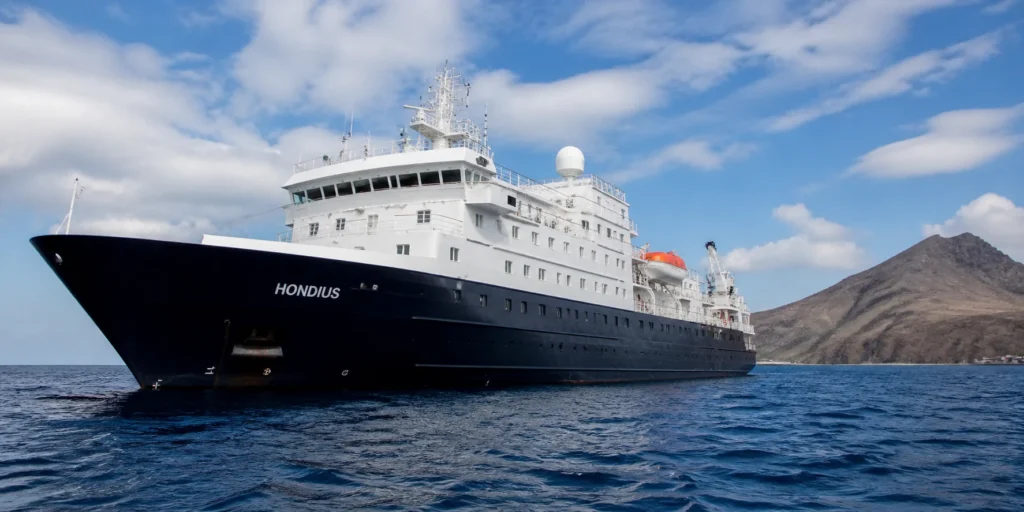

Part One: The Departure
The ocean was supposed to be their escape. For the passengers of the MV Hondius, a sturdy Dutch-flagged expedition ship, the vast blue waters of the Atlantic promised freedom, fresh sea air, and the kind of adventure you can only find when the coastline disappears behind you. Families waved from the dock. Couples held hands on the deck. Retirees who had saved for years finally allowed themselves to believe that this trip—this one special journey—would be the memory that outlasted all others.
No one packed their bags expecting a silent killer to be hiding in the corners of their dream vacation.
The MV Hondius left port on a morning that seemed painted by a careful artist. The sky was soft blue. The wind was gentle. The captain made the usual announcements about safety drills, meal times, and the exciting itinerary ahead. Passengers sipped coffee and juice in the dining area, flipping through maps and shore excursion brochures. Children pressed their faces against the windows. A few older travelers found quiet corners with books, content to watch the water slide by.
But by the time the World Health Organization stepped in on a quiet Sunday, the dream had turned into a nightmare. Three people were dead. Several others were fighting for their breath. And a tiny, ancient virus called hantavirus—something most people had never even heard of—was suddenly the most feared word on the ship.
This is the story of what happened, how a virus you cannot catch from a cough turned deadly on the open sea, and what it means for travelers everywhere. It is a story about nature, about human error, about bad luck, and about the invisible world of germs that lives right alongside us every single day.
Part Two: A Floating Hotel in the Middle of Nowhere
Let us set the scene properly. The MV Hondius is not your typical giant cruise ship. You have probably seen advertisements for the massive vessels that carry six thousand passengers, with waterslides, ice skating rinks, shopping malls, and multiple buffet lines. This is not that. The MV Hondius is an expedition vessel. That means it is smaller, tougher, and built to go places that big ships cannot follow. Think less party boat and more floating science lab with cozy cabins.
The ship was named after a Dutch cartographer from the 1500s. That tells you something about the company that runs it. Oceanwide Expeditions prides itself on exploration, not entertainment. Their customers are not looking for midnight comedy shows or casinos. They are looking for polar bears, glaciers, remote islands, and the kind of raw nature that most people only see on documentaries.
When the MV Hondius set sail on this particular voyage, the excitement on board was real. The route was a dream itinerary: from the coast of West Africa north toward the cooler waters of the North Atlantic, with planned stops at islands that few Western tourists ever visit. There were going to be guided hikes, bird watching tours, photography workshops, and lectures from naturalists. Some passengers had booked this trip more than a year in advance.
But the Atlantic Ocean does not care about your vacation plans. And neither do viruses.
The ship carried a mix of nationalities. According to later reports, there were Dutch crew members, British expedition guides, Canadian photographers, German bird watchers, and a group of seventeen Americans who had traveled across the ocean for what they hoped would be the adventure of a lifetime. They came from different backgrounds, different ages, different health statuses. Some were retired schoolteachers. Some were working professionals on a rare holiday. One couple was celebrating their fortieth wedding anniversary.
No one knew that within two weeks, three of them would never go home.
Part Three: The First Signs of Trouble
Illness on a cruise ship is not unusual. In fact, it is almost expected. Cruise ships are closed environments. People eat together, sleep near each other, touch the same handrails, and breathe the same recycled air. Norovirus, the infamous stomach bug that causes vomiting and diarrhea, sweeps through cruise ships every single year. The industry has become very good at handling it. They have extra cleaning crews. They have isolation cabins. They have protocols written in thick binders.
So when the first passenger on the MV Hondius felt a little off, nobody panicked.
It started quietly, the way most bad things start. A passenger woke up with a headache. Nothing terrible, just a dull ache behind the eyes. They took some over-the-counter pain medicine and went to breakfast. Later that day, they mentioned feeling a bit tired. Maybe the sun was stronger than they expected. Maybe they did not drink enough water. Maybe it was just one of those days.
But then a second person got sick. And then a third. And the symptoms were not the dizzy, nauseous feeling of rough waves. This was different. This felt like their muscles were turning into wet cement. Every movement was hard. Even lifting an arm to scratch an itch took serious effort.
One passenger described it later to a family member (who then shared the story with a reporter) as feeling like they had run a marathon the day before, except they had not left the ship. Their thighs ached. Their back ached. Their shoulders ached. It was the kind of deep, bone-level soreness that does not go away with rest.
The onboard doctor, a trained physician who had worked on ships for years, started making notes. He ruled out seasickness first, because the seas had been calm. He ruled out food poisoning next, because the sick passengers had not eaten together. He checked for signs of dehydration, allergic reactions, and even heatstroke. Nothing fit perfectly.
And then the fever started. Low at first, then climbing. Then came the chills. Then the feeling that something was very, very wrong inside the chest.
Part Four: The Lungs Begin to Fill
This is the part of the story that is hardest to tell without scaring people unnecessarily. But the truth is important. Hantavirus, in its most dangerous form, attacks the lungs in a way that few other viruses do.
Here is what happens inside the body. The virus enters through the nose or mouth, usually in tiny particles of dust that you never even see. It travels down into the deepest parts of the lungs, where the air sacs are. These air sacs, called alveoli, are supposed to fill with air. That is how you breathe. That is how oxygen gets into your blood.
But hantavirus has a nasty trick. It attacks the walls of the smallest blood vessels, the capillaries, that surround those air sacs. The virus makes these blood vessels leaky. Fluid that should stay inside your blood vessels starts seeping out into your air sacs. Your lungs begin to fill with liquid, like a sponge soaking up water. Only instead of water, it is your own blood plasma.
Suddenly, breathing is hard. You feel like you are trying to breathe through a pillow. No matter how deeply you inhale, you cannot get enough air. Your heart starts racing, trying to pump oxygen that is not there. Your blood pressure drops because the fluid leaking out of your vessels means there is less blood volume left to circulate. In severe cases, you can go into shock.
That is what doctors call Hantavirus Pulmonary Syndrome, or HPS. It kills about thirty to forty percent of the people who get it, even with good hospital care. Without hospital care, the number is much higher.
On the MV Hondius, the first passenger to reach this stage did not make it.
Part Five: Three People Never Wake Up
The worst news came in pieces, like a storm building on the horizon. First, a passenger was found unresponsive in their cabin. Crew members performed CPR. They used the onboard defibrillator. They radioed for emergency medical advice from shore. Nothing worked. That passenger was gone.
Oceanwide Expeditions announced the death in a brief, carefully worded statement. They expressed condolences. They promised cooperation with authorities. They did not release the name, respecting the family’s wishes.
Less than twenty-four hours later, a second passenger died. This time, the ship’s doctor had already moved that person to the medical bay. There was a ventilator on board. There were oxygen tanks and medications to support blood pressure. But the virus moved too fast. Despite everything the doctor did, the second passenger slipped away.
Then the third death came. By then, everyone on the ship knew something was terribly wrong. The dining area was empty. The lectures had been canceled. Passengers stayed in their cabins, drawing the curtains and whispering to each other through closed doors.
The company later confirmed that all three deceased were passengers, not crew members. They did not say whether they were Americans or of other nationalities. Investigators would have to determine that later, through DNA testing and medical records, a process that takes weeks when it happens across international borders.
The ship had already changed course by the time the third person died. It was not heading toward adventure anymore. It was heading toward safety—specifically, the port of Praia, the capital of Cape Verde. Cape Verde is a small island nation off the west coast of Africa, about three hundred fifty miles from Senegal. It is a beautiful place with volcanic landscapes, colorful buildings, and a population of about half a million people.
But its hospitals are small. Its public health system is stretched thin. And it was about to become the unexpected center of an international outbreak investigation.
You can imagine the silence on deck as the ship approached Praia. The shore was close. You could see the lights of the city at night. But for the families of the three who died, it was already too late.
Part Six: Hantavirus? Most People Have Never Heard of It
If you are scratching your head right now, wondering if you missed a news story about some terrifying new disease, you are not alone. Most people have never heard of hantavirus. It is not like the flu or COVID-19, which spread through the air when someone coughs or sneezes. It is not like norovirus, which spreads through contaminated food and surfaces. Hantavirus has a different, almost strange way of getting inside the human body.
Let us break it down in simple terms.
Hantavirus lives in rodents. Not all rodents. In North and South America, the main carriers are deer mice, cotton rats, and rice rats. In Europe and Asia, other kinds of rodents carry different versions of the virus. The rodents themselves do not look sick. They do not act sick. They carry the virus in their droppings, their urine, and their saliva. It does not hurt them. They are what scientists call a natural reservoir.
Here is the key: the virus leaves the rodent’s body in those droppings and urine. It can survive outside the rodent for several days, sometimes longer if the conditions are right. When the droppings dry out and turn to dust, the virus becomes airborne. You do not need to touch the rodent. You do not need to be bitten. You just need to breathe in the dust.
This usually happens in enclosed spaces with poor ventilation. Think of an old shed, a barn, a storage room, or a cabin that has been closed up for the winter. You open the door, walk in, and sweep the floor. The dust rises. You breathe it in. And two weeks later, you are in the hospital struggling to breathe.
That is why hantavirus is often called a “rural” disease or a “wilderness” disease. It mostly affects people who spend time in places where rodents live. Farmers, campers, hikers, and outdoor workers are the most common victims. Children sometimes get it from playing in dusty sheds. And, as the MV Hondius showed, expedition cruise passengers can get it too.
Part Seven: How Does a Rodent Virus Get on a Cruise Ship?
This is the question that everyone asked. How does a virus carried by mice end up on a clean, modern cruise ship in the middle of the Atlantic Ocean? It does not make sense at first. You imagine cruise ships as floating hotels with strict hygiene rules. And they are. But no amount of cleaning can eliminate every single possibility.
Let us walk through the most likely scenarios, because understanding how this happened is the first step toward making sure it never happens again.
First, the MV Hondius is an expedition ship. That means it visits remote ports that big cruise ships never touch. Some of these ports have old buildings, warehouses, storage sheds, and fishing villages where mice are common. When passengers go ashore on excursions, they walk on dirt paths, they explore abandoned structures, they step in places where rodents have been. They can easily pick up contaminated dust on their shoes, their pants, their backpacks. Then they come back to the ship and track that dust everywhere.
Second, the ship loads cargo at every port. Food, drinks, cleaning supplies, spare parts, linens, towels, life rafts, and hundreds of other items come on board. These items are stored on shore before loading, sometimes in warehouses that are not rodent-proof. A single cardboard box with mouse droppings on the bottom can bring the virus onto the ship. You would never see it. The box looks fine on top.
Third, and most likely according to infectious disease experts, the ship itself may have had a hidden rodent problem. Even the cleanest ship has deep, dark corners where things are stored for months or years at a time. Old life jackets, spare ropes, emergency flares, extra mattresses, holiday decorations. These spaces are not cleaned often because they are not used often. If a mouse got onto the ship while it was docked in a port—perhaps by climbing a mooring line or hiding in a cargo pallet—it could have nested in one of those storage areas. It could have left droppings. It could have died. And then weeks later, a crew member opens that storage locker, stirs up the dust, and breathes in the virus.
That is the sneaky thing about hantavirus. You never see the threat coming. There is no bite mark. No warning sign. No smell. Just a deep breath, and days later, a fever that will not break.
Part Eight: The Timeline of an Invisible Killer
Let us walk through how a typical hantavirus infection unfolds, because understanding the timeline can save lives. This is based on medical literature, not on the specific cases from the MV Hondius, since those investigations are still ongoing.
Day one through three: The person feels fine. They might notice nothing at all. The virus is quietly replicating inside their body, but the immune system has not yet sounded the alarm.
Day four through seven: The first symptoms appear. They are vague and easy to ignore. Fatigue. Muscle aches, especially in the large muscles like the thighs, hips, back, and shoulders. Fever. Chills. Headache. Nausea. Vomiting. Diarrhea. Abdominal pain. This looks like a dozen other common illnesses. Most people assume they have the flu.
Day eight through ten: This is the dangerous turning point. For about half of infected people, the symptoms go away. Their immune system wins. For the other half, the virus suddenly attacks the lungs. Within a few hours, the person goes from feeling sick but okay to struggling for every breath. Their heart races. Their blood pressure crashes. Their oxygen levels drop. They turn pale or blue. This is a medical emergency.
Day ten through fourteen: If the person is in a hospital with good intensive care, doctors can try to support them while their body fights the virus. This means oxygen, fluids, medications to raise blood pressure, and sometimes a ventilator to breathe for them. In the worst cases, they need a heart-lung bypass machine called ECMO. Even with all of that, about thirty to forty percent die. Without it, almost all die.
On a cruise ship, even one with a good medical bay, the clock is ticking. The ship might be days away from a hospital with an intensive care unit. That is why the three deaths on the MV Hondius happened so quickly. By the time the doctors realized what they were dealing with, it was too late to get the patients to a proper ICU.
Part Nine: Why Did Not the Ship’s Doctor See It Coming?
This is a fair question, and it deserves a fair answer. Cruise ships have medical clinics. Some of the larger ships have small hospitals with x-ray machines, ventilators, and even operating rooms. The MV Hondius, being an expedition ship, had a smaller facility, but it still had a trained physician and a nurse.
When the first passengers got sick, the ship’s doctors probably ran through the usual list of suspects. Here is what they would have considered.
First, norovirus. That is always the top guess on a cruise ship. It spreads fast, causes vomiting and diarrhea, and is highly contagious. But the symptoms on the MV Hondius did not match perfectly. There was too much muscle pain and too little vomiting.
Second, influenza. The flu can cause fever, muscle aches, and fatigue. It fits many of the symptoms. But the flu usually spreads quickly from person to person, and on a ship, you would expect dozens of cases within days. That was not happening here.
Third, food poisoning. Certain types of bacteria can cause severe illness, but again, the pattern was wrong. Food poisoning usually hits a group of people who ate the same meal at the same time. These cases were more scattered.
Fourth, COVID-19. Even in 2026, COVID is still on the list for any respiratory illness. But the ship likely had testing kits for COVID, and the tests would have come back negative.
Hantavirus would not have been on the top of anyone’s list, because it is not a typical cruise ship illness. In fact, there are almost no recorded cases of hantavirus outbreaks on ships. This might be the first one in history. You cannot blame the ship’s doctor for not recognizing a zebra when he was looking for horses.
The problem is that hantavirus is rare. According to the Centers for Disease Control and Prevention, there have been only about eight hundred confirmed cases in the United States since scientists first identified the virus in 1993. That is a tiny number compared to the flu, which infects millions of Americans every year. Most doctors go their entire careers without seeing a single case.
So the ship’s doctor did everything right. He reported the unusual illness. He isolated the sick passengers. He contacted shore-based medical experts. But by the time the pieces came together, three people had already died.
Part Ten: The Symptoms You Need to Watch For
Let us list the symptoms clearly, because knowing them could save your life or the life of someone you love. This is not medical advice, but it is public health information that every traveler should have.
Early symptoms, days four through seven after exposure:
- Fever over one hundred degrees
- Severe muscle aches, especially in thighs, hips, back, and shoulders
- Headache
- Dizziness
- Chills
- Nausea and vomiting
- Diarrhea
- Stomach pain
Late symptoms, days eight through ten after exposure:
- Shortness of breath
- Coughing, sometimes with frothy sputum
- Rapid heartbeat
- Low blood pressure
- Bluish tint to lips and skin
- Inability to catch your breath even while sitting still
If you have been in an area where rodents might have been present, and you develop these symptoms, you need to tell a doctor immediately. Use the word “hantavirus.” Do not wait to see if it gets better. Do not assume it is just a cold. Go to the emergency room.
There is no specific cure for hantavirus. There is no antiviral drug that kills it. There is no vaccine. Treatment is supportive, meaning doctors try to keep you alive while your own immune system fights the virus. That is only possible in a hospital intensive care unit.
Part Eleven: Who Gets Hantavirus? You Might Be Surprised
Here is something that surprises most people: hantavirus does not pick on the weak and the elderly. In fact, young, healthy, active people are the most common victims. Why? Because young, healthy, active people are the ones who go into barns, sheds, cabins, hiking trails, and expedition ships that dock in wild places.
Farmers get it. Construction workers get it. Campers get it. Hikers get it. People who clean out summer cabins get it. Children who play in dusty garages get it. The average person sitting in an office in a big city has almost zero risk. But the moment you go into a dusty old building or a ship’s rarely used storage hold, your risk pops up a little.
On the MV Hondius, the victims were not necessarily elderly or sickly. They were people who loved adventure. They had the money and the health to travel to remote places. And that makes the story even sadder. They did everything right. They took the trip they had dreamed about. And a mouse they never saw killed them.
There is a particular cruelty to that. If you are old and sick, you expect bad luck. But when you are healthy and full of energy, death is supposed to be a distant concept, something that happens to other people in other circumstances. On the MV Hondius, three healthy people learned that distance is not as far as it seems.
Part Twelve: The Ship Anchors in Cape Verde, and the World Pays Attention
By the time the World Health Organization made its announcement on Sunday, the MV Hondius was already anchored off Praia, Cape Verde. Let us talk about Cape Verde for a moment, because this small nation suddenly found itself in an international spotlight it never asked for.
Cape Verde is an archipelago of ten volcanic islands about three hundred fifty miles off the coast of West Africa. It was uninhabited when Portuguese explorers discovered it in the fifteen hundreds. Today, about half a million people live there. The economy depends on tourism, fishing, and money sent home from Cape Verdeans living abroad. The capital, Praia, is a bustling city of about one hundred fifty thousand people on the southern coast of Santiago Island.
The country has a public health system that is proud of its achievements. Life expectancy has gone up. Infant mortality has gone down. But it is not a wealthy country. Its hospitals are small. Its intensive care beds are few. Its laboratory capacity is limited. And now, it had an expedition ship anchored in its harbor with a deadly virus on board.
Anchored means the ship was not docked. It was sitting in the harbor, waiting. The local health authorities had to figure out how to test the remaining one hundred forty-nine people on board—including seventeen Americans—without risking an outbreak on the islands themselves. They could not let everyone disembark. They could not just walk away. They had to find a solution that protected Cape Verdeans while also providing medical care to the sick.
You can imagine the scene. A quiet ship under a hot African sun. Everyone confined to their cabins. Crew members in masks and gloves. The only sounds were the creak of metal, the slap of waves against the hull, and the distant hum of the city. No one getting on. No one getting off. Just waiting.
Part Thirteen: Good News for a Change
Before we go any further, let us share the one piece of genuinely good news in this otherwise dark story. You cannot catch hantavirus from another human being.
Read that again. You cannot catch hantavirus from another person. Not from their breath. Not from their sweat. Not from their blood. Not from touching them. Not from sharing a cabin. Not from eating food they prepared. Not from any normal human contact. Hantavirus is not a contagious disease like the flu, the common cold, or COVID-19.
That means the other passengers and crew on the MV Hondius were not at risk from the people who were sick. Their only risk was if they had also breathed in the same contaminated dust from the same hidden source. Once that source is identified and removed, the danger goes away. The virus does not live in humans and spread through the population.
This also means that Cape Verde was not at risk of a broader outbreak from the ship. Even if a sick passenger had walked off the ship and into the city, they could not have infected anyone else. The only risk to Cape Verdeans would be if they went onto the ship and stirred up the same contaminated dust. And that was easy to prevent: just keep people off the ship until it was cleaned.
That is a huge relief. But it does not bring back the three people who died. And it does not make the remaining one hundred forty-nine people any less scared. Fear does not always listen to logic. When you are trapped on a ship where three people have died, you worry, even if the science says you are safe.
Part Fourteen: How Do You Clean a Ship After Hantavirus?
Cleaning up after a hantavirus outbreak is not like mopping a floor or wiping down a counter. You cannot just spray and wipe. You cannot use a regular vacuum cleaner. You cannot sweep. All of those normal cleaning methods would actually make the problem worse. Let us explain why.
When mouse droppings dry out, they break apart into tiny particles that are light enough to float in the air. Sweeping or vacuuming creates a cloud of these particles. That cloud contains live virus. Breathing in that cloud is exactly how people get hantavirus in the first place. So normal cleaning is dangerous.
The correct cleaning protocol is specific and careful. Here is how professionals do it.
First, you put on protective gear. That means an N95 mask or better, goggles or a face shield, rubber gloves, and a disposable coverall or old clothes that can be washed in hot water immediately afterward.
Second, you do not touch the droppings directly. You spray them with a disinfectant solution. The standard recipe is one part household bleach to nine parts water. You spray until the droppings are completely soaked. Then you wait at least five minutes for the virus to be killed.
Third, you wipe up the droppings and the disinfectant with paper towels. You do not reuse the paper towels. You put them directly into a plastic bag.
Fourth, you seal that plastic bag. Then you put it into a second plastic bag. Then you seal the second bag. Double bagging prevents any dust from escaping.
Fifth, you wash any surfaces where droppings were found with more disinfectant. You let it air dry.
Sixth, you remove your protective gear carefully, washing your gloves before taking them off. You put all used gear into the double bags. You wash your hands thoroughly with soap and water.
Seventh, you launder any clothing you were wearing in hot water with regular detergent.
For a ship the size of the MV Hondius, with all its cabins, hallways, storage rooms, engine spaces, cargo holds, and common areas, that cleanup could take days or even weeks. Professional hazmat crews would need to inspect every compartment. They would need to test for the virus to confirm it was gone. The ship would likely stay anchored until health officials declared it safe.
Part Fifteen: The Seventeen Americans on Board
Any time American citizens are caught in a health crisis overseas, the United States government gets involved. The State Department has a special office called the Office of American Citizens Services and Crisis Management. Their job is exactly this: helping Americans who are in trouble outside the United States.
When news of the outbreak broke, the American embassy in Praia immediately contacted Cape Verdean authorities. They also reached out to Oceanwide Expeditions and the World Health Organization. Their goals were straightforward. First, find out which of the seventeen Americans were sick and get them medical care. Second, make sure the healthy Americans were safe. Third, arrange for transportation home when it was safe to do so.
But on a ship anchored off Cape Verde, getting home was complicated. You cannot just send everyone to the airport. If any of the remaining passengers were sick, they needed hospital care first. Cape Verde’s hospitals were good for routine care, but they were not equipped for a mass casualty event. The intensive care units were small. The ventilators were limited. The specialized oxygen equipment might not have been available.
The healthy Americans faced a different problem. Where do they go? Do they stay on the ship during cleanup, breathing recycled air and wondering if the dust is really gone? Do they quarantine on the island, in a hotel room that might not be ready for them? Do they fly home early on a commercial flight, risking exposure to other passengers and bringing nothing but fear with them?
These were the kinds of decisions that embassies, cruise lines, and health ministries fought over behind closed doors. Meanwhile, the seventeen Americans waited. Some cried. Some prayed. Some called their families to say they were okay, even if they were not sure that was true.
Part Sixteen: A Brief History of Hantavirus
Even though most people have never heard of hantavirus, scientists have known about it for decades. In fact, the virus is probably ancient. It likely evolved alongside rodents millions of years ago. Humans only got on its radar recently.
The first recorded outbreak in modern medicine happened during the Korean War in the early nineteen fifties. Thousands of United Nations soldiers developed a strange illness that caused fever, bleeding, and kidney failure. About ten percent died. Doctors called it Korean Hemorrhagic Fever. They did not know what caused it.
Years later, scientists identified the culprit as a virus carried by field mice in Korea. They named it Hantaan virus, after the Hantaan River in South Korea. That virus became the first known member of what we now call the hantavirus family.
But the version that attacks the lungs, the one that killed three people on the MV Hondius, was discovered much later. In 1993, a mysterious illness struck the Four Corners region of the southwestern United States. The Four Corners is where Arizona, New Mexico, Colorado, and Utah meet. A young, healthy Navajo man died suddenly of respiratory failure. Then his fiancée died. Then others. The Navajo Nation called it a new illness. The CDC called it an emergency.
Within months, scientists identified the cause: a previously unknown hantavirus, carried by deer mice, that attacked the lungs instead of the kidneys. They named it Sin Nombre virus, which is Spanish for “virus without a name.” Later outbreaks occurred in South America, where different hantaviruses caused similar lung illnesses.
Since 1993, there have been about eight hundred confirmed cases of hantavirus pulmonary syndrome in the United States. The death rate is about thirty-six percent. In some South American countries, the death rate is even higher. The virus remains rare, but when it strikes, it strikes hard.
Part Seventeen: Different Hantaviruses Do Different Things
Here is something else that might surprise you. Hantavirus is not one virus. It is a whole family of viruses. Different versions exist in different parts of the world, and they cause different diseases.
In the Americas, the hantaviruses cause Hantavirus Pulmonary Syndrome, the lung disease that killed three people on the MV Hondius. The main carriers are deer mice in North America, rice rats in the southeastern United States, and various forest rodents in South America.
In Europe and Asia, the hantaviruses cause a different disease called Hemorrhagic Fever with Renal Syndrome, or HFRS. That disease attacks the kidneys instead of the lungs. Patients suffer from fever, bleeding, and kidney failure. The death rate is lower, usually between one and fifteen percent, but it can still be very serious.
The different symptoms happen because the viruses have evolved to target different parts of the body. The North and South American versions have a preference for the tiny blood vessels in the lungs. The European and Asian versions target the tiny blood vessels in the kidneys. No one knows exactly why. It is one of the many mysteries of virology.
What matters for travelers is this: if you are in the Americas, worry about your lungs. If you are in Europe or Asia, worry about your kidneys. But in both cases, the prevention is the same: avoid contact with rodent droppings, urine, and saliva.
Part Eighteen: Oceanwide Expeditions Faces the Storm
Oceanwide Expeditions is a respected name in adventure travel. The company was founded in the Netherlands in the nineteen eighties. It specializes in polar expeditions to Antarctica, the Arctic, and remote islands in between. Its ships are modern, well maintained, and staffed by experienced crews. It has a good safety record. Until now.
When the news broke, the company did not hide. They put out a clear statement on Monday confirming that one hundred forty-nine people remained on board, including seventeen Americans. They expressed condolences to the families of the three people who died. They promised full cooperation with health officials from Cape Verde, the World Health Organization, and other authorities. They said they were doing everything possible to support the remaining passengers and crew.
But let us be honest. This is a nightmare for a small expedition company. Their brand is built on two things: adventure and safety. Now their ship is anchored in the news headlines for all the wrong reasons. People are asking hard questions. Could this have been prevented? Did the company know about rodent problems on previous voyages? Were storage areas inspected regularly? Were crew members trained to recognize the signs of rodent infestation?
The company will likely face lawsuits. The families of the three deceased passengers have every right to seek answers and compensation. Booking cancellations will probably follow. Future travelers might think twice before booking an expedition cruise, even if the risk of hantavirus is incredibly low.
Whether the damage to the company’s reputation is fair depends on what investigators find. If the virus came from a rogue mouse that snuck on board in a port, that is terrible bad luck but not the company’s fault. If the company knew about rodent problems and ignored them, that is negligence. We do not know yet. The investigation is just beginning.
Part Nineteen: What Passengers Are Saying
Privacy rules mean we do not have direct quotes from the families of the victims right now. And that is appropriate. They are grieving. They deserve space and respect. But we can piece together some of the story from social media posts made by other passengers before the outbreak turned deadly.
One passenger posted a photo of the sunset over the Atlantic, writing, “Day three on the Hondius. Best decision I ever made.” Another posted a video of dolphins swimming alongside the ship, with the caption, “This is why you book an expedition cruise.” A third wrote about the food: “Surprisingly good for a ship this size. The chef is from Portugal and he knows what he is doing.”
One passenger mentioned the crew: “Everyone is so nice. Our cabin steward remembers our names and our coffee orders. Little things like that make a big difference.”
None of those posts mentioned mice. None mentioned coughing or breathing trouble. None mentioned feeling sick. That is how fast things changed. One day you are watching dolphins. The next day you are watching three body bags being carried off the ship.
There is a lesson there, but it is not a comforting one. Life can turn on a dime. Health can disappear. The things you thought would last forever can end in an instant. That is not just true on cruise ships. That is true everywhere.
Part Twenty: What You Can Do to Protect Yourself
This story is scary. There is no point pretending otherwise. Three people are dead. Others are fighting for their lives. A beloved ship is quarantined in a foreign harbor. But fear is useful only if it leads to action. So let us talk about what you can do to protect yourself, whether you are on a cruise ship, in a cabin, or just cleaning out your garage.
First, be aware. Know that hantavirus exists. Know that it comes from rodents. Know the symptoms. Do not assume you will never encounter it. Awareness is your first line of defense.
Second, when you travel on any ship or stay in any remote cabin, pay attention to signs of rodents. Look for droppings. They look like small black grains of rice, usually about a quarter inch long. Look for gnaw marks on wood, plastic, or food packaging. Look for nests made of shredded paper, fabric, or insulation. Look for tracks in dust or grease marks along the tops of pipes and ledges. If you see any of these signs, report them immediately.
Third, never sweep or vacuum dry droppings. That is the most dangerous thing you can do. Always spray them with a bleach solution first, then wipe them up with gloves and a mask. If you do not have bleach, use a commercial disinfectant that says it kills viruses. If you do not have any disinfectant, just leave the area and call someone who does.
Fourth, store food properly. On a ship or in a cabin, keep all food in sealed containers. Do not leave crumbs or spills. Take garbage out daily. Rodents are attracted to food. If you remove the food, you remove the reason for them to come inside.
Fifth, seal entry points. Check for holes around pipes, vents, doors, and windows. If a hole is bigger than a pencil, a mouse can squeeze through. Use steel wool, caulk, or metal screening to block holes. Mice can chew through plastic and wood, but they cannot chew through steel.
Sixth, know the symptoms of hantavirus. Fever, muscle aches, fatigue, and then sudden breathing trouble. If you or someone you are traveling with has these symptoms after possible rodent exposure, do not wait. Get to a hospital and use the word “hantavirus” right away.
Seventh, do not panic. Remember that hantavirus is incredibly rare. You are more likely to be struck by lightning, attacked by a shark, or hit by a car while crossing the street. Taking reasonable precautions is smart. Living in fear is not.
Part Twenty-One: The Role of the World Health Organization
The World Health Organization does not get involved in every stomach bug on every cruise ship. That would be impossible. There are too many ships, too many illnesses, and too few resources. The WHO steps in only when an outbreak is unusual, deadly, or has the potential to spread across borders.
The hantavirus outbreak on the MV Hondius met all three criteria. It was unusual because hantavirus on a ship is almost unheard of. It was deadly because three people had already died. And it had the potential to spread across borders because the ship had traveled through international waters and had passengers from multiple countries on board.
By announcing the suspected outbreak on Sunday, the WHO was doing several things. First, they were alerting other countries to watch for sick travelers who might have been on that ship. If any passengers had disembarked before the outbreak was recognized, they could have carried the virus to other locations.
Second, the WHO was reminding the world that even in 2026, with all our technology and medical knowledge, old viruses can still surprise us. Hantavirus has been around for millennia. But it found a new way to spread—through a cruise ship—and the WHO wanted other ships to take notice.
Third, the WHO was providing technical assistance to Cape Verde. They sent experts in infectious disease control. They helped coordinate testing and contact tracing. They offered laboratory support to confirm the diagnosis. The WHO does not run the response, but it provides the expertise that local health systems may lack.
Part Twenty-Two: A Race Against Time for the Sick Survivors
As of the latest reports, at least three other people besides the three who died are sick. That means they are likely either in the first stage of hantavirus, with fevers and muscle aches, or in the scary second stage, where the lungs begin to fill with fluid.
If they are in the second stage, they need hospital care immediately. Specifically, they need to be in an intensive care unit. They need oxygen, delivered through a mask or a tube. They need careful monitoring of their blood pressure, because it can crash without warning. They may need medications to keep their blood pressure up. They may need a ventilator to breathe for them. In the worst cases, they need a heart-lung bypass machine called ECMO, which is not available in most small hospitals.
The good news is that if hantavirus is caught early, before the lungs fill too much, most people survive. The bad news is that the virus moves fast. The transition from first stage to second stage can happen in a matter of hours. That means every hour matters. A delay of six hours can be the difference between life and death.
The even worse news is that there is no specific treatment. Doctors cannot give you a pill that kills hantavirus. They cannot give you an antibody treatment like they can for some other viruses. All they can do is support your body while it fights the virus on its own. That is why the death rate is so high. Your body either wins or it loses. The doctors are just there to keep you alive long enough to give your body a chance.
Part Twenty-Three: What Happens Next to the MV Hondius?
The ship’s future is uncertain. Once the cleanup is complete and all passengers are either healthy or transferred to hospitals, Oceanwide Expeditions has to make some difficult decisions.
Option one: sail the ship back to its home port, possibly with a minimal crew, for deep cleaning and repairs. But that sail would take days or even weeks, depending on where the home port is. The ship would need permission from every country it passes. Some countries might refuse, afraid of the virus. Others might allow passage but require the ship to stay a certain distance from shore. It is a logistical and diplomatic headache.
Option two: keep the ship anchored in Cape Verde for weeks while professional hazmat teams clean every compartment. This is expensive. The ship earns no money while it sits at anchor. The crew still needs to be paid. Food and supplies still need to be delivered. But it might be the safest option, because Cape Verdean authorities can supervise the cleanup directly.
Option three: declare the ship a total loss. That is unlikely. Ships are worth millions of dollars. The MV Hondius is a relatively new vessel, built in 2019. It would be an extreme measure to scrap it over a single outbreak. But it has happened before with other ships that suffered severe contamination problems, though never with hantavirus.
One thing is certain: the MV Hondius will not take passengers again anytime soon. Every booking will be canceled or postponed. Every future voyage will be reviewed. The company’s reputation will take years to recover, if it ever does. For a small expedition company, that could be a fatal blow.
Part Twenty-Four: Remembering the Three Lives Lost
In the middle of all the science, the cleaning protocols, the legal questions, and the business concerns, it is easy to forget the most important part of this story. Three people are dead. They were not statistics. They were not case numbers. They were human beings with names, faces, families, and dreams.
They booked a cruise expecting to see the wild Atlantic. They packed their bags with sunscreen, binoculars, and comfortable walking shoes. They kissed their families goodbye and promised to send postcards. Instead, they died far from home, anchored off a small island nation that most of their neighbors could not find on a map.
Their families are now planning funerals instead of hearing vacation stories. They are making phone calls to airlines, insurance companies, and funeral homes. They are trying to understand how a mouse virus on a ship ended their loved one’s life. There may never be a satisfying answer. Sometimes viruses are cruel in random ways. Sometimes the universe does not make sense.
Let us imagine, for a moment, one of those three lives. Maybe it was a retired schoolteacher from Iowa who had spent forty years in a classroom. She had dreamed of this trip since she was a girl, reading National Geographic in the school library. She saved for a decade. She bought a new camera just for this voyage. She wanted to see the birds.
Maybe it was a young couple from California, both in their thirties, both successful in their careers. They had been putting off travel for years, always too busy, always working. This was supposed to be their reward. They wanted to stand on the deck at night, away from city lights, and see the stars.
Maybe it was an older man from Florida, a widower, whose wife had died two years ago. She had always wanted to take an expedition cruise. He promised her he would go, even if she could not. He brought a photo of her in his wallet. He talked to her picture every night before bed.
We will never know exactly who they were, not until the families decide to share their stories. But they were someone. They mattered. And their deaths should not be forgotten in the rush to clean the ship and assign blame.
Part Twenty-Five: A Deeper Look at Expedition Cruising
To understand why this outbreak happened, you have to understand expedition cruising. It is a different world from the giant ships that sail the Caribbean. Expedition cruises are for people who want to go where the big ships cannot. They travel to the Arctic, Antarctica, the Amazon, and remote islands in the Pacific and Atlantic.
The ships are smaller, usually carrying fewer than two hundred passengers. The cabins are comfortable but not luxurious. The food is good but not gourmet. The real attraction is the itinerary. You are not sitting by a pool. You are hiking on a glacier, kayaking through icebergs, or watching polar bears hunt on the pack ice.
Expedition ships make frequent stops. They use small zodiac boats to shuttle passengers from the ship to the shore. That means passengers get their feet wet, literally and figuratively. They walk on beaches, through forests, across tundra, and into old buildings. They are touching the environment in a way that big-ship passengers never do.
That is wonderful for adventure. But it also increases the risk of bringing something back to the ship. Dirt on your boots. Dust on your clothes. Pollen in your hair. And, in this case, rodent droppings that you never even noticed.
The expedition cruise industry has safety protocols for many things. They train crews in cold water rescue. They carry extra food and fuel in case of storms. They have doctors on board for medical emergencies. But hantavirus was probably not high on their list of concerns. It will be now.
Part Twenty-Six: How Hantavirus Compares to Other Cruise Ship Illnesses
Let us put hantavirus in perspective by comparing it to the two most common cruise ship illnesses: norovirus and COVID-19.
Norovirus is the king of cruise ship outbreaks. It causes vomiting and diarrhea. It spreads through contaminated food, water, surfaces, and direct contact. It is incredibly contagious. A single infected passenger can spread norovirus to dozens of others within hours. Outbreaks happen on cruise ships every year. The symptoms are miserable but almost never deadly. Most people recover in a day or two.
COVID-19 also spreads easily through the air and close contact. It causes fever, cough, fatigue, and sometimes severe pneumonia. Cruise ships had major COVID outbreaks in the early years of the pandemic. Many passengers died. But vaccines and treatments have made it much less dangerous than it was in 2020.
Hantavirus is different. It is not contagious at all. It cannot spread from person to person. But it is much more deadly than norovirus and, in some ways, more deadly than COVID. The death rate for hantavirus pulmonary syndrome is thirty to forty percent. That is higher than the death rate for COVID at the height of the pandemic. The only reason hantavirus does not cause more deaths is that it is incredibly rare.
So here is the bottom line. On a cruise ship, you are far more likely to catch norovirus. But if you catch hantavirus, you are far more likely to die. That makes hantavirus a low-probability, high-consequence threat. And those are the scariest kind.
Part Twenty-Seven: The Emotional Toll on the Crew
We have talked a lot about the passengers. But let us take a moment to think about the crew. There are about one hundred forty-nine people still on board the MV Hondius, and many of them are crew members. They are not passengers on vacation. They are workers doing a job.
Imagine being a cabin steward on that ship. You have been cleaning rooms, making beds, and delivering towels to the same passengers for days. You have smiled at them, learned their names, and chatted about their plans. Now three of them are dead. The others are hiding in their cabins, afraid to come out. You are still cleaning. You are still working. But you are also scared.
Imagine being the ship’s doctor. You went to medical school for years. You trained for emergencies. But nothing in your training prepared you for a virus you had only read about in textbooks. You watched three patients die despite everything you did. You will carry those faces with you for the rest of your life.
Imagine being the captain. You are responsible for every soul on that ship. You made the decision to change course toward Cape Verde. You made the decision to anchor rather than dock, to protect the local population. You have been awake for days, making calls, answering questions, trying to hold the ship together. The weight of what happened sits on your shoulders.
The crew will need support too. They will need counseling, time off, and a chance to process what they have been through. But they are still on the ship, still working, still waiting. Their own trauma is on hold until the crisis ends.
Part Twenty-Eight: The Environmental Angle
There is another layer to this story that most news reports have not mentioned. Hantavirus outbreaks are sometimes linked to environmental changes. When the climate shifts, rodent populations can explode. More rodents mean more droppings, which means more chances for humans to breathe in the virus.
Scientists have observed this pattern in the southwestern United States. After wet winters that produce abundant vegetation, deer mouse populations surge. A year or two later, hantavirus cases go up. The virus is always there, but the conditions determine how many people get sick.
Could something similar have happened in the ports where the MV Hondius docked? It is possible. If there was an unusual rainy season in West Africa, rodent populations might have grown. More mice in warehouses and storage sheds means more contaminated dust. A single ship visiting multiple ports might have been exposed repeatedly.
This is speculative. No one has proven a link between climate and this specific outbreak. But it is worth considering. As the planet warms and weather patterns shift, diseases that used to be rare may become more common. Hantavirus is just one example.
Part Twenty-Nine: What Health Officials Are Doing Now
Behind the scenes, a complicated response is underway. Let us walk through what health officials are doing at this very moment.
First, they are testing. Every remaining passenger and crew member on the MV Hondius is being tested for hantavirus. Blood tests can detect antibodies, which show whether a person has been exposed. Some people may have been infected without getting sick. Those people need to be identified.
Second, they are tracing. Contact tracing for hantavirus is different than for other diseases. Since the virus does not spread person to person, officials do not need to track who sat next to whom. Instead, they need to track where people went and what they touched. Which storage rooms did they open? Which excursions did they take? Where did they walk? The goal is to find the common source of the virus.
Third, they are cleaning. Professional hazmat crews are being assembled. They will enter the ship in full protective gear and begin the careful, slow process of decontamination. Every surface will be sprayed. Every corner will be inspected. The ship will not be declared safe until multiple tests come back negative.
Fourth, they are communicating. The WHO, the Cape Verdean government, Oceanwide Expeditions, and multiple embassies are sharing information around the clock. They are updating the public, the passengers’ families, and the media. They are trying to be transparent without causing panic.
This work is exhausting and thankless. The people doing it are under immense pressure. But they are the only thing standing between the current crisis and a much worse one.
Part Thirty: Final Thoughts
The ocean does not promise safety. It only promises adventure. That is a beautiful thing and a terrifying thing, sometimes at the same time. The passengers of the MV Hondius learned that lesson in the hardest way possible.
This story will not stop most people from cruising. And it should not. The odds of dying from hantavirus on a ship are astronomically low. You have a higher chance of being struck by lightning while holding a winning lottery ticket. Thousands of cruise ships sail every year without a single case of hantavirus. This is a freak event, not a trend.
But this story should make us humble. A virus carried by a mouse no bigger than your fist killed three people. It did not care about their nationality, their money, their health, or their vacation plans. It did not ask permission. It did not follow the rules. It just did what viruses do: it found a way to survive and spread.
And that is a reminder. No matter how advanced our ships and our medicine and our cleaning protocols become, nature still writes the final rules. We are not as separate from the wild as we like to think. We carry it with us, on our shoes, in our cargo, and in the dark corners of our ships.
As the sun sets over Praia harbor tonight, the MV Hondius sits quiet and still. The one hundred forty-nine people on board are waiting. Not for adventure. Not for shore excursions. Not for sunset photos. They are waiting for answers. They are waiting for the all-clear. They are waiting to go home.
And somewhere in a dark corner of that ship, the ghost of a mouse has left behind a silence that no disinfectant can wipe away. The silence of three lives ended too soon. The silence of a vacation turned into a tragedy. The silence of the deep Atlantic, which hears everything and tells nothing.
We owe it to the three who died to remember them. Not as cautionary tales. Not as statistics. But as people who had dreams, who booked tickets, who packed bags, and who never came home. May their memory be a blessing. And may their story remind us that even in the most controlled environments, the wild is always watching.



Taihq88, alright! I signed up, and I gotta say, the sign-up process was super easy. Good variety of games, especially slots. Payouts seem pretty quick too. I’ll be back for sure. More info here: taihq88
Yo, check out vin55 Its been a blast playing there So many games and the site is super easy to use Definitely worth a look vin55
Heard rumblings about pagcorp. Doing a little research to see what they’re all about. Gonna see if it truly is legit! Learn more at: pagcorp
excellent submit, very informative. I’m wondering why the other experts of this sector don’t notice this. You must continue your writing. I’m sure, you’ve a great readers’ base already!
I have been exploring different platforms for my daily gaming sessions and I must say this place really stands out with its smooth interface and fantastic game collection. The customer support team is always quick to help and the withdrawal process feels completely straightforward. Highly recommended for anyone looking for a reliable spot to unwind. npgamevault
I had a great run last night! The games are fair and the atmosphere is exciting. Definitely spending more time on 7brwincom.