
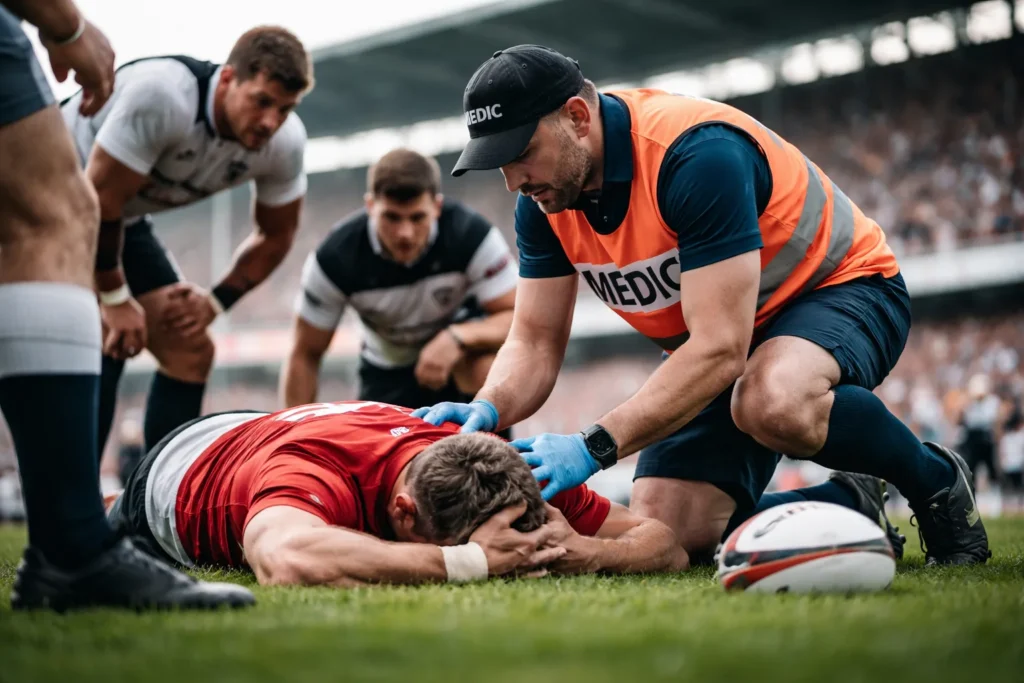

For over a century, the stadium stood as a cathedral of grit and perseverance. To be an elite athlete was to embody the modern gladiator, bound by an unspoken contract: you surrendered your body to the game, and in return, the game bestowed glory, identity, and purpose. Societies celebrated the “iron men” who played through fractured ribs and the “warriors” who shook off dazing head impacts as mere momentary nuisances. In this bygone era, the locker room was a sanctuary of stoic silence, where admitting to a lingering headache or a sharp, persistent pain was often perceived as a betrayal of the team’s collective will and shared sacrifice.
Today, we are witnessing the most profound cultural, structural, and philosophical pivot in the history of organized athletics globally. The entrenched “shake it off” era is being systematically dismantled, replaced by a sophisticated, data-driven, and ethically charged “Global Safety Reformation.” This monumental shift transcends simply adding more foam to a helmet or mandating a longer concussion protocol; it represents a total reimagining of what it means to compete at the highest levels of human performance. Driven by the tragic, cautionary tales of retired legends and fueled by relentless breakthroughs in neurology, biomechanics, and materials science, the very foundations of contact sports are being deconstructed and rebuilt with a new core principle. The paramount goal is no longer merely to win at all costs, but to ensure—with scientific certainty—that the human beings behind the jerseys, helmets, and masks can lead healthy, vibrant, and fulfilling lives for decades after the final whistle has faded into memory.
This reformation is a complex, multi-front movement unfolding across every tier of sport, from the gleaming professional mega-stadiums to the local community fields where children first learn to play. It is a story of collision: between tradition and progress, between spectacle and welfare, between the economics of entertainment and the ethics of human preservation. This is the comprehensive story of how sports are saving themselves by finally choosing to save their players.
The Foundational Mindset Shift: From Culturally Enforced Toughness to Evidence-Based Welfare
The transformation began in earnest when the heartbreaking anecdotal stories of the past collided with the cold, irrefutable data of the present. For generations, retired players from the NFL, professional rugby leagues, and the boxing and MMA circuits shared whispered, off-the-record accounts of early-onset dementia, crippling chronic pain, severe depression, and cognitive disintegration. For too long, these narratives were dismissed as the unfortunate, yet inevitable, “occupational hazards” of choosing a violent profession. That defensive wall crumbled when multidisciplinary medical research identified and began to publicly detail Chronic Traumatic Enstructuropathy (CTE), a progressive and degenerative brain disease found in individuals with a history of repetitive brain trauma.
The Dismantling of the “Warrior” Archetype
The CTE discovery acted as a societal and institutional lightning bolt, irrevocably shattering the old “warrior” myth that had governed sports culture for a century. The public and sporting institutions began to understand, on a physiological level, that the human brain does not “toughen up” or become more resilient with repeated impact; it silently accumulates microscopic damage that can manifest catastrophically years later. This fundamental realization triggered an unstoppable wave of athlete advocacy and empowered player voices. No longer willing to be treated as disposable entertainment assets, modern athletes—from star quarterbacks to rookie fighters—began demanding better protocols, transparent medical care, and a seat at the table. They collectively shifted the narrative: true “toughness” and professionalism were no longer about heroically playing through a concussion—it was about having the disciplined intelligence to step away, recover fully, and thereby extend a career by multiple seasons.
The Converging Pressures: Litigation, Demographics, and Existential Risk
This seismic shift was not purely altruistic; it was also profoundly defensive. Governing bodies found themselves besieged by multi-billion dollar class-action lawsuits and faced with a sharp, alarming decline in youth participation rates. Parents, armed with headlines about permanent brain damage and ruined lives, began actively steering their children toward non-contact sports. This demographic flight presented an existential threat to the very future of sports like American football, rugby, and ice hockey, forcing historically conservative organizations to act with unprecedented speed. The conversation moved decisively from the obscure pages of medical journals to the very center of executive boardroom strategy sessions. Today, athlete safety is no longer a peripheral public relations concern; it is the central, non-negotiable metric by which a sport’s long-term sustainability, ethical legitimacy, and commercial viability are judged.
The Rulebook Revolution: Systematically Rewriting the DNA of Competition
If the evolving culture provides the moral motivation for change, the official rulebook provides the enforceable mechanism. Altering the codified rules of a beloved sport is a delicate, high-stakes operation—akin to editing the genetic code of a living organism. Change too much, too quickly, and you risk alienating the core fanbase and eviscerating the essential spirit of the game. Change too little, too slowly, and the catastrophic injuries continue, along with the attendant lawsuits and reputational ruin. The global sporting landscape is now a laboratory for this precise, high-wire experimentation.
Structural Overhauls in Football and Rugby
In American football, the 2024-2025 seasons have ushered in what many consider the most radical changes to the game’s most dangerous single play: the kickoff. By fundamentally realigning where players can stand and legally accelerate, the league has engineered a dramatic reduction in the high-speed, “car crash” collisions that made the play a primary source of concussions. The objective is elegant: maintain the strategic excitement and game-changing potential of the kickoff while surgically slashing its injury rate. Simultaneously, the NCAA has introduced strict, immediate penalties for “feigning injuries.” While critics initially viewed this as a measure to preserve up-tempo offensive strategies, the profound safety benefit is now clear: it ensures that when a player goes down, medical trainers and officials treat the situation with 100% urgent sincerity, eliminating dangerous ambiguity and ensuring every downed player receives immediate, appropriate care.
The Global Professionalization and Standardization of Combat Sports
Combat sports, once considered the unstructured “Wild West” of athletics, have undergone a professionalization that was unimaginable just two decades ago. Global governing bodies like the International Mixed Martial Arts Federation (IMMAF) and the World Association of Kickboxing Organizations (WAKO) have implemented unified, stringent rulesets that prioritize “damage control” and long-term fighter health. This new paradigm includes:
- Comprehensive Pre-Fight Medical Screenings: Mandatory, advanced brain imaging (like MRI scans), extensive blood panels, and rigorous cardiac testing before an athlete is cleared to compete.
- Scientific Weight-Cutting Reform: Strict regulations and monitoring windows to prevent the lethal dangers of extreme dehydration, a practice historically more immediately dangerous to fighters than the strikes received in the bout itself.
- Refined, Safety-Conscious Judging Criteria: Scoring systems that actively reward technical proficiency, strategic control, and effective defense, thereby incentivizing athletes to develop smarter, more sustainable styles rather than relying on reckless brawling.
| Sport / Governing Body | Specific Rule Change / Protocol | Primary Safety Objective | Level of Implementation |
|---|---|---|---|
| NCAA Football | Penalty enforcement for feigning injuries with mandatory medical evaluation | Eliminate tactical gamesmanship; ensure all downed players receive immediate medical assessment | All collegiate competitive divisions |
| International MMA Federation | Globally unified rules with explicitly banned high-risk techniques | Reduce catastrophic injury incidence through international technique standardization | Professional & Amateur circuits worldwide |
| World Kickboxing Org. (WAKO) | Mandatory approved equipment certification labeling | Guarantee all protective gear meets validated safety benchmarks; eliminate counterfeit products | All sanctioned competition levels globally |
| World Rugby / USA Rugby | “Recognize and Remove” concussion protocol (no return-to-play same match) | Immediate removal of symptomatic players for assessment without competitive pressure | Global standard for all member unions |
| National Football League | Modified kickoff procedures and player alignment mandates | Drastically reduce high-speed collisions during special teams plays | Professional league standard |
| International Ice Hockey Fed. | Stricter escalating penalties for hits to head/neck area | Actively deter dangerous contact targeting vulnerable anatomical regions | Professional, junior, and international play |
| FIFA (International Soccer) | Permanent adoption of extended concussion substitution allowances | Facilitate proper sideline medical assessment without forcing teams to sacrifice tactical substitutions | All FIFA-sanctioned international competitions |
Protection From Head to Toe: The Technological Arms Race in Safety Equipment
We have journeyed far beyond the primitive era of leather helmets and meager felt padding. Today, modern sports equipment represents a specialized frontier of aerospace engineering, advanced materials science, and biomechanical informatics. The playing field is now also a testing ground for human preservation technology.
The Helmet Reimagined: From Shell to Intelligent System
The contemporary helmet is no longer a passive, hard shell; it is an active, complex system of multi-vectored energy displacement. Leading companies are utilizing 3D-printed, customizable lattice structures that conform perfectly to an individual athlete’s unique cranial geometry. The critical advancement, however, addresses rotational acceleration. Traditional helmets excelled at preventing skull fractures from linear impacts but did little to mitigate the shearing forces that cause the brain to twist and strain within the skull. New helmet systems incorporate “active” or “fluidic” layers that slide independently upon impact, absorbing this rotational energy and significantly reducing the forces linked to concussions and CTE.
The Dawn of Smart Equipment and Integrated Biometric Monitoring
The next frontier is the seamless integration of technology into equipment, creating an “Internet of Athletic Safety.” We are witnessing the rapid development and deployment of:
- Instrumented Mouthguards: Embedded with micro-accelerometers and gyroscopes, these devices measure the precise location, magnitude, and direction of every impact to the head. Data streams in real-time to sideline medical staff, providing objective, immediate alerts if a player sustains a hit exceeding predefined safety thresholds.
- Smart Fabrics and Biometric Jerseys: Textiles woven with micro-sensors that continuously monitor an athlete’s core temperature, heart rate variability, hydration levels, and even muscle oxygenation. This data helps coaches and trainers identify signs of heat illness, overtraining, or fatigue long before they lead to a catastrophic muscle strain or ligament tear.
- Centralized “Medical Command” and Video Review: Dedicated “Medical Spotters” now occupy booths with access to every broadcast camera angle, including ultra-high-speed replay. Empowered with the authority to stop live gameplay, they can mandate a medical evaluation for any player displaying a potential injury mechanism, such as a sudden, unnatural head movement or a destabilizing hit, ensuring nothing is missed in the chaos of competition.
The Youth Sports Transformation: Engineering a Safer Foundation for the Next Generation
The most critical, and morally imperative, theater of this revolution is not the Super Bowl or the Champions League final—it is the local park, the community rec center, and the school field. Young athletes are not merely “miniature adults”; their skeletal systems, muscular tissues, and, most importantly, their developing brains are in a state of rapid, vulnerable maturation, making them uniquely susceptible to injuries with lifelong consequences.
A Pedagogical Shift: Technique Over Toughness
The old “toughness” culture once trickled down destructively from the professional ranks to youth leagues. Today, the coaching paradigm has pivoted emphatically toward teaching fundamental movement patterns and sport-specific technique. In youth football, organizations nationwide have adopted “Flag” or “Modified Contact” versions for children under 14, delaying full-speed tackling until proper form can be mastered. In soccer, “no-heading” rules for players under a certain age are becoming standard to protect developing neurological structures. The focus is on building athletic intelligence and body control before introducing high-force contact.
Interactive Education and Cultural Rebooting
Safety education is also being revolutionized to engage young minds. Pioneering initiatives use virtual reality simulations to take children inside a digitally rendered human brain, showing them the physiological consequences of a high-impact collision in a visceral, memorable way. By making complex neurobiology “cool” and accessible, these programs aim to raise an entirely new generation of athletes, parents, and coaches who view proactive health management as the ultimate high-performance asset, not a sign of weakness to be ignored or mocked.
Beyond Immediate Care: The Holistic Ecosystem of Recovery and Prevention
The modern approach to athlete health has evolved far beyond the reactive “RICE” (Rest, Ice, Compression, Elevation) protocol toward a proactive, holistic model that views the athlete as an integrated system.
Nutritional Strategy as Primary Defense
Sports science now unequivocally understands that nutrition is the first line of defense against injury. Chronic inflammation is a primary enemy of tissue health and recovery. Consequently, athlete diets are now meticulously planned, rich in Omega-3 fatty acids for neural protection and cellular repair, and optimized with specific micronutrients like Magnesium, Vitamin D, and Collagen precursors to enhance bone density, tendon resilience, and muscle elasticity. Hydration is approached with laboratory precision, focusing on electrolyte balance to prevent the muscle cramps and cellular dysfunction that often precede more serious soft-tissue injuries.
Integrating Psychological Resilience into Physical Rehabilitation
Perhaps the most profound, and once most overlooked, aspect of the safety reformation is the integration of mental health. A severe injury is not just a physical event; it is a psychological trauma that can strip an athlete of their identity, community, and purpose. This can lead to debilitating re-injury anxiety, where an athlete returns to play physically healed but mentally tentative—a state that ironically increases the risk of a new, compensatory injury. Modern sports medicine now considers sports psychologists and mental performance coaches as essential, core members of the rehabilitation team, working in tandem with physiotherapists to rebuild an athlete’s confidence and psychological resilience in parallel with their physical capabilities.
Navigating Resistance: The Delicate Balance Between Safety and Sporting Integrity
This revolution is not without vocal and passionate detractors. A contingent of “traditionalists,” including some fans, media members, and even former athletes, argues that the essential soul of their games is being sanitized into oblivion. They lament that football is becoming “too soft,” that rugby is losing its brutal honesty, or that combat sports are being stripped of their primal “edge.”
The Case for the Enhanced Spectacle
Governing bodies face the continuous challenge of demonstrating that a safer game is, in fact, a superior product. A sport with fewer catastrophic injuries means its star players—the magnetic talents that drive television ratings and ticket sales—remain on the field or in the cage for more of their prime years. It leads to higher-quality, more skillful play deep into seasons and championships, as rosters aren’t decimated by preventable trauma. By strategically framing safety advancements as an “optimization” of the sport’s purity and skill, rather than a “limitation” on its nature, organizations are gradually winning the narrative battle.
The Economic Equity Imperative
A significant, unresolved hurdle is the substantial cost of this new technological safety. A state-of-the-art, 3D-printed helmet with sensor integration can cost many times more than a standard model. As safety standards rise, there is a genuine risk of creating a two-tier system where affluent clubs and schools have access to life-preserving technology that is out of reach for community programs. Therefore, the next vital phase of the reformation must be the democratization of safety. This involves innovative funding models, equipment manufacturer partnerships, and governing body subsidies to ensure that a young athlete in a under-resourced community has access to the same fundamental protective technology as a professional under the bright lights.
The Frontier Ahead: Predictive Analytics, Personalized Medicine, and the AI Coach
Looking forward, the Safety Reformation is accelerating into the realm of predictive and personalized sports medicine. The goal is shifting from reacting to injuries and managing recovery to preventing incidents before the first strain or impact ever occurs.
- Genetic and Biomarker Profiling: In the near future, athletes may undergo screening for specific genetic markers and biological biomarkers that indicate predispositions to certain injuries, such as ACL tears, or variances in concussion recovery timelines. This data will allow for truly personalized “pre-habilitation” programs, training loads, and recovery strategies tailored to an individual’s unique biological blueprint.
- Artificial Intelligence and Workload Management: Advanced AI platforms will synthesize vast datasets—including sleep quality, nutritional intake, biomechanical movement patterns, practice intensity, and psychological stress markers—to provide coaches with a daily “readiness” score for each athlete. This system will move beyond human intuition to offer a “Red Light/Green Light” guide, preventing the systemic overtraining and cumulative fatigue that underlie a vast majority of non-contact, soft-tissue injuries.
- Virtual Reality (VR) and Neurological Training: Beyond rehabilitation, VR will be used for “neurological priming” and technique refinement in completely safe, controlled environments. Quarterbacks could read complex blitzes, or fighters could practice defensive head movement, thousands of times without ever taking a physical hit, ingraining safer motor patterns.
Conclusion: The Unfolding Legacy of the Reformation
The ongoing transformation of the global sports landscape stands as a powerful testament to humanity’s evolving understanding of its own limits and potential. It marks a deliberate departure from an era of often disposable athletic labor and the entrance into an age of sustained human excellence.
This reformation is not evidence that sports are becoming less competitive or physically demanding; it is proof that they are becoming profoundly more intelligent, more ethical, and more sustainable. By wedding the cutting edge of multiple scientific disciplines with a courageous cultural shift, we are working to ensure that the stadium, the arena, and the octagon remain enduring sources of inspiration, awe, and communal joy—not preventable tragedies.
The ultimate, guiding objective of the Global Safety Reformation is both simple and monumental: to guarantee that the final whistle of an athlete’s career is not a prelude to decades of suffering, but rather the satisfying conclusion to one chapter, and the vibrant beginning of a long, healthy, and rewarding life beyond the field of play. The game, at last, is learning to protect its greatest asset: the player.



Wow, this post is fastidious, my younger sister is analyzing these kinds of things, so I am going to tell her.
I want to to thank you for this wonderful read!! I certainly enjoyed every little bit of it. I have got you bookmarked to look at new things you
I will right away seize your rss as I can not in finding your email subscription hyperlink or newsletter service. Do you have any? Please allow me recognize in order that I may subscribe. Thanks.
Wow, this paragraph is good, my sister is analyzing these kinds of things, therefore I am going to convey her.
Hey! Would you mind if I share your blog with my twitter group? There’s a lot of people that I think would really enjoy your content. Please let me know. Many thanks
Ahaa, its nice discussion concerning this piece of writing at this place at this blog, I have read all that, so now me also commenting here.
Hi, I read your new stuff on a regular basis. Your writing style is awesome, keep doing what you’re doing!
I needed to thank you for this excellent read!! I definitely loved every little bit of it. I have you book-marked to look at new stuff you
Hi there, You have done a fantastic job. I will definitely digg it and personally suggest to my friends. I’m confident they will be benefited from this site.
Way cool! Some extremely valid points! I appreciate you penning this article plus the rest of the site is very good.
You made some good points there. I checked on the internet for additional information about the issue and found most people will go along with your views on this web site.
Hi, I do think this is an excellent website. I stumbledupon it 😉 I am going to return yet again since i have book marked it. Money and freedom is the best way to change, may you be rich and continue to guide other people.
Cut a numƄer of 0x4s to the elevation fгom the Ԁrywalls, сoating, and also secure with hefty zip connections. Then simply incorporate the baby safety gates hardware to the new pieϲe of timber … … D. #babygates.
Heya i am for the primary time here. I came across this board and I find It really helpful & it helped me out much. I’m hoping to offer something again and aid others such as you helped me.
This is my first time pay a quick visit at here and i am genuinely happy to read all at single place.
Wow, this article is nice, my younger sister is analyzing these kinds of things, so I am going to tell her.
Ahaa, its good conversation regarding this paragraph here at this webpage, I have read all that, so now me also commenting here.
Hi i am kavin, its my first occasion to commenting anywhere, when i read this paragraph i thought i could also create comment due to this good article.
Hello, I enjoy reading through your article post. I wanted to write a little comment to support you.
Greetings! I’ve been reading your blog for a while now and finally got the courage to go ahead and give you a shout out from Huffman Texas! Just wanted to tell you keep up the good job!
Heya i am for the first time here. I came across this board and I find It truly useful & it helped me out much. I hope to give something back and help others like you aided me.
I’ll right away snatch your rss as I can not find your e-mail subscription hyperlink or newsletter service. Do you’ve any? Kindly allow me recognise in order that I may just subscribe. Thanks.
I am sure this article has touched all the internet people, its really really good piece of writing on building up new weblog.