
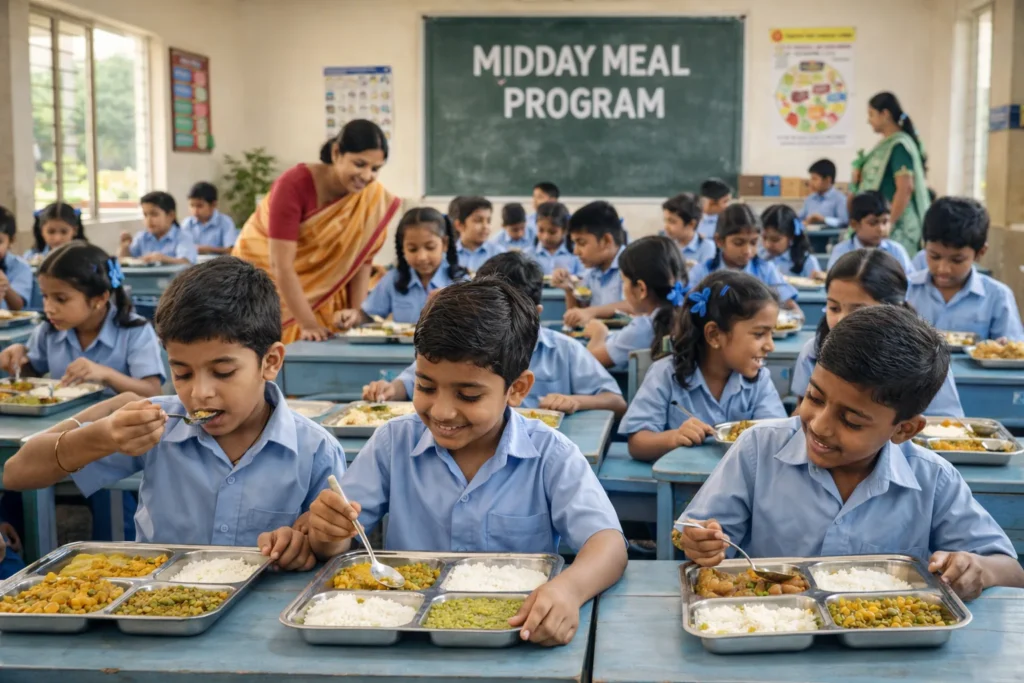

Prologue: The Symphony of the Empty Desk
In every school across America, there exists a quiet, unspoken symphony—a composition played not with instruments, but with silence. For decades, the most common movement in this symphony was the hollow echo of an empty desk in a third-period classroom, the rustle of a single unclaimed worksheet on a Monday morning, the faint scrape of a chair pushed in by a custodian because no small hands had pulled it out that day.
This was the symphony of absence.
In Room 302 at Oakridge Elementary, Mrs. Elena Alvarez was its most attentive listener. She could name each note. The faint tremor in Leo’s voice on Fridays when he asked if he could take his unfinished snack home. The way Sofia would wear her coat all morning in the winter, even when the classroom was warm, because the layers underneath were too thin. The Monday morning ritual of four or five students trickling in late, their eyes downcast, their energy already spent from a weekend of scarcity. The chairs—those empty, aching chairs—were the rests in the music, the pauses that spoke louder than any sound.
Then, in the fall of 2022, the symphony began to change. A new rhythm emerged. It started with the smell of roasted sweet potatoes and rosemary that began to drift up from the cafeteria vents by 9 AM. It grew with the sight of students lingering at breakfast carts in the hallway, laughing over yogurt parfaits instead of rushing to class with empty stomachs. It crescendoed on a Tuesday in October when Mrs. Alvarez took attendance and received twenty-four clear, confident “here!”s in response. The silence was gone. The empty chairs were filled. The new composition was one of presence.
This is the story of how America decided to listen to a different kind of music. It is the story of a radical, compassionate, and scientifically-grounded realization: that the path to educational equity, academic excellence, and a stronger society does not begin with a newer textbook or a smarter app. It begins in the cafeteria. It begins with what we put on a tray. It begins with the understanding that a hungry child cannot learn, but a nourished child cannot be stopped.
This is the chronicle of the Nourishment Nexus—the moment when schools stopped viewing food as a logistical challenge and began recognizing it as the most fundamental educational infrastructure of all.
BOOK ONE: THE AGE OF ABSENCE
Chapter 1: The Ghosts in the Classroom
To comprehend the magnitude of the transformation, one must first understand the depth of the crisis it addressed. Chronic absenteeism was not a simple statistic; it was a slow-moving avalanche burying potential. Before the reforms, over 8 million students in the United States—approximately one in six—were chronically absent, missing 10% or more of the school year.
But these were not random ghosts. They were predictable, patterned, and heartbreakingly logical.
The Geography of Hunger:
A map of chronic absenteeism in any major city was nearly indistinguishable from a map of food deserts. In neighborhoods where the nearest grocery store was a two-bus ride away, Monday absences could reach 30%. Families relying on SNAP benefits, which often dwindled to nothing by the month’s final week, faced an impossible calculus: send a child to school hungry, or keep them home.
The Chronobiology of Scarcity:
Researchers began to notice that academic performance didn’t just dip among hungry children; it followed a precise biochemical timeline. The “9:30 AM Crash” occurred when a sugar-heavy breakfast (or no breakfast) left blood glucose plummeting during literacy block. The “2:00 PM Fade” saw attention evaporate after a lunch of processed carbohydrates. These were not behavioral failures. They were physiological events.
The Stigma Cascade:
The pre-reform cafeteria was a theater of social stratification. The system created visible castes:
- The Cash Kids: Who paid with digital accounts or bills.
- The Reduced-Price Cohort: Who announced their 40-cent status.
- The Free Lunch Recipients: Whose names were on lists, sometimes called out.
- The Debtors: Who received an “alternate meal” of a cold cheese sandwich, a public brand of shame.
- The Avoiders: Who simply skipped the arena altogether.
This hierarchy didn’t just dictate who ate what; it dictated who felt they belonged. For a vulnerable adolescent, the risk of public humiliation was a more powerful deterrent than hunger itself.
Chapter 2: The Body’s SOS: The Physiology of Learning on Empty
The human brain, particularly a child’s developing brain, is the most metabolically demanding organ in the body. Comprising only 2% of body weight, it consumes 20-25% of the body’s total energy. When that energy supply is inconsistent or nutritionally poor, the brain does not simply “work less hard.” It undergoes a state of triage.
Neurological Triage:
Dr. Anika Sharma’s pioneering fMRI studies revealed the stark reality. In children experiencing food insecurity, activity in the prefrontal cortex—the command center for executive function, decision-making, and attention—was markedly dim. Simultaneously, the amygdala—the fear and anxiety center—shone brightly. The brain was literally rewiring itself. Resources were being diverted from “What is the theme of this story?” to “Am I safe? When will I eat next?” Learning was not the priority; survival was.
The Blood Sugar Roller Coaster:
A typical pre-reform school breakfast—a sugary cereal bar and fruit cup in heavy syrup—could send a child’s blood glucose soaring to 180 mg/dL within 30 minutes. The pancreas would respond with a massive insulin dump, crashing levels to 70 mg/dL or lower by mid-morning. This crash triggered the release of cortisol and adrenaline, stress hormones that prepare the body for danger. Imagine trying to decode a phonics lesson while your nervous system screams that you are in jeopardy.
The Silent Deficiency Epidemic:
- Iron-Deficiency Anemia: Affecting up to 15% of children from low-income households, anemia reduces oxygen delivery to the brain by up to 30%. Symptoms—lethargy, shortness of breath, brain fog—were persistently mislabeled as laziness.
- Omega-3 Deficiency: These crucial fats form the very structure of brain cell membranes. Without them, neural communication is sluggish.
- Micronutrient Shortfalls: Deficiencies in B vitamins, zinc, and vitamin D impair neurotransmitter synthesis, energy production within neurons, and neuroprotection.
The empty desk was not a symbol of truancy. It was the endpoint of a biochemical cascade. The child was not “absent.” Their body had been declared unfit for learning.
Chapter 3: The Economic Algebra of Missing School
For families living in poverty, school attendance was never a simple choice. It was a complex equation where every variable was scarce: time, money, energy, and peace of mind.
The Direct Cost Barrier:
Even “reduced-price” meals (40 cents for lunch, 30 cents for breakfast) amounted to real money. For a family with three children, this was $10.50 per week, $42 per month—often the exact margin needed for a utility payment, a prescription co-pay, or a tank of gas to get to work.
The Opportunity Cost Calculation:
Older children frequently missed school to care for younger siblings while parents worked inflexible, low-wage jobs. Others worked their own after-school jobs, their contributions essential to the family’s survival. Education was an investment in a distant future; putting food on the table tonight was a non-negotiable present.
The Logistical Labyrinth:
Without reliable transportation, getting multiple children to different schools on time was a daily logistical miracle. On days when the miracle failed, hard choices were made: which child could walk? Which child’s school was closest? Which child had eaten something that morning and had the energy for the journey?
This was the “attendance poverty trap”: economic stress led to poor nutrition and logistical chaos, which led to missed school, which led to academic gaps, which perpetuated economic stress. It was a cycle so vicious it appeared inescapable. The school, with its bells and schedules, often felt like an institution operating in a parallel universe to the grim realities of these families’ lives.
BOOK TWO: THE ARCHITECTS OF CHANGE
Chapter 4: The Paradigm Shift: From Charity to Civil Right
The revolution began not with a spatula, but with a philosophy. For most of the 20th century, school nutrition existed in a policy purgatory, caught between agricultural surplus disposal and charitable hunger relief. Its primary metrics were cost-per-meal and compliance, not cognitive outcomes.
The breakthrough was a fundamental reframing: What if school food was not a welfare program, but a prerequisite for learning? What if it was as essential to education as electricity, textbooks, or qualified teachers?
This paradigm shift changed everything:
- From Clients to Students: Children were no longer “beneficiaries” of a meal program; they were learners whose biological readiness for instruction was the school’s responsibility.
- From Cost Centers to Learning Infrastructure: Budget lines for food were evaluated not just on price, but on return on investment in attendance, behavior, and academic achievement.
- From Cafeteria Workers to Educators: The staff preparing and serving food were recognized as frontline educators, creating the physiological conditions for the work happening in classrooms.
This was the birth of the Nourishment Nexus: the understanding that the kitchen, the cafeteria, and the classroom are not separate domains, but interconnected nodes in a single system dedicated to human development.
Chapter 5: The Culinary Renaissance: Engineering Food for the Mind
Out went the industrial cans and frozen blocks. In came the crates of rainbow chard and the barrels of sweet potatoes still wearing their earth. The new school menu was not just a list of dishes; it was a blueprint for neurological support, designed with the precision of a textbook.
The Breakfast Reformation:
The goal: stabilize blood glucose for 3-4 hours of morning learning.
- Protein-Forward Design: Scrambled eggs, Greek yogurt, and lean turkey sausages provided 15-20 grams of protein, supplying the amino acid tyrosine for dopamine production (focus, motivation) and tryptophan for serotonin synthesis (mood stability).
- Complex Carb Integration: Steel-cut oats, whole-wheat waffles, and quinoa bowls replaced sugary cereals, providing a slow, steady release of glucose.
- Strategic Fats: Avocado slices, chia seed pudding, and nuts (where allergies allowed) supported the myelin sheathing of neurons, speeding neural transmission.
The Lunch Revolution:
The goal: fuel sustained afternoon cognition without post-meal lethargy.
- The End of the Compartmentalized Tray: The classic “starch, protein, veggie” segregation gave way to bowl-based meals: kidney bean and quinoa bowls, roasted vegetable and chickpea medleys, chicken and brown rice stir-fries. This encouraged balanced macronutrient intake with every bite.
- Color as a Nutrient Code: Students were taught “Eat the Rainbow.” Orange sweet potatoes (beta-carotene) for brain tissue health. Dark leafy greens (lutein) for visual processing speed. Red peppers (vitamin C) for neurotransmitter synthesis. Purple cabbage (anthocyanins) for memory protection.
- The Fermentation Frontier: Introducing kimchi, sauerkraut, and yogurt supported a diverse gut microbiome, which produces neurotransmitters that travel via the vagus nerve to influence mood and anxiety levels directly.
The Hydration Transformation:
Sugary milk and juice were sidelined. Water bottle filling stations appeared in every hallway. Infused waters with cucumber and mint or berries and basil made hydration appealing. Even mild dehydration (a 2% loss of body water) impairs cognitive performance by 25%. This was no longer a trivial detail.
Chapter 6: The Access Revolution: Tearing Down the Walls
The most exquisite meal is meaningless if a child cannot access it. The second pillar of reform was a relentless campaign to eliminate every barrier—financial, psychological, and logistical.
Universal Free Meals via Community Eligibility:
The game-changer was the Community Eligibility Provision (CEP). If 40% or more of a school’s students were automatically eligible for free meals (through participation in SNAP, TANF, etc.), the entire school could provide free breakfast and lunch to every student without collecting a single household application. The stigma vaporized. By 2023, over 33,000 schools serving 16 million students had adopted CEP. The cafeteria became a true commons.
Breakfast After the Bell:
Acknowledging that the traditional pre-school cafeteria breakfast missed the most vulnerable children (late bus riders, those avoiding the social scene), schools innovated:
- Grab-and-Go Carts: Positioned at main entrances.
- Second Chance Breakfast: Served after first period for students not hungry at 7:30 AM.
- Classroom Breakfast: Especially in elementary grades, turning the first few minutes into a family-style meal that built community.
Automated Enrollment:
Through secure data matches between state agencies and school districts, eligible children were silently, automatically enrolled. No forms. No identification. No risk of embarrassment for illiterate or non-English-speaking parents.
The End of Lunch Shaming:
Policies were enacted, and often enshrined in state law, prohibiting:
- Throwing away a hot meal when a debt was discovered.
- Serving an “alternate meal” that identified a child’s economic status.
- Withholding diplomas or participation in activities over meal debt.
- Using debt collectors against families.
Many districts used pandemic relief funds to wipe out historical meal debt entirely, a clean slate that felt like a moral victory.
Chapter 7: The Kitchen Metamorphosis
This revolution required a physical transformation. School kitchens, designed for reheating, had to become laboratories for fresh food.
From Freezer to Farmstead:
Walk-in freezers full of pre-fried patties were replaced with refrigerators humming with fresh produce. Industrial steamers and combi-ovens that could roast vegetables to perfection replaced old fryers. Blast chillers allowed central kitchens to cook safely in bulk for satellite schools.
The Staff Evolution:
Cafeteria workers underwent a renaissance. They became “School Culinary Specialists.” Local restaurant chefs volunteered to train them in knife skills, flavor development, and batch cooking. Nutritionists taught them the “why” behind the recipes. Their identity shifted from servers to nurturers, from hourly employees to educational partners.
The Student Co-Creators:
Through student culinary councils, young people had real input. Taste-test panels decided which new recipes made the menu. Their cultural preferences drove innovation: jollof rice appeared in schools with West African populations, pho in Vietnamese communities, halal options universally. When students saw their heritage on the menu, the message was clear: “You belong here.”
BOOK THREE: THE HUMAN ECHOES
Chapter 8: The Educators’ Chronicle
Principal David Chen’s Epiphany:
“For fifteen years,” Principal Chen reflects, “I spent my mornings putting out fires that started in the cafeteria. The Monday fights over stolen snacks. The afternoon classroom meltdowns. I thought I was running a school, but I was often managing the downstream effects of hunger. When we went universal-free and upgraded the food, the change wasn’t incremental; it was tectonic. The cafeteria morphed from my biggest headache to the heart of our school culture. Kids now linger there to do homework together. The social stratification is gone. The data is stunning—attendance up, referrals down, scores up—but the human story is about dignity restored.”
Mrs. Elena Alvarez’s New Reality:
“I used to have a ‘metabolic map’ of my teaching day,” says the veteran third-grade teacher. “Easy review during the sugar rush from home breakfasts. New material in the precious 90-minute window of stable energy. Videos after lunch during the ‘carb coma.’ That map is obsolete. I now teach our most demanding math concepts from 1:00 to 2:00 PM, and my students are sharper, more persistent. They have the emotional bandwidth to struggle productively. But the deepest change is in their eyes. The anxiety is gone. They come in… ready.”
Nurse Patricia Williams’ Quiet Clinic:
“My clinic log tells the story,” says the school nurse. “Pre-reform, 10:00 to 11:00 AM was ‘hunger hour.’ A parade of headaches, stomach aches, dizziness. I kept saltines and applesauce like a triage station. Now? That traffic has dropped by 70%. I have time for actual healthcare—asthma management, vision screenings. The school dentist notes fewer cavities. We’ve moved from crisis response to prevention.”
Chapter 9: The Family Tapestry
The Gonzalez Family’s Lifeline:
When Carlos Gonzalez lost his manufacturing job, the family’s first panic was about food. “Then the letter came: all school meals free for all students,” recalls his wife, Maria. “That was a $400-a-month lifeline—exactly our car payment. But it was more than money. My picky eater, Sofia, now talks about ‘Power-Up Purple Day’ with beet hummus. She tries foods at school she’d refuse at home. The chef taught us to make the black bean sweet potato burgers. My daughter is nourished, and my family is learning to eat well. That’s a gift that lasts generations.”
James Thompson’s Healing:
James Thompson grew up with “lunch line shame” in the 1990s. “I’d be last in line so fewer people saw my free lunch ticket. Sometimes I just skipped.” As a father, he was terrified of that legacy for his kids. Universal free meals broke the cycle. “My son sends me photos of his lunch. There’s no tickets, no separate line. He just… eats. It feels like a generational wound has been sutured by a turkey wrap and an apple.”
Chapter 10: The Student Chorus
Elementary Voices:
“I used to get a tummy ache during math. Now I eat the rainbow at lunch and my brain feels strong.” — Leo, 3rd grade.
“My mom sleeps later now. She’s not so stressed in the morning making lunches. We talk in the car instead.” — Chloe, 4th grade.
Middle School Truths:
“The old pizza was like cardboard. The new pizza has real veggies and the cheese tastes real. People actually eat it.” — Diego, 7th grade.
“There’s no ‘brought lunch’ table and ‘school lunch’ table anymore. We all eat the same good food, so we sit with whoever.” — Aisha, 8th grade.
High School Insights:
“I work after school. The supper program means I eat a real meal before my shift instead of spending my wages on fast food.” — Marcus, 11th grade.
“Our culinary arts class develops recipes for the cafeteria. My team’s Moroccan lentil soup is on the menu next month. We’re feeding our whole school. That’s power.” — Jade, 12th grade.
BOOK FOUR: THE SCIENCE OF WHAT WORKS
Chapter 11: The Neurochemistry of a Nourished Mind
The benefits are not anecdotal; they are biochemical, occurring at the synaptic level.
The Dopamine Dividend:
Tyrosine from breakfast eggs and yogurt converts to dopamine. Adequate dopamine means improved executive function: working memory (holding multiple concepts at once), cognitive flexibility (shifting between tasks), and motivational drive (persisting through challenges). Studies show tyrosine-rich breakfasts boost persistence on difficult problems by 25%.
The Serotonin Sanctuary:
Tryptophan from poultry and complex carbohydrates becomes serotonin. Sufficient serotonin stabilizes mood, reduces anxiety, and governs impulse control. The calm, focused classroom is, in part, a serotonin-rich environment.
BDNF: The Brain’s Miracle-Gro:
Brain-Derived Neurotrophic Factor (BDNF) is a protein that fertilizes brain cells, encouraging growth and connection. Omega-3s (from fish, flax) and polyphenols (from colorful produce) spike BDNF production. Higher BDNF means faster learning, stronger memory, and resilience against stress.
Taming the Stress Response:
Food insecurity keeps the body’s HPA axis on high alert, flooding the system with cortisol. Chronic cortisol damages the hippocampus, the brain’s memory center. Reliable, dignified meals lower baseline cortisol by up to 30%, literally protecting the architecture of memory.
Chapter 12: The Metabolic Machinery
The body is a precision instrument. The new meals fuel it with precision.
The Glucose Steady-State:
A child’s brain needs about 4.4 grams of glucose per hour. The old sugary breakfast dumped 15 grams in 30 minutes, then left the brain starved. The new balanced breakfast delivers 6-8 grams upfront, then trickles 4-5 grams per hour from complex carbs, matching the brain’s burn rate perfectly.
The Protein Budget:
A 70-pound child needs about 30 grams of protein daily for growth and neurotransmitter synthesis. School meals now provide 12-15 grams at breakfast and 18-22 at lunch, ensuring the biochemical substrates for learning are present during school hours.
Chapter 13: The Gut-Brain Conversation
The gut is now understood as a “second brain.” The fiber and fermented foods in the new menus cultivate a healthy gut microbiome. This microbial community:
- Produces neurotransmitters (like serotonin) that signal directly to the brain via the vagus nerve.
- Generates anti-inflammatory compounds that soothe the brain.
- Strengthens the immune system, leading to fewer sick days.
A happy gut contributes directly to a calm, focused mind.
BOOK FIVE: THE PROOF IN THE DATA
Chapter 14: The Attendance Resurrection
The numbers tell an unambiguous story of return:
- Chronic Absenteeism in High-Poverty Schools: 28% → 17%
- Average Daily Attendance in CEP Schools: 91.3% → 95.8%
- Monday Absence Differential: +22% → +6%
- Kindergarten Attendance (a critical predictor): +8 percentage points
Chapter 15: The Academic Ascent
With bodies present and brains fueled, learning soars:
- Mathematics Proficiency: +12.7 percentile points
- Reading Comprehension: +9.4 percentile points
- Course Failure Rates: -18%
- Special Education Referrals: -31% (suggesting many learning issues were masked hunger)
Chapter 16: The Behavioral Transformation
A nourished child is a regulated child:
- Office Disciplinary Referrals: -37%
- Cafeteria Incidents: -52%
- Student Sense of Belonging: +28%
Chapter 17: The Economic Equation
This is not an expense; it is an investment with spectacular returns:
- For every $1 invested in comprehensive meal reform, $5 to $10 is returned to society through increased lifetime earnings, reduced healthcare costs, lower remedial education needs, and decreased criminal justice involvement.
BOOK SIX: THE HORIZON AHEAD
Chapter 18: The Personalized Plate
The future is tailored:
- Nutrigenomics: Understanding how a child’s genetics affect nutrient metabolism.
- Digital Nutrition Passports: Apps that track preferences, allergies, and needs, suggesting optimal meal choices.
- Allergy-Safe Tech: Biometric scanners that ensure students with severe allergies receive perfectly safe meals.
Chapter 19: The School as Community Nourishment Hub
The cafeteria is expanding its mission:
- Supper Programs & Weekend Backpacks: Closing the nutritional loop.
- Intergenerational Meals: Seniors dining with students, fighting isolation and sharing wisdom.
- Community Cooking Classes & Farmers Markets: Schools becoming centers of culinary literacy and food access for all.
Chapter 20: The Curriculum of the Kitchen
Food is becoming the ultimate interdisciplinary tool:
- Math: Calculating recipe ratios and food costs.
- Science: Studying plant biology in the school garden, chemistry in cooking.
- History: Exploring culture through heirloom recipes.
- Literature: Analyzing food symbolism in stories.
EPILOGUE: THE SYMPHONY OF PRESENCE
It is a morning in the not-so-distant future. The bell rings at Oakridge Elementary, but it does not ring for empty desks. It rings for a community gathering.
In the Community Nourishment Center (once just a cafeteria), third graders share a “History Harvest” stew—featuring the Three Sisters of corn, beans, and squash—with local elders. The vegetables were grown in the school’s regenerative farm, managed by a graduate of the program. The chef is a former student from the culinary arts pathway. The food waste is under 10%, tracked by AI and composted to feed the garden.
Mrs. Alvarez takes attendance. Twenty-four voices answer, strong and clear. But the measure of success is no longer just the sound of “here.” It is in the vibrant discussion about fractions happening over lunch. It is in the science experiment energized by steady blood sugar. It is in the eyes of a child who knows, deep in their bones, that this institution cares for their whole being.
The empty chair was the symbol of an old paradigm—one that asked a mind to thrive while ignoring the body that housed it. The nourished child is the symbol of the new paradigm—one that understands that to educate is first to nurture, that to build a future is first to fortify the present.
We have learned that the most important school supply is not a pencil or a tablet. It is a plate. A plate filled with intention, served with dignity, and consumed in community. This is the Nourishment Nexus. It is where we finally understood: we cannot teach an empty chair. But when we fill the child, we fill the classroom, the mind, and the future with limitless possibility. The symphony of absence has ended. The music of presence has just begun.



**mitolyn**
Mitolyn is a carefully developed, plant-based formula created to help support metabolic efficiency and encourage healthy, lasting weight management.