
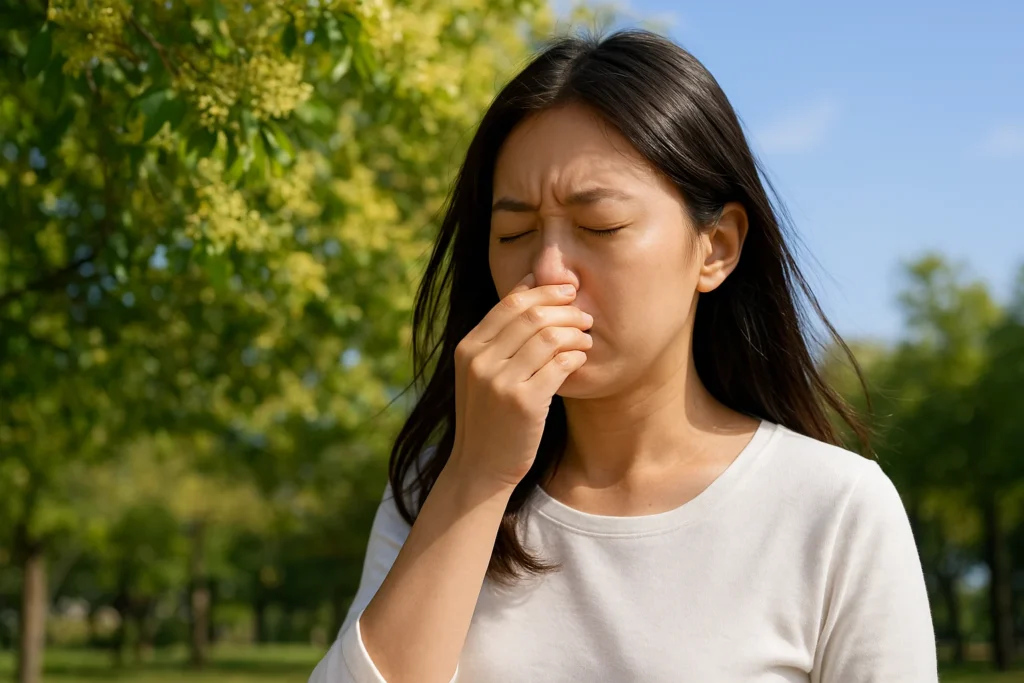

The Day the Air Turned to Venom: A Deep Dive into the Melbourne Catastrophe
The evening of Monday, November 21, 2016, in Melbourne, Australia, was far more than a sudden weather change; it was a devastating lesson in the intersection of climate, public health, and urban ecology. As a massive, fast-moving thunderstorm front barreled across the city just before 6:00 PM, it initiated an environmental sequence of events that swiftly turned the air toxic for thousands. The city’s emergency lines were instantly swamped by an unprecedented surge of calls from individuals—many with no prior history of asthma—gasping for breath. Within hours, hospital emergency departments saw a near 1,000% spike in presentations for acute respiratory distress, ultimately leading to the tragic and preventable deaths of 10 people.
This catastrophic event, known as thunderstorm asthma, exposed the terrifying potential of nature’s perfect storm. The lethal mechanism involved the microscopic transformation of common allergens. Typically, large grass pollen grains are too bulky to travel far down the human respiratory tract, being filtered out in the nose and upper airways. However, the unique atmospheric conditions of the approaching storm—strong winds, intense updrafts, and soaring humidity—collaborated in a deadly synergy. The wind swept up trillions of surface grass pollen particles, carrying them aloft into the clouds. There, the combination of high moisture and electric charge from the lightning caused the pollen grains to swell and then rupture, fragmenting them into hundreds of smaller, highly concentrated, respirable particles measuring less than 2.5 micrometers in diameter. The storm’s powerful downdrafts then blasted this invisible cloud of micro-allergens back down to ground level, where unsuspecting residents inhaled them deep into the delicate lower airways, triggering simultaneous, life-threatening bronchospasm.
This disaster was a horrifying premonition of a new, climate-accelerated reality where seasonal allergies are no longer a minor annoyance, but a growing, costly public health threat affecting nearly a third of the global population. The Melbourne event represented a fundamental shift in how we must think about respiratory health in a changing climate—where weather patterns and plant biology combine to create unprecedented health emergencies that can overwhelm even the most advanced medical systems.
The Chemical Catalyst and the Unending Season: How Climate Fuels Allergen Production
The Super-Fertilizer Driving Pollen Overload
While the world focuses on the temperature effects of global warming, the increasing concentration of atmospheric carbon dioxide is simultaneously acting as a powerful, invisible fertilizer for the planet’s most common allergenic plants. This effect is not theoretical; it is measurable and dramatic, fundamentally altering the quantity and potency of seasonal allergens.
Lewis Ziska, a professor of environmental health science at Columbia University, spearheaded seminal research demonstrating this link. His controlled experiments involving ragweed, a major autumnal allergen across North America, showed that when plants were grown in environments with elevated CO2 levels—mirroring future projections—their response was overwhelmingly proliferative. The ragweed plants exhibited enhanced growth, greater overall biomass, and, critically, produced significantly more pollen. In some studies, key allergenic species like grass produced 50% more pollen when exposed to future CO2 concentrations compared to current levels. Even long-lived trees, such as certain oak varieties, have been shown in controlled settings to generate over tenfold more pollen under conditions of elevated CO2. Furthermore, scientists speculate that the CO2 stress may alter the biochemical structure of the pollen itself, potentially yielding a “more allergenic form of the pollen,” capable of triggering stronger and more immediate immune responses.
The Phenomenological Shift: A Perpetual State of Allergy
Global warming is systematically eroding the temporal boundaries of allergy seasons, dissolving them into an increasingly contiguous period of respiratory distress. Rising average temperatures, particularly in early spring, trigger the phenological events of plants—such as bud break and pollination—significantly earlier in the year.
Long-term studies across the Northern Hemisphere confirm this unprecedented shift. Research published in 2022 projected that if current warming trends continue, the allergy season across large swaths of North America and Europe could potentially begin up to 40 days earlier and conclude 15 days later by the end of the century. This translates to an annual extension of nearly two full months, effectively creating a near year-round cycle of sensitization and symptoms for hay fever sufferers. The intensity of this shift is particularly pronounced in northern latitudes, where the ragweed pollen season has demonstrably lengthened by up to 25 days over the last two decades alone. This extended exposure window not only increases the duration of suffering but also enhances the likelihood of new allergic sensitization in previously unaffected individuals, thereby fueling the rise in global allergy prevalence, which is estimated to be affecting nearly 20-40% of the world’s population.
The Economic and Social Toll: Counting the Cost of a Chronic Sneeze
The Invisible Burden on Global Economies
The pollen crisis is far from a mere public health nuisance; it constitutes a massive and often underappreciated economic burden. The collective cost of allergic diseases, primarily driven by seasonal and perennial rhinitis, runs into billions of dollars globally, stemming from direct healthcare costs, medication, and, most significantly, lost productivity.
A recent analysis in Australia revealed that allergic diseases cost the nation an annual financial burden of $18.9 billion, a staggering increase from the $7.8 billion reported in 2007. Crucially, 80% of these financial costs were attributed to lost productivity—a combination of absenteeism (missing work) and presenteeism (working while impaired by symptoms like fatigue, poor concentration, and recurrent sneezing). Similar patterns are observed across Europe and Asia, where studies indicate that effective management of allergic rhinitis could save economies over €100 billion through reduced medical expenses and improved worker performance. The high prevalence of hay fever among teens and young adults—a key segment of the workforce and student population—magnifies this impact, creating a drag on educational attainment and economic output that lasts decades.
Japan’s Policy Pivot: From Forestry Mandate to Health Crisis
In Japan, the problem is so severe and widespread that the economic and social damage is impossible to ignore. A staggering 38.8% of the populace suffers specifically from cedar pollinosis. The crisis is rooted in a post-World War II national mandate that prioritized the rapid planting of fast-growing Japanese cedar and cypress trees for reconstruction materials. Decades later, as these massive forests matured (pollen production peaks in trees over 30 years old), they began releasing overwhelming, annual pollen plumes. With demand for domestic lumber declining and forests aging, the density and output of pollen increased exponentially, transforming a necessary post-war policy into a severe national health liability. The total annual economic loss, encompassing medical expenditures and productivity losses due to cedar hay fever, is estimated to exceed ¥286 billion.
In a testament to the severity of the situation, the government has committed to a radical 30-year plan to reduce scattered pollen by half. This requires a monumental national effort, including dramatically increasing annual logging targets to 70,000 hectares and, more critically, supporting the massive production of genetically modified, low- and non-pollen-producing cedar seedlings. The success of this long-term initiative hinges on sustained political will and significant financial investment to transition the nation’s forest management strategy from one based purely on timber yield to one focused on respiratory health.
The Urban Paradox: Reimagining Green Spaces for Respiratory Health
The Nuance of City Planning and Bio-Aerosols
The global movement to increase urban green space—a critical measure to combat the urban heat island effect, filter pollution, and enhance mental health—presents a complex dilemma in the context of aeroallergens. Research has repeatedly demonstrated that the relationship between urban greenery and respiratory health is not simply good or bad; it is highly species-dependent and location-specific.
In many historical urban planning models, cities favored male trees over female trees. Male trees produce pollen and no messy fruit or seeds, making them easier to maintain in public areas and on streets. This preference, however, unintentionally saturated the urban atmosphere with allergenic pollen from species like Plane trees, Cypress, and Poplar, creating “allergic deserts” within the urban core. Conversely, the presence of large, diverse forests within parks has been consistently associated with better respiratory outcomes, suggesting their pollutant-filtering benefits outweigh the localized pollen impact.
Designing Hypoallergenic Cities of the Future
Moving forward, the challenge for city planners is to adopt a pollen-aware urban design philosophy. This involves a crucial shift in landscape architecture:
- Prioritizing Female and Entomophilous Species: Actively favoring female trees (which produce seeds/fruit but no pollen) or entomophilous plants (those pollinated by insects, like most flowers and fruit trees, whose sticky pollen is too heavy to become airborne) over wind-pollinated, highly allergenic male species.
- Strategic Zoning: Implementing low-allergenicity vegetation zoning—creating wide green corridors or buffer zones planted with non-allergenic species to help reduce pollen concentration gradients near residential and high-traffic areas.
- The OPALS Scale: Utilizing objective tools, such as the Ogren Plant Allergy Scale, to scientifically rate the allergenic potential of every plant species used in public and private landscaping, thereby creating accountability for the respiratory impact of urban forestry choices.
By leveraging advanced ecological knowledge, cities can transform their green spaces from unintended allergen traps into true “comfort islands” that provide maximum environmental benefits with minimal respiratory risk.
The Looming Threat: Thunderstorm Asthma and Climate Extremes
The Perfect Confluence of Climate and Biology
The Melbourne event, while extreme, is scientifically predicted to increase in frequency and intensity as a function of climate change. The specific sequence of events required for thunderstorm asthma is directly facilitated by a warming planet:
- Increased Fuel Load: Longer and more intense pollen seasons ensure a massive available “fuel load” of aeroallergens at the ground level when a storm hits.
- Intensified Weather: Climate change is increasing the frequency and severity of extreme weather events, including the very type of rapid, high-intensity thunderstorms with strong downdrafts required to rupture pollen grains and blast them to the ground.
- Osmotic Shock: The phenomenon relies on the rapid change in humidity—the sudden shift from a dry, windy environment to intense moisture just before the rainfall—which causes the dry pollen grains to absorb water, swell, and burst due to osmotic pressure. The remaining tiny fragments, now aerosolized and deeply inhalable, become deadly.
The threat is not confined to Australia; similar events have been documented across diverse geographies, underscoring the universal vulnerability. As the climate destabilizes, a once-rare meteorological curiosity becomes a more probable public health emergency, demanding a robust, coordinated global response plan that integrates meteorological forecasting with immediate public health warnings.
The Human Dimension: Living in a World of Pollen
The Daily Struggle for Millions
Behind the statistics and economic figures lies the human reality of living with severe allergies. For millions worldwide, the changing pollen landscape means a fundamental restructuring of daily life during allergy seasons. The impact extends far beyond occasional sneezing or itchy eyes—it affects cognitive function, emotional well-being, and social interactions.
Many allergy sufferers describe experiencing “brain fog”—a noticeable decline in mental clarity, concentration, and memory during high-pollen periods. This cognitive impairment has been documented in studies showing slowed reaction times and reduced academic performance during peak allergy seasons. The sleep disruption caused by nighttime symptoms creates a cycle of fatigue that further compounds cognitive issues, affecting workplace performance and school achievement.
The social implications are equally significant. Many people with severe allergies avoid outdoor activities during peak seasons, missing social gatherings, children’s sports events, and simple pleasures like dining outdoors. This self-imposed isolation can lead to feelings of loneliness and depression, particularly when others dismiss their symptoms as minor inconveniences rather than recognizing them as a legitimate chronic health condition.
The Psychological Toll of Chronic Allergies
The persistent nature of modern allergy seasons creates a unique psychological burden. Unlike acute illnesses that resolve within days, allergy sufferers face months of continuous symptoms with no end in sight. This chronicity leads to what psychologists call “illness intrusion”—the ways in which a health condition interferes with various life domains.
The constant need to manage symptoms—taking medications, avoiding triggers, planning activities around pollen counts—creates a background level of stress that can escalate into anxiety, particularly for those who have experienced severe reactions or live in fear of thunderstorm asthma events. The visibility of symptoms like red, watery eyes and constant nose-blowing can also cause embarrassment and self-consciousness, especially for adolescents and young adults.
Innovations in Treatment and Management
Beyond Antihistamines: The New Frontier of Allergy Care
The growing severity of pollen allergies has spurred innovation in treatment approaches that move beyond traditional antihistamines. Immunotherapy, once limited to years of allergy shots, has evolved to include sublingual tablets and drops that can be administered at home. These treatments work by gradually desensitizing the immune system to specific allergens, offering long-term relief rather than just symptom management.
Recent advances in biologic medications have provided new options for people with severe, treatment-resistant allergies. These targeted therapies block specific immune pathways involved in allergic responses, offering relief for those who don’t respond to conventional treatments. While currently expensive and reserved for the most severe cases, these medications represent a promising direction for future allergy care.
Technology and Personal Monitoring
The digital revolution has transformed allergy management through smartphone apps that provide real-time pollen counts, personalized forecasts, and symptom tracking. These tools allow individuals to make informed decisions about daily activities and medication use based on predicted pollen levels in their specific location.
Wearable technology is emerging as another tool in allergy management. Smart masks with built-in air filters can provide protection while monitoring air quality, and wearable sensors can track physiological changes that might indicate an allergic reaction is imminent. These technologies empower individuals to take proactive steps to manage their symptoms rather than simply reacting to them.
Global Variations in Pollen Challenges
Regional Differences in Pollen Sources and Seasons
While the trend toward longer and more intense pollen seasons is global, the specific challenges vary by region based on local vegetation, climate patterns, and urban planning approaches. Understanding these regional variations is crucial for developing effective public health responses.
In North America, ragweed remains a primary culprit, with its season extending particularly in northern regions where warming temperatures have allowed it to thrive. In Europe, birch pollen has become increasingly problematic, with studies showing both higher concentrations and longer seasons across the continent. In Japan, as previously discussed, cedar and cypress pollen dominate the spring allergy season, creating a public health crisis of unique scale and severity.
Tropical and Developing Nations: An Emerging Concern
While much of the research on changing pollen patterns has focused on temperate regions, tropical and developing nations face their own unique challenges. Urbanization in these regions often outpaces thoughtful urban planning, leading to the planting of highly allergenic species for quick shade and ornamentation. Meanwhile, climate change is altering flowering patterns in tropical species that have not been well-studied for their allergenic potential.
The healthcare infrastructure in many developing nations is ill-equipped to handle a surge in allergy cases, with limited access to specialists and modern medications. This creates a potential for significant public health impacts as climate change continues to alter pollen patterns in these regions.
The Future of Pollen: Projections and Preparations
Climate Models and Pollen Forecasting
Scientists are increasingly incorporating pollen production into climate models, creating projections that can guide public health planning. These models suggest that without significant reductions in greenhouse gas emissions, pollen seasons will continue to lengthen and intensify throughout the 21st century.
The development of more sophisticated pollen forecasting systems represents a critical area of investment. By combining weather data, satellite observations of vegetation, and pollen concentration measurements, these systems could provide earlier and more accurate warnings of high-risk periods, potentially preventing events like the Melbourne thunderstorm asthma catastrophe.
Public Health Infrastructure for a Pollen-Rich Future
The growing pollen threat requires a rethinking of public health infrastructure and emergency preparedness. This includes developing specific protocols for thunderstorm asthma events, ensuring adequate stockpiles of emergency medications, and training healthcare providers to recognize and manage severe allergic reactions.
Public education campaigns are equally important, helping people understand their allergy risks and appropriate preventive measures. Schools and workplaces need policies that accommodate individuals with severe allergies, particularly during high-risk periods. These might include allowing remote work or study options on days with extreme pollen counts or during thunderstorm asthma warnings.
Conclusion: A Global Health Imperative
The escalating global pollen crisis represents one of the most personal, pervasive, and economically damaging consequences of a changing climate. It is a complex tapestry woven from rising CO2 emissions that act as a plant super-fertilizer, warming temperatures that blur the lines of our seasons, and historically flawed urban planning that has prioritized aesthetics and maintenance over respiratory safety.
The solution requires a holistic, multi-layered commitment from individuals, municipal governments, and international bodies:
- Individual Resilience: Adopting strict personal protective measures, engaging in proactive medication strategies, and utilizing modern treatments like immunotherapy to build long-term tolerance.
- Scientific and Policy Innovation: Driving the next generation of pollen-free agriculture (as seen with Japan’s cedar program) and mandating hypoallergenic urban planning that designs green spaces for health, not just for heat mitigation.
- Root Cause Climate Action: Acknowledging that the ultimate, long-term relief from pollen overload is dependent on aggressively reducing the greenhouse gas emissions that are simultaneously creating more pollen and driving the extreme weather that weaponizes it.
The fight against the unseen storm is fundamentally a fight for clean air and the right to breathe easily. By integrating ecological science, urban design, and public health policy, we can work towards a future where human civilization and the natural world coexist without compromising the daily health of billions. The path forward requires recognizing that the quality of the air we breathe is inextricably linked to the health of our planet—and that protecting both is essential for our collective future.



Your point of view caught my eye and was very interesting. Thanks. I have a question for you.
Thanks for sharing. I read many of your blog posts, cool, your blog is very good.
**mitolyn reviews**
Mitolyn is a carefully developed, plant-based formula created to help support metabolic efficiency and encourage healthy, lasting weight management.
Your article helped me a lot, is there any more related content? Thanks!
Thank you for your sharing. I am worried that I lack creative ideas. It is your article that makes me full of hope. Thank you. But, I have a question, can you help me?