
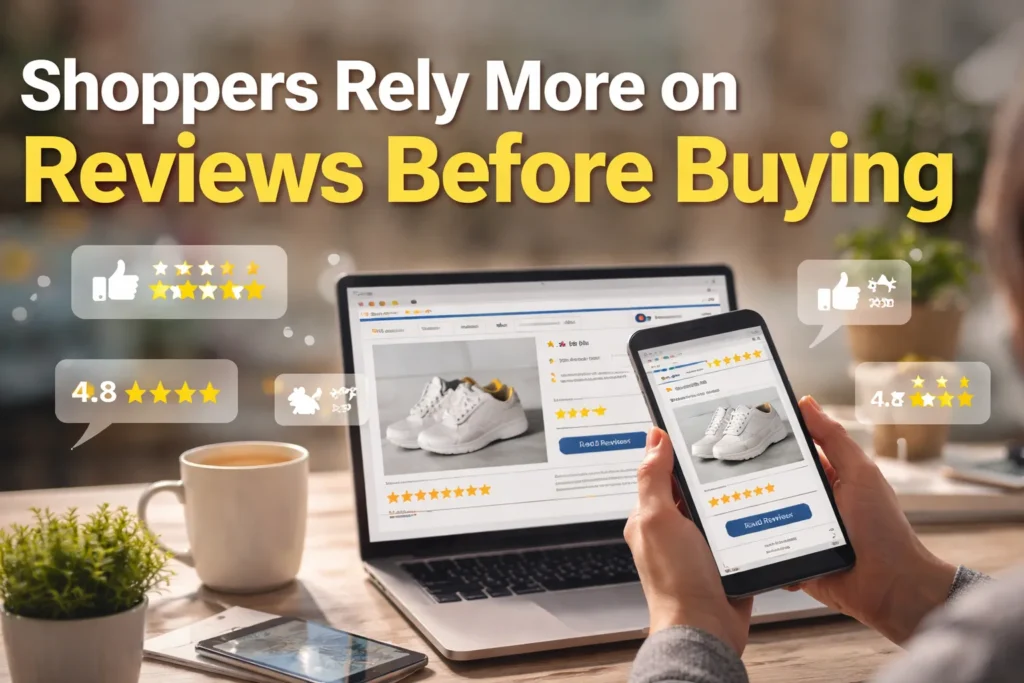

Part One: The Modern Shopping Ritual
The clock on Sarah’s kitchen wall reads 9:47 PM. She’s sitting at her small dining table, laptop open, a half-empty mug of tea growing cold beside her. Outside her apartment window, the lights of Austin twinkle against the night sky, but Sarah isn’t looking at the view. She’s on a mission.
For the past three months, she’s been tripping over her ancient vacuum cleaner. It’s a hand-me-down from her mother, a clunky machine that sounds like a dying airplane and hasn’t picked up much of anything in years. Every time she runs it, she ends up on her hands and knees with a dustpan anyway. Her golden retriever, Cooper, watches from his dog bed with what she swears is amusement.
Tonight is the night. She’s finally saved up enough. She types into the search bar: “robot vacuum for pet hair.”
In less than a second, her screen fills with options. Dozens of sleek, round machines stare back at her. They all promise the same things. Powerful suction. Smart navigation. Tangle-free brushes. Long battery life. They all have photos of perfectly clean hardwood floors. They all have similar prices, ranging from $250 to $600.
Sarah stares at the wall of choices. Her cursor hovers over one, then another, then back to the first. Her shoulders slump slightly. She’s experiencing something that happens to billions of people every single day: decision paralysis.
She doesn’t know which one to pick. The brands are all unfamiliar. The feature lists read like they were written by robots for other robots. “Quad-core cyclone suction technology.” “Advanced gyroscopic navigation system.” What do any of those words actually mean for her floors and Cooper’s fur?
So Sarah does what nearly every human on earth now does when faced with this problem. She doesn’t look at the brand’s claims. She scrolls right past the professional product photos. She ignores the promotional videos.
She scrolls down to the reviews.
This moment, right here, is the most important moment in all of modern commerce. It’s the moment when the voice of the crowd drowns out the voice of the corporation. It’s the moment when real people, with their real stories and real messes and real disappointments, take over the conversation.
Sarah doesn’t know it yet, but she’s about to spend the next hour reading stories from strangers. She’ll read about a woman in Ohio whose robot vacuum saved her sanity during puppy potty training. She’ll read about a man in Seattle whose vacuum got stuck under his couch so often he wrote a hilarious one-star review that made her laugh out loud. She’ll read about a family in Florida whose vacuum died after three months, and she’ll see how the company responded.
By the time she makes her choice, she won’t just know the product’s features. She’ll feel like she knows the product’s life story. And that feeling, that sense of knowing what she’s really getting into, is the only thing that will finally let her click that “buy” button.
This is the world we all live in now. This is the age of total transparency, where the customer isn’t just king—they’re the lead salesperson, the quality control manager, and the storyteller, all rolled into one.
Part Two: The Deep History of Word of Mouth
Before we go further into Sarah’s story, it’s worth understanding how we got here. Humans have always relied on word of mouth. For thousands of years, if you wanted to know which blacksmith made the best horseshoes or which baker had the freshest bread, you asked your neighbors. You trusted the people in your community because you knew them. Their reputation was tied to their words.
That system worked well for small communities. But as cities grew and commerce expanded, word of mouth became harder to trust. You couldn’t know everyone. You couldn’t verify every recommendation. You had to rely on signs and advertising and the promises of strangers trying to sell you things.
For most of the twentieth century, advertising ruled. Companies controlled the message. They told you what was good, and you either believed them or you didn’t. There was no easy way to check. If you wanted to know whether a vacuum cleaner actually picked up pet hair, you had to buy it and find out for yourself.
The internet changed everything. Suddenly, strangers could talk to each other. They could share experiences. They could warn each other about bad products and celebrate good ones. The balance of power shifted from the companies to the customers.
Early internet reviews were chaotic. They appeared on forums and personal websites and early commerce sites. There was no system, no standardization, no easy way to find them. But the seed was planted. People wanted to share their experiences, and other people wanted to read them.
Then came the review platforms. Amazon made reviews central to the shopping experience. Yelp organized reviews for local businesses. TripAdvisor did the same for travel. Google integrated reviews into search results. Suddenly, reviews were everywhere, standardized, searchable, and impossible to ignore.
Today, reviews are as fundamental to commerce as price. You can’t separate them. They’re built into every platform, every search, every shopping experience. They’re the first thing we look for and the last thing we check before we buy.
Sarah, sitting at her table in Austin, is part of a tradition that goes back thousands of years. She’s asking her neighbors for advice. It’s just that her neighbors now include millions of people she’s never met, and their advice is available instantly, any time of day or night.
Part Three: The Psychology of Trust
Why do we trust strangers on the internet more than we trust companies? The answer lies in basic human psychology.
When a company tells you their product is great, you know they have a motive. They want your money. Their praise is expected, required, and therefore meaningless. It’s like asking someone at a party if they’re having a good time. Of course they’ll say yes. What else would they say?
When a stranger tells you a product is great, they have no motive. They don’t benefit from your purchase. They’re not getting paid. They’re just sharing their experience. Their praise is voluntary, unexpected, and therefore meaningful. It’s like overhearing someone at a party say they’re having a great time when they don’t know you’re listening. That’s the truth.
This is the fundamental psychology of reviews. We trust them because they’re disinterested. The reviewer gains nothing from our decision. Their only incentive is to be helpful or to vent. Both of those incentives lead to honesty.
There’s another layer to the psychology. We’re social animals. We’re wired to learn from each other. When we see that many people have had a similar experience, we assume that experience is likely to be true for us too. This is called social proof, and it’s one of the most powerful forces in human behavior.
If you see a restaurant with a long line, you assume the food is good. If you see a product with hundreds of positive reviews, you assume it works. You don’t need to test it yourself. The crowd has tested it for you.
This is why reviews are so effective. They tap into deep psychological needs. We want to make good decisions. We want to avoid risk. We want to belong to the group that makes smart choices. Reviews help us do all of these things.
Sarah feels this psychology working on her as she reads. Each positive review reduces her anxiety. Each photo confirms what others have said. Each consistent complaint helps her set realistic expectations. By the time she’s done, she feels like she knows the product intimately. The risk of buying feels small because so many others have already taken that risk and reported back.
Part Four: The Numbers That Explain Everything
Let’s step back from Sarah’s story for a moment and look at the big picture. The numbers behind this behavior are staggering. They tell us that Sarah is not unusual. She’s not overly cautious or strangely obsessed with strangers’ opinions. She’s perfectly normal.
Recent comprehensive surveys have confirmed something that would have seemed strange twenty years ago. A staggering 97 percent of consumers now read online reviews before they buy anything. Think about that number for a long moment. It’s not fifty percent. It’s not seventy percent. It’s not even ninety percent. It’s ninety-seven percent.
This means that out of every hundred people walking into a store or loading a website, only three are willing to make a decision without consulting the crowd first. Only three are willing to trust the brand’s word alone. The other ninety-seven want to hear from people like them.
This isn’t just a habit for young people who grew up with smartphones in their hands. It cuts across every age group, every income level, every corner of the country. Your grandmother is probably reading reviews for her new blender. Your teenage nephew is definitely reading reviews for his video games. Your boss is reading reviews before picking a restaurant for the team lunch.
The only thing that changes is what they’re reading reviews about. For some, it’s local services. For others, it’s big-ticket items. For everyone, it’s everything.
Consider this: when people are buying something from a brand they’ve never tried before, the reliance on reviews gets even stronger. Research shows that 96 percent of consumers check reviews before buying something new to them. That number is basically the same as the overall number. It doesn’t matter if it’s a brand you know or a brand you’ve never heard of. You’re still going to check what other people say.
Think about the last time you walked into a physical store for something important. Maybe it was a new television. Maybe it was a power tool. What’s the first thing you probably did when you got to the aisle? You pulled out your phone. You looked up the model number. You read the reviews right there, standing in the store, holding the box in your hands.
We’ve reached a point where we trust complete strangers on the internet more than we trust the company trying to sell us something. And when you think about it, that makes perfect sense. The company has one goal: to sell you that product. The stranger who bought it last week has no goal at all except maybe to warn you or to brag a little. Their incentive is aligned with yours. They want the truth, and they’re sharing it.
This is the foundation of everything that follows. Once you understand that ninety-seven out of one hundred shoppers are reading reviews, you start to see the entire marketplace differently. Every product page becomes a conversation. Every business becomes a reputation. Every customer becomes a reporter.
Part Five: The Star Rating Shortcut
Sarah, still scrolling through robot vacuums, does something instinctive. She barely thinks about it. Her cursor moves to the left side of the screen, and she clicks a small checkbox.
It says: “Four Stars and Up.”
In that single click, she has eliminated perhaps half of her options. She hasn’t read a single word about those products. She doesn’t know their features or their prices. All she knows is that the crowd has judged them, and the crowd found them wanting.
Star ratings are the gatekeepers of modern commerce. They are the quick visual shorthand that tells us whether something is worth our time. In a world of infinite choices, the star rating is the first filter. It’s the bouncer at the club door, deciding who gets in and who has to wait outside.
But here’s where it gets interesting. We’ve become rating snobs over the years, and our standards keep getting higher. It used to be that a four-star product was considered pretty good. Not perfect, but solid. Worth a look. Those days are gone.
Recent data shows that a whopping 72 percent of shoppers will not consider a product that has an average rating below four stars. Think about what that means. A product with 3.8 stars might be excellent in many ways. It might be the best value for the money. It might have features that nothing else in its price range offers. But to 72 percent of shoppers, that 3.8 might as well be a warning label.
The threshold has moved even higher for many of us. Nearly a third of consumers, 31 percent, now say they refuse to buy anything rated below four and a half stars. The range of acceptable products has narrowed to a tiny sliver at the very top. Anything less than near-perfection is suspect.
This creates a strange pressure on businesses. A 4.2-star average, which would have been excellent a decade ago, now looks mediocre. It triggers suspicion. What’s wrong with it? Why do so many people think it’s just okay? The psychology of the crowd becomes a force that pushes everyone toward either triumph or failure. There’s very little room in the middle anymore.
But here is the paradox that every experienced shopper understands. While we demand these high ratings, we’re also wise to the fact that a perfect score can be misleading. We know that a product with five stars but only three reviews is basically untested. Three people liked it. So what? That’s not a crowd. That’s a handful.
And a product with a perfect score and thousands of reviews? That triggers a different kind of suspicion. Is it too good to be true? Are the reviews real? Did the company do something shady to clean up their rating? We’ve all heard stories about companies deleting negative reviews or paying for positive ones. A perfect record starts to look like a red flag.
This is why only a tiny fraction of us, just 15 percent, actually trust a star rating on its own. We see the stars as the headline, the attention-grabber. But we demand to read the full story before we commit. The stars get our attention, but the words seal the deal.
Sarah, sitting at her table in Austin, understands this instinctively. She’s filtered for four stars and up, but now she’s looking at a product with a solid 4.6 rating. That’s good. That passes the first test. But she’s not about to buy it based on that number alone. She needs to know why it’s 4.6. She needs to hear from the people who gave it five stars and the people who gave it three. She needs to understand the story behind the score.
Part Six: The Deep Dive Into Written Words
The stars got Sarah’s attention. The 4.6 rating made her click on one particular vacuum. But now the real work begins.
She starts scrolling through the written reviews. At first, she just skims. “Works great.” “Love this thing.” “Good value.” These are fine, but they don’t tell her much. They’re the review equivalent of background noise.
Then she starts scanning for specific words. She’s looking for “golden retriever.” She’s looking for “pet hair.” She’s looking for “tangles” and “brush roll” and “hardwood floors.” She’s building a custom filter in her mind, searching for people whose situation matches hers.
And then she finds it. A review from someone named Mike in Colorado. It has a five-star rating and a photo attached. She clicks to expand it.
“I have two golden retrievers and this thing is a lifesaver. The brushroll didn’t tangle once. I ran it three times the first day just to see how much it would pick up, and the bin was completely full each time. My floors have never been cleaner. The mapping feature actually works—it learned my floor plan after two runs and now does a perfect pattern every time. Cooper, my dog, was scared of it for about a day. Now he just ignores it. If you have shedding dogs, buy this vacuum.”
Sarah feels something shift inside her. Mike’s situation matches hers exactly. Two golden retrievers. Hardwood floors. A scared dog that got over it. This isn’t a generic review. This is a story about her life, written by a stranger who lived it first.
This is the power of the written word in the age of reviews. We aren’t just looking for confirmation that a product works. We’re looking for evidence that it works for us. We’re looking for someone who shares our specific problems, our specific circumstances, our specific needs.
The data backs this up. Written feedback is valued by 43 percent of shoppers as the most important type of review. But even more powerful than plain text are the reviews that include photos or videos. A full 34 percent of consumers say that visual proof is the most impactful format.
Why? Because photos and videos are harder to fake. They show the product in a real environment, not a studio. They show the dust in the bin, the fur on the floor, the size compared to a human hand. They provide evidence that words alone cannot convey.
Sarah scrolls past Mike’s review and finds another one with photos. This one shows the vacuum’s dustbin after a single run in a house with two cats. The bin is packed with gray fur. The photo is slightly blurry and badly lit, which actually makes it more convincing. It’s clearly a real person in a real house, not a professional photographer.
This is what authenticity looks like in the review economy. It’s not polished. It’s not perfect. It’s real.
Part Seven: The Different Types of Review Readers
Not everyone reads reviews the same way. Sarah’s approach is thorough and methodical, but other people have different styles. Understanding these differences helps explain why reviews are so universally important.
Some people are skimmers. They glance at the star rating, read the first few reviews, and make a decision in under a minute. They’re not looking for deep analysis. They just want confirmation that the product isn’t terrible. These are the people who rely most heavily on the star rating and the sheer number of reviews.
Some people are deep divers like Sarah. They read dozens of reviews. They search for specific keywords. They compare experiences across multiple platforms. They want to understand the product completely before they commit. These are the people who write their own reviews afterward, adding to the collective knowledge.
Some people are skeptics. They go straight to the lowest ratings first. They want to know what could go wrong. They read the one-star reviews carefully, looking for patterns. If the complaints are about things that don’t matter to them, they feel reassured. If the complaints are about deal-breakers, they move on.
Some people are visual seekers. They filter for reviews with photos and videos. They want to see the product in action before they read a single word. For them, a picture really is worth a thousand reviews.
Some people are recentists. They sort by newest first and only read reviews from the past week or month. They don’t care what people thought six months ago. They want to know what people think right now.
Some people are comparers. They open multiple tabs and read reviews for several products at once. They’re building a comparison matrix in their minds, weighing the pros and cons of each option based on what reviewers say.
All of these approaches are valid. All of them lead to the same place: a decision based on the experiences of others. The style may differ, but the reliance on reviews is the same.
Sarah is a deep diver and a keyword searcher. She’s also becoming a comparer as she starts looking at a second vacuum model that caught her eye. Her approach takes time, but it gives her confidence. By the time she’s done, she’ll know more about robot vacuums than she ever expected to learn.
Part Eight: The Shadow World of Fake Reviews
As Sarah reads deeper into the reviews, she starts to notice something. A cluster of five-star reviews all use very similar language. They all say “great product” and “highly recommended” and “excellent value.” They don’t mention specific features. They don’t mention dogs or carpets or battery life. They’re vague and generic.
Her internal alarm bell rings softly. She’s been shopping online long enough to recognize the pattern. These might be fake.
The rise of fake, paid-for, and AI-generated reviews is the biggest threat to the entire review system. It’s a shadow industry that has grown up alongside legitimate feedback, and it’s getting more sophisticated every year. Companies that want to cheat the system can now buy hundreds of five-star reviews for a few hundred dollars. They can use AI to generate unique-sounding text that avoids the duplicate detection algorithms. They can post fake negative reviews about their competitors.
You’ve probably felt this yourself. You’re reading reviews for a product, and something feels wrong. The language is too formal. It sounds like it was written by a marketing robot. It praises the product in vague terms without ever describing a specific experience. It might even include strange phrases that don’t sound like how real people talk.
You’re not alone in your suspicion. A massive 72 percent of consumers say that if they even suspect a review is AI-generated or fake, their trust in that business plummets. The mere suspicion is enough to poison the well. Once you think a company is cheating, you assume all their reviews might be fake. You walk away.
We are all becoming amateur detectives, scanning reviews for clues of inauthenticity. We look for verified purchase badges. We check the dates to see if a bunch of five-star reviews appeared all at once. We read the one-star reviews to see what the real problems might be. We’re building a complete picture, and we’re wary of anything that looks too perfect.
This skepticism is well-founded. A fascinating field experiment conducted with a real e-commerce seller revealed the dangers of manipulating reviews. The seller offered customers cash-back rewards in exchange for favorable reviews. On the surface, this seems like a smart strategy. Get people to say nice things, pay them a little, and watch your ratings climb.
But it backfired spectacularly. Even though people took the money and wrote the positive reviews, the act of being asked to fake it damaged their trust in the seller. Their likelihood of repurchasing from that seller dropped by a staggering 20.3 percent. The attempted shortcut to building a reputation actually destroyed long-term customer loyalty.
Think about what that means. The people who were paid to write positive reviews actually ended up liking the company less because they were asked to lie. The strategy didn’t just fail to build trust. It actively destroyed it.
This is why the phrase “verified purchase” has become one of the most powerful trust signals on the internet. Eighty-three percent of shoppers say that seeing that “verified” badge heavily influences their decision. It’s proof that the review came from someone who actually spent their own money. It’s the gold standard of online proof, the closest thing we have to a guarantee of authenticity.
Sarah notices that Mike’s review has the verified purchase badge. The suspicious cluster of generic reviews? Most of them don’t. That’s another data point in her mental calculation. She trusts Mike. She’s skeptical of the others.
Part Nine: How Companies Fight Fake Reviews
The platforms that host reviews are fighting back against the fake review industry. It’s an arms race, with each side getting more sophisticated over time.
Amazon uses artificial intelligence to detect suspicious patterns. If a product gets a sudden flood of five-star reviews from accounts that have never reviewed anything else, the system flags them. If the same IP address posts multiple reviews for the same product, the system flags them. If review language matches known templates used by paid review services, the system flags them.
Google uses similar technology for local business reviews. They look for patterns that suggest manipulation. They also allow business owners to flag suspicious reviews for manual review. It’s not perfect, but it helps.
Yelp has perhaps the most aggressive approach. Their recommendation software automatically filters reviews it considers less reliable. These filtered reviews are still visible if you look for them, but they don’t count toward the overall star rating. This system has been controversial, but it’s designed to prioritize authentic voices.
Some platforms are experimenting with blockchain technology to create immutable review records. Once a review is written, it cannot be changed or deleted. This would make manipulation much harder, though it’s still in early stages.
Despite these efforts, fake reviews remain a problem. The financial incentive is too strong. A few hundred dollars spent on fake reviews can generate thousands of dollars in sales. Until the penalties are severe enough to outweigh the benefits, the fake review industry will continue to exist.
This is why consumer vigilance matters. The more we learn to spot fakes, the less effective they become. The more we value verified purchases and detailed experiences, the more we reward authentic reviewers. We have power in this system too. We’re not just victims of manipulation. We’re participants who can choose where to place our trust.
Sarah, without realizing it, is part of this fight. Her skepticism protects her from bad decisions. Her willingness to read deeply rewards companies that earn their ratings honestly. When she eventually writes her own review, she’ll add to the authentic voice of the crowd.
Part Ten: The Power of Visual Evidence
Sarah clicks on the photo attached to Mike’s review. It expands to fill her screen. The photo shows a golden retriever lying on a hardwood floor, looking mildly annoyed at the robot vacuum parked nearby. The floor is clean. Really clean. You can see the reflection of the room in the wood.
This single image does more to convince Sarah than any amount of text could. She can see the dog. She can see the floor. She can see the vacuum. It’s all real. It’s all right there.
The human brain processes visual information sixty thousand times faster than text. We are wired to trust our eyes in a way that we can never quite trust words. This is why visual reviews have become so powerful in the shopping journey.
According to recent surveys, 29 percent of consumers now say video reviews are the most impactful format. This number has been climbing steadily as platforms like YouTube, TikTok, and Instagram have become primary search engines for shoppers. People don’t just want to read about a product. They want to see it in action.
Think about the last time you searched for something like “how to use a robot vacuum” or “best vacuum for pet hair review.” You probably watched a video. You wanted to see someone unbox it, set it up, run it, and show you the results. You wanted to hear their voice, see their facial expressions, and judge their sincerity for yourself.
Video reviews provide a level of authenticity that text alone cannot match. It’s much harder to fake a video. It requires time, effort, and equipment. The person’s face is right there. Their tone of voice is right there. You can tell if they’re genuinely excited or just reading a script.
For products that are complicated, visual, or size-dependent, video reviews are becoming essential. Clothing reviews with video show you how the fabric moves and fits. Tool reviews with video show you how the product performs under real conditions. Food product reviews with video show you what the item actually looks like when it comes out of the package.
Sarah scrolls past the photos and finds a video review. It’s short, maybe two minutes long. A woman in her kitchen is showing the robot vacuum navigating around her island. She runs it, then shows the full dustbin. She laughs when the vacuum bumps into her dog’s food bowl. She seems real. She seems honest. Sarah watches the whole thing.
By the time the video ends, Sarah has essentially seen the product in action. She knows how it moves, how it sounds, how much it picks up. She’s gotten a demo without leaving her chair. This is the future of reviews, and it’s already here.
Part Eleven: The Importance of Recent Experiences
Sarah is about to make her decision when she notices something. The review from Mike in Colorado is from eleven months ago. The video review is from eight months ago. They’re both positive, both detailed, both helpful. But they’re also old.
A thought crosses her mind: Has anything changed since then? Has the company changed the design? Has the quality gone down? Have they started using cheaper materials?
This is the question that haunts every serious review reader. We know that products change over time. Companies cut costs. Manufacturing moves to different factories. Quality control slips. A review from two years ago might describe a completely different product than the one being sold today.
This is why 74 percent of consumers say they only care about reviews written in the last three months. The recent past is all that matters. Anything older than that is suspect, possibly irrelevant, definitely less trustworthy.
For some shoppers, the window is even narrower. Nearly a third of us, 32 percent, won’t trust a review unless it was written within the last two weeks. That’s an incredibly short window, but it makes sense. We want to know what’s happening right now. We want to know about the experience of someone who bought the product yesterday, received it today, and is sharing their first impressions while they’re still fresh.
A product with a ton of old reviews feels stagnant. It’s like a restaurant that was great in 2019 but might be serving frozen food today. You wouldn’t trust a five-year-old review of a restaurant, so why would you trust a five-year-old review of a vacuum cleaner?
Sarah changes her sorting filter. Instead of “top reviews,” she selects “most recent.” Now she’s seeing feedback from the past few weeks. A review from three days ago catches her eye.
“Just got this yesterday. Set it up in about five minutes. Ran it once and it picked up a full bin of fur from my lab mix. So far so good. Will update if anything changes.”
That’s what she needed. A fresh data point. Someone who just went through the experience she’s about to have. The product still works. The setup is still easy. The company is still shipping the same quality.
She feels her resistance melting away. The combination of detailed old reviews, visual evidence, and recent confirmation has built a complete picture. She knows what she’s getting.
Part Twelve: The Seasonal Nature of Reviews
Reviews also have seasonal patterns that smart shoppers understand. A product might get different reviews at different times of year, and knowing this can help you interpret what you’re reading.
For example, air conditioners get the most reviews in summer. People buy them when it’s hot, install them immediately, and write reviews based on that first experience. Those reviews might be glowing because the relief from heat is so immediate. But they won’t tell you how the unit performs after a year of use.
Heaters get the most reviews in winter. Same pattern. The urgency of being cold drives purchases and reviews, but long-term durability remains unknown.
Outdoor equipment gets reviewed heavily in spring and summer. People are excited to use their new gear in good weather. You won’t learn much about how it holds up in rain or snow from those seasonal reviews.
Gift items get a flood of reviews in December and January. People buy them as presents, then review them right after the holidays. These reviews capture first impressions but not long-term satisfaction.
Smart shoppers adjust for seasonality. If you’re buying an air conditioner in January, you might need to rely on reviews from the previous summer. You’ll have to assume that if it worked well then, it probably still works well now. But you’ll also want to check for recent reviews that might indicate changes in quality or design.
Sarah is buying her vacuum in October, which is a neutral time for home cleaning products. The reviews she’s reading span all seasons, which gives her a balanced view. She sees how the vacuum performs in summer when dogs are shedding more, and in winter when floors are tracked with snow and salt. This full-year view is actually better than a seasonal snapshot.
Part Thirteen: The Comparison Game
Before she clicks buy, Sarah does one more thing. She opens a new tab. She searches for the same vacuum model on two other websites. She wants to see if the reviews are consistent across platforms.
This is standard practice now. We’ve become multi-platform shoppers, building cases across multiple sources before we commit. Fifty-three percent of us say we always or often compare the same product across different websites and marketplaces before buying.
We might check Amazon, then the brand’s own website, then a specialty retailer, then YouTube. We’re looking for consistency. If a product has great reviews on Amazon but terrible reviews on the brand’s site, something is wrong. If the complaints on one platform don’t appear on another, something is suspicious.
Sarah finds the same vacuum on a home goods website. The reviews there are slightly fewer, but they’re consistent with what she saw on the main site. People mention pet hair. People mention the mapping feature. People mention the easy setup. The complaints match too—a few people mention that it’s loud, which she already knows from the other reviews.
This consistency is the final piece of evidence. It confirms that the reviews aren’t just concentrated on one platform where the company might be manipulating them. They’re spread across the internet, telling the same story.
This is why the total number of reviews matters, too. A business needs a critical mass of feedback to be considered credible. For many shoppers, a handful of reviews isn’t enough. Forty-seven percent of consumers say they won’t use a business that has fewer than twenty reviews. It’s not about reading all twenty. It’s about the psychological comfort of knowing that a decent-sized group of people have tested the waters and survived.
Sarah’s vacuum has over five hundred reviews across multiple platforms. That’s more than enough. The crowd has spoken, and the crowd is large enough to trust.
Part Fourteen: The Problem of Too Many Choices
Let’s step back again and consider why reviews have become so essential. It’s not just that we don’t trust companies. It’s that we’re drowning in options.
Have you ever searched for something simple, like a white t-shirt or a set of kitchen knives? The results can be overwhelming. Page after page of products that look almost identical. The same stock photos. The same feature lists written in the same marketing language. The same prices, or close enough that price doesn’t help you decide.
In these moments, choice actually becomes a burden. Psychologists call this “choice overload.” When we have too many options, we freeze. We can’t decide. We walk away. We buy nothing.
This happens constantly in online shopping. Fifty-one percent of shoppers say they struggle to choose between products that look too similar. When everything blurs together, the only thing that can break the tie is social proof. The reviews become the product. They are the only thing that distinguishes one seemingly identical item from another.
Imagine two white t-shirts. Same price. Same fabric blend. Same basic design. The only difference is that one has 4.8 stars with two hundred reviews, and the other has 4.2 stars with twelve reviews. Which one are you buying? The answer is obvious. The reviews have made the decision for you.
This is why reviews are not just helpful but essential in crowded markets. They provide the differentiation that the products themselves lack. They tell you which white t-shirt actually holds its shape after washing, which one doesn’t shrink, which one feels soft against your skin. The product page can’t tell you these things because every product page makes the same claims. Only the reviews can deliver the truth.
Sarah faced this same problem with robot vacuums. Dozens of round machines, all promising the same things. Without reviews, she would have been guessing. With reviews, she’s making an informed decision based on the experiences of people like her.
Part Fifteen: Learning to Love the Bad Review
Sarah notices something else as she reads. Not all the reviews are positive. In fact, there’s a whole section of one-star and two-star reviews. She clicks on them, curious.
One person complains that the vacuum got stuck under their couch every single time. Another person says it stopped working after three months. A third person says the app is confusing and hard to set up.
Any business owner would dread seeing these reviews. But for Sarah, they’re actually helpful. They give her the complete picture. She learns that if she buys this vacuum, she might need to block off the space under her couch. She learns that the warranty is important because some units fail early. She learns that the app setup might require some patience.
This is the strange truth about negative reviews. We’ve all become smart enough to know that no product is perfect for everyone. A product can be the best in the world, and someone will buy the wrong size, receive a damaged box, or just have a bad day and take it out in a review.
A perfect five-star record with hundreds of reviews can actually look suspicious. Where are the crazy people? Where are the shipping complaints? Where are the people who just didn’t read the instructions? A mix of reviews, including some negative ones, adds a layer of authenticity that a perfect score can’t buy. It proves the reviews are real.
What really matters to shoppers is how the business handles the bad news. Eighty percent of consumers say that negative reviews can create a poor first impression, but that impression can be fixed. The key is response.
Sarah scrolls through the negative reviews and looks for responses from the company. On one review complaining about the vacuum getting stuck, the company responded within a day. They apologized for the frustration, explained that the vacuum needs a certain clearance height, and offered a partial refund. On another review about a unit that stopped working, the company responded with instructions for warranty service and a sincere apology.
This matters. Thirty-seven percent of shoppers say that a business owner responding to reviews is a key factor in building their trust. A negative review that gets a helpful, professional response actually becomes a positive signal. It shows the company is listening. It shows they care. It shows they’ll be there if something goes wrong.
Ultimately, what shoppers value most is consistency. The single most important factor, rated by 56 percent of consumers, is that a review is backed up by other reviews with similar sentiment. If three people mention that a vacuum is loud, you believe it. If ten people mention that it gets stuck under low furniture, you plan for it. We aren’t looking for perfection. We’re looking for a predictable, honest picture of what we’re about to buy.
Sarah sees that multiple reviews mention the vacuum is loud. That’s consistent. Multiple reviews mention the excellent pet hair pickup. That’s also consistent. The negative reviews cluster around a few specific issues, and the positive reviews cluster around a few specific strengths. The picture is clear. She knows what she’s getting.
Part Sixteen: The Local Business Difference
Sarah’s shopping journey has been about a product, but the same principles apply to local services. In fact, for local businesses, reviews are even more critical.
When you need a plumber, a dentist, a restaurant, or a hair stylist, you don’t have the luxury of trying out ten different options. You need to make the right choice on the first try. Reviews are how you do it.
Think about the last time you needed a plumber. Your water heater was leaking. You needed someone fast. What did you do? You pulled out your phone and searched for “plumbers near me.” Then you looked at the results with the highest ratings and the most reviews. You probably read a few to confirm they showed up on time and charged fair prices. Then you made the call.
Local businesses live and die by their online reputations. A plumber with 4.9 stars and one hundred reviews will get calls all day long. A plumber with 3.5 stars and five reviews will sit by the phone waiting.
The stakes are even higher for local businesses because the reviews are so personal. They’re not just about a product’s features. They’re about someone’s experience in your establishment, with your employees, in your space. A bad review about a rude waiter or a dirty bathroom can cost you customers for years.
This is why local business owners need to be obsessed with their online reputations. They need to ask every happy customer to leave a review. They need to respond to every review, good and bad. They need to monitor multiple platforms—Google, Yelp, Facebook, industry-specific sites—because customers are looking everywhere.
The numbers back this up. Forty-seven percent of consumers say they won’t use a business that has fewer than twenty reviews. For local businesses, that twenty-review threshold is the minimum ticket to entry. Below that, you’re invisible to nearly half your potential customers.
Sarah thinks about her own habits with local businesses. She never picks a restaurant without checking reviews first. She never hires a service without reading what previous customers said. She’s just as reliant on reviews for local services as she is for products. Probably more so, because the stakes are higher. A bad meal is disappointing. A bad plumber can flood your house.
Part Seventeen: Reviews for Big Ticket Items
The stakes get even higher when you’re buying something expensive. A vacuum cleaner is one thing. A car, a house, or a major renovation is something else entirely.
For big ticket items, the review process becomes more intense. People spend days or weeks reading everything they can find. They don’t just read product reviews. They read forum discussions, watch YouTube videos, join Facebook groups, and talk to owners directly.
Car buyers, for example, often spend hours researching before they visit a dealership. They read reviews of different models, comparing reliability ratings and common problems. They read reviews of local dealerships, looking for ones with good service departments. They watch video reviews from automotive journalists and ordinary owners. By the time they walk onto the lot, they often know more about the cars than the salespeople do.
Home buyers face an even more complex review landscape. They research neighborhoods, schools, builders, and real estate agents. They read reviews from current residents. They check crime statistics and school ratings. They’re building a complete picture of what it would be like to live in a particular place, and reviews are a huge part of that picture.
Major renovation projects require reviewing contractors, architects, and suppliers. A bad contractor can cost you tens of thousands of dollars and months of stress. People read every review they can find, ask for references, and sometimes even visit past projects in person.
Sarah’s vacuum purchase feels small compared to these decisions. But the principles are the same. She’s managing risk. She’s gathering information. She’s learning from the experiences of others. The process scales up, but it doesn’t change.
Part Eighteen: The New Generation of Review Readers
As Sarah finally adds the vacuum to her cart, she thinks about how her shopping habits have changed over the years. She remembers being a teenager and buying CDs based solely on the album cover. She remembers buying clothes from catalogs without ever seeing them in person. It seems almost primitive now.
The younger generation is even more review-dependent than she is. People in their twenties and early thirties have never known a world without online reviews. They’ve been reading them since they were old enough to type. They’re more skeptical, more thorough, and more demanding than any generation before them.
They also use different platforms. While Sarah still relies heavily on traditional review sections, younger shoppers are just as likely to check TikTok or Instagram. They search for hashtags. They watch unboxing videos. They follow influencers who review products in their niches. The definition of a “review” has expanded to include any content where someone shares their experience with a product.
This is why businesses can no longer focus on just one platform. You need to be where your customers are. If you’re selling beauty products, you need to be on TikTok and Instagram. If you’re selling tools, you need to be on YouTube. If you’re selling local services, you need to be on Google and Nextdoor. The reviews are everywhere, and so must you be.
The rise of AI is also changing the landscape. We are just beginning to see how artificial intelligence will affect reviews. On one hand, AI is being used to generate fake reviews, which erodes trust. On the other hand, AI tools are becoming a major part of how we discover products in the first place. Recent surveys found that use of AI tools for local business recommendations has skyrocketed from just 6 percent to 45 percent in a single year.
Imagine telling your AI assistant, “Find me a highly-rated robot vacuum for pet hair that’s quiet and doesn’t get stuck.” The AI will go out and synthesize hundreds of reviews to give you an answer. It will do in seconds what took Sarah an hour. This means that managing your online reputation is no longer just about appearing on search results. It’s about ensuring your data is accurate and plentiful enough for AI algorithms to trust you.
Part Nineteen: The Business Response Imperative
Let’s look at the situation from the other side. What does all this mean for businesses? How should they respond to a world where 97 percent of customers are reading reviews?
The first and most important lesson is that you cannot ignore your reviews. They exist whether you pay attention to them or not. The conversation about your business is happening right now, on multiple platforms, and you are either part of it or you’re not.
Ignoring reviews is like owning a store and refusing to talk to customers who walk in. It’s bad business. It sends a signal that you don’t care. And in the review economy, not caring is a death sentence.
The businesses that thrive are the ones that embrace reviews. They ask every customer for feedback. They read every review carefully. They respond to every review, good and bad. They use the feedback to improve their products and services. They treat reviews not as a burden but as free market research and free advertising combined.
When you respond to a positive review, you thank the customer and reinforce their good experience. When you respond to a negative review, you show that you’re listening and that you care about making things right. Both responses are seen by everyone who reads that review, including potential customers.
The data shows that responding to reviews builds trust. Thirty-seven percent of consumers say that a business owner responding to reviews is a key factor in building their trust. That’s more than a third of your potential customers making decisions based partly on whether you’re engaged with your own reputation.
Some businesses worry that negative reviews will hurt them no matter what. But the truth is more nuanced. A business with a perfect record and no responses looks suspicious. A business with a few negative reviews and thoughtful responses looks authentic. The responses turn negatives into positives.
The key is to respond professionally. Never get defensive. Never argue with the customer. Never make excuses. Apologize sincerely, offer to make things right, and take the conversation offline if necessary. Show the public that you’re a reasonable person running a reasonable business. That’s all anyone asks.
Part Twenty: The Review Request Strategy
Getting reviews doesn’t happen by accident. Businesses that succeed at building their online reputation have a deliberate strategy for requesting feedback.
The timing of the request matters enormously. Ask too soon, and the customer hasn’t had time to form an opinion. Ask too late, and they’ve moved on and forgotten. The sweet spot varies by industry, but generally, you want to ask when the experience is still fresh but fully complete.
For products, this might be a few days after delivery. The customer has had time to unbox and use the item, but they haven’t moved on to the next thing. For restaurants, it might be immediately after the meal, while the experience is still vivid. For services, it might be right after the job is complete and payment is made.
The method of asking matters too. Email requests are common and effective. In-app prompts can work well for digital products. Text message requests are becoming more popular for local services. Some businesses include review requests on receipts or business cards.
What you say in the request matters. Be specific. Ask about their experience. Make it clear that you value their feedback, whether positive or negative. Some businesses offer incentives for reviews, but this can backfire if it seems like you’re buying positive ratings. The safest approach is to ask for honest feedback without conditions.
Sarah has received many review requests over the years. She ignores most of them. But when a company asks genuinely, with a simple message and an easy link, she sometimes responds. Especially if the experience was notably good or notably bad. She wants to help others make good decisions, just like Mike helped her.
Part Twenty-One: The Psychology of Writing Reviews
Why do people write reviews? What motivates someone to take time out of their day to share their experience with strangers?
For some, it’s altruism. They genuinely want to help others avoid mistakes and find good products. They remember how much reviews helped them, and they want to pay it forward. Sarah feels this way. She’s read hundreds of reviews over the years, and she feels a responsibility to contribute her own.
For others, it’s catharsis. When a product is terrible, writing a negative review releases frustration. It’s a way to vent, to warn others, and to feel like the bad experience had some meaning. The angrier the review, the more likely it came from this motivation.
For some, it’s social connection. Review platforms create communities. People read each other’s reviews, like them, comment on them. Writing reviews becomes a way to participate in a group, to be heard, to matter.
For others, it’s expertise. Some reviewers take pride in their detailed, helpful reviews. They develop a following. Their reviews get marked as helpful by hundreds of people. This recognition feels good and motivates them to keep writing.
For a few, it’s reward. Some platforms offer perks for frequent reviewers. Amazon has its top reviewer program. Yelp has its elite squad. These programs give status and sometimes free products to their most active members.
Whatever the motivation, the result is the same: a growing library of human experience that helps the rest of us make better decisions. Sarah will join this library soon. She’ll write her review, post her photos, and become part of the crowd that helped her.
Part Twenty-Two: The Dark Side of Review Culture
For all their benefits, reviews have a dark side. The same system that helps shoppers make good decisions can also be abused in harmful ways.
Review bombing is one problem. This happens when a coordinated group targets a business with a flood of negative reviews, often for reasons unrelated to the actual product or service. A business might get review-bombed because of the owner’s political views, a controversial ad campaign, or even a viral misunderstanding. The reviews are fake in the sense that they’re not about genuine customer experiences, but they’re real in the sense that they come from real accounts.
Extortion is another problem. Some people leave negative reviews specifically to get refunds or free products. They threaten to keep the bad review up unless the business gives them what they want. This is essentially blackmail, and it puts businesses in an impossible position. Give in, and you encourage more of the same. Refuse, and you’re stuck with an unfair negative review.
Competitor sabotage happens too. Unscrupulous businesses sometimes pay for fake negative reviews about their competitors. They might also post fake positive reviews about themselves. This is against the terms of service on every platform, but it happens anyway.
Unfair expectations can also create unfair reviews. Some people leave one-star reviews because a product didn’t arrive fast enough, even though shipping speed has nothing to do with product quality. Others leave negative reviews because they didn’t read the description carefully and bought the wrong size or model. These reviews are technically honest about the person’s experience, but they’re not fair reflections of the product.
Sarah is aware of all this. She knows that not every review is trustworthy, even if it’s real. She reads critically, looking for patterns and ignoring outliers. She understands that a few crazy reviews don’t invalidate a product with hundreds of consistent ratings.
Part Twenty-Three: The Future of Reviews
As Sarah completes her purchase and closes her laptop, she’s participating in a system that will only grow more important in the years ahead. Reviews are not a passing trend. They’re a fundamental shift in how commerce works.
The future will bring more video reviews, more AI integration, more platforms, more sophistication. The challenge for both consumers and businesses will be maintaining trust in an increasingly complex environment.
For consumers, the challenge is learning to spot fakes and make good decisions. We’ll need to become even better detectives, even more skeptical, even more thorough. We’ll need to understand how AI works and how it can be used to manipulate us. We’ll need to value verified purchases and look for consistency across platforms.
For businesses, the challenge is building and maintaining authentic reputations in a world where trust is the most valuable currency. You can’t fake it anymore. You can’t buy your way to a good reputation. You have to earn it, one customer at a time, one review at a time. You have to be genuinely good at what you do, and you have to prove it consistently.
The businesses that win will be the ones that understand this deeply. They won’t see reviews as something to manage or control. They’ll see them as conversations with their customers. They’ll listen, learn, and improve. They’ll build relationships one review at a time.
The consumers who win will be the ones who use reviews wisely. They’ll read deeply, look for patterns, and make informed decisions. They’ll contribute their own reviews to help others. They’ll be part of the system that makes commerce more honest and more transparent for everyone.
Part Twenty-Four: Sarah’s Decision
It’s now 10:47 PM. Sarah has been reading reviews for exactly one hour. Her tea is completely cold. Cooper has gotten up, circled three times, and gone back to sleep. The laptop battery is down to 15 percent.
She’s read dozens of reviews. She’s watched two videos. She’s compared prices across three websites. She’s seen the vacuum in action, heard about its strengths and weaknesses, and learned how the company handles problems.
She knows that the vacuum is loud but powerful. She knows it picks up pet hair better than anything in its price range. She knows it might get stuck under very low furniture, so she’ll need to block off the space under her couch. She knows the company responds to problems quickly and fairly. She knows that people who bought it three days ago are still happy with it.
She clicks the “buy” button.
In that click, she’s not just buying a vacuum. She’s buying into the collective experience of dozens of strangers who walked this path before her. She’s trusting Mike in Colorado and the woman in the kitchen video and the person who wrote a review three days ago. She’s trusting the crowd.
This is the world we all live in now. When Sarah’s vacuum arrives in two days, she’ll unbox it, set it up, and watch it clean her floors. And then, if it works as promised, she’ll do something important. She’ll go back to the website and write her own review. She’ll add her voice to the crowd. She’ll become part of the system that helped her decide.
Because that’s how it works. We read reviews to make decisions, and then we write reviews to help others do the same. We’re all in this together, building a massive, messy, imperfect, and incredibly useful library of human experience. We’re all helping each other buy better.
For businesses, the message is clear. Reviews aren’t just a feature on your website. They are your reputation. They are the public record of your promises kept or broken. They are the voice of your customers, and that voice is louder than anything you can say about yourself.
In a world where 97 percent of us are reading, the conversation about your business is happening whether you’re in the room or not. You might as well pull up a chair and listen. You might as well join the conversation. You might as well become part of the crowd.
Because the crowd is where the power is now. The crowd decides what gets bought and what gets ignored. The crowd decides who succeeds and who fails. The crowd has the microphone, and they’re not giving it back.
Sarah closes her laptop. She stretches, yawns, and looks over at Cooper. “You’re about to have much cleaner floors, buddy,” she tells him. Cooper thumps his tail once and goes back to sleep.
In two days, a box will arrive. In two days, Sarah will join the crowd of reviewers herself. In two days, another shopper somewhere will read her words and make a decision based on them.
The cycle continues. The voices keep speaking. And we all keep listening.
Part Twenty-Five: The Final Numbers
Before we leave Sarah to her clean floors, let’s recap the numbers one more time. They tell the story of where we are and where we’re going.
97 percent of consumers read reviews before buying. This is nearly everyone. It’s not a niche behavior. It’s not a generational quirk. It’s how shopping works now.
96 percent check reviews before buying from a brand they’ve never tried. New brands have no advantage here. You’re judged by the crowd from day one.
72 percent won’t consider a product below four stars. The bar is high and getting higher.
31 percent demand four and a half stars or nothing. Near-perfection is the new standard.
83 percent trust verified purchase reviews above all others. Proof of purchase is proof of authenticity.
74 percent only care about reviews from the last three months. Recency matters as much as quality.
56 percent value consistency across reviews above everything else. If everyone says the same thing, it must be true.
53 percent compare products across multiple platforms. Your reputation exists everywhere, not just on your site.
47 percent won’t use a business with fewer than twenty reviews. The threshold for credibility keeps rising.
37 percent say business responses to reviews build trust. Engagement matters.
29 percent now prefer video reviews. The future is visual.
45 percent use AI tools to find recommendations. The next frontier is algorithmic.
These numbers paint a picture of a world where trust is scarce and reviews are the currency that buys it. They show us that the crowd has taken over. They show us that authenticity is the only strategy that works.
For businesses, the path forward is clear. Be good. Ask for reviews. Respond to every one. Learn from the feedback. Improve constantly. Build a reputation that can withstand scrutiny.
For consumers, the path is equally clear. Read deeply. Look for patterns. Trust verified purchases. Contribute your own reviews. Be part of the solution.
And for all of us, the path is the same. We’re in this together. We’re helping each other. We’re building something that, for all its flaws, makes the world a little more honest, a little more transparent, and a little easier to navigate.
Sarah found her vacuum. You’ll find whatever you’re looking for. Just read the reviews first.
Part Twenty-Six: A Week Later
Sarah’s vacuum arrived on Thursday. She unboxed it in her living room while Cooper watched suspiciously from his bed. She downloaded the app, connected to Wi-Fi, and sent the vacuum on its first mission.
It worked exactly as the reviews promised. It was loud but powerful. It mapped her apartment in two runs. It filled the dustbin with golden fur. It got stuck under the couch once, just as predicted, and she blocked the space with a small box.
On Saturday, Sarah sat down at her laptop and wrote her own review. She mentioned Cooper by name. She included a photo of the full dustbin. She mentioned the couch issue and how she solved it. She gave it four stars because of the noise, but she recommended it highly for pet owners.
A few days later, someone liked her review. Then someone else. Her voice joined the crowd.
Somewhere in another city, at another dining table, another shopper is reading Sarah’s words right now. They have a golden retriever too. They’re trying to decide which vacuum to buy.
Sarah helped them. Just like Mike helped her. Just like dozens of strangers helped them both.
That’s how it works. That’s how we shop now. That’s the world we built together, one review at a time.



**prostafense**
ProstAfense is a premium, doctor-crafted supplement formulated to maintain optimal prostate function, enhance urinary performance, and support overall male wellness.
**prostadine**
Prostadine concerns can disrupt everyday rhythm with steady discomfort, fueling frustration and a constant hunt for dependable relief.
**kerassentials**
Kerassentials is an entirely natural blend crafted with 4 potent core oils and enriched by 9 complementary oils and vital minerals.