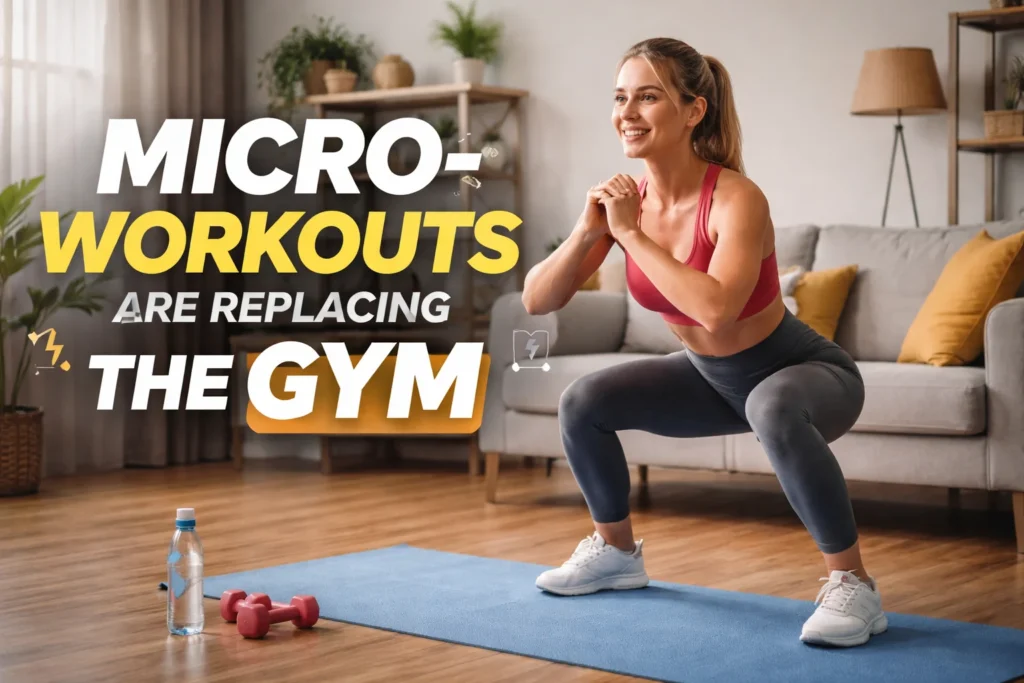

Introduction: The Fitness Revolution You Didn’t See Coming
Picture this: It’s Wednesday at 3:17 PM. You’re between meetings, your energy is flagging, and you know you should move your body, but the thought of changing clothes, driving to the gym, working out for an hour, showering, and returning to your day feels utterly impossible. So you do nothing. Again.
This scenario plays out millions of times daily across the world, creating what exercise scientists call “the intention-behavior gap”—the frustrating space between knowing we should exercise and actually doing it. For decades, the fitness industry has offered one primary solution: more—more time, more equipment, more intensity, more commitment. But what if the answer wasn’t more, but different? What if fitness could meet us exactly where we are—in our offices, our homes, our fragmented schedules—rather than demanding we come to it?
Enter the micro-workout revolution: a paradigm-shifting approach to fitness that proves health isn’t built in hour-long blocks but in minutes accumulated throughout a day. This isn’t another fitness fad; it’s a fundamental rethinking of how humans move, grounded in evolutionary biology and supported by cutting-edge research. The most surprising finding? These fragmented movement patterns may be better suited to our physiology and psychology than the regimented exercise sessions we’ve been taught to prioritize.
In this comprehensive guide, we’ll explore every dimension of micro-workouts: the science proving their effectiveness, the psychology explaining why we stick with them, practical strategies for implementation across every life context, and the profound implications for public health. Whether you’re a time-crunched professional, a parent juggling endless responsibilities, someone who’s never felt comfortable in a gym, or simply a person seeking a more sustainable relationship with movement, this approach offers something transformative: fitness that fits into life as it’s actually lived.
Chapter 1: The Problem with Modern Exercise
The Historical Shift: From Integrated Movement to Segregated Exercise
To understand why micro-workouts feel so revolutionary, we must first examine how we arrived at our current exercise paradigm. For most of human history, physical activity wasn’t something people “did”—it was something that happened naturally through the course of living. Our hunter-gatherer ancestors moved frequently at varying intensities: walking to forage, bursts of running to hunt or evade danger, lifting and carrying resources, climbing, digging, and building. Their movement pattern was inherently sporadic, varied, and integrated into daily survival.
The agricultural revolution began to change this pattern, introducing more repetitive motions but still embedding movement within productive work. The industrial revolution accelerated the segregation, with factory work compartmentalizing specific movements while reducing overall variability. By the late 20th century, something unprecedented occurred: for the first time in human history, physical activity became largely optional for those in developed nations. With automation, transportation advances, and sedentary jobs, movement transformed from an unavoidable aspect of living to a conscious, scheduled choice.
This shift gave birth to the modern fitness industry, which responded to increasing sedentary lifestyles by creating dedicated spaces (gyms), specialized equipment (treadmills, weight machines), and scheduled time blocks for “exercise.” While this approach has helped millions, it has simultaneously created new barriers:
- Time Segmentation: The requirement for uninterrupted 30-60 minute blocks
- Location Dependence: The need to travel to specialized facilities
- Financial Barriers: Membership fees and equipment costs
- Psychological Hurdles: Intimidation, self-consciousness, and performance anxiety
- Identity Conflicts: The perception that one must become “a gym person”
These barriers have created what public health researchers term “the active inactive”—people who value fitness, intend to exercise, but consistently fail to meet recommended guidelines. In the United States alone, despite a $35 billion gym industry, less than 25% of adults meet physical activity guidelines for both aerobic and muscle-strengthening activities. This discrepancy reveals a fundamental mismatch between the solution offered (long, dedicated workouts) and the problem (fragmented time, competing priorities, psychological resistance).
The Rise of Sedentary Culture and Its Consequences
Parallel to the growth of the fitness industry has been an explosion in sedentary behavior. The average office worker now sits for 10-15 hours daily—during commutes, at work, during meals, and while relaxing. This isn’t merely an absence of exercise; prolonged sitting creates unique physiological harms:
- Reduced metabolic rate by approximately 90% compared to standing
- Diminished lipoprotein lipase activity, an enzyme crucial for fat metabolism
- Increased insulin resistance even in otherwise healthy individuals
- Impaired vascular function with reduced blood flow to extremities
- Muscle protein signaling changes that promote muscle breakdown
Perhaps most concerning is research showing that 60 minutes of daily exercise cannot fully counteract the negative effects of 10 hours of sitting. This discovery has forced a fundamental reconsideration of exercise prescriptions. If the traditional approach of “exercise for an hour, sit for ten” is physiologically inadequate, what alternatives exist?
The emerging answer is surprisingly simple: break up sedentary time with frequent movement bursts. This approach doesn’t replace longer workouts but addresses the separate (and arguably more pressing) issue of sedentary harm. Micro-workouts represent the most practical implementation of this principle—brief, accessible movements that punctuate prolonged sitting.
The Psychology of Exercise Avoidance
Beyond time and access, psychological factors powerfully influence exercise participation. Three key barriers emerge repeatedly in research:
- The Perception of Insufficient Time
The most commonly cited barrier to exercise isn’t actual time scarcity but perceived time scarcity. When people estimate they need 30-60 minutes for a “real” workout, even 15 free minutes feels inadequate, leading to postponement. This creates a psychological trap where only perceived “perfect” conditions justify exercise initiation. - The “All-or-Nothing” Mindset
Many people hold an implicit belief that if they can’t complete a “full” workout, there’s little point in starting. This perfectionistic thinking leads to repeated cycles of intense effort followed by complete abandonment—a pattern less sustainable than modest but consistent movement. - Identity Disconnect
For individuals who don’t identify as “athletic,” “fit,” or “gym-goers,” traditional exercise settings can feel like visiting a foreign country where they don’t speak the language or understand the customs. This identity mismatch creates discomfort that outweighs the perceived benefits.
Micro-workouts address each barrier directly: they redefine what constitutes a “complete” workout (making 5 minutes valid), they replace the all-or-nothing paradigm with a “something is better than nothing” approach, and they allow people to build fitness without adopting a new identity. This psychological accessibility may be their greatest advantage over traditional exercise formats.
Chapter 2: The Science of Micro-Workouts
Defining Terms: From VILPA to Exercise Snacking
Before examining the research, let’s clarify terminology that appears throughout the scientific literature:
- VILPA (Vigorous Intermittent Lifestyle Physical Activity): Brief bursts of vigorous activity embedded within daily life (e.g., stair climbing, brisk walking, carrying groceries). This term specifically refers to unstructured, non-exercise activity performed at high intensity.
- Exercise Snacks: Very brief (≤1 minute), intense exercise bouts performed periodically throughout the day, typically structured but minimal (e.g., 20 seconds of stair climbing, 30 seconds of jumping jacks).
- Micro-Workouts: The broader category encompassing both VILPA and exercise snacks—any intentional physical activity lasting ≤10 minutes, regardless of structure or context.
- HIIT (High-Intensity Interval Training): Structured workouts alternating between vigorous efforts and recovery periods, typically lasting 10-30 minutes. Micro-workouts differ in duration and often lack formal structure.
The distinction between VILPA and exercise snacks is particularly important. VILPA represents a philosophical shift—recognizing that lifestyle activities can provide meaningful health benefits when performed with sufficient intensity. Exercise snacks are more prescriptive—specific, structured movements inserted at intervals. Both approaches demonstrate significant benefits, suggesting the common denominator is brief, intense movement rather than the specific form it takes.
Groundbreaking Research Findings
The Mortality Reduction Studies
The most compelling evidence for micro-workouts comes from large-scale observational studies using accelerometer data:
The UK Biobank VILPA Study (2022)
Published in Nature Medicine, this study analyzed data from 25,241 non-exercisers (average age 62) who wore activity trackers for seven days. Researchers specifically looked for brief bursts of vigorous activity lasting 1-2 minutes. The findings were remarkable:
- Participants who engaged in 3-4 daily one-minute VILPA bouts experienced:
- 40% reduction in all-cause mortality
- 49% reduction in cardiovascular disease mortality
- 32% reduction in cancer-related mortality
- Benefits followed a clear dose-response relationship up to approximately 11 daily bouts
- Each additional one-minute bout provided further risk reduction
- These associations remained significant after controlling for age, sex, smoking, alcohol, diet, sleep, and socioeconomic factors
The Women’s Health Study (2022)
Published in JAMA Cardiology, this research followed 25,000 women (average age 62) for approximately 8 years using wearable devices:
- Women who averaged 3.4 minutes of vigorous activity daily showed:
- 67% lower risk of heart failure
- 45% lower risk of any major cardiovascular event
- Benefits were independent of total moderate-to-vigorous activity
- The timing mattered: accumulating vigorous activity throughout the day provided greater benefits than a single continuous bout
The Norwegian Cohort Study (2023)
Adding to the evidence, this study of 1,500 adults found that:
- 4-5 daily one-minute vigorous bursts improved cardiorespiratory fitness equivalently to 150 minutes of moderate continuous exercise
- Blood pressure improvements were actually greater in the vigorous burst group
- Participants reported higher enjoyment and adherence with the burst protocol
The Metabolic Health Evidence
Beyond cardiovascular benefits, micro-workouts demonstrate impressive effects on metabolic regulation:
Blood Glucose Control
Multiple studies have examined how brief activity breaks affect post-meal glucose:
- A 2021 study in Medicine & Science in Sports & Exercise found that 2 minutes of walking every 20 minutes lowered post-meal glucose by 30% and insulin by 37% compared to uninterrupted sitting
- Research in Diabetologia showed that six 1-minute walking bouts spaced hourly improved insulin sensitivity by 12-16% in sedentary adults
- The glucose-lowering effects appear most pronounced when activity occurs within 30 minutes after meals
Mitochondrial Function
High-intensity bursts create beneficial stress on mitochondria (cellular energy producers):
- A 2022 study in Cell Metabolism demonstrated that 4-6 daily 30-second sprints increased mitochondrial content by 28-49% in sedentary adults
- These improvements occurred without changes in overall fitness, suggesting mitochondrial adaptation specifically to intermittent stress
- Enhanced mitochondrial function improves metabolic flexibility—the body’s ability to switch between fuel sources efficiently
Fat Metabolism
Contrary to expectations that longer workouts are needed for fat burning:
- Research shows repeated brief vigorous bouts increase fat oxidation throughout the day
- The mechanism involves enhanced catecholamine sensitivity and improved lipid trafficking
- While total calories burned may be lower than in longer workouts, the metabolic quality of those calories (greater proportion from fat) may be superior
Physiological Mechanisms: Why Brief Bursts Work So Well
The disproportionate benefits of micro-workouts stem from several interconnected physiological mechanisms:
1. Hormonal Symphony
Brief, intense activity triggers an optimal release of beneficial hormones:
- Catecholamines (Adrenaline/Noradrenaline): Surge within seconds, mobilizing energy stores, increasing heart rate and contractility, and enhancing fat breakdown
- Growth Hormone: Increases up to 10-fold during intense bursts, supporting tissue repair, muscle growth, and fat metabolism
- Irisin: The “exercise hormone” released from muscle during intense contraction, stimulates fat browning and increases metabolic rate
- BDNF (Brain-Derived Neurotrophic Factor): Improves brain plasticity, learning, and memory; sometimes called “Miracle-Gro for the brain”
2. Vascular and Circulatory Effects
The cardiovascular system responds rapidly to vigorous activity:
- Nitric Oxide Release: Intense muscle contraction stimulates endothelial nitric oxide production, causing immediate vasodilation and improved blood flow
- Shear Stress: Increased blood flow velocity creates beneficial friction along vessel walls, improving endothelial function
- Capillary Recruitment: Brief intense effort opens dormant capillaries, improving nutrient delivery and waste removal
3. Metabolic Flexibility Enhancement
Micro-workouts train the body to switch efficiently between energy systems:
- Glycogen Sparing: Repeated bursts improve the muscles’ ability to use fat at higher intensities, conserving glycogen
- Lactate Clearance: Training the body to process lactate as fuel rather than viewing it as waste
- Insulin-Independent Glucose Uptake: Vigorous activity stimulates glucose transport into muscles without requiring insulin, particularly beneficial for insulin resistance
4. Neuromuscular Benefits
Even brief efforts maintain and improve neuromuscular connections:
- Motor Unit Recruitment: High intensity requires maximal motor unit activation, maintaining neural pathways to muscle fibers
- Rate Coding Improvement: The nervous system learns to fire signals more rapidly, improving power output
- Inter-Muscle Coordination: Brief complex movements enhance communication between muscle groups
Table: Comparative Physiological Effects of Different Exercise Formats
| Physiological Parameter | Micro-Workouts (6×1 min) | Continuous Moderate (30 min) | Traditional HIIT (20 min) |
|---|---|---|---|
| EPOC (Afterburn) | Moderate (4-8% of calories) | Low (2-4% of calories) | High (8-15% of calories) |
| Mitochondrial Biogenesis | Significant (via AMPK pathway) | Moderate (via PGC-1α) | Significant (both pathways) |
| Insulin Sensitivity | Excellent (acute GLUT4 translocation) | Good (chronic adaptation) | Excellent (both acute & chronic) |
| Vascular Function | Immediate improvement (nitric oxide) | Gradual improvement | Significant improvement |
| Time to Benefit Onset | Minutes | Days to weeks | Hours to days |
| Adherence Potential | Very High | Moderate | Low to Moderate |
The Evolutionary Perspective: Why Our Bodies Are Designed for Bursts
Human physiology didn’t evolve for sustained moderate effort—it evolved for survival, which meant variability and intensity:
- Hunter-Gatherer Movement Patterns: Research on contemporary hunter-gatherer tribes shows they average 75 minutes daily of moderate-to-vigorous activity, but this occurs in brief bursts (2-3 minutes) throughout the day, not in continuous sessions.
- Fight-or-Flight System: Our stress response is designed for acute, not chronic, activation. Brief vigorous activity provides the stimulus this system expects without the prolonged stress that causes harm.
- Energy Conservation: In environments where food was scarce, efficiency mattered. Brief intense efforts followed by recovery represented optimal energy use compared to sustained moderate effort.
- Movement Variability: Natural movement involves constantly changing patterns—different speeds, directions, surfaces, and tasks. Micro-workouts better mimic this variability than repetitive gym exercises.
This evolutionary mismatch hypothesis suggests that part of our struggle with modern exercise stems from asking our bodies to do something unnatural—sustained, repetitive effort at fixed intensity. Micro-workouts may succeed because they better match our evolutionary movement template.
Chapter 3: The Psychology of Micro-Workouts
Cognitive and Emotional Benefits
The advantages of micro-workouts extend far beyond physical health to cognitive and emotional domains:
Immediate Cognitive Enhancement
Research demonstrates rapid cognitive improvements following brief activity:
- Attention and Focus: A 2021 study in Neuropsychologia found that 5 minutes of moderate-intensity walking improved selective attention by 14% compared to sitting
- Working Memory: Brief bouts of exercise increase dopamine and norepinephrine, enhancing working memory capacity
- Creative Problem-Solving: The cognitive flexibility required to switch between tasks (work to exercise and back) appears to transfer to improved creative thinking
- Information Processing Speed: Even 2 minutes of stair climbing has been shown to increase processing speed by 8-12%
Emotional Regulation and Mood
The mood benefits of exercise are well-established, but micro-workouts offer unique advantages:
- Stress Interruption: Brief movement breaks disrupt the physiological stress cascade (cortisol release, sympathetic nervous system activation)
- Emotional Reset: Provides a “circuit breaker” for frustration, anxiety, or overwhelm
- Positive Reinforcement Loop: Each completed bout provides a sense of accomplishment, releasing dopamine and creating positive associations with movement
- Reduced Rumination: Physical activity, even brief, shifts attention from internal worries to external environment and bodily sensations
The “Fresh Start” Effect
Micro-workouts leverage several psychological principles:
- Decision Simplicity: A 60-minute gym session requires multiple preliminary decisions (what to wear, which exercises, how to get there). A 2-minute micro-workout requires just one decision: to start now.
- Completion Bias: Humans prefer completed tasks. Brief workouts are virtually guaranteed completable, providing immediate satisfaction.
- Habit Formation: Research shows that frequency, not duration, drives habit formation. Daily micro-workouts create stronger movement habits than less frequent longer sessions.
Behavioral Science Principles at Work
Micro-workouts successfully incorporate evidence-based behavior change strategies:
1. Implementation Intentions
The “if-then” planning strategy that bypasses decision fatigue:
- “If my meeting ends at 2:00, then I’ll do 2 minutes of stair climbing”
- “If I finish checking email, then I’ll do 1 minute of desk push-ups”
- “If I’m waiting for water to boil, then I’ll do calf raises”
2. Habit Stacking
Attaching a new behavior (micro-workout) to an existing habit:
- After brushing teeth → 1 minute of balance exercises
- Before checking phone in morning → 2 minutes of dynamic stretching
- During coffee brewing → wall sit or plank
3. Task Bracketing
Using movement to create psychological boundaries between tasks:
- 2-minute workout between work tasks signals completion of one and readiness for another
- Creates mental “compartments” that improve focus within each task
4. The Zeigarnik Effect
The tendency to remember uncompleted tasks:
- Having a goal of “6 movement breaks today” creates gentle tension that drives completion
- Each completed bout provides closure while the remaining goal maintains motivation
5. Identity-Based Habits
Micro-workouts support identity formation differently than traditional exercise:
- Rather than requiring adoption of “exerciser” identity, they allow “someone who moves throughout the day”
- Lower barrier to identity adoption because it doesn’t require specialized knowledge, equipment, or locations
- Identity reinforced more frequently (multiple daily successes vs. 3-4 weekly gym sessions)
Overcoming Psychological Barriers
Let’s examine how micro-workouts address specific psychological obstacles:
Barrier: “I Don’t Have Time”
- Micro-workout reframe: “I don’t need 60 minutes; I need 60 seconds several times daily”
- Strategy: Identify “time confetti”—those scattered minutes between tasks that typically get wasted
Barrier: “I’m Too Tired”
- Micro-workout reframe: “Movement creates energy; I don’t need energy to start moving”
- Strategy: The 2-minute rule—commit to just 2 minutes; usually, energy follows initiation
Barrier: “I Don’t Know What to Do”
- Micro-workout reframe: “I don’t need a complex routine; I need simple movements”
- Strategy: Master 5-10 basic movements (squat, push, pull, hinge, carry, rotate) and vary them
Barrier: “I’ll Look Foolish”
- Micro-workout reframe: “I can do movements that are appropriate to my environment”
- Strategy: Develop “stealth” options for public settings and save vigorous options for private moments
Barrier: “It Doesn’t Feel Like Enough”
- Micro-workout reframe: “Scientific evidence proves small amounts matter”
- Strategy: Track cumulative minutes of vigorous activity; most people are surprised by the total
The Motivation Continuum
Micro-workouts work across different motivation types:
Intrinsic Motivation (Doing for Enjoyment)
- Focus on how movement feels—the energy boost, mental clarity, stress relief
- Choose activities you genuinely enjoy, even if not “optimal” exercises
- Vary movements to maintain novelty and interest
Identified Motivation (Doing for Values)
- Connect movement to deeper values: health for family, longevity for goals, self-care
- Use micro-workouts as practice for valuing yourself through small, consistent actions
- Frame each bout as an investment in your future self
External Motivation (Doing for Outcomes)
- Track metrics: daily bouts completed, cumulative minutes, consistency streaks
- Use accountability: share goals with others, join challenges
- Link to existing routines: “no coffee until I move for 2 minutes”
The flexibility of micro-workouts allows them to meet individuals wherever they are on the motivation spectrum, making them sustainable across changing circumstances.
Chapter 4: Designing Your Micro-Workout Ecosystem
Creating Your Personal Movement Menu
The most effective micro-workout strategy is personalized, varied, and context-specific. Rather than a single prescription, create a “menu” of options you can draw from based on time, environment, energy, and preference.
By Duration
The 30-Second Power Shot
When you have mere seconds:
- 10 rapid bodyweight squats
- 15 jumping jacks
- 5 desk push-ups
- 30-second wall sit
- Stair sprint (one flight)
The 1-Minute Energizer
A full minute allows more substantial efforts:
- 30 seconds mountain climbers, 30 seconds rest
- 20 walking lunges
- 1-minute brisk walk (increase to maximum sustainable pace)
- 30-second plank, 30-second rest
- 1-minute dance to upbeat music
The 2-3 Minute Circuit
Time for combination moves:
- 45 seconds squats, 45 seconds push-ups, 45 seconds plank
- 1-minute stair repeats, 1-minute walking recovery
- 30 seconds each: jumping jacks, wall sit, desk dips, calf raises
- 2-minute dynamic stretching routine
The 5-10 Minute Focused Session
When you have a true break:
- 30 seconds work/30 seconds rest HIIT (10 rounds)
- 5-minute yoga flow
- 10-minute walk-jog intervals
- Full-body resistance band circuit
By Environment
Office/Workplace Stealth Options
Movements that attract minimal attention:
- Isometric exercises: glute squeezes, abdominal hollowing, seated leg lifts
- “Invisible” movements: ankle circles, shoulder rolls, discreet stretching
- Bathroom break workouts: 1-minute wall sit in stall, calf raises at sink
- Walking meetings or standing desk adjustments
Home Integration Strategies
Using household items and spaces:
- Kitchen counter: incline push-ups, step-ups
- Living room: commercial break workouts, furniture-assisted exercises
- Stairs: the ultimate home fitness tool—sprints, step-ups, lunges
- Household objects: water jug or laundry detergent for resistance, towel for sliding exercises
Outdoor/Natural Environment
Using public spaces creatively:
- Park bench: step-ups, tricep dips, inclined push-ups
- Playground equipment: pull-ups on bars, step-ups on platforms
- Natural features: hill sprints, log lifts, trail balance exercises
- “Green exercise”: gardening with vigor, yard work as workout
Travel Adaptations
Maintaining movement while away:
- Hotel room: luggage carries, towel rows, bodyweight circuits
- Airport: terminal walking, gate area stretching, suitcase lifts
- Car trips: rest stop movement breaks, seated isometrics while driving
By Fitness Component
Cardiovascular Focus
- Stair repeats
- Jump rope (real or imaginary)
- High knees or butt kicks
- Shadow boxing
- Dance bursts
Strength Emphasis
- Push-up variations
- Squat variations
- Plank and its progressions
- Pull-up/row alternatives (using door frame, table)
- Carry exercises (groceries, child, briefcase)
Mobility and Flexibility
- Dynamic stretching sequences
- Yoga poses held for 30-60 seconds
- Joint circles and rotations
- Myofascial release with household objects
- Balance challenges
Power and Explosiveness
- Jump squats or lunges
- Burpees (full or modified)
- Medicine ball slams (imagined or with pillow)
- Sprint starts
- Plyometric push-ups
Programming Principles for Optimal Results
While flexibility is a strength of micro-workouts, certain principles optimize their effectiveness:
1. The Intensity Imperative
To compensate for shorter duration, intensity must be sufficient:
- Use the talk test: you should be able to speak in short phrases but not hold a conversation
- Rate of perceived exertion (RPE) should be 7-9 on a 10-point scale
- Heart rate should reach 70-85% of maximum (estimated as 220 minus your age)
2. Movement Variety Principle
Include different movement patterns throughout the week:
- Push: Pressing movements away from body
- Pull: Drawing movements toward body
- Squat: Knee-dominant lower body
- Hinge: Hip-dominant lower body
- Carry: Loaded locomotion
- Rotate: Spinal rotation under control
- Gait: Walking, running, skipping variations
3. The Spacing Rule
Distribute bouts throughout the day rather than clustering:
- Optimal spacing appears to be 60-90 minutes between vigorous bursts
- This provides continuous metabolic stimulation without excessive fatigue
- Particularly important for blood glucose control (post-meal movement)
4. Progressive Overload Application
Even micro-workouts should evolve as you adapt:
- Increase intensity: more effort, faster movements, added resistance
- Increase density: more bouts per day, shorter rest between
- Increase complexity: more challenging variations, combination movements
- Increase consistency: more days per week with movement breaks
5. Recovery Integration
Brief doesn’t mean without recovery needs:
- Include lower-intensity days or active recovery (walking, stretching)
- Listen to signs of overtraining: excessive fatigue, poor sleep, persistent soreness
- Periodize intensity: some days with maximal effort, others with moderate
Table: Sample One-Week Micro-Workout Integration Plan
| Time | Monday | Tuesday | Wednesday | Thursday | Friday | Weekend |
|---|---|---|---|---|---|---|
| Morning (Wake-up) | 3-min dynamic mobility | 2-min sun salutations | 5-min brisk walk | 3-min balance challenge | 2-min power poses | Family activity |
| Mid-Morning | 2-min stair sprint | 1-min desk push-ups | 3-min walking meeting | 2-min chair squats | 3-min resistance band | Outdoor adventure |
| Pre-Lunch | 5-min full-body circuit | 2-min standing desk moves | 1-min wall sit challenge | 4-min yoga flow | 3-min dance break | Skill practice |
| Afternoon | 3-min isometric holds | 2-min calf raises during call | 5-min park walk | 1-min breathing + movement | 4-min HIIT | Recreational sports |
| Evening | 10-min family dance | 5-min kitchen workout | 8-min bodyweight circuit | 7-min stretching | Active date night | Restorative movement |
| Focus | Cardio power | Upper body | Lower body | Mobility & recovery | Full body integration | Joyful movement |
Equipment Minimalism: The Beauty of Bodyweight
One of micro-workouts’ greatest advantages is minimal equipment requirements. With creativity, everyday objects become fitness tools:
The Office Edition
- Chair: Tricep dips, step-ups, incline push-ups
- Desk: Elevated push-ups, leaning rows
- Wall: Wall sits, wall push-ups, heel raises
- Water bottle: Light resistance for curls, presses, rows
The Home Edition
- Stairs: The ultimate home gym—sprints, lunges, step-ups
- Towel: Sliding exercises, resistance rows
- Water jugs: Adjustable weight for carries, presses, swings
- Backpack: Loaded with books for weighted movements
The Outdoor Edition
- Park bench: Step-ups, tricep dips, incline/decline push-ups
- Tree branch: Pull-ups, hanging knee raises
- Hill: Sprints, bounding, hill walks
- Curb: Step-ups, calf raises, balance practice
The philosophy is “use what you have.” This not only eliminates financial barriers but also cultivates creativity and adaptability—valuable fitness attributes in themselves.
Chapter 5: Specialized Applications and Populations
Micro-Workouts for Different Life Stages
Children and Adolescents
The micro-workout philosophy aligns perfectly with natural youth movement patterns:
- Play-based approach: Short bursts of running, jumping, climbing during recess or play
- Brain breaks: 2-5 minute movement breaks between study sessions improve focus and retention
- Family integration: “Movement snacks” together—dance breaks, relay races, obstacle courses
- Skill development: Brief, frequent practice of movement skills (throwing, catching, balancing)
Research shows that accumulated short bursts of activity provide similar health benefits to continuous exercise for children while being more sustainable and enjoyable.
Older Adults
For aging populations, micro-workouts offer particular advantages:
- Reduced injury risk: Brief sessions limit fatigue that can lead to falls or poor form
- Joint-friendly options: Can focus on mobility, balance, and strength in manageable doses
- Cognitive benefits: May help maintain executive function and delay cognitive decline
- Social integration: Group movement breaks in senior centers or retirement communities
Studies on older adults show that frequent brief strength sessions (2-3× daily) produce similar strength gains to longer, less frequent sessions with better adherence.
Pregnancy and Postpartum
Micro-workouts accommodate the changing needs of pregnancy and recovery:
- Energy management: Brief sessions align with fluctuating pregnancy energy levels
- Pelvic floor integration: Can include brief, frequent pelvic floor exercises throughout the day
- Baby incorporation: Use baby as resistance for gentle strength movements
- Time efficiency: Critical during the fragmented schedule of new parenthood
Workplace Integration: The Corporate Wellness Revolution
Forward-thinking companies are redesigning workspaces and cultures around movement:
Environmental Modifications
- Active workstations: Treadmill desks, cycling workstations, standing desk options
- Movement-promoting architecture: Centralized trash/recycling, attractive stairwells, walking paths
- On-site facilities: Exercise rooms, showers, secure bicycle storage
- Outdoor spaces: Walking trails, outdoor meeting areas, green spaces
Cultural Shifts
- Meeting policies: Walking meetings, standing agendas, movement breaks during long sessions
- Leadership modeling: Executives visibly taking movement breaks
- Incentive structures: Rewards for activity accumulation rather than gym attendance
- Communication norms: Normalizing messages like “stepping away for a movement break”
Program Implementation
- Micro-challenges: Department competitions for most movement breaks
- Education: Workshops on integrating movement into workdays
- Technology: Apps that prompt movement breaks at optimal intervals
- Community building: Group movement breaks or walking clubs
Companies implementing these strategies report increased productivity, reduced absenteeism, improved morale, and enhanced creativity. The return on investment for movement-friendly workplaces can reach 6:1 according to some analyses.
Clinical Applications: Exercise as Medicine
Healthcare providers are increasingly prescribing micro-workouts:
Cardiac Rehabilitation
- Frequent brief efforts are often better tolerated than continuous exercise
- Can begin with 1-minute walks multiple times daily, gradually increasing
- Provides continuous cardiovascular stimulus without excessive strain
Diabetes Management
- Post-meal movement (10-15 minutes after eating) effectively manages blood glucose
- Insulin users can time micro-workouts with insulin peaks for better glucose control
- Reduces need for medication adjustments by providing consistent daily movement
Pulmonary Conditions
- Breath-paced movement helps manage dyspnea (breathlessness)
- Frequent short sessions prevent excessive fatigue
- Can incorporate specific breathing exercises with movement
Mental Health
- Movement as intervention for anxiety, depression, ADHD
- Provides immediate mood boost through endorphin release
- Creates positive behavioral activation patterns
- Offers distraction and cognitive shift from rumination
Musculoskeletal Rehabilitation
- Frequent brief movement maintains joint mobility without exacerbating inflammation
- Allows tissue adaptation with adequate recovery between sessions
- Can be easily modified based on daily symptom fluctuations
The “exercise snacking” approach is particularly valuable in clinical populations because it lowers the barrier to initiation, allows precise dosing, and can be easily adjusted based on individual response.
Athletic Performance Enhancement
Even competitive athletes benefit from micro-workouts:
Skill Acquisition
- Frequent brief practice (5-10 minutes, 3-5× daily) often outperforms longer, less frequent sessions for skill learning
- Provides more total repetitions with better focus and less fatigue
- Allows neural consolidation between sessions
Active Recovery
- Brief, gentle movement between intense training sessions enhances recovery
- Increases blood flow without adding training stress
- Helps maintain mobility and range of motion
Metabolic Conditioning
- Accumulated vigorous efforts throughout day can supplement formal conditioning
- Maintains metabolic adaptations during travel or busy periods
- Provides “top-up” stimulus without interfering with primary training
Mental Training
- Brief movement breaks during study/film sessions improve focus and retention
- Can incorporate sport-specific visualization during bodyweight movements
- Builds discipline of integrating movement into all aspects of life
Chapter 6: Technology and Micro-Workouts
Wearable Devices and Apps
Technology has accelerated the micro-workout revolution by making tracking and prompting effortless:
Activity Trackers
Modern devices now recognize and encourage micro-movements:
- Vigorous minute tracking: Many devices now specifically track minutes of vigorous activity
- Movement reminders: Alerts to move after prolonged sitting
- Active goal setting: Goals based on movement frequency rather than duration
- Heart rate zone monitoring: Real-time feedback on intensity
Mobile Applications
Specialized apps support micro-workout implementation:
- 5-minute workout libraries: Curated collections of brief routines
- Interval timers: Customizable work/rest intervals for any duration
- Exercise demonstrations: Proper form guidance for hundreds of movements
- Community features: Challenges, sharing, accountability groups
Smart Environment Integration
The future of micro-workouts includes environmental prompts:
- Smart furniture: Desks that remind you to stand or move
- Connected home devices: Speakers that suggest movement breaks
- Workplace systems: Calendar integrations that schedule movement between meetings
- Gamified environments: Points for using stairs, walking routes, active stations
Data and Personalization
The wealth of data from wearables enables unprecedented personalization:
Individual Patterns
- Optimal timing: Identifying when you have most energy for vigorous efforts
- Recovery needs: Tracking how different frequencies affect sleep and readiness
- Effective exercises: Noticing which movements provide greatest energy boost
- Consistency predictors: Identifying conditions that lead to missed days
Population Insights
Aggregate data reveals larger patterns:
- Cultural differences: How movement patterns vary by country, workplace, age
- Barrier identification: When and why people most often skip movement
- Intervention effectiveness: Which prompts and programs actually change behavior
- Health correlations: How micro-movement patterns correlate with health outcomes
The Quantified Self Movement
Micro-workouts appeal to self-trackers because:
- Provide frequent data points (multiple daily vs. 3-4 weekly workouts)
- Allow experimentation with different timing, types, and durations
- Create visible patterns between movement and other metrics (mood, energy, focus)
- Support iterative optimization based on personal response
Virtual and Augmented Reality
Emerging technologies create new possibilities:
VR Fitness
- Immersive experiences: Makes brief workouts feel like adventures or games
- Form feedback: Real-time correction of movement patterns
- Social connection: Virtual group workouts without travel time
- Progress tracking: Detailed analytics on movement quality, not just quantity
AR Integration
- Environmental overlay: Suggests movements using existing furniture/objects
- Form guidance: Projects proper movement patterns onto your space
- Gamified challenges: Turns your environment into an obstacle course or game
- Progress visualization: Shows improvements in strength, mobility, or skill over time
The Metaverse Potential
Future applications might include:
- Digital twins: Avatar that reflects your fitness progress
- Virtual coaches: AI-powered guidance for micro-workouts
- Global challenges: Competitions with people worldwide in virtual spaces
- Skill transfer: Practicing real-world movements in virtual space with feedback
Chapter 7: The Social and Cultural Dimensions
Community Building Through Micro-Movement
While often performed individually, micro-workouts have powerful social applications:
Workplace Communities
- Movement challenges: Department competitions for most daily bursts
- Accountability partners: Pairing up to remind each other to move
- Group breaks: Designated times when teams take movement breaks together
- Success sharing: Celebrating milestones and consistency
Online Communities
- Social media groups: Sharing micro-workout ideas and accomplishments
- Virtual challenges: Global events with shared tracking
- Expert communities: Learning from trainers specializing in minimal equipment training
- Support networks: Especially valuable for those with limited local fitness options
Family Integration
- Household challenges: Turning chores into friendly competitions
- Movement rituals: Family dance parties, after-dinner walks, active games
- Intergenerational activities: Movements adaptable to all ages and abilities
- Values transmission: Teaching children that movement is part of life, not separate from it
The Accessibility Revolution
Micro-workouts democratize fitness by eliminating traditional barriers:
Financial Accessibility
- No gym memberships, equipment costs, or specialized clothing
- Uses existing environments and objects
- Reduces healthcare costs through prevention
Geographical Accessibility
- Possible anywhere: urban, rural, home, work, travel
- Adapts to available space: from studio apartment to office cubicle
- Weather-independent options always available
Physical Accessibility
- Can be adapted for virtually any ability level
- Allows pacing based on energy, pain, or mobility fluctuations
- Progressive approach reduces injury risk from doing too much too soon
Psychological Accessibility
- No intimidation factor of gyms or group classes
- No performance pressure or comparison
- Allows private skill development before public participation
- Self-paced progression reduces anxiety
Temporal Accessibility
- Fits into fragmented schedules
- No need for childcare or special time arrangements
- Can be done in work clothes without shower need
- Aligns with natural energy fluctuations throughout day
This comprehensive accessibility makes micro-workouts potentially transformative for public health, reaching populations that traditional exercise approaches have consistently failed to engage.
Cultural Shifts in Fitness Perception
The micro-workout movement is part of a larger cultural reevaluation of fitness:
From Performance to Health
- Shift from appearance/performance goals to functional health
- Emphasis on what movement does for you (energy, mood, longevity) rather than how it makes you look
- Acceptance of diverse movement expressions rather than prescribed forms
From Segregated to Integrated
- Movement as part of life rather than separate from it
- Fitness as something you “live” rather than “do”
- Environment design that encourages natural movement rather than requiring special sessions
From Intensive to Sustainable
- Recognizing that consistency beats intensity over the long term
- Valuing modest daily efforts over heroic occasional efforts
- Designing approaches for decades, not just seasons
From Expert-Dependent to Self-Efficacious
- Empowering individuals with simple tools they can use independently
- Building confidence through small, frequent successes
- Reducing dependence on coaches, equipment, and facilities
These shifts align with broader cultural movements toward sustainability, integration, and holistic well-being.
Chapter 8: Implementation Strategies and Troubleshooting
Starting Your Practice: The First 30 Days
A gradual approach ensures sustainable adoption:
Week 1: Awareness and Experimentation
- Day 1-2: Simply notice movement opportunities. Carry a small notebook or use phone notes to jot down when you have 1-5 minutes.
- Day 3-4: Identify your “movement personality.” Do you prefer strength or cardio? Morning or afternoon? Solo or social?
- Day 5-7: Try one different micro-workout each day. Notice which you enjoy and which give you the best energy boost.
Week 2: Habit Formation
- Day 8-10: Choose two consistent times for movement breaks. Anchor them to existing habits (after morning coffee, before lunch).
- Day 11-12: Create your “menu” of 5-7 favorite micro-workouts. Include options for different energy levels and time constraints.
- Day 13-14: Experiment with tracking. Try a simple checkmark system, a notes app, or a wearable device. Notice what motivates you.
Week 3: Integration and Expansion
- Day 15-17: Add a third daily micro-workout. Place it strategically where you typically experience an energy dip.
- Day 18-20: Involve others. Try a family movement break, workplace challenge, or virtual accountability partner.
- Day 21: Evaluate and adjust. What’s working? What barriers emerged? Refine your approach.
Week 4: Personalization and Mastery
- Day 22-25: Begin progressive overload. Add one more repetition, slightly more intensity, or a more challenging variation.
- Day 26-28: Experiment with different environments. Try outdoor, travel, or unconventional space workouts.
- Day 29-30: Solidify your identity. Notice how you now think of yourself as “someone who moves throughout the day.”
Troubleshooting Common Challenges
“I Keep Forgetting”
- Solution: Habit stacking. Attach movement to existing routines: “After I [existing habit], I will [micro-workout].”
- Implementation: Phone reminders at strategic times. Physical prompts (post-it note on computer).
- Advanced: Identify your “forgetting patterns.” Do you forget at certain times, in certain locations, or during specific activities?
“I Don’t Feel Like It”
- Solution: The 2-minute rule. Commit to just 2 minutes; usually, motivation follows action.
- Implementation: Have “low-energy options” on your menu for when willpower is low.
- Advanced: Examine the “don’t feel like it” feeling. Is it physical fatigue, mental resistance, or emotional state? Address the root cause.
“I Don’t See Results”
- Solution: Redefine “results.” Look for energy, mood, focus, sleep quality, not just weight or measurements.
- Implementation: Track different metrics: daily movement minutes, consistency streaks, how you feel.
- Advanced: Ensure sufficient intensity. Are you working hard enough during bursts? Use talk test or heart rate.
“It Feels Silly or Embarrassing”
- Solution: Develop “stealth” options for public settings. Save vigorous options for private moments.
- Implementation: Remember that people are generally focused on themselves, not judging you.
- Advanced: Gradual exposure. Start with completely private movements, gradually incorporate more public ones as confidence grows.
“My Environment Doesn’t Support It”
- Solution: Get creative. Every environment offers movement possibilities with imagination.
- Implementation: Focus on what you CAN do rather than what you can’t.
- Advanced: Become an advocate. Politely request movement-friendly modifications at work or home.
“I Get Bored”
- Solution: Regular menu rotation. Change your options weekly or monthly.
- Implementation: Learn one new movement each week to maintain novelty.
- Advanced: Create themes (balance week, power week, mobility week) or challenges (7 days of different push-up variations).
Advanced Implementation Strategies
Once established, enhance your practice:
Periodization for Micro-Workouts
- Macrocycle (3-4 months): Focus phase (e.g., mobility, strength, cardiovascular)
- Mesocycle (3-4 weeks): Specific emphasis within focus (e.g., push strength, aerobic capacity)
- Microcycle (1 week): Daily variation within structure
- Daily: Adjust based on energy, schedule, recovery needs
Integration with Other Practices
- Mindfulness: Combine movement with breath awareness, present-moment focus
- Nutrition: Time movement strategically around meals for metabolic benefit
- Sleep: Use gentle evening movement as transition ritual
- Learning: Movement breaks during study to improve retention and focus
The Long-Term Perspective
- Decades, not days: Design a practice sustainable for 20+ years
- Adaptation: Expect your needs, abilities, and preferences to change over time
- Community: As you advance, consider mentoring others beginning their journey
- Advocacy: Support movement-friendly policies in workplaces, schools, communities
Chapter 9: The Future of Micro-Workouts
Research Directions
The science of micro-workouts is still emerging, with important questions remaining:
Optimal Dosing
- What is the ideal balance of frequency, intensity, and duration?
- How do optimal parameters differ by age, fitness level, health status?
- What are the upper limits—when do more frequent bursts become counterproductive?
Mechanisms Elucidation
- Precise hormonal, cellular, and genetic pathways activated by brief bursts
- Long-term adaptations beyond the acute responses currently measured
- Interaction with other lifestyle factors: nutrition, sleep, stress management
Population-Specific Applications
- Special populations: disabilities, chronic conditions, rehabilitation
- Cultural adaptations: respecting different movement traditions and preferences
- Life stage variations: from childhood through advanced age
Technology Integration
- How can wearables and apps best support sustainable micro-workout habits?
- What are the ethical considerations of constant activity monitoring?
- How to balance data-driven optimization with intuitive movement?
Societal Implications
Widespread micro-workout adoption could transform public health:
Healthcare System Impact
- Prevention focus: Reduced burden of chronic lifestyle diseases
- Treatment integration: Exercise as standard component of disease management
- Cost savings: Billions potentially saved through reduced medication and procedure needs
- Provider training: Medical professionals educated in movement prescription
Urban Design and Architecture
- Movement-promoting environments: Cities designed for active transportation and spontaneous movement
- Building integration: Stairs as attractive central features, walking paths indoors and out
- Public spaces: Parks, plazas, and pathways encouraging varied movement
- Workplace revolution: Offices designed around movement rather than static sitting
Educational Transformation
- Movement integration: Physical activity woven throughout school day, not just in PE class
- Brain-based learning: Movement breaks to enhance focus, memory, and creativity
- Lifelong habits: Children developing sustainable movement patterns rather than exercise as chore
- Inclusive approach: Activities adaptable to all abilities and interests
Economic Considerations
- Fitness industry evolution: Shift from facility-based to integrated services
- Workplace productivity: Potential gains from healthier, more energetic workforce
- Healthcare economics: Reduced costs from prevention rather than treatment
- Inequality reduction: Addressing health disparities through accessible movement options
The Big Picture: A Movement Renaissance
At its heart, the micro-workout revolution represents something profound: a reclamation of movement as human birthright. For too many, exercise has become a chore, a punishment, a transaction (suffering now for benefits later). Micro-workouts invite us back to a more natural relationship with our bodies—one of frequent, varied, joyful movement woven through the fabric of our days.
This isn’t about abandoning all longer workouts or traditional fitness. It’s about expanding our understanding of what “counts” as meaningful movement. It’s about creating a movement ecology where micro-workouts, moderate activity, vigorous training, sports, play, and rest all have their place in a sustainable lifelong practice.
The most exciting implication may be this: we’re discovering that our bodies are more responsive, more adaptable, and more grateful for movement than we ever imagined. They don’t need perfect hour-long sessions performed in special places with expensive equipment. They need what they’ve always needed: frequent signals that we’re alive, that we can exert ourselves, that we’re capable of effort and worthy of recovery.
Conclusion: Your Movement, Your Life, Your Way
Sarah’s story, which began this exploration, continues to unfold. Eighteen months after her first tentative desk push-ups, she hasn’t returned to the gym. But something more profound has occurred: movement has become part of her identity. Not as something she “does” but as something she “is”—an active person, integrated into her life.
Her fitness tracker tells part of the story: she now averages 28 minutes of vigorous activity daily, accumulated in fragments throughout her days. But the more important story lives in her energy, her focus at work, her patience with her children, her joy in moving. She discovered that fitness wasn’t a destination to reach but a quality to cultivate minute by minute, day by day.
The research we’ve explored makes a compelling case: our bodies respond remarkably to the movement patterns they evolved with—frequent, varied, and often intense. But beyond the physiology, micro-workouts offer something equally valuable: psychological sustainability. They meet us where we are—in our busy lives, our fragmented schedules, our varying motivations—and invite us to move in ways that fit rather than fight our reality.
As you finish this guide, consider not what you “should” do, but what you can do. Not tomorrow in an ideal world, but today in your actual life. Where might you find 60 seconds for a movement burst? What simple movement brings you energy or joy? How might you weave activity into the existing patterns of your day?
The micro-workout revolution offers an empowering message: you don’t need to find time for fitness. You already have the time—scattered throughout your day in minutes between tasks. You don’t need special equipment or locations. You have a body, gravity, and your environment. You don’t need to become a different person. You just need to move the person you already are.
The barrier to entry has never been lower. The evidence has never been stronger. The opportunity has never been more accessible. Your next minute is an opportunity. Your next movement is a step toward health. Your micro-workout journey begins not with a dramatic overhaul but with a simple question: How might I move right now?
In that question lies the potential to transform not just your fitness, but your relationship with your body, your time, and your life. The revolution isn’t coming. It’s here. And it fits perfectly into the life you’re already living.